

Facial Feminization Surgery (FFS) represents a profound journey of self-discovery and transformation. For many, custom implants are pivotal in achieving desired facial contours, offering unparalleled precision and aesthetic harmony. Yet, the choice of material for these bespoke implants—specifically PEEK (Polyetheretherketone) versus Titanium—demands careful consideration. Each material presents distinct advantages and disadvantages concerning weight, imaging compatibility, and tactile feel, directly influencing both surgical outcomes and long-term patient experience. Understanding these critical differences empowers individuals to make informed decisions alongside their surgical team, ensuring a result that aligns with their unique vision.
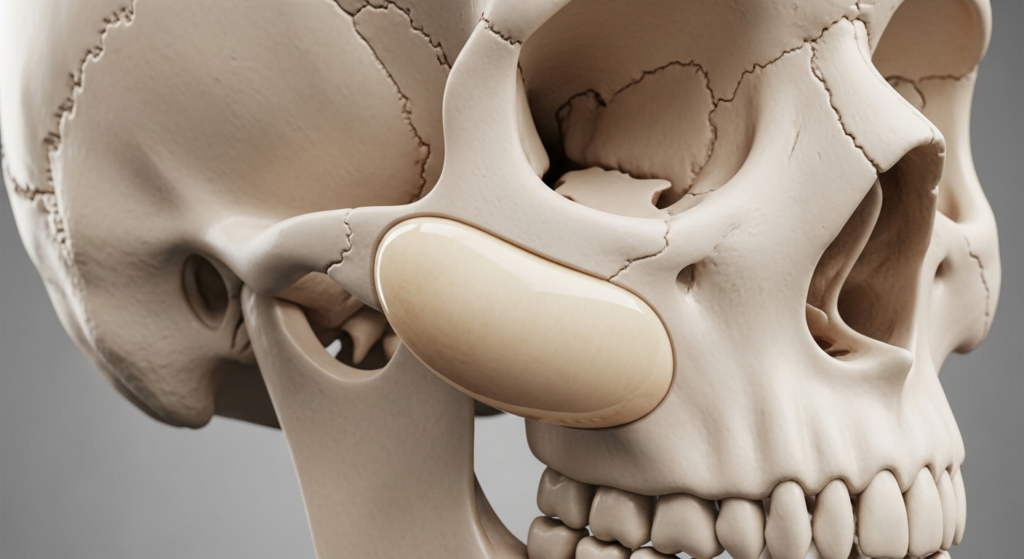
Table of Contents
The Foundation of Facial Transformation: Custom FFS Implants
The evolution of Facial Feminization Surgery has ushered in an era of unprecedented customization. Gone are the days of one-size-fits-all approaches; today, advanced 3D printing technologies allow for the creation of implants meticulously tailored to each patient’s unique anatomy and aesthetic aspirations. This bespoke approach ensures a natural, harmonious integration with existing facial structures, delivering results that are both subtle and transformative.
Custom implants play a critical role in reshaping key facial areas, including the forehead, jawline, and chin. They provide volume, refine contours, and balance proportions, contributing significantly to a more feminine facial appearance. The precision offered by these implants minimizes surgical invasiveness and optimizes recovery, making them an indispensable tool in modern FFS. The impact extends beyond physical alteration, profoundly influencing a patient’s psychological well-being and self-perception.
Selecting the appropriate material for these custom implants is paramount. The chosen substance must not only be biocompatible and durable but also possess characteristics that support both the surgical process and the patient’s long-term comfort and diagnostic needs. This decision, made in close consultation with an experienced surgeon, directly influences the implant’s feel, its visibility in future medical imaging, and its overall integration with the body. For a comprehensive understanding of the entire process, explore our detailed guide on Facial Feminization Surgery.

PEEK Implants: The Lightweight, Imaging-Friendly Choice
Polyetheretherketone, or PEEK, has emerged as a revolutionary material in medical implantology, particularly for custom facial applications. Its unique properties offer distinct advantages, making it a preferred choice for patients prioritizing comfort and diagnostic clarity.
Unmatched Comfort: The Advantage of PEEK’s Low Density
One of PEEK’s most compelling attributes is its remarkably low density, closely mimicking that of human cortical bone. This characteristic translates directly into superior patient comfort. Implants crafted from PEEK exert minimal gravitational pull on surrounding tissues, reducing the sensation of foreign body presence. Patients often report that PEEK implants feel more natural and less noticeable than denser alternatives.
The reduced weight also minimizes potential strain on the delicate facial musculature and soft tissues over time. This is particularly beneficial for larger implants or those placed in areas subject to dynamic movement. The physiological integration is enhanced, as the body perceives the implant as less of a burden, contributing to a more comfortable and seamless long-term experience. This subtle yet significant difference in density can profoundly impact a patient’s daily comfort and overall satisfaction.
Clarity in Diagnostics: PEEK’s MRI and CT Compatibility
PEEK’s radiolucent nature is a significant advantage for post-operative medical imaging. Unlike metallic implants, PEEK does not produce significant artifacts on Magnetic Resonance Imaging (MRI) or Computed Tomography (CT) scans. This clarity is crucial for accurate diagnostic evaluations, should future medical conditions require detailed imaging of the head and neck region.
The absence of imaging interference ensures that surgeons and radiologists can obtain unobstructed views of the underlying bone, soft tissues, and surrounding anatomical structures. This capability is invaluable for monitoring healing, assessing long-term implant stability, or diagnosing unrelated medical issues without the distortion typically associated with metallic implants. Patients can undergo necessary diagnostic procedures with confidence, knowing their implants will not compromise image quality.
Biocompatibility and Integration: PEEK’s Interaction with Human Tissue
PEEK exhibits excellent biocompatibility, meaning it is well-tolerated by the human body. Its inert chemical composition minimizes the risk of adverse tissue reactions, inflammation, or allergic responses. This inherent compatibility contributes to a stable and healthy interface between the implant and the surrounding biological environment.
The material’s surface can also be modified to encourage tissue integration, further enhancing its long-term stability. While PEEK does not directly osseointegrate like some metals, its smooth, non-porous surface resists bacterial adhesion, a critical factor in preventing implant-related infections. This robust biological profile ensures that PEEK implants remain a safe and reliable option for permanent facial augmentation.
Customization and Manufacturing: The Precision of 3D-Printed PEEK
The advent of 3D printing technology has revolutionized the fabrication of PEEK implants. Utilizing advanced Computer-Aided Design (CAD) and Computer-Aided Manufacturing (CAM) processes, surgeons can design patient-specific implants with unparalleled precision. This digital workflow begins with high-resolution CT scans of the patient’s facial anatomy, creating a detailed 3D model.
Surgeons then virtually sculpt the desired implant, ensuring perfect anatomical fit and aesthetic contouring. This digital blueprint is subsequently used to 3D print the PEEK implant layer by layer, resulting in a perfectly customized device. This manufacturing method allows for intricate geometries and complex shapes, which are often necessary for achieving optimal facial feminization results. The precision of 3D-printed PEEK minimizes intraoperative adjustments and ensures a seamless integration with the patient’s unique facial structure.
Mechanical Properties: Flexibility and Impact Resistance
PEEK’s mechanical properties are another significant advantage. It possesses a modulus of elasticity closer to that of bone compared to metals, which helps to mitigate the phenomenon known as “stress shielding.” Stress shielding occurs when a much stiffer implant bears a disproportionate amount of load, leading to bone resorption around the implant. PEEK’s more compliant nature allows for a more natural distribution of stress, promoting healthier bone maintenance.
Furthermore, PEEK exhibits excellent impact resistance and fatigue strength, making it durable under the repetitive stresses of facial movements and minor traumas. This resilience ensures the long-term integrity of the implant, providing a stable and lasting aesthetic enhancement. Its ability to withstand daily forces without fracturing or deforming is a testament to its robust engineering, offering patients peace of mind regarding the longevity of their results.
Titanium Implants: Unrivaled Strength and Proven Durability
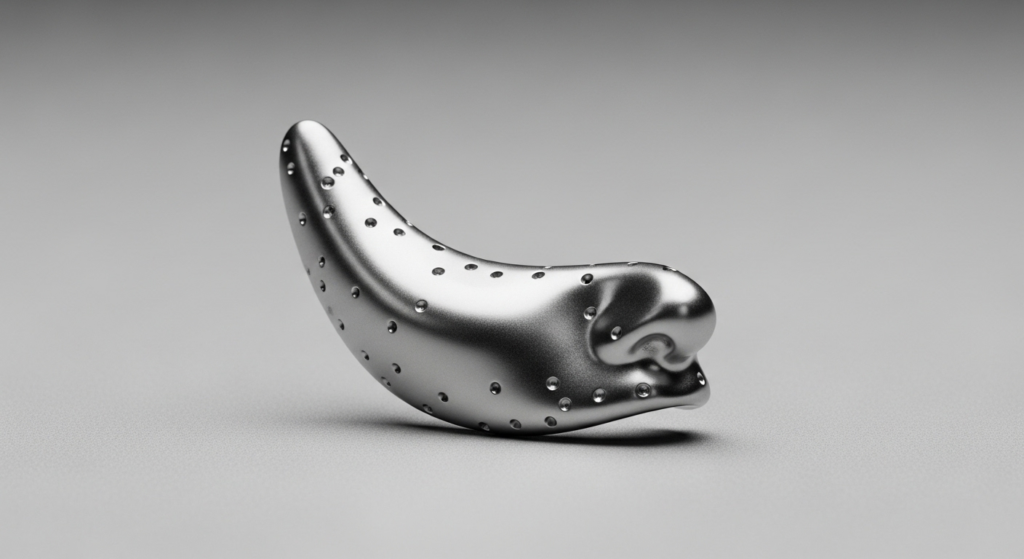
Titanium, a stalwart in medical implantology for decades, offers a different set of advantages, primarily centered around its exceptional strength and unparalleled track record of success. For patients and surgeons prioritizing maximum structural integrity and long-term reliability, Titanium remains a formidable choice.
Enduring Resilience: Titanium’s Superior Strength and Longevity
Titanium is renowned for its extraordinary strength-to-weight ratio, making it incredibly robust despite its relatively light mass. This superior mechanical strength ensures that Titanium implants can withstand significant forces without deformation or fracture. For facial implants, this translates to exceptional durability and a virtually indestructible presence within the facial skeleton.
The material’s high tensile strength and fatigue resistance mean it can endure the constant stresses of chewing, speaking, and facial expressions over many decades without degradation. This inherent resilience provides an assurance of longevity, making Titanium an ideal choice for areas requiring maximum structural support or where the implant may be subjected to higher mechanical loads. Patients can trust in the enduring integrity of their Titanium implants for a lifetime.
A Legacy of Trust: Titanium’s Established Medical History
Titanium’s extensive history in medicine is a testament to its reliability and safety. For over 60 years, it has been the gold standard for orthopedic, dental, and craniofacial implants. This long-standing clinical use has generated a vast body of research and real-world data, unequivocally demonstrating its biocompatibility and long-term success.
Surgeons and patients benefit from this proven track record, as the material’s behavior within the human body is thoroughly understood. The confidence derived from decades of successful applications makes Titanium a highly dependable option for custom FFS implants. Its established safety profile minimizes unforeseen complications and provides a sense of security for both the surgical team and the individual undergoing transformation.
Imaging Considerations: Navigating Titanium’s Radiopacity
While Titanium’s strength is a major asset, its radiopacity presents a notable consideration for post-operative imaging. Titanium implants appear brightly on X-rays and CT scans, creating “streak artifacts” that can obscure underlying anatomical details. This metallic interference can complicate the interpretation of future diagnostic images, potentially hindering the detection of subtle changes or unrelated medical issues in the vicinity of the implant.
For MRI scans, Titanium is generally considered safe and non-ferromagnetic, meaning it will not be pulled by the magnetic field. However, it can still cause localized signal voids or distortions, which may affect image quality. Surgeons must account for these imaging challenges during pre-operative planning and inform patients about potential limitations for future diagnostic needs. Specialized imaging protocols or alternative modalities may be necessary to circumvent these artifacts.
Osseointegration: Titanium’s Unique Bone-Bonding Capability
One of Titanium’s most remarkable biological properties is its ability to osseointegrate, meaning it can form a direct, structural, and functional connection with living bone. This phenomenon provides exceptional long-term stability and fixation for implants. When bone grows directly onto and into the surface of a Titanium implant, it creates an incredibly strong and permanent bond, effectively making the implant an integral part of the skeletal structure.
This direct bone-to-implant contact minimizes micromotion, reduces the risk of implant loosening, and promotes long-term success. Surface treatments, such as roughening or coating with hydroxyapatite, can further enhance osseointegration. For facial implants, particularly those intended for permanent structural support, this unique capability offers an unparalleled level of stability and biological integration, ensuring the implant remains firmly in place for decades.
Thermal Conductivity and Patient Sensation
Titanium, being a metal, possesses higher thermal conductivity compared to PEEK. This means it can transfer heat or cold more readily. While typically not a significant issue, some patients with very superficial Titanium implants might report a transient sensation of temperature change in response to extreme external temperatures. For instance, a very cold drink might be felt more acutely through a chin implant.
This phenomenon is generally mild and temporary, and most patients adapt quickly. However, it is a subtle difference that distinguishes it from the more thermally insulating PEEK. Surgeons discuss this potential, albeit rare, sensation with patients during the consultation phase, ensuring a complete understanding of the material’s properties and how they might subtly influence daily experience.

Direct Comparison: PEEK vs. Titanium at a Glance
To facilitate a clearer understanding, the following table outlines the key comparative aspects of PEEK and Titanium for custom facial implants:
| Feature | PEEK (Polyetheretherketone) | Titanium |
| Weight/Density | Low density, similar to bone. Offers superior comfort and reduced tissue strain. | Higher density than PEEK, but still relatively light. Provides robust structural support. |
| Imaging Compatibility (MRI/CT) | Radiolucent; minimal artifacts on MRI/CT. Excellent for post-operative diagnostics. | Radiopaque; causes streak artifacts on CT/X-ray. Can obscure underlying anatomy. Generally MRI-safe but may cause distortions. |
| Feel/Tactile Sensation | More compliant, feels more natural and less noticeable due to bone-like elasticity. | Stiffer, may feel more rigid. Higher thermal conductivity can lead to transient temperature sensitivity. |
| Strength/Durability | Good impact resistance and fatigue strength. Modulus of elasticity closer to bone. | Exceptional tensile strength and fatigue resistance. Unrivaled structural integrity and longevity. |
| Biocompatibility | Excellent, inert, low risk of adverse reactions. Resists bacterial adhesion. | Excellent, highly biocompatible. Proven track record over decades. |
| Osseointegration | Does not directly osseointegrate, but promotes stable tissue integration. | Actively osseointegrates with bone, providing superior long-term fixation and stability. |
| Customization | Highly customizable via 3D printing (CAD/CAM) for precise anatomical fit. | Highly customizable via 3D printing (CAD/CAM) for precise anatomical fit. |
| Long-Term Considerations | Stable, comfortable, excellent for future imaging. | Extremely durable, proven longevity, but imaging challenges persist. |
Tailoring Your Transformation: Making the Right Material Choice
The decision between PEEK and Titanium for custom FFS implants is highly individualized, necessitating a thorough discussion with your surgeon. Several factors influence this critical choice, extending beyond the inherent properties of each material to encompass patient-specific goals, anatomical considerations, and lifestyle.
Consider the specific location of the implant. For instance, a chin implant might benefit from Titanium’s osseointegration for maximum stability, especially if significant projection or structural change is desired. Conversely, a forehead contouring implant might favor PEEK for its lighter weight and superior imaging compatibility, given the proximity to critical brain structures and the potential need for future neurological imaging.
Your surgeon’s expertise and preference also play a significant role. An experienced FFS surgeon will guide you through the nuances of each material, explaining how they integrate with your unique facial anatomy and contribute to your desired aesthetic outcome. They will assess your bone quality, soft tissue thickness, and overall health to recommend the most suitable option. Ultimately, the goal is to select a material that not only achieves your aesthetic objectives but also ensures long-term comfort, safety, and peace of mind.

The Dr. MFO Difference: Precision and Personalized Care
At Dr. MFO Clinic, we understand that choosing the right material for your custom FFS implants is a decision of profound importance. Our philosophy centers on combining cutting-edge technology with an unwavering commitment to personalized patient care. We leverage advanced 3D imaging and planning software to meticulously design each implant, ensuring an exact fit and optimal aesthetic result, regardless of the material chosen.
Our team of highly skilled surgeons possesses extensive expertise in both PEEK and Titanium implant procedures. We engage in comprehensive consultations, discussing every aspect of your treatment plan, including the benefits and considerations of each material. This transparent approach empowers you to make an informed decision, confident in the knowledge that your transformation is in the hands of dedicated specialists. We prioritize your safety, comfort, and satisfaction, delivering results that are not only aesthetically pleasing but also functionally sound and enduring.
Frequently Asked Questions
What are the main advantages of PEEK implants?
PEEK implants offer advantages such as low density (similar to bone), excellent MRI and CT compatibility with minimal artifacts, good biocompatibility, and high customizability through 3D printing. They provide superior comfort and clarity for future diagnostic imaging.
Why might someone choose Titanium implants over PEEK?
Individuals might choose Titanium implants for their exceptional strength, proven long-term durability, and unique ability to osseointegrate (bond directly with bone), providing superior stability and fixation. Titanium has a long and successful history in medical implantology.
Do PEEK implants feel different from Titanium implants?
Yes, PEEK implants tend to feel more natural and less noticeable due to their bone-like elasticity and lower density. Titanium implants are stiffer and may have higher thermal conductivity, potentially leading to transient temperature sensitivity in some cases.
How do PEEK and Titanium implants affect future medical imaging?
PEEK implants are radiolucent, causing minimal interference on MRI and CT scans, which is beneficial for clear diagnostic imaging. Titanium implants are radiopaque and can create streak artifacts on CT and X-rays, potentially obscuring underlying anatomy, though they are generally MRI-safe.
Can both PEEK and Titanium implants be custom-made?
Absolutely. Both PEEK and Titanium implants are highly customizable using advanced 3D printing (CAD/CAM) technology. This allows for the creation of patient-specific implants that perfectly match individual facial anatomy and aesthetic goals.
What factors should I consider when choosing between PEEK and Titanium?
Key factors include the implant’s location, desired aesthetic outcome, long-term comfort preferences, potential need for future medical imaging, and your surgeon’s recommendation based on your unique anatomy and health profile. A detailed consultation is essential for making the best choice.