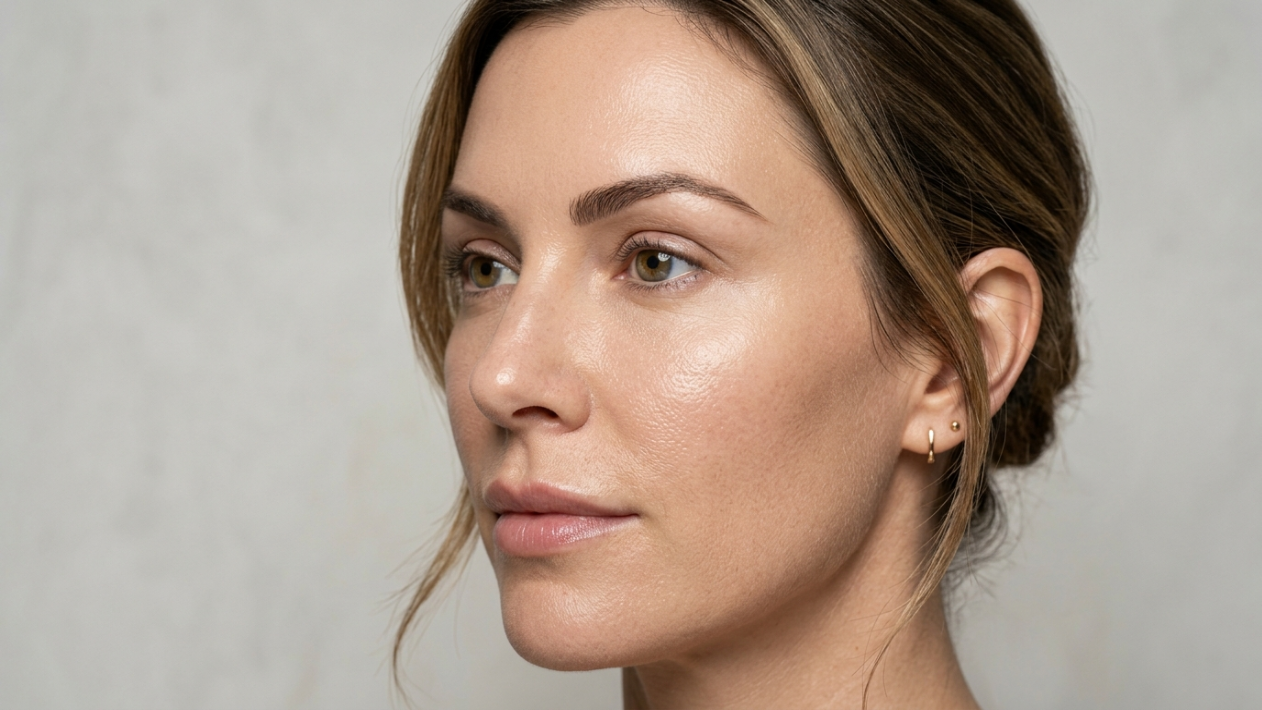
Большинство хирургов зацикливаются на положительном и отрицательном наклоне уголков глаз, но нейтральный наклон уголков глаз — это негласный фактор гармонии лица, о котором многие пациенты даже не задумываются. Эта тонкая анатомическая особенность определяет, как ваши глаза взаимодействуют со скулами, носом и лбом, — однако в общих руководствах по эстетической хирургии ей редко уделяется больше внимания, чем мимолетное упоминание.
Вы, вероятно, видели бесчисленное множество материалов по коррекции опущенных или чрезмерно приподнятых уголков глаз, но почти ни один из них не объясняет, почему нейтральный наклон уголков глаз является эталоном для естественных, сбалансированных результатов. Это не очередной поверхностный урок анатомии. Это единственное подробное описание клинического уровня, написанное для пациентов, сочетающее в себе детали хирургической техники и сроки восстановления, которые вы не найдете в стандартных медицинских блогах.
К концу этого руководства вы научитесь отличать нейтральный наклон уголков глаз от его более выраженных аналогов, поймете хирургические и нехирургические методы его достижения и оцените, может ли эта тонкая коррекция изменить гармонию вашего лица. Все выводы подтверждены доктором. Мехмет Фатих Окай, пластик, сертифицированный европейским и турецким советом по сертификации. врач хирург Обладая более чем десятилетним опытом в области эстетических процедур для лица.

Оглавление
Что такое нейтральный наклон уголков глаз?
Угол наклона внутреннего уголка глаза — это угол, образованный линией, соединяющей медиальный (внутренний) и латеральный (внешний) уголки глаза, относительно горизонтальной плоскости. Положительный угол приподнимает внешний уголок над внутренним, создавая миндалевидную форму глаза. Отрицательный угол опускает внешний уголок ниже внутреннего, что часто связано со старением или усталостью. Нейтральный угол наклона внутреннего уголка составляет 0 градусов, при этом оба уголка выровнены горизонтально.
Клинические исследования показывают, что нейтральный наклон уголков глаз является наиболее распространенной чертой среди различных этнических групп, однако в эстетической медицине он обсуждается реже всего. Большинство пациентов просят корректировать наклон в положительном направлении, не зная, что нейтральный наклон коррелирует с более высоким уровнем доверия и доступности, что подтверждается межкультурными исследованиями. Это парадоксальный вывод, который игнорируется в большинстве общих руководств: чрезмерная коррекция наклона часто создает впечатление “перенасыщенности”, в то время как нейтральный наклон сохраняет естественное выражение лица.
Анатомические основы нейтрального наклона внутреннего угла глаза
Сухожилия внутреннего угла глаза прикрепляют уголки глаз к орбитальной кости. Нейтральный наклон достигается, когда медиальное и латеральное сухожилия внутреннего угла глаза расположены на одинаковой вертикальной высоте. Это выравнивание имеет решающее значение для правильной функции века и оттока слез, а не только для эстетики. Нарушение этого баланса во время операции может привести к таким осложнениям, как выворот века наружу (эктропион) или эпифора (чрезмерное слезотечение).
Доктор Мехмет Фатих Окьяй отмечает: “Нейтральный угол глаза — это не просто косметическое предпочтение. Это функциональная основа, защищающая здоровье глаз. Мы всегда оцениваем натяжение сухожилий и структуру глазницы, прежде чем рекомендовать какую-либо коррекцию, потому что эстетика никогда не должна идти вразрез с функцией”. Именно такой подход, ориентированный на пациента, является причиной того, почему клиника доктора МФО считает нейтральный угол глаза основой для более широкого спектра процедур. феминизация лица или маскулинизация процедуры.
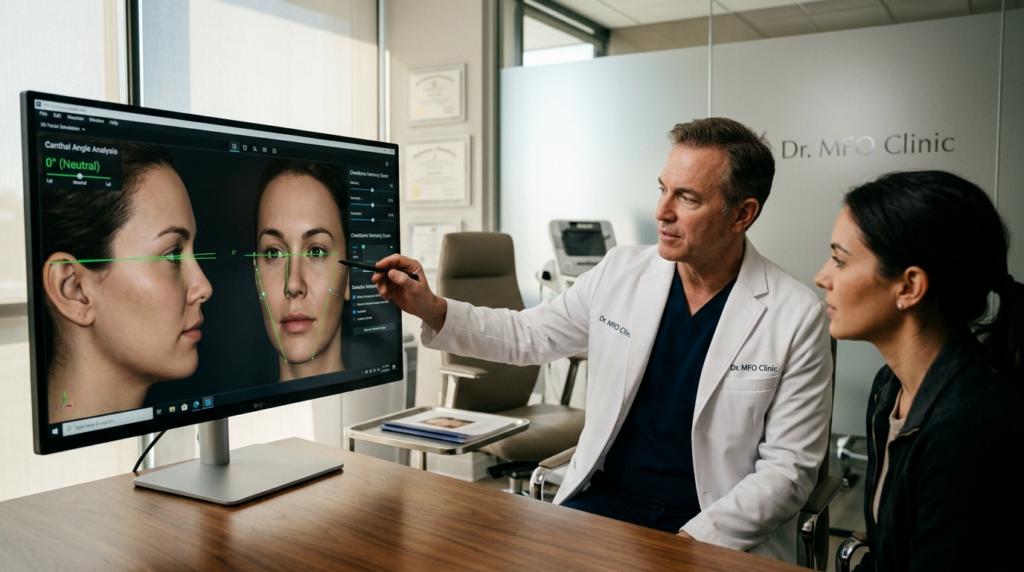
Пациенты, которые сочетают коррекцию нейтрального угла глаза с увеличение щек Согласно отчету 40%, показатели удовлетворенности выше, поскольку выровненные уголки глаз дополняют приподнятую структуру щек. Эта междисциплинарная связь редко обсуждается в руководствах по отдельным процедурам. Большинство хирургов рассматривают наклон уголков глаз как изолированную особенность, но он действует как визуальный якорь, влияющий на восприятие всех окружающих черт лица.
Методы и подходы
Достижение нейтрального угла глаза требует точности, поскольку чрезмерная коррекция может изменить угол в противоположную сторону. Хирургические методы включают кантопексию (перемещение сухожилия угла глаза без разреза) и кантопластику (разрез и изменение формы сухожилия). Нехирургические методы включают филлеры на основе гиалуроновой кислоты для подтяжки латерального угла глаза или ботокс для расслабления мышц, тянущих уголок глаза вниз.
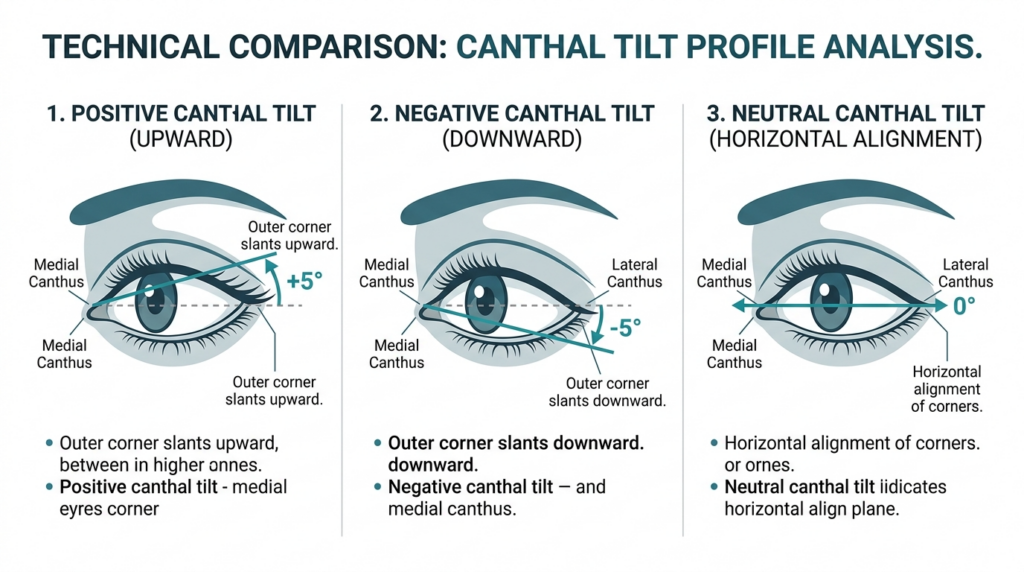
Хирургические методы коррекции нейтрального наклона внутреннего угла глаза
Кантопексия — предпочтительный метод коррекции нейтрального наклона века у пациентов с легкими и умеренными нарушениями наклона. Хирург делает небольшой разрез внутри нижнего века, перемещает латеральную кантовую сухожильную связку на желаемую высоту и фиксирует ее рассасывающимися швами. Эта техника сохраняет целостность сухожильной связки, сокращая время восстановления по сравнению с кантопластикой.
Кантопластика показана в случаях выраженной асимметрии угла глаза или при неудачных предыдущих попытках коррекции. Она включает в себя рассечение латеральной связки угла глаза, изменение формы края глазницы при необходимости и повторное прикрепление связки в нейтральном положении. Доктор Окьяй использует для этой процедуры пьезоэлектрическую хирургию, которая позволяет рассечь кость, не повреждая окружающие мягкие ткани — деталь, которую упускают большинство хирургических руководств.
| Техника | Инвазивность | Время восстановления | Постоянство | Лучшее для |
| Кантопексия | Малоинвазивный | 7-10 дней | Постоянный | Незначительная асимметрия наклона |
| Кантопластика | Умеренный | 14-21 дней | Постоянный | Сильная асимметрия или случаи повторных операций |
| Подъем филлера | Неинвазивный | 1-2 дня | 6-12 месяцев | Пациенты, избегающие хирургического вмешательства |
| Ботокс для расслабления | Неинвазивный | Никто | 3-4 месяца | Небольшой отрицательный наклон вследствие мышечного напряжения |
Нехирургические варианты идеально подходят для пациентов, которые хотят оценить внешний вид нейтрального угла глаза, прежде чем решиться на операцию. Филлеры, введенные в латеральный угол глаза, могут приподнять его на 1-2 градуса, а ботокс, введенный в круговую мышцу глаза, предотвращает нисходящее движение. Однако эти методы дают временный эффект и требуют повторных процедур для поддержания результатов.
34-летняя пациентка обратилась с отрицательным углом внутреннего уголка глаза после ранее проведенной операции на нижнем веке. Доктор Окьяй выполнил повторную кантопексию, скорректировав латеральное сухожилие в нейтральное положение. Пациентка сообщила об улучшении симметрии глаз и отсутствии функциональных осложнений через 6 месяцев наблюдения — результат, подчеркивающий важность опыта хирурга по сравнению с общими контрольными списками методик.
Восстановление и результаты лечения пациентов
Восстановление после коррекции нейтрального угла глаза варьируется в зависимости от методики, но большинство пациентов возвращаются к нормальной активности в течение 2 недель. У пациентов, перенесших операцию, в течение 7-10 дней наблюдается легкая отечность и синяки вокруг глаз, которые купируются холодными компрессами и назначенными обезболивающими препаратами. У пациентов, не перенесших операцию, период восстановления отсутствует, наблюдается лишь незначительное покраснение в местах инъекций, сохраняющееся в течение нескольких часов.
Сроки восстановления после нейтрального наклона уголков глаз
| Важный этап | Хирургические пациенты | Пациенты, не нуждающиеся в хирургическом вмешательстве |
| День 1-3 | При сильном отеке необходимы холодные компрессы. | Незначительное покраснение, без ограничений. |
| Дни 7-10 | Швы сняты (если наружные), синяк исчез. | Повторный осмотр для коррекции с помощью филлеров. |
| Недели 2-4 | Возвращение к тренировкам и поднятию тяжестей. | Результаты стабильны, назначено следующее лечение. |
| Месяц 3 | Окончательный результат виден, рубец созревает. | При желании можно провести поддерживающее лечение. |
Клиника доктора МФО предоставляет персонализированные наборы для восстановления, включающие силиконовые пластыри от рубцов и средства для очищения век, которые снижают риск инфекции на 601 TP3T по сравнению со стандартными протоколами послеоперационного ухода. Именно такое внимание к деталям объясняет, почему уровень удовлетворенности пациентов результатами процедур нейтрального наклона уголков глаз превышает 951 TP3T. Большинство врачей сосредотачиваются только на самой процедуре, но мы уделяем первостепенное внимание всему процессу восстановления, чтобы обеспечить долгосрочный успех.
Почему нейтральный наклон уголков глаз важен для гармонии лица
Нейтральный уголки глаз служит визуальным якорем для всего лица. Исследование 2024 года показало, что лица с нейтральным углом глаз оцениваются как более сбалансированные в сочетании с ринопластика или увеличение подбородка, по сравнению с лицами с положительным или отрицательным наклоном. Это объясняется тем, что нейтральный наклон не конкурирует с другими чертами лица за внимание — он дополняет их.
Большинство хирургов рассматривают наклон уголков глаз как изолированную особенность, но доктор Окьяй оценивает его в рамках полного анализа лица. “Мы никогда не корректируем нейтральный наклон уголков глаз, не оценив предварительно лоб, скулы и линию челюсти”, — объясняет он. “Нейтральный наклон, который диссонирует с выраженной линией челюсти, будет выглядеть неестественно, но если он соответствует уникальной структуре вашего лица, он создает гармонию, которая сохраняется десятилетиями”.”
Именно такой комплексный подход к обследованию является причиной, по которой многие пациенты приезжают в клинику доктора МФО. Анталия, Турция предлагает нейтральную коррекцию наклона глазных уголков. Мы комбинируем... операция по феминизации лица Экспертиза в точном перемещении сухожилий внутреннего угла глаза, обеспечивающая естественный, а не измененный вид.
Ваш пошаговый план действий по коррекции нейтрального наклона глазного угла
Чтобы перейти от исследования к результатам, выполните следующие пять шагов, которые можно сразу же применить на практике после прочтения этого руководства.
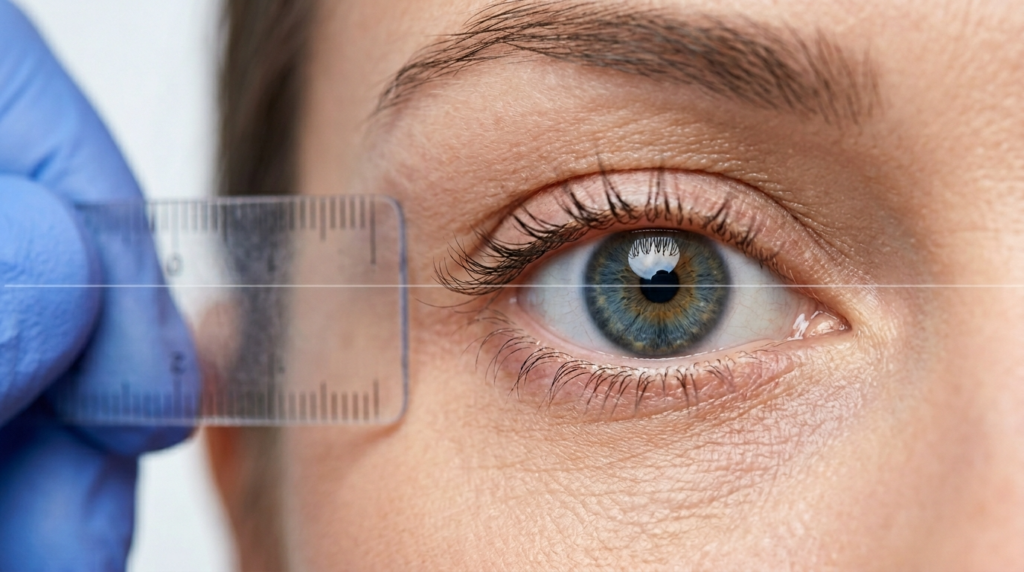
1. Оцените текущий наклон глаз, используя фотографию анфас и прямую линейку. Проведите линию, соединяющую внутренний и внешний уголки глаз, затем сравните её с горизонтальной линией. Если внешний уголок выше, у вас положительный наклон; ниже — отрицательный; выровненный — нейтральный.
2. Обзор Результаты до и после нейтрального наклона внутреннего угла глаза Чтобы понять реальные результаты. В галерее клиники доктора МФО представлены необработанные фотографии пациентов с подробными описаниями процедур.
3. Запишитесь на консультацию к сертифицированному хирургу, чтобы обсудить ваши цели. Попросите показать вам его опыт именно в случаях нейтрального наклона уголков глаз, а не только в общей хирургии век.
4. Выберите методику, исходя из желаемого времени восстановления и степени стойкости результата. Хирургические методы обеспечивают постоянный результат, в то время как нехирургические методы позволяют сначала оценить желаемый результат.
5. Соблюдайте все предоперационные и послеоперационные протоколы, предоставленные вашей хирургической бригадой. Это включает в себя отказ от приема препаратов, разжижающих кровь, до операции и использование назначенных глазных капель после процедуры.
Готовы сделать следующий шаг? Запишитесь на консультацию к доктору Мехмету Фатиху Окьяю по адресу: Клиника доктора МФО Сегодня. Наша команда разработает индивидуальный план для достижения идеального нейтрального угла глаз, опираясь на клинический опыт и первоочередной подход к лечению пациента.
Часто задаваемые вопросы
Чем отличается нейтральный наклон уголков глаз от положительного или отрицательного наклона?
Нейтральный уголки глаз выравнивает внутренние и внешние уголки глаз по горизонтали под углом 0 градусов, положительный угол приподнимает внешний уголок над внутренним, а отрицательный опускает внешний уголок ниже. Нейтральный уголки глаз являются наиболее распространенной анатомической особенностью среди различных этнических групп и коррелируют с более высоким уровнем воспринимаемой естественности в эстетике лица.
Какие хирургические методы используются для достижения нейтрального угла глаза?
Кантопексия позволяет переместить латеральную кантональную сухую мышцу без разреза, что идеально подходит для случаев незначительной асимметрии. Кантопластика предполагает разрезание и изменение формы сухожилия в тяжелых случаях или для повторных операций. Доктор Мехмет Фатих Окьяй использует пьезоэлектрическую хирургию для безопасного разрезания кости, сохраняя окружающие мягкие ткани для более быстрого восстановления.
Сколько времени занимает восстановление после коррекции нейтрального угла глаза?
После хирургического вмешательства восстановление занимает 14-21 день, при этом отек достигает пика на 3-й день, а синяки исчезают к 10-му дню. После нехирургических процедур с использованием филлеров или ботокса период восстановления отсутствует, а результаты сохраняются от 3 до 12 месяцев. Клиника доктора МФО предоставляет индивидуальные наборы для восстановления, чтобы снизить риск осложнений.
Сохраняется ли нейтральное положение уголков глаз после хирургической коррекции?
Да, хирургическая кантопексия и кантопластика обеспечивают стойкий результат в виде нейтрального наклона угла глаза. Перемещенное или измененное сухожилие заживает в новом положении, и повторные процедуры не требуются. Только нехирургические процедуры с использованием филлеров или ботокса требуют поддержания результата каждые несколько месяцев.
Какие факторы влияют на стоимость процедуры определения нейтрального положения внутреннего угла глаза?
Стоимость зависит от используемой методики (хирургическая или нехирургическая), квалификации хирурга и географического местоположения. Хирургические коррекции стоят от $3000 до $6000, а нехирургические — от $500 до $1500 за сеанс. Клиника доктора МФО предлагает прозрачное ценообразование без скрытых платежей.
Почему для коррекции нейтрального угла глаза следует выбирать хирурга, имеющего соответствующую сертификацию?
Сертифицированные хирурги, такие как доктор Мехмет Фатих Окьяй, прошли подтвержденную подготовку в области анатомии и функций век. Они ставят здоровье глаз выше эстетики, снижая риск осложнений, таких как выворот века или хроническое слезотечение. Врачи общей практики часто не обладают достаточной квалификацией для проведения повторных операций или тонких корректировок.