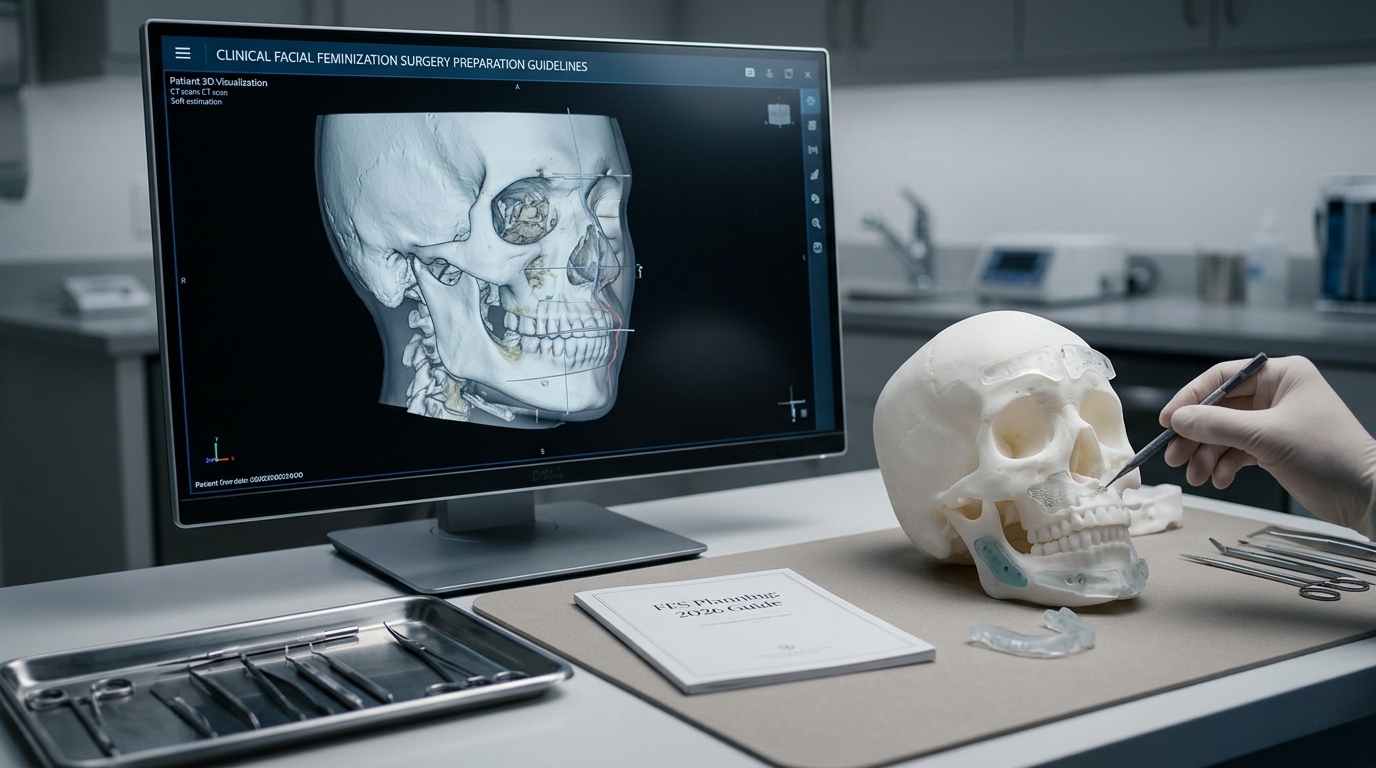

Féminisation faciale La chirurgie de féminisation faciale (FFS) représente un parcours profondément complexe et personnel, offrant une voie de transformation aux personnes souhaitant harmoniser leur apparence extérieure avec leur identité féminine affirmée. Ce domaine hautement spécialisé de la chirurgie craniofaciale et plastique transcende les simples améliorations esthétiques, exigeant une approche méticuleuse et individualisée qui tient compte des variations profondes et inhérentes à l'anatomie faciale humaine. Le principe fondamental qui guide la réussite de cette intervention est le respect de la diversité des caractéristiques du visage humain. féminisation faciale Il est essentiel de comprendre que chaque visage est unique et ne présente pas les mêmes caractéristiques masculines. Par conséquent, une approche standardisée est intrinsèquement inadaptée pour obtenir des résultats optimaux, naturels et profondément satisfaisants. Le processus requiert une stratégie chirurgicale sur mesure, méticuleusement adaptée à l'architecture squelettique et des tissus mous propre à chaque patient, fruit d'une interaction complexe entre prédisposition génétique, facteurs de développement et influences hormonales.
Ce guide complet explore le rôle crucial de l'anatomie faciale distinctive dans la définition des interventions et techniques chirurgicales précises employées lors de la FFS, soulignant comment une appréciation nuancée des caractéristiques individuelles aboutit à une transformation véritablement personnalisée et efficace. Nous explorerons comment les chirurgiens experts abordent le paysage complexe des différences cranio-faciales entre les sexes, allant des contours subtils des sourcils aux angles plus prononcés de la mâchoire, et comment ces nuances anatomiques influencent directement le choix et la réalisation des interventions féminisatrices. L'objectif n'est pas seulement d'atténuer les traits ouvertement masculins, mais de sculpter une apparence faciale cohérente et équilibrée qui reflète authentiquement l'identité de genre de l'individu, améliorant ainsi le bien-être psychologique, atténuant la dysphorie de genre et facilitant l'affirmation sociale (Barnett et al., 2023).
Cette exploration mettra en lumière les outils diagnostiques avancés, tels que l'imagerie 3D haute résolution et les systèmes sophistiqués de planification chirurgicale virtuelle, qui permettent aux chirurgiens de créer un plan détaillé en trois dimensions du visage du patient. Cette intégration technologique permet une précision inégalée dans la stratégie préopératoire, permettant des simulations de résultats et des guides chirurgicaux personnalisés. De plus, nous examinerons comment diverses techniques chirurgicales, englobant à la fois les modifications osseuses (qui s'attaquent à la structure fondamentale du visage) et les affinements des tissus mous (qui apportent les finitions délicates), s'intègrent en synergie pour produire un résultat harmonieux, préservant le naturel tout en obtenant une féminisation profonde.
La discussion portera sur les considérations essentielles relatives à la gestion des attentes des patients, à leur ancrage dans le réalisme chirurgical et à la compréhension des défis uniques posés par d'importantes variations anatomiques. Nous insisterons également sur l'importance capitale de choisir un spécialiste hautement expérimenté, possédant une connaissance approfondie des principes esthétiques et de la reconstruction craniofaciale complexe. En définitive, cette analyse détaillée vise à mettre en lumière l'interaction profonde entre l'anatomie faciale individuelle et l'art chirurgical, révélant comment une approche profondément personnalisée est non seulement bénéfique, mais absolument indispensable à l'obtention de résultats transformateurs, durables et profondément marquants en matière de féminisation faciale. La compréhension des techniques spécifiques, telles que… génioplastie Pour le remodelage du menton, il est crucial d'apprécier la profondeur de cette spécialisation. La capacité de modifier la projection, la hauteur et la largeur du menton permet un changement radical dans la perception du visage, transformant un trait typiquement masculin en un trait qui s'harmonise avec un profil plus doux et plus féminin (Dr MFO, 2025a).

Table des matières
Comprendre le plan directeur : anatomie fondamentale de la féminisation faciale
Avant toute intervention chirurgicale, une compréhension approfondie de l'anatomie faciale fondamentale du patient est primordiale. Une féminisation faciale soignée chirurgien L'examen évalue minutieusement l'interaction complexe entre l'os sous-jacent et les tissus mous sus-jacents. Cette évaluation complète est essentielle car les différences inhérentes aux proportions squelettiques et à la répartition des tissus mous sont des déterminants clés du genre perçu. Par exemple, des repères squelettiques spécifiques tels que la glabelle, la bosse frontale et l'angle de la mandibule contribuent de manière significative à ces distinctions.
Les traits masculins se caractérisent généralement par des arcades sourcilières plus marquées, une mâchoire plus large et carrée, un menton plus proéminent et un profil nasal distinct, avec une arête nasale plus haute et une pointe moins retroussée. À l'inverse, les traits féminins présentent un front plus lisse, une mâchoire plus fine, un menton délicat et un nez plus petit et plus fin. Cependant, l'intensité de ces traits varie considérablement d'une personne à l'autre en raison de facteurs génétiques, ethniques et développementaux (Alraddadi, 2021). La prise en compte de ces nuances anatomiques individuelles n'est pas une simple observation, mais la condition essentielle à l'élaboration d'un plan chirurgical véritablement personnalisé et efficace. Cette précision permet d'éviter un aspect artificiel ou “ refait ”, garantissant ainsi des résultats naturels et en harmonie avec la beauté unique de chaque individu.
Pour obtenir ce schéma anatomique détaillé, l'imagerie diagnostique avancée joue un rôle indispensable. Les tomodensitométries tridimensionnelles (TDM 3D) sont fréquemment utilisées, fournissant une reconstruction tridimensionnelle haute résolution de l'architecture squelettique et des tissus mous propre à chaque patient. Ces examens offrent une vision inégalée de la densité osseuse, de la pneumatisation des sinus, des trajets nerveux et des contours précis du squelette facial (Barnett et al., 2023). Ces données sont ensuite utilisées conjointement avec un logiciel de planification chirurgicale virtuelle (PCV), permettant aux chirurgiens de mesurer précisément les structures existantes et de simuler d'éventuelles modifications chirurgicales. La possibilité de réaliser des ostéotomies virtuelles et de prédire le drapage des tissus mous permet une précision sans précédent dans la planification de chaque étape de l'intervention.
Au-delà des images statiques, des évaluations dynamiques de la mobilité des tissus mous, de l'élasticité cutanée et de l'activité musculaire sont également intégrées. Comprendre les variations d'épaisseur et d'élasticité des tissus, par exemple, est crucial pour anticiper la façon dont les tissus mous sus-jacents se redraperont après une réduction ou une augmentation osseuse. Cette évaluation dynamique garantit que les modifications féminisantes, en particulier celles concernant la mâchoire et le menton, s'intègrent harmonieusement aux tissus mous environnants, évitant ainsi des transitions artificielles. L'association d'un examen physique complet et d'une imagerie avancée offre… chirurgien Grâce à une compréhension globale du visage de la patiente, ils peuvent élaborer une stratégie de féminisation à la fois anatomiquement correcte et esthétiquement harmonieuse, dépassant les idéaux génériques pour obtenir des résultats authentiques et propres à chaque individu.

Analyse régionale approfondie : Impact anatomique sur des techniques spécifiques de féminisation
Le front et les orbites : sculpter une base féminine
Le tiers supérieur du visage, comprenant le front et les rebords orbitaires, est une zone primordiale pour la détermination du sexe. Les variations de l'os frontal et de l'arcade sourcilière figurent parmi les caractéristiques sexuellement dimorphiques les plus significatives. Le front masculin présente souvent une bosse frontale marquée, des sourcils plus épais et plus horizontaux par rapport au rebord orbitaire supérieur, et un front fuyant. Le volume du sinus frontal sous-jacent et l'épaisseur de sa paroi antérieure déterminent en grande partie l'ampleur de la réduction possible. À l'inverse, le front féminin se caractérise généralement par un contour plus lisse et arrondi, un profil plus vertical et des sourcils plus arqués, positionnés au-dessus du rebord orbitaire (Barnett et al., 2023). L'importance de la bosse frontale peut varier considérablement d'un individu à l'autre, influençant directement la complexité et le choix de l'intervention chirurgicale et nécessitant ainsi une approche hautement personnalisée.
Ces variations anatomiques influencent directement la sélection de modelage du front Les interventions sont principalement classées en trois catégories : techniques de type 1 (rasage), de type 2 (combinées) et de type 3 (recul). Chez les personnes présentant une paroi antérieure du sinus frontal relativement épaisse et une bosse peu prononcée, une intervention de type 1, consistant en un fraisage ou un rasage direct de l’os saillant, peut suffire à créer une transition plus harmonieuse. Cette technique est moins invasive et la récupération est plus rapide. En revanche, lorsque l’os du sinus frontal est plus fin ou que la bosse du sourcil est très marquée, une approche plus invasive est souvent nécessaire pour obtenir une féminisation adéquate sans compromettre l’intégrité structurelle ni engendrer de résultats esthétiques indésirables.
La cranioplastie de type 3, également appelée recul du sinus frontal, consiste à retirer délicatement la paroi antérieure du sinus frontal, à la remodeler méticuleusement, puis à la réinsérer dans une position plus reculée et féminisée (Barnett et al., 2023). Cette technique reconstructive permet une réduction plus importante et un effet féminisant plus marqué, modifiant fondamentalement le contour supra-orbitaire et permettant d'obtenir la courbure convexe recherchée pour un front féminin. La précision requise pour cette intervention est immense, car elle implique de travailler autour de structures délicates et de garantir un remodelage symétrique. En postopératoire, le segment osseux réinséré s'intègre à l'os environnant, assurant un résultat stable et durable.
En conjonction avec modelage du front, Le remodelage du rebord orbitaire est fréquemment pratiqué pour accentuer la féminisation du tiers supérieur du visage. Sur les visages masculins, les contours osseux des orbites peuvent paraître plus marqués et anguleux, projetant souvent des ombres qui masculinisent le regard. En lissant et en arrondissant soigneusement ces contours, les yeux semblent plus grands, plus ouverts et moins ombrés, contribuant à un regard plus doux et plus engageant. La précision de ces interventions, notamment à proximité de structures critiques comme les nerfs supra-orbitaire et supratrochléaire, est primordiale pour prévenir tout déficit sensitif. La maîtrise chirurgicale permettant d'éviter ces trajets nerveux est essentielle au confort du patient et à la prévention des complications à long terme.
De plus, la position naturelle de la ligne d'implantation des cheveux et un éventuel affaissement des sourcils orienteront le choix de la technique de lifting frontal. Une incision coronale, traversant le cuir chevelu, peut être privilégiée pour une avancée significative de la ligne d'implantation des cheveux associée à un remodelage du front. En revanche, un lifting frontal endoscopique, utilisant de plus petites incisions au sein de la ligne d'implantation des cheveux, permet de rehausser les sourcils avec une modification minimale de cette dernière, notamment lorsque l'abaissement de la ligne d'implantation n'est pas l'objectif principal. La planification chirurgicale virtuelle, décrite en détail par Barnett et al. (2023), est devenue un outil indispensable, permettant aux chirurgiens de visualiser précisément les résultats souhaités et de planifier les ostéotomies avec une précision accrue, réduisant ainsi considérablement la durée de l'intervention et minimisant les complications telles que la résection excessive ou les lésions nerveuses. Cette cartographie préopératoire méticuleuse garantit une intégration harmonieuse des contours modifiés au reste du visage, offrant une esthétique du haut du visage harmonieuse et résolument féminine. L'interaction entre ces interventions du haut du visage est cruciale, car les modifications dans une zone peuvent avoir un impact significatif sur la perception d'une autre, nécessitant une approche intégrée et globale.

Milieu du visage et joues : sculpter la douceur et la projection
La partie médiane du visage, délimitée par les pommettes et les tissus mous sus-jacents, joue un rôle essentiel dans la perception de la féminité et de la jeunesse. On observe des variations importantes de projection et de contour entre les physionomies masculine et féminine. Chez les hommes, les pommettes sont souvent moins saillantes, ce qui contribue à un visage moins triangulaire et peut donner une apparence plus austère ou anguleuse. À l'inverse, les joues féminines se caractérisent généralement par des arcades zygomatiques plus hautes et plus antérieures, créant une convexité harmonieuse et contribuant à un contour du visage plus doux, plus jeune et souvent en forme de cœur (Barnett et al., 2023). La répartition et le volume du tissu adipeux sous-cutané, notamment la graisse malaire et la graisse buccale, varient également considérablement, influençant l'aspect général de la partie médiane du visage. Une évaluation précise de ces facteurs oriente la stratégie chirurgicale.
Les stratégies chirurgicales de féminisation du milieu du visage sont hautement individualisées et dépendent de la structure anatomique du patient et de l'esthétique souhaitée. En cas de projection malaire insuffisante ou de milieu du visage naturellement plus plat, augmentation des joues est souvent recommandée. Ceci peut être réalisé par diverses méthodes. Autologue greffe de graisse, Cette technique, qui consiste à prélever de la graisse sur d'autres parties du corps du patient (par exemple, l'abdomen ou les cuisses) par liposuccion, à la traiter, puis à l'injecter dans les joues, offre une solution naturelle. Elle permet une augmentation du volume douce et naturelle et peut simultanément améliorer la qualité de la peau. La viabilité des greffons de graisse est essentielle pour des résultats durables.
Une autre solution consiste à placer des implants alloplastiques sur mesure, généralement fabriqués à partir de matériaux biocompatibles comme le silicone, au niveau des pommettes afin d'obtenir un volume et une définition permanents. Ces implants sont soit préconçus, soit fabriqués sur mesure à partir d'une planification chirurgicale virtuelle 3D permettant d'épouser précisément les contours souhaités (Barnett et al., 2023). Les implants sur mesure offrent une augmentation prévisible et stable, notamment en cas de déficiences squelettiques importantes. Le choix entre greffe de graisse Le choix entre implants et augmentation mammaire dépend du degré d'augmentation souhaité, de la disponibilité de graisse et des préférences de la patiente. Les deux techniques visent à créer un contour des joues plus saillant et esthétique, contribuant à une apparence jeune et féminine.
À l'inverse, dans de rares cas où les pommettes sont excessivement larges ou anguleuses, avec des traits masculins, un chirurgien peut envisager une réduction de l'arcade zygomatique afin d'adoucir la largeur du tiers moyen du visage. Par ailleurs, la répartition des boules de Bichat, coussinets adipeux profonds situés dans la joue, influence la plénitude du visage. Chez les personnes présentant un tiers inférieur du visage plus rond et plus plein, ce qui nuit à l'esthétique féminine, l'ablation des boules de Bichat peut être envisagée afin de creuser et de définir la région sous-malaire, rehaussant ainsi l'apparence des pommettes. Cette réduction ciblée de la graisse contribue à sculpter un tiers moyen du visage plus fin et mieux défini, mettant en valeur les pommettes.
L'interaction délicate de ces interventions permet de créer une “ courbe en ogive ” – un contour gracieux en double S, de la tempe à la joue, particulièrement révélateur de joues jeunes et féminines. L'association d'interventions pour le nez et les joues, comme le souligne Dr MFO (2025c), la planification anatomique synergique est essentielle en raison de l'interdépendance de l'esthétique du nez et du tiers moyen du visage. Un nez trop proéminent, par exemple, peut donner l'impression d'un tiers moyen du visage en retrait, tandis que des pommettes bien saillantes peuvent équilibrer visuellement un nez. Par conséquent, les modifications apportées à une zone influencent profondément la perception de l'autre, ce qui nécessite une approche intégrée pour parvenir à une harmonie faciale globale et à une transformation véritablement naturelle. Le vecteur précis de augmentation des joues, Par exemple, cela peut modifier considérablement la longueur et la forme perçues du nez, soulignant ainsi l'importance d'une planification holistique.
Le nez : atteindre des proportions délicates
Le nez, élément central du visage, est une caractéristique essentielle qui influence considérablement l'harmonie faciale et la perception du genre. Les structures nasales présentent une immense diversité, mais certains schémas distincts contribuent à la reconnaissance du genre. Les nez masculins se caractérisent souvent par une arête nasale plus large, une bosse dorsale plus prononcée, des narines (base alaire) plus larges et une pointe moins relevée, voire parfois projetée vers le bas. Ces caractéristiques peuvent conférer une apparence forte, parfois dure. À l'inverse, les nez féminins se caractérisent généralement par une taille globale plus petite, une arête plus étroite, un profil dorsal plus doux ou légèrement concave et une pointe plus fine, légèrement relevée, contribuant à un angle naso-labial plus obtus (Barnett et al., 2023). Obtenir ces changements subtils mais significatifs exige une connaissance approfondie de l'anatomie nasale et des techniques avancées. rhinoplastie techniques.
Ce large spectre d’anatomie nasale nécessite une gamme complète de rhinoplastie Techniques de féminisation faciale. La réduction de la bosse dorsale est une intervention courante qui consiste à retirer ou à râper avec précision l'excès d'os et de cartilage le long de l'arête nasale afin d'obtenir un profil plus lisse et plus fin. Simultanément, le rétrécissement des os nasaux par ostéotomies (sections osseuses contrôlées) contribue à réduire la largeur globale de l'arête nasale, pour un aspect plus harmonieux. La précision du placement et du contrôle de ces ostéotomies est essentielle pour éviter de déstabiliser la pyramide nasale. Les techniques de plastie de la pointe sont cruciales pour féminiser la pointe du nez ; elles consistent en un remodelage méticuleux des cartilages alaires inférieurs par excisions, sutures et greffes afin de rendre la pointe plus petite, plus définie et correctement orientée vers le haut (Barnett et al., 2023). Une réduction de la base alaire peut être réalisée pour affiner des narines trop larges, un trait parfois masculin, et garantir ainsi une base nasale proportionnée à la pointe et à l'arête nasales féminisées. L’objectif précis est de créer un nez qui s’harmonise avec le front et le milieu du visage nouvellement redessinés, en évitant une apparence trop agressive ou artificielle, assurant ainsi une esthétique faciale équilibrée.
La rhinoplastie ouverte, qui utilise une petite incision au niveau de la columelle et des incisions internes, est souvent privilégiée en féminisation faciale en raison de l'accès et de la visibilité optimaux qu'elle offre à la structure osseuse et cartilagineuse sous-jacente. Ceci permet au chirurgien de manipuler précisément les structures et d'atteindre des objectifs de féminisation spécifiques, tels que la réduction de la cloison nasale caudale pour une rotation ascendante de la pointe du nez (Barnett et al., 2023). La relation complexe entre les composantes osseuses et cartilagineuses du nez exige un chirurgien hautement qualifié pour obtenir des résultats stables et esthétiques. La préservation minutieuse du soutien septal et des valves nasales est également cruciale pour maintenir la fonction respiratoire et prévenir les problèmes post-rhinoplastie courants.
De plus, l'enveloppe des tissus mous, composée de la peau, du tissu adipeux sous-cutané et des muscles, joue un rôle important dans le résultat final ; son épaisseur et son élasticité déterminent la facilité avec laquelle les changements sous-jacents seront révélés. La prise en compte de la vascularisation nasale, principalement issue des branches des artères ophtalmique et faciale, et de l'innervation par le nerf trijumeau, est cruciale pour minimiser les complications telles que les saignements ou les troubles sensitifs. L'objectif ultime est de sculpter un nez en harmonie avec l'ensemble des traits féminisés du visage, améliorant ainsi la perception de soi et le bien-être social de la patiente (Dr MFO, 2025b). Cet équilibre garantit que le nez, tout en étant féminisé, reste proportionné et d'apparence naturelle dans le contexte facial unique de chaque personne.
Mâchoire et menton : adoucir le bas du visage
Le tiers inférieur du visage, en particulier la mâchoire et le menton, sont les principaux indicateurs du dimorphisme sexuel et contribuent significativement à la perception du genre. Les mâchoires masculines sont généralement plus larges, plus carrées et plus anguleuses, présentant souvent des angles mandibulaires proéminents et une crête oblique externe plus épaisse. Le menton des visages masculins peut être plus large, plus carré ou excessivement proéminent, contribuant à une apparence faciale inférieure marquée, parfois émoussée. À l'inverse, les mâchoires féminines sont généralement plus étroites, plus effilées et présentent souvent une gracieuse forme en V ou un contour ovale aux angles plus doux. Le menton des visages féminins est généralement plus fin, avec moins de largeur et de projection, contribuant à un profil facial inférieur affiné (Barnett et al., 2023).
Les techniques chirurgicales de féminisation du menton et de la mâchoire reposent sur des modifications osseuses réalisées avec une grande précision. La réduction de l'angle mandibulaire est une intervention clé visant à adoucir la partie postérieure de la mâchoire. Elle consiste à retirer délicatement une portion d'os au niveau des angles mandibulaires saillants, transformant ainsi un contour carré en une transition plus douce et effilée entre l'oreille et le menton. Cette procédure est souvent réalisée par voie intra-orale (à l'intérieur de la bouche) afin d'éviter les cicatrices externes visibles, permettant une ostéotomie et un modelage précis tout en minimisant les risques de lésions des structures vitales telles que le nerf alvéolaire inférieur (Barnett et al., 2023). L'étendue du retrait osseux est planifiée avec soin à l'aide d'une imagerie 3D pour garantir la symétrie et un modelage optimal.
Remodelage du menton, ou génioplastie, Cette intervention s'attaque directement à la taille, à la projection et à la forme du menton, jouant un rôle crucial dans la féminisation du bas du visage (Dr MFO, 2025a). En féminisation faciale, l'objectif est souvent de réduire la largeur du menton, de raccourcir sa hauteur s'il est excessivement long, et/ou de le remodeler pour lui donner une forme plus pointue ou arrondie, selon le résultat souhaité par la patiente et son anatomie. La technique principale pour une féminisation significative du menton est la génioplastie d'avancement. Cette procédure consiste à réaliser une ostéotomie horizontale (section osseuse) dans l'os du menton, permettant un repositionnement précis de sa partie inférieure. Celle-ci peut être reculée (récession) pour réduire la projection, remontée (réduction verticale) pour en raccourcir la hauteur, et subtilement affinée pour créer un profil plus délicat (Dr MFO, 2025a). Le segment repositionné est ensuite fixé à l'aide de petites plaques et vis en titane pour une cicatrisation stable et prévisible (Barnett et al., 2023).
Pour les mentons nécessitant principalement des modifications subtiles de largeur ou de projection sans repositionnement important, une génioplastie osseuse (remodelage/réduction du menton) peut être réalisée. Cette technique utilise des fraises spéciales pour tailler et sculpter l'os existant, affinant et arrondissant le menton ou lissant les angles (Dr MFO, 2025a). Moins invasive qu'une génioplastie par glissement, elle est plus adaptée aux corrections mineures. Une autre technique, l'ostéotomie de l'aile du menton, est plus complexe et moins fréquente dans le cadre d'une féminisation primaire, mais peut être utilisée pour un remodelage 3D précis, la correction d'asymétries ou lors de reprises chirurgicales nécessitant une manipulation osseuse importante. Les implants, généralement en silicone, sont généralement évités lors d'une génioplastie féminisante primaire, car leur fonction principale est l'augmentation, souvent contraire aux objectifs de réduction de la féminisation. Les implants comportent des risques d’apparence non naturelle, d’infection ou de déplacement, ce qui rend les techniques de remodelage osseux préférables pour des résultats naturels et durables dans le cadre de la FFS (Dr. MFO, 2025a).
L'intégration de ces procédures aboutit souvent à une chirurgie en “ V ”, qui associe une réduction de l'angle mandibulaire et une génioplastie afin de créer une silhouette du bas du visage nettement plus fine et féminine. Dans certains cas, une réduction du muscle masséter, par voie chirurgicale ou par injections de toxine botulique, peut également être envisagée chez les personnes présentant une hypertrophie des muscles de la mâchoire contribuant à une largeur excessive du bas du visage. L'effet combiné de ces interventions soigneusement planifiées permet d'obtenir un bas du visage plus gracieux, harmonieux et résolument féminin, équilibrant les traits modifiés au niveau du tiers supérieur et moyen du visage (Dr MFO, 2025b). L'obtention d'une forme en V harmonieuse exige une planification méticuleuse afin de garantir une intégration parfaite de tous les éléments du bas du visage.
La trachée : un décolleté plus lisse
La pomme d'Adam, ou saillie laryngée, est un caractère sexuel secondaire distinctif qui se développe et s'accentue à la puberté masculine en raison de l'hypertrophie et de l'angle aigu du cartilage thyroïde. Sa présence peut être une source importante de dysphorie de genre pour de nombreuses femmes transgenres, car il s'agit d'un trait très visible, immédiatement associé à un profil masculin. La chondrolaryngoplastie, ou réduction trachéale, est une intervention de féminisation simple mais très efficace, spécifiquement conçue pour réduire la taille et la saillie de la pomme d'Adam (Barnett et al., 2023). Cette intervention consiste à remodeler le cartilage pour obtenir un cou plus lisse et plus féminin. L'importance de la réduction est déterminée avec précision afin d'atteindre les objectifs esthétiques sans altérer la fonction vocale.
L'intervention consiste généralement à pratiquer une petite incision transversale discrète dans un pli cutané naturel du cou, souvent à mi-chemin entre le pli sous-mentonnier et l'angle cervico-mentonnier, afin de minimiser la visibilité d'une éventuelle cicatrice. Par cette incision, le chirurgien rase soigneusement la partie la plus proéminente du cartilage thyroïdien, réduisant ainsi sa projection et créant un contour du cou plus lisse et plus doux. Un soin extrême est apporté à préserver une bordure cartilagineuse supérieure au niveau des cordes vocales pour la stabilisation et, surtout, à éviter d'endommager les cordes vocales elles-mêmes, situées juste derrière le cartilage (Barnett et al., 2023). Cette approche méticuleuse garantit la préservation de la fonction vocale. Bien qu'il s'agisse principalement d'une modification du cartilage, qui est une forme de tissu squelettique, le rasage trachéal impacte profondément l'apparence générale du cou et du profil, contribuant à une silhouette plus féminine et atténuant une source importante de dysphorie.
La récupération après un rasage trachéal est généralement plus rapide que celle d'interventions osseuses plus importantes, la plupart des gonflements et de l'inconfort aigus disparaissant en quelques semaines. Les patients peuvent ressentir des modifications temporaires de la voix ou une sensation de tiraillement immédiatement après l'intervention, mais ces symptômes disparaissent généralement avec la guérison. Dans certains cas, une excision de la graisse sous-mentonnière et une platysmaplastie (remise en tension des muscles du cou) peuvent être réalisées simultanément pour améliorer la silhouette du cou souhaitée et obtenir une remise en tension cutanée maximale, en particulier chez les patients âgés pour lesquels le relâchement cutané est une préoccupation majeure (Barnett et al., 2023). Pour de nombreuses personnes, obtenir un décolleté plus lisse procure un immense soulagement psychologique, leur permettant de se sentir plus à l'aise et plus confiantes dans leur apparence, notamment lorsqu'elles portent des vêtements qui exposent le cou. Cette intervention relativement limitée a un impact significatif sur l'affirmation de genre globale en s'attaquant à l'un des traits masculins les plus visibles de la région de la tête et du cou.

Intégration des techniques de féminisation holistique : l'art de la synergie
La féminisation faciale authentique se résume rarement à une seule intervention. Il s'agit plutôt d'une symphonie complexe d'interventions chirurgicales coordonnées, chacune méticuleusement planifiée pour compléter les autres et prendre en compte l'anatomie unique de la patiente. Le chirurgien expérimenté agit comme un architecte, orchestrant une série de modifications – allant de la restructuration osseuse fondamentale aux subtiles retouches des tissus mous – pour obtenir un résultat équilibré, harmonieux et naturellement féminin. Cette approche intégrée garantit un résultat global cohérent et en accord avec l'identité de genre de la patiente, plutôt qu'une collection de modifications isolées et disparates. La synergie entre les interventions est primordiale, car la modification d'un élément du visage influence inévitablement la perception et l'esthétique des traits adjacents et plus éloignés. Un résultat véritablement artistique se révèle lorsque toutes les parties du visage sont considérées comme un tout unifié, s'animant naturellement au gré des expressions et des émotions.
Par exemple, une réduction de la proéminence des sourcils féminise non seulement le front, mais agrandit aussi visuellement le regard, accentuant ainsi l'effet d'une rhinoplastie subtile. De même, les interventions de remodelage de la mâchoire et du menton, notamment la génioplastie d'avancement pour la projection et la réduction verticale (Dr MFO, 2025a), offrent une base plus fine sur laquelle les tissus mous se drapent avec plus de délicatesse, optimisant l'effet de l'augmentation des pommettes et du lifting des lèvres. C'est l'enchaînement judicieux et la combinaison de ces techniques qui transforment la féminisation du visage, d'une simple intervention chirurgicale, en un art raffiné. Cet effet synergique produit souvent des résultats supérieurs à la somme des interventions individuelles, créant une esthétique féminine naturellement harmonieuse, comme si elle avait toujours fait partie intégrante du visage.
Le choix entre une approche en une seule étape et une approche par étapes (plusieurs interventions chirurgicales réalisées dans le temps) dépend fortement de la complexité anatomique du cas, de l'état de santé général du patient et de ses préférences personnelles. Si une intervention en une seule étape offre l'avantage d'une convalescence unique et permet souvent de réaliser des économies substantielles, la sécurité du patient demeure la priorité absolue. Des études indiquent qu'un nombre accru d'interventions par anesthésie chez les patientes subissant une féminisation faciale n'entraîne pas nécessairement un taux de complications plus élevé, ce qui suggère que des approches en une seule étape, bien planifiées et complètes, peuvent être réalisées en toute sécurité sous réserve d'un jugement médical approprié (Barnett et al., 2023). Cependant, cela exige une sélection rigoureuse des patients et une évaluation préopératoire approfondie afin de s'assurer qu'ils peuvent tolérer une durée d'intervention plus longue.
Toutefois, pour les personnes présentant des besoins chirurgicaux importants, des comorbidités médicales significatives ou celles qui préfèrent une convalescence progressive après des interventions mineures, une approche par étapes peut s'avérer plus appropriée. Dans ces cas, les interventions structurelles sur les tissus durs, telles que le recul du sinus frontal, le remodelage supra-orbitaire, l'affinement de l'ovale du visage et la rhinoplastie, sont souvent privilégiées, suivies d'interventions sur les tissus mous comme le lifting du visage, le lifting du cou et la blépharoplastie, notamment chez les patients plus âgés chez lesquels le relâchement cutané est un facteur à prendre en compte (Barnett et al., 2023). Cette séquence stratégique garantit que les modifications osseuses fondamentales sont établies avant d'affiner les tissus mous sus-jacents, optimisant ainsi les résultats esthétiques et fonctionnels. Quelle que soit la stratégie d'intervention, l'objectif principal est d'obtenir une intégration harmonieuse, où chaque modification chirurgicale contribue à la définition du contour féminin final. Cette approche personnalisée garantit que chaque aspect de la transformation est soigneusement étudié et réalisé, pour des résultats profondément satisfaisants et d'apparence naturelle.
Planification préopératoire et avancées technologiques pour la précision
Le succès de la chirurgie de féminisation faciale avancée, notamment en cas de variations anatomiques importantes, repose essentiellement sur une planification préopératoire complète et précise. Cette phase cruciale a connu une véritable révolution grâce à l'intégration de techniques d'imagerie de pointe et de technologies virtuelles, offrant un niveau de précision et de prédictibilité sans précédent. L'imagerie haute résolution, comme la tomographie volumique à faisceau conique (CBCT) et la tomodensitométrie (TDM) standard, fournit des données anatomiques tridimensionnelles détaillées du crâne et des tissus mous sus-jacents (Barnett et al., 2023). Ces techniques d'imagerie avancées permettent de saisir les spécificités de la structure craniofaciale de chaque patient, fournissant ainsi un plan numérique précis pour l'intervention chirurgicale.
Ces données précises sont absolument essentielles pour un diagnostic exact des anomalies squelettiques existantes, notamment les déficits de volume osseux, les asymétries subtiles, les malpositions des segments faciaux et une évaluation précise des structures sous-jacentes critiques telles que les voies nerveuses et les sinus. La compréhension détaillée tirée de ces images constitue le fondement de toute la stratégie chirurgicale, permettant aux chirurgiens de cartographier méticuleusement l'anatomie existante et de localiser précisément toutes les zones nécessitant une correction ou une augmentation. Par exemple, la visualisation détaillée du trajet du nerf mentonnier est cruciale pour une génioplastie sûre, minimisant le risque d'engourdissement postopératoire (Dr MFO, 2025a). Cette connaissance diagnostique approfondie éclaire chaque étape ultérieure du processus de planification, garantissant ainsi une approche chirurgicale à la fois efficace et sûre.
S’appuyant sur ces données d’imagerie riches, les systèmes de planification chirurgicale virtuelle (PCV) tridimensionnelle sont devenus des outils indispensables en féminisation faciale moderne. La PCV consiste à importer les données tomodensitométriques (TDM) ou tomographiques à faisceau conique (CBCT) du patient dans un logiciel spécialisé, où est généré un modèle numérique 3D précis du visage et du crâne. Dans cet environnement virtuel sophistiqué, les chirurgiens peuvent planifier méticuleusement chaque ostéotomie (section osseuse), la mise en place de la greffe osseuse et le positionnement personnalisé des implants. Cette plateforme numérique permet la simulation de divers scénarios chirurgicaux, permettant aux chirurgiens d’ajuster virtuellement les mouvements des segments osseux, d’affiner les contours et de visualiser les résultats esthétiques et fonctionnels potentiels avant toute incision physique. Ce processus de planification itératif assure une mesure précise des réductions ou augmentations osseuses, garantissant que les contours finaux correspondent non seulement aux principes de féminisation, mais aussi aux besoins reconstructifs spécifiques du patient. Par exemple, des guides de coupe et des gabarits de forage personnalisés peuvent être conçus virtuellement, puis imprimés en 3D. Ils sont ensuite utilisés en peropératoire pour réaliser les ostéotomies planifiées avec une précision remarquable, minimisant ainsi les erreurs humaines et améliorant la précision chirurgicale (Barnett et al., 2023). La planification chirurgicale virtuelle permet la prévisualisation de modifications subtiles de la projection et de la hauteur du menton, essentielles pour des résultats optimaux en génioplastie.
Au-delà de la planification virtuelle, le rôle émergent de l'intelligence artificielle (IA) dans la modélisation préopératoire offre des perspectives prometteuses. Les logiciels basés sur l'IA, tels que DeepSurface AI, peuvent générer des modélisations 3D du visage du patient, ajustables en temps réel pour visualiser les résultats chirurgicaux potentiels sur différentes zones du visage (Barnett et al., 2023). Bien que ce domaine soit encore en développement et nécessite des recherches approfondies, cette technologie recèle un immense potentiel pour aligner les attentes des patients sur les possibilités chirurgicales réalistes, favorisant ainsi une communication plus efficace entre le patient et le chirurgien quant aux objectifs souhaités. Cet outil contribue à combler le fossé entre les possibilités chirurgicales et la perception du patient, garantissant une compréhension partagée de la transformation anticipée.
De plus, les systèmes de navigation peropératoire améliorent encore la précision pendant l'intervention. Ces systèmes, souvent comparés à un GPS pour le chirurgien, suivent en temps réel la position exacte des instruments chirurgicaux par rapport à l'anatomie du patient et au modèle virtuel préétabli. Cette validation continue du placement des instruments et du repositionnement osseux garantit que l'intervention respecte scrupuleusement le plan virtuel, même dans les cas complexes présentant une anatomie atypique ou déformée. Cette technologie est particulièrement précieuse pour des zones comme la mâchoire et le menton, où des coupes osseuses précises sont essentielles pour obtenir la symétrie et la projection souhaitées. L'association de l'imagerie avancée, de la planification chirurgicale virtuelle et des systèmes de navigation peropératoire améliore non seulement considérablement la précision, la sécurité et l'efficacité de la chirurgie de féminisation faciale, mais aussi la prévisibilité des résultats, ce qui se traduit par une plus grande satisfaction des patients et des résultats d'une grande naturalité.
Considérations et défis peropératoires dans les procédures complexes de féminisation
La réalisation d'une chirurgie complexe de féminisation faciale, notamment chez les patientes présentant des variations squelettiques importantes ou ayant subi des interventions antérieures, soulève des défis et des considérations peropératoires uniques et exigeants. Ces circonstances requièrent non seulement une habileté chirurgicale exceptionnelle, mais aussi une grande capacité d'adaptation et une connaissance approfondie des variations anatomiques. Contrairement aux interventions esthétiques plus courantes, ces cas impliquent souvent une anatomie fortement altérée ou atypique, susceptible de masquer les repères chirurgicaux habituels et d'accroître considérablement la complexité de la dissection et de la manipulation osseuse. Le chirurgien doit être prêt à gérer les imprévus et à ajuster la stratégie préétablie en temps réel, tout en respectant les objectifs généraux de féminisation. La capacité d'adaptation, tout en préservant les principes esthétiques, est la marque d'un chirurgien expert.
L'un des défis majeurs réside dans la gestion et la préservation méticuleuses des structures neurovasculaires vitales. Le nerf facial et ses nombreuses branches délicates, qui contrôlent les expressions faciales, sont particulièrement vulnérables lors de dissections étendues des tissus mous et de remodelages osseux, notamment au niveau du tiers moyen du visage et de la mâchoire. De même, les branches du nerf trijumeau, responsables de la sensibilité, peuvent être lésées, ce qui peut entraîner un engourdissement ou une altération de la sensibilité, temporaire ou permanente. Ce risque est particulièrement important lors d'une génioplastie, au niveau de l'émergence du nerf mentonnier de la mandibule (Dr MFO, 2025a). Une connaissance précise des variations anatomiques des trajets nerveux, mises en évidence par Alraddadi (2021), associée à une technique chirurgicale rigoureuse, est essentielle pour préserver la fonction nerveuse et minimiser les risques de paralysie faciale ou de déficits sensoriels. L'utilisation judicieuse de la surveillance nerveuse peropératoire constitue un outil précieux, fournissant un retour d'information en temps réel pour identifier et protéger ces structures délicates lors de dissections complexes.
Les préoccupations vasculaires sont également accrues dans les cas de reconstruction et de féminisation extensive. Les tissus cicatriciels suite à des interventions chirurgicales antérieures ou ayant subi un traumatisme peuvent présenter une vascularisation compromise, augmentant le risque de nécrose du lambeau, de retard de cicatrisation ou de saignement peropératoire excessif. Une dissection minutieuse et contrôlée, une manipulation délicate des tissus et une hémostase méticuleuse sont primordiales pour préserver le réseau vasculaire fragile. Lors de l'utilisation de greffes osseuses volumineuses, il est absolument essentiel de garantir une vascularisation adéquate du lit receveur pour la survie et la réussite de l'intégration. En cas de vascularisation sévère, des techniques spécialisées telles que les greffes osseuses vascularisées, où un segment osseux est transplanté avec son artère et sa veine nourricières, puis reconnecté par microchirurgie, peuvent s'avérer nécessaires. Cette technique représente le summum de la reconstruction, mais elle augmente également considérablement la durée opératoire et les exigences techniques.
La gestion des variations anatomiques inhérentes représente un autre défi majeur. Comme le souligne Alraddadi (2021), ces variations, bien que normales, peuvent fortement influencer les résultats cliniques. Chaque cas de déficience ou de dimorphisme du squelette facial est unique, obligeant les chirurgiens à adapter leurs techniques en fonction de la présentation clinique. Si la planification chirurgicale virtuelle avancée offre un cadre précis, la réalité du champ opératoire peut révéler des déviations anatomiques imprévues. Il est donc indispensable de disposer d'un chirurgien possédant une vaste expérience en chirurgie craniofaciale et reconstructive, capable de prendre des décisions éclairées et rapides, quitte à s'écarter du plan initial sans compromettre la sécurité ni les objectifs esthétiques. Des facteurs tels qu'une densité osseuse inattendue, la présence de tissu cicatriciel fibreux ou une anatomie sinusale atypique peuvent influencer la précision des ostéotomies et la stabilité des plaques de fixation. Le chirurgien doit donc être capable à la fois de respecter le plan et d'improviser de manière sûre et efficace.
De plus, l'obtention d'une symétrie précise et de contours harmonieux sur un visage potentiellement déformé exige une évaluation peropératoire continue, impliquant souvent des inspections visuelles et des palpations répétées afin de garantir que les réductions, avancées ou augmentations osseuses soient équilibrées et conformes aux objectifs de féminisation. L'ampleur et la complexité des interventions combinant chirurgie osseuse et des tissus mous peuvent allonger la durée opératoire, augmentant ainsi les risques liés à l'anesthésie générale et à la convalescence. Par conséquent, une équipe chirurgicale parfaitement coordonnée, un instrumentarium performant et une sélection rigoureuse des patients, fondée sur une évaluation préopératoire approfondie, sont des prérequis essentiels pour maîtriser ces complexités peropératoires et obtenir des résultats optimaux, sûrs et transformateurs. Cette approche intégrée garantit que tous les traits du visage contribuent à une apparence féminine harmonieuse et naturelle.
Récupération postopératoire et gestion à long terme : nourrir la transformation
La phase postopératoire suivant une chirurgie de féminisation faciale complète, notamment lorsque des modifications osseuses et des tissus mous complexes ont été réalisées, est une période critique qui exige des soins méticuleux, de la patience et un plan de prise en charge bien structuré. Le délai de récupération pour les interventions importantes est généralement plus long et peut être plus éprouvant que pour les interventions esthétiques classiques, compte tenu de l'ampleur des manipulations osseuses, du remodelage des tissus et du risque d'œdèmes et d'ecchymoses importants. Les patientes doivent être pleinement préparées à ce processus, en sachant que l'apparence postopératoire immédiate évoluera considérablement au cours des semaines et des mois suivants. Des attentes réalistes quant à la récupération sont essentielles à la satisfaction et au bien-être psychologique des patientes.
Immédiatement après l'intervention, les patients peuvent s'attendre à un gonflement important du visage, à des ecchymoses et à une gêne. Le gonflement est une réaction physiologique quasi universelle au traumatisme chirurgical. Il est généralement plus prononcé dans les premiers jours à une semaine suivant l'intervention, puis s'atténue progressivement sur plusieurs semaines, voire plusieurs mois. La résorption complète du gonflement résiduel, notamment dans les zones ayant subi une intervention osseuse ou une greffe importante, peut prendre jusqu'à un an, voire plus, pour que les contours définitifs apparaissent. Les ecchymoses disparaissent également, généralement en 2 à 4 semaines, passant du noir violacé au jaune verdâtre avant de disparaître complètement. La gestion de la douleur est cruciale et repose généralement sur une combinaison d'antalgiques prescrits, d'anti-inflammatoires et d'application régulière de compresses froides, qui contribuent à minimiser le gonflement et à soulager la gêne. L'hospitalisation peut durer plusieurs jours, notamment après des ostéotomies complexes ou la pose de greffes importantes, ce qui permet une surveillance étroite des signes vitaux, la détection précoce de complications potentielles telles qu'un hématome ou une infection, et un contrôle efficace de la douleur.
Les instructions postopératoires sont adaptées à chaque intervention. Pour les patients ayant subi une ostéotomie de la mâchoire ou du menton, comme une génioplastie d'avancement, un régime alimentaire mou ou liquide est souvent prescrit pendant plusieurs semaines afin de limiter les contraintes sur les segments osseux en cours de cicatrisation et les incisions intra-orales (Dr MFO, 2025a). Une hygiène buccale rigoureuse, incluant souvent des bains de bouche antiseptiques, est essentielle pour prévenir toute infection. L'activité physique est strictement limitée durant les premières semaines ; il est conseillé aux patients d'éviter les efforts physiques intenses, le port de charges lourdes et toute activité susceptible d'augmenter la pression artérielle ou de solliciter les structures faciales en cours de cicatrisation. L'activité physique est progressivement reprise au fur et à mesure de la convalescence et après autorisation de l'équipe chirurgicale. Il est fortement recommandé de surélever la tête, même pendant le sommeil, pendant plusieurs semaines afin d'optimiser le drainage lymphatique et de réduire l'œdème. La kinésithérapie ou des massages lymphatiques doux peuvent également être recommandés ultérieurement pour accélérer la résorption de l'œdème et améliorer la souplesse des tissus mous, favorisant ainsi une convalescence plus harmonieuse.
Les interventions reconstructives complexes comportent intrinsèquement des complications potentielles supérieures à celles de la chirurgie esthétique classique. Bien que les chirurgiens emploient des techniques méticuleuses pour les minimiser, la vigilance et une surveillance attentive sont essentielles. La résorption de la greffe, où une partie de l'os autologue transplanté peut être réabsorbée par l'organisme, peut entraîner une perte partielle de contour ou de volume, nécessitant parfois une réintervention. Concernant les implants alloplastiques, les risques potentiels incluent l'exposition ou l'infection de l'implant, ce qui peut compromettre son intégration et, dans les cas les plus graves, nécessiter son retrait. La pseudarthrose ou la consolidation vicieuse des ostéotomies, bien que rares, peuvent survenir si les segments osseux ne se consolident pas correctement, pouvant entraîner une asymétrie persistante ou des troubles fonctionnels, nécessitant souvent une nouvelle intervention chirurgicale. Les lésions nerveuses, malgré les efforts de préservation peropératoires les plus rigoureux, peuvent se manifester en postopératoire par un engourdissement persistant, des troubles de la sensibilité (fourmillements, picotements) ou, dans de rares cas, une faiblesse motrice, affectant notamment les expressions faciales (Dr MFO, 2025a). Les patients doivent être pleinement informés de ces risques potentiels.
Les attentes concernant la stabilité à long terme constituent un aspect crucial du conseil aux patientes. Bien que le remodelage osseux important réalisé lors d'une chirurgie de féminisation offre une base stable et durable, les structures faciales continuent d'évoluer avec l'âge. Les modifications des tissus mous liées au vieillissement, aux variations de poids ou à la poursuite d'un traitement hormonal peuvent nécessiter des retouches mineures ou non chirurgicales, même des années après l'intervention initiale. Des consultations de suivi régulières sont donc essentielles pour surveiller l'intégrité de la reconstruction à long terme, répondre à toute préoccupation émergente et garantir la satisfaction durable de la patiente. Un engagement envers un suivi médical continu et des attentes réalistes à long terme sont des éléments indispensables à la réussite et à la pérennité d'une féminisation faciale. La transformation initiale représente une étape importante, mais un suivi régulier assure la longévité et l'harmonie des résultats.
Restauration fonctionnelle et esthétique : des résultats complets au-delà de l'apparence
L'objectif principal de la chirurgie de féminisation faciale avancée, notamment pour corriger les déficiences squelettiques faciales sévères dues à des anomalies congénitales, des traumatismes ou des variations complexes du développement, dépasse largement la simple transformation esthétique. Si l'alignement visuel des traits externes avec l'identité de genre est primordial, la restauration complète d'une fonction faciale optimale est tout aussi importante. Pour les patients présentant des déficiences fonctionnelles préexistantes, la chirurgie de féminisation offre une formidable opportunité de recouvrer ou d'améliorer simultanément des capacités physiologiques essentielles, améliorant ainsi leur qualité de vie et facilitant des interactions sociales plus harmonieuses. Cette double approche garantit au patient une affirmation à la fois visuelle et fonctionnelle de son identité.
Dans ces cas complexes, les troubles fonctionnels peuvent être divers et avoir un impact significatif sur la vie quotidienne. Il peut s'agir de difficultés de mastication dues à un important défaut d'alignement des mâchoires ou à un dysfonctionnement de l'articulation temporo-mandibulaire (ATM). Ces troubles peuvent être traités par des ostéotomies mandibulaires et maxillaires précises qui non seulement féminisent le contour de la mâchoire, mais rétablissent également une occlusion dentaire correcte. Une vision altérée ou une gêne oculaire résultant d'une dystopie orbitaire (yeux mal positionnés) ou d'un mauvais positionnement du rebord infra-orbitaire peuvent être soulagées par une reconstruction méticuleuse de la région orbitaire, offrant ainsi un meilleur soutien et une meilleure protection aux yeux. Une respiration difficile, souvent consécutive à une obstruction nasale importante, une déviation de la cloison nasale ou une hypoplasie médiofaciale, peut être corrigée par une rhinoplastie complète qui améliore le flux d'air nasal tout en créant une apparence nasale plus fine (Barnett et al., 2023). Les troubles de la parole, parfois dus à des anomalies anatomiques buccales ou pharyngées liées à des malformations squelettiques, peuvent également s'améliorer après une chirurgie osseuse corrective de la mâchoire et du massif facial moyen. Ces améliorations fonctionnelles sont essentielles à une transformation véritablement globale.
Par conséquent, la réussite d'une féminisation faciale dans ces cas complexes repose sur l'obtention simultanée d'une esthétique très féminine et d'une récupération fonctionnelle solide et durable. Le travail osseux minutieux, comprenant des ostéotomies complexes, l'utilisation stratégique de greffes osseuses autologues et la pose d'implants sur mesure, joue un rôle direct et fondamental dans le rétablissement d'un soutien squelettique adéquat pour ces structures faciales essentielles. Par exemple, la correction des anomalies mandibulaires permet non seulement de sculpter une mâchoire plus douce et plus effilée, mais aussi de restaurer une occlusion dentaire et une efficacité masticatoire optimales, favorisant ainsi une meilleure nutrition et un confort accru. La génioplastie, au-delà de la féminisation de l'apparence du menton, peut également améliorer l'angle menton-cou, ce qui est esthétiquement agréable et contribue à une sensation de confort et d'équilibre (Dr MFO, 2025a).
La reconstruction des rebords orbitaires et du tiers moyen du visage améliore le champ visuel et offre une meilleure protection aux yeux, tandis qu'une rhinoplastie bien pensée, au-delà de l'obtention d'un nez plus fin, améliore activement le flux d'air nasal et la fonction respiratoire (Barnett et al., 2023). L'intégration de techniques précises de gestion des tissus mous affine encore davantage ces deux résultats. Le redrapage précis de la peau, des muscles et de la graisse sur la nouvelle structure osseuse redessinée assure des transitions naturelles et minimise les marques chirurgicales visibles, contribuant à une apparence harmonieuse et expressive. La greffe de graisse autologue, outre ses avantages esthétiques d'ajout de volume féminin à des zones comme les joues et les lèvres, peut également améliorer significativement la qualité des tissus locaux, camoufler les petites irrégularités et potentiellement améliorer la vascularisation, contribuant ainsi à une intégration fonctionnelle et esthétique durable. Cette approche globale souligne l'impact profond de la féminisation faciale sur le bien-être physique et psychologique.
La planification préopératoire méticuleuse, utilisant la planification chirurgicale virtuelle 3D haute résolution et la navigation peropératoire, contribue grandement à atteindre ce double objectif. En définissant précisément les mouvements osseux, en prédisant le redrapage des tissus mous et en cartographiant les emplacements des greffes, les chirurgiens peuvent optimiser à la fois l'esthétique féminisatrice et l'intégrité structurelle nécessaires à la restauration fonctionnelle. Les mesures des résultats rapportées par les patients démontrent systématiquement que les personnes ayant subi une féminisation faciale complète ressentent des bénéfices psychologiques significatifs, notamment une nette réduction de la dysphorie de genre, une amélioration de l'estime de soi et une meilleure image corporelle (Barnett et al., 2023). Cependant, dans les cas de reconstruction, ces gains psychologiques sont souvent amplifiés par l'impact transformateur de la récupération de fonctions perdues ou jamais exercées, ce qui améliore encore la qualité de vie globale, favorise une plus grande indépendance et facilite une intégration sociale plus sereine. La capacité remarquable de la chirurgie reconstructive de féminisation moderne à sculpter simultanément un visage esthétiquement féminin et pleinement fonctionnel représente le summum de la pratique chirurgicale cranio-faciale et d’affirmation de genre contemporaine, offrant des résultats qui changent véritablement la vie de ceux qui sont confrontés aux défis anatomiques les plus profonds.
Choisir un spécialiste : le choix crucial pour une féminisation complexe
La décision de recourir à une chirurgie reconstructive avancée de féminisation faciale pour corriger des déficiences squelettiques faciales sévères revêt une importance capitale et exige le choix d'un chirurgien hautement spécialisé et exceptionnellement expérimenté. La complexité inhérente à ces cas requiert un niveau d'expertise bien supérieur à celui d'un chirurgien plasticien généraliste, voire même d'un chirurgien dont la pratique est exclusivement axée sur la féminisation esthétique. Par conséquent, il est primordial de choisir un chirurgien possédant une double compétence : une solide expérience des interventions de féminisation faciale courantes et des reconstructions maxillo-faciales complexes. Un tel spécialiste possède une connaissance approfondie de l'anatomie craniofaciale complexe, de la biomécanique du remodelage et de la cicatrisation osseuse, ainsi que des techniques reconstructives avancées, notamment la microchirurgie vasculaire lorsque des greffes vascularisées sont indiquées pour des tissus compromis (Dr. MFO, 2025b). Son expertise est essentielle pour appréhender les situations anatomiques les plus complexes.
Ces chirurgiens hautement spécialisés maîtrisent la prise en charge des défauts squelettiques importants, la correction des asymétries congénitales ou acquises sévères et la reconstruction précise des unités faciales altérées. Surtout, cette double expertise leur permet non seulement de créer des contours féminins esthétiquement harmonieux, mais aussi de posséder les connaissances fondamentales et les compétences techniques nécessaires pour reconstruire une structure faciale stable et fonctionnelle à partir d'un point de départ fortement altéré ou déficient. Cela inclut une grande maîtrise des ostéotomies complexes réalisées avec précision, la mise en œuvre de techniques avancées de greffe osseuse utilisant soit des tissus autologues, soit des matériaux alloplastiques sur mesure, ainsi que la pose experte d'implants personnalisés pour restaurer le volume et la projection perdus. Leur formation combine souvent chirurgie plastique, chirurgie orale et maxillo-faciale et une spécialisation en chirurgie craniofaciale, leur conférant un ensemble de compétences solides pour les situations anatomiques les plus complexes. Cette formation approfondie est essentielle pour garantir le succès esthétique et fonctionnel, notamment dans des interventions comme la génioplastie, où la précision des coupes osseuses et du repositionnement est primordiale (Dr MFO, 2025a).
De plus, un chirurgien idéal en féminisation reconstructive maîtrise parfaitement les technologies de pointe qui améliorent la précision et la sécurité. Cela inclut la maîtrise des systèmes de planification chirurgicale virtuelle (PCV) 3D haute résolution, la capacité de concevoir et d'utiliser des guides chirurgicaux et des gabarits de forage personnalisés, ainsi que la maîtrise des systèmes de navigation peropératoire (Barnett et al., 2023). Sa capacité à exploiter ces outils avancés garantit une précision chirurgicale optimale, minimise les risques potentiels et maximise la prévisibilité des résultats, notamment dans les cas d'anatomie atypique ou déformée. Au-delà de ses compétences techniques, le spécialiste le plus efficace adoptera une approche profondément centrée sur le patient. Cela implique des consultations approfondies et empathiques afin de bien comprendre les objectifs, les préoccupations et les besoins psychologiques de chaque patient. Il s'engage à fournir des attentes réalistes concernant le processus chirurgical, les modalités de la convalescence et les résultats potentiels à long terme, ce qui est particulièrement important compte tenu de la complexité inhérente et de la durée de convalescence des interventions reconstructives. Cette approche globale garantit la confiance du patient et des résultats optimaux.
Pour les patients potentiels, il est essentiel de vérifier les qualifications du chirurgien, notamment sa certification dans les spécialités chirurgicales pertinentes et un portfolio complet démontrant des résultats positifs dans des cas de reconstruction complexes. Consulter un chirurgien travaillant au sein d'une équipe multidisciplinaire, ou collaborant avec elle (incluant potentiellement des chirurgiens maxillo-faciaux, des orthodontistes et des professionnels de la santé mentale), garantit une prise en charge globale et complète, prenant en compte tous les aspects du bien-être du patient. En définitive, le choix d'un chirurgien hautement expérimenté et qualifié est le facteur le plus déterminant pour obtenir des résultats sûrs, fonctionnels, esthétiquement transformateurs et durables en chirurgie reconstructive avancée de féminisation faciale, offrant ainsi aux patients la certitude que leurs besoins complexes sont entre des mains expertes. Ce choix influence profondément l'ensemble du parcours chirurgical et ses effets à long terme.

Conclusion : Le rôle crucial de la stratégie anatomique individualisée
Le parcours d'une féminisation faciale est une démarche profondément personnelle et méticuleusement orchestrée, façonnée de manière unique par l'anatomie faciale singulière de chaque personne. Comme l'a souligné cette analyse approfondie, obtenir des résultats naturels, harmonieux et durables en matière de féminisation exige bien plus qu'une approche généralisée ; cela requiert une compréhension fine des différences, subtiles ou manifestes, des structures squelettiques et des tissus mous qui définissent le genre facial. La capacité d'évaluer, de planifier et de réaliser avec précision les modifications chirurgicales en fonction du profil biologique unique de chaque patient est la clé de résultats véritablement transformateurs et réussis. Cette stratégie individualisée garantit que les changements féminisants sont non seulement esthétiquement agréables, mais s'intègrent aussi parfaitement à l'harmonie générale du visage du patient, reflétant ainsi sa véritable identité.
Nous avons exploré comment les variations de l'os frontal et des rebords orbitaires déterminent les techniques spécifiques de remodelage du front, comment la projection du tiers moyen du visage influence les stratégies d'augmentation ou de réduction des joues, et comment la structure cartilagineuse et osseuse complexe du nez guide les interventions délicates de rhinoplastie. De même, la diversité des formes de la mandibule et du menton exige un remodelage hautement personnalisé de la mâchoire et du menton, les techniques de génioplastie telles que la génioplastie d'avancement et la génioplastie osseuse offrant un contrôle précis de la projection, de la hauteur et de la largeur (Dr MFO, 2025a). La proéminence laryngée requiert une réduction minutieuse. Chacune de ces modifications régionales, prise isolément, contribue à la féminisation, mais leur véritable potentiel réside dans leur intégration synergique. Cette perspective holistique est essentielle pour créer une apparence faciale harmonieuse et naturellement féminine.
Les progrès réalisés en matière de planification préopératoire, notamment l'intégration de l'imagerie 3D haute résolution et des systèmes de planification chirurgicale virtuelle, ont révolutionné le domaine, permettant aux chirurgiens d'élaborer des plans très détaillés de la transformation souhaitée. Cette synergie technologique améliore la précision, minimise les risques et optimise la prévisibilité, transformant les cas complexes, auparavant sujets à des conjectures hasardeuses, en solutions d'une ingénierie précise. Les difficultés peropératoires, telles que la préservation méticuleuse des structures neurovasculaires et l'adaptation dynamique aux variations anatomiques, soulignent la complexité de ces interventions et l'importance cruciale d'une solide expérience chirurgicale. Par ailleurs, la convalescence postopératoire, souvent longue et intensive, nécessite une prise en charge globale et personnalisée afin de garantir une cicatrisation optimale et une stabilité à long terme, en tenant compte notamment de l'inconfort et de l'engourdissement après des interventions comme la génioplastie (Dr MFO, 2025a). La gestion des attentes du patient tout au long de ce parcours est essentielle à sa satisfaction globale.
Au-delà des modifications esthétiques, une féminisation faciale réussie implique intrinsèquement la restauration ou l'amélioration des fonctions faciales essentielles, en corrigeant les troubles potentiels liés à la mastication, à la vision et à la respiration. Cette double approche, à la fois esthétique et fonctionnelle, garantit à la patiente non seulement une apparence extérieure en accord avec son identité, mais aussi une nette amélioration de sa qualité de vie (Dr MFO, 2025a). Le choix d'un chirurgien hautement spécialisé, possédant une expertise pointue en féminisation faciale et en reconstruction maxillo-faciale complexe, constitue la décision la plus cruciale pour les personnes entreprenant cette démarche. Son savoir-faire unique, alliant vision artistique et profonde connaissance anatomique, est indispensable pour appréhender la complexité des cas les plus complexes et obtenir des résultats à la fois sûrs et esthétiquement remarquables. Le choix d'un expert est donc primordial.
En définitive, la chirurgie de féminisation du visage, surtout lorsqu'elle est adaptée à l'anatomie unique de chaque personne, est une puissante affirmation d'identité, renforçant la confiance en soi et procurant un sentiment d'authenticité plus profond. Elle témoigne de l'évolution constante de la science et de l'art chirurgicaux, offrant des possibilités transformatrices à celles et ceux qui recherchent l'harmonie entre leur être intérieur et leur apparence extérieure. L'engagement permanent envers la précision, les soins personnalisés et des résultats optimaux continuera de définir ce domaine essentiel et transformateur, offrant espoir et résultats concrets à d'innombrables personnes. Consulter un spécialiste certifié possédant une vaste expérience est la première étape cruciale vers une transformation harmonieuse et valorisante. N'hésitez pas à solliciter des consultations approfondies pour appréhender le parcours sur mesure qui vous attend.
Questions fréquemment posées
Pourquoi l’anatomie faciale individuelle est-elle si importante dans la planification d’une chirurgie de féminisation du visage ?
L'anatomie faciale individuelle est cruciale, car chaque visage est unique, avec des structures osseuses et une répartition des tissus mous variables. Une stratégie chirurgicale personnalisée, adaptée à ces nuances anatomiques spécifiques, garantit des résultats de féminisation plus naturels, harmonieux et efficaces, contrairement à une approche générique.
Quel rôle jouent l’imagerie 3D et la planification chirurgicale virtuelle dans la personnalisation des procédures de féminisation du visage ?
L'imagerie 3D, comme le scanner, fournit un plan détaillé de l'architecture du squelette et des tissus mous du patient. Les logiciels de planification chirurgicale virtuelle permettent aux chirurgiens de simuler des interventions, de mesurer précisément les modifications et de concevoir des guides personnalisés, améliorant ainsi considérablement la précision, la sécurité et la prévisibilité chirurgicales.
Comment les modifications osseuses et les procédures sur les tissus mous interagissent-elles de manière synergique dans la féminisation du visage ?
modifications osseuses (par exemple, remodelage du front, réduction de la mâchoireLes interventions chirurgicales de fond redéfinissent la structure du visage. Les interventions sur les tissus mous (rhinoplastie, augmentation des pommettes, lifting des lèvres, etc.) affinent ensuite ces contours, ajoutent du volume et rehaussent les expressions. Leur combinaison harmonieuse garantit une apparence cohérente, équilibrée et naturellement féminine.
Quels sont les défis critiques auxquels sont confrontés les chirurgiens complexes de féminisation du visage ?
Les défis incluent la préservation méticuleuse des structures neurovasculaires vitales (comme les nerfs faciaux), la gestion de l'affaiblissement de l'apport sanguin dans les tissus cicatriciels, l'adaptation aux variations anatomiques inattendues et la garantie d'une symétrie précise. Ces interventions exigent une compétence chirurgicale et une adaptabilité exceptionnelles.
À quel type de récupération peut-on s’attendre après une chirurgie de féminisation faciale étendue ?
La convalescence après une intervention chirurgicale importante s'accompagne généralement d'un gonflement, d'ecchymoses et d'une gêne considérables, qui s'atténuent progressivement en quelques semaines ou quelques mois. La disparition complète du gonflement et la consolidation osseuse peuvent prendre jusqu'à un an, voire plus. Le respect des consignes postopératoires, notamment le repos, le maintien de la tête surélevée et une alimentation molle, est essentiel. En cas de génioplastie, il convient de prendre en compte un engourdissement temporaire et des restrictions alimentaires (Dr MFO, 2025a).
Au-delà de l’esthétique, quels autres bénéfices offre la chirurgie de féminisation du visage ?
Au-delà de l'alignement esthétique, la chirurgie de féminisation faciale peut améliorer ou restaurer significativement des fonctions faciales vitales telles que la mastication, la vision et la respiration, notamment en cas de déficiences squelettiques préexistantes. Ce double objectif améliore la qualité de vie globale, réduit la détresse psychologique et favorise une plus grande confiance en soi.
Quelles qualifications faut-il rechercher chez un chirurgien pour une féminisation faciale complexe ?
Pour les cas complexes, il est recommandé de consulter un chirurgien maîtrisant à la fois la féminisation faciale de routine et la reconstruction maxillo-faciale complexe. Ce spécialiste doit posséder une vaste expérience, une certification dans les spécialités concernées, un solide portfolio de résultats et une expertise des technologies de pointe telles que la planification chirurgicale virtuelle 3D. Il doit également privilégier une approche centrée sur le patient (Dr MFO, 2025b).
Bibliographie
- Alraddadi, A. (2021). Revue de la littérature sur les variations anatomiques : signification clinique, approche d'identification et stratégies d'enseignement. Cureus, 13(4), e14451. https://pmc.ncbi.nlm.nih.gov/articles/PMC8117423/
- Barnett, SL, Choe, J., Aiello, C., & Bradley, JP (2023). Chirurgie de féminisation faciale : différences anatomiques, planification préopératoire, techniques et considérations éthiques. Médecine (Kaunas), 59(12), 2070. https://pmc.ncbi.nlm.nih.gov/articles/PMC10744788/
- Dr. MFO. (2025a, 12 février). Affiner la féminité : La génioplastie dans la chirurgie de féminisation faciale (FFS). https://www.dr-mfo.com/genioplasty-in-facial-feminization-surgery/
- Dr. MFO. (2025b, 13 octobre). Techniques chirurgicales reconstructives avancées pour les déficiences squelettiques faciales sévères. https://www.dr-mfo.com/advanced-reconstructive-ffs-surgical-techniques/
- Dr. MFO. (2025c, 4 juillet). Considérations anatomiques clés pour les interventions combinées du nez et des joues chez les personnes transgenres. https://www.dr-mfo.com/combined-nose-cheek-ffs-anatomical-considerations/
- Bibliothèque de santé Klarity. (5 mars 2025). Manifestations orthopédiques du syndrome fémoro-facial. https://my.klarity.health/orthopedic-manifestations-of-femoral-facial-syndrome/