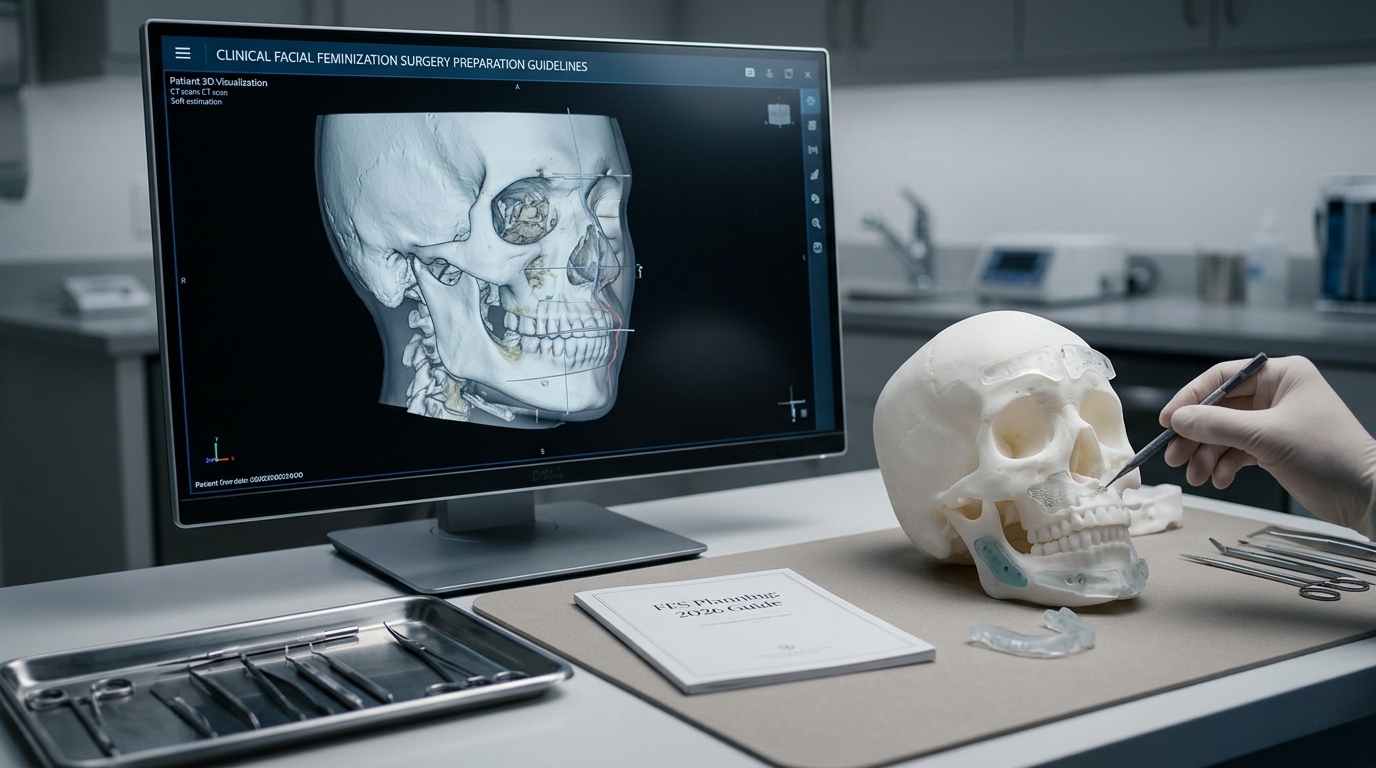

Le monde de l'esthétique est en constante évolution, introduisant une nouvelle terminologie qui brouille souvent les frontières entre interventions chirurgicales et non chirurgicales. Parmi les termes les plus recherchés et les plus mal compris figurent :“Augmentation du pic temporel” Équilibrage du front “ et ” L’harmonisation du front ». Bien que les deux interventions visent à créer une structure faciale supérieure harmonieuse, elles diffèrent fondamentalement par leurs objectifs anatomiques, leurs techniques opératoires, leur durée et les structures faciales qu’elles traitent. Comprendre ces distinctions est crucial pour toute personne envisageant une intervention esthétique, car choisir la mauvaise procédure peut conduire à des résultats insatisfaisants, en décalage avec votre structure osseuse unique.
La confusion provient souvent des tendances sur les réseaux sociaux, où les termes sont utilisés indifféremment pour décrire le front sculpté et rajeuni popularisé par les mannequins et les célébrités. Cependant, d'un point de vue médical, l'augmentation de la pointe temporale implique généralement la pose stratégique d'implants solides ou greffe de graisse L’objectif est d’accentuer la fosse temporale et de créer une arcade sourcilière plus définie. En revanche, l’harmonisation du front est un terme plus général qui englobe la réduction de l’arcade sourcilière, l’avancement de la ligne des cheveux et le remodelage de l’ensemble du tiers supérieur du visage. Ce guide analysera les réalités cliniques de ces deux approches, en comparant les différentes techniques chirurgicales, des implants temporaux aux liftings endoscopiques, aux liftings mécaniques temporaires proposés par les alternatives non chirurgicales.
Les implants temporaux solides ultra-souples constituent une méthode permanente d'augmentation temporale.
— Explorez la chirurgie plastique

Table des matières
Définition de l'esthétique : pic temporal vs équilibre du front
Pour comprendre ces interventions, il est essentiel de définir l'anatomie de la région temporale. Le terme “ pointe temporale ” désigne la saillie latérale de l'os temporal, située juste au-dessus de l'arcade zygomatique et en avant de l'oreille. Cette zone, recouverte par le muscle et le fascia temporal, forme la limite latérale du front. Une pointe temporale bien définie contribue à un visage en forme de cœur, crée un jeu d'ombres qui affine le visage et soutient la partie latérale du sourcil. L'“ équilibrage du front ”, quant à lui, concerne l'ensemble du tiers supérieur du visage, incluant la glabelle (arête du sourcil), le rebord supra-orbitaire et la ligne des cheveux. Son objectif est de corriger les asymétries, d'atténuer la saillie ou d'avancer la ligne des cheveux afin d'améliorer les proportions du visage.
Les différences structurelles déterminent l'approche chirurgicale. L'obtention d'une pointe temporale bien définie implique souvent la mise en place d'implants en silicone solide ou en polyéthylène poreux dans la fosse temporale. Ceci crée une augmentation latérale permanente qui soutient les tissus mous. L'harmonisation du front nécessite fréquemment une combinaison de réduction de l'arcade sourcilière (ostéoplastie), d'avancement de la ligne capillaire (excision du cuir chevelu) et de remodelage temporal. Sans correction de la pointe temporale, une arcade sourcilière réduite peut donner un aspect creux et artificiel, notamment du côté du regard. C'est pourquoi l'augmentation temporale est souvent réalisée conjointement à la réduction du front pour un résultat harmonieux. réduction du front pour un résultat harmonieux.
Rôle du fascia temporal et de l'os
La fosse temporale est un espace anatomique complexe délimité en haut par la ligne temporale, en bas par l'arcade zygomatique et en profondeur par le muscle temporal, sous le fascia superficiel. Le fascia temporal superficiel (fascia temporo-pariétal) est une fine couche vascularisée qui doit être disséquée avec précaution lors d'une intervention chirurgicale afin d'éviter toute lésion de l'artère temporale superficielle. Chez de nombreuses personnes, notamment celles d'origine asiatique ou celles ayant subi une perte de poids importante, la fosse temporale est naturellement creuse en raison d'un manque de tissu adipeux sous-cutané ou d'un recul de l'os temporal. Pour augmenter le volume de cette zone, chirurgien Il faut créer une poche entre le fascia temporal et le fascia du muscle temporal.
La différence entre une augmentation temporale subtile et une augmentation temporale marquée réside dans la forme de l'implant et son vecteur de positionnement. Une augmentation temporale modérée utilise généralement un petit implant ailé qui remplit la fosse latérale sans s'étendre trop médialement. Une augmentation temporale marquée pour féminisation faciale Dans certains cas, une masculinisation peut nécessiter un implant plus grand, conçu sur mesure, s'étendant du rebord orbitaire latéral à l'os pariétal. C'est pourquoi les implants PEEK personnalisés sont de plus en plus utilisés dans les cas complexes : ils peuvent être conçus pour épouser parfaitement la courbure du crâne du patient.
Conçus par des chirurgiens de renom, les implants faciaux d'Implantech offrent les solutions esthétiques et reconstructrices de rajeunissement que vos patients recherchent.
— Implantech

Voies chirurgicales : implants, greffes de graisse et liftings endoscopiques
L'augmentation temporale chirurgicale offre les résultats les plus permanents et anatomiquement corrects. Les principaux vecteurs utilisés sont les implants solides et les greffes autologues. greffe de graisse, et endoscopique ascenseur temporaireLes implants solides offrent un volume immédiat et prévisible et sont idéaux pour les patients présentant un creux important ou ceux qui recherchent un contour spécifique. Le lipofilling offre un aspect plus naturel, mais son taux de survie est variable (30-70%) et plusieurs séances peuvent être nécessaires. Le lifting temporal endoscopique corrige la composante des tissus mous en repositionnant le fascia temporo-pariétal et le sourcil, ce qui peut indirectement améliorer l'apparence de la région temporale en réduisant l'affaissement.
L'implant PEEK personnalisé semble faciliter les interventions chirurgicales en éliminant plusieurs étapes méticuleuses qui reposent principalement sur l'expérience du chirurgien.
— PMC
La technique de référence pour l'augmentation temporale permanente consiste à poser des implants en silicone solide ou en Medpor par une petite incision dissimulée dans la ligne des cheveux. Cette procédure implique la création d'une loge précise dans la fosse temporale, en veillant à ce que l'implant soit positionné profondément sous le fascia superficiel afin d'éviter toute palpabilité. L'implant est ensuite fixé par des micro-vis pour prévenir toute migration. Pour les patients nécessitant à la fois une augmentation temporale et réduction du front, L'incision peut souvent être combinée, minimisant ainsi les cicatrices visibles. Cette approche est particulièrement efficace dans Féminisation faciale La chirurgie (FFS) est essentielle pour obtenir une apparence féminine, car elle permet une transition lisse et convexe du front, du sourcil à la région temporale.
| Procédure | Anatomie de la cible | Emplacement de l'incision | Anesthésie | Récupération |
| Implant temporal | Fosse temporale, os temporal | Ligne des cheveux/cuir chevelu | Anesthésie locale avec sédation | 7 à 10 jours (gonflement/ecchymoses) |
| Greffe de graisse | Couche temporale sous-cutanée | Site donneur (abdomen/cuisse) | Locale | 5 à 7 jours (minimum) |
| Lifting temporal endoscopique | Fascia temporo-pariétale, sourcil | Cuir chevelu/Temples | Général/Local | 10 à 14 jours (sensation de soulèvement) |
| Réduction du front | Os frontal, ligne des cheveux | Cuir chevelu | Général | 2 à 3 semaines (gonflement important) |
Les contraintes anatomiques de la chirurgie
Tous les visages ne sont pas adaptés à une augmentation temporale importante. Les patients présentant une fosse temporale naturellement étroite peuvent manquer de tissus mous pour dissimuler un implant volumineux, ce qui peut entraîner une palpabilité ou des bords visibles. À l'inverse, chez les patients ayant une arcade zygomatique proéminente, l'augmentation temporale peut accentuer la largeur du tiers moyen du visage, ce qui peut être inesthétique pour ceux qui souhaitent affiner leur silhouette. La profondeur du muscle temporal est également un facteur important ; un muscle peu profond peut ne pas offrir une couverture suffisante pour l'implant, augmentant ainsi le risque de complications.
Pour ces raisons anatomiques, l'augmentation du pic temporal est souvent considérée comme une composante d'une analyse faciale complète. Chirurgie de masculinisation du visage (FMS), l'augmentation temporelle est fréquemment combinée avec réduction de la mâchoire et augmentation des joues Pour créer un cadre carré et anguleux, la chirurgie de féminisation faciale (FFS) vise à obtenir une courbe harmonieuse et continue du front à la tempe, nécessitant une coordination précise entre la réduction de l'arcade sourcilière et l'augmentation temporale. Cette intervention est particulièrement efficace pour les yeux enfoncés ou les visages manquant de soutien latéral, créant l'illusion d'un visage plus ouvert et plus jeune.

Augmentation temporale non chirurgicale : injections de comblement et fils tenseurs
L'essor du remodelage facial non chirurgical est principalement dû aux injections d'acide hyaluronique et aux fils tenseurs. Ces techniques offrent une solution temporaire aux patients réticents à la chirurgie ou recherchant une amélioration subtile. Cependant, elles présentent des limites quant au degré d'augmentation et à la durée des résultats, notamment au niveau des tempes où l'anatomie est complexe et la peau fine.
‘'À Dr MFO, Nous reconnaissons que le débat entre ‘ pic temporal ’ et ‘ équilibre du front ’ se résume essentiellement à un choix entre une augmentation anatomique subtile et permanente et une reconstruction structurelle complète. L’effet ’ pic temporal ’ nécessite souvent l’ancrage de l’implant à l’os temporal, une intervention chirurgicale que les produits de comblement non chirurgicaux ne peuvent tout simplement pas reproduire en toute sécurité sur le long terme.’
— Perspective clinique du Dr MFO
Injections de comblement : augmentation volumétrique
Les injections d'acide hyaluronique constituent la méthode non chirurgicale la plus courante pour l'augmentation des tempes. En injectant le produit dans la fosse temporale, on augmente le volume du tissu sous-cutané, ce qui crée un effet liftant temporaire et lisse la partie latérale du front. Cette procédure est rapide, ne nécessite qu'une anesthésie locale et la convalescence est très courte. Cependant, les résultats sont temporaires et durent généralement de 6 à 12 mois selon le produit utilisé. À terme, des injections répétées peuvent entraîner une « fatigue » du produit, la peau se détendant ou le produit migrant, ce qui donne un aspect artificiel.
Les risques associés aux injections de produits de comblement dans la région temporale comprennent l'occlusion vasculaire, notamment si l'aiguille pénètre dans l'artère temporale superficielle. Ceci peut entraîner une nécrose cutanée ou la cécité si le produit est injecté de manière rétrograde. De plus, la fosse temporale est une zone très mobile ; le produit injecté à cet endroit peut migrer ou se résorber de façon inégale, provoquant une asymétrie. Par conséquent, les injections de produits de comblement sont surtout indiquées pour les patients présentant un léger creusement et souhaitant un aperçu du résultat d'une éventuelle intervention chirurgicale plutôt qu'une modification permanente.
Élévateurs à fil : Suspension mécanique
Les fils de polydioxanone (PDO) sont des sutures résorbables insérées sous la peau pour lifter mécaniquement la région latérale du sourcil et des tempes. Les fils crantés sont souvent utilisés pour fixer le tissu sous-cutané, offrant un effet liftant maximal entre un et deux mois et durant jusqu'à six à douze mois. Bien qu'efficaces pour un relâchement cutané léger, les fils PDO ne permettent pas de créer de volume au niveau de la fosse temporale. Ils se contentent de suspendre la peau et le fascia superficiel. Avec le temps, à mesure que les fils se résorbent et que les tissus se stabilisent, l'effet liftant s'estompe.
Les risques associés aux liftings par fils tenseurs comprennent la rupture du fil, sa visibilité sous la peau, l'infection et l'asymétrie. Dans la zone temporale délicate, un positionnement incorrect peut endommager l'artère temporale superficielle ou la branche frontale du nerf facial, entraînant une asymétrie temporaire ou permanente des mouvements des sourcils. Par conséquent, les liftings par fils tenseurs conviennent mieux aux patients présentant une bonne élasticité cutanée et souhaitant un aperçu du résultat potentiel d'une intervention chirurgicale plutôt qu'une modification permanente.
Analyse comparative : longévité, risques et coûts
Lorsqu'il s'agit de choisir entre l'augmentation des tempes et l'harmonisation du front, il convient de prendre en compte la permanence de l'intervention par rapport à son caractère invasif. L'augmentation chirurgicale des tempes est la seule méthode permettant une modification permanente de la structure latérale du front. Les méthodes non chirurgicales nécessitent un entretien important et sont limitées par l'élasticité de la peau et la structure osseuse sous-jacente.
‘ Pour obtenir l’esthétique ‘Temporal Peak’, il existe trois voies cliniques distinctes : l’implant temporal chirurgical (permanent), le lipofilling (durée variable) ou les injections d’acide hyaluronique (temporaire). Ce guide compare la durée, les risques et les coûts (500 £ à 8 000 £) de chaque méthode afin de vous aider à choisir l’approche la mieux adaptée à votre anatomie. ’
— Perspective clinique du Dr MFO
| Méthode | Longévité | Le temps de récupération | Principaux risques | Fourchette de coûts estimée |
| Implant chirurgical temporal | Permanent | 7 à 10 jours (gonflement visible) | Asymétrie, cicatrices, palpabilité, infection | 3 000 £ – 8 000 £ ($4 000 – $10 000) |
| Greffe de graisse | Variable (30-70% Survie) | 5 à 7 jours (site du donneur) | Résorption inégale, formation de kystes, infection | 2 500 £ – 6 000 £ ($3 200 – $7 500) |
| Agents de comblement dermique | 6-12 mois | Aucune (marques d'aiguille) | Occlusion vasculaire, migration, effet Tyndall | 500 £ – 1 500 £ ($650 – $2,000) par séance |
| Le lifting du fil | 6-12 mois | 1 à 3 jours (contusions mineures) | Rupture de fil, lésion nerveuse, asymétrie | 800 £ – 2 000 £ ($1 000 – $2 500) |
L'analyse coûts-avantages
Bien que les options non chirurgicales paraissent moins coûteuses au départ, leur coût cumulé sur 3 à 5 ans dépasse souvent le coût initial d'une intervention chirurgicale. Un patient optant pour des injections de comblement annuelles (1 000 £/an) dépensera 5 000 £ en cinq ans, sans obtenir le même résultat qu'avec des implants de joue à 4 000 £. De plus, la convalescence post-opératoire implique une période d'indisponibilité unique, tandis que les traitements non chirurgicaux, bien qu'sans convalescence, nécessitent des visites régulières et ne permettent aucun arrêt de travail.
Les profils de risque diffèrent également de manière significative. Les complications chirurgicales sont généralement liées à la cicatrisation et à l'anesthésie, mais ne sont prises en charge qu'une seule fois. Les complications non chirurgicales peuvent être cumulatives ; par exemple, des injections répétées de produit de comblement dans le sillon lacrymal ou le canthus externe peuvent entraîner une fatigue du produit, caractérisée par un étirement de la peau ou une migration du produit, donnant un aspect inesthétique. L'occlusion vasculaire est un risque rare mais grave associé aux produits injectables, tandis que les risques chirurgicaux sont généralement localisés au site opératoire.
Adaptation à la forme du visage : Quelle procédure convient le mieux à votre anatomie ?
Le choix entre une augmentation des tempes et un équilibrage du front dépend fortement de la morphologie de votre visage. Une intervention harmonieuse sur un visage en forme de cœur peut paraître disgracieuse sur un visage carré ou rond. L'objectif de toute intervention d'amélioration du haut du visage est d'équilibrer les tiers et les cinquièmes du visage, et non d'isoler la région temporale.
Visages ronds
Les visages ronds bénéficient d'une définition latérale qui crée l'illusion d'une structure faciale plus fine. L'augmentation des tempes, qui vise à élargir latéralement le visage, peut contribuer à l'allonger. Cependant, une augmentation trop importante peut accentuer la rondeur des joues si elle n'est pas accompagnée d'un remodelage du contour du visage (tel qu'un lifting). réduction de la mâchoire ou une augmentation des pommettes). Pour les visages ronds, un implant temporal discret est souvent préféré à une augmentation importante, associé à une légère réduction de l'arcade sourcilière pour créer une apparence plus ovale.
Visages carrés
Les visages carrés, caractérisés par une mâchoire prononcée et des traits anguleux, peuvent supporter l'effet marqué d'une tempe proéminente. Les angles aigus du front complètent l'angularité de la mâchoire. Une augmentation temporale chirurgicale associée à un lifting latéral des sourcils peut créer une symétrie masculine saisissante qui équilibre un bas du visage massif. Une chirurgie des paupières en amande sur un visage carré pourrait donner un résultat trop doux, ne créant pas un contraste suffisant avec la mâchoire carrée.
Visages longs/ovales
Pour les visages longs ou ovales, l'objectif est d'éviter d'ajouter trop de hauteur verticale. Un implant temporal trop haut risque d'allonger davantage le visage, ce qui est généralement indésirable. En revanche, une augmentation temporale latérale, qui élargit le visage horizontalement, permet d'équilibrer sa longueur. La réduction du front associée à une augmentation temporale constitue souvent la solution idéale, car elle permet de maintenir la partie supérieure du visage dans le plan horizontal.
Yeux enfoncés vs. yeux proéminents
Les yeux proéminents (ceux situés en avant sur le rebord orbitaire) sont d'excellents candidats pour une augmentation temporale, car leur structure permet un lifting latéral. Cependant, une augmentation excessive peut alourdir les sourcils. Les yeux enfoncés (ceux situés en retrait dans l'orbite) sont mieux adaptés à une augmentation temporale combinée à un lipofilling. Un implant temporal sur des yeux enfoncés risque de créer un aspect “ squelettique ”, la tension au niveau du front créant un creux. Dans ce cas, le lipofilling associé à la pose d'un implant temporal est souvent la solution recommandée.
Protocoles de soins et de rétablissement postopératoires
Quelle que soit la technique choisie, les soins postopératoires déterminent le résultat esthétique final. L'augmentation temporale chirurgicale exige une hygiène rigoureuse afin de prévenir toute infection au niveau de l'incision. Les patients doivent éviter le port de lentilles de contact pendant au moins 4 à 6 semaines et appliquer des pommades spécifiques pour prévenir la rétraction cicatricielle.
Gestion de l'enflure et des cicatrices
Il est impératif de dormir la tête surélevée pendant les deux premières semaines afin de réduire l'œdème orbitaire. Les compresses froides sont utiles, mais elles ne doivent pas être en contact direct avec la peau pour éviter les gelures. Après une augmentation temporale chirurgicale, la gestion des cicatrices consiste généralement à appliquer des pansements en gel de silicone sur la ligne des cheveux une fois les points de suture retirés. La protection solaire est essentielle, car l'exposition aux UV peut foncer la cicatrice latérale et la rendre visible.
La récupération sans chirurgie est plus rapide, mais exige des précautions différentes. Après un lifting par fils tenseurs PDO, les patients doivent éviter les mouvements faciaux excessifs (mâcher des aliments durs, sourire de façon exagérée) pendant deux semaines afin d'éviter le déplacement des fils. Pour les injections de comblement, les massages sont généralement déconseillés, sauf pour corriger une asymétrie, et les patients doivent éviter les anticoagulants afin de minimiser les ecchymoses.
Maintenance à long terme
Les résultats chirurgicaux sont permanents, mais le processus de vieillissement se poursuit. Un lifting des paupières supérieures ne stoppe pas l'affaissement des sourcils ni la perte de volume du visage. Les patients peuvent avoir besoin d'un entretien non chirurgical, comme des injections de Botox pour repositionner les sourcils ou des injections d'acide hyaluronique pour combler les tempes, 5 à 10 ans après l'intervention afin de conserver un résultat esthétique optimal. À l'inverse, les patients ayant opté pour un lifting non chirurgical doivent prévoir des retouches tous les 4 à 6 mois pour maintenir le résultat.
Bibliographie
- Explorez la chirurgie plastique. (s.d.). Stratégies techniques pour une augmentation temporale permanente modeste par modification implantaire standard. Extrait de https://exploreplasticsurgery.com/technical-strategies-modest-permanent-temporal-augmentation-by-standard-implant-modification/
- Implantech. (s.d.). Implants faciaux : Temporaux. Extrait de https://www.implantech.com/before-after/facial-implants/temporal/
- PMC. (2022). L'implant PEEK personnalisé semble faciliter les interventions chirurgicales. Extrait de https://pmc.ncbi.nlm.nih.gov/articles/PMC9076787/
- Dr MFO. (nd). Remodelage du front. Récupéré de https://dr-mfo.com/forehead-contouring
- Dr. MFO. (s.d.). Chirurgie de masculinisation du visage. Récupéré de https://dr-mfo.com/fms-facial-masculinization-surgery
- Société américaine des chirurgiens plasticiens. (sd). Lifting du front. Extrait de https://www.plasticsurgery.org/cosmetic-procedures/forehead-lift
- Jamil, W. (2023). Augmentation temporale esthétique : implants ou greffe de graisse. Aesthetic Surgery Journal, 43(4), 450-462. DOI : 10.1093/asj/sjad012