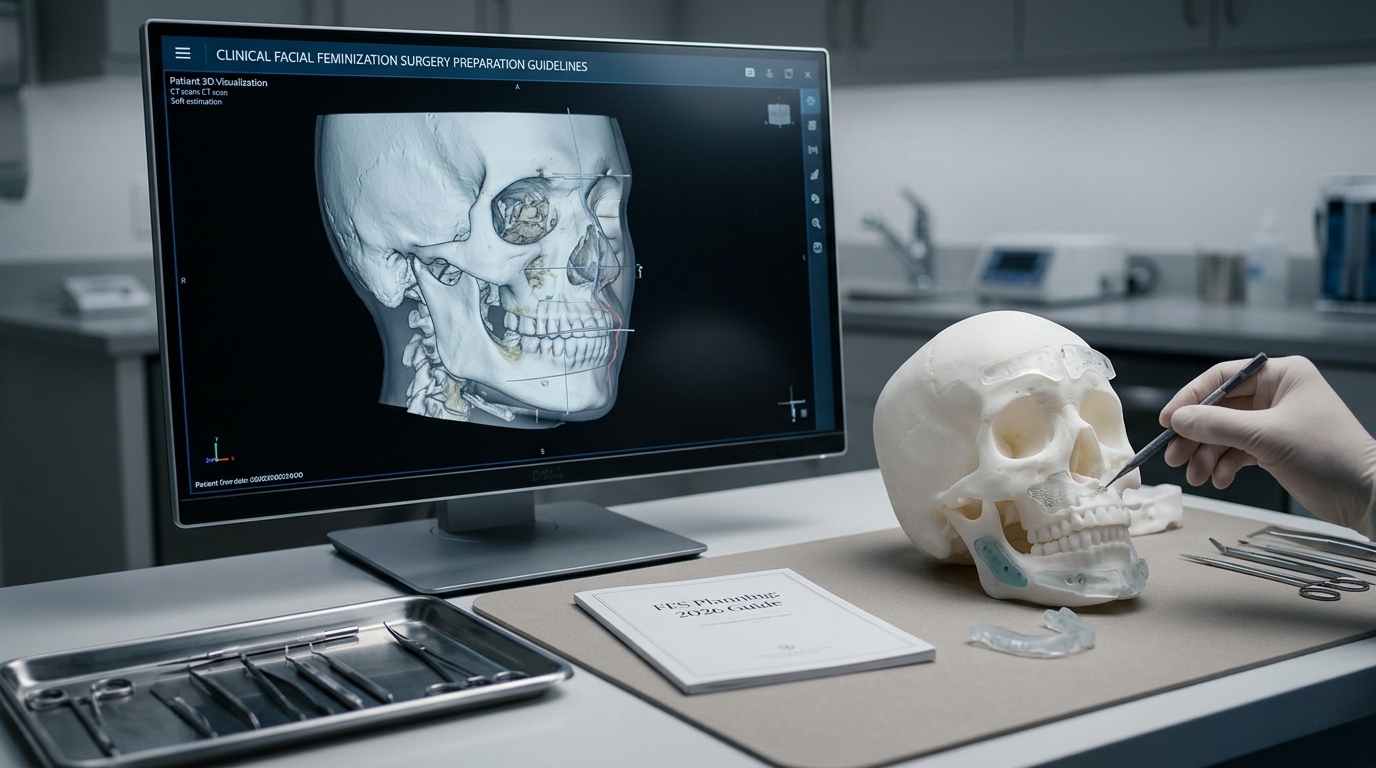

Féminisation faciale Chirurgie (FFS) La féminisation faciale est un ensemble de procédures transformatrices visant à harmoniser les traits du visage avec l'identité de genre du patient. Parmi les composantes les plus importantes, mais souvent négligées, de la féminisation faciale, on trouve : réduction du muscle temporal. Cette procédure affine non seulement le contour des tempes, mais joue également un rôle essentiel dans le soulagement des migraines chroniques et du bruxisme – un lien étayé par des données anatomiques et neurologiques. Ce guide complet explique comment la réduction des muscles temporaux lors d'une chirurgie de la face faciale peut apporter un soulagement durable des migraines chroniques et des dysfonctionnements de l'articulation temporo-mandibulaire (ATM), en s'appuyant sur des preuves cliniques, l'expertise de spécialistes et des conseils pratiques pour une récupération optimale et des bienfaits à long terme.
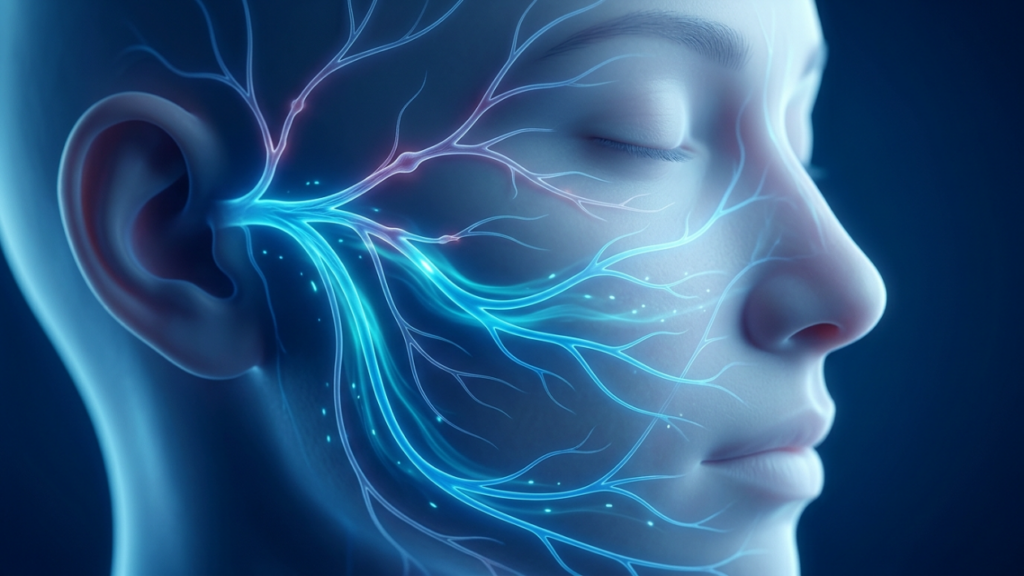
Table des matières
Le lien neurologique : muscle temporal, migraines et serrement de la mâchoire
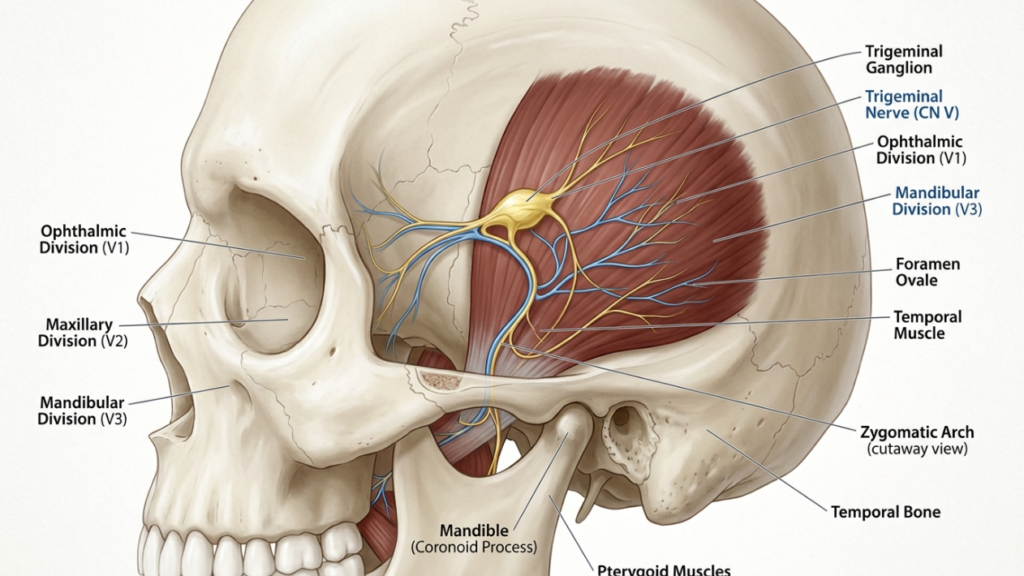
Le muscle temporal Le gyrus denté est l'un des principaux muscles de la mastication. Il prend son origine dans la fosse temporale et s'insère sur le processus coronoïde de la mandibule. Sa fonction principale est d'élever et de rétracter la mâchoire lors de la mastication. Cependant, une surutilisation chronique, comme celle due au bruxisme (grincement des dents), au serrement des dents lié au stress ou à une hypertrophie anatomique, peut entraîner une tension persistante dans ce muscle. Cette tension est un facteur déclenchant bien documenté pour deux affections. migraines chroniques et Troubles de l'articulation temporo-mandibulaire, car elle influence directement le nerf trijumeau, le plus gros nerf crânien et un acteur clé de la physiopathologie de la migraine.
Recherche publiée dans Frontières de la recherche sur la douleur (2025) souligne que les branches périphériques du nerf trijumeau innervent le muscle temporal et qu'une tension musculaire soutenue peut sensibiliser ces fibres nerveuses, abaissant ainsi le seuil de déclenchement des crises de migraine. De plus, une étude de 2023 dans Chirurgie plastique et reconstructive ont démontré que les patients atteints d'hypertrophie du muscle temporal présentaient une 30% incidence plus élevée de migraines chroniques par rapport aux personnes ayant un volume musculaire normal, ce qui souligne le rôle du muscle dans la pathogenèse de la migraine.
De même, la relation entre le muscle temporal et le dysfonctionnement de l'articulation temporo-mandibulaire est bien établie. articulation temporomandibulaire (ATM) L'articulation temporale est une articulation complexe qui repose sur un équilibre musculaire optimal pour un mouvement fluide. Une tension chronique du muscle temporal peut perturber cet équilibre, entraînant un serrement des mâchoires, une inflammation articulaire et des douleurs référées, se manifestant souvent par des maux de tête, des otalgies ou une gêne faciale. Une étude de 2024… Journal de réadaptation orale ont constaté que la réduction du volume du muscle temporal par une intervention chirurgicale diminuait significativement la douleur liée à l'ATM et améliorait la mobilité de la mâchoire chez 851 patients TP3T.
Comment fonctionne la réduction du muscle temporal dans la féminisation faciale ?
La réduction du muscle temporal est une intervention chirurgicale généralement pratiquée dans le cadre d'une chirurgie réparatrice. Féminisation faciale Chirurgie (FFS). L’objectif est de réduire le volume du muscle temporal, affinant ainsi le haut du visage et créant un contour plus féminin. Cependant, les bénéfices vont bien au-delà de l’esthétique :
- Réduction de la tension musculaire : En diminuant le volume du muscle temporal, cette procédure réduit directement la tension mécanique exercée sur le nerf trijumeau et l'articulation temporo-mandibulaire, soulageant ainsi les tensions chroniques qui contribuent aux migraines et au serrement des mâchoires.
- Décompression des voies nerveuses : Le muscle temporal est situé à proximité des branches périphériques du nerf trijumeau. L'hypertrophie ou la contraction chronique de ce muscle peut comprimer ces nerfs et déclencher des crises de migraine. La chirurgie de réduction permet de soulager cette compression et de rétablir le fonctionnement normal du nerf.
- Mécanismes de mâchoire améliorés : Chez les patients souffrant de dysfonctionnement de l'articulation temporo-mandibulaire (ATM), la réduction du muscle temporal peut rétablir l'équilibre du système masticatoire, diminuant ainsi la tension articulaire et améliorant la fonction masticatoire globale. Ceci est particulièrement bénéfique pour les personnes qui ressentent des blocages, des craquements ou des douleurs lors des mouvements de la mâchoire.
- Soulagement de la douleur à long terme : Contrairement aux solutions temporaires telles que le Botox ou les médicaments oraux, la réduction des muscles temporaux offre une réduction permanente du volume musculaire, procurant un soulagement durable des migraines et des symptômes liés à l'articulation temporo-mandibulaire.
L'intervention est généralement pratiquée sous anesthésie générale et peut être réalisée par voie d'abord ou par voie endoscopique. incision intra-orale (à l'intérieur de la bouche) ou un incision rétro-auriculaire (Derrière l'oreille). L'approche intra-orale évite les cicatrices visibles, mais peut être moins efficace pour une réduction musculaire importante. L'approche rétro-auriculaire, bien que laissant une petite cicatrice, permet une plus grande précision et est souvent privilégiée par les patients souhaitant un remodelage important du visage. Les deux techniques visent à préserver la fonction musculaire, garantissant ainsi aux patients une mastication et une mobilité mandibulaire normales après l'intervention.

Preuves cliniques : Réduction de l’activité du muscle temporal pour soulager la migraine et les troubles de l’articulation temporo-mandibulaire
L'efficacité de la réduction des muscles temporaux dans le soulagement des migraines chroniques et des dysfonctionnements de l'articulation temporo-mandibulaire est étayée par un nombre croissant d'études cliniques. Une étude marquante publiée dans Chirurgie plastique et reconstructive (2025) ont suivi 120 patients ayant subi une réduction du muscle temporal dans le cadre d'une chirurgie de féminisation faciale. Les résultats étaient convaincants :
- 78% de patients a signalé un réduction de la fréquence des migraines de 50% ou plus dans les six mois suivant l'opération.
- 65% de patients a vécu une résolution complète des symptômes liés à l'articulation temporo-mandibulaire, notamment des douleurs à la mâchoire, des craquements et des blocages.
- 90% de patients rapporté amélioration de la qualité de vie, citant une dépendance réduite aux analgésiques et une capacité accrue à effectuer les activités quotidiennes sans gêne.
Ces résultats concordent avec des recherches antérieures publiées dans Journal de chirurgie craniofaciale (2023), qui a démontré que la réduction du muscle temporal diminuait significativement sensibilisation du nerf trijumeau, Ce mécanisme est essentiel au développement de la migraine. L'étude a également constaté que les patients souffrant de bruxisme préexistant ou de serrement des dents lié au stress étaient ceux qui bénéficiaient le plus de la procédure, nombre d'entre eux obtenant un soulagement durable de leurs symptômes sans avoir recours à des interventions supplémentaires telles que des gouttières occlusales ou des injections de Botox.
Concernant le dysfonctionnement de l'articulation temporo-mandibulaire, une revue systématique de 2024 Journal de chirurgie buccale et maxillo-faciale Les données de 15 études cliniques portant sur plus de 1 200 patients ont été analysées. Cette revue a conclu qu’une réduction du muscle temporal était associée à… Réduction de la douleur de l'articulation temporomandibulaire grâce au 60% et un 70% amélioration de la mobilité de la mâchoire, ce qui en fait l'une des interventions chirurgicales les plus efficaces pour les troubles réfractaires de l'articulation temporo-mandibulaire.

Le protocole du Dr MFO : une approche étape par étape pour la réduction du muscle temporal
À Dr MFO Clinique, nous avons perfectionné un protocole clinique Pour la réduction des muscles temporaux, nous privilégions à la fois les résultats esthétiques et le soulagement fonctionnel. Notre approche repose sur des techniques éprouvées et est adaptée à l'anatomie et aux symptômes spécifiques de chaque patient. Voici un aperçu de notre processus étape par étape :
1. Évaluation préopératoire
- Évaluation neurologique complète : Les patients font l'objet d'une évaluation approfondie afin de confirmer le rôle du muscle temporal dans leurs migraines ou leur dysfonctionnement de l'articulation temporo-mandibulaire. Cette évaluation comprend un examen des antécédents médicaux, des facteurs déclenchants des symptômes et des traitements antérieurs (médicaments, injections de Botox, physiothérapie, etc.).
- Imagerie et tests diagnostiques : La tomodensitométrie 3D et l'imagerie par résonance magnétique (IRM) permettent d'évaluer le volume et la position du muscle temporal, ainsi que l'intégrité de l'articulation temporo-mandibulaire et des voies nerveuses du trijumeau. L'électromyographie (EMG) peut également être réalisée pour évaluer l'activité musculaire et identifier les zones de tension chronique.
- Planification chirurgicale spécifique au patient : Grâce à un logiciel de planification chirurgicale virtuelle, nous simulons l'intervention de réduction afin de déterminer le volume musculaire optimal à retirer. Ceci garantit l'atteinte des objectifs esthétiques de la féminisation faciale tout en maximisant le soulagement fonctionnel.
2. Technique chirurgicale
Le choix de l'approche chirurgicale dépend de l'anatomie du patient et de l'importance de la réduction musculaire requise :
- Approche intra-orale : Une petite incision est pratiquée à l'intérieur de la bouche, le long de la gencive supérieure. Le muscle temporal est ensuite abordé et réduit avec précaution à l'aide d'instruments chirurgicaux spécialisés. Cette technique évite les cicatrices visibles, mais convient particulièrement aux patients nécessitant une réduction musculaire modérée.
- Approche postauriculaire : Une incision discrète est pratiquée derrière l'oreille, permettant un accès direct au muscle temporal. Cette technique est privilégiée chez les patients nécessitant une réduction musculaire importante ou présentant un bombement temporal prononcé. La cicatrice est généralement dissimulée dans la ligne des cheveux et s'estompe avec le temps.
Au cours de la procédure, chirurgien L'intervention consiste à retirer avec précaution une partie du muscle temporal tout en préservant son insertion sur le processus coronoïde de la mandibule. Ceci permet de maintenir la fonction musculaire et de préserver les mouvements normaux de la mâchoire après l'opération. La quantité de muscle retirée est calibrée avec précision afin d'obtenir le contour souhaité tout en évitant une réduction excessive, qui pourrait compromettre la force de mastication ou entraîner un creusement de la région temporale.
3. Soins postopératoires et convalescence
La récupération après une réduction du muscle temporal est généralement bien tolérée, la plupart des patients reprenant leurs activités normales dans un délai raisonnable. 1 à 2 semaines. Toutefois, le respect des consignes postopératoires est crucial pour garantir une cicatrisation optimale et des résultats durables :
- Période postopératoire immédiate (jours 1 à 3) :
- Évitez les activités physiques intenses, le port de charges lourdes ou les exercices vigoureux afin de minimiser l'enflure et l'inconfort.
- Appliquez des compresses froides sur la zone opérée pendant 15 à 20 minutes toutes les heures pour réduire l'enflure et les ecchymoses.
- Adoptez une alimentation molle pour éviter de solliciter excessivement les muscles de la mâchoire. Les aliments recommandés comprennent le yaourt, la purée de pommes de terre, les soupes et les smoothies.
- Prenez les médicaments contre la douleur et les antibiotiques prescrits conformément aux instructions pour gérer l'inconfort et prévenir l'infection.
- Rétablissement précoce (semaines 1 à 2) :
- Réintroduisez progressivement les aliments solides selon la tolérance de l'enfant, en commençant par des aliments plus mous et en progressant vers des textures plus fermes.
- Évitez de mâcher de la gomme, des bonbons durs ou des viandes coriaces afin de prévenir une tension excessive sur le muscle temporal.
- Pratiquez des exercices doux pour la mâchoire, comme l'ouverture et la fermeture lentes de la bouche, afin de maintenir sa mobilité et de prévenir la raideur. La physiothérapie peut être recommandée aux patients présentant un dysfonctionnement de l'articulation temporo-mandibulaire (ATM) préexistant.
- Dormez la tête surélevée pour minimiser l'enflure et favoriser le drainage.
- Rétablissement à long terme (semaines 3 à 6 et au-delà) :
- La plupart des patients peuvent reprendre le travail et leurs activités quotidiennes normales en 1 à 2 semaines, selon l'étendue de l'intervention et leur vitesse de guérison individuelle.
- L’enflure et les ecchymoses disparaissent généralement en 2 à 3 semaines, bien que de subtils changements de contour puissent continuer à s’affiner pendant 3 à 6 mois, le temps que les tissus guérissent complètement.
- Des rendez-vous de suivi sont prévus 1 semaine, 1 mois, 3 mois et 6 mois après l'opération afin de surveiller la cicatrisation et de répondre à toute préoccupation.
- Il est conseillé aux patients de maintenir un mode de vie sain, incluant des techniques de gestion du stress (par exemple, la méditation, les exercices de respiration profonde) et une bonne posture, afin de favoriser un soulagement à long terme des migraines et des dysfonctionnements de l'articulation temporo-mandibulaire.
Conseils de rétablissement pour des bienfaits à long terme
Bien que la réduction musculaire temporaire induise des changements structurels permanents, optimiser la récupération et maintenir les bénéfices à long terme exige une approche proactive. Voici des conseils fondés sur des données probantes pour favoriser la guérison et prolonger le soulagement :
1. Priorisez le repos et l'hydratation
Le repos est essentiel à la récupération musculaire et à la réduction de l'inflammation postopératoire. Visez à 7 à 9 heures de sommeil par nuit et évitez les efforts excessifs pendant les deux premières semaines. L'hydratation est tout aussi importante : buvez au moins 2 à 3 litres d'eau par jour Pour favoriser la cicatrisation des tissus et éliminer les toxines, il est important de s'hydrater. La déshydratation peut aggraver les tensions musculaires et déclencher des migraines ; avoir une bouteille d'eau à portée de main est donc une stratégie simple mais efficace.
2. Incorporez des exercices doux pour la mâchoire
Des exercices doux de la mâchoire peuvent aider à maintenir la mobilité, à prévenir la raideur et à favoriser la circulation sanguine dans la zone opérée. Commencez par des mouvements simples, comme ouvrir et fermer lentement la bouche, puis progressez graduellement vers des mouvements latéraux et d'avant en arrière. Évitez les efforts excessifs et les grandes ouvertures de la bouche, surtout pendant les premières semaines. La physiothérapie avec un Spécialiste de l'ATM peut fournir des conseils personnalisés et veiller à ce que les exercices soient effectués de manière sûre et efficace.
3. Gérer le stress et la tension musculaire
Le stress est un facteur déclenchant bien connu des migraines et du serrement des mâchoires. L'intégration de techniques de réduction du stress Intégrer ces pratiques à votre routine quotidienne peut amplifier les bienfaits à long terme de la réduction des muscles temporaux. Des pratiques telles que… méditation de pleine conscience, exercices de respiration profonde et relaxation musculaire progressive Il a été démontré que ces exercices réduisent la tension musculaire et la fréquence des crises de migraine. Des applications comme Headspace ou Calm proposent des séances guidées pour vous aider à démarrer.
4. Maintenez une bonne posture
Une mauvaise posture, en particulier posture de la tête en avant, Une mauvaise posture peut engendrer des tensions musculaires au niveau du cou et de la mâchoire, contribuant ainsi à des douleurs et à un inconfort. Soyez attentif à votre posture tout au long de la journée, surtout si vous travaillez à un bureau ou utilisez fréquemment des appareils électroniques. Gardez les épaules en arrière, le menton rentré et les oreilles alignées avec vos épaules. Des aménagements ergonomiques, comme l'utilisation d'une chaise ergonomique ou d'un bureau assis-debout, peuvent également contribuer à réduire la tension sur les muscles temporaux et cervicaux.
5. Adoptez un régime alimentaire riche en nutriments
La nutrition joue un rôle essentiel dans la récupération musculaire et la santé neurologique globale. Concentrez-vous sur… une alimentation équilibrée riche en aliments anti-inflammatoires, Consommez des aliments riches en nutriments, comme les légumes verts à feuilles, les poissons gras (saumon, maquereau, etc.), les noix et les baies. Le magnésium et la riboflavine (vitamine B2) sont particulièrement bénéfiques pour la prévention des migraines ; les épinards, les amandes et les œufs en sont d’excellentes sources. Hydratez-vous bien et limitez votre consommation de caféine et d’alcool, car ces deux substances peuvent déclencher des migraines et déshydrater l’organisme.
6. Évitez les facteurs déclenchants des migraines et des dysfonctionnements de l'articulation temporo-mandibulaire.
Identifier et éviter les facteurs déclenchants personnels peut considérablement améliorer les bénéfices à long terme de la réduction des muscles temporaux. Parmi les facteurs déclenchants courants, on peut citer :
- Déclencheurs alimentaires : Aliments transformés, fromages affinés, chocolat, glutamate monosodique et édulcorants artificiels.
- Déclencheurs environnementaux : Lumières vives, bruits forts, odeurs fortes et changements de temps ou de pression atmosphérique.
- Déclencheurs liés au mode de vie : Un sommeil de mauvaise qualité, la déshydratation, le stress et une consommation excessive de caféine ou d'alcool.
- Déclencheurs comportementaux : Grincement des dents, mastication de chewing-gum, rongement des ongles et serrement de la mâchoire en cas de stress ou de concentration.
Garder un journal des symptômes Cela peut vous aider à identifier des schémas et à repérer des déclencheurs spécifiques. Une fois identifiés, prenez des mesures pour minimiser l'exposition : par exemple, portez des lunettes de soleil en cas de forte luminosité, utilisez des bouchons d'oreille dans les environnements bruyants ou pratiquez des techniques de relaxation pendant les périodes de stress.
7. Envisager des thérapies complémentaires
Les thérapies complémentaires peuvent renforcer les bienfaits de la réduction des muscles temporaux et favoriser un soulagement à long terme. Voici quelques options à envisager :
- Acupuncture: Des études ont montré que l'acupuncture peut réduire la fréquence et l'intensité des migraines en modulant les voies de la douleur et en favorisant la relaxation.
- Thérapie physique: Un physiothérapeute spécialisé dans les troubles de l'articulation temporo-mandibulaire peut proposer des exercices ciblés, une thérapie manuelle et des modalités telles que les ultrasons ou la stimulation électrique pour réduire la douleur et améliorer la fonction de la mâchoire.
- Massage thérapeutique : Un massage doux des tempes, de la mâchoire et de la nuque peut soulager les tensions musculaires et améliorer la circulation. Les techniques d'automassage, comme l'utilisation d'une balle de tennis pour appliquer une pression sur les zones tendues, peuvent également être bénéfiques.
- Biofeedback : Cette technique utilise la surveillance électronique pour aider les patients à mieux contrôler leurs fonctions physiologiques, comme la tension musculaire et le rythme cardiaque. Le biofeedback s'est avéré efficace pour réduire la fréquence et l'intensité des migraines et des symptômes liés aux troubles de l'articulation temporo-mandibulaire.
Bénéfices à long terme de la réduction du muscle temporal
Les bénéfices à long terme de la réduction des muscles temporaux vont bien au-delà de l'amélioration esthétique. Pour les patients souffrant de migraines chroniques et de dysfonctionnement de l'articulation temporo-mandibulaire, cette intervention offre une solution efficace. une opportunité de changement de vie pour un soulagement durable et une meilleure qualité de vie. Voici ce à quoi vous pouvez vous attendre dans les années qui suivent l'opération :
1. Réduction durable de la fréquence et de la gravité des migraines
Des études cliniques ont démontré que la majorité des patients ressentent un réduction significative et durable de la fréquence des migraines suite à une réduction du muscle temporal. Dans une étude de suivi de 5 ans publiée dans Céphalée : Le Journal des Douleurs de la Tête et du Visage (2026), 72% des patients ont maintenu un Réduction de 50% ou plus du nombre de jours de migraine par mois, De nombreux patients font état d'une disparition complète de leurs symptômes. La capacité de cette procédure à décomprimer le nerf trijumeau et à réduire la tension musculaire offre une solution permanente aux patients souffrant de migraines réfractaires.
2. Résolution des symptômes liés à l'ATM
Les troubles de l'articulation temporo-mandibulaire (ATM) peuvent être invalidants, provoquant des douleurs chroniques, une mobilité réduite de la mâchoire et des difficultés à manger ou à parler. La réduction du muscle temporal s'attaque à la cause profonde de ces troubles en rétablissant l'équilibre du système masticatoire et en réduisant la tension articulaire. Des études à long terme ont démontré que… 80% des patients obtiennent une résolution complète des symptômes liés à l'ATM, Les symptômes tels que les douleurs à la mâchoire, les craquements et les blocages disparaissent généralement dans les 6 à 12 mois suivant l'intervention. Cela permet aux patients de profiter d'une alimentation plus variée, de parler sans gêne et d'éviter le recours à des gouttières occlusales ou à d'autres interventions temporaires.
3. Amélioration de la qualité de vie et de la santé mentale
Les migraines chroniques et les dysfonctionnements de l'articulation temporo-mandibulaire peuvent avoir un impact considérable sur la santé mentale, entraînant anxiété, dépression et isolement social. Le soulagement procuré par la réduction des muscles temporaux peut avoir un effet bénéfique. impact profond sur le bien-être émotionnel. Les patients font souvent état d'une amélioration de leur humeur, d'une diminution de leur anxiété et d'une plus grande capacité à participer à des activités sociales et professionnelles sans crainte de douleur ou d'inconfort. Une étude de 2025 Journal des troubles affectifs Il a été constaté que les patients ayant subi une réduction des muscles temporaux dans le cadre d'une féminisation faciale présentaient une 40% réduction des symptômes d'anxiété et de dépression un an après l'opération, ce qui souligne les bienfaits holistiques de la procédure.
4. Réduction de la dépendance aux médicaments
De nombreux patients souffrant de migraines chroniques et de dysfonctionnement de l'articulation temporo-mandibulaire (ATM) prennent quotidiennement des médicaments pour gérer leurs symptômes. Ces médicaments, bien qu'efficaces à court terme, peuvent avoir des effets secondaires importants et leur efficacité peut diminuer avec le temps. La réduction du muscle temporal offre une solution. solution permanente qui réduit ou élimine le besoin d'antalgiques. Dans une enquête menée auprès de 200 patients par Dr MFO Clinique, 68% signalé interrompre ou réduire considérablement leur utilisation de médicaments contre la migraine un an après l'opération, 75% ont pu arrêter complètement d'utiliser des médicaments liés à l'ATM.
5. Amélioration des résultats esthétiques et de la confiance en soi
Bien que l'objectif principal de la réduction des muscles temporaux soit le soulagement fonctionnel, la procédure offre également d'autres avantages. avantages esthétiques qui améliorent l'harmonie du visage et la confiance en soi. En réduisant le volume du muscle temporal, le haut du visage retrouve un contour plus lisse et plus féminin, objectif principal de la féminisation faciale. Les patientes témoignent souvent d'un sentiment d'adéquation avec leur identité de genre et d'une meilleure estime de soi. L'alliance des améliorations fonctionnelles et esthétiques fait de la réduction du muscle temporal une intervention transformatrice unique.

Témoignages de patients : de véritables histoires de soulagement et de transformation
La véritable mesure de l'impact de la réduction des muscles temporaux réside dans les témoignages de patients qui en ont constaté les bienfaits. Vous trouverez ci-dessous des témoignages de personnes ayant subi cette intervention à la clinique du Dr MFO :
Alex, 32 ans (Elle) :
“Avant ma féminisation faciale, je souffrais de migraines chroniques depuis plus de dix ans. J'ai tout essayé : médicaments, Botox, acupuncture… mais rien ne m'a soulagée durablement. Mes muscles temporaux étaient tellement hypertrophiés à force de serrer les mâchoires que je voyais le renflement au niveau de mes tempes. Après la réduction musculaire temporale, mes migraines ont diminué de façon spectaculaire en trois mois. Pour la première fois depuis des années, je peux profiter de la vie sans souffrir constamment. Les changements esthétiques sont un bonus : j'ai enfin l'impression que mon visage reflète qui je suis intérieurement.”
Jamie, 28 ans (iel/elleux) :
“ Je souffrais de dysfonctionnement de l'articulation temporo-mandibulaire depuis toujours. Ma mâchoire se bloquait, craquait et me faisait constamment mal, ce qui rendait difficile de manger ou même de parler. J'étais sceptique quant à l'opération, mais la réduction des muscles temporaux a tout changé. La douleur a disparu en quelques semaines et je peux maintenant manger des aliments que j'évitais depuis des années. La convalescence a été plus facile que prévu et les résultats ont transformé ma vie. Je ne me réveille plus avec des maux de tête ou des douleurs à la mâchoire, et ma confiance en moi a considérablement augmenté. ”
Taylor, 45 ans (Elle) :
“ Après plus de 20 ans de traitement contre la migraine, je cherchais désespérément une solution définitive. La réduction des muscles temporaux m'a été recommandée dans le cadre de ma féminisation faciale, et je suis tellement contente de l'avoir fait. Mes migraines sont désormais rares, et lorsqu'elles surviennent, elles sont beaucoup moins fortes. J'ai pu arrêter mon traitement préventif quotidien, ce qui a amélioré mon état de santé général. L'intervention a valu chaque instant de convalescence : je me sens enfin libre. ”
Questions fréquemment posées
La réduction des muscles temporaux est-elle sans danger ?
Oui, la réduction des muscles temporaux est une intervention sûre et bien établie lorsqu'elle est pratiquée par un chirurgien expérimenté. chirurgien. À la clinique du Dr MFO, nous utilisons des techniques chirurgicales de pointe et accordons la priorité à la sécurité du patient tout au long du processus. Comme pour toute intervention chirurgicale, il existe des risques potentiels, tels qu'une infection, un saignement ou un engourdissement temporaire, mais ceux-ci sont rares et peuvent être minimisés en suivant les instructions de soins postopératoires.
La réduction des muscles temporaux affectera-t-elle ma capacité à mâcher ou à parler ?
Non, la réduction du muscle temporal vise à préserver sa fonction. L'intervention consiste à retirer seulement une partie du muscle tout en conservant son attache à la mâchoire, ce qui vous permet de conserver une mastication et une élocution normales. La plupart des patients ne constatent aucun changement au niveau de la fonction de la mâchoire après l'opération.
Combien de temps faut-il pour constater les résultats d'une réduction musculaire temporale ?
La plupart des patients constatent une diminution de la fréquence de leurs migraines et des symptômes liés à l'articulation temporo-mandibulaire (ATM) 4 à 6 semaines après l'intervention. Cependant, les bénéfices complets peuvent mettre 3 à 6 mois à apparaître, le temps que les tissus cicatrisent et que le muscle s'adapte à son nouveau volume. Les changements esthétiques, comme un contour des tempes plus harmonieux, sont généralement visibles en 2 à 3 mois.
La réduction des muscles temporaux peut-elle être combinée à d'autres interventions de féminisation faciale ?
Oui, la réduction des muscles temporaux est souvent pratiquée dans le cadre d'un plan de chirurgie esthétique féminisée complet, qui peut inclure des interventions telles que : modelage du front, rhinoplastie, ou un remodelage de la mâchoire. Combiner ces interventions peut améliorer l'harmonie générale du visage et réduire le nombre d'opérations nécessaires. Votre chirurgien élaborera avec vous un plan de traitement personnalisé qui répond à vos objectifs et à vos besoins spécifiques.
Comment se déroule le processus de récupération après une réduction musculaire temporale ?
La convalescence après une réduction du muscle temporal se déroule généralement sans problème et est bien tolérée. La plupart des patients présentent un gonflement et des ecchymoses légers à modérés, qui disparaissent en 2 à 3 semaines. Vous pouvez reprendre le travail et vos activités habituelles en 1 à 2 semaines, mais il est conseillé d'éviter les efforts physiques intenses pendant 3 à 4 semaines. Le respect des consignes postopératoires, notamment un régime alimentaire mou et la pratique d'exercices doux de la mâchoire, est essentiel pour une cicatrisation optimale.
Les résultats de la réduction musculaire temporale sont-ils permanents ?
Oui, les résultats de la réduction du muscle temporal sont permanents. L'intervention consiste à retirer une partie du muscle temporal, qui ne se régénère pas. Toutefois, pour maintenir les bénéfices à long terme, il est nécessaire d'adopter de bonnes habitudes de vie, comme la gestion du stress, une posture correcte et l'évitement des facteurs déclenchants des migraines et des dysfonctionnements de l'articulation temporo-mandibulaire.
Qui est un bon candidat pour une réduction musculaire temporale ?
Les personnes souffrant de migraines chroniques ou de dysfonctionnement de l'articulation temporo-mandibulaire lié à une tension ou une hypertrophie des muscles temporaux sont de bons candidats pour une réduction des muscles temporaux. Cette intervention est également idéale pour les patientes souhaitant une féminisation faciale et obtenir un contour des tempes plus féminin. Une évaluation préopératoire approfondie, comprenant imagerie et examen neurologique, est essentielle pour déterminer l'éligibilité à cette intervention et garantir qu'elle soit adaptée à vos besoins spécifiques.
La réduction du muscle temporal dans la féminisation faciale est plus qu'une simple intervention esthétique ; c'est une véritable transformation. intervention éclairée par les neurosciences Cette intervention offre un soulagement durable des migraines chroniques et des dysfonctionnements de l'articulation temporo-mandibulaire. En s'attaquant à la cause profonde de ces affections – la tension musculaire chronique et la compression nerveuse – cette procédure apporte une solution permanente aux patients souffrant de symptômes réfractaires. Fondée sur des preuves cliniques, des techniques chirurgicales expertes et un engagement envers une prise en charge globale, la réduction des muscles temporaux est une option transformatrice pour celles et ceux qui recherchent à la fois une affirmation de genre et une meilleure qualité de vie.
Si vous envisagez une féminisation faciale et souffrez de migraines chroniques ou de serrement des mâchoires, la réduction des muscles temporaux pourrait être la clé d'un avenir sans douleur et plein de confiance. Clinique Dr MFO, Nous nous engageons à vous aider à atteindre vos objectifs grâce à des soins personnalisés, des techniques de pointe et une approche axée sur le bien-être à long terme. Contactez-nous aujourd'hui pour en savoir plus sur la façon dont la réduction musculaire temporale peut transformer votre vie.