

Féminisation faciale Chirurgie (FFS) La chirurgie de féminisation faciale (FFS) est un ensemble de procédures transformatrices visant à harmoniser les traits du visage avec l'identité de genre du patient. Parmi les interventions FFS les plus demandées figure la réduction des pommettes, qui affine le tiers moyen du visage en atténuant la saillie de l'arcade zygomatique. Cependant, en tant que rhinoplastie et féminisation du visage chirurgien, Je dois souligner un risque crucial, mais souvent négligé : le piège de la ‘ surféminisation ’. Cet article explore les raisons pour lesquelles retenue esthétique et précision chirurgicale sont essentiels à la réalisation harmonie du visage et résultats naturels, tout en évitant les pièges de la surcorrection qui peuvent entraîner des complications fonctionnelles et un aspect non naturel.

Comprendre le piège de la ‘ féminisation excessive ’
Le piège de la ‘ surféminisation ’ désigne la tendance à recourir à des modifications chirurgicales excessives dans le but d'obtenir une apparence “ hyperféminine ”. Si l'objectif de la féminisation faciale est de créer un visage en accord avec l'identité de genre de la personne, une correction excessive peut entraîner une perte de féminité. harmonie du visage, un aspect non naturel, et même des complications fonctionnelles telles qu'une obstruction des voies nasales, des lésions nerveuses ou une mauvaise consolidation osseuse. La recherche et l'expérience clinique montrent que les meilleurs résultats en matière de féminisation faciale sont obtenus grâce à interventions subtiles et mesurées qui préservent les caractéristiques uniques de la structure faciale de la patiente tout en rehaussant sa féminité.
Une étude publiée dans Chirurgie plastique et reconstructive (2026) ont constaté que les patients qui ont subi procédures FFS mesurées et individualisées Elles ont rapporté une plus grande satisfaction et moins de complications que celles ayant subi des modifications plus invasives. La clé du succès réside dans la compréhension que la féminité ne se définit pas par des caractéristiques extrêmes, mais par… équilibre, proportion et harmonie— des principes qui s'alignent sur les nombre d'or d'esthétique faciale.
Le nombre d'or : le modèle de l'harmonie faciale
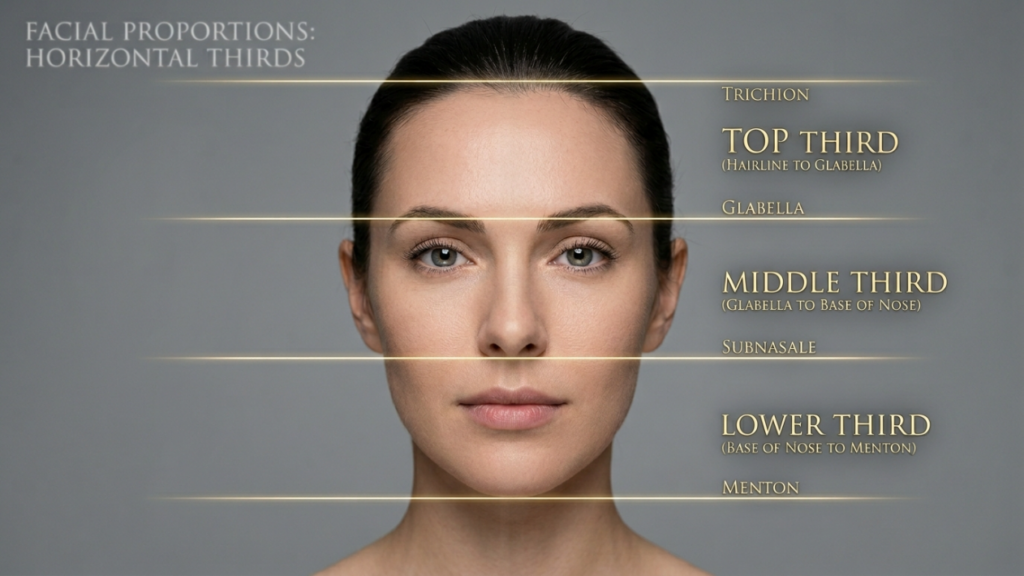
Le nombre d'or Le nombre d'or (environ 1,618) est un principe mathématique depuis longtemps associé à la beauté et à l'harmonie dans l'art, l'architecture et la nature. En esthétique faciale, il sert de guide pour obtenir des proportions équilibrées entre les différents traits du visage, tels que le front, le tiers moyen et le tiers inférieur. Pour les femmes transgenres subissant une féminisation faciale, le respect de ces principes garantit que les modifications chirurgicales accentuent la féminité sans perturber l'harmonie naturelle du visage.
Par exemple, dans modelage du front, L’objectif n’est pas de créer un front trop plat ou arrondi, mais d’obtenir une courbe douce et naturelle qui s’harmonise avec le reste du visage. De même, la réduction des pommettes doit viser à adoucir le milieu du visage tout en préservant le soutien structurel des voies nasales et des tissus environnants. Lorsque ces interventions sont réalisées avec retenue esthétique, Le résultat est un visage d'apparence naturellement féminine, plutôt que modifié chirurgicalement.

L'importance de la contention : éviter les complications fonctionnelles et esthétiques
La féminisation excessive peut entraîner diverses complications, tant fonctionnelles qu'esthétiques. L'un des risques les plus importants est obstruction des voies nasales, ce qui peut se produire lorsque la réduction des pommettes ou d'autres interventions sur le tiers moyen du visage compromettent l'intégrité structurelle des valves nasales. Une étude menée par Frontières de la chirurgie (2025) ont constaté que les patients ayant subi un remodelage agressif du tiers moyen du visage présentaient une 20% augmentation de la résistance des voies nasales, Certains patients développent un collapsus symptomatique de la valve nasale. Ceci souligne l'importance de préserver le soutien latéral du nez lors des interventions de chirurgie de féminisation faciale.
Parmi les autres complications potentielles d'une féminisation excessive, on peut citer :
- Dégâts nerveux: Une réduction osseuse trop agressive ou une manipulation des tissus mous peuvent endommager les nerfs faciaux, entraînant un engourdissement, des picotements ou une perte de sensation dans les joues, les lèvres ou le menton.
- Mauvaise consolidation osseuse : Un retrait osseux excessif peut affaiblir le squelette facial, augmentant ainsi le risque de fractures, de résorption osseuse ou de cicatrisation retardée.
- Apparence anormale : Une correction excessive peut donner un aspect “ chirurgical ” ou “ exagéré ”, où le visage perd son individualité et paraît générique ou figé comme un masque.
- Irrégularités des tissus mous : Les interventions invasives peuvent entraîner un relâchement des tissus mous, une asymétrie ou des irrégularités de contour, pouvant nécessiter une chirurgie de révision pour corriger ces problèmes.
Ces complications soulignent l'importance de précision chirurgicale et retenue esthétique. Comme indiqué dans une étude de 2026 Open mondial de chirurgie plastique et reconstructive, Les meilleurs résultats en chirurgie de fémur sont obtenus lorsque les chirurgiens donnent la priorité à planification individualisée et modifications conservatrices qui respectent l'anatomie unique du patient.

Le rôle de la précision chirurgicale dans la chirurgie esthétique du visage
La précision chirurgicale est la pierre angulaire du succès de la féminisation faciale. Les progrès en Imagerie 3D et planification chirurgicale virtuelle (VSP) Ces outils ont révolutionné le domaine, permettant aux chirurgiens de simuler les interventions et d'en prédire les résultats avec une précision sans précédent. Ils leur permettent de planifier les ostéotomies, les réductions osseuses et les ajustements des tissus mous au millimètre près, minimisant ainsi les risques de surcorrection et de complications.
Par exemple, dans le cadre d'une féminisation du menton, la planification chirurgicale virtuelle permet aux chirurgiens de déterminer la quantité exacte d'os à retirer ou à remodeler pour obtenir un contour plus doux et plus féminin, sans compromettre l'intégrité structurelle de la mâchoire. De même, dans le cadre d'un remodelage du front, l'imagerie 3D aide les chirurgiens à visualiser l'impact de la réduction osseuse sur le profil facial global, garantissant ainsi que les modifications accentuent la féminité tout en préservant les proportions naturelles.
Une étude de 2026 sur Journal de chirurgie plastique, reconstructive et esthétique ont constaté que les patients ayant subi une FFS avec VSP ont rapporté taux de satisfaction plus élevés et moins de complications par rapport à ceux qui ont bénéficié d'une planification chirurgicale traditionnelle. Ceci souligne le rôle crucial de la technologie dans la réalisation des résultats naturels et harmonieux.
Stratégies pour obtenir des résultats naturels
Pour éviter le piège de la ‘ féminisation excessive ’ et obtenir des résultats naturels et harmonieux, les chirurgiens et les patientes devraient envisager les stratégies suivantes :
1. Planification chirurgicale individualisée
L'anatomie faciale de chaque patiente est unique, et la chirurgie de féminisation faciale doit être adaptée à ses besoins spécifiques. Une évaluation préopératoire approfondie, incluant l'imagerie 3D et la planification virtuelle du visage, est essentielle pour identifier les interventions les plus appropriées et déterminer le degré optimal de modification. Ceci garantit que les interventions chirurgicales mettent en valeur la féminité sans perturber l'harmonie naturelle du visage.
2. Réduction osseuse conservatrice
Les interventions de réduction osseuse, comme le remodelage des pommettes ou de la mâchoire, doivent être réalisées avec précaution afin d'éviter d'affaiblir le squelette facial. Les ostéotomies segmentaires, qui préservent l'intégrité structurelle de l'os, sont souvent privilégiées par rapport à un remodelage ou une ablation osseuse plus importants. Cette approche minimise le risque de complications telles que la résorption osseuse ou une mauvaise consolidation.
3. Préservation des tissus mous
Les tissus mous jouent un rôle essentiel dans l'esthétique et la fonction du visage. Une manipulation trop agressive de ces tissus peut entraîner un relâchement cutané, une asymétrie ou des irrégularités de contour. Des techniques telles que greffe de graisse ou approches minimalement invasives peut améliorer les contours du visage tout en préservant l'intégrité des tissus mous.
4. Procédures par étapes pour les cas complexes
Chez les patients nécessitant plusieurs interventions, le fractionnement des opérations peut réduire le risque de complications et favoriser une meilleure adaptation des tissus mous. Par exemple, le remodelage du front et la réduction des pommettes peuvent être réalisés en plusieurs étapes afin de minimiser l'œdème, d'améliorer la cicatrisation et d'obtenir un résultat plus naturel.
5. Soins et surveillance postopératoires
Une surveillance postopératoire étroite est essentielle pour identifier et traiter rapidement les complications. Les patients doivent être informés des signes de complications, tels qu'un gonflement excessif, un engourdissement ou une difficulté à respirer, et encouragés à consulter rapidement un médecin si ces symptômes apparaissent. Des consultations de suivi régulières permettent aux chirurgiens d'évaluer la cicatrisation et d'apporter les ajustements nécessaires.
Le rôle du chirurgien : concilier art et précision
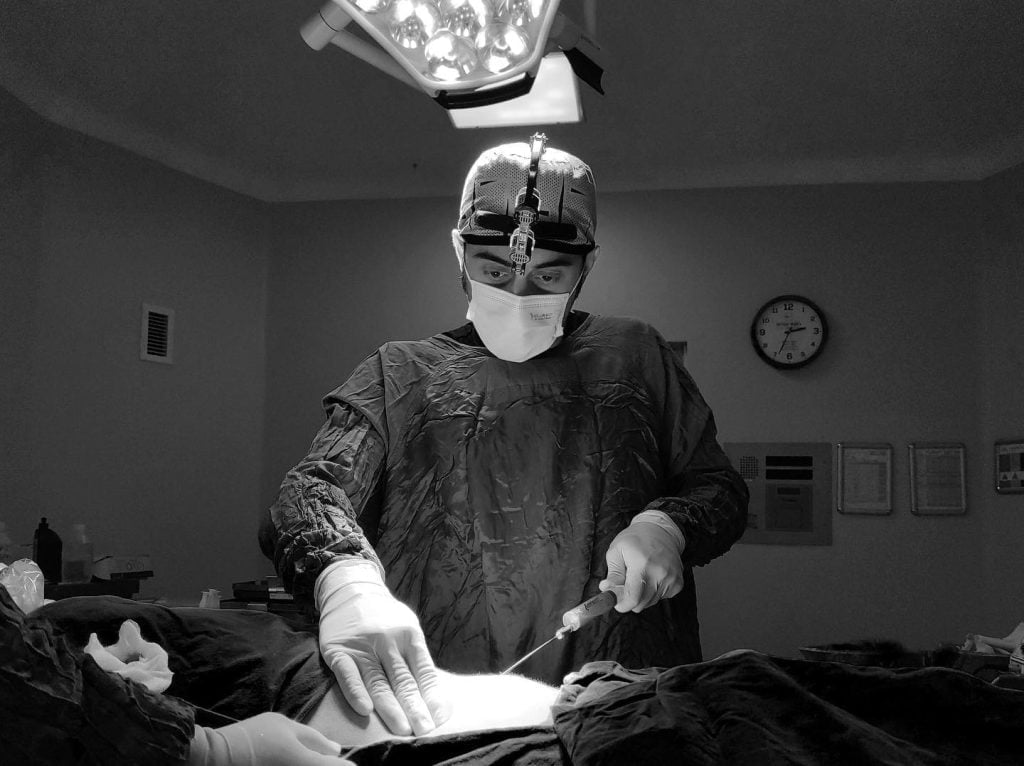
En tant que chirurgiens, notre responsabilité dépasse la simple exécution technique. Nous devons également servir de gardiens de la retenue esthétique, en veillant à ce que nos patients obtiennent des résultats à la fois féminine et naturelle. Cela nécessite une compréhension approfondie de l'esthétique faciale, un engagement envers des soins personnalisés et la capacité de résister à la tentation de surcorriger dans la poursuite d'un résultat idéal.
Les principes clés pour les chirurgiens comprennent :
- Collaboration multidisciplinaire : La collaboration avec des spécialistes en rhinoplastie, en voies respiratoires et en chirurgie craniofaciale garantit que tous les aspects de l'anatomie faciale du patient sont pris en compte, minimisant ainsi le risque de complications fonctionnelles.
- Consentement éclairé : Les patientes doivent être pleinement informées des risques liés à une féminisation excessive, notamment des complications fonctionnelles et du risque d'un aspect non naturel. Cela leur permet de prendre des décisions éclairées concernant leurs soins.
- Formation continue : Se tenir au courant des dernières recherches et techniques en matière de chirurgie faciale permet aux chirurgiens d'affiner leur approche et d'adopter des pratiques fondées sur des preuves qui privilégient les résultats naturels.
- Soins centrés sur le patient : L'adaptation des plans chirurgicaux à l'anatomie et aux objectifs uniques de chaque patiente garantit que les résultats correspondent à sa vision de la féminité, plutôt qu'à une norme idéalisée ou générique.

Conclusion : L’art de la retenue dans la chirurgie esthétique du visage
La chirurgie de féminisation faciale est un outil puissant pour harmoniser les traits du visage avec l'identité de genre, mais son succès dépend de retenue esthétique et précision chirurgicale. Le piège de la ‘ féminisation excessive ’ représente un risque réel, avec des conséquences potentielles allant de complications fonctionnelles à une apparence non naturelle. En adhérant aux principes de harmonie du visage et le nombre d'or, et, en privilégiant des modifications individualisées et conservatrices, les chirurgiens peuvent aider leurs patients à obtenir des résultats à la fois féminine et authentiquement naturelle.
L'avenir de la chirurgie de féminisation faciale repose sur notre capacité à allier art et précision, afin de garantir à chaque patient des soins de la plus haute qualité. Face à l'évolution constante de ce domaine, il est de notre responsabilité de le promouvoir. retenue esthétique et excellence chirurgicale, créant des résultats qui responsabilisent et valorisent sans compromettre la santé ni l'individualité.
Questions fréquemment posées
Qu’est-ce que le piège de la ‘ surféminisation ’ dans la chirurgie de féminisation faciale (FFS) ?
Le piège de la ‘ féminisation excessive ’ désigne la tendance à recourir à des interventions chirurgicales trop invasives pour obtenir une apparence ‘ hyper-féminine ’. Cela peut entraîner une perte d'harmonie du visage, un aspect artificiel et des complications fonctionnelles telles qu'une obstruction des voies nasales ou des lésions nerveuses.
Comment le nombre d'or s'applique-t-il à la chirurgie de féminisation faciale ?
Le nombre d'or (environ 1,618) est un principe mathématique qui permet d'obtenir des proportions harmonieuses entre les différents traits du visage. En chirurgie de féminisation faciale, il sert de modèle pour sublimer la féminité tout en préservant l'harmonie naturelle, garantissant ainsi que des modifications telles que le remodelage du front ou la réduction des pommettes s'intègrent parfaitement au reste du visage.
Quels sont les risques d'une féminisation excessive dans le cadre d'une chirurgie de féminisation faciale ?
Une féminisation excessive peut entraîner plusieurs complications, notamment une obstruction des voies nasales, des lésions nerveuses, une mauvaise consolidation osseuse, un aspect non naturel et des irrégularités des tissus mous. Ces risques soulignent l'importance de la précision chirurgicale et de la retenue esthétique dans la féminisation faciale.
Comment la planification chirurgicale virtuelle (VSP) peut-elle améliorer les résultats de la chirurgie FFS ?
La planification chirurgicale virtuelle (PCV) permet aux chirurgiens de simuler les interventions et d'en prédire les résultats avec une précision millimétrique. Cette technologie facilite la planification des ostéotomies, des réductions osseuses et des ajustements des tissus mous, minimisant ainsi les risques de surcorrection et de complications. Des études montrent que les patients ayant subi une chirurgie de féminisation faciale avec PCV présentent des taux de satisfaction plus élevés et moins de complications.
Quelles stratégies les chirurgiens peuvent-ils utiliser pour obtenir des résultats naturels en matière de féminisation faciale ?
Les chirurgiens peuvent obtenir des résultats naturels grâce à une planification chirurgicale personnalisée, une réduction osseuse conservatrice, la préservation des tissus mous, des interventions en plusieurs étapes pour les cas complexes et une surveillance postopératoire étroite. Ces stratégies contribuent à sublimer la féminité tout en préservant l'harmonie du visage et en minimisant les complications.
Pourquoi la retenue esthétique est-elle importante en chirurgie de féminisation faciale ?
La retenue esthétique est essentielle car elle permet aux interventions chirurgicales de sublimer la féminité sans altérer l'harmonie naturelle du visage. Des interventions trop invasives peuvent engendrer des complications fonctionnelles et un aspect artificiel, tandis que des approches conservatrices et personnalisées offrent des résultats à la fois féminins et authentiques.
Quel rôle joue le chirurgien pour éviter une féminisation excessive ?
Le rôle du chirurgien est d'allier art et précision, en veillant à la justesse esthétique. Cela implique une collaboration multidisciplinaire, le consentement éclairé, une formation continue et une prise en charge centrée sur la patiente afin que les résultats correspondent à sa vision de la féminité, tout en évitant toute surcorrection.