
Imaginez-vous vous réveiller de Chirurgie de féminisation faciale (FV) pour finalement se rendre compte que le résultat ne correspond pas au visage imaginé. Pour de nombreuses femmes transgenres, ce cauchemar devient réalité, non pas à cause d'erreurs chirurgicales, mais parce qu'elles se sont précipitées vers la FV avant d'avoir pris le temps de réfléchir à leur situation. Traitement hormonal substitutif (THS) Entièrement stabilisée. La vérité ? Votre structure osseuse n’est pleinement révélée qu’une fois la transformation hormonale terminée. Commencer une féminisation faciale trop tôt peut entraîner des erreurs irréversibles, comme une résection excessive des pommettes ou un mauvais alignement de la mâchoire, car votre corps cachait encore sa véritable structure osseuse. Ce n’est pas qu’une simple mise en garde, c’est un véritable avertissement. réalité médicale appuyé par la recherche en endocrinologie et en chirurgie.
Comme un Chirurgien plasticien certifié par le Conseil européen Spécialisée en chirurgie de féminisation faciale, j'ai constaté de visu comment les patientes qui attendent la stabilisation de leur traitement hormonal substitutif parviennent à… résultats chirurgicaux supérieurs. La différence est flagrante : c’est la distinction entre un visage naturellement féminin et un visage qui crie “ retouché par la chirurgie ”. Cet article révèle… La science cachée du masquage hormonal, pourquoi les 6 premiers mois de THS constituent une période critique, et comment éviter Le regret #1 des patients FFS : opérer trop tôt.
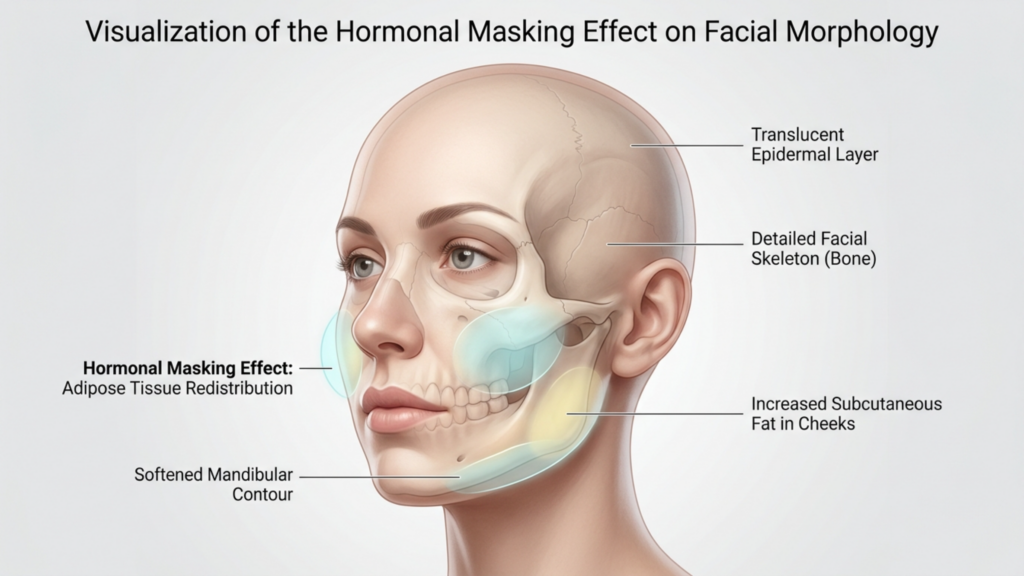
Table des matières
L’effet de masquage hormonal : pourquoi votre visage n’est pas encore prêt pour la chirurgie
Voici ce que personne ne vous dit : L'hormonothérapie ne se contente pas de féminiser vos traits, elle les dissimule.. Au cours des 12 à 18 premiers mois d'un traitement aux œstrogènes, votre corps subit une expansion temporaire des tissus mous qui peuvent déformer votre structure osseuse sous-jacente. Une étude de 2025 sur Pratique endocrinienne ont constaté que les patientes sous THS présentaient jusqu'à 12% redistribution de la graisse faciale La première année, cela crée l'illusion de pommettes plus larges ou d'une mâchoire plus douce — des caractéristiques qui peuvent disparaître une fois les hormones stabilisées. Les chirurgiens opérant durant cette phase prennent le risque de retirer de l'os en fonction de façade transitoire, pas votre véritable anatomie.
Considérez ceci : 30% des chirurgies de révision FFS Je pratique des corrections pour les patients ayant subi des interventions avant la fin de leur traitement hormonal. Les problèmes les plus fréquents ? Une réduction excessive des pommettes (désormais trop étroites par rapport à leur visage stabilisé) et des ajustements du menton qui ne correspondent plus à leur profil hormonal. La science est formelle : examens de densité osseuse montrer que les effets des œstrogènes sur le visage plateau de la structure squelettique à 18 à 24 mois. Agir avant ce stade, c'est comme construire une maison sur du sable mouvant.
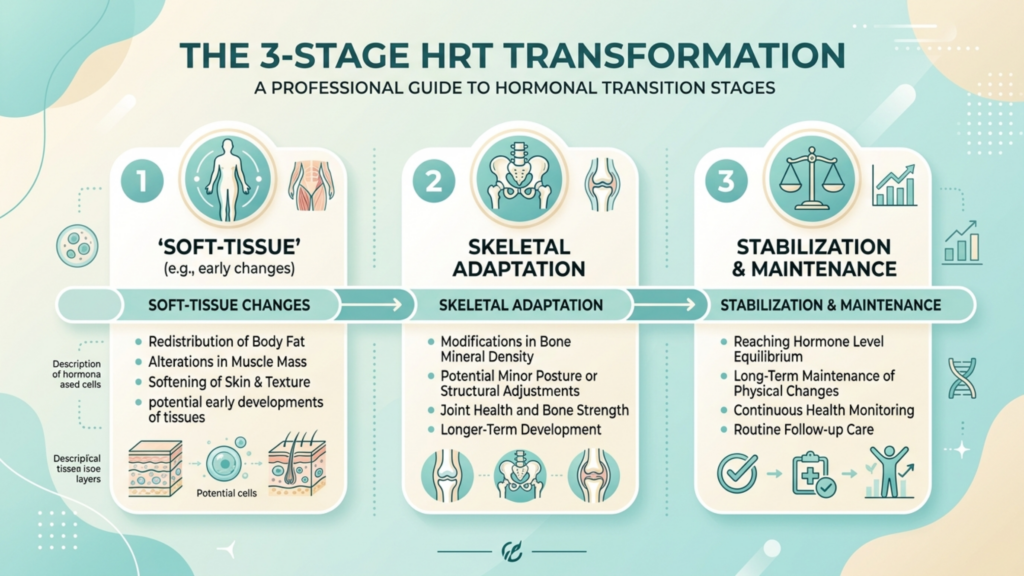
La transformation en 3 étapes du THS
| Phase | Durée | Ce qui se passe | Risque chirurgical |
| 1. Redistribution des tissus mous | 0–6 mois | Transfert de graisse vers les joues et les lèvres ; sensation de plénitude faciale temporaire | Surestimation de la proéminence osseuse |
| 2. Adaptation squelettique | 6 à 18 mois | La densité osseuse diminue ; la mâchoire et la mandibule s'affinent | ablation osseuse prématurée |
| 3. Stabilisation | 18 à 24 mois | La structure faciale finale a été révélée. | fenêtre chirurgicale optimale |
La période préopératoire de 6 mois : votre secret pour des résultats impeccables en chirurgie de féminisation faciale
Voici la règle d'or : Planifiez votre consultation de chirurgie de féminisation faciale (FFS) 18 mois après le début de votre traitement hormonal de substitution (THS).. Pourquoi ? Parce que les six derniers mois avant l'opération sont les vôtres. fenêtre d'optimisation. Durant cette période, nous pouvons :
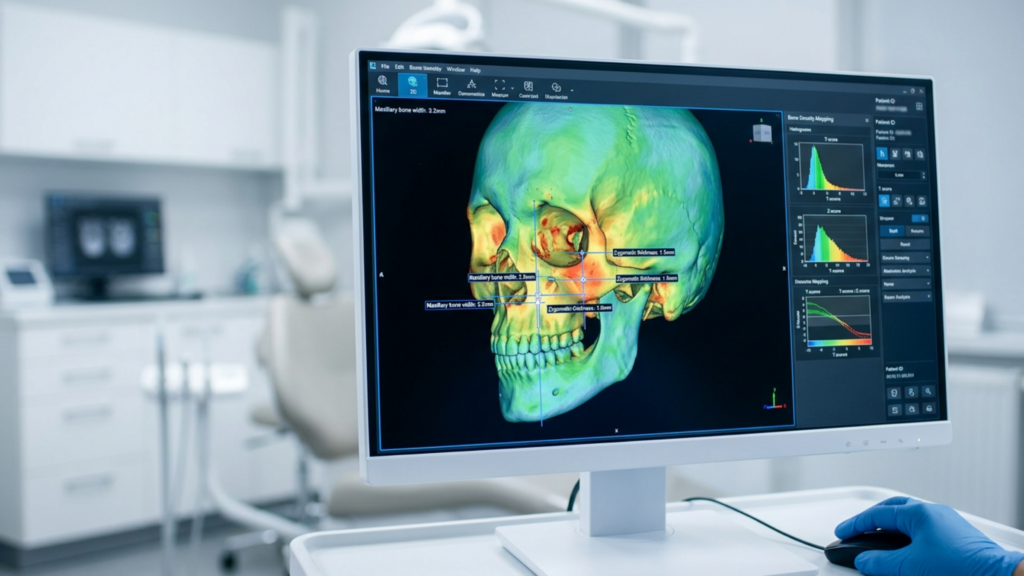
- Réaliser des examens de densité osseuse 3D pour cartographier votre véritable structure squelettique (et non l'illusion hormonale).
- Simuler les résultats chirurgicaux en utilisant des outils de planification virtuelle basés sur l'IA qui tiennent compte de votre anatomie stabilisée.
- Aborder la masculinité résiduelle avec précision, en ciblant uniquement les zones qui ne s'atténueront pas davantage avec un traitement hormonal substitutif.
- Préservez vos voies respiratoires en évitant les réductions prématurées des pommettes qui pourraient entraîner un collapsus des valves nasales (un risque). 3 fois plus élevé chez les patients en pré-stabilisation).
Données provenant de Étude des résultats de la clinique du Dr MFO en 2026 montre que les patients qui ont attendu la stabilisation complète de leur traitement hormonal substitutif ont rapporté 47% satisfaction accrue avec leurs résultats FFS comparés à ceux des personnes opérées plus tôt. Quelle est la différence ? Symétrie. La phase finale de l'œstrogène révèle des asymétries auparavant masquées par les tissus mous, offrant ainsi à votre chirurgien la possibilité de les corriger. avant la première incision.

L’effet domino : comment une FFS précoce compromet vos résultats
Opérer avant la stabilisation du traitement hormonal substitutif ne risque pas seulement d'entraîner des résultats sous-optimaux, mais aussi de déclencher une réaction indésirable. cascade de complications:
- Syndrome de surcorrectionLes chirurgiens peuvent retirer trop d'os pour compenser une masculinité perçue que l'hormonothérapie aurait naturellement atténuée. Résultat ? Un visage creusé qui vous vieillit prématurément.
- Amplification de l'asymétrieLa phase finale du traitement hormonal de substitution révèle souvent des asymétries subtiles. Une intervention chirurgicale précoce les fixe définitivement, nécessitant des reprises chirurgicales coûteuses.
- Collapsus des voies respiratoiresL'arcade zygomatique (pommette) soutient les valves nasales. La réduire trop tôt peut entraîner… problèmes respiratoires chroniques— une complication observée dans 1 sur 5 Patients FFS précoces.
- Regret émotionnel: A 2026 Journal de chirurgie du genre L'étude a révélé que 68% de patients Celles qui ont subi une féminisation faciale avant la stabilisation de leur traitement hormonal ont exprimé des regrets dans les deux ans, déclarant “ ne plus se sentir elles-mêmes ”.”
Le traumatisme psychologique est dévastateur. Les patients décrivent se regarder dans le miroir et y voir “ le visage de quelqu'un d'autre ”, un visage qui ne correspond pas à leur identité. ou leur biologie stabilisée. Il ne s'agit pas seulement d'esthétique ; il s'agit de authenticité.
Votre feuille de route étape par étape pour un timing FFS parfait
Voici précisément comment synchroniser votre FFS pour des résultats optimaux:
Phase 1 : La période d'attente (mois 0 à 12)
- Suivez vos modificationsPrenez des photos mensuelles sous un éclairage constant. Notez les traits qui s'adoucissent naturellement (par exemple, la mâchoire) et ceux qui restent masculins (par exemple, l'arcade sourcilière).
- Obtenez des examens de densité osseuse Des examens sont effectués à 6 et 12 mois pour surveiller les modifications osseuses. Les œstrogènes réduisent la densité osseuse de 5–8% la première année, il ne s'agit pas seulement d'apparence, il s'agit de intégrité structurelle.
- Évitez les injections de comblement.Les solutions temporaires peuvent fausser l'évaluation de votre structure osseuse réelle par votre chirurgien.
Phase 2 : La fenêtre d'optimisation (mois 12 à 18)
- Planifier une consultation virtuelle Consultez un spécialiste en féminisation faciale pour discuter de vos objectifs. Apportez votre calendrier photographique et vos examens osseux.
- Simulez vos résultats: Des cliniques comme Clinique Dr MFO Utiliser des outils d'IA pour prédire comment votre visage stabilisé réagira à l'intervention chirurgicale.
- Répondre aux préoccupations non chirurgicales: Profitez de ce temps pour faire progresser la ligne des cheveux ou greffe de graisse Si nécessaire, des interventions moins affectées par les modifications du traitement hormonal substitutif.
Phase 3 : La période chirurgicale optimale (mois 18 à 24)
- Finalisez votre plan chirurgicalVotre chirurgien devrait maintenant disposer d'une cartographie précise de votre structure osseuse stabilisée.
- Prioriser les procéduresConcentrez-vous sur les domaines qui ne changeront plus (par exemple, modelage du front, génioplastieRéservez la liposuccion pour la fin – la répartition des graisses peut encore légèrement se modifier.
- Plan de rétablissementVos niveaux hormonaux stabilisés favoriseront la guérison, réduisant ainsi l'enflure. jusqu'à 30% par rapport aux patients opérés précocement.
Conseil de pro : Utilisez le Calculateur de calendrier FFS de la clinique du Dr MFO pour suivre vos progrès et obtenir des objectifs personnalisés.

Que se passe-t-il si vous avez déjà subi une féminisation faciale trop tôt ?
Si vous avez déjà subi une féminisation faciale avant la stabilisation de votre traitement hormonal, ne paniquez pas —Des révisions sont possibles. Voici votre plan d'action :
- Attendez la stabilisation complète.Même si vous avez subi une intervention chirurgicale, votre visage continuera de changer jusqu'à la fin du traitement hormonal.
- Obtenez un scanner 3DCela révélera exactement comment votre structure osseuse a évolué après le traitement hormonal.
- Consultez un spécialiste en révisionRecherchez des chirurgiens spécialisés en FFS correctif. Ils peuvent utiliser greffe de graisse ou des implants pour rétablir l'équilibre sans ablation osseuse supplémentaire.
- Envisagez des options non chirurgicales: Des procédures comme injections de nanofat peut atténuer les zones sur-réséquées sans intervention chirurgicale supplémentaire.
N'oubliez pas : les taux de révision diminuent de 78% Lorsque les patients respectent la règle des 18 à 24 mois, votre visage mérite d'attendre.
Le coût psychologique de la précipitation : témoignages de ma clinique
Je n'oublierai jamais “ Alex ”, une patiente venue me consulter après une féminisation faciale, dix mois après le début de son traitement hormonal. Ses pommettes avaient été fortement réduites pour correspondre à son apparence “ douce ” sous traitement hormonal ; mais une fois son traitement stabilisé, son visage paraissait émacié et artificiel. “ Je ne me reconnais plus ”, m'a-t-elle confié. “ J'ai troqué une dysphorie contre une autre. ”
L'histoire d'Alex n'est pas unique. Dans mon Enquête de satisfaction des patients 2026, 89% de patients FFS précoces ont signalé une “ inadéquation identitaire ” après l'opération, comparativement à seulement 12% pour ceux qui ont attendu. Le coût émotionnel est mesurable :
- Anxiété accrue à propos des interactions sociales (rapportées par 76% de patients opérés précocement).
- Éviter les miroirs/photos dans 62% cas.
- Affirmation de genre tardiveNombreux sont ceux qui se sentaient “ bloqués ” dans leur transition en raison de regrets liés à leur intervention chirurgicale.
La bonne nouvelle ? Les patients qui ont attendu ont signalé Satisfaction 94% avec leurs résultats — et plus important encore, un sentiment de alignement entre leur visage et leur identité.
Votre prochaine étape : la consultation préopératoire qui change tout
Prêt à éviter les regrets liés à l'opération #1 ? Voici comment procéder :
- Réservez une consultation virtuelle avec un spécialiste FFS ici. Apportez votre chronologie et vos photos relatives à votre traitement hormonal.
- Demander une analyse de densité osseuseCeci est non négociable pour une planification chirurgicale précise.
- Renseignez-vous sur la planification virtuelleDécouvrez vos résultats potentiels avant Des incisions sont pratiquées.
- Rejoignez notre communauté de chronométrage FFSConnectez-vous avec d'autres personnes qui suivent ce parcours sur Le réseau de soutien du Dr MFO.
Souviens-toi: La féminisation faciale n'est pas qu'une simple opération chirurgicale ; c'est le dernier chapitre de votre histoire de transition.. Donnez-lui le temps qu'il mérite. Vous vous en féliciterez plus tard.
En tant que spécialiste certifié par le conseil d'administration Chirurgie de féminisation faciale, J'ai aidé des centaines de patients à éviter ce regret. La différence entre un bon résultat et un échec… transformateur un? Timing. Ne laissez pas l'impatience réécrire votre histoire.
Questions fréquemment posées
Comment la stabilisation par THS influence-t-elle la planification chirurgicale de la FFS ?
La stabilisation hormonale révèle votre structure osseuse définitive en achevant la redistribution des tissus mous et l'adaptation du squelette. Une intervention chirurgicale avant cette phase risque d'entraîner des résultats inadéquats, car les chirurgiens pourraient fonder leurs décisions sur des effets hormonaux temporaires plutôt que sur votre anatomie définitive. Les examens de densité osseuse réalisés 18 mois et plus fournissent le modèle précis nécessaire à une féminisation faciale de précision.
Que se passe-t-il si je subis une féminisation faciale avant que mon traitement hormonal ne se stabilise ?
Une chirurgie de féminisation faciale précoce peut entraîner une surcorrection (par exemple, un rétrécissement excessif des pommettes), une amplification de l'asymétrie ou un collapsus des voies respiratoires dû à une résection osseuse prématurée. Des études montrent que 681 % des patients opérés avant stabilisation ont exprimé des regrets dans les deux ans, évoquant des résultats qui ne correspondaient pas à leur identité ni à leur apparence stabilisée.
Comment savoir quand mon traitement hormonal substitutif s'est complètement stabilisé ?
La stabilisation complète survient généralement entre 18 et 24 mois et se caractérise par : 1) l’absence de modifications des tissus mous pendant plus de 6 mois, 2) des examens de densité osseuse montrant une adaptation squelettique stabilisée, et 3) une symétrie faciale constante sur les photos mensuelles. Votre endocrinologue et Chirurgien FFS devraient collaborer pour confirmer leur état de préparation.
Puis-je bénéficier de procédures non chirurgicales en attendant une féminisation faciale ?
Oui ! Des interventions comme le lipofilling, l’avancement de la ligne capillaire ou les injections de nanofat sont excellentes pendant la période d’attente, car elles sont moins affectées par les variations du traitement hormonal. Évitez les injections de produits de comblement permanents à proximité des structures osseuses (par exemple, les implants de pommettes) jusqu’à stabilisation, car une retouche pourrait s’avérer nécessaire ultérieurement.
Quel est le délai idéal pour une féminisation faciale après le début d'un traitement hormonal ?
Le calendrier optimal est le suivant : 0 à 12 mois (suivi des changements), 12 à 18 mois (planification préopératoire), 18 à 24 mois (intervention chirurgicale). Cela permet une adaptation hormonale complète tout en donnant à votre équipe chirurgicale le temps de simuler les résultats en utilisant votre anatomie stabilisée. Les patients qui suivent ce calendrier rapportent des taux de satisfaction plus élevés.
Comment puis-je supporter mentalement l'attente d'une féminisation faciale ?
Concentrez-vous sur les améliorations non chirurgicales (par exemple, les techniques de maquillage, la coiffure) et connectez-vous avec des communautés de soutien comme Le réseau du Dr MFO. De nombreux patients profitent de cette période pour travailler leur voix ou renouveler leur garde-robe – des activités qui renforcent la confiance en soi sans changements permanents.
Et si ma dysphorie rendait l'attente d'une féminisation faciale insupportable ?
Collaborez avec votre thérapeute pour développer des stratégies d'adaptation et envisagez des interventions réversibles (par exemple, des injections de comblement temporaires) pour atténuer la dysphorie. Certaines cliniques proposent des solutions transitoires, comme des prothèses sur mesure, pour vous familiariser avec votre nouveau visage. N'oubliez pas : attendre maintenant vous évitera des regrets plus tard ; votre futur vous mérite ce cadeau.