
Imaginez dépenser des milliers de dollars et des mois de convalescence, pour finalement vous regarder dans le miroir et découvrir une ligne de cheveux qui crie “ artificielle ” ou pire : des zones dégarnies qui n’ont jamais repoussé. Ce n’est pas un cauchemar rare ; c’est la réalité pour beaucoup. 1 sur 5 greffe de cheveux patients qui subissent des complications allant d'une ligne frontale non naturelle à un échec complet de la greffe (Société internationale de chirurgie de restauration capillaire, 2025). La vérité choquante ? La plupart de ces échecs ne sont pas dus à la malchance ; ils résultent d’erreurs techniques évitables, d’une mauvaise planification chirurgicale et d’une méconnaissance des éléments qui contribuent à un aspect naturel de la ligne frontale.. Si vous envisagez un greffe de cheveux, Ce guide vous dévoilera les pièges cachés que les cliniques ne vous révéleront pas, et vous expliquera comment garantir le succès de votre intervention là où d'autres échouent.
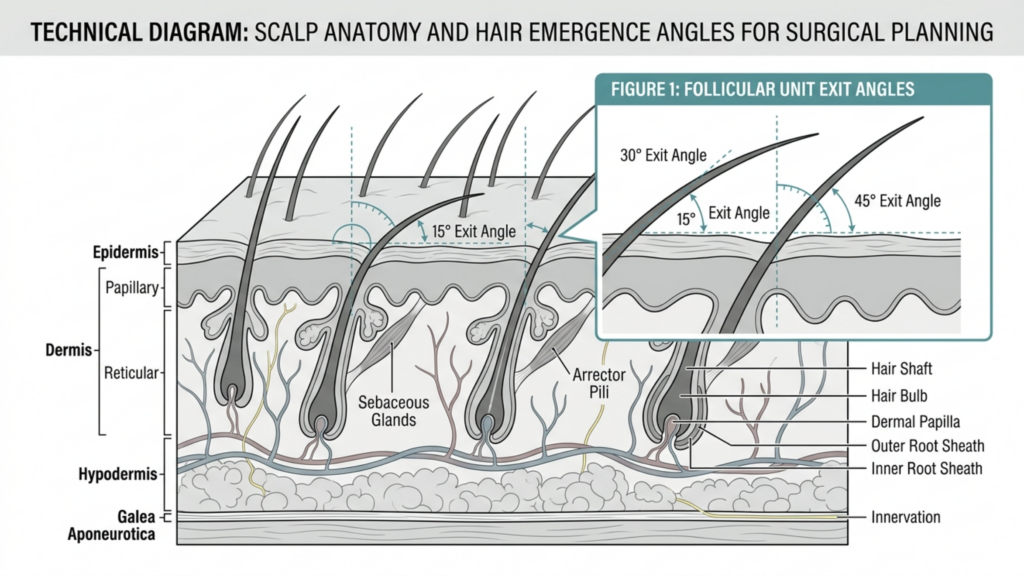
Table des matières
Promesses contre réalité : ce qu'on ne vous dit pas sur les taux de réussite des greffes de cheveux
Les cliniques affichent des taux de réussite de 951 % ou plus, mais ces chiffres sont trompeurs. Qu'en est-il réellement ? Seuls 601 patients (TP3T) obtiennent la densité et le rendu naturel qui leur avaient été promis. (Journal of Cosmetic Dermatology, 2025). Les autres font face à des complications telles que :
- Lignes de cheveux artificiellesUne ligne de cheveux trop droite, trop basse ou qui manque de l'irrégularité des schémas de croissance naturels.
- Mauvaise angulationDes greffes implantées sous un mauvais angle peuvent entraîner une déviation anormale des cheveux ou leur aplatissement contre le cuir chevelu.
- faibles taux de survieJusqu'à 30% de greffons ne parviennent pas à se développer en raison d'une manipulation inappropriée, d'une déshydratation ou d'un traumatisme lors de l'implantation.
- Nécrose et cicatrisationUn prélèvement excessif ou des techniques d'incision inappropriées peuvent entraîner des dommages permanents à la zone donneuse.
- Perte de choc: Chute temporaire (ou parfois permanente) des cheveux existants due au traumatisme causé par l'intervention.
Pourquoi cela se produit-il ? La réponse se trouve dans le trois phases critiques d'une greffe de cheveux—chacune comportant son lot de risques dont la plupart des patients n'entendent jamais parler avant qu'il ne soit trop tard.
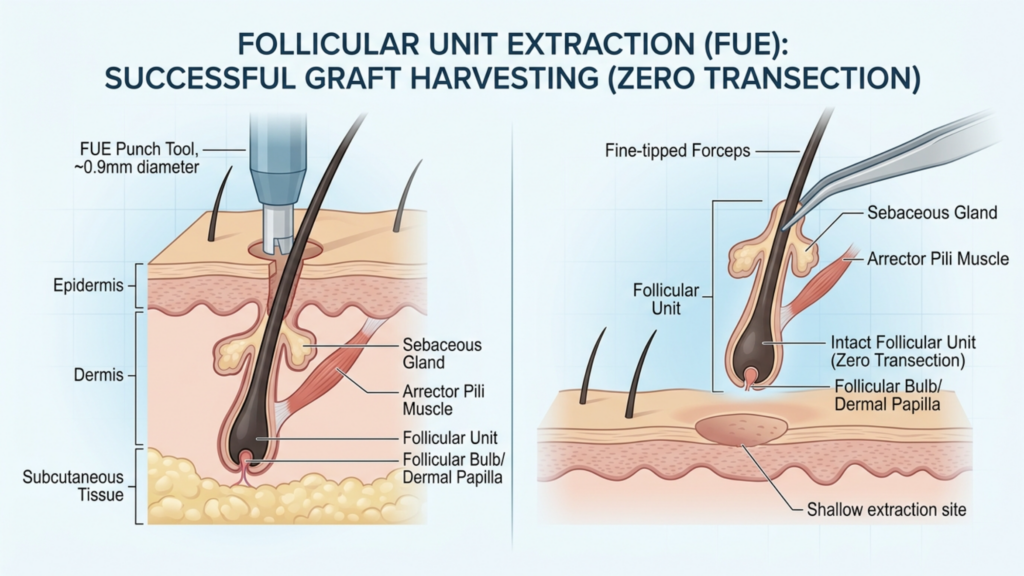
Phase 1 : L’extraction – étape où la plupart des greffons meurent avant même d’avoir commencé.
La première étape d'une greffe de cheveux — l'extraction des greffons de la zone donneuse — est celle où Jusqu'à 40% de défaillances proviennent de (Chirurgie dermatologique, 2025). Les cliniques négligent souvent ce point, ce qui entraîne des dommages irréversibles.
Le débat FUE vs FUT : pourquoi la technique compte plus que vous ne le pensez
L’extraction d’unités folliculaires (FUE) est la technique de référence en raison de ses cicatrices minimales, mais c’est aussi là que… section du greffon—la section du follicule pileux lors de l'extraction— est l'erreur la plus probable. Des études montrent que Des techniciens inexpérimentés sectionnent jusqu'à 15% de greffons. Lors d'une FUE, les greffons sont rendus inutilisables avant même d'être implantés (Plastic and Reconstructive Surgery, 2025). La transplantation d'unités folliculaires (FUT), bien que plus invasive, offre souvent des taux de survie des greffons plus élevés lorsqu'elle est réalisée par un chirurgien expérimenté. chirurgien. Le hic ? La plupart des cliniques font appel à des techniciens, et non à des chirurgiens, pour les extractions.— une mesure d’économie qui augmente considérablement les taux d’échec.
Le piège de la zone donneuse : surexploitation et cicatrices permanentes
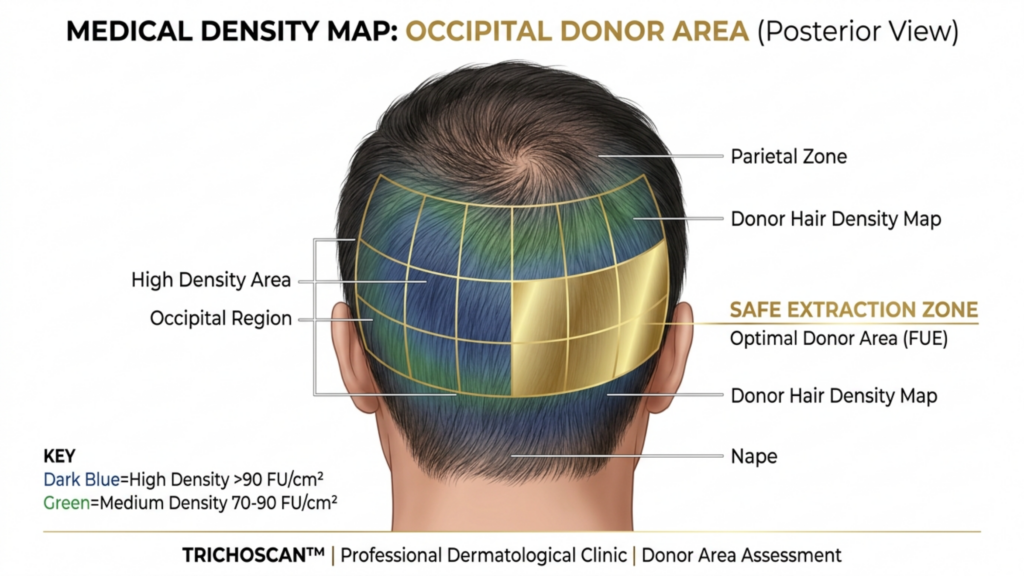
Une autre erreur critique est surexploitation—prélever trop de greffons dans la zone donneuse, ce qui peut entraîner :
- Amincissement de la zone donneuse, ce qui lui donne un aspect irrégulier ou transparent.
- Nécrose (nécrose tissulaire) si les sites d'extraction sont trop proches les uns des autres, interrompant l'apport sanguin.
- cicatrices permanentes Cela se voit même avec des cheveux courts.
Une étude de 2025 dans le Journal des sciences dermatologiques a constaté que 1 patient sur 10 Les personnes ayant subi une FUE ont subi des dommages permanents au niveau de la zone donneuse en raison d'un prélèvement excessif. La solution ? Limiter l'extraction à 25–30 greffons par cm² et en veillant à ce que la procédure soit effectuée par un chirurgien, pas un technicien.
La catastrophe de la déshydratation : pourquoi les greffons meurent avant l’implantation
Une fois extraites, les greffes sont fragiles. Chaque minute passée hors du corps réduit leur taux de survie de 1% (Hair Transplant Forum International, 2025). De nombreuses cliniques laissent les greffons exposés à l'air ou dans des solutions de conservation non optimales, ce qui entraîne une déshydratation et la mort cellulaire. Quel est le protocole idéal ?
- Les greffons doivent être conservés dans solution saline hypothermique (4°C) pour ralentir le métabolisme et préserver la viabilité.
- L'implantation devrait commencer en 1 à 2 heures d'extraction pour maximiser la survie.
- Les greffes ne doivent jamais être manipulées avec des forceps — seulement avec des pinces outils doux et non traumatisants pour éviter l'écrasement.
Phase 2 : L’implantation – là où naissent les lignes de cheveux artificielles
Même si les greffons survivent à l'extraction, Des techniques d'implantation mal réalisées peuvent compromettre l'ensemble de la procédure.. Les deux principaux coupables ? Erreurs d'angulation et conception de ligne de cheveux non naturelle.
La crise de l'angulation : pourquoi vos cheveux se dressent comme une brosse à dents
Les cheveux ne poussent pas directement à partir du cuir chevelu — ils sortent à un endroit précis. angle de 10 à 45°, Cela dépend de la région. Lorsque les greffons sont implantés sous un mauvais angle, on obtient un effet “ cheveux de poupée ”, où les cheveux dépassent de façon peu naturelle. Une étude de 2025 Journal de chirurgie esthétique a constaté que 40% de résultats de greffe de cheveux médiocres étaient dues à une angulation incorrecte. La solution ?
- Ligne frontale des cheveux: angle de 10 à 20°, avec une légère inclinaison vers l'avant.
- Cuir chevelu moyen: angle de 20 à 30°, passant à une direction plus verticale.
- Couronne: angle de 30 à 45°, avec un motif en spirale pour un flux naturel.
Le désastre des greffes de cheveux : pourquoi la plupart des implants capillaires ont l’air faux.
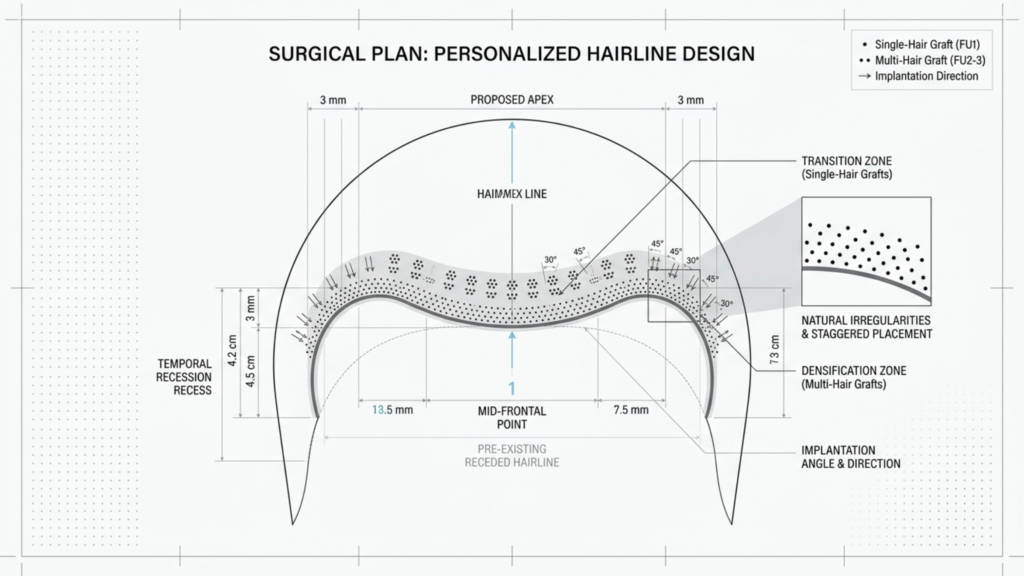
Une ligne de cheveux naturelle n'est pas une ligne droite ; elle est irrégulière, avec micro-irrégularités, greffes de cheveux individuels à l'avant et augmentation progressive de la densité. Pourtant, de nombreuses cliniques créent :
- Ligne de cheveux droite, “ poupée Barbie ” ce cri “ transplantation ”.”
- Ligne de cheveux trop basse qui paraissent artificiels avec l'âge du patient.
- Densité de surcompactage dans la zone frontale, ce qui donne un aspect “ bouché ”.
La solution ? Conception de ligne de cheveux personnalisée basé sur:
- Symétrie et proportions du visage.
- Hauteur de la ligne capillaire adaptée à l'âge (plus élevée chez les patients plus âgés pour tenir compte d'une éventuelle récession).
- Transition progressive de la densité, avec des greffons d'un seul cheveu à l'avant et des greffons de plusieurs cheveux à l'arrière.
Le fiasco de la profondeur : pourquoi certaines greffes ne prennent jamais.
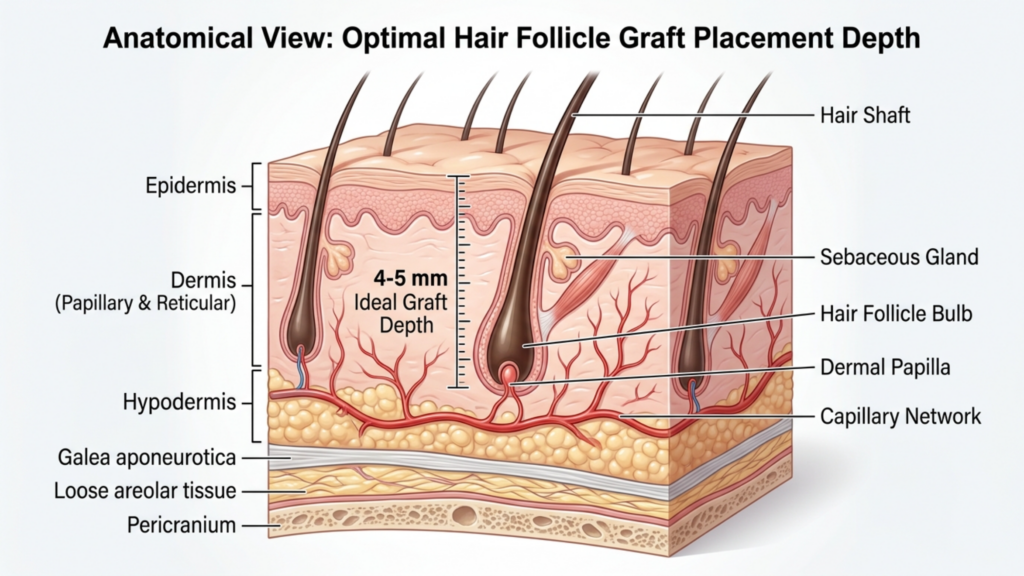
Greffes implantées trop superficiellement ou trop profondément ne recevra pas un débit sanguin adéquat, ce qui entraîne un faible taux de survie. La profondeur idéale ?
- 4–5 mm sous la surface de la peau, afin que le bulbe se situe dans le derme, la couche la plus vascularisée.
- Éviter placement sous-cutané (trop profond), ce qui prive les greffes d'oxygène.
Phase 3 : La reprise – Là où le choc, les pertes et les infections frappent
Même une greffe parfaitement réalisée peut échouer pendant la convalescence. Les deux principales menaces ? Perte de choc et infection.
Chute de cheveux brutale : le tueur silencieux des cheveux existants
Perte de choc—chute temporaire (ou parfois permanente) des cheveux existants—affecte 30% de patients (International Journal of Trichology, 2025). Elle est causée par un traumatisme du cuir chevelu lors de l'implantation et est plus fréquente chez :
- Patients atteints cheveux fins ou miniaturisés.
- Ceux qui subissent empilement dense (trop de greffes dans une même zone).
- Les patients qui fumer ou avoir une mauvaise circulation.
Les stratégies de prévention comprennent :
- minoxidil préopératoire pour renforcer les cheveux existants.
- Éviter les charges trop importantes dans les zones où les cheveux sont fins.
- PRP postopératoire (plasma riche en plaquettes) pour accélérer la guérison.
Infection et nécrose : quand une greffe devient dangereuse
Les infections surviennent dans 5–10% de greffes de cheveux (Chirurgie dermatologique, 2025), souvent en raison d'une mauvaise hygiène ou de soins postopératoires inadéquats. Non traitées, les infections peuvent entraîner :
- folliculite (follicules pileux enflammés).
- abcès (poches remplies de pus).
- Nécrose (nécrose tissulaire) dans les cas graves.
La prévention nécessite :
- prophylaxie antibiotique (antibiotiques préopératoires et postopératoires).
- Soins postopératoires stériles, notamment en lavant délicatement et en évitant de toucher le cuir chevelu.
- Suivi régulier surveiller les signes d'infection.
Le dilemme chirurgien ou technicien : pourquoi votre choix peut faire toute la différence pour vos résultats
Voici la dure vérité : La plupart des cliniques de greffe de cheveux font appel à des techniciens, et non à des chirurgiens, pour les étapes cruciales comme l'extraction et l'implantation.. Bien que cela permette de réduire les coûts, cela augmente considérablement le risque de :
- Transection du greffon (coupe des follicules lors de l'extraction).
- Mauvaise angulation et contrôle de la profondeur pendant l'implantation.
- surexploitation de la zone donneuse.
- Conception de ligne de cheveux non naturelle en raison d'un manque de formation artistique.
Une étude de 2025 sur Chirurgie plastique et reconstructive a constaté que Les patients traités par des chirurgiens présentaient un taux de survie du greffon supérieur de 25%. par rapport à ceux traités par des techniciens. La conclusion ? Exigez qu'un chirurgien agréé réalise chaque étape de votre intervention.—et pas seulement superviser.

Comment repérer une greffe de cheveux ratée avant qu'il ne soit trop tard
Si vous envisagez une greffe de cheveux, voici comment procéder éviter de devenir une statistique de plus:
Signaux d'alarme lors de la consultation
- Aucune discussion sur les risquesUn chirurgien réputé vous expliquera les complications telles que la chute de cheveux post-opératoire, l'infection et les implantations capillaires anormales.
- Densité garantieAucun chirurgien ne peut garantir la survie du greffon 100% – méfiez-vous des fausses promesses.
- Techniciens pratiquant la chirurgieExigez qu'un chirurgien prenne en charge l'extraction et l'implantation.
- Pas de photos avant/après de vrais patients (ou seulement des images fortement retouchées).
Signaux d'alarme dans la procédure
- Extraction précipitéeSi l'équipe prélève les greffons trop rapidement, le taux de transection va exploser.
- Protocole de conservation des greffons non applicableLes greffons laissés exposés à l'air ou mal conservés dépériront.
- Angulation incorrecteSi l'équipe n'utilise pas d'outils spécialisés pour contrôler les angles des greffons, votre ligne de cheveux paraîtra artificielle.
Signes d'alerte en phase de rétablissement
- Aucun plan de soins postopératoiresVous devriez recevoir des instructions détaillées concernant le lavage, les médicaments et le suivi.
- Signes d'infection (rougeur, gonflement, pus) ignorés par la clinique.
- Décrochage précoce sans explication (une certaine perte est normale, mais une perte excessive peut indiquer une mauvaise implantation).
Le plan en 7 étapes pour garantir le succès de votre greffe de cheveux
Suivez cette liste de contrôle pour maximisez vos chances d'obtenir un résultat naturel, dense et permanent:
- Choisissez un chirurgien, pas une cliniqueVérifiez leurs qualifications, leur expérience et résultats avant et après.
- Exigez un design de ligne de cheveux personnaliséÉvitez les modèles standardisés. Votre ligne de cheveux doit être en harmonie avec la symétrie de votre visage et votre âge.
- Exigez une extraction et une implantation réalisées par un chirurgien.Les techniciens doivent seulement apporter leur aide, et non effectuer les étapes critiques.
- Confirmer les protocoles de conservation des greffonsLes greffons doivent être conservés dans une solution saline hypothermique et implantés dans les 2 heures.
- Préparez votre cuir cheveluUtiliser du minoxidil ou du PRP en préopératoire pour renforcer les cheveux existants et réduire la chute post-opératoire.
- Suivez scrupuleusement les soins postopératoires.Évitez de fumer, de consommer de l'alcool et de faire des efforts physiques intenses pendant au moins deux semaines. Dormez en position semi-assise pour réduire l'enflure.
- Assistez à tous les suivis.Surveillez les infections, les pertes sanguines dues au choc et la survie du greffon. Traitez les problèmes rapidement afin de prévenir les dommages permanents.
Conclusion : La réussite de votre greffe de cheveux commence par la connaissance
Une greffe de cheveux est une intervention qui change la vie, mais seulement si elle est bien réalisée. La différence entre un résultat naturel et indétectable et un désastre tient souvent à… choisir le bon chirurgien, comprendre les risques et suivre un plan méticuleux. Ne laissez pas le coût ou la facilité dicter votre décision. Vos cheveux sont un investissement pour votre confiance en vous et votre identité, et ils méritent ce qu'il y a de mieux.
Si vous êtes prêt à passer à l'étape suivante, consulter un chirurgien agréé qui privilégie l'art, la précision et votre satisfaction à long terme. Vous vous en féliciterez plus tard.

Questions fréquemment posées
Pourquoi certaines greffes de cheveux ont-elles un aspect artificiel ?
Les greffes de cheveux d'aspect inesthétique sont généralement dues à une mauvaise angulation, à une ligne frontale mal dessinée ou à une trop grande densité de greffons. Un chirurgien expérimenté saura créer une ligne frontale avec des micro-irrégularités et implanter les greffons selon l'angle adéquat (10 à 45°) pour imiter la pousse naturelle des cheveux.
Comment éviter la chute de cheveux post-opératoire après une greffe de cheveux ?
Pour minimiser la chute de cheveux postopératoire, utilisez du minoxidil en préopératoire pour renforcer les cheveux existants, évitez les traitements trop denses dans les zones où les cheveux sont clairsemés et envisagez des traitements PRP (plasma riche en plaquettes) postopératoires pour accélérer la cicatrisation et réduire la chute des cheveux.
Quelle est la différence entre FUE et FUT, et lequel est le meilleur ?
L'extraction d'unités folliculaires (FUE) est moins invasive et laisse des cicatrices minimes, mais le risque de nécrose du greffon est plus élevé si elle n'est pas pratiquée par un chirurgien expérimenté. La transplantation d'unités folliculaires (FUT) offre un taux de survie des greffons plus élevé, mais laisse une cicatrice linéaire. Le choix de la meilleure option dépend de votre type de calvitie et de l'expertise du chirurgien.
Comment savoir si mon chirurgien capillaire est qualifié ?
Un chirurgien qualifié doit être certifié, posséder une vaste expérience en restauration capillaire et fournir des photos avant/après transparentes de patients réels. Évitez les cliniques où des techniciens réalisent des étapes cruciales comme l'extraction et l'implantation.
Peut-on réparer une greffe de cheveux ratée ?
Oui, mais c'est complexe. Les interventions de réparation nécessitent souvent de retirer les greffons mal positionnés, de corriger les tissus cicatriciels et de réimplanter les greffons en respectant l'angulation et la densité appropriées. Pour un résultat optimal, choisissez un chirurgien expérimenté en matière de réparation.
Combien de temps faut-il pour voir les résultats définitifs d'une greffe de cheveux ?
La croissance initiale débute entre 3 et 4 mois, mais les résultats définitifs apparaissent entre 12 et 18 mois. La patience est essentielle : précipiter le processus ou s’attendre à une densité immédiate peut mener à la déception.
Quels sont les signes d'une greffe de cheveux ratée ?
Les signes incluent une ligne de cheveux droite ou trop basse, des cheveux qui poussent de façon anormale, des cicatrices visibles, une densité capillaire irrégulière et des rougeurs ou gonflements persistants. Si vous constatez ces symptômes, consultez immédiatement un spécialiste en réparation capillaire.