
Et si le secret d'un visage sculpté en forme de V ne résidait pas seulement dans la génétique ou le contouring, mais dans… intervention chirurgicale de 15 minutes qui élimine définitivement les amas graisseux pour donner à vos joues un aspect plus rebondi ? Bienvenue dans le monde de bichectomie, la joue chirurgie d'amincissement cela redéfinit l'harmonie faciale dans 2026. Mais attention : si cette intervention promet une mâchoire plus définie et des pommettes plus saillantes, elle ne convient pas à tout le monde – et une personne mal adaptée peut se retrouver avec un visage émacié et un air prématurément vieilli. Alors, comment savoir si vous êtes un candidat idéal ? Et que faire ? exactement se produit lorsqu'un chirurgien Vous souhaitez vous faire retirer les boules de Bichat ? Ce guide explore en profondeur l’anatomie, les risques et le potentiel transformateur de la bichectomie, en s’appuyant sur des données cliniques et des résultats concrets.
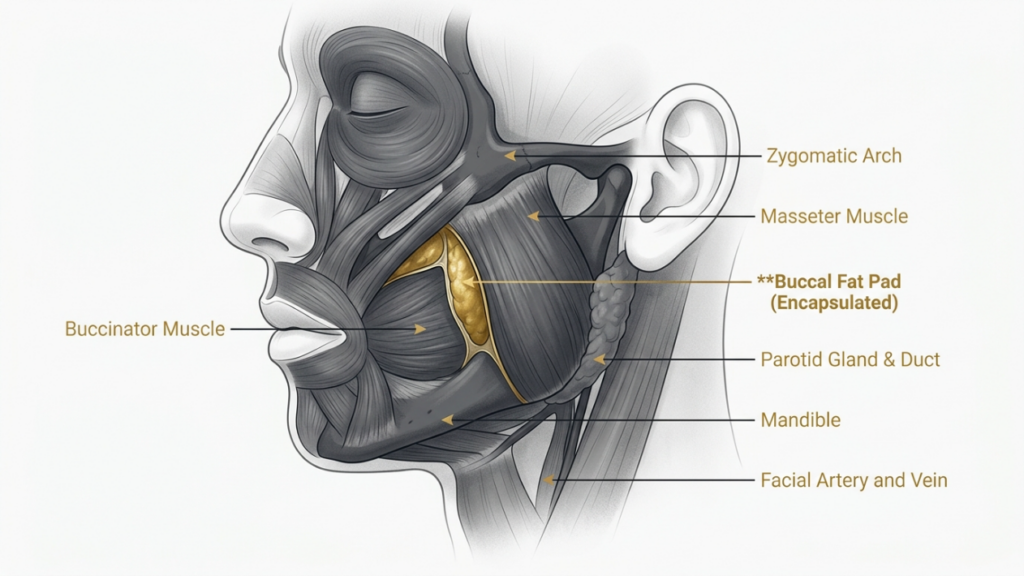
Table des matières
L'anatomie cachée : que sont les coussinets adipeux buccaux et pourquoi sont-ils importants ?
La boule de Bichat n'est pas un simple amas de graisse aléatoire, c'est un structure encapsulée hautement vascularisée Nichée entre les muscles de vos joues et votre mâchoire. Contrairement à la graisse sous-cutanée (celle que l'on peut pincer), la graisse buccale est profond, Les boules de Bichat jouent un rôle crucial dans le volume et les mouvements du visage. Le plus surprenant ? Leur taille varie énormément d’une personne à l’autre. Certaines personnes ont naturellement des boules de Bichat plus volumineuses, ce qui donne à leur visage une rondeur juvénile permanente, tandis que d’autres en ont très peu, ce qui contribue à un aspect plus anguleux.
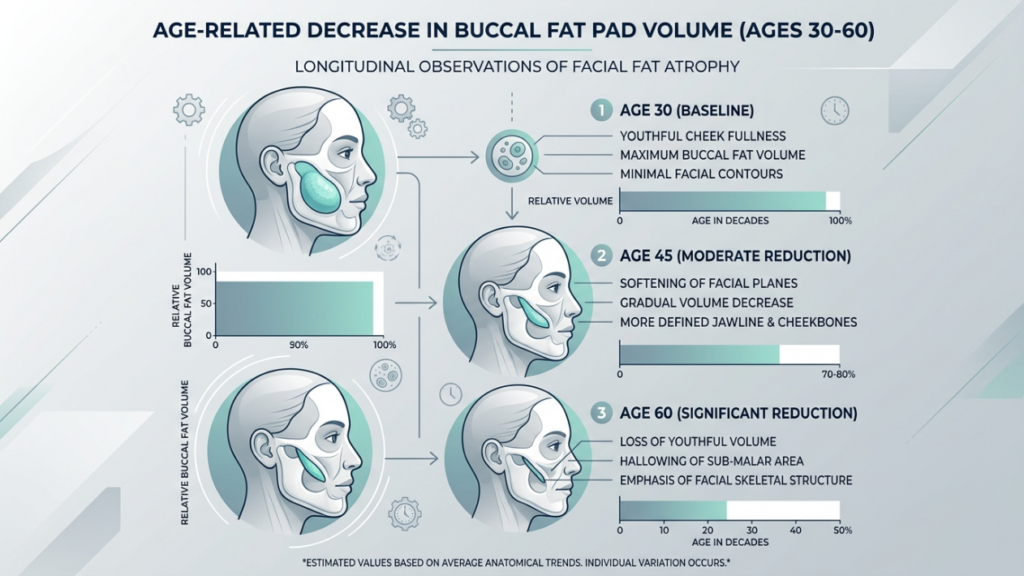
Mais voici ce qui devient fascinant : les boules de Bichat rétrécir avec l'âge. Des études menées par Journal de chirurgie craniofaciale (2025) révèlent que le volume de la graisse buccale diminue d'environ 15–20% entre 30 et 60 ans, contribuant à l'aspect “ creusé ” associé au vieillissement. Ainsi, lorsque vous optez pour une bichectomie, vous… accélération Ce processus naturel est permanent. La question n'est pas seulement de savoir si vous souhaitez des joues plus fines, mais aussi si votre visage peut supporter la perte de ce soutien structurel. (PubMed, 2025).
Le double rôle de la boule de Bichat : coussin et coupable
Les coussinets adipeux buccaux remplissent deux fonctions principales :
- Coussinet facial : Elles agissent comme un tampon protecteur pour les nerfs et les muscles du visage, absorbant les chocs lors de la mastication et des expressions faciales. C'est pourquoi une ablation agressive de la graisse buccale peut parfois entraîner… sensibilité nerveuse temporaire ou permanente.
- Influence esthétique : Leur volume influe directement sur la largeur du milieu du visage. Des boules de Bichat trop développées peuvent donner un aspect “ de hamster ”, tandis qu'une quantité minimale de graisse buccale accentue la définition des pommettes. Cependant, si vous en retirez trop, vous risquez de donner un aspect “ squelettique ”, où les joues paraissent creuses et prématurément vieillies.
Cette dualité explique pourquoi la bichectomie est à la fois révolutionnaire et risqué. Il ne s'agit pas seulement d'éliminer la graisse ; il s'agit de rééquilibrage Votre architecture faciale.
Qui est le candidat idéal pour une bichectomie ? (Et qui devrait s’enfuir à toutes jambes ?)
Tout le monde n'est pas candidat à la bichectomie, et c'est tant mieux. Le patient idéal répond généralement aux critères suivants :
- Âge 25–40 ans : Les patients plus jeunes peuvent ne pas avoir une répartition complète de la graisse faciale, tandis que les patients plus âgés risquent d'exacerber la perte de volume liée à l'âge.
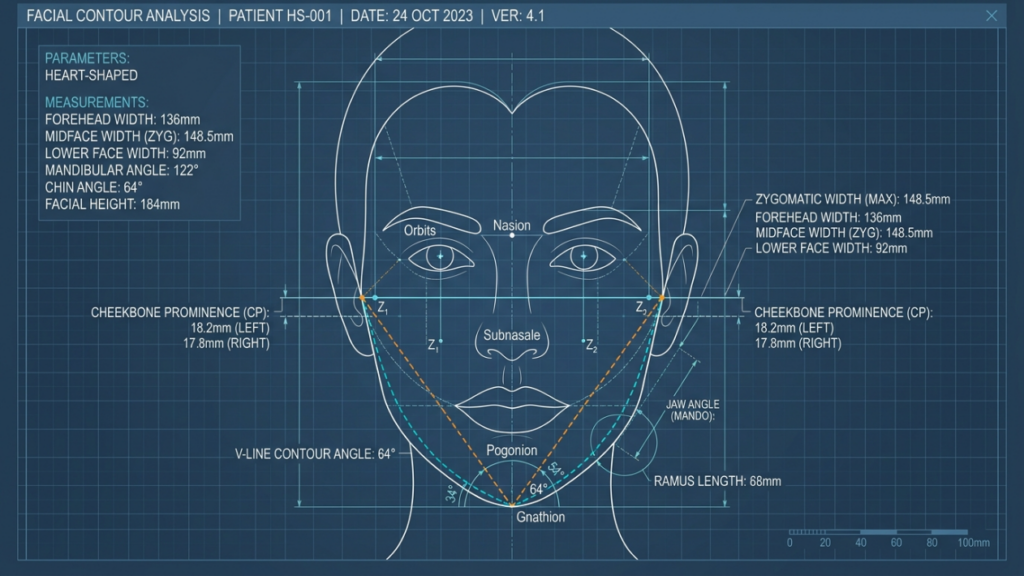
- Rond ou carré Forme du visage: Ce sont les personnes ayant des joues naturellement plus pleines qui bénéficient le plus de cette procédure, car elle crée un visage plus ovale ou en forme de cœur.
- Bonne élasticité de la peau : Les patients ayant une peau ferme et élastique s'adaptent mieux au remodelage post-opératoire. Une faible élasticité peut entraîner un relâchement cutané.
- Attentes réalistes : La bichectomie affine les joues mais ne modifie pas radicalement le contour de la mâchoire ni du menton. Il s'agit de raffinement, et non une transformation.
Inversement, drapeaux rouges inclure:
- Visages minces ou émaciés (risque de résection excessive).
- Antécédents de troubles alimentaires (risque de perte de volume exagérée).
- Fumeurs (cicatrisation altérée et risque d'infection plus élevé).
- Des objectifs irréalistes (par exemple, s’attendre à un visage “ digne d’un mannequin ” grâce à une seule intervention).
Une étude de 2026 sur Open mondial de chirurgie plastique et reconstructive a constaté que 1 patient sur 5 ayant subi une bichectomie ont regretté l'intervention en raison d'attentes non satisfaites ou de complications esthétiques. Ceci souligne la nécessité d'un consultation approfondie avec un certificat de conseil chirurgien qui se spécialise dans l'anatomie faciale (NCBI, 2026).
Déroulement de l'intervention : Que se passe-t-il lors d'une bichectomie ?
La bichectomie est généralement pratiquée sous anesthésie locale. anesthésie locale avec sédation, L'anesthésie générale peut toutefois être utilisée pour les interventions combinées. L'opération elle-même dure 15 à 30 minutes et suit les étapes suivantes :
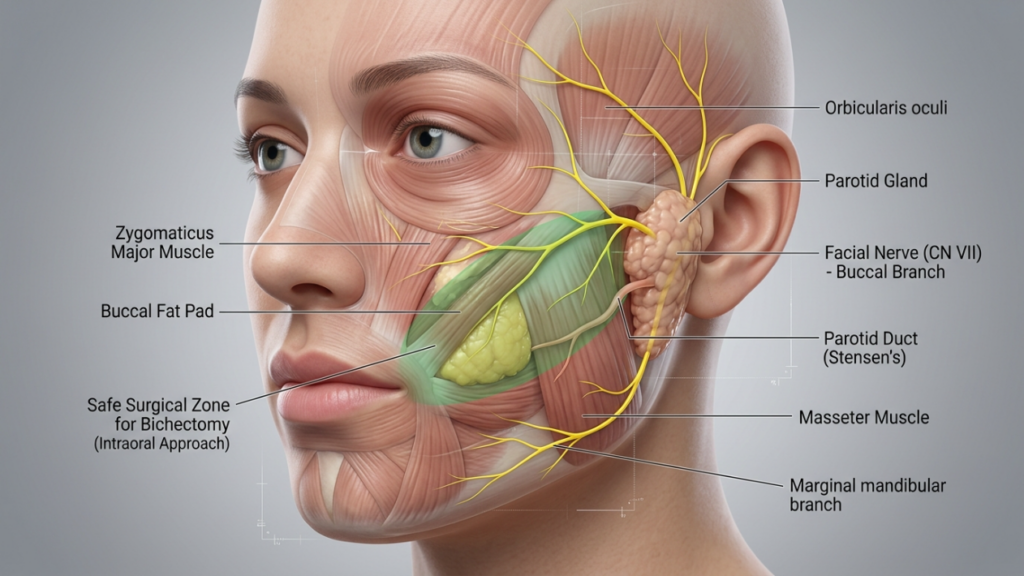
- Incision: Une petite incision (1 à 2 cm) est pratiquée. à l'intérieur de la bouche, le long de la face interne de la joue. Cela ne laisse aucune cicatrice visible.
- Exposition du coussinet adipeux : La boule de Bichat est soigneusement isolée des tissus environnants. Sa couleur jaunâtre caractéristique la rend facilement identifiable.
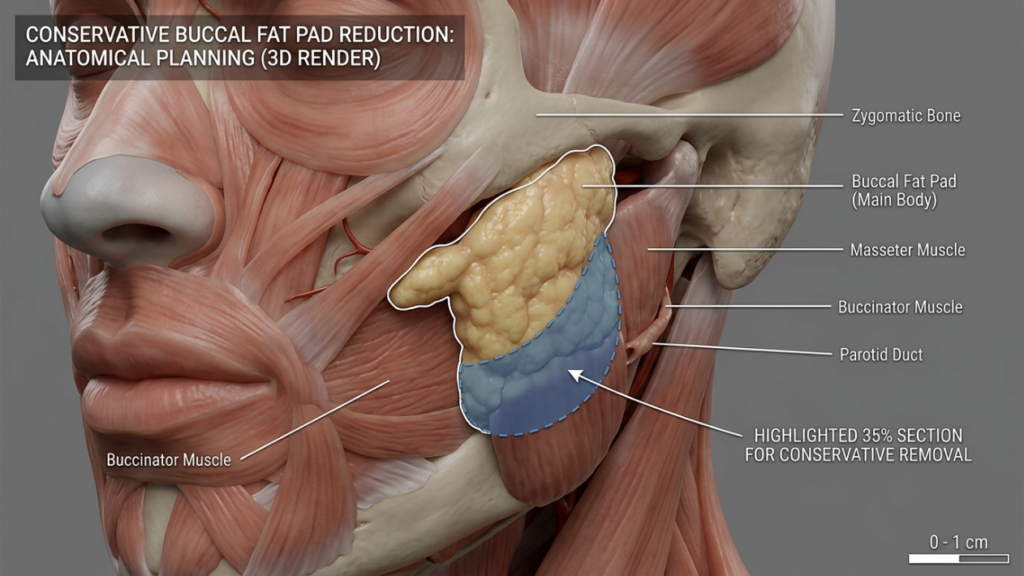
- Suppression partielle : Seulement 30–50% On retire une partie du tissu adipeux pour éviter une résection excessive. L'objectif est d'affiner la silhouette, pas de creuser le ventre.
- Fermeture: L'incision est refermée à l'aide de sutures résorbables. Aucun pansement externe n'est nécessaire.
La convalescence est étonnamment rapide. La plupart des patients reprennent le travail en peu de temps. 3 à 5 jours, même si l'enflure et les ecchymoses peuvent persister pendant 2 à 3 semaines. Le résultat final ? Un permanent Affinement du milieu du visage, avec des effets pleinement visibles après 3 mois.
Cependant, voici ce que la plupart des chirurgiens ne vous diront pas : la boule de Bichat est connecté au nerf facial. Bien que les complications soient rares, une ablation agressive peut entraîner un engourdissement temporaire ou, dans des cas extrêmes, lésions nerveuses permanentes. C’est pourquoi choisir un chirurgien avec vaste expérience en anatomie faciale n'est pas négociable.
Les risques dont personne ne parle (et comment les éviter)
La bichectomie est souvent présentée comme une intervention “ simple ”, mais comme toute opération chirurgicale, elle comporte des risques. Voici ce qu'il faut savoir :
| Risque | Cause | Prévention |
| Résection excessive (aspect émacié) | Enlever trop de graisse | Choisissez un chirurgien conservateur ; visez une ablation maximale de 30 à 40% |
| Lésions nerveuses (engourdissement/faiblesse) | Dissection agressive à proximité du nerf facial | Choisissez un chirurgien qui utilise la surveillance nerveuse |
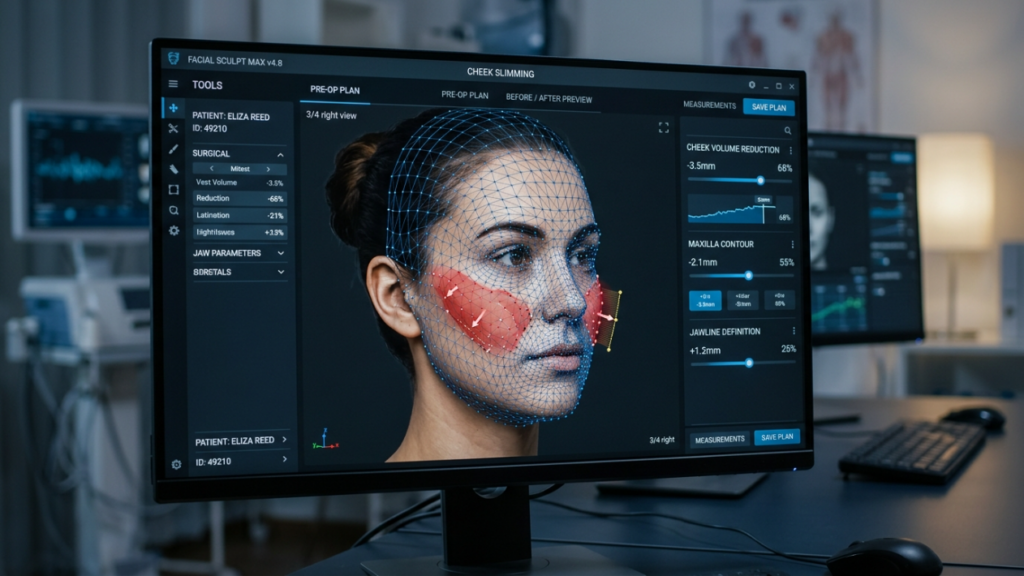
| Asymétrie | Élimination inégale des graisses | Imagerie 3D préopératoire pour planifier des incisions symétriques |
| Infection | Mauvaise hygiène buccale post-opératoire | Bain de bouche antibiotique + soins buccaux rigoureux |
| Cicatrices (internes) | Technique de suture incorrecte | Sutures résorbables + contrôles de suivi |
La complication la plus fréquente ? Résection excessive. Une étude de 2025 sur Journal de chirurgie esthétique a constaté que 12% de patients ayant subi une bichectomie Elles se creusaient excessivement, ce qui leur donnait un aspect “ squelettique ” et un vieillissement prématuré. La solution ? Greffe de graisse rétablir le volume, mais cela engendre des coûts et une complexité supplémentaires. (ASJ, 2025).
Un autre problème peu abordé : Les boules de Bichat ne se régénèrent pas.. Contrairement à la graisse sous-cutanée, dont le volume peut varier en fonction du poids, l'ablation des boules de Bichat est définitive. Cela signifie qu'en cas de prise de poids ultérieure, vos joues risquent de ne pas se remplir proportionnellement, créant ainsi un contraste inesthétique entre un visage moyen fin et un visage inférieur plus rond.
Bichectomie vs. Alternatives : Quelle méthode d’amincissement des joues vous convient le mieux ?
La bichectomie n'est pas la seule solution pour affiner les joues. Voici comment elle se compare aux autres méthodes :
| Méthode | Avantages | Les inconvénients | Idéal pour |
| Bichectomie | Permanent, d'apparence naturelle, sans cicatrices externes | Risques chirurgicaux, irréversibles, temps d'arrêt | Celles qui ont des joues pleines et qui souhaitent un amincissement permanent |
| graisse buccale Liposuccion | Moins invasif, convalescence plus courte | Moins précis, peut nécessiter des retouches. | léger gonflement des joues avec une bonne élasticité de la peau |
| Injections de comblement des joues (résorbables) | Non chirurgical, réversible, sans convalescence | Solution temporaire (6 à 12 mois), coûteuse à long terme | Ceux qui ne sont pas sûrs des changements permanents |
| Raffermissement cutané par radiofréquence | Non invasif, stimule le collagène | Résultats progressifs, plusieurs séances nécessaires | Relâchement cutané léger avec excès de graisse minime |
| Régime alimentaire/exercice | Naturel, gratuit, bienfaits globaux pour la santé | Effet limité sur la graisse buccale, résultats lents | Perte de poids générale (et non un amincissement ciblé des joues) |
Pour la plupart des patients, le choix se résume à permanence vs réversibilité. Si vous êtes déterminé(e) à un changement durable et que votre structure faciale s'y prête, la bichectomie offre une précision inégalée. En cas d'hésitation, des options non chirurgicales comme les injections de comblement ou la radiofréquence peuvent constituer un point de départ moins risqué.
Soins postopératoires : comment assurer une convalescence sans complications et des résultats optimaux
Votre rétablissement joue un rôle important Rôle 50% dans vos résultats finaux. Suivez ces étapes pour minimiser les complications :
- Premières 24 heures : Appliquez des compresses de glace (20 minutes, 20 minutes de pause) pour réduire l'enflure. Dormez avec la tête surélevée à 30–45 degrés.
- Jours 2 à 7 : Rincez-vous la bouche avec un bain de bouche antibiotique 3 fois par jour. Privilégiez une alimentation molle (soupes, yaourts, purée de pommes de terre).
- Semaines 2 à 4 : Évitez les efforts physiques intenses, le tabac et l'alcool. Massez doucement vos joues pour prévenir les raideurs.
- À long terme : Protégez votre peau avec un écran solaire SPF 50+ pour prévenir les changements de pigmentation. Hydratez-vous bien pour favoriser la cicatrisation.
Signes d'alerte à surveiller : Douleurs intenses, présence de pus ou asymétrie persistant plus d'une semaine : contactez immédiatement votre chirurgien.
Le coût de la bichectomie : à quoi s'attendre en 2026
En 2026, le coût d'une bichectomie varie considérablement selon le lieu, l'expertise du chirurgien et selon qu'elle soit pratiquée seule ou associée à d'autres interventions (par exemple, une augmentation du menton ou une autre intervention chirurgicale). rhinoplastieVoici une analyse détaillée :
| Emplacement | Coût moyen (USD) | Remarques |
| États-Unis | $3 500–$7 000 | Plus élevé dans des villes comme New York/Los Angeles ; comprend l’anesthésie |
| Turquie (Antalya/Istanbul) | $1,200–$2,500 | Réputé pour le tourisme médical ; vérifiez les références de la clinique. |
| Corée du Sud | $2 800–$5 000 | Forte demande pour le remodelage du visage ; cliniques haut de gamme |
| Mexique | $1 500–$3 000 | Qualité abordable mais variable ; chirurgiens chercheurs |
| Royaume-Uni | $4 000–$6 500 | Réglementé par la BAAPS ; comprend le suivi médical |
Conseil de pro : Méfiez-vous des cliniques proposant une bichectomie pour moins de 1 000 £. Cela indique souvent des chirurgiens inexpérimentés ou des conditions dangereuses. Priorisez toujours certification du conseil et portfolios avant/après prix excessif.
Comment choisir le bon chirurgien pour votre bichectomie
Les compétences de votre chirurgien déterminent 90% de votre résultat. Voici comment les sélectionner :
- Certification du conseil : Assurez-vous qu'ils soient certifiés par un organisme reconnu (par exemple, ISAPS, ASPS ou EBOPRAS).
- Spécialisation: Recherchez des chirurgiens qui se spécialisent dans contour du visage, et pas seulement la chirurgie plastique générale.
- Galerie Avant/Après : Examinez au moins 20 cas de bichectomie. Les résultats sont-ils naturels ? Observez-vous des signes de résection excessive ?
- Commentaires des patients : Consultez des plateformes comme RealSelf ou Google pour obtenir des avis impartiaux. Portez une attention particulière aux commentaires concernant récupération et symétrie.
- Processus de consultation : Un bon chirurgien évaluera votre anatomie faciale, Il ne s'agit pas seulement de vos désirs. Ils devraient aborder les risques tels que les lésions nerveuses et la résection excessive.
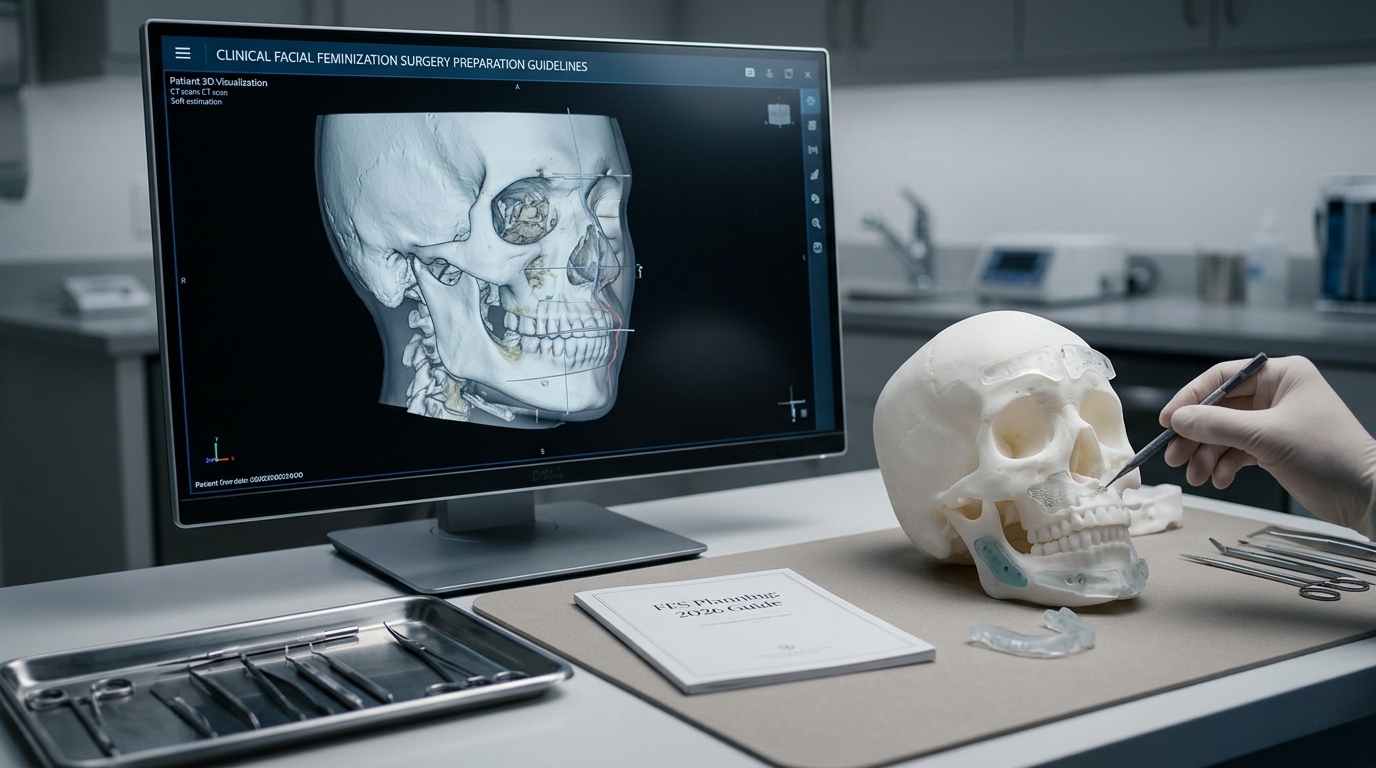
- Technologie: Utilisent-ils l'imagerie 3D pour la planification préopératoire ? Cela réduit les risques d'asymétrie.
À Clinique Dr MFO, nous combinons planification virtuelle 3D avec élimination conservatrice de la graisse pour garantir des résultats d'apparence naturelle. Nos patients obtiennent un 25–35% réduction du volume du tiers moyen du visage sans que cela paraisse “ exagéré ”.

Questions fréquemment posées
La bichectomie est-elle définitive, ou la graisse peut-elle repousser ?
La bichectomie est définitive car la boule de Bichat ne se régénère pas. Cependant, une prise de poids importante peut entraîner une expansion des cellules graisseuses restantes dans les joues, modifiant légèrement le résultat. C'est pourquoi il est recommandé de maintenir un poids stable après l'intervention.
Quelle est la différence entre une bichectomie et une liposuccion des joues ?
La bichectomie consiste à retirer chirurgicalement une partie de la boule de Bichat par une incision intra-orale, tandis que la boule de Bichat liposuccion La bichectomie utilise une canule pour aspirer la graisse. Elle offre des résultats plus précis et permanents, tandis que la liposuccion est moins invasive mais peut nécessiter des retouches.
La bichectomie peut-elle aider à corriger un double menton ou à redéfinir le contour de la mâchoire ?
La bichectomie affine principalement les joues et accentue le relief des pommettes. Pour corriger un double menton ou affiner l'ovale du visage, des interventions comme la liposuccion, l'augmentation du menton ou… réduction de la mâchoire sont plus efficaces. Certains patients associent la bichectomie à ces traitements pour un remodelage facial complet.
La convalescence après une bichectomie est-elle douloureuse ?
La plupart des patients ressentent une gêne légère à modérée pendant 3 à 5 jours, soulagée par les analgésiques prescrits. L'enflure et les ecchymoses atteignent leur maximum 48 heures après l'intervention et disparaissent en 2 semaines. L'intervention est réalisée sous anesthésie locale avec sédation ; vous ne ressentirez donc aucune douleur pendant l'opération.
Existe-t-il des alternatives non chirurgicales à la bichectomie ?
Oui ! Les options non chirurgicales comprennent les injections d’acide hyaluronique résorbables dans les joues (pour un amincissement temporaire), le raffermissement cutané par radiofréquence et la perte de poids ciblée. Cependant, ces méthodes sont moins précises et nécessitent un entretien. La bichectomie est la seule solution permanente pour la réduction de la graisse buccale.
Quels sont les signes d'une bichectomie mal réalisée ?
Les signes d'une bichectomie ratée comprennent l'asymétrie, un creusement excessif (aspect « squelettique »), des lésions nerveuses (engourdissements ou faiblesse) et des cicatrices visibles. Ces risques sont minimisés en choisissant un chirurgien certifié possédant une vaste expérience en anatomie faciale.
Dans combien de temps pourrai-je voir les résultats définitifs de ma bichectomie ?
Vous remarquerez des changements immédiats, mais les résultats définitifs apparaîtront après 3 mois, une fois l'œdème complètement résorbé. Le contour des joues continuera de s'affiner à mesure que la peau se raffermit. La patience est essentielle : évitez de juger les résultats trop tôt !