
¿Y si el secreto para un rostro esculpido en forma de V no es solo la genética o el contorneado, sino...? Procedimiento quirúrgico de 15 minutos ¿Que elimina permanentemente las almohadillas de grasa haciendo que tus mejillas parezcan más llenas? Bienvenido al mundo de bichectomía, la mejilla cirugía de adelgazamiento que está redefiniendo la armonía facial en 2026. Pero aquí está el truco: si bien este procedimiento promete una mandíbula más definida y pómulos más marcados, no es para todos, y el candidato equivocado puede terminar con una apariencia demacrada y prematuramente envejecida. Entonces, ¿cómo saber si eres el candidato ideal? ¿Y qué... exactamente sucede cuando un cirujano ¿Te planteas la extirpación de las bolsas de grasa bucal? Esta guía profundiza en la anatomía, los riesgos y el potencial transformador de la bichectomía, respaldada por información clínica y resultados reales.
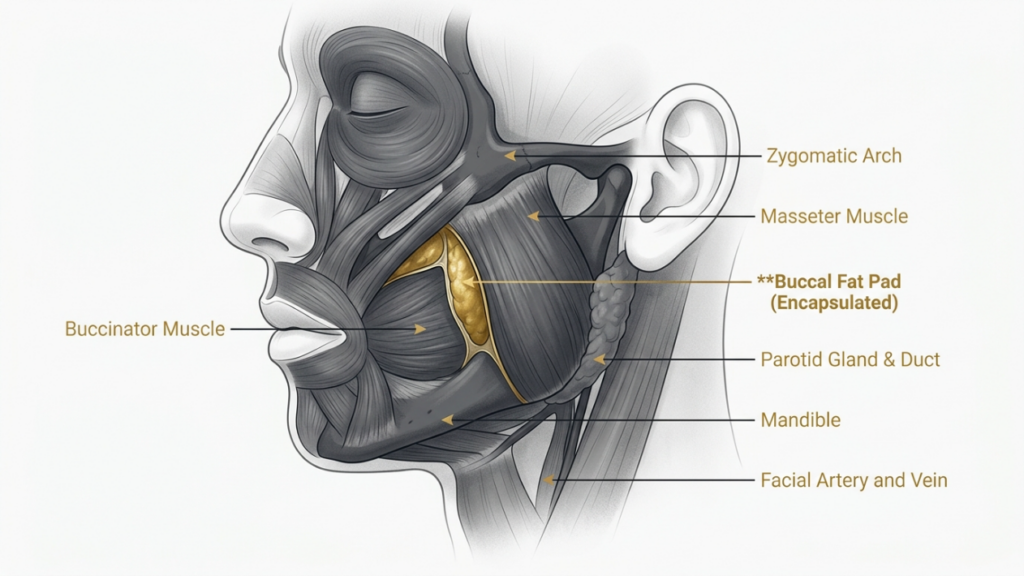
Tabla de contenido
Anatomía oculta: ¿Qué son las almohadillas de grasa bucal y por qué son importantes?
La almohadilla de grasa bucal no es solo un grupo aleatorio de grasa, es un Estructura encapsulada altamente vascularizada ubicada entre los músculos de las mejillas y la mandíbula. A diferencia de la grasa subcutánea (la que se puede pellizcar), la grasa bucal es profundo, que desempeña un papel crucial en el volumen y el movimiento facial. Y aquí viene lo interesante: su tamaño varía drásticamente entre individuos. Algunas personas tienen naturalmente almohadillas de grasa bucal más grandes, lo que le da a su rostro una redondez perpetuamente infantil, mientras que otras tienen muy poca grasa bucal, lo que contribuye a una apariencia más angulosa.
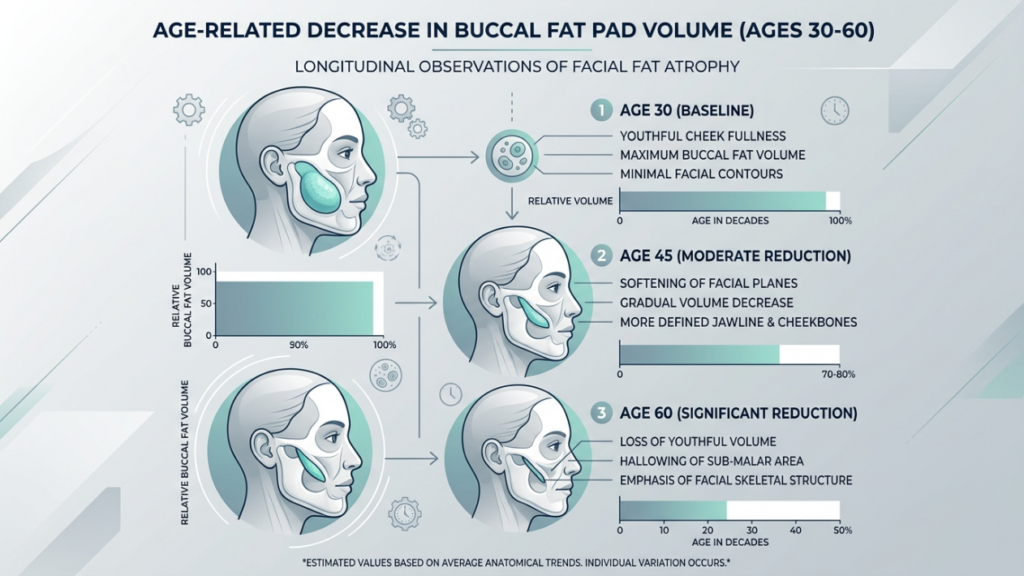
Pero aquí es donde se pone fascinante: las almohadillas de grasa bucal. encogerse con la edad. Estudios de la Revista de cirugía craneofacial (2025) revelan que el volumen de grasa bucal disminuye aproximadamente 15–20% entre los 30 y los 60 años, contribuyendo al aspecto "hundido" asociado con el envejecimiento. Entonces, cuando optas por una bichectomía, esencialmente estás acelerador Este proceso natural es permanente. La cuestión no es solo si deseas mejillas más delgadas, sino si tu rostro puede soportar la pérdida de este soporte estructural. (PubMed, 2025).
La doble función de la almohadilla de grasa bucal: amortiguadora y culpable
Las almohadillas de grasa bucal cumplen dos funciones principales:
- Amortiguación facial: Actúan como un amortiguador protector para los nervios y músculos faciales, absorbiendo el impacto durante la masticación y las expresiones faciales. Por eso, la eliminación agresiva de la grasa bucal a veces puede provocar... Sensibilidad nerviosa temporal o permanente.
- Influencia estética: Su volumen afecta directamente al ancho de la zona media del rostro. Un exceso de grasa bucal puede crear un efecto de mejillas hundidas, mientras que una cantidad mínima realza la definición de los pómulos. Sin embargo, si se elimina demasiada, se corre el riesgo de lograr un aspecto esquelético, con las mejillas hundidas y con signos de envejecimiento prematuro.
Esta dualidad es la razón por la que la bichectomía es ambas revolucionario y arriesgado. No se trata solo de eliminar grasa; se trata de reequilibrio tu arquitectura facial.
¿Quién es el candidato ideal para la bichectomía? (¿Y quién debería huir en dirección contraria?)
No todos son candidatos para la bichectomía, y eso es algo bueno. El paciente ideal generalmente cumple con estos criterios:
- Edad 25–40: Es posible que los pacientes más jóvenes no tengan una distribución de grasa facial completamente desarrollada, mientras que los pacientes mayores corren el riesgo de agravar la pérdida de volumen relacionada con la edad.
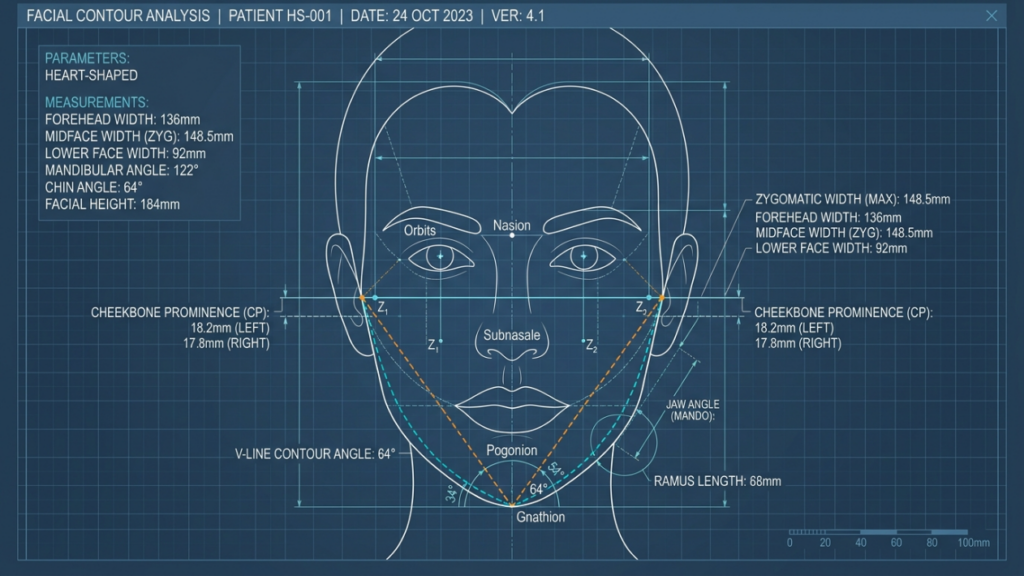
- Redonda o cuadrada Forma de la cara: Quienes tienen las mejillas naturalmente más rellenas son los que más se benefician de este procedimiento, ya que crea un rostro más ovalado o con forma de corazón.
- Buena elasticidad de la piel: Los pacientes con piel firme y elástica se adaptan mejor al contorno postoperatorio. La falta de elasticidad puede provocar flacidez.
- Expectativas realistas: La bichectomía adelgaza las mejillas pero no alterará drásticamente la línea de la mandíbula ni el mentón. Se trata de refinamiento, no transformación.
En cambio, señales de alerta incluir:
- Rostros delgados o demacrados (riesgo de resección excesiva).
- Antecedentes de trastornos alimentarios (potencial de pérdida de volumen exagerada).
- Fumadores (cicatrización deficiente y mayor riesgo de infección).
- Objetivos poco realistas (por ejemplo, esperar un rostro "de modelo" con un solo procedimiento).
Un estudio de 2026 en Cirugía Plástica y Reconstructiva Global Open descubrió que 1 de cada 5 pacientes sometidos a bichectomía Lamentaron el procedimiento debido a expectativas no cumplidas o complicaciones estéticas. Esto subraya la necesidad de una consulta exhaustiva con una certificación de la junta cirujano quien se especializa en anatomía facial (NCBI, 2026).
El procedimiento: ¿Qué sucede durante una bichectomía?
La bichectomía se realiza típicamente bajo anestesia local con sedación, aunque se puede utilizar anestesia general para procedimientos combinados. La cirugía en sí dura 15–30 minutos y sigue estos pasos:
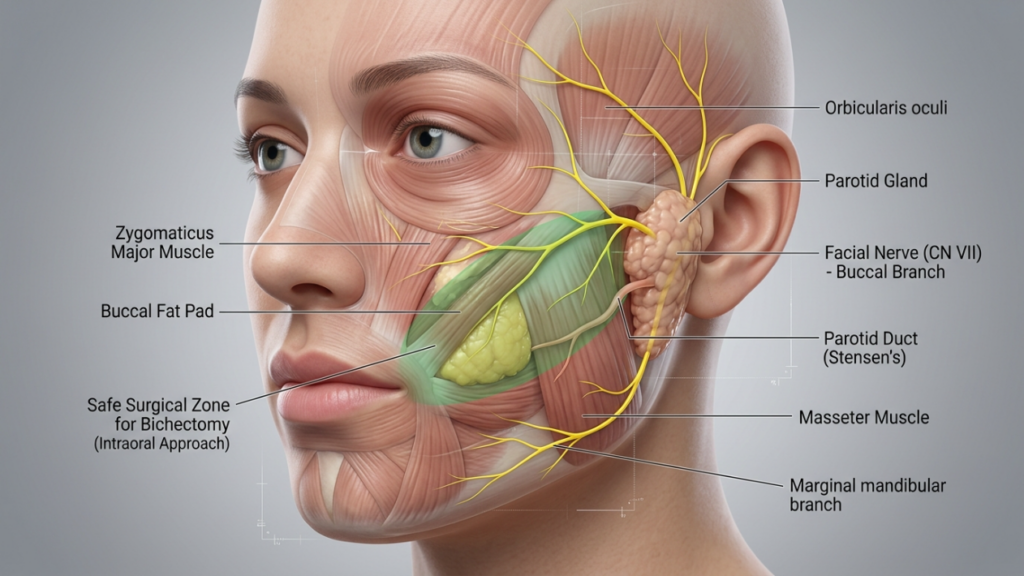
- Incisión: Se realiza una pequeña incisión (1–2 cm). dentro de la boca, a lo largo de la parte interna de la mejilla. Esto no deja cicatrices visibles.
- Exposición a la almohadilla grasa: La almohadilla de grasa bucal se aísla cuidadosamente de los tejidos circundantes. Su característico color amarillento permite identificarla fácilmente.
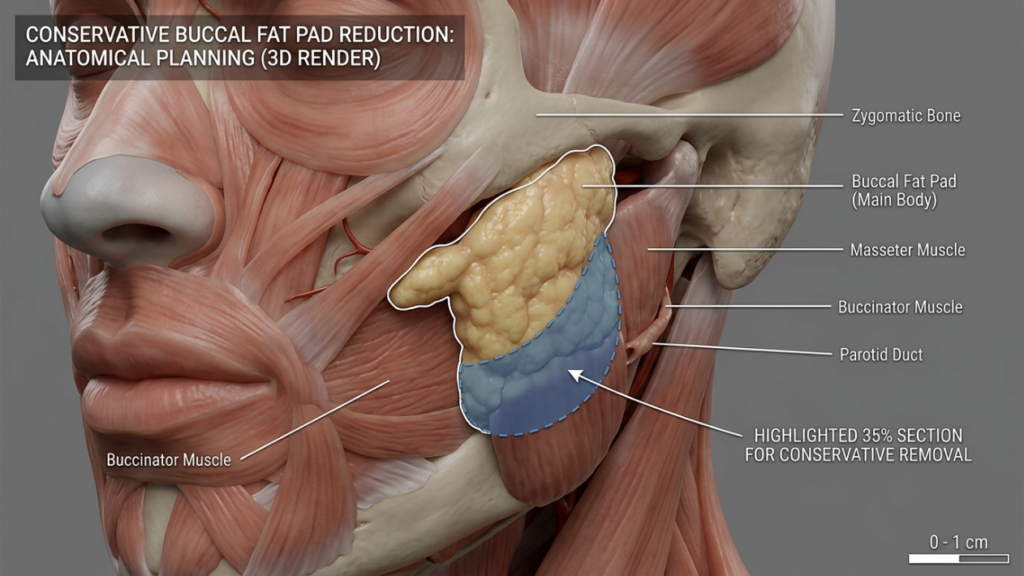
- Extracción parcial: Solo 30–50% Se elimina una parte del tejido adiposo para evitar una resección excesiva. El objetivo es adelgazar, no dejar el cuerpo hundido.
- Cierre: La incisión se cierra con suturas reabsorbibles. No se necesitan vendajes externos.
La recuperación es sorprendentemente rápida. La mayoría de los pacientes regresan al trabajo en 3-5 días, aunque la hinchazón y los hematomas pueden persistir durante 2-3 semanas. ¿El resultado final? Un permanente Adelgazamiento de la zona media del rostro, con resultados completos visibles después de 3 meses.
Sin embargo, esto es lo que la mayoría de los cirujanos no te dirán: la almohadilla de grasa bucal es conectado al nervio facial. Si bien las complicaciones son raras, la extracción agresiva puede provocar entumecimiento temporal o, en casos extremos, daño nervioso permanente. Por eso es importante elegir un cirujano con Amplia experiencia en anatomía facial. No es negociable.
Los riesgos de los que nadie habla (y cómo evitarlos)
La bichectomía se suele promocionar como un procedimiento “sencillo”, pero como cualquier cirugía, conlleva riesgos. Esto es lo que necesitas saber:
| Riesgo | Causa | Prevención |
| Resección excesiva (aspecto demacrado) | Eliminar demasiada grasa | Elija un cirujano conservador; el objetivo es una extracción máxima de 30–40%. |
| Daño nervioso (entumecimiento/debilidad) | Disección agresiva cerca del nervio facial | Opte por un cirujano que utilice monitorización nerviosa. |
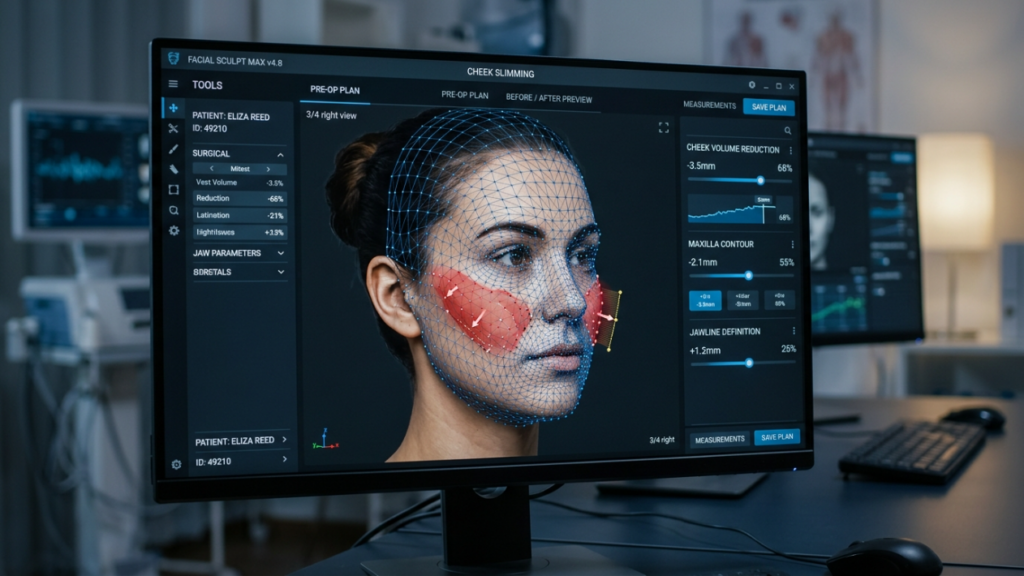
| Asimetría | Eliminación desigual de grasa | Imágenes 3D preoperatorias para planificar incisiones simétricas. |
| Infección | Mala higiene bucal postoperatoria | enjuague bucal antibiótico + cuidado bucal estricto |
| Cicatrización (interna) | Técnica de sutura incorrecta | Suturas reabsorbibles + controles de seguimiento |
¿La complicación más común? Resección excesiva. Un estudio de 2025 en Revista de Cirugía Estética descubrió que 12% de pacientes con bichectomía experimentaron un ahuecamiento excesivo, lo que provocó una apariencia "esqueletonada" que los envejeció prematuramente. ¿La solución? Injerto de grasa para restaurar el volumen, pero esto añade coste y complejidad. (ASJ, 2025).
Otro tema poco tratado: Las almohadillas de grasa bucal no vuelven a crecer.. A diferencia de la grasa subcutánea, que puede fluctuar con los cambios de peso, la eliminación de la grasa bucal es permanente. Esto significa que si aumentas de peso más adelante, tus mejillas podrían no rellenarse proporcionalmente, lo que provocaría un contraste poco natural entre la parte media del rostro delgada y la parte inferior más llena.
Bichectomía vs. Alternativas: ¿Qué método para adelgazar las mejillas es el adecuado para ti?
La bichectomía no es la única forma de adelgazar las mejillas. Aquí te mostramos cómo se compara con otros métodos:
| Método | Ventajas | Contras | Mejor para |
| Bichectomía | Permanente, de aspecto natural, sin cicatrices externas. | Riesgos quirúrgicos, irreversibles, tiempo de inactividad. | Aquellas personas con mejillas llenas que buscan un adelgazamiento permanente |
| Grasa bucal liposucción | Menos invasivo, recuperación más corta | Menos preciso, puede requerir retoques. | Ligera plenitud en las mejillas con buena elasticidad de la piel. |
| Rellenos de mejillas (disolubles) | No quirúrgico, reversible, sin tiempo de recuperación. | Temporal (6-12 meses), costoso a largo plazo. | Aquellos que no están seguros de los cambios permanentes |
| Estiramiento de la piel mediante radiofrecuencia | No invasivo, estimula la producción de colágeno. | Resultados graduales, se necesitan varias sesiones. | Flacidez leve con mínimo exceso de grasa |
| Dieta/Ejercicio | Beneficios naturales, gratuitos y generales para la salud. | Impacto limitado en la grasa bucal, resultados lentos. | Pérdida de peso general (no se trata de adelgazamiento específico de las mejillas). |
Para la mayoría de los pacientes, la elección se reduce a: permanencia versus reversibilidad. Si estás comprometida con un cambio a largo plazo y tienes la estructura facial adecuada, la bichectomía ofrece una precisión inigualable. Pero si tienes dudas, las opciones no quirúrgicas como los rellenos o la radiofrecuencia pueden ser un punto de partida con menor riesgo.
Cuidados postoperatorios: cómo garantizar una recuperación sin complicaciones y resultados óptimos.
Tu recuperación juega un papel importante Función 50% en sus resultados finales. Siga estos pasos para minimizar las complicaciones:
- Primeras 24 horas: Aplique compresas de hielo (20 minutos puestas, 20 minutos de descanso) para reducir la hinchazón. Duerma con la cabeza elevada entre 30 y 45 grados.
- Días 2–7: Enjuágate la boca con un enjuague bucal antibiótico 3 veces al día. Sigue una dieta de alimentos blandos (sopas, yogur, puré de patatas).
- Semanas 2–4: Evite el ejercicio extenuante, fumar y el alcohol. Masajee suavemente sus mejillas para prevenir la rigidez.
- A largo plazo: Protege tu piel con SPF 50+ para prevenir cambios de pigmentación. Mantente hidratado para favorecer la cicatrización.
Señales de alerta a tener en cuenta: Dolor intenso, pus o asimetría que persista durante más de una semana. En estos casos, debe llamar inmediatamente a su cirujano.
El costo de la bichectomía: qué esperar en 2026
En 2026, el costo de la bichectomía varía ampliamente según la ubicación, la experiencia del cirujano y si se realiza sola o con otros procedimientos (por ejemplo, aumento de mentón o rinoplastia). Aquí tienes un desglose:
| Ubicación | Costo promedio (USD) | Notas |
| Estados Unidos | $3.500–$7.000 | Más elevado en ciudades como Nueva York/Los Ángeles; incluye anestesia. |
| Pavo (Antalya/Estambul) | $1,200–$2,500 | Popular para el turismo médico; verifique las credenciales de la clínica. |
| Corea del Sur | $2.800–$5.000 | Alta demanda de tratamientos de contorno facial; clínicas de alta gama. |
| México | $1.500–$3.000 | Asequibles pero de calidad variable; cirujanos de investigación |
| Reino Unido | $4.000–$6.500 | Regulado por BAAPS; incluye atención de seguimiento. |
Consejo profesional: Tenga cuidado con las clínicas que ofrecen bichectomía por menos de $1,000. Esto a menudo indica cirujanos inexpertos o condiciones inseguras. Siempre priorice certificación de la junta y portafolios antes/después sobre precio.
Cómo elegir al cirujano adecuado para su bichectomía
La habilidad de su cirujano determina 90% de su resultado. Aquí te explicamos cómo evaluarlos:
- Certificación de la Junta: Asegúrese de que estén certificados por un organismo reconocido (por ejemplo, ISAPS, ASPS o EBOPRAS).
- Especialización: Busque cirujanos que se especialicen en contorno facial, no solo cirugía plástica general.
- Galería de antes y después: Analice al menos 20 casos de bichectomía. ¿Los resultados parecen naturales? ¿Hay indicios de resección excesiva?
- Comentarios de pacientes: Consulta plataformas como RealSelf o Google para obtener comentarios imparciales. Presta atención a los comentarios sobre recuperación y simetría.
- Proceso de consulta: Un buen cirujano evaluará su anatomía facial, No solo tus deseos. Deben hablar sobre riesgos como el daño nervioso y la resección excesiva.
- Tecnología: ¿Utilizan imágenes 3D para la planificación preoperatoria? Esto reduce los riesgos de asimetría.
En Clínica Dr. MFO, combinamos Planificación virtual 3D con eliminación de grasa conservadora para garantizar resultados de aspecto natural. Nuestros pacientes logran un 25–35% reducción de la plenitud en la parte media del rostro Sin que parezca "exagerado".

Preguntas frecuentes
¿La bichectomía es permanente o la grasa puede volver a crecer?
La bichectomía es permanente porque la almohadilla de grasa bucal no se regenera. Sin embargo, si aumenta de peso significativamente, las células grasas restantes en sus mejillas pueden expandirse, alterando ligeramente los resultados. Por eso se recomienda mantener un peso estable después de la cirugía.
¿Cuál es la diferencia entre la bichectomía y la liposucción de grasa bucal?
La bichectomía consiste en extirpar quirúrgicamente una porción de la almohadilla de grasa bucal a través de una incisión intraoral, mientras que la grasa bucal liposucción Utiliza una cánula para succionar la grasa. La bichectomía ofrece resultados más precisos y permanentes, mientras que la liposucción es menos invasiva, pero puede requerir retoques.
¿Puede la bichectomía ayudar a reducir la papada o a definir la línea de la mandíbula?
La bichectomía principalmente adelgaza las mejillas y mejora la definición de los pómulos. Para una papada o un refinamiento de la línea de la mandíbula, se utilizan procedimientos como la liposucción, el aumento de mentón o reducción de mandíbula son más eficaces. Algunos pacientes combinan la bichectomía con estos tratamientos para un contorno facial integral.
¿Qué tan dolorosa es la recuperación de una bichectomía?
La mayoría de los pacientes refieren molestias leves a moderadas durante 3 a 5 días, que se pueden controlar con analgésicos recetados. La hinchazón y los hematomas alcanzan su punto máximo a las 48 horas y disminuyen en 2 semanas. El procedimiento se realiza con anestesia local y sedación, por lo que no sentirá dolor durante la cirugía.
¿Existen alternativas no quirúrgicas a la bichectomía?
¡Sí! Las opciones no quirúrgicas incluyen rellenos reabsorbibles para las mejillas (para un adelgazamiento temporal), estiramiento de la piel con radiofrecuencia y pérdida de peso localizada. Sin embargo, estos métodos son menos precisos y requieren mantenimiento. La bichectomía es la única solución permanente para la reducción de la grasa bucal.
¿Cuáles son los signos de una bichectomía mal realizada?
Los signos de una bichectomía mal realizada incluyen asimetría, hundimiento excesivo (aspecto esqueletizado), daño nervioso (entumecimiento o debilidad) y cicatrices visibles. Estos riesgos se minimizan al elegir un cirujano certificado con amplia experiencia en anatomía facial.
¿Cuándo podré ver los resultados finales de mi bichectomía?
Aunque notarás cambios inmediatos, los resultados finales se aprecian después de 3 meses, una vez que la hinchazón haya desaparecido por completo. Las mejillas seguirán definiéndose a medida que la piel se tense alrededor del nuevo contorno. La paciencia es clave: ¡evita juzgar los resultados demasiado pronto!