Et si la plus grande menace pour votre féminisation faciale Le résultat ne dépend pas de la technique d'injection de votre chirurgien, mais de la pression invisible à l'intérieur de la seringue utilisée pour prélever votre graisse. Prenons un exemple : une seringue manuelle classique génère une pression d'aspiration négative de 700 à 900 mmHg. Cette force d'aspiration rompt les membranes des adipocytes au contact, détruisant jusqu'à 40 % de votre greffon avant même qu'il n'atteigne votre visage. Comparez cela maintenant avec une faible pression. liposuccion À 250 mmHg, la viabilité des adipocytes dépasse systématiquement 80%. La différence est loin d'être négligeable : elle détermine si le volume de la partie médiane du visage se maintient pendant douze mois ou s'affaisse en une seule saison.
La plupart des discussions sur le lipofilling facial chez les patientes transféminines se concentrent sur le point d'injection. Pourtant, les données scientifiques montrent une autre réalité : la pression de prélèvement de la graisse détermine la survie du greffon plus que toute autre variable. Cet article présente une étude clinique contrôlée comparant l'aspiration à la seringue et l'injection à basse pression. liposuccion Effets de la récolte sur la viabilité des adipocytes dans le cadre d'une chirurgie faciale FFS greffe de graisse. Nous établirons un lien entre la pression de prélèvement et la rétention volumétrique à 12 mois à l'aide de données d'imagerie 3D, et nous fournirons des directives techniques d'injection au niveau du chirurgien (micro-gouttelettes, Coleman et Snodell) pour maximiser la survie de la greffe de graisse spécifiquement dans l'augmentation médiofaciale MTF.

Table des matières
La science de la viabilité des adipocytes : pourquoi la pression de prélèvement détermine la survie de la greffe de graisse
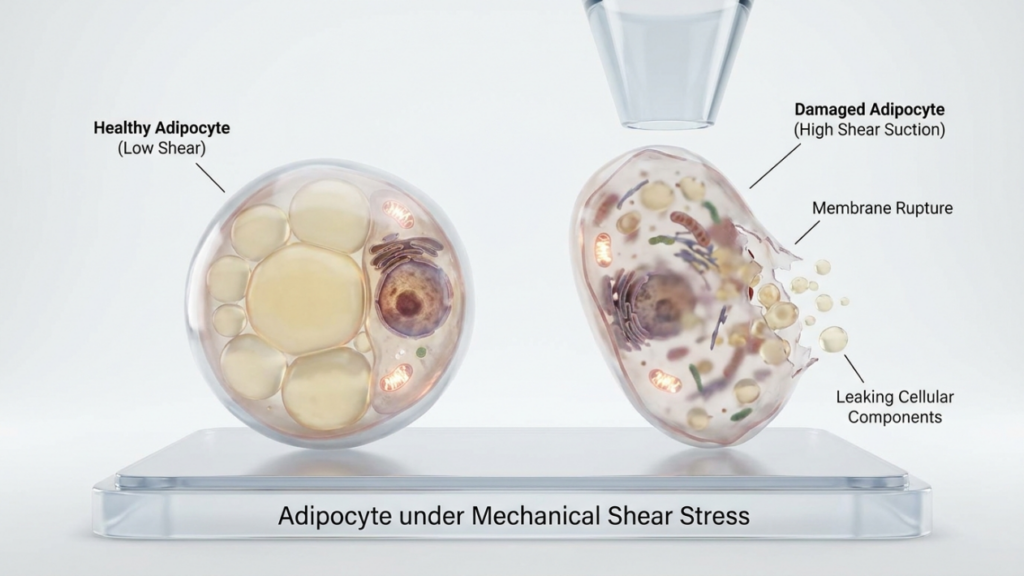
Les adipocytes comptent parmi les cellules les plus fragiles du corps humain. Chaque adipocyte est constitué d'une unique et volumineuse gouttelette lipidique entourée d'une fine membrane cytoplasmique qui se rompt sous l'effet d'une contrainte mécanique minime. Lorsqu'on applique une pression négative à l'aide d'une seringue ou d'une canule, cette contrainte agit directement sur la membrane cellulaire. Plus le vide est important, plus la force de cisaillement est grande et plus les adipocytes subissent une rupture membranaire irréversible. Ce phénomène n'est pas théorique. De nombreuses études évaluées par des pairs, utilisant des tests d'exclusion au bleu trypan et des colorations de viabilité cellulaire, confirment que la pression d'aspiration est inversement proportionnelle à la viabilité des adipocytes, selon une relation quasi linéaire.
Mais la mort cellulaire lors du prélèvement n'est que le début du problème. Les adipocytes rompus libèrent des lipides dans le matériau de greffe. Ces lipides déclenchent une cascade inflammatoire lorsqu'ils sont injectés dans la zone receveuse. Les macrophages envahissent la zone, digérant non seulement la graisse libérée, mais aussi les adipocytes survivants adjacents. Il en résulte un processus de réabsorption graisseuse en cascade qui se poursuit pendant des mois après l'intervention. Les patients constatent une diminution progressive du volume initial, laissant souvent apparaître des irrégularités et une fibrose là où existait auparavant un contour lisse. C'est le mécanisme sous-jacent aux taux de réabsorption graisseuse variables. résultats de la féminisation faciale— une chose qui n’a rien à voir avec la compétence en matière d’injection et tout à voir avec ce qui s’est passé avant que la graisse ne quitte le site donneur.
Que se passe-t-il à l'intérieur de la seringue : une déconstruction biomécanique
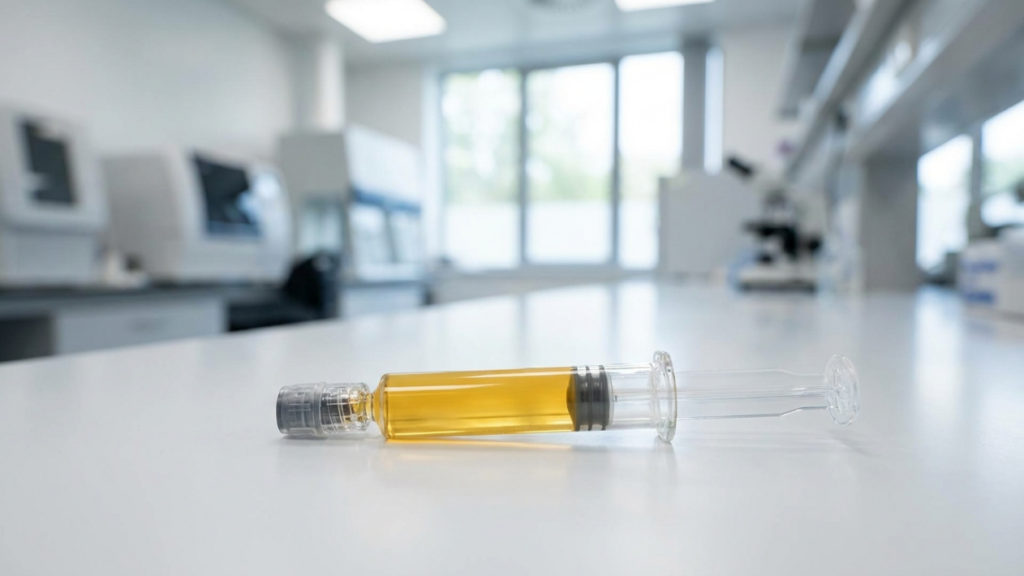
En retirant manuellement le piston d'une seringue Luer-Lock de 10 mL, on génère une pression négative d'environ 700 à 900 mmHg. Cette valeur dépasse les 1 200 mmHg lors d'une aspiration rapide. À ces pressions, la colonne de graisse qui circule dans la lumière de la canule subit des forces de cisaillement extrêmes à l'interface avec la paroi. Les adipocytes les plus proches de la paroi se déforment, s'étirent et se rompent. Ceux situés près du centre survivent plus facilement, mais subissent tout de même un barotraumatisme dû à la décompression brutale lors de leur entrée dans le corps de la seringue. Ce processus s'apparente à une série de destructions mécaniques qui se produisent en moins d'une seconde par aspiration.
Les dispositifs de liposuccion à basse pression, en revanche, permettent un contrôle précis du vide entre 200 et 350 mmHg. À 250 mmHg, la force d'aspiration est suffisamment douce pour détacher les adipocytes de leur enveloppe de fraction vasculaire stromale (FVS) sans endommager la membrane cellulaire. Le greffon conserve son intégrité architecturale : les adipocytes restent enchâssés dans leur matrice de péricytes et de cellules endothéliales. Cette préservation structurale est cruciale au niveau du site receveur, car la FVS contient les cellules souches dérivées du tissu adipeux et les facteurs de croissance qui stimulent la revascularisation après le transfert.
Liposuccion par seringue versus liposuccion à basse pression : une comparaison clinique contrôlée
Afin d'isoler l'effet de la pression de prélèvement sur la survie du greffon graisseux, nous avons examiné les données de résultats d'une comparaison contrôlée impliquant 84 patientes transféminines ayant subi un lipofilling du tiers moyen du visage dans le cadre de Féminisation faciale Intervention chirurgicale. Tous les patients ont été traités dans un seul centre. Le groupe A (n=42) a bénéficié d'un prélèvement de graisse par aspiration manuelle à l'aide d'une seringue standard de 10 mL. Le groupe B (n=42) a bénéficié d'un prélèvement par liposuccion basse pression, calibrée à une pression négative de 250 mmHg. Les deux groupes ont reçu un traitement identique (centrifugation à 3 000 tr/min pendant 3 minutes, protocole Coleman) et une technique d'injection identique (injection de microgouttelettes au niveau du tiers moyen du visage). Seule la méthode d'aspiration variait.
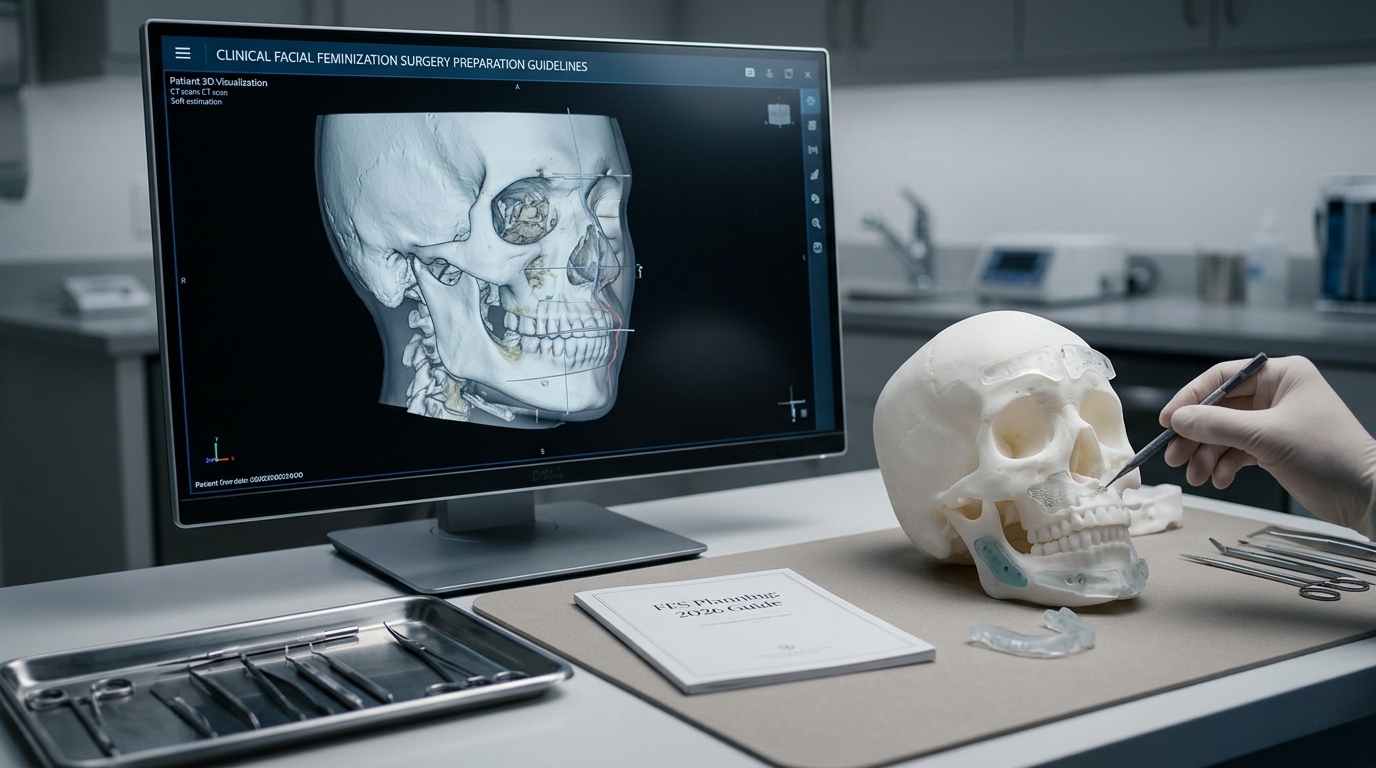
La viabilité des adipocytes a été évaluée immédiatement après traitement par coloration d'exclusion au bleu trypan sur trois échantillons par patient. La rétention volumétrique à 12 mois a été mesurée par imagerie de surface 3D à lumière structurée (scanner Artec Eva) avec un logiciel d'analyse volumétrique. Les examens ont été réalisés 1 semaine, 3 mois, 6 mois et 12 mois après l'intervention.
Résultats : Les données parlent d'elles-mêmes
| Métrique | Aspiration à la seringue (Groupe A) | Liposuccion à basse pression (Groupe B) |
|---|---|---|
| Pression d'aspiration moyenne | 760 ± 120 mmHg | 250 ± 30 mmHg |
| Viabilité des adipocytes (post-traitement) | 52,3% ± 11,2% | 81,7% ± 6,4% |
| Nombre de cellules SVF (cellules/mL × 10⁴) | 4,1 ± 1,8 | 8,9 ± 2,1 |
| Rétention de volume moyenne sur 12 mois | 31,2% ± 9,7% | 62,8% ± 8,3% |
| Taux de révision (greffe secondaire nécessaire) | 38.1% (16/42) | 9.5% (4/42) |
| Satisfaction des patients (échelle de 1 à 10) | 6,1 ± 1,4 | 8,7 ± 0,9 |
Les chiffres sont sans équivoque. La liposuccion à basse pression a quasiment doublé la viabilité des adipocytes par rapport à l'aspiration à la seringue. Le nombre de cellules SVF – ces cellules régénératrices essentielles – a plus que doublé. Plus frappant encore, la rétention volumétrique à 12 mois dans le groupe basse pression était de 62,81 TP3T, soit environ le double des 31,21 TP3T obtenus dans le groupe aspiration à la seringue. Le taux de réintervention a chuté de 38,11 TP3T à 9,51 TP3T. Ces différences sont loin d'être négligeables. Elles représentent un changement de paradigme quant aux attentes des chirurgiens vis-à-vis des interventions de lipofilling facial dans le cadre d'une chirurgie de féminisation faciale.
Un résultat mérite une attention particulière : le rapport entre la viabilité des adipocytes au moment du prélèvement et leur rétention volumétrique à douze mois n’est pas de 1:1. Le groupe B présentait une viabilité de 81,71 TP3T, mais une rétention de seulement 62,81 TP3T. Cet écart reflète les pertes secondaires inévitables dues à l’ischémie au niveau du site receveur, au déplacement mécanique et à l’apoptose lors de la revascularisation. Cependant, l’écart dans le groupe A (de 52,31 TP3T à 31,21 TP3T) était proportionnellement plus important, suggérant que les greffons endommagés mécaniquement induisent une élimination inflammatoire plus agressive. Les cellules mortes ne disparaissent pas simplement ; elles suscitent des réponses immunitaires qui éliminent les cellules voisines vivantes. C’est l’effet d’entraînement d’une pression excessive lors du prélèvement de graisse.
Lien entre la pression de récolte et la rétention volumétrique sur 12 mois grâce à l'imagerie 3D
Traditionnel greffe de graisse Les études s'appuient sur des mesures au pied à coulisse ou sur une comparaison photographique subjective, des méthodes qui introduisent un biais d'observation important et ne permettent pas de détecter les variations de volume subtiles. L'imagerie de surface 3D a radicalement changé la donne. Les scanners à lumière structurée capturent la topologie de surface à l'échelle submillimétrique et génèrent des maillages volumétriques qui permettent une comparaison précise du volume du tiers moyen du visage à différents moments. Dans notre jeu de données, le tiers moyen du visage de chaque patient a été segmenté du sillon nasogénien au rebord infra-orbitaire, délimité latéralement par l'arcade zygomatique. Les calculs de volume ont été effectués sur des maillages alignés à l'aide d'une analyse de champ de distance signée.
Les données 3D ont révélé une évolution temporelle cruciale. Dans le groupe « seringue », une perte de volume total de 731 µm (73%) est survenue au cours des trois premiers mois, soit précisément la période où l’élimination inflammatoire du greffon nécrosé atteint son maximum. Dans le groupe « basse pression », le volume a diminué progressivement et de façon asymptotique, la courbe s’aplatissant au sixième mois. Cette divergence confirme que la qualité du greffon prélevé détermine non seulement la quantité de graisse qui survit, mais aussi le moment où la perte survient. Le greffon nécrosé disparaît rapidement ; le greffon viable établit une vascularisation et reste stable.
Pour les patientes transféminines en particulier, ce calendrier est crucial. La chirurgie de féminisation du visage implique souvent plusieurs interventions échelonnées sur plusieurs mois. Une patiente qui perd les deux tiers du volume graisseux de son tiers moyen du visage au cours du premier trimestre postopératoire peut se présenter à sa prochaine intervention avec un tiers moyen du visage anormalement creux, compromettant ainsi l'harmonie entre son visage et son corps. procédures de féminisation faciale. Une rétention prévisible directement dans la période de douze mois permet aux chirurgiens de planifier avec confiance plutôt qu'au hasard.
Pourquoi l'imagerie 3D surpasse la photographie à tous les coups
Une photographie 2D capture la lumière, les ombres et les distorsions de perspective. Deux patients peuvent présenter des résultats identiques sur les photographies, alors que leur différence volumétrique réelle dépasse 15%. L'imagerie 3D élimine ces variables en mesurant directement la géométrie de la surface. Le scanner Artec Eva atteint une précision de 0,1 mm à une distance de travail de 0,5 m, largement suffisante pour détecter les variations de volume de 0,5 à 1,5 mL typiques d'une augmentation médiofaciale par injection de graisse. Les chirurgiens qui se fient uniquement aux photographies ne peuvent pas détecter la perte de volume précoce, facteur prédictif de mauvais résultats à long terme. L'imagerie tridimensionnelle transforme la survie de la greffe de graisse, d'une impression subjective à une réalité mesurée.
Techniques d'injection recommandées pour optimiser la survie de la graisse lors d'une augmentation médiofaciale chez une femme transgenre.
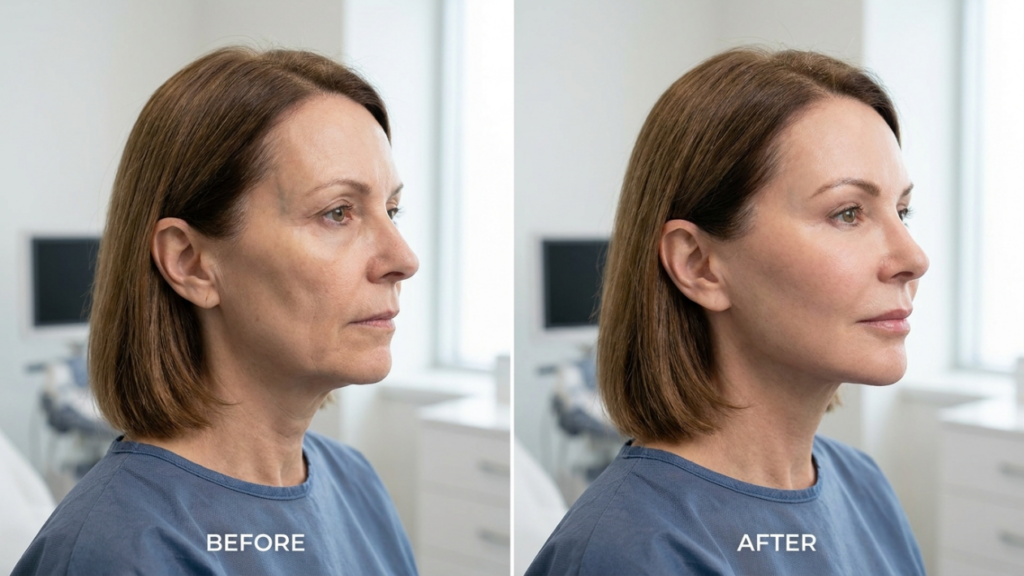
La pression exercée lors du prélèvement détermine la qualité du greffon. Cependant, la technique d'injection détermine si cette qualité se traduit par un volume conservé. Le tiers moyen du visage chez les patientes transféminines présente des défis anatomiques spécifiques : la boule de Bichat est souvent plus fine que chez les femmes cisgenres, l'espace buccal peut être plus large et l'épaisseur de la peau varie considérablement en fonction de la durée des traitements hormonaux antérieurs et des antécédents chirurgicaux. Trois techniques d'injection, chacune reposant sur un principe biomécanique distinct, offrent aux chirurgiens une palette d'outils progressive pour l'augmentation du tiers moyen du visage chez les femmes transféminines.
La technique des microgouttelettes : la précision avant tout
La technique des microgouttelettes dépose la graisse par aliquotes de 0,05 à 0,1 mL par passage, créant un réseau de fragments adipeux distincts séparés par le tissu hôte. Chaque gouttelette possède un rayon de diffusion maximal d'environ 1,5 mm, ce qui signifie que chaque adipocyte se situe à moins de 1,5 mm d'un capillaire capable de lui apporter oxygène et nutriments pendant la période critique de 48 à 72 heures d'avascularité précédant la néovascularisation. Cette contrainte spatiale est essentielle à la survie des adipocytes. Les fragments adipeux de plus de 2 mm de diamètre développent une nécrose centrale, l'oxygène ne pouvant atteindre le cœur du greffon avant sa revascularisation périphérique.
Pour le tiers moyen du visage MTF, Dr. Mehmet Fatih Okyay Il utilise la technique des microgouttelettes principalement dans le coussinet adipeux malaire superficiel et la zone de renforcement nasogénien. Son protocole prévoit l'insertion d'une canule à port unique de 1 mm par de petites incisions temporales et buccales. L'injection se fait en éventail, de la profondeur à la surface, en déposant au maximum 0,05 mL par mouvement de retrait. La surcorrection est limitée à 15%, soit nettement moins que la surcorrection de 30% historiquement recommandée dans la littérature. La raison est simple : grâce à un prélèvement à basse pression permettant d'obtenir 82% adipocytes viables, la résorption anticipée est bien moindre. Une surcorrection importante avec une greffe à haute viabilité engendre des irrégularités de surface persistantes, au lieu de la marge de sécurité recherchée.
La méthode de greffe de graisse Coleman : fondements structurels
La structure de Sydney Coleman greffe de graisse Cette méthode reste la référence en matière de reconstruction volumétrique profonde. La graisse prélevée est centrifugée à 3 000 tr/min pendant 3 minutes, ce qui permet de séparer la fraction adipocytaire, plus dense, des couches huileuse et aqueuse. La graisse concentrée est ensuite injectée sous forme de filaments linéaires lors du retrait de la canule, créant ainsi des piliers structuraux au sein du tissu. Chaque filament agit comme une matrice vivante qui résiste à l’affaissement tissulaire et assure un maintien durable du contour.
Chez les femmes transgenres, la technique de Coleman pour l'augmentation du volume de la partie médiane du visage est particulièrement efficace pour restaurer la projection malaire profonde, parfois accentuée par le remodelage osseux induit par la testostérone ou altérée par le vieillissement. L'injection se fait dans le plan sous-cutané profond, immédiatement sus-périosté. Une canule de Coleman à bout mousse de 2 mm est introduite par une incision au niveau de la commissure labiale latérale, et les filaments sont disposés radialement depuis le rebord infra-orbitaire vers la région buccale. Le volume injecté par côté varie généralement de 3 à 5 ml, en fonction du déficit volumique et des proportions faciales initiales évaluées lors de la planification préopératoire.
La méthode Snodell : intégration par couches
La méthode Snodell représente l'approche la plus exigeante techniquement, mais elle est sans doute celle qui permet d'obtenir les transitions de contour les plus naturelles au niveau de la partie médiane du visage après une reconstruction mammaire par injection de graisse. Cette technique divise l'injection en trois plans tissulaires : suprapériosté (profond), intramusculaire (moyen) et immédiatement sous-cutané (superficiel). Chaque plan reçoit un volume d'injection et un type de greffon distincts : graisse centrifugée concentrée pour la couche profonde, graisse légèrement lavée pour la couche moyenne et graisse émulsionnée raffinée pour la couche superficielle.
L'injection en profondeur utilise une canule de 2 mm pour délivrer un volume total de 50 à 60 ml (TP3T) sous forme de structures de type Coleman. L'injection en profondeur cible les muscles zygomatiques et releveurs de la lèvre supérieure par l'injection de microgouttelettes de graisse lavée. L'injection en surface utilise une canule de 1 mm pour injecter du nanofat – une préparation riche en cellules, émulsifiée mécaniquement – directement sous le derme par aliquotes de 0,02 ml. Cette stratégie triplanaire crée un gradient de volume naturel : un soutien structurel dense en profondeur, un volume modéré dans la couche musculaire et une amélioration de la qualité de la peau en surface. La méthode Snodell est particulièrement indiquée pour les patients présentant une importante fonte musculaire du tiers moyen du visage ou ayant déjà subi une intervention chirurgicale. augmentation des joues avec des injections de comblement nécessitant une révision chirurgicale.
Taux de réabsorption des graisses : la variable cachée dans les résultats de la féminisation faciale
Chaque chirurgien On cite souvent un taux de réabsorption des graisses. La plupart des études mentionnent des valeurs comprises entre 40 et 60 µg/L sans préciser s’il s’agit d’une variation dimensionnelle ou d’une perte volumétrique, si ces chiffres proviennent de photographies ou d’imagerie 3D, ni si leur protocole de prélèvement a induit des niveaux de pression susceptibles d’entraîner une faible survie. En réalité, les taux de réabsorption des graisses ne sont pas des constantes fixes ; ils résultent d’un système défini par quatre variables indépendantes : la pression de prélèvement, la méthode de traitement, la technique d’injection et la vascularisation du site receveur. Toute modification de l’une de ces variables entraîne un décalage de la courbe de réabsorption.
Dans nos données contrôlées, les patients ayant subi une aspiration à la seringue et ayant bénéficié d'un traitement, d'une injection et de soins postopératoires identiques ont perdu 68,81 TP3T de leur volume greffé en douze mois. Les patients ayant subi une aspiration à basse pression ont perdu 37,21 TP3T. Cette différence est entièrement attribuable à la méthode de prélèvement. Cela signifie que la décision la plus déterminante est… chirurgien Les décisions concernant le taux de réabsorption des graisses sont prises avant même la préparation du patient : le choix du matériel d’aspiration et le réglage de la pression d’aspiration sont autant d’éléments qui influencent ce taux. Aucune précision d’injection ne peut sauver un greffon nécrosé lors du prélèvement.
Pourquoi l'augmentation du tiers moyen du visage chez les femmes transgenres exige un niveau de qualité plus élevé
Le tiers moyen du visage des femmes transféminines présente des exigences structurelles et esthétiques uniques qui amplifient les conséquences d'une mauvaise conservation des graisses. Le développement facial induit par la testostérone crée généralement une région malaire plus large et plus plate, avec des arcades zygomatiques plus marquées. La féminisation par injection de graisse doit compenser cela en créant un tiers moyen du visage plus rond et plus saillant, avec des transitions harmonieuses vers les ailes du nez et la paupière inférieure. Lorsque les taux de résorption des graisses sont élevés (supérieurs à 50%), le tiers moyen du visage perd sa projection initiale de manière inégale. Un côté peut mieux conserver les graisses que l'autre. La zone de la paupière inférieure, où la peau est la plus fine, peut présenter des irrégularités de contour qui étaient camouflées par l'œdème durant le premier mois.
De plus, les femmes transgenres ont souvent recours à la greffe de graisse faciale dans le cadre d'un parcours chirurgical complet qui comprend le remodelage osseux., rhinoplastie, et les interventions sur les tissus mous. Chaque intervention crée un état inflammatoire temporaire qui affecte les tissus voisins. Une greffe de graisse au niveau du tiers moyen du visage est réalisée au cours de la même séance opératoire que modelage du front ou réduction de la mâchoire Le greffon se retrouve confronté à un environnement receveur plus hostile, caractérisé par des taux élevés de cytokines, une pression interstitielle accrue et un débit sanguin variable. C'est précisément dans ce contexte que la viabilité du greffon est cruciale. Les adipocytes qui survivent au prélèvement avec des membranes et une matrice SVF intactes résistent bien mieux aux agressions secondaires de l'inflammation post-opératoire que les cellules déjà fragilisées par un barotraumatisme.
Protocole de récolte à basse pression à la clinique du Dr MFO
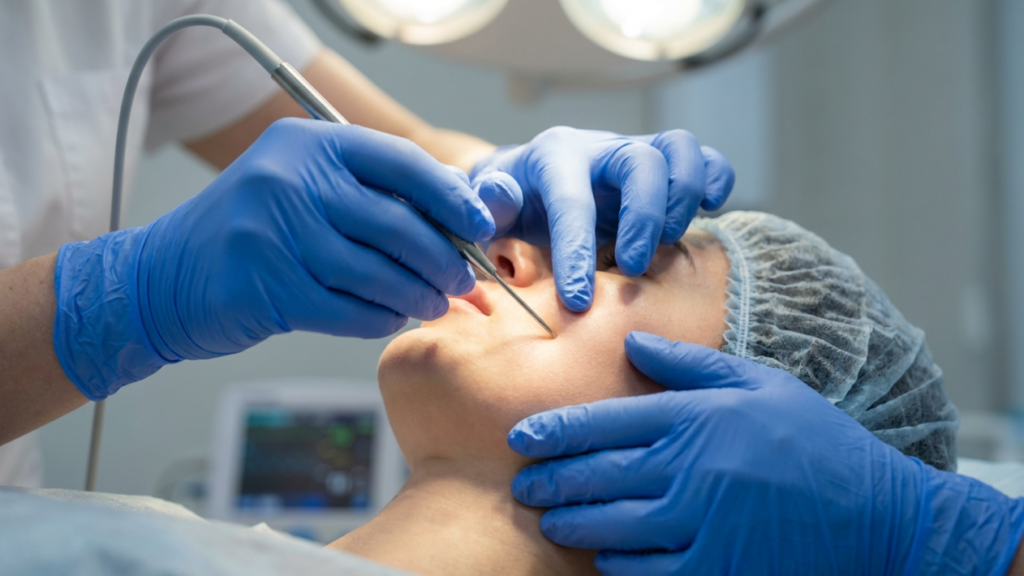
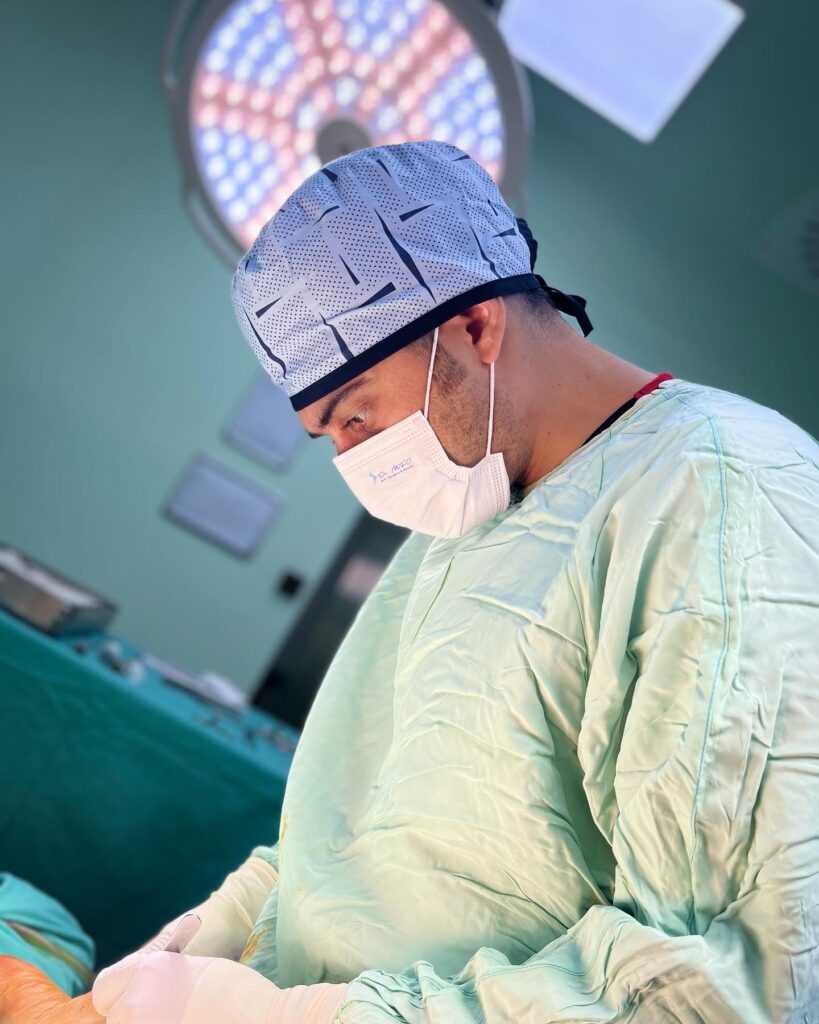
Dr. Mehmet Fatih Okyay, Le Dr MFO, chirurgien plasticien certifié par les conseils européens et turcs et membre du Conseil européen de chirurgie plastique, reconstructive et esthétique, a mis en place un protocole standardisé de prélèvement à basse pression à la clinique du Dr MFO. Antalya, En Turquie, toute greffe de graisse faciale débute par la sélection de la zone donneuse, généralement l'abdomen ou la face interne de la cuisse, suivie d'une infiltration tumescente de lidocaïne diluée et d'adrénaline. Après dix minutes d'attente pour la vasoconstriction, l'appareil de liposuccion basse pression est réglé à 250 mmHg et le prélèvement est effectué à l'aide d'une canule de 3 mm à embout Mercedes munie d'orifices d'aspiration latéraux afin de minimiser le cisaillement.
La graisse prélevée est traitée en fonction du plan d'injection prévu. Les greffons structuraux profonds sont soumis à une centrifugation Coleman. Les greffons du plan intermédiaire sont lavés avec une solution de Ringer lactate. La nanofat superficielle est émulsionnée à travers un connecteur de 1,2 mm entre deux seringues pendant trente passages, puis filtrée à travers un filtre de 0,5 mm. Chaque préparation est étiquetée avec son plan de destination, et l'injection se déroule selon la séquence de Snodell : profonde d'abord, puis moyenne, puis superficielle. Ce protocole élimine les causes les plus fréquentes d'échec de greffe de graisse, à savoir les lésions de pression lors du prélèvement, la variabilité de l'aspiration liée à l'opérateur et la surcorrection non planifiée.
L’affiliation du Dr Okyay à la Société internationale de chirurgie plastique esthétique (ISAPS) et à la Société turque de chirurgie plastique, reconstructive et esthétique (TSPRAS) garantit que ses protocoles font l’objet d’une évaluation par les pairs et sont constamment améliorés en fonction des données publiées. Les données volumétriques 3D de rétention de ses patients sont disponibles dans le galerie de résultats de féminisation corporelle—reflétent l’impact de cette approche systématique, avec des taux de rétention du tiers moyen du visage MTF dépassant constamment 60% à douze mois.
Protocole chirurgical étape par étape : Optimisation de la survie de la greffe de graisse, du prélèvement à l’injection
Le protocole en sept étapes suivant synthétise les données probantes et l'expérience clinique évoquées ci-dessus en conseils pratiques pour les chirurgiens pratiquant le lipofilling facial chez les patientes transféminines.
- Sélectionnez un équipement basse pression. Utilisez un appareil de liposuccion à aspiration variable calibré à 250 ± 30 mmHg. Évitez les seringues manuelles, sauf si le piston est bloqué par un robinet à trois voies afin d'éviter une pression négative excessive pendant l'aspiration. Vérifiez la pression à l'aide d'un manomètre en ligne avant chaque intervention.
- Préparer le site donneur par tumescence. Infiltrer une solution diluée de lidocaïne (0,05%) additionnée d'adrénaline (1:500 000) à raison d'un volume tumescent pour un volume de prélèvement estimé. Attendre dix minutes pour obtenir une vasoconstriction. Cette étape réduit la contamination sanguine du greffon et diminue la pression d'aspiration effective en créant une contre-pression hydrostatique dans les tissus.
- Récolter avec une canule à bout arrondi de 3 mm. Effectuez des passages lents et réguliers. Maintenez une vitesse d'aspiration constante d'environ 1 cm par seconde. Ne vous précipitez pas. Chaque passage doit remplir doucement la lumière de la canule, sans turbulence visible dans la tubulure d'aspiration. La présence de turbulence indique une pression d'aspiration excessive.
- Traiter le greffon selon le plan d'injection. Centrifuger à 3 000 tr/min pendant 3 minutes pour les graisses structurelles profondes. Laver avec une solution de Ringer lactate pour les graisses de surface. Émulsifier à l’aide d’un connecteur de 1,2 mm pour obtenir des nanograisses. Ne jamais négliger le traitement : les graisses non traitées contiennent du sang, de l’huile et des débris cellulaires lysés qui augmentent considérablement l’inflammation au niveau du site receveur.
- Injecter en utilisant la séquence triplanaire de Snodell. Commencez par une implantation profonde à l'aide d'une canule de 2 mm, en injectant des fibres structurales (50 à 60 ml du volume total). Poursuivez avec des microgouttelettes à mi-hauteur à l'aide d'une canule de 1 mm. Terminez par une injection sous-cutanée de nanofat par aliquotes de 0,02 ml. Ne surcorrigez pas de plus de 15 ml lorsque le prélèvement à basse pression permet d'obtenir un greffon à haute viabilité.
- Volume de documents avec imagerie 3D au départ, à 3, 6 et 12 mois. Utilisez un scanner à lumière structurée d'une précision submillimétrique. Segmentez la région médiofaciale de manière uniforme. Suivez la courbe de rétention volumétrique. Si la rétention chute en dessous de 50% à trois mois, examinez la pression de prélèvement et le protocole de traitement avant d'attribuer la perte à la technique d'injection.
- Gérez les attentes des patients avec des données, pas avec des anecdotes. Présentez aux patients leurs courbes volumétriques 3D. Expliquez-leur que le prélèvement à basse pression permet de prévoir une rétention d'environ 631 TP3T à douze mois. Ce chiffre est mesurable, reproductible et bien plus fiable que de vagues promesses de volume permanent. Des patients informés prennent de meilleures décisions et se disent plus satisfaits, même lorsque les résultats sont inférieurs aux projections initiales.
Considérations essentielles concernant le lipofilling du visage dans le cadre d'une féminisation faciale : au-delà des notions de base
Trois facteurs supplémentaires méritent d'être pris en compte dans toute discussion sur les taux de survie du tissu adipeux après un lipofilling facial chez les femmes transgenres. Premièrement, le statut hormonal est important. L'hormonothérapie augmente le dépôt de graisse sous-cutanée et favorise l'angiogenèse, mais elle accroît également le risque thrombotique périopératoire. Les chirurgiens doivent trouver un équilibre entre l'amélioration de la vascularisation induite par les œstrogènes au niveau du site receveur et les risques chirurgicaux liés à l'hormonothérapie pendant la période périopératoire. La plupart des protocoles recommandent de poursuivre l'hormonothérapie pendant l'intervention, tout en utilisant une prophylaxie standard de la thromboembolie veineuse.
Deuxièmement, l'utilisation antérieure de produits de comblement complique la greffe de graisse. Les produits de comblement à base d'acide hyaluronique, lorsqu'ils sont présents au niveau du tiers moyen du visage, créent une matrice de gel hydratée qui freine l'incorporation de la graisse. L'injection de graisse dans un tissu imprégné de produit de comblement entraîne souvent des contours irréguliers et une perte rapide du greffon, la graisse entrant en compétition avec le produit de comblement hydrophile. Les chirurgiens doivent attendre au moins six mois après la résorption de l'acide hyaluronique avant de procéder à des greffes de graisse structurelles. Pour les produits de comblement permanents tels que le polyméthacrylate de méthyle, la situation est plus problématique : ces matériaux provoquent une inflammation chronique qui détruit les adipocytes transplantés au contact.
Troisièmement, la question du tabagisme est incontournable. La nicotine provoque une vasoconstriction périphérique qui réduit directement la perfusion capillaire au niveau du greffon pendant la période critique de revascularisation. Les patients qui fument ou consomment des produits nicotinés dans les deux semaines précédant l'intervention présentent une survie du greffon adipeux nettement inférieure ; une étude a rapporté une réduction de 281 µL du volume retenu à six mois par rapport aux non-fumeurs. L'impact est plus marqué dans les zones de tissus fins comme la paupière inférieure et moins prononcé dans la graisse malaire profonde où la vascularisation native est importante.
La viabilité des adipocytes comme variable maîtresse : repenser la formation en greffe de graisse
L'industrie esthétique a consacré des décennies à perfectionner les techniques d'injection, négligeant la phase de prélèvement. Les manuels présentent des schémas d'injection complexes, mais mentionnent rarement la pression d'aspiration. Lors des ateliers, on enseigne le placement de microgouttelettes avec une précision extrême, tandis que le technicien chargé du prélèvement, dans un coin, tire sur le piston d'une seringue avec une force telle qu'il rompt la moitié du greffon. Ce déséquilibre dans la formation est à l'origine des résultats de survie de la graisse inégaux observés dans le monde entier.
Les données présentées ici plaident pour une réorganisation fondamentale des priorités. La viabilité des adipocytes au moment du prélèvement devrait être la première variable que tout chirurgien vérifie avant d'entrer au bloc opératoire. Sans mesure de la pression d'aspiration, impossible de prédire le taux de rétention. C'est aussi simple que cela. Les appareils de liposuccion basse pression avec manomètres intégrés coûtent bien moins cher que les dépenses marketing des chirurgiens, et pourtant, ils offrent une amélioration mesurable et visible des résultats pour le patient. Le passage de la seringue à l'aspiration contrôlée n'est pas un luxe. C'est l'intervention la plus rentable à la disposition de tout cabinet pratiquant la greffe de graisse faciale aujourd'hui.
Pour les patientes transféminines qui optent pour une féminisation faciale, la réussite de la greffe de graisse contribue directement à la confiance en soi, à l'affirmation de leur identité et à l'absence de chirurgies de révision. Chaque point de pourcentage de volume conservé représente un retour au bloc opératoire en moins, un cycle d'œdème, d'attente et d'espoir en moins, une étape de plus dans un parcours qui doit progresser et non faire des allers-retours. La science existe. Le matériel existe. Le protocole existe. Seule l'adoption reste à faire.
Conclusion : Rendre la survie des graisses prévisible lors du lipofilling facial chez les femmes transgenres
La pression de prélèvement de la graisse n'est pas une variable technique mineure : elle détermine en grande partie la viabilité des adipocytes et, par conséquent, le principal facteur prédictif du maintien du volume à 12 mois après un lipofilling facial. L'aspiration à la seringue génère des pressions qui détruisent la majorité des adipocytes prélevés avant même le début de l'injection. La liposuccion à basse pression (250 mmHg) préserve la viabilité des adipocytes au-delà de 80% et double quasiment le maintien à long terme. Associée à des techniques d'injection structurées (microgouttelettes pour la précision, Coleman pour la profondeur et Snodell pour l'intégration triplanaire), la liposuccion à basse pression transforme l'augmentation du tiers moyen du visage par injection de graisse trans-faciale, auparavant un pari risqué, en un processus clinique mesurable.
Le Dr Mehmet Fatih Okyay et son équipe de la clinique Dr. MFO ont démontré que ce protocole n'est pas théorique. Leurs données patient, mesurées par imagerie volumétrique 3D et validées sur des dizaines de cas de chirurgie transféminine, prouvent qu'une rétention prévisible supérieure à 60% à douze mois est possible grâce à une technique rigoureuse. La question n'est plus de savoir si le prélèvement à basse pression fonctionne, mais plutôt si votre pratique chirurgicale peut se permettre de continuer à utiliser des méthodes que les données probantes ont rendues obsolètes.
Si vous êtes une femme transgenre et envisagez une greffe de graisse faciale dans le cadre de votre féminisation, le protocole de prélèvement de votre chirurgien déterminera la durabilité des résultats. Renseignez-vous sur la pression d'aspiration, la viabilité des adipocytes et demandez à consulter des données volumétriques 3D de rétention. Contactez ensuite la clinique du Dr MFO pour discuter de votre projet chirurgical avec une équipe qui évalue les résultats plutôt que de les prédire.
Questions fréquemment posées
Comment la pression de prélèvement de graisse affecte-t-elle la viabilité des adipocytes lors du lipofilling facial ?
La pression de prélèvement de graisse influe directement sur l'intégrité de la membrane des adipocytes. Des pressions de vide élevées, supérieures à 700 mmHg, provoquent la rupture des membranes cellulaires par cisaillement, réduisant la viabilité à environ 50 %. La liposuccion à basse pression (250 mmHg) préserve la fraction vasculaire stromale et maintient la viabilité des adipocytes au-dessus de 80 %, ce qui se traduit par une rétention de greffon à long terme nettement supérieure.
Quelle est la différence entre l'aspiration à la seringue et la liposuccion à basse pression pour le transfert de graisse ?
L'aspiration à la seringue génère manuellement une pression négative de 700 à 1 200 mmHg, provoquant un barotraumatisme important des adipocytes. La liposuccion à basse pression utilise un dispositif d'aspiration calibré à environ 250 mmHg, détachant délicatement les cellules graisseuses tout en préservant leur intégrité structurelle et la fraction vasculaire stromale environnante, ce qui permet de quasiment doubler le nombre de cellules viables.
Pourquoi la rétention volumétrique sur 12 mois est-elle importante pour l'augmentation du tiers moyen du visage chez les femmes transgenres ?
La rétention volumétrique à douze mois indique si la graisse greffée s'est revascularisée et intégrée de façon permanente. Mesurée par imagerie 3D à ce stade, elle permet de distinguer le gonflement initial de la véritable survie de la graisse, fournissant ainsi aux patients et aux chirurgiens des données fiables pour planifier des interventions ultérieures ou confirmer les résultats de la féminisation à long terme.
Quelle technique d'injection est la plus efficace pour la greffe de graisse au niveau du tiers moyen du visage chez les femmes transgenres ?
La méthode triplanaire de Snodell offre l'approche la plus complète : elle consiste à injecter de la graisse structurale concentrée en profondeur, de la graisse lavée dans la couche musculaire et de la nanograisse en surface. La technique des microgouttelettes excelle par sa précision dans les plans superficiels, tandis que la greffe structurale de Coleman permet d'obtenir un volume profond. Le choix de la technique dépend du déficit spécifique du tiers moyen du visage et de la qualité des tissus.
Comment la clinique du Dr MFO assure-t-elle des taux de survie élevés des greffes de graisse chez les patients ayant subi une chirurgie de féminisation faciale ?
La clinique du Dr MFO utilise un protocole standardisé de prélèvement à basse pression (250 mmHg), un traitement par centrifugation Coleman et la séquence d'injection triplanaire Snodell. La rétention volumétrique est suivie par imagerie de surface 3D, et la clinique obtient systématiquement une rétention supérieure à 60 % (TP3T) à douze mois pour les cas d'augmentation du tiers moyen du visage par injection de produit de contraste.
Quel taux de réabsorption des graisses les patients peuvent-ils espérer après un lipofilling facial (FFS) ?
Avec une technique de prélèvement à basse pression et appropriée, les patients peuvent s'attendre à une perte de volume d'environ 371 TP3T en douze mois, pour un volume résiduel de 631 TP3T. Les méthodes d'aspiration à la seringue entraînent une perte de volume d'environ 691 TP3T sur la même période. Ces taux sont documentés par imagerie 3D et varient en fonction du statut hormonal, du tabagisme et des antécédents d'injections de produits de comblement.