¿Qué pasaría si la mayor amenaza para tu feminización facial ¿El resultado no depende de la técnica de inyección de su cirujano, sino de la presión invisible dentro de la jeringa utilizada para extraer la grasa? Considere lo siguiente: una jeringa manual típica genera presiones de aspiración de entre 700 y 900 mmHg de presión negativa. Esa fuerza de vacío rompe las membranas de las células adiposas al contacto, matando hasta el 40% de su injerto antes de que toque su rostro. Ahora compare eso con una presión baja. liposucción A 250 mmHg, donde la viabilidad de los adipocitos supera consistentemente el 80%. La diferencia no es mínima: es la diferencia entre un tercio medio facial que conserva su volumen a los doce meses y uno que se desinfla en una sola temporada.
La mayoría de las discusiones sobre el lipofilling facial en pacientes transfemeninas se centran en la ubicación de la inyección. Sin embargo, la ciencia cuenta una historia diferente: la presión de extracción de grasa determina la supervivencia del injerto más que cualquier otra variable posterior. Este artículo presenta una comparación clínica controlada de la aspiración con jeringa versus la extracción a baja presión. liposucción Cosecha de viabilidad de adipocitos en FFS facial injerto de grasa. Relacionaremos la presión de extracción con la retención volumétrica a los 12 meses utilizando datos de imágenes 3D, y proporcionaremos pautas de técnica de inyección a nivel de cirujano (microgotas, Coleman y Snodell) para maximizar la supervivencia del injerto de grasa específicamente en el aumento de la parte media del rostro en mujeres transgénero.

Tabla de contenido
La ciencia de la viabilidad de los adipocitos: por qué la presión de extracción determina la supervivencia del injerto de grasa.
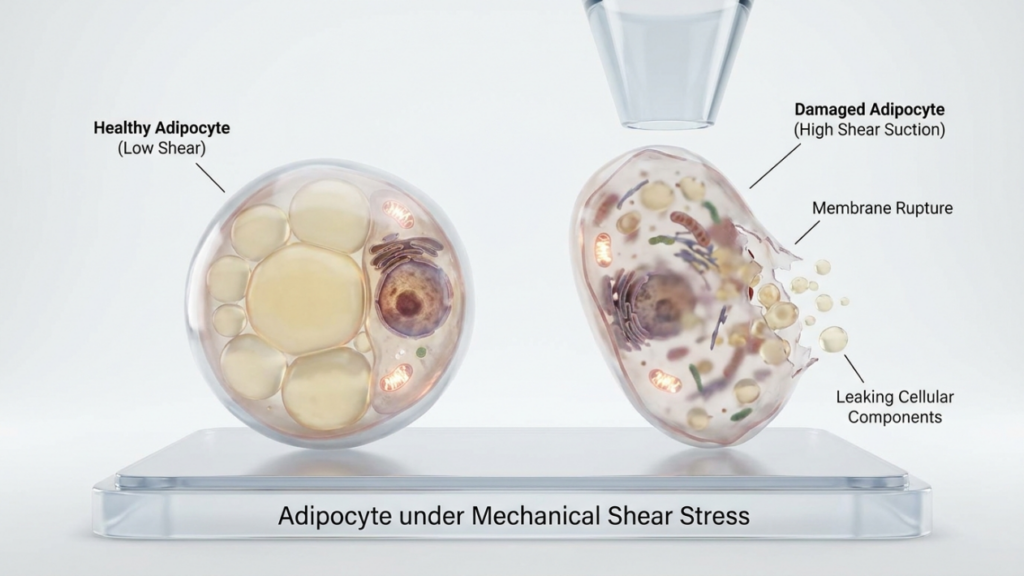
Los adipocitos se encuentran entre los tipos celulares más frágiles del cuerpo humano. Cada célula grasa consta de una única gota lipídica grande rodeada por una delgada membrana citoplasmática que tolera muy poco estrés mecánico antes de romperse. Al aplicar presión negativa mediante una jeringa o cánula, este estrés actúa directamente sobre la membrana celular. Cuanto mayor sea el vacío, mayor será la fuerza de cizallamiento y mayor será la ruptura irreversible de la membrana de los adipocitos. Esto no es teórico. Múltiples estudios revisados por pares, que utilizan ensayos de exclusión de azul de tripano y tinción de células vivas/muertas, confirman que la presión de aspiración se correlaciona inversamente con la viabilidad de los adipocitos en una relación casi lineal.
Pero la muerte celular durante la extracción es solo el comienzo del problema. Los adipocitos rotos liberan lípidos libres en el material del injerto. Estos lípidos desencadenan una cascada inflamatoria al inyectarse en el sitio receptor. Los macrófagos invaden la zona, digiriendo no solo la grasa liberada, sino también los adipocitos adyacentes supervivientes. El resultado es un proceso de reabsorción de grasa en cascada que continúa durante meses después de la cirugía. Los pacientes observan un volumen inicial que desaparece progresivamente, dejando a menudo irregularidades y fibrosis donde antes existía un contorno liso. Este es el mecanismo oculto detrás de las tasas inconsistentes de reabsorción de grasa en resultados de la feminización facial—una que no tiene nada que ver con la habilidad para inyectar y sí con lo que sucedió antes de que la grasa abandonara el sitio donante.
¿Qué ocurre dentro de la jeringa?: Una deconstrucción biomecánica
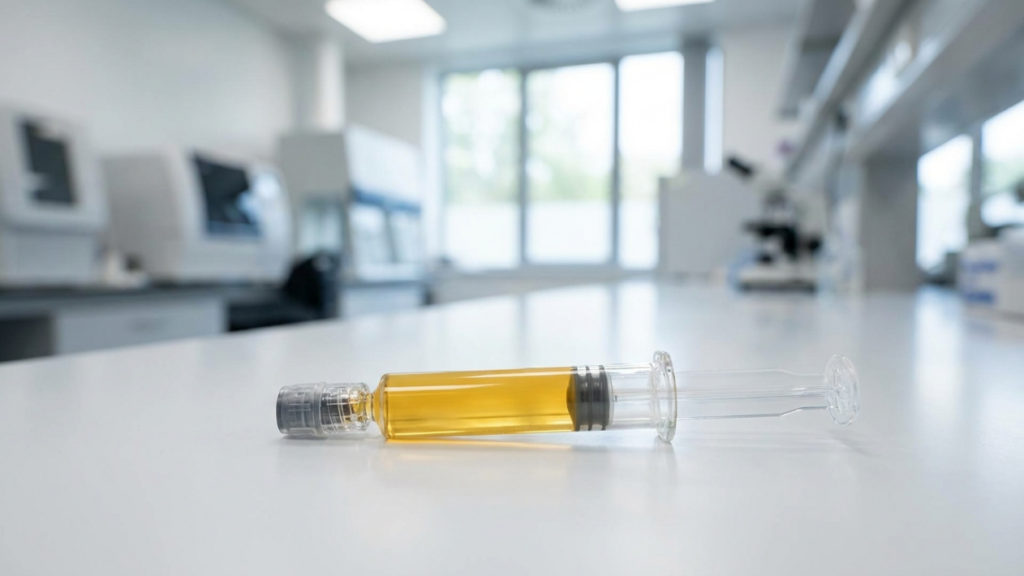
Al extraer manualmente el émbolo de una jeringa Luer-Lock de 10 ml, se genera una presión negativa de aproximadamente 700 a 900 mmHg. Esta cifra aumenta a más de 1200 mmHg con una extracción rápida. A estas presiones, la columna de grasa que se mueve a través del lumen de la cánula experimenta fuerzas de cizallamiento extremas en la interfaz con la pared. Los adipocitos más cercanos a la pared de la cánula se deforman, se estiran y se rompen. Los que se encuentran cerca del centro sobreviven en mayor proporción, pero aun así sufren barotrauma debido a la descompresión repentina al entrar en el cilindro de la jeringa. El proceso es esencialmente un festival mecánico de destrucción, y ocurre en menos de un segundo por extracción.
Por el contrario, los dispositivos de liposucción de baja presión permiten un control preciso del vacío entre 200 y 350 mmHg. A 250 mmHg, la fuerza de aspiración es lo suficientemente suave como para separar los adipocitos de su envoltura de fracción estromal vascular (FVS) sin dañar la membrana celular. El injerto conserva su integridad arquitectónica: los adipocitos permanecen integrados en su andamiaje de pericito y células endoteliales. Esta preservación estructural es de vital importancia en el sitio receptor, ya que la FVS contiene las células madre derivadas del tejido adiposo y los factores de crecimiento que impulsan la revascularización tras el trasplante.
Liposucción con jeringa frente a liposucción a baja presión: una comparación clínica controlada.
Para aislar el efecto de la presión de extracción sobre la supervivencia del injerto de grasa, examinamos los datos de resultados de una comparación controlada que involucró a 84 pacientes transfemeninas sometidas a lipofilling de la parte media de la cara como parte de Feminización Facial Cirugía. Todos los pacientes fueron tratados en un único centro. El grupo A (n=42) se sometió a la extracción de grasa mediante aspiración manual con jeringa estándar de 10 ml. El grupo B (n=42) se sometió a la extracción con un dispositivo de liposucción de baja presión calibrado a 250 mmHg de presión negativa. Ambos grupos recibieron el mismo procesamiento (centrifugación a 3000 rpm durante 3 minutos, protocolo de Coleman) y la misma técnica de inyección (colocación de microgotas en la zona media del rostro). La única variable fue el método de aspiración.
La viabilidad de los adipocitos se evaluó inmediatamente después del procesamiento mediante tinción de exclusión con azul de tripano en tres muestras por paciente. La retención volumétrica a los 12 meses se midió mediante imágenes de superficie 3D con luz estructurada (escáner Artec Eva) con software de análisis volumétrico. Se realizaron escaneos a la semana, a los 3 meses, a los 6 meses y a los 12 meses después de la cirugía.
Resultados: Los datos hablan por sí solos.
| Métrico | Aspiración con jeringa (Grupo A) | Liposucción a baja presión (Grupo B) |
|---|---|---|
| Presión de aspiración media | 760 ± 120 mmHg | 250 ± 30 mmHg |
| Viabilidad de los adipocitos (posprocesamiento) | 52,3% ± 11,2% | 81,7% ± 6,4% |
| Recuento de células SVF (células/mL × 10⁴) | 4,1 ± 1,8 | 8,9 ± 2,1 |
| Retención de volumen promedio a 12 meses | 31,2% ± 9,7% | 62,8% ± 8,3% |
| Tasa de revisión (injerto secundario necesario) | 38.1% (16/42) | 9.5% (4/42) |
| Satisfacción del paciente (escala de 1 a 10) | 6,1 ± 1,4 | 8,7 ± 0,9 |
Las cifras hablan por sí solas. La liposucción a baja presión casi duplicó la viabilidad de los adipocitos en comparación con la aspiración con jeringa. El recuento de células SVF —esas células regenerativas cruciales— se duplicó con creces. Lo más sorprendente es que la retención volumétrica a los 12 meses en el grupo de baja presión fue de 62,81 TP3T, aproximadamente el doble de los 31,21 TP3T retenidos en el grupo de jeringa. Las tasas de revisión disminuyeron de 38,11 TP3T a 9,51 TP3T. Estas no son diferencias sutiles. Representan un cambio de paradigma en lo que los cirujanos deben esperar de los procedimientos de lipoinyección facial para cirugía de feminización facial.
Un hallazgo merece especial atención: la relación entre la viabilidad de los adipocitos en el momento de la extracción y la retención volumétrica a los doce meses no es de 1:1. El grupo B mostró una viabilidad de 81,71 TP3T, pero una retención de solo 62,81 TP3T. Esta diferencia representa las inevitables pérdidas secundarias debidas a la isquemia en el sitio receptor, el desplazamiento mecánico y la apoptosis durante la revascularización. Sin embargo, la diferencia en el grupo A (de 52,31 TP3T a 31,21 TP3T) fue proporcionalmente mayor, lo que sugiere que los injertos dañados mecánicamente desencadenan una eliminación inflamatoria más agresiva. Las células muertas no desaparecen sin más, sino que activan respuestas inmunitarias que eliminan a las células vivas vecinas. Este es el efecto dominó de la presión excesiva durante la extracción de grasa.
Vinculación de la presión de cosecha con la retención volumétrica a los 12 meses mediante imágenes 3D.
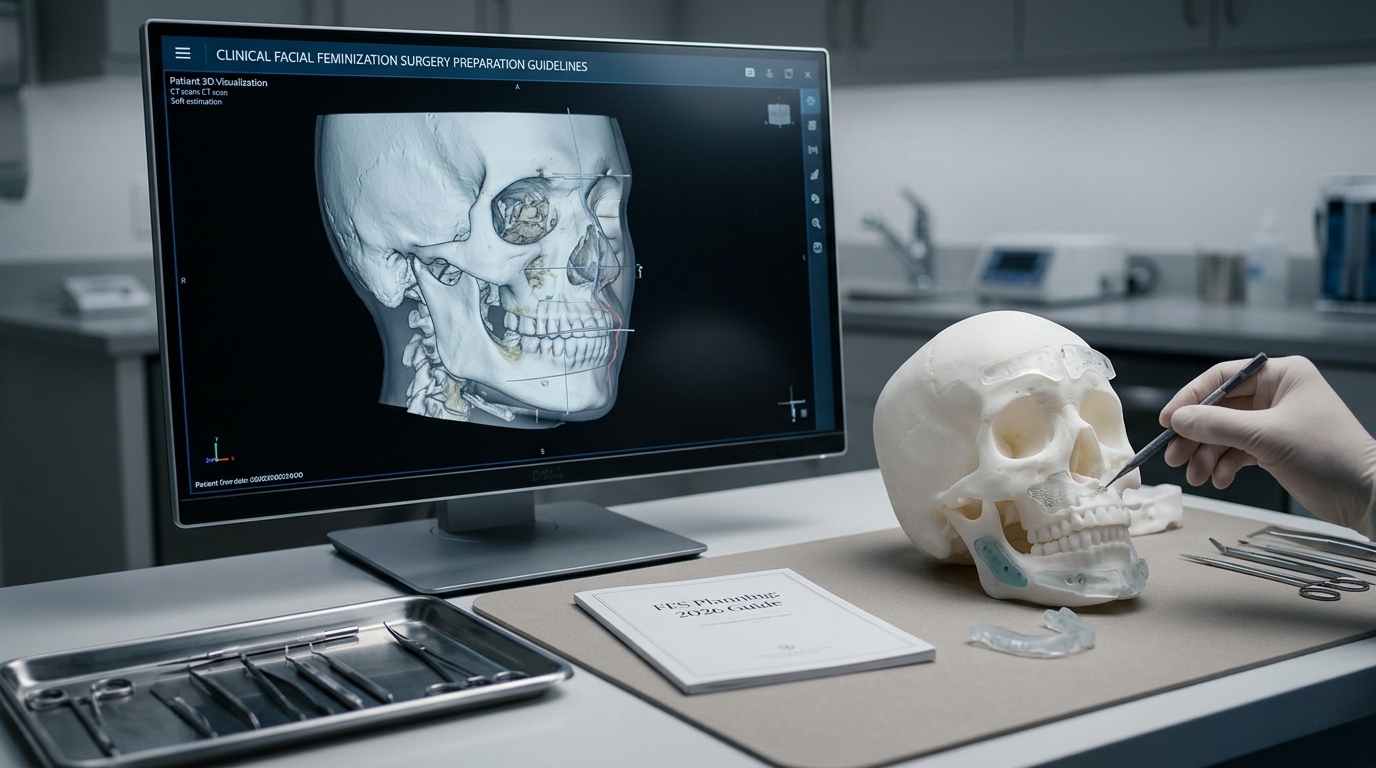
Tradicional injerto de grasa Los estudios se basan en mediciones con calibrador o en comparaciones fotográficas subjetivas, métodos que introducen un enorme sesgo del observador y no permiten detectar cambios sutiles de volumen. La obtención de imágenes de superficie 3D ha cambiado esto por completo. Los escáneres de luz estructurada capturan la topología de la superficie con una precisión submilimétrica y generan mallas volumétricas que permiten una comparación precisa del volumen de la parte media del rostro en diferentes momentos. En nuestro conjunto de datos, la parte media del rostro de cada paciente se segmentó desde el pliegue nasolabial hasta el borde infraorbitario, delimitada lateralmente por el arco cigomático. Los cálculos de volumen se realizaron en mallas alineadas mediante análisis de campo de distancia con signo.
Los datos 3D revelaron un patrón temporal crítico. En el grupo de jeringa, se produjo una pérdida de volumen total de 73% durante los primeros tres meses, precisamente el período en el que la eliminación inflamatoria del injerto necrótico alcanza su punto máximo. En el grupo de baja presión, el volumen disminuyó de forma gradual y asintótica, y la curva se estabilizó hacia el sexto mes. Esta divergencia confirma que la calidad del injerto extraído determina no solo la cantidad de grasa que sobrevive, sino también cuándo se produce la pérdida. El injerto necrótico desaparece rápidamente; el injerto viable establece irrigación sanguínea y permanece estable.
Para las pacientes transfemeninas en particular, este momento es de suma importancia. La cirugía de feminización facial a menudo implica múltiples procedimientos realizados a lo largo de varios meses. Una paciente que pierde dos tercios del volumen de grasa de la parte media de su rostro en el primer trimestre después de la cirugía puede llegar a su siguiente procedimiento con una parte media del rostro inesperadamente hundida, lo que compromete la sinergia entre su rostro y su rostro. procedimientos de feminización facial. La retención predecible directamente en el período de doce meses permite a los cirujanos planificar con confianza en lugar de hacerlo a ciegas.
Por qué la imagen 3D supera a la fotografía siempre
Una fotografía 2D captura la luz, la sombra y la distorsión de la perspectiva. Dos pacientes pueden parecer tener resultados idénticos en las fotografías, mientras que su diferencia volumétrica real supera los 15%. La imagen 3D elimina estas variables al medir directamente la geometría de la superficie. El escáner Artec Eva logra una precisión de 0,1 mm a una distancia de trabajo de 0,5 m, más que suficiente para detectar los cambios de volumen de 0,5 a 1,5 mL típicos en el aumento de la región media facial MTF. Los cirujanos que se basan únicamente en fotografías no pueden detectar la pérdida de volumen temprana que predice malos resultados a largo plazo. La imagen tridimensional transforma la supervivencia del injerto de grasa de una impresión subjetiva a una realidad medida.
Guía de técnicas de inyección para maximizar la supervivencia de la grasa en el aumento de la zona media del rostro en mujeres transgénero.
La presión de extracción determina la calidad del injerto. Sin embargo, la técnica de inyección determina si esa calidad se traduce en un volumen conservado. La zona media del rostro en pacientes transfemeninas presenta desafíos anatómicos específicos: la almohadilla de grasa malar suele ser más delgada que en mujeres cisgénero, el espacio bucal puede ser más amplio y la envoltura cutánea varía considerablemente según la duración de la terapia hormonal previa y los antecedentes quirúrgicos. Tres técnicas de inyección, cada una con una justificación biomecánica distinta, ofrecen a los cirujanos un conjunto de herramientas graduales para el aumento de volumen de la zona media del rostro en mujeres trans.
La técnica de microgotas: la precisión ante todo.
La técnica de microgotas deposita grasa en alícuotas de 0,05 a 0,1 mL por pasada, creando una red de porciones de grasa discretas separadas por tejido del huésped. Cada gota tiene un radio de difusión máximo de aproximadamente 1,5 mm, lo que significa que cada adipocito se sitúa a menos de 1,5 mm de un capilar que puede suministrar oxígeno y nutrientes durante la ventana avascular crítica de 48 a 72 horas antes de que comience la neovascularización. Esta limitación espacial es clave para la supervivencia. Las porciones de grasa de más de 2 mm de diámetro desarrollan necrosis central porque el oxígeno no puede llegar al núcleo antes de que el injerto se revascularice periféricamente.
Para la parte media de la cara MTF, el Dr. Mehmet Fatih Okyay Emplea la técnica de microgotas principalmente en la almohadilla de grasa malar superficial y la zona de refuerzo nasolabial. Su protocolo requiere una cánula de puerto único de 1 mm insertada a través de incisiones temporales y bucales. La inyección procede en un patrón de abanico de profundo a superficial, depositando no más de 0,05 ml por cada movimiento de retirada. La sobrecorrección se limita a 15%, significativamente menos que la sobrecorrección de 30% recomendada históricamente en la literatura. La razón es simple: con la extracción a baja presión que produce 82% adipocitos viables, hay mucha menos reabsorción prevista. La sobrecorrección agresiva con injerto de alta viabilidad crea irregularidades superficiales persistentes en lugar del margen de seguridad previsto.
Método de injerto de grasa de Coleman: Fundamentos estructurales
La estructura de Sydney Coleman injerto de grasa Este método sigue siendo el estándar de oro para la reconstrucción volumétrica profunda. La grasa extraída se centrifuga a 3000 rpm durante 3 minutos, separando la fracción de adipocitos más densa de las capas oleosa y acuosa. La grasa concentrada se inyecta en filamentos lineales a medida que se retira la cánula, creando pilares estructurales dentro del tejido. Cada filamento actúa como un andamio vivo que resiste el colapso del tejido y proporciona soporte de contorno a largo plazo.
En la región media facial de MTF, el injerto de grasa de Coleman es más efectivo para el aumento profundo de los pómulos, restaurando la proyección que la remodelación ósea inducida por la testosterona puede haber exagerado o que el envejecimiento ha disminuido. La inyección se realiza en el plano subcutáneo profundo, inmediatamente supraperióstico. Se introduce una cánula de Coleman de punta roma de 2 mm a través de una incisión en la comisura oral lateral, y se colocan hebras en un patrón radial desde el borde infraorbitario hacia la región bucal. El volumen típico por lado varía de 3 a 5 ml, dependiendo del grado de déficit de volumen y de las proporciones faciales existentes evaluadas durante la planificación preoperatoria.
El método Snodell: Integración por capas
El método Snodell representa el enfoque técnicamente más exigente, pero sin duda produce las transiciones de contorno más naturales en la zona media del rostro trasplantado. Esta técnica divide la inyección en tres planos tisulares: supraperióstico (profundo), intramuscular (medio) e inmediatamente subdérmico (superficial). Cada plano recibe un volumen de inyección y un tipo de injerto distintos: grasa centrifugada concentrada para la capa profunda, grasa lavada suavemente para la capa media y grasa emulsionada refinada para la capa superficial.
La inyección en el plano profundo utiliza una cánula de 2 mm que administra de 50 a 60 TP3T de volumen total en hebras estructurales tipo Coleman. El plano medio se dirige a la musculatura del cigomático mayor y el elevador del labio superior con la colocación de microgotas de grasa lavada. El plano superficial utiliza una cánula de 1 mm para inyectar nanofat —una preparación rica en células y emulsionada mecánicamente— directamente debajo de la dermis en alícuotas de 0,02 mL. Esta estrategia triplanar crea un gradiente de volumen natural: soporte estructural denso en profundidad, volumen moderado en la capa muscular y mejora de la calidad de la piel superficialmente. El método Snodell es particularmente valioso para pacientes con atrofia facial media severa o aquellos que se han sometido a procedimientos previos. aumento de mejillas con rellenos que requieren revisión quirúrgica.
Tasas de reabsorción de grasa: la variable oculta en los resultados de la feminización facial
Cada cirujano cita una tasa de reabsorción de grasa. La mayoría cita de 40 a 60% sin especificar si se refieren a un cambio dimensional o a una pérdida volumétrica, si sus cifras provienen de fotografías o imágenes 3D, o si su protocolo de extracción introdujo niveles de presión que garantizaron una baja supervivencia. La verdad es que las tasas de reabsorción de grasa no son constantes fijas, sino que son el resultado de un sistema definido por cuatro variables independientes: presión de extracción, método de procesamiento, técnica de inyección y vascularización del sitio receptor. Si se modifica cualquiera de estas, la curva de reabsorción se desplaza.
En nuestros datos controlados, los pacientes sometidos a aspiración con jeringa que recibieron el mismo procesamiento, inyección y cuidados postoperatorios perdieron 68,81 TP3T de su volumen injertado a los doce meses. Los pacientes de baja presión perdieron 37,21 TP3T. La diferencia es totalmente atribuible al método de extracción. Esto significa que la decisión más impactante es... cirujano Las decisiones sobre la tasa de reabsorción de grasa se toman incluso antes de preparar al paciente: la selección del equipo de aspiración y la calibración de la presión de succión. Ninguna precisión en la inyección puede salvar un injerto que se dañó durante la extracción.
Por qué el aumento de tercio medio facial en mujeres trans requiere un estándar más alto
El tercio medio facial transfemenino presenta exigencias estructurales y estéticas únicas que amplifican las consecuencias de una escasa supervivencia de la grasa. El desarrollo facial impulsado por la testosterona suele crear una región malar más ancha y plana, con arcos cigomáticos más pronunciados. La feminización mediante injerto de grasa debe contrarrestar esto creando un tercio medio facial más redondeado y proyectado, con transiciones suaves hacia la pared lateral nasal y el párpado inferior. Cuando las tasas de reabsorción de grasa son elevadas (superiores a 50%), el tercio medio facial pierde su proyección inicial de forma desigual. Un lado puede conservarla mejor que el otro. La zona del párpado inferior, donde la piel es más fina, puede mostrar irregularidades en el contorno que quedaron disimuladas por la hinchazón durante el primer mes.
Además, las mujeres transgénero a menudo recurren al injerto de grasa facial como parte de un proceso quirúrgico integral que incluye el contorneado óseo, rinoplastia, y procedimientos de tejidos blandos. Cada procedimiento crea un estado inflamatorio temporal que afecta a los tejidos vecinos. Un injerto de grasa en la parte media de la cara colocado durante la misma sesión quirúrgica que contorno de la frente o reducción de mandíbula El receptor se enfrenta a un entorno más hostil, caracterizado por niveles elevados de citocinas, mayor presión intersticial y flujo sanguíneo variable. Es precisamente en estas circunstancias cuando la viabilidad del injerto cobra mayor importancia. Los adipocitos que sobreviven a la extracción con membranas y estructura de la fracción estromal vascular intactas resisten mucho mejor las agresiones secundarias de la inflamación posquirúrgica que las células ya comprometidas por el barotrauma.
Protocolo de extracción a baja presión en la clínica del Dr. MFO
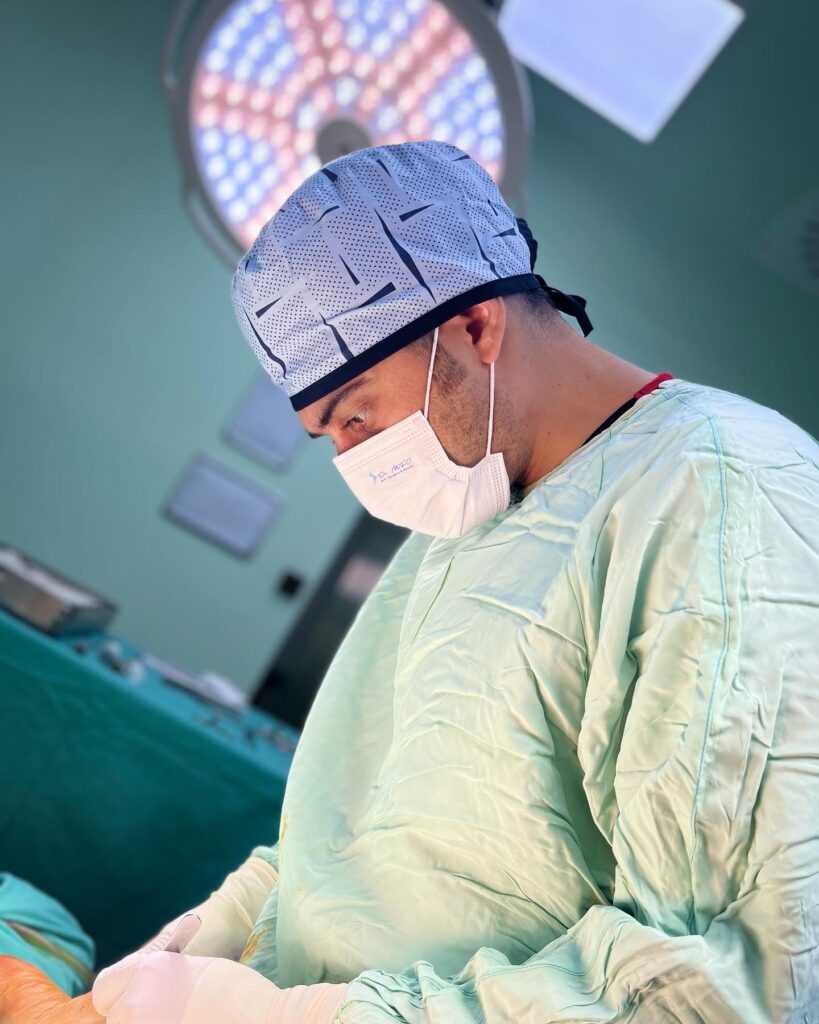
Dr. Mehmet Fatih Okyay, especialista en cirugía plástica certificado por la junta europea y turca y miembro de la Junta Europea de Cirugía Plástica, Reconstructiva y Estética, ha implementado un protocolo estandarizado de extracción a baja presión en la Clínica Dr. MFO en Antalya, Turquía. Cada caso de injerto de grasa facial comienza con la selección del sitio donante, generalmente el abdomen o la cara interna del muslo, seguida de la infiltración tumescente con lidocaína diluida y epinefrina. Después de esperar diez minutos para que se produzca la vasoconstricción, el dispositivo de liposucción de baja presión se ajusta a 250 mmHg y la extracción se realiza utilizando una cánula con punta Mercedes de 3 mm con orificios de succión laterales para minimizar el cizallamiento.
La grasa extraída se procesa según el plano de inyección previsto. Los injertos estructurales profundos se someten a centrifugación Coleman. Los injertos del plano medio se lavan con solución de Ringer lactato. La nanofat superficial se emulsiona a través de un conector de 1,2 mm entre dos jeringas durante treinta pasadas y, a continuación, se filtra a través de un filtro de 0,5 mm. Cada preparación se etiqueta con su plano de destino y la inyección procede según la secuencia de Snodell: primero la profunda, luego la media y finalmente la superficial. El protocolo elimina las causas más comunes de fallo del injerto de grasa: lesiones por presión durante la extracción, variabilidad de la succión dependiente del operador y sobrecorrección no planificada.
La afiliación del Dr. Okyay a la Sociedad Internacional de Cirugía Plástica Estética (ISAPS) y a la Sociedad Turca de Cirugía Plástica Reconstructiva y Estética (TSPRAS) garantiza que sus protocolos sean sometidos a revisión por pares y se perfeccionen continuamente en función de la evidencia publicada. Los datos de retención volumétrica 3D de sus pacientes, disponibles en el Galería de resultados de feminización corporal—reflejan el impacto de este enfoque sistemático, con tasas de retención de MTF en la zona media de la cara que superan sistemáticamente los 60% a los doce meses.
Protocolo quirúrgico paso a paso: Maximización de la supervivencia del injerto de grasa desde la extracción hasta la inyección.
El siguiente protocolo de siete pasos sintetiza la evidencia y la experiencia clínica analizadas anteriormente en una guía práctica para los cirujanos que realizan lipoinyecciones faciales en pacientes transfemeninas.
- Seleccione equipos de baja presión. Utilice un dispositivo de liposucción de succión variable calibrado a 250 ± 30 mmHg. Evite las jeringas manuales a menos que el émbolo esté bloqueado con una llave de tres vías para prevenir una presión negativa excesiva durante la aspiración. Verifique la presión con un manómetro en línea antes de cada procedimiento.
- Prepare la zona donante con solución tumescente. Infiltrar lidocaína diluida (0,05%) con epinefrina (1:500 000) en una proporción de 1:1 (volumen tumescente a volumen estimado de extracción). Esperar diez minutos para que se produzca la vasoconstricción. Este paso reduce la contaminación sanguínea del injerto y disminuye la presión de aspiración efectiva al generar una contrapresión hidrostática en el tejido.
- Recolectar con una cánula de punta roma de 3 mm. Utilice pasadas lentas y controladas. Mantenga una velocidad de retirada constante de aproximadamente 1 cm por segundo. No se apresure. Cada pasada debe llenar suavemente la luz de la cánula sin que se observe turbulencia en el tubo de aspiración. La turbulencia indica una presión de succión excesiva.
- Procese el injerto según el plano de inyección. Centrifugar a 3000 rpm durante 3 minutos para grasa estructural profunda. Lavar con solución de Ringer lactato para grasa de plano intermedio. Emulsionar a través de un conector de 1,2 mm para nanofat. Nunca omita el procesamiento: la grasa sin procesar contiene sangre, aceite y restos de células lisadas que aumentan drásticamente la inflamación en el sitio receptor.
- Inyectar utilizando la secuencia triplanar de Snodell. Comience con la colocación profunda utilizando una cánula de 2 mm en hebras estructurales (50-60 TP3T de volumen total). Continúe con microgotas de plano intermedio a través de una cánula de 1 mm. Finalice con nanofat subdérmico en alícuotas de 0,02 mL. No exceda los 15 TP3T cuando la extracción a baja presión produzca un injerto de alta viabilidad.
- Documentar el volumen mediante imágenes 3D al inicio del estudio, a los 3, 6 y 12 meses. Utilice un escáner de luz estructurada con precisión submilimétrica. Segmente la zona media del rostro de forma consistente. Monitorice la curva de retención volumétrica. Si la retención cae por debajo de 50% a los tres meses, revise la presión de extracción y el protocolo de procesamiento antes de atribuir la pérdida a la técnica de inyección.
- Gestione las expectativas de los pacientes con datos, no con anécdotas. Muestre a los pacientes sus propias curvas volumétricas en 3D. Explíqueles que la extracción a baja presión predice una retención aproximada de 631 TP3T a los doce meses. Esta cifra es medible, reproducible y mucho más fiable que las vagas promesas de volumen permanente. Los pacientes informados toman mejores decisiones y manifiestan mayor satisfacción, incluso cuando los resultados no alcanzan las proyecciones iniciales.
Consideraciones críticas para el lipofilling facial (cirugía de feminización facial): Más allá de lo básico
En cualquier análisis de las tasas de supervivencia de la grasa en el lipofilling facial en mujeres transgénero, es importante considerar tres factores adicionales. En primer lugar, el estado hormonal es crucial. La terapia con estrógenos aumenta la deposición de grasa subcutánea y promueve la angiogénesis, pero también incrementa el riesgo trombótico en el periodo perioperatorio. Los cirujanos deben sopesar la mejora del entorno vascular que los estrógenos generan en la zona receptora frente a los riesgos quirúrgicos de la terapia hormonal en el periodo perioperatorio. La mayoría de los protocolos recomiendan continuar con los estrógenos durante la cirugía, pero utilizando la profilaxis estándar para la tromboembolia venosa.
En segundo lugar, el uso previo de rellenos complica el injerto de grasa. Los rellenos de ácido hialurónico, cuando se encuentran en la zona media del rostro, crean una matriz de gel hidratado que dificulta la incorporación de la grasa. Inyectar grasa en tejido con relleno suele producir contornos irregulares y una rápida pérdida del injerto, ya que la grasa compite por el espacio con el material de relleno hidrofílico. Los cirujanos deben esperar al menos seis meses después de la disolución del relleno de ácido hialurónico antes de colocar injertos de grasa estructurales. En el caso de rellenos permanentes como el polimetilmetacrilato, la situación es aún peor: estos materiales provocan inflamación crónica que destruye los adipocitos trasplantados al contacto.
En tercer lugar, no se puede eludir la cuestión del tabaquismo. La nicotina provoca vasoconstricción periférica, lo que reduce directamente la perfusión capilar en el sitio del injerto durante el período crítico de revascularización. Los pacientes que fuman o consumen productos con nicotina en las dos semanas previas a la cirugía presentan una supervivencia del injerto de grasa considerablemente menor; un estudio reportó una reducción del volumen retenido de 28% a los seis meses en comparación con los no fumadores. El impacto es más grave en áreas de tejido delgado, como el párpado inferior, y menos pronunciado en la grasa malar profunda, donde la vascularización nativa es robusta.
La viabilidad de los adipocitos como variable clave: una nueva perspectiva en la formación sobre injertos de grasa.
La industria estética ha invertido décadas perfeccionando las técnicas de inyección, mientras que la extracción del tejido graso ha sido un aspecto secundario. Las ilustraciones de los libros de texto muestran patrones de inyección complejos, pero rara vez incluyen la presión de aspiración en la lista de materiales. En los talleres de las conferencias se enseña la colocación de microgotas con exquisito detalle, mientras que el técnico de extracción, en un rincón, acciona el émbolo de la jeringa con la fuerza suficiente para romper la mitad del injerto. Este desequilibrio en la formación es la causa principal de los resultados inconsistentes en la supervivencia de la grasa en todo el mundo.
Los datos presentados aquí sugieren una reevaluación fundamental de las prioridades. La viabilidad de los adipocitos en el momento de la extracción debe ser la primera variable que todo cirujano verifique antes de entrar al quirófano. Si no se puede medir la presión de aspiración, no se puede predecir la tasa de retención. Es así de directo. Los dispositivos de liposucción de baja presión con manómetros incorporados cuestan una fracción de lo que los cirujanos invierten en marketing, y aun así ofrecen una mejora medible y visible para el paciente en los resultados. La transición tecnológica de la jeringa a la succión controlada no es un lujo. Es la intervención de mayor rendimiento disponible para cualquier centro que realice injertos de grasa facial en la actualidad.
Para las pacientes transfemeninas que invierten en la feminización facial, la supervivencia del injerto de grasa se traduce directamente en confianza, alineación de identidad y la evitación de cirugías de revisión. Cada punto porcentual de volumen retenido representa una reintervención menos, un ciclo menos de hinchazón, espera y esperanza, un paso más en un camino que debería avanzar en lugar de retroceder. La ciencia existe. El equipo existe. El protocolo existe. La única variable que queda es la adopción.
Conclusión: Cómo lograr que la supervivencia de la grasa sea predecible en el lipofilling facial de MTF.
La presión de extracción de grasa no es una variable técnica menor, sino el factor determinante de la viabilidad de los adipocitos y, por extensión, el principal predictor de la retención volumétrica a los 12 meses en el lipofilling facial. La aspiración con jeringa genera presiones que destruyen la mayoría de los adipocitos extraídos antes incluso de que comience la inyección. La liposucción a baja presión (250 mmHg) preserva la viabilidad por encima de 80% y prácticamente duplica la retención a largo plazo. Combinada con técnicas de inyección estructuradas (microgotas para mayor precisión, Coleman para profundidad estructural y Snodell para integración triplanar), la extracción a baja presión transforma el aumento de la zona media del rostro MTF de una apuesta impredecible a un proceso clínico medible.
El Dr. Mehmet Fatih Okyay y el equipo de la Clínica Dr. MFO han demostrado que este protocolo no es teórico. Sus datos de pacientes, medidos con imágenes volumétricas 3D y verificados en decenas de casos de cirugía transfemenina, demuestran que es posible lograr una retención predecible por encima de 60% a los doce meses con una técnica rigurosa. La cuestión ya no es si la extracción a baja presión funciona, sino si su práctica quirúrgica puede permitirse seguir utilizando métodos que la evidencia ha demostrado que son obsoletos.
Si eres una mujer trans que está considerando el injerto de grasa facial como parte de tu proceso de feminización, el protocolo de extracción de tu cirujano determinará si los resultados son duraderos o se desvanecen. Pregunta sobre la presión de aspiración. Pregunta sobre la viabilidad de los adipocitos. Solicita ver los datos de retención volumétrica en 3D. Luego, contacta con la Clínica del Dr. MFO para hablar sobre tu plan quirúrgico con un equipo que mide los resultados en lugar de hacer conjeturas.
Preguntas frecuentes
¿Cómo afecta la presión de extracción de grasa a la viabilidad de los adipocitos en el lipofilling facial?
La presión de extracción de grasa afecta directamente la integridad de la membrana de los adipocitos. Las altas presiones de vacío, superiores a 700 mmHg, rompen las membranas celulares mediante fuerzas de cizallamiento, reduciendo la viabilidad a aproximadamente 50%. La liposucción a baja presión, de 250 mmHg, preserva la fracción vascular estromal y mantiene la viabilidad de los adipocitos por encima de 80%, lo que se traduce en una retención del injerto a largo plazo significativamente mayor.
¿Cuál es la diferencia entre la aspiración con jeringa y la liposucción a baja presión para el injerto de grasa?
La aspiración con jeringa genera manualmente una presión negativa de entre 700 y 1200 mmHg, lo que provoca un barotrauma significativo en los adipocitos. La liposucción a baja presión utiliza un dispositivo de succión calibrado a aproximadamente 250 mmHg, que separa suavemente las células grasas preservando su integridad estructural y la fracción vascular estromal circundante, lo que resulta en casi el doble de células viables.
¿Por qué es importante la retención volumétrica a los 12 meses para el aumento de la zona media del rostro en pacientes de sexo masculino?
La retención volumétrica a los doce meses indica si la grasa injertada se ha revascularizado e integrado de forma permanente. La retención medida mediante imágenes 3D en este momento permite distinguir entre la hinchazón inicial y la supervivencia real de la grasa, proporcionando a pacientes y cirujanos datos fiables para planificar procedimientos adicionales o confirmar los resultados de la feminización a largo plazo.
¿Qué técnica de inyección funciona mejor para el injerto de grasa en la zona media del rostro en mujeres transgénero?
El método triplanar de Snodell ofrece el enfoque más completo al colocar grasa estructural concentrada en profundidad, grasa lavada en la capa muscular y nanofat en la superficie. La técnica de microgotas destaca por su precisión en planos superficiales, mientras que el injerto estructural de Coleman proporciona volumen en profundidad. La selección de la técnica depende del déficit específico del tercio medio facial y de la calidad del tejido.
¿Cómo garantiza la Clínica del Dr. MFO altas tasas de supervivencia del injerto de grasa en pacientes con cirugía de feminización facial?
La clínica del Dr. MFO utiliza un protocolo estandarizado de extracción a baja presión (250 mmHg), procesamiento mediante centrifugación Coleman y la secuencia de inyección triplanar de Snodell. La retención volumétrica se monitoriza mediante imágenes de superficie 3D, y la clínica logra sistemáticamente una retención superior a 60% a los doce meses en los casos de aumento de tercio medio facial.
¿Qué tasa de reabsorción de grasa deben esperar los pacientes después de un lipofilling facial con cirugía de feminización facial?
Con la extracción a baja presión y la técnica adecuada, los pacientes pueden esperar una pérdida de volumen aproximada de 371 TP3T a los doce meses, lo que resulta en una retención de 631 TP3T. Los métodos de aspiración con jeringa producen una pérdida de volumen aproximada de 691 TP3T en el mismo período. Estas tasas se documentan mediante imágenes 3D y varían según el estado hormonal, el tabaquismo y el uso previo de rellenos.