
Intraprendere il viaggio di Femminilizzazione facciale (FFS) è una decisione profondamente personale e trasformativa. Per molte donne transgender e individui non binari, la FFS è un passo cruciale per allineare il proprio aspetto esteriore con la propria identità interiore, promuovendo un profondo senso di congruenza e benessere. Nel Regno Unito, orientarsi nel panorama delle competenze chirurgiche può sembrare complesso, soprattutto se si considerano le diverse specializzazioni di chirurghi maxillo-facciali e plastici. Spesso ci si chiede: quale tipo di chirurgo è più qualificato per eseguire queste complesse procedure?
La verità è che la FFS non è una procedura singola, ma un insieme completo di interventi progettati per modificare i tratti del viso maschili in un'estetica più femminile. Ciò comporta un delicato equilibrio tra il rimodellamento delle strutture ossee e la rifinitura dei tessuti molli. Di conseguenza, l'ideale Chirurgo FFS Spesso possiede un mix unico di competenze che attingono sia dalla chirurgia maxillo-facciale che da quella plastica. Comprendere la formazione di base e le competenze specialistiche di ciascun campo è fondamentale per fare una scelta consapevole.
Questa guida approfondita analizzerà le qualifiche, i percorsi formativi e le specifiche aree di competenza dei chirurghi maxillo-facciali e plastici nel Regno Unito. Esploreremo come i rispettivi background contribuiscano alle varie componenti della FFS, dal complesso lavoro sulle ossa della fronte e della mandibola alla delicata scultura del naso e dei tessuti molli.
Il nostro obiettivo non è dichiarare una specializzazione definitivamente "migliore" dell'altra, ma piuttosto evidenziare i loro punti di forza complementari e i fattori critici che dovrebbero guidare il vostro processo di selezione. Alla fine, avrete una comprensione più chiara di cosa costituisce un chirurgo FFS altamente qualificato e come identificare lo specialista più adatto ad aiutarvi a raggiungere i risultati desiderati per la femminilizzazione del viso.
ha registrato un costante aumento nel Regno Unito, a dimostrazione di una crescente consapevolezza e accettazione dei trattamenti di gender affirming (Regan et al., 2021). Questa impennata sottolinea l'importanza di un'assistenza chirurgica accessibile e qualificata. La FFS non riguarda solo il miglioramento estetico; si tratta di affrontare la disforia di genere e migliorare significativamente la qualità della vita di una persona armonizzando i tratti del viso con la propria identità di genere (Altman, 2012). Questo profondo impatto richiede chirurghi con competenze tecniche eccezionali, ma anche una profonda comprensione degli obiettivi unici e delle considerazioni emotive dei pazienti FFS.
Il percorso per diventare chirurgo nel Regno Unito è rigoroso e altamente competitivo, indipendentemente dalla specializzazione scelta. In genere prevede dai cinque ai sei anni di facoltà di medicina, seguiti da due anni di formazione di base e altri due anni di formazione chirurgica di base. Durante queste fasi iniziali, gli aspiranti chirurghi acquisiscono una vasta esperienza clinica in diverse specialità mediche e chirurgiche (Royal College of Surgeons of England, nd). Questo periodo di formazione di base culmina con l'esame di ammissione al Royal College of Surgeons (MRCS), un prerequisito per accedere alla formazione chirurgica specialistica. È dopo questo punto che i percorsi per i chirurghi maxillo-facciali e plastici iniziano a divergere, ognuno dei quali conduce a distinte aree di competenza avanzata, cruciali per la FFS.

Sommario
Comprendere la FFS: un'impresa multidisciplinare
La chirurgia di femminilizzazione del viso comprende una vasta gamma di procedure, ciascuna delle quali mira a caratteristiche specifiche per creare un aspetto del viso più femminile. Queste procedure spesso includono rimodellamento della fronte, lifting delle sopracciglia, rinoplastica (rimodellamento del naso), aumento della guancia, lifting delle labbra, riduzione dell'angolo della mandibola, genioplastica (rimodellamento del mento) e riduzione della trachea (riduzione del pomo d'Adamo) (Barnett et al., 2023). La complessità di questi interventi, che coinvolgono sia la manipolazione ossea che quella dei tessuti molli, evidenzia perché la chirurgia di femminilizzazione del viso (FFS) sia intrinsecamente un campo multidisciplinare. Nessuna singola specialità chirurgica copre tradizionalmente ogni aspetto del viso con la stessa profondità di competenza.
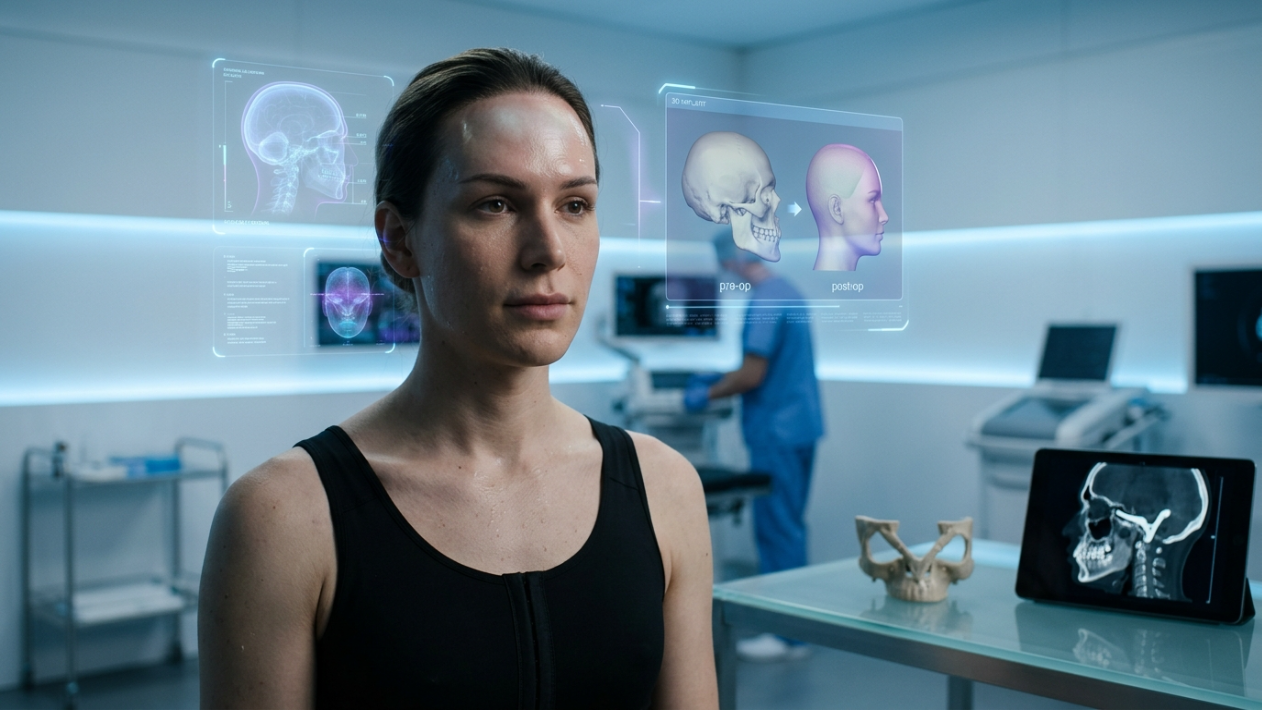
La moderna FFS si basa in larga misura su tecniche di pianificazione avanzate. Le scansioni TC facciali preoperatorie vengono utilizzate di routine per creare modelli 3D dettagliati dell'anatomia facciale del paziente. Queste scansioni consentono ai chirurghi di pianificare meticolosamente aggiustamenti precisi delle ossa facciali, navigando attentamente attorno alle strutture anatomiche critiche (Callen et al., 2020). Questo livello di precisione è fondamentale per ottenere risultati estetici e funzionali ottimali e richiede un chirurgo con una profonda conoscenza dell'anatomia craniofacciale e della biomeccanica chirurgica.
L'obiettivo finale della FFS va oltre la mera modificazione fisica; mira a ridurre la disforia di genere e a migliorare l'immagine di sé e il comfort sociale (Surgical Membership Portal, 2025). La ricerca mostra costantemente alti livelli di soddisfazione dei pazienti, con studi che indicano un aumento significativo di pazienti con appartenenza di genere femminile dopo l'intervento chirurgico (Fisher et al., 2020). Questo profondo impatto sottolinea l'importanza di selezionare un chirurgo che non solo possieda le competenze tecniche, ma comprenda anche le complesse dimensioni psicologiche e sociali dell'affermazione di genere.
Il chirurgo maxillo-facciale: competenza in ossa e mascelle
La Chirurgia Orale e Maxillo-Facciale (OMFS), spesso chiamata "Maxfax", è una specialità chirurgica unica che unisce medicina e odontoiatria. I chirurghi maxillo-facciali seguono una formazione approfondita che fornisce loro una profonda competenza in anatomia, patologia e gestione chirurgica del viso, delle mascelle e del cavo orale. La loro formazione prevede in genere il conseguimento sia di una laurea in medicina che di una laurea in odontoiatria, seguite da una formazione chirurgica specialistica. Questa doppia qualifica fornisce loro una comprensione senza pari della struttura ossea facciale e dell'occlusione (come i denti si incastrano tra loro).
Il percorso formativo per i chirurghi maxillo-facciali, dopo gli anni iniziali di specializzazione e di specializzazione chirurgica, si concentra intensamente sulle patologie che interessano la regione cranio-facciale. Tra queste rientrano traumi, deformità congenite, tumori della testa e del collo e chirurgia ricostruttiva del viso e delle mascelle. La loro pratica quotidiana prevede interventi ossei complessi, come osteotomie (tagli ossei), innesti ossei e la manipolazione precisa delle strutture scheletriche facciali. Questo li rende particolarmente adatti agli aspetti ossei-centrici della FFS.
Per la FFS, l'esperienza di un chirurgo maxillo-facciale è particolarmente preziosa per procedure come il rimodellamento della fronte, che spesso comporta il rimodellamento dell'osso frontale e dell'arcata sopraccigliare. I chirurghi maxillo-facciali sono inoltre altamente qualificati nella riduzione dell'angolo mandibolare e nella genioplastica (rimodellamento del mento), dove la rimozione e il riposizionamento ossei precisi sono fondamentali per ottenere un contorno facciale inferiore più morbido e femminile. Il Maxillofacial Trainee Research Collaborative (MTReC) ha persino avviato progetti di mappatura specifica della fornitura e dell'adozione della FFS nel Regno Unito, indicando un coinvolgimento diretto e attivo di questa specialità nella chirurgia facciale di genere (Maxillofacial Trainee Research Collaborative, nd). La loro profonda conoscenza della meccanica scheletrica facciale e la loro esperienza nella ricostruzione facciale complessa li rendono ottimi candidati per le modifiche ossee richieste nella FFS.

Il chirurgo plastico: padronanza dei tessuti molli e dell'estetica
La chirurgia plastica è un'altra specialità chirurgica altamente competitiva e richiesta nel Regno Unito. Dopo aver completato la facoltà di medicina, la formazione di base e la formazione chirurgica di base, gli aspiranti chirurghi plastici intraprendono un programma di formazione specialistica di sei anni (ST3-8) incentrato esclusivamente sulla chirurgia plastica (British Association of Plastic, Reconstructive and Aesthetic Surgeons [BAPRAS], nd). Questa formazione enfatizza un'ampia gamma di procedure ricostruttive ed estetiche su tutto il corpo, con particolare attenzione alla regione della testa e del collo.
I chirurghi plastici sono maestri nella manipolazione dei tessuti molli, nella guarigione delle ferite e nei principi estetici. La loro formazione comprende la chirurgia microvascolare, la ricostruzione delle ustioni, la chirurgia della mano, la ricostruzione del seno e un'ampia gamma di procedure cosmetiche. Questa completa conoscenza di diverse tecniche chirurgiche e considerazioni estetiche li rende particolarmente qualificati per gli aspetti dei tessuti molli della FFS. Sono abili nel ottenere risultati dall'aspetto naturale gestendo attentamente pelle, muscoli e grasso.
Nel contesto della FFS, le competenze di un chirurgo plastico sono particolarmente cruciali per interventi come il lifting delle sopracciglia, che comporta il riposizionamento delle sopracciglia e della pelle della fronte per creare una zona degli occhi più aperta e femminile. Sono particolarmente indicati anche per la rinoplastica, dove l'obiettivo è perfezionare la forma, le dimensioni e la proiezione del naso per armonizzarlo con gli altri tratti del viso femminilizzati.
Anche il lifting delle labbra e l'aumento degli zigomi, che comportano modifiche sottili ma efficaci nel volume e nella posizione dei tessuti molli, rientrano pienamente nel loro campo. Inoltre, la loro competenza nella gestione delle cicatrici e nelle meticolose tecniche di chiusura è fondamentale per ridurre al minimo le cicatrici visibili, una preoccupazione fondamentale per i pazienti FFS (BAPRAS, nd). L'occhio estetico e la profonda comprensione dell'armonia del viso, acquisiti durante la formazione in chirurgia plastica, sono indispensabili per ottenere un risultato equilibrato e naturalmente femminile.
Sovrapposizione e specializzazione: dove convergono i percorsi
Sebbene i chirurghi maxillo-facciali e plastici abbiano specializzazioni principali distinte, esiste una significativa sovrapposizione nelle loro competenze, in particolare per quanto riguarda la testa e il collo. Entrambe le specialità sono specializzate in traumi facciali, chirurgia ricostruttiva e gestione delle deformità facciali. Questa convergenza è esattamente il motivo per cui la FFS spesso trae vantaggio da un approccio collaborativo o da chirurghi che hanno conseguito un'ulteriore sottospecializzazione in chirurgia cranio-facciale o in cure di gender-affirming.
Alcune procedure FFS coinvolgono intrinsecamente sia componenti ossee che tessuti molli. Ad esempio, il rimodellamento della fronte richiede non solo la rimodellazione dell'osso sottostante, ma anche un'attenta gestione dell'attaccatura dei capelli e della posizione delle sopracciglia. Allo stesso modo, la genioplastica prevede un intervento osseo sul mento, ma il risultato estetico finale è fortemente influenzato dal modo in cui i tessuti molli si adagia sull'osso appena rimodellato. In questi casi, è essenziale un chirurgo con una solida conoscenza sia delle dinamiche scheletriche che di quelle dei tessuti molli.
Sempre più spesso, i chirurghi cercano borse di studio e corsi di formazione avanzata che colmino i confini tradizionali delle specializzazioni. Un chirurgo maxillo-facciale potrebbe intraprendere una formazione aggiuntiva in chirurgia estetica, mentre un chirurgo plastico potrebbe acquisire ulteriore competenza nel trattamento delle ossa cranio-facciali. Questa contaminazione incrociata di competenze porta alla formazione di chirurghi FFS altamente specializzati, in grado di affrontare l'intero spettro delle esigenze di femminilizzazione del viso in modo completo. La chiave non è necessariamente la specializzazione iniziale, ma la successiva dedizione alla padronanza delle tecniche e delle sfumature specifiche della FFS.
Scegliere il chirurgo: considerazioni chiave
Considerate le competenze distinte ma complementari dei chirurghi maxillo-facciali e plastici, come si sceglie lo specialista giusto per la FFS nel Regno Unito? La risposta sta nel concentrarsi su diversi fattori critici, oltre alla specializzazione iniziale.
- Esperienza in FFS: Questo è probabilmente il fattore più cruciale. La FFS è un campo altamente specializzato. L'esperienza generale di un chirurgo in chirurgia maxillo-facciale o plastica è importante, ma la sua esperienza specifica e il suo curriculum con le procedure FFS sono fondamentali. Cercate chirurghi che eseguano regolarmente la FFS e che abbiano un ampio portfolio di risultati.
- Sub-specializzazione e doppia qualifica: Alcuni chirurghi possono possedere una doppia qualifica o aver seguito un'ampia formazione specialistica in chirurgia craniofacciale o in chirurgia facciale di genere. Questi individui possiedono spesso un set di competenze completo che abbraccia sia l'osso che i tessuti molli, rendendoli particolarmente adatti alla FFS.
- Comprensione dell'estetica femminile: La FFS non consiste solo nel ridurre i tratti maschili; si tratta di creare un aspetto armonioso e naturalmente femminile. Un chirurgo FFS esperto avrà un occhio artistico acuto e una profonda comprensione delle sottili differenze nelle proporzioni e nei contorni del viso che definiscono la femminilità.
- Approccio centrato sul paziente: Il chirurgo deve dimostrare empatia e una profonda comprensione dei vostri obiettivi personali e del vostro percorso emotivo. Deve essere in grado di spiegare chiaramente le procedure, i potenziali esiti e gli eventuali rischi associati, assicurandovi di sentirvi ascoltati e informati durante tutto il percorso.
- Approccio di squadra: Per i casi complessi di FFS, un approccio multidisciplinare, che coinvolga sia chirurghi maxillo-facciali che chirurghi plastici, o un singolo chirurgo con una vasta esperienza in FFS, può essere estremamente utile. Questo garantisce che tutti gli aspetti della femminilizzazione del viso, dal rimodellamento osseo al perfezionamento dei tessuti molli, siano affrontati con cura esperta.
- Tecnologia di pianificazione preoperatoria: Come evidenziato in precedenza, l'uso di strumenti avanzati di imaging e pianificazione 3D è un tratto distintivo della moderna FFS. Informatevi sull'uso da parte del chirurgo di scansioni TC e pianificazione chirurgica virtuale per garantire precisione e risultati prevedibili.
In definitiva, il chirurgo "migliore" è quello che possiede le competenze e l'esperienza specifiche necessarie per raggiungere i tuoi obiettivi individuali di FFS, combinate con una profonda comprensione dell'estetica femminile e un approccio compassionevole e incentrato sul paziente. È fondamentale condurre ricerche approfondite, leggere le testimonianze dei pazienti e sottoporsi a più visite per trovare un chirurgo che infonda fiducia e affidabilità.

Il futuro dell'FFS: approcci integrati e competenze in evoluzione
Il campo della chirurgia di femminilizzazione del viso è in continua evoluzione, trainato dai progressi nelle tecniche chirurgiche, nelle tecnologie di imaging e da una più profonda comprensione delle esigenze dei pazienti. La tendenza si sta muovendo verso approcci più integrati che combinano i punti di forza della chirurgia maxillo-facciale e di quella plastica. Ciò significa che, sebbene permangano le tradizionali distinzioni tra le specialità, i professionisti della chirurgia maxillo-facciale più efficaci sono coloro che hanno sviluppato un ampio set di competenze che comprende sia la chirurgia ossea che quella dei tessuti molli o che lavorano in collaborazione all'interno di un team specializzato in chirurgia maxillo-facciale.
Stanno emergendo anche nuove metodologie per la misurazione dei risultati post-FFS, che porteranno ad approcci chirurgici ancora più raffinati e personalizzati (Williams et al., 2023). Questa evoluzione basata sui dati migliorerà ulteriormente la capacità dei chirurghi di prevedere e ottenere risultati ottimali, adattando ogni procedura all'anatomia facciale unica e ai desideri estetici del singolo paziente. L'attenzione sarà sempre più rivolta al raggiungimento di risultati dall'aspetto naturale che si integrino perfettamente con l'aspetto generale del paziente, piuttosto che alla semplice esecuzione di procedure isolate.
Inoltre, le considerazioni etiche relative alla FFS, tra cui la necessità medica, la copertura assicurativa e i criteri di selezione dei pazienti, continuano a essere importanti argomenti di discussione nel contesto sanitario del Regno Unito (Barnett et al., 2023). Con la crescente accettazione sociale delle cure basate sull'affermazione di genere, si prevede che l'accesso a chirurghi FFS altamente qualificati migliorerà e l'integrazione della FFS nei percorsi sanitari tradizionali diventerà più solida. Ciò garantirà che un numero maggiore di persone possa accedere alle cure trasformative di cui ha bisogno da parte di chirurghi non solo tecnicamente competenti, ma anche profondamente impegnati nei principi di affermazione di genere.

Conclusione: un approccio olistico alla selezione del chirurgo FFS
In conclusione, la questione se un chirurgo maxillo-facciale o un chirurgo plastico sia "migliore" per la FFS nel Regno Unito non è una semplice scelta binaria. Entrambe le specialità apportano una preziosa competenza al complesso e sfumato campo della femminilizzazione del viso. I chirurghi maxillo-facciali offrono una padronanza senza pari delle strutture ossee facciali, rendendoli ideali per procedure che coinvolgono fronte, mandibola e mento. I chirurghi plastici, d'altra parte, eccellono nella manipolazione dei tessuti molli, nella rifinitura estetica e nella gestione delle cicatrici, fattori fondamentali per procedure come il lifting delle sopracciglia, la rinoplastica e il lifting delle labbra.
I risultati più efficaci della FFS derivano spesso da un approccio olistico, sia attraverso un team collaborativo di specialisti o, sempre più spesso, da un singolo chirurgo che ha dedicato la propria attività alla FFS e ha acquisito ampie competenze interdisciplinari. Questi chirurghi FFS altamente specializzati colmano le tradizionali lacune tra chirurgia maxillo-facciale e chirurgia plastica, offrendo un set di competenze completo che affronta sia le componenti scheletriche che quelle dei tessuti molli della femminilizzazione del viso con precisione e occhio artistico.
Quando scegliete il vostro chirurgo FFS nel Regno Unito, date priorità alla sua esperienza specifica e alla comprovata esperienza nella chirurgia di femminilizzazione del viso rispetto alla sua specializzazione iniziale. Cercate un chirurgo che dimostri una profonda comprensione dell'estetica femminile, utilizzi tecnologie avanzate di pianificazione preoperatoria e adotti un approccio incentrato sul paziente. Verificate le sue qualifiche, esaminate i suoi risultati e partecipate a consulenze approfondite per assicurarvi che siano in linea con i vostri obiettivi e aspettative personali. Il percorso FFS è un investimento significativo per il vostro benessere e la vostra autoaffermazione, e scegliere il chirurgo giusto è il passo più importante per raggiungere un riflesso armonioso e autentico del vostro vero sé.
Il potere trasformativo della FFS va ben oltre i cambiamenti fisici; ha un impatto profondo sulla salute mentale, sul benessere sociale e sulla qualità della vita in generale. Con il continuo progresso del settore, con approcci chirurgici integrati e metodologie di misurazione in continua evoluzione, il futuro promette cure ancora più raffinate e personalizzate. Prendendo una decisione informata basata su una ricerca completa e un'attenta valutazione, puoi intraprendere con sicurezza il tuo percorso FFS, sapendo di aver scelto un chirurgo non solo tecnicamente competente, ma anche profondamente impegnato nella tua affermazione di genere e nel tuo benessere.
Il tuo viso è una tela di identità e il chirurgo giusto è l'artista che può aiutarti a rivelare il capolavoro che è in te.
Domande frequenti
Qual è la differenza principale tra i chirurghi maxillo-facciali e quelli plastici per quanto riguarda la FFS?
I chirurghi maxillofacciali si concentrano principalmente sulla struttura ossea del viso, delle mascelle e della cavità orale, diventando esperti in procedure come il rimodellamento della fronte, riduzione della mandibola, e rimodellamento del mento. I chirurghi plastici sono specializzati nella manipolazione dei tessuti molli, nel perfezionamento estetico e nella ricostruzione, eccellendo in procedure come il lifting delle sopracciglia, la rinoplastica e il lifting delle labbra.
Ho bisogno sia di un chirurgo maxillo-facciale che di un chirurgo plastico per la FFS?
Non necessariamente. Sebbene la FFS spesso tragga vantaggio dalla competenza sia nel campo osseo che in quello dei tessuti molli, molti chirurghi FFS altamente specializzati hanno sviluppato competenze complete che collegano queste specializzazioni tradizionali. Alcuni possono lavorare in team multidisciplinari, mentre altri possiedono una doppia qualifica o una formazione specifica in FFS.
Quali qualifiche dovrei ricercare in un chirurgo FFS nel Regno Unito?
Cercate un chirurgo con una vasta esperienza specifica in FFS, una profonda conoscenza dell'estetica femminile e un approccio incentrato sul paziente. Verificate la sua iscrizione al General Medical Council (GMC) e informatevi su eventuali sottospecializzazioni o borse di studio in chirurgia craniofacciale o di gender-affirming.
Quanto è importante la tecnologia di pianificazione preoperatoria nella FFS?
Le tecnologie di pianificazione preoperatoria, come la TAC 3D e la pianificazione chirurgica virtuale, sono estremamente importanti. Consentono ai chirurghi di pianificare meticolosamente e con precisione gli adattamenti ossei e dei tessuti molli, garantendo maggiore accuratezza, prevedibilità e risultati estetici ottimali.
Quali sono le procedure principali coinvolte nella chirurgia di femminilizzazione del viso?
Le principali procedure FFS possono includere il rimodellamento della fronte, il lifting delle sopracciglia, la rinoplastica (rimodellamento del naso), l'aumento degli zigomi, il lifting delle labbra, la riduzione dell'angolo mandibolare, la genioplastica (rimodellamento del mento) e la rasatura tracheale (riduzione del pomo d'Adamo). La combinazione specifica di procedure è personalizzata in base alle esigenze individuali.
Bibliografia
- Altman, K. (2012). Chirurgia di femminilizzazione del viso: il ruolo dell'otorinolaringoiatra. Opinione attuale in otorinolaringoiatria e chirurgia della testa e del collo, 20(4), 302-307. Recuperato da https://pubmed.ncbi.nlm.nih.gov/22682235/
- Barnett, RA, Fisher, C. e Safer, JD (2023). Chirurgia di femminilizzazione del viso: una revisione delle considerazioni etiche. Rivista di chirurgia craniofacciale, 34(8), 2419-2422. Recuperato da https://pubmed.ncbi.nlm.nih.gov/37930673/
- Associazione britannica dei chirurghi plastici, ricostruttivi ed estetici (BAPRAS). (nd). Il percorso formativo. Estratto da https://www.bapras.org.uk/professionals/training-and-education/careers-in-plastic-surgery/the-training-pathway
- Callen, J., Fisher, C. e Safer, JD (2020). TC facciale preoperatoria per la chirurgia di femminilizzazione del viso. Rivista di chirurgia craniofacciale, 31(8), 2275-2277. Recuperato da https://pubmed.ncbi.nlm.nih.gov/33377414/
- Fisher, C. e Safer, JD (2020). Chirurgia di femminilizzazione del viso: una revisione sistematica dei risultati riferiti dai pazienti. Chirurgia plastica e ricostruttiva, 146(5), 1011-1018. Recuperato da https://pubmed.ncbi.nlm.nih.gov/31676906/
- Collaborazione di ricerca per tirocinanti maxillo-facciali. (nd). Progetto di femminilizzazione del viso. Recuperato da http://maxfaxtrainee.co.uk/FacialFeminisation.html
- Regan, A., Kent, S. e Morrison, R. (2021). Chirurgia di femminilizzazione del viso nel Servizio Sanitario Nazionale scozzese. Rivista britannica di chirurgia orale e maxillo-facciale, 59(5), 505-509. Recuperato da https://pubmed.ncbi.nlm.nih.gov/34272108/
- Royal College of Surgeons of England. (nd). Requisiti di ammissione e formazione in chirurgia. Estratto da https://www.rcseng.ac.uk/careers-in-surgery/careers-support/what-is-surgery-like-as-a-career/entry-requirements-and-training/
- Portale per gli iscritti alla chirurgia. (21 giugno 2025). Chirurgia FFS svelata: cosa devi sapere prima di sottoporti a intervento. Estratto da https://surgicalmembershipportal.co.uk/health/ffs-surgery-exposed-what-you-really-need-to-know-before-going-under/
- Williams, K., Fisher, C. e Safer, JD (2023). Nuove metodologie per misurare i risultati post-FFS. Chirurgia plastica e ricostruttiva, 152(4), 678-685. Recuperato da https://pubmed.ncbi.nlm.nih.uk/37955450/