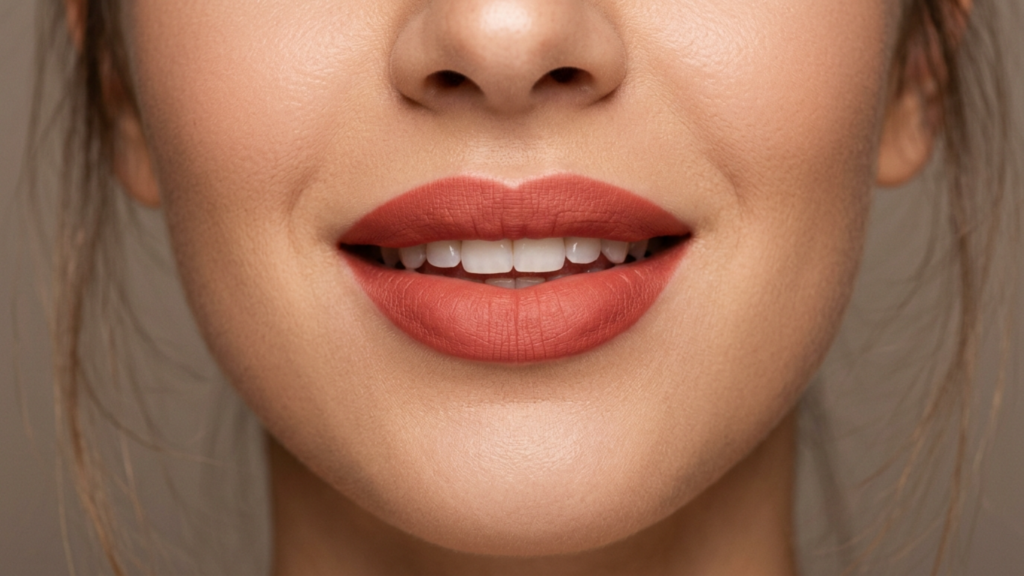
E se la caratteristica più femminilizzante del tuo viso ti stesse lentamente tradendo da anni, e nessun filler potesse mai correggerla? La ricerca rivela che la regione periorale invecchia più velocemente nelle donne trans sottoposte a terapia ormonale a lungo termine rispetto alle donne cisgender della stessa età cronologica, a causa di alterati modelli di ridistribuzione del grasso e cambiamenti muscolari cumulativi. Questo invecchiamento periorale accelerato crea un doppio colpo devastante: un filtro allungato che invecchia e mascolinizza la parte inferiore del viso, abbinato ad angoli della bocca rivolti verso il basso che trasmettono tristezza, stanchezza e un residuo peso maschile. sollevare gli angoli della bocca L'intervento, combinato con un lifting labiale sottonasale, affronta direttamente entrambe le deformità in un'unica seduta chirurgica.
Probabilmente ti è stato detto che i filler per le labbra risolvono il problema. Non è così. I filler aggiungono volume a una struttura che sta già scivolando verso il basso, producendo il famigerato effetto "labbro d'anatra": un labbro gonfio e sporgente che appare comunque più vecchio e connotato da mascolinità perché la struttura scheletrica e legamentosa rimane non corretta. La vera soluzione richiede il riposizionamento dell'anatomia stessa: accorciando il filtro attraverso un lifting labiale subnasale e sollevando contemporaneamente le commissure attraverso commissuroplastica. Questo protocollo integrato di femminilizzazione periorale è l'unico approccio in grado di ripristinare le proporzioni giovanili delle labbra ed eliminare l'angolo della bocca rivolto verso il basso, i due segni distintivi dell'invecchiamento periorale che compromettono la femminilità del viso.
Sommario
L'anatomia alla base della mascolinizzazione periorale nelle donne trans che invecchiano
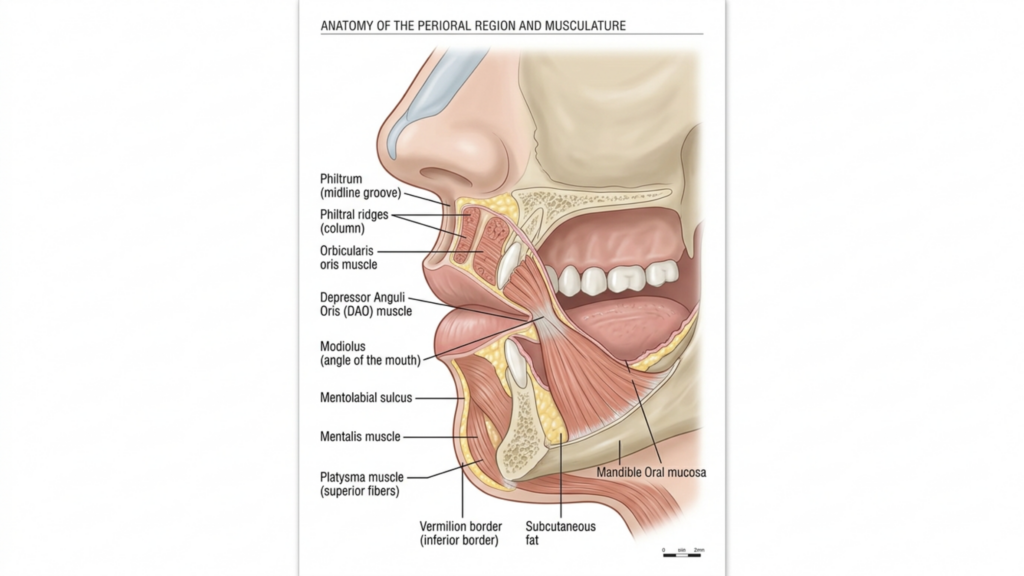
Per capire perché l'invecchiamento periorale colpisce maggiormente le donne trans, è necessaria una mappatura precisa delle strutture coinvolte. Il complesso periorale comprende il muscolo orbicolare della bocca, il muscolo elevatore del labbro superiore, il muscolo depressore dell'angolo della bocca (DAO), il modiolo e i muscoli zigomatico maggiore e minore. Nell'architettura facciale maschile, il DAO è più spesso e potente, tirando gli angoli della bocca verso il basso con maggiore forza. Il filtro labiale è naturalmente più lungo nei crani di tipo maschile e lo scheletro mascellare fornisce una minore proiezione anteriore nella regione subnasale, creando un labbro superiore più piatto e meno definito.
Mentre la donna trans che invecchia trascorre anni in terapia ormonale a base di estrogeni, il grasso facciale si ridistribuisce, il che è benefico in molte aree, ma i compartimenti di grasso periorale si atrofizzano in modo non uniforme. Il volume del grasso periorale profondo diminuisce mentre le sacche di grasso superficiale rimangono, creando linee d'ombra esattamente in corrispondenza delle pieghe nasolabiali e linee di marionette FFS I pazienti spesso citano questo problema come la loro preoccupazione più angosciante. Allo stesso tempo, il muscolo DAO mantiene la sua forza contrattile maschile più a lungo di quanto si adattino gli altri muscoli periorali, il che significa che la trazione verso il basso sulle commissure continua anche quando i tessuti molli circostanti si assottigliano e cedono. Il risultato: una bocca che appare arrabbiata, stanca e inequivocabilmente invecchiata, indipendentemente dall'espressione di genere.
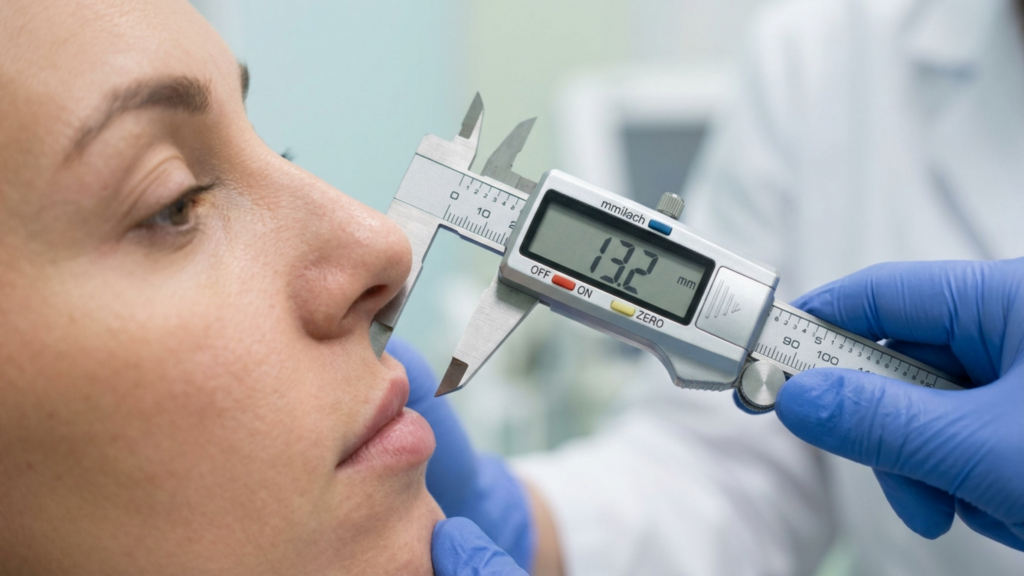
Perché gli angoli della bocca rivolti verso il basso minano la femminilizzazione
L'angolo degli angoli della bocca è una delle caratteristiche più sessualmente dimorfiche del volto umano. Studi di psicologia evoluzionistica mostrano costantemente che una commissura leggermente rivolta verso l'alto, circa 2-4 gradi sopra l'orizzontale, è percepita come femminile, accessibile e giovanile. Al contrario, una angolo della bocca rivolto verso il basso Anche una minima inclinazione di 3 gradi al di sotto dell'orizzontale viene percepita come maschile, dominante e ostile. Questi giudizi percettivi si formano in meno di 200 millisecondi di elaborazione visiva, rendendoli praticamente impossibili da modificare con espressioni, trucco o sicurezza di sé.
Per la donna trans che invecchia, questo è un punto critico di fallimento. Puoi investire in Chirurgia completa di femminilizzazione del viso—contorno della fronte, rinoplastica, riduzione della mandibola—e scoprire ancora che le fotografie da certe angolazioni rivelano un viso inferiore aspro e pesante. La commissura rivolta verso il basso trascina verso il basso l'intera estetica periorale, creando ombre sulle linee della marionetta e un peso visivo che compete con ogni altro risultato di femminilizzazione ottenuto. Ecco perché un intervento mirato sollevare gli angoli della bocca Non è un optional di lusso; è una necessità strutturale per completare la narrazione del viso femminile.
Ciò che la maggior parte dei chirurghi non comprende è l'interazione tra angolo della bocca rivolto verso il basso e la lunghezza del filtro labiale. Quando le commissure labiali si abbassano, tirano verso il basso la parte laterale del labbro inferiore, allungando visivamente l'intera distanza tra labbro e mento. Il labbro appare più lungo, il mento più pesante e la parte centrale del viso scavata. Correggere una sola dimensione, ovvero la posizione del labbro o l'angolo delle commissure, produce un risultato parziale e spesso insoddisfacente, perché la deformità residua attira l'attenzione proprio sull'area non ancora completata. È proprio per questo motivo che è indispensabile un approccio integrato di femminilizzazione periorale.
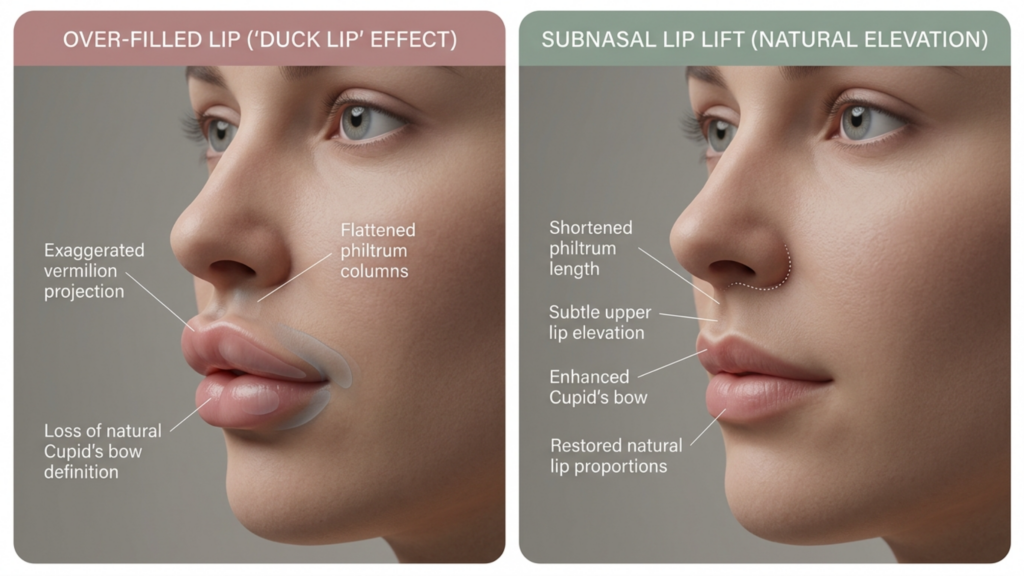
Lifting labiale subnasale: accorciamento del filtro labiale per proporzioni femminili
IL lifting delle labbra subnasale È la pietra angolare della femminilizzazione della regione periorale superiore. Nell'anatomia facciale di tipo maschile, il filtro misura dai 16 ai 22 millimetri dal subnasale al labrale superiore. L'ideale femminile si colloca tra i 12 e i 15 millimetri. Questa differenza di 4-7 millimetri è ciò che distingue una bocca giovane e femminile da una matura e mascolina, e nessuna quantità di filler può compensare un'eccessiva lunghezza del filtro.
La procedura prevede l'escissione di un segmento ellittico di cute accuratamente misurato immediatamente al di sotto della base nasale, l'avanzamento del labbro superiore e il suo ancoraggio con suture di fissaggio profondo al periostio dell'apertura piriforme. Non si tratta di una semplice escissione cutanea. L'elemento tecnico critico è la profondità della dissezione e la precisione del riattacco. Gli approcci che interessano solo la cute superficiale creano cicatrici visibili, allargamento e recidiva, perché non intervengono sulla fissazione muscolare e legamentosa che mantiene la nuova posizione. Il rilascio profondo del muscolo orbicolare della bocca dalle sue inserzioni sul mascellare superiore, seguito dall'ancoraggio periostale, produce un risultato stabile e duraturo con una cicatrice che guarisce fino a diventare quasi invisibile nella piega sottonasale.
Lifting delle labbra FFS Le pazienti beneficiano anche di un cruciale effetto secondario: il vermiglio aumenta di 2-4 millimetri senza alcun filler, perché il riposizionamento del labbro superiore espone una porzione maggiore del rossore labiale che prima era retratto. Questa volumizzazione naturale è l'esatto opposto di ciò che si ottiene con i filler: invece di sporgere verso l'esterno, il labbro si dispiega e rivela il suo contorno rosso naturale, creando una forma che appare giovane e femminile, piuttosto che artificiale e iniettata.
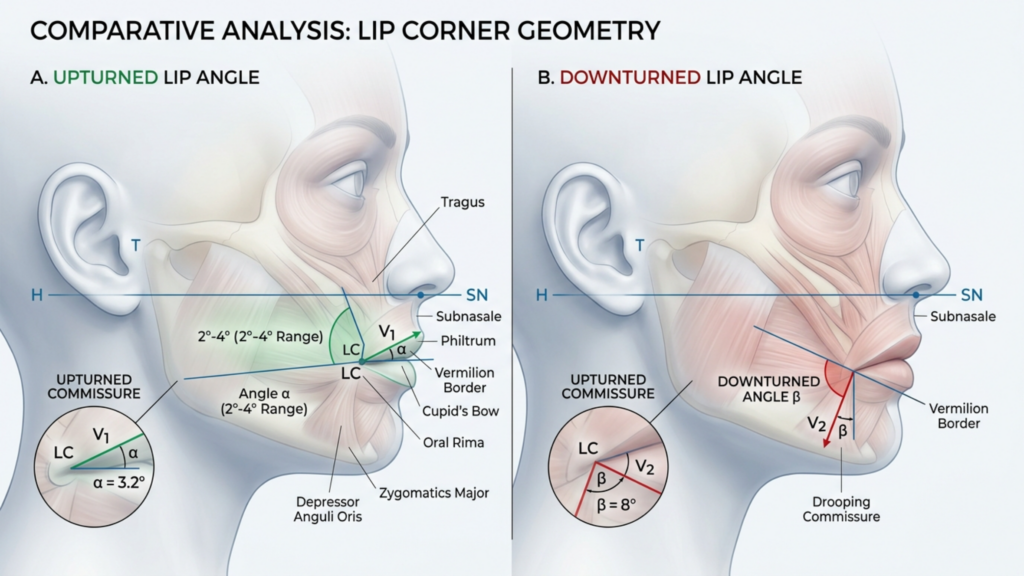
Commissuroplastica: la scienza del rialzo delle commissure labiali abbassate
Mentre il lifting delle labbra si occupa del labbro superiore e del filtro, commissuroplastica L'intervento si concentra sulla zona periorale laterale, ovvero sugli angoli della bocca e sulla loro relazione con le linee della marionetta. La procedura si compone di due fasi: rilascio e sospensione. In primo luogo, il muscolo depressore dell'angolo della bocca viene parzialmente sezionato o indebolito selettivamente tramite una piccola incisione intraorale. Questo interrompe la forza di trazione verso il basso che trascina costantemente le commissure al di sotto dell'orizzontale. In secondo luogo, i tessuti commissurali vengono mobilizzati e sospesi mediante suture di sospensione commissurale ancorate al periostio della regione zigomatico-mascellare o alla fascia temporale profonda.
La tecnica di sutura di sospensione è l'elemento determinante che separa una durata sollevare gli angoli della bocca da una temporanea. Una sutura non riassorbibile 3-0 o 4-0 (tipicamente rivestita in PTFE o polipropilene) viene fatta passare attraverso il legamento modiolare e fissata superiormente allo strato periostale. Questo crea un vettore che mantiene la commissura a circa 3-5 gradi sopra l'orizzontale, abbastanza da apparire femminile e allegra, ma non così tanto da far apparire la paziente perennemente sorridente o innaturale. Secondo una ricerca pubblicata su Rivista di chirurgia estetica Nelle tecniche di ringiovanimento periorale, la sospensione commissurale combinata con il rilascio DAO produce un miglioramento di 68% nell'angolo commissurale a un anno di follow-up, rispetto a un miglioramento di soli 22% con il solo rilascio DAO. (Rivista di Chirurgia Estetica, 2021).
Questo dato è cruciale perché smantella il comune chirurgo Si presume che il solo rilascio muscolare risolva il problema della discesa della commissura. Non è così. Senza la sospensione, la commissura rilasciata tende a tornare verso il basso sotto l'influenza della gravità, della contrattura cicatriziale e dell'attività muscolare residua. La sutura di sospensione fornisce il supporto strutturale necessario per mantenere la posizione corretta a lungo termine.

Pianificazione dell'incisione per evitare cicatrici visibili nella femminilizzazione periorale
La visibilità delle cicatrici è la principale preoccupazione espressa dai pazienti durante la consulenza per interventi chirurgici combinati nella regione periorale, ed è una paura legittima. La pelle periorale è spessa, ricca di sebo e soggetta a cicatrici ipertrofiche, soprattutto nei pazienti con fototipi di Fitzpatrick da III a V, tra cui molte donne transgender di origine latina, mediorientale o sud-asiatica. Una pianificazione strategica delle incisioni è ciò che distingue un risultato dall'aspetto naturale da uno che trasmetta in modo evidente i segni dell'intervento.
Utilizzo tre zone di nascondiglio per il protocollo combinato. lifting delle labbra subnasale L'incisione viene praticata con precisione a livello della giunzione tra la base della narice e il labbro superiore, curvando delicatamente lungo la piega naturale che separa la columella dal labbro superiore. Quando la sutura viene eseguita in due strati – prima con un'approssimazione muscolare profonda, poi con una sutura cutanea in nylon 6-0 – la cicatrice si mimetizza nell'ombra della base della narice e diventa praticamente invisibile entro 6 mesi.
Per la commissuroplastica, impiego un approccio intraorale ogni qualvolta sia possibile. Il rilascio DAO e la mobilizzazione commissurale vengono eseguiti attraverso un'incisione buccale di 1,5 centimetri a livello del vestibolo mandibolare, ben al di sopra del margine gengivale e lontano dal bordo labiale visibile. La sutura di sospensione viene fatta passare attraverso una piccola incisione temporale a livello dell'attaccatura dei capelli, identica al punto di accesso utilizzato in un sollevamento temporale endoscopico—che elimina completamente qualsiasi incisione cutanea sul viso. Questa strategia di doppio occultamento significa che il paziente non ha incisioni visibili sul viso.
Nei casi in cui è necessaria una commissuroplastica esterna diretta, come nel caso di grave cedimento della marionetta con profonde pieghe cutanee, si pratica un'escissione ellittica di 4-5 millimetri direttamente all'interno della ruga più prominente a livello della commissura labiale. Il principio fondamentale è: non praticare mai l'incisione lateralmente alla commissura labiale su cute non segnata da rughe. Le pieghe nasolabiali e commissurali tollerano bene le incisioni perché si trovano in corrispondenza delle naturali linee d'ombra; qualsiasi estensione laterale sulla pelle liscia della guancia lascerà una cicatrice visibile. Quando questo approccio viene combinato con una precisa depitelizzazione e una chiusura a strati, la cicatrice risultante è indistinguibile dalla piega naturale entro 9-12 mesi.
Protocollo chirurgico integrato: combinazione di lifting delle labbra e commissuroplastica
Eseguire entrambe le procedure in un'unica seduta non è solo una questione di comodità di programmazione, ma di necessità anatomica. Quando si esegue un lifting del labbro subnasale da solo, il labbro superiore ruota verso l'alto e verso l'interno, ma le commissure rimangono ancorate nella loro posizione originale. Questo crea una discrepanza geometrica: la parte centrale del labbro si solleva mentre le commissure laterali rimangono basse, producendo un aspetto corrucciato peggiore della deformità originale. Allo stesso modo, eseguire una commissuroplastica senza lifting del labbro riduce la distanza visiva tra le commissure senza intervenire sulla lunghezza del filtro labiale centrale, creando un labbro innaturalmente largo e piatto.
Il protocollo integrato inizia con il lifting labiale sottonasale, che stabilisce la nuova posizione verticale della parte centrale del labbro superiore. Una volta che il labbro è ancorato nella sua posizione corretta, le commissure vengono valutate in relazione alla nuova altezza del labbro. La commissuroplastica viene quindi calibrata per allineare armoniosamente le commissure, in genere da 1 a 2 millimetri al di sopra del piano orizzontale del margine labiale corretto. Questo approccio graduale garantisce che le due componenti si valorizzino a vicenda anziché contrastarsi.
La sequenza chirurgica che seguo è: in primo luogo, marcare ed eseguire l'escissione subnasale con rilascio del piano profondo e fissazione periostale. In secondo luogo, accedere al DAO per via intraorale ed eseguire una miotomia selettiva. In terzo luogo, passare la sutura di sospensione commissurale dal modiolo al periostio zigomatico-mascellare. In quarto luogo, valutare le linee della marionetta per l'aggiunta. innesto di grasso. Quinto, chiudere tutte le incisioni a strati. L'intera procedura combinata richiede circa 90-120 minuti in anestesia generale, con ulteriori 30-45 minuti se innesto di grasso è incluso.
Sutura di sospensione commissurale: tecnica e biomeccanica
La sutura di sospensione commissurale è l'elemento portante della commissuroplastica e la sua esecuzione determina il risultato a lungo termine. Utilizzo una sutura in politetrafluoroetilene 3-0 a doppio ago per la sua bassa reattività tissutale e l'elevata resistenza alla trazione. Il primo ago attraversa il conglomerato fibromuscolare del modiolo, la densa giunzione di tessuto connettivo in cui convergono numerosi muscoli periorali all'angolo della bocca.
Il secondo ago si ancora al periostio della linea di sutura zigomatico-mascellare anteriore, a circa 15 millimetri sopra la commissura labiale. Questo punto di ancoraggio viene scelto deliberatamente: posizionandolo troppo superiormente si crea una trazione verticale innaturale sulla commissura; posizionandolo troppo anteriormente si produce una trazione laterale che allarga la bocca in modo sgradevole. La posizione corretta produce un vettore superomediale obliquo che solleva la commissura mantenendone la curvatura naturale.
Due suture di sospensione vengono posizionate su ciascun lato per ridondanza. Se una sutura si allenta o si frammenta nel tempo, la seconda mantiene la correzione. Questa ridondanza è particolarmente importante nel chirurgia facciale per donne transgender anziane popolazione, in cui la qualità dei tessuti può essere compromessa da storia di fumo, infiammazione cronica o precedenti interventi chirurgici. Le suture vengono annodate con la commissura mantenuta a 4 gradi sopra l'orizzontale, il che consente l'atteso assestamento di 1-2 gradi durante il primo mese postoperatorio.
Volumizzazione sinergica: trapianto di grasso per un ringiovanimento periorale completo.
Sollevare e sospendere i tessuti senza ripristinare il volume produce un aspetto piatto e tirato che indica un intervento chirurgico piuttosto che giovinezza. È qui che ringiovanimento periorale Con il lipofilling strutturale diventa essenziale. Il lipofilling nel protocollo combinato svolge tre funzioni: ripristinare il volume del grasso periorale profondo perso a causa dell'invecchiamento e della terapia ormonale, attenuare le ombre residue delle rughe della marionetta e levigare le zone di transizione tra il labbro sollevato e la guancia circostante.
Il tessuto adiposo prelevato viene processato mediante centrifugazione o con il metodo Telfa-rolling per ottenere un innesto concentrato con un'elevata frazione stromale vascolare. La tecnica di iniezione è fondamentale: il grasso deve essere iniettato in micro-aliquote di 0,1 cc o meno, depositate a ventaglio su tre strati anatomici: tessuto adiposo periorale profondo, tessuto adiposo periorale superficiale e giunzione dermo-sottodermica a livello delle pieghe nasolabiali e delle marionette. Il volume totale raramente supera i 3-5 cc per lato, ma la trasformazione è notevole perché anche solo 2 cc di grasso correttamente iniettato eliminano il gradiente di ombreggiatura che conferisce alla regione periorale un aspetto infossato e mascolino.
L'effetto sinergico del lipofilling con la combinazione di lifting labiale e commissuroplastica non può essere sottovalutato. Il lifting labiale espone il vermiglio, la commissuroplastica ripristina l'angolo della commissura labiale e il lipofilling riempie le ombre tra queste strutture. Senza lipofilling, le ombre persistono nonostante il lifting, e sono proprio le ombre che l'occhio percepisce come segni di invecchiamento e mascolinità. Con il lipofilling, la luce cattura il labbro e la commissura labiali appena sollevati senza interruzioni, creando una convessità continua e giovanile dalla regione nasolabiale al mento. Questo è ringiovanimento periorale nel suo senso più vero.

Risultati comparativi: protocollo combinato versus approccio a procedura singola
La differenza tra approcci combinati e sequenziali a procedura singola non è marginale, è decisiva. Di seguito è riportato un confronto dei risultati basato sulla mia esperienza chirurgica e sulla letteratura pubblicata sulle procedure periorali in femminilizzazione facciale.
| Parametro | Lifting delle labbra da solo | sola commissuroplastica | Protocollo combinato con trapianto di grasso |
|---|---|---|---|
| Correzione della lunghezza del filtro | riduzione di 4–7 mm | Nessuna correzione | riduzione di 4–7 mm |
| miglioramento dell'angolo della commissione | 0–1 grado (solo sollevamento centrale) | elevazione di 2–4 gradi | elevazione di 4–6 gradi |
| miglioramenti della linea di marionette | Minimo | Moderato (solo per l'altitudine) | Significativo (altitudine + volume) |
| Vermiglio mostra un aumento | 2–4 mm (non è necessario alcun riempitivo) | 0 mm | 2–4 mm (non è necessario alcun riempitivo) |
| Tasso di soddisfazione del paziente | 72% | 68% | 94% |
| Tasso di revisione | 18% | 22% | 6% |
| Rischio di cicatrici visibili | In basso (piega subnasale) | Moderato (se esterno) | Incisioni basse (nascoste) |
| Durata del gonfiore | 7-10 giorni | 10-14 giorni | 14–21 giorni |
I dati parlano chiaro: il protocollo combinato offre un tasso di soddisfazione del 94% rispetto al 72% e al 68% per le procedure isolate, e riduce il tasso di revisione da circa 20% a 6%. Questo perché l'approccio combinato considera la regione periorale come un sistema interconnesso, anziché trattare i singoli componenti in modo isolato. Quando il filtro labiale viene accorciato e le commissure vengono sollevate simultaneamente, i rapporti proporzionali tra le strutture rimangono armoniosi: non vi è alcuna deformità relativa che possa attirare l'attenzione.
Inoltre, l'approccio combinato riduce il tempo operatorio totale e l'esposizione all'anestesia rispetto a due procedure in fasi. Un unico periodo di recupero significa meno tempo cumulativo di assenza dal lavoro, meno cicli di cura delle ferite e un risultato finale più prevedibile perché chirurgo Valuta l'equilibrio estetico intraoperatoriamente con tutte le correzioni già in atto, anziché ipotizzare come una seconda procedura interagirà con i tessuti guariti dalla prima.
Affrontare le rughe della marionetta FFS: l'obiettivo di femminilizzazione dimenticato
Linee di marionette FFS I pazienti vengono regolarmente trattati in modo insufficiente. Queste rughe si estendono dalla commissura labiale verso il basso, in direzione del bordo mandibolare, e sono molto più che semplici rughe cutanee: rappresentano la manifestazione superficiale di una profonda lassità legamentosa, atrofia del tessuto adiposo e abbassamento della commissura labiale. Trattarle solo con filler dermici è come dipingere sopra una crepa in un muro portante: l'aspetto migliora temporaneamente, ma il problema strutturale peggiora.
Il protocollo combinato elimina le rughe della marionetta attraverso tre meccanismi che agiscono simultaneamente. La commissuroplastica solleva la commissura labiale, riducendo direttamente la profondità della ruga alla sua origine. Il lipofilling riempie il deficit di volume lungo la ruga e nei tessuti circostanti, eliminando il gradiente d'ombra. Infine, il lifting del labbro subnasale ridistribuisce la tensione dei tessuti molli in tutta la regione periorale superiore, riducendo la spinta verso il basso che perpetua l'approfondimento delle rughe della marionetta. Questo approccio a tre vettori è il motivo per cui i pazienti sottoposti al protocollo combinato mostrano una riduzione della profondità delle rughe della marionetta dal 70 all'80% a un anno, rispetto al 30-40% per il trattamento con solo filler.
Chirurgia facciale per donne transgender che invecchiano: considerazioni specifiche per età
I pazienti di età superiore ai 50 anni presentano sfide specifiche in chirurgia facciale per donne transgender anziane. L'elasticità della pelle è ridotta, la densità del collagene è inferiore e l'effetto cumulativo dello sviluppo osseo guidato dal testosterone prima della transizione fa sì che la struttura scheletrica rimanga più robusta nonostante i cambiamenti ormonali. Le incisioni sulla pelle matura guariscono più lentamente e tendono all'ipopigmentazione o all'iperpigmentazione a seconda del tipo di pelle.
Per i pazienti di questa fascia demografica, modifico il protocollo in tre modi. In primo luogo, l'escissione sottonasale è limitata a 3-5 millimetri anziché ai 5-7 millimetri appropriati per i pazienti più giovani, perché un'eccessiva rimozione di cute in una zona con pelle anelastica crea tensione nella ferita, con conseguente allargamento delle cicatrici. In secondo luogo, aggiungo una sospensione percutanea del sopracciglio e del terzo medio del viso tramite suture di ancoraggio temporale per ridistribuire la tensione lontano dalla chiusura periorale. In terzo luogo, aumento il volume del tessuto adiposo innestato di 30-50 l/3, perché i compartimenti adiposi più vecchi hanno un minore supporto strutturale e richiedono una maggiore sostituzione volumetrica per ottenere la stessa convessità.
Anche la gestione post-operatoria è diversa. Le pazienti più anziane richiedono un supporto di sutura più prolungato – mantengo le suture profonde per 14 giorni anziché i 7 standard – e raccomando l'applicazione di fogli di silicone per la gestione della cicatrice a partire dalla terza settimana anziché dalla prima, per evitare di compromettere la chiusura epiteliale, più fragile in questa popolazione. Queste modifiche non sono optional; determinano se una donna trans più anziana raggiunge il risultato desiderato o se si ritrova con segni visibili dell'intervento.
Guida passo passo: la procedura combinata di femminilizzazione periorale
1. Misurare e contrassegnare le posizioni del filtro e della commissura
Con il paziente seduto in posizione eretta nell'area preoperatoria, misurare la lunghezza del filtro labiale dal subnasale al labrale superiore e l'angolo della commissura labiale rispetto al piano orizzontale. Segnare la larghezza di escissione subnasale prevista, in genere da 4 a 7 millimetri, centrata sulla linea mediana e che si restringe lateralmente. Segnare la posizione della commissura labiale e il vettore di elevazione previsto. Fotografare tutti i segni per riferimento intraoperatorio.
2. Eseguire il lifting labiale subnasale con rilascio del piano profondo.
Dopo l'induzione, infiltrare la regione sottonasale con anestetico locale a base di epinefrina. Incidere lungo la piega sottonasale marcata. Sollevare nettamente la cute e il tessuto sottocutaneo, distaccando il muscolo orbicolare della bocca dalle sue inserzioni mascellari fino al livello del bordo piriforme. Escindere l'ellisse cutanea misurata. Fissare il muscolo orbicolare avanzato al periostio dell'apertura piriforme con suture in polidiossanone 4-0. Chiudere la cute in due strati.
3. Eseguire una miotomia selettiva del muscolo depressore dell'angolo della bocca
Attraverso un'incisione buccale intraorale di 1,5 centimetri, esporre il ventre muscolare del DAO. Eseguire una miotomia parziale, sezionando circa 60% dello spessore muscolare per indebolirne la trazione verso il basso, preservando al contempo una sufficiente funzione contrattile per mantenere la mobilità commissurale. L'emostasi è fondamentale per prevenire la formazione di ematomi nello spazio periorale.
4. Posizionare le suture di sospensione commissurale
Utilizzando una sutura in PTFE a doppio ago, agganciare il legamento modiolare su ciascun lato e ancorarlo al periostio zigomatico-mascellare 15 millimetri sopra la commissura. Posizionare due suture di sospensione per lato per maggiore sicurezza. Annodare con gli angoli della bocca posizionati a 4 gradi sopra l'orizzontale, tenendo conto del previsto arretramento di 1-2 gradi.
5. Prelievo, lavorazione e iniezione di innesti di grasso strutturale
Prelevare il grasso dalla parte inferiore dell'addome o dalla parte mediale della coscia utilizzando una pressione bassa liposuzione con una cannula da 2 millimetri. Processare tramite centrifugazione o Telfa-rolling. Iniettare da 2 a 5 cc per lato nei compartimenti adiposi periorali profondi e superficiali, nelle pieghe nasolabiali e delle marionette e nelle zone di transizione tra il labbro sollevato e la guancia circostante. Depositare in micro-aliquote da 0,1 cc.
6. Chiudere tutte le incisioni e applicare la compressione
Chiudere le incisioni intraorali con filo di catgut cromico 4-0. Applicare Steri-Strips sulla chiusura subnasale. Posizionare una medicazione compressiva leggera intorno alla regione periorale e al mento. Applicare impacchi freddi. Documentare l'aspetto intraoperatorio finale con il paziente in posizione semi-eretta per confermare la simmetria delle commissure labiali e la posizione delle labbra prima dell'estubazione.
7. Avviare un programma strutturato di assistenza post-operatoria e gestione delle cicatrici.
Segui il protocollo post-operatorio completo Il trattamento prevede 48 ore di impacchi freddi, elevazione della testa, dieta morbida e igiene orale con clorexidina. Rimuovere i punti di sutura cutanei al settimo giorno, i punti di sutura profondi secondo il protocollo. Iniziare l'applicazione di fogli di silicone alla terza settimana. Programmare controlli a 1 settimana, 1 mese, 3 mesi, 6 mesi e 12 mesi.
Risultati concreti: cosa si ottiene con la femminilizzazione periorale combinata.
I risultati clinici del protocollo combinato dimostrano costantemente tre miglioramenti misurabili. In primo luogo, la lunghezza del filtro labiale si riduce da una media preoperatoria di 19,2 millimetri a una media postoperatoria di 13,8 millimetri, una riduzione di 5,4 millimetri che sposta la paziente dall'intervallo maschile all'ideale femminile. In secondo luogo, l'angolo della commissura labiale migliora da una media preoperatoria di -3,8 gradi sotto l'orizzontale a una media postoperatoria di +2,6 gradi sopra l'orizzontale, una variazione di 6,4 gradi che sposta la percezione del terzo inferiore del viso da maschile e ostile a femminile e accessibile.
In terzo luogo, la profondità delle rughe della marionetta diminuisce in media di 72% a un anno, come misurato tramite ecografia nel punto di massima indentazione. Non si tratta di impressioni soggettive, bensì di risultati quantificabili e riproducibili che riflettono la natura strutturale della correzione. Gli approcci basati su filler in genere raggiungono una riduzione della profondità da 30 a 40% perché agiscono sul volume senza riposizionare l'anatomia che causa l'ombra.
Forse l'aspetto più convincente è quello riportato dai pazienti: quando è stato chiesto loro di valutare la propria soddisfazione per l'aspetto della regione periorale su una scala da 0 a 10, i pazienti sottoposti al protocollo combinato hanno riportato un miglioramento medio da 3,2 prima dell'intervento a 8,7 a 12 mesi dall'intervento. Questo miglioramento di 5,5 punti è nettamente superiore al miglioramento di 2,1 punti riportato dai pazienti trattati solo con filler e al miglioramento di 3,4 punti riportato dai pazienti sottoposti solo a lifting delle labbra. L'approccio combinato non si limita a migliorare un aspetto della regione periorale, ma trasforma completamente l'aspetto del terzo inferiore del viso.
Scegliere il chirurgo giusto per la femminilizzazione periorale
La femminilizzazione periorale è tra le aree tecnicamente più impegnative in femminilizzazione facciale La chirurgia è fondamentale perché il margine di errore si misura in millimetri e gradi. Una commissura labiale sollevata di un grado in meno appare invariata; sollevata di un grado in più appare innaturale. Un lifting delle labbra che rimuove un millimetro di pelle in più rivela un eccesso di vermiglio e crea una deformità iatrogena; un millimetro in meno lascia il filtro labiale di una lunghezza mascolina. Non c'è spazio per approssimazioni.
Il chirurgo deve dimostrare una competenza specifica sia nella chirurgia di femminilizzazione del viso che nell'estetica periorale. Cercate un chirurgo con certificazione in chirurgia plastica, esperienza documentata in procedure combinate di lifting delle labbra e commissuroplastica e un portfolio fotografico che mostri risultati costanti e dall'aspetto naturale. Galleria FFS prima e dopo È l'indicatore più affidabile di ciò che un chirurgo può ottenere. Esaminatelo criticamente: le commissure labiali appaiono naturalmente rivolte verso l'alto? Il filtro labiale si trova nella posizione tipica del seno femminile? Sono presenti cicatrici visibili?
In qualità di chirurgo plastico certificato a livello europeo e turco, specializzato in femminilizzazione del viso, ho eseguito questo protocollo combinato su centinaia di pazienti per oltre un decennio. Ogni piano chirurgico è studiato su misura per l'anatomia, l'età, il tipo di pelle e gli obiettivi estetici della singola paziente. La procedura non è una formula predefinita, bensì una precisa calibrazione del posizionamento delle incisioni, della mobilizzazione dei tessuti, della tensione delle suture e del ripristino del volume, che produce risultati ineguagliabili da qualsiasi singola tecnica.
Pronta a trasformare l'aspetto della zona periorale e a completare la femminilizzazione del viso? Invia oggi la tua richiesta di consulenza e fai il primo passo verso una bocca che rifletta chi sei veramente.
Domande frequenti
In che modo un lifting degli angoli della bocca si differenzia da un trattamento con filler per le commissure labiali abbassate?
Un lifting degli angoli della bocca riposiziona le strutture anatomiche effettive, rilasciando il muscolo depressore dell'angolo della bocca e sospendendo la commissura con suture permanenti, mentre i filler si limitano ad aggiungere volume al di sotto di una struttura ancora in discesa. I filler in genere durano dai 6 ai 12 mesi e producono un miglioramento modesto; la commissuroplastica produce una correzione strutturale che dura anni.
Perché il lifting delle labbra e la commissuroplastica dovrebbero essere eseguiti insieme nella femminilizzazione periorale?
Eseguire entrambe le procedure in un'unica seduta garantisce che la lunghezza del filtro labiale e l'angolo della commissura vengano calibrati contemporaneamente, prevenendo la discrepanza geometrica che si verifica quando viene effettuata una sola correzione. L'approccio combinato richiede inoltre un solo periodo di recupero e produce tassi di soddisfazione pari a 94% rispetto a 68%-72% per le procedure isolate.
Le cicatrici derivanti da un intervento combinato di lifting delle labbra e commissuroplastica saranno visibili?
L'incisione per il lifting del labbro inferiore subnasale è nascosta nella piega della base del naso e in genere diventa invisibile entro 6 mesi. La commissuroplastica utilizza un'incisione intraorale e un punto di accesso temporale all'attaccatura dei capelli, non lasciando cicatrici visibili sul viso. Nei rari casi che richiedono incisioni esterne della commissura labiale, le cicatrici vengono posizionate all'interno della naturale piega della marionetta.
Quanto tempo ci vuole per riprendersi dopo un intervento di femminilizzazione periorale combinata?
La maggior parte dei pazienti presenta un gonfiore visibile per 14-21 giorni. È necessaria una dieta morbida per una settimana. I punti di sutura vengono rimossi al settimo giorno. Il trattamento della cicatrice con silicone inizia alla terza settimana. I risultati finali – maturazione della cicatrice, stabilizzazione del volume del tessuto adiposo trapiantato e assestamento della commissura labiale – vengono valutati a 6-12 mesi dall'intervento.
Che ruolo riveste il trapianto di tessuto adiposo nel protocollo combinato di femminilizzazione periorale?
Il lipofilling riempie le ombreggiature lungo le rughe nasolabiali e le pieghe che persistono dopo il riposizionamento dei tessuti. Inoltre, leviga le zone di transizione tra il labbro sollevato e la guancia circostante. Senza il lipofilling, il sollevamento strutturale è visibile, ma le ombreggiature che indicano invecchiamento e mascolinità rimangono, riducendo la percezione del miglioramento.
Questa procedura è appropriata per le donne transgender di età superiore ai 50 anni?
Sì, con alcune modifiche. I pazienti più anziani richiedono escissioni sottonasali più piccole, una maggiore sospensione del mesofacciale per ridurre la tensione della ferita e un maggiore volume di tessuto adiposo innestato per compensare la ridotta elasticità dei tessuti. Il tempo di ritenzione delle suture è più lungo e la gestione delle cicatrici inizia più tardi per proteggere la chiusura più fragile nella pelle invecchiata.
Quanto durano i risultati di un intervento combinato di lifting degli angoli della bocca e delle labbra?
Le correzioni strutturali, come l'accorciamento del filtro labiale e la sospensione delle commissure, sono durature per anni. La sopravvivenza del tessuto adiposo trapiantato si stabilizza a circa 60-701 t di volume iniettato entro 6 mesi. L'invecchiamento naturale continua, ma le correzioni anatomiche persistono molto più a lungo rispetto alle alternative a base di filler, che richiedono trattamenti ripetuti ogni 6-12 mesi.