Binlerce dolar harcadığınızı ve aylarca süren iyileşme sürecinden sonra aynaya baktığınızda "yapay" diye bağıran bir saç çizgisi veya daha da kötüsü, bir daha hiç çıkmayan saç tutamları görmek nasıl bir duygu, bir düşünün. Bu nadir görülen bir kabus değil; birçok kişi için gerçek bir durum. 5'te 1 saç ekimi hastalar Saç ekiminde doğallıktan sapmalardan tutun da greftlerin tamamen başarısız olmasına kadar değişen komplikasyonlar yaşayanlar var (Uluslararası Saç Restorasyon Cerrahisi Derneği, 2025). Şok edici gerçek ne mi? Bu başarısızlıkların çoğu kötü şanstan değil, önlenebilir teknik hatalardan, yetersiz cerrahi planlamadan ve saç çizgisinin doğal görünmesini sağlayan unsurların anlaşılmamasından kaynaklanmaktadır.. Eğer düşünüyorsanız... saç ekimi, Bu kılavuz, kliniklerin size söylemeyeceği gizli tuzakları ve diğerlerinin başarısız olduğu durumlarda işleminizin nasıl başarılı olacağını ortaya koyacaktır.
İçindekiler
Vaatler ve Gerçekler: Saç Ekimi Başarı Oranları Hakkında Size Söylenmeyenler
Klinikler ,1 veya daha yüksek başarı oranlarıyla övünüyor, ancak bu rakamlar yanıltıcı. Gerçek ne? Hastaların yalnızca 1'i (TP3T) kendilerine vaat edilen yoğunluk ve doğallığa ulaşabiliyor. (Kozmetik Dermatoloji Dergisi, 2025). Geri kalanlar ise şu gibi komplikasyonlarla karşı karşıya kalır:
- Doğal olmayan saç çizgileri: Çok düz, çok aşağıda veya doğal büyüme düzeninin düzensizliğinden yoksun bir saç çizgisi.
- Kötü açılandırmaSaç köklerinin yanlış açıyla ekilmesi, saçların doğal olmayan bir şekilde dışarı çıkmasına veya kafa derisine yapışık kalmasına neden olur.
- Düşük hayatta kalma oranlarıUygunsuz kullanım, dehidrasyon veya implantasyon sırasında travma nedeniyle 30%'ye kadar greftin gelişimi başarısız olmaktadır.
- Nekroz ve yara iziAşırı doku alımı veya uygunsuz kesi teknikleri, donör bölgede kalıcı hasara yol açabilir.
- Şok kaybıİşlemden kaynaklanan travma nedeniyle mevcut saçlarda geçici (veya bazen kalıcı) dökülme.
Bu neden oluyor? Cevap şurada yatıyor: üç kritik aşama saç ekimi—her birinin kendine özgü riskleri vardır ve çoğu hasta bu risklerden ancak çok geç olduğunda haberdar olur.
1. Aşama: Ekin Çıkarma—Aşıların Çoğu Daha Büyümeye Başlamadan Ölür
Saç ekiminin ilk aşaması olan donör bölgeden greftlerin alınması, bu aşamanın başlangıcıdır. 40%'ye kadar arızanın kaynağı (Dermatolojik Cerrahi, 2025). Klinikler bu konuda sıklıkla kestirme yollara başvurarak geri dönüşü olmayan hasarlara yol açarlar.
FUE ve FUT Tartışması: Teknik Neden Sandığınızdan Daha Önemli?
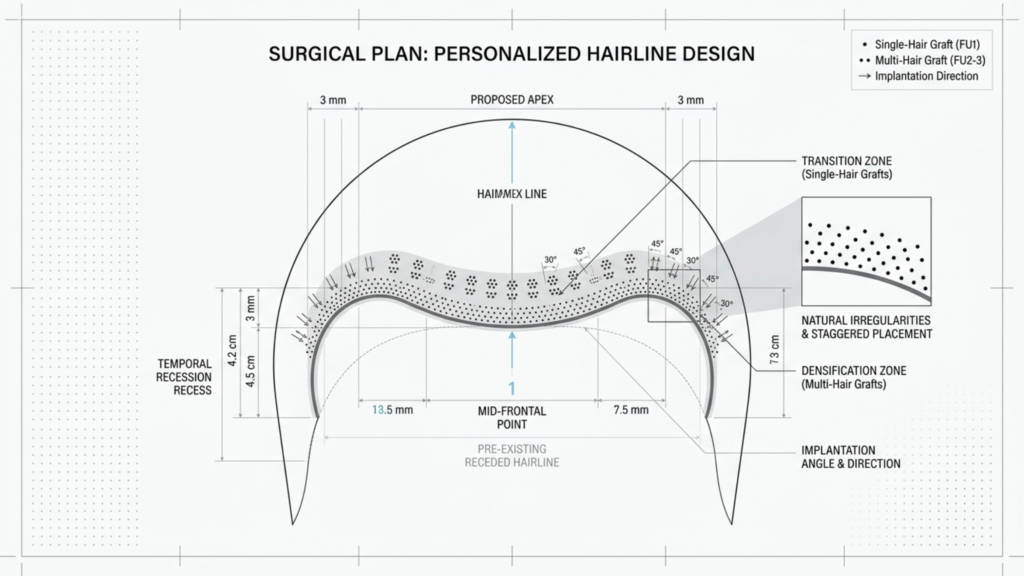
Foliküler Ünite Ekstraksiyonu (FUE), minimal iz bırakması nedeniyle altın standart olarak kabul edilir, ancak aynı zamanda risklerin de en yüksek olduğu yöntemdir. greft kesimi—Saç kökü çekimi sırasında saç folikülünün kesilmesi— en sık rastlanan durumdur. Çalışmalar şunu göstermektedir ki Deneyimsiz teknisyenler 15%'ye kadar greft kesimi yapmaktadır. FUE sırasında, daha implante edilmeden işlevsiz hale gelmelerine neden olur (Plastik ve Rekonstrüktif Cerrahi, 2025). Foliküler Ünite Transplantasyonu (FUT), daha invaziv olmasına rağmen, yetenekli bir cerrah tarafından yapıldığında genellikle daha yüksek greft sağkalım oranları sağlar. Cerrah. Peki ya sorun ne? Çoğu klinikte diş çekimi için cerrahlar değil, teknisyenler kullanılır.—maliyet tasarrufu sağlayan ancak başarısızlık oranlarını önemli ölçüde artıran bir önlem.
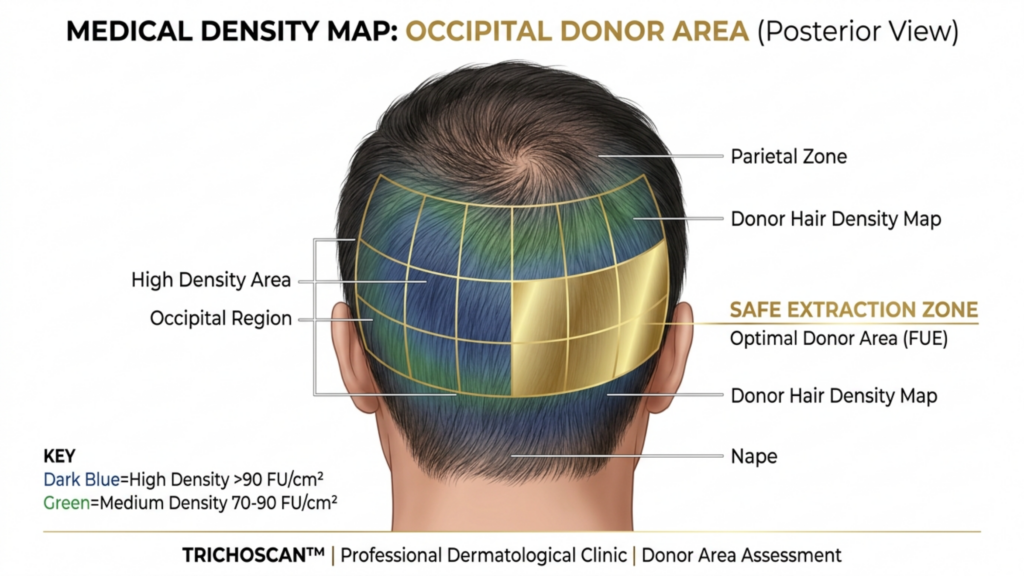
Bağış Alanı Tuzağı: Aşırı Hasat ve Kalıcı Yara İzleri
Bir diğer kritik hata ise şudur: aşırı hasat—Donör bölgeden çok fazla greft alınması şu sonuçlara yol açabilir:
- Donör bölgenin inceltilmesi, Bu da onu yamalı veya şeffaf görünmesine neden olur.
- Nekroz (Doku ölümü) Eğer çekim bölgeleri birbirine çok yakınsa ve kan akışı kesilirse meydana gelir.
- Kalıcı yara izi Bu, kısa saç kesimlerinde bile görülebilir.
2025 yılında yapılan bir çalışmada Dermatolojik Bilimler Dergisi şunu buldu ki 10 hastadan 1'inde FUE yöntemi uygulanan hastalarda aşırı doku alımı nedeniyle donör bölgede kalıcı hasar meydana geldi. Çözüm nedir? Ekstraksiyonun cm² başına 25-30 greft ile sınırlandırılması ve işlemin bir kişi tarafından gerçekleştirilmesini sağlamak Cerrah, Teknisyen değilim.
Su Kaybı Felaketi: Doku Nakli Neden İmplantasyondan Önce Ölür?
Aşılar alındıktan sonra kırılgan hale gelirler. Vücut dışında geçirdikleri her dakika, hayatta kalma oranlarını 1% azaltır. (Uluslararası Saç Ekimi Forumu, 2025). Birçok klinik, ekilen saç köklerini havaya veya uygun olmayan saklama çözümlerine maruz bırakarak dehidrasyona ve hücre ölümüne yol açar. İdeal protokol nedir?
- Aşılar şu şekilde saklanmalıdır: hipotermik (4°C) tuzlu çözelti Metabolizmayı yavaşlatmak ve canlılığı korumak için.
- İmplantasyon başlamalıdır 1-2 saat içinde Hayatta kalmayı en üst düzeye çıkarmak için ekstraksiyon.
- Doku greftlerine asla forsepsle dokunulmamalıdır—sadece nazik, travma yaratmayan araçlar Ezilmeyi önlemek için.
2. Aşama: İmplantasyon—Doğal Olmayan Saç Çizgilerinin Oluştuğu Yer
Ekilen dokular alındıktan sonra bile, Yanlış implantasyon teknikleri tüm işlemi mahvedebilir.. En büyük iki suçlu kimler? Açısal hatalar Ve doğal olmayan saç çizgisi tasarımı.
Açı Krizi: Saçlarınız Neden Diş Fırçası Gibi Dışarı Çıkıyor?
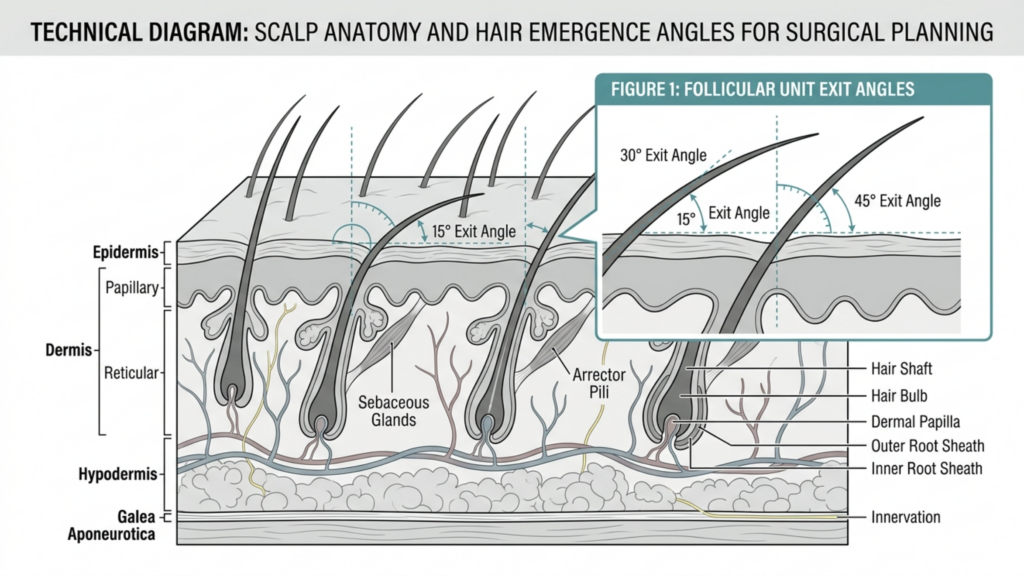
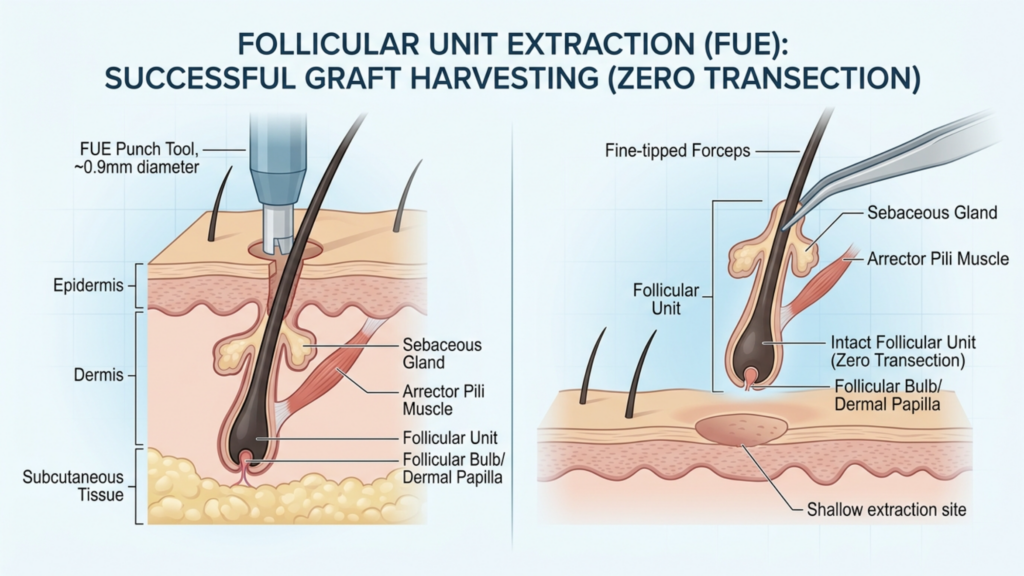
Saç, kafa derisinden dümdüz uzamaz; bir noktadan çıkar. 10–45° açı, Bölgeye bağlı olarak değişir. Greftler yanlış açıyla ekildiğinde, sonuç "bebek saçı" etkisi olur; saçlar doğal olmayan bir şekilde dışarı doğru çıkar. 2025 yılında yapılan bir çalışmada Estetik Cerrahi Dergisi şunu buldu ki 40% numaralı vakada saç ekimi sonuçları yetersizdir. Sorunlar yanlış açılandırmadan kaynaklanıyordu. Çözüm?
- Alın saç çizgisi: 10–20° açıyla, hafifçe öne doğru eğimli.
- Kafa derisinin orta kısmı: 20–30° açıyla, daha dikey bir yöne doğru geçiş.
- Taç: 30–45° açıyla, doğal akış için girdap deseni.
Saç Çizgisi Tasarım Felaketi: Çoğu Saç Ekimi Neden Yapay Görünüyor?
Doğal saç çizgisi düz bir çizgi değildir; düzensizdir, Mikro düzensizlikler, ön kısımda tek saç teli greftleri ve kademeli yoğunluk artışı. Ancak birçok klinik şunları yaratıyor:
- Düz, "Barbie bebek" saç çizgileri "Nakil" diye bağıran şey.“
- Çok düşük saç çizgisi Hastanın yaşı ilerledikçe doğallığını kaybeden görünümler.
- Aşırı yoğunluk Ön bölgede, "tıkanmış" bir görünüme yol açar.
Çözüm mü? Özel saç çizgisi tasarımı esas alınarak:
- Yüz simetrisi ve oranları.
- Yaşa uygun saç çizgisi yüksekliği (ilerideki saç dökülmesini hesaba katmak için yaşlı hastalar için daha yüksek).
- Ön kısımda tekli, arka kısımda ise çoklu saç ekimi ile kademeli yoğunluk geçişleri sağlanmıştır.
Derinlik Fiyaskosu: Bazı Aşılar Neden Hiç Büyümez?
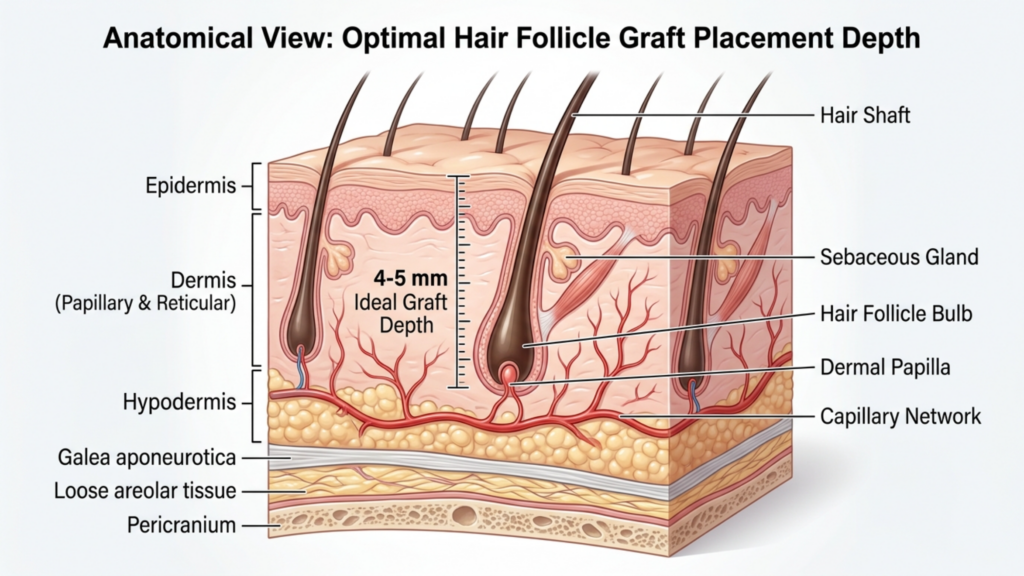
Nakil işlemi çok sığ veya çok derin yapıldı. yeterli kan akışı alamayacak, Bu durum, düşük hayatta kalma oranına yol açıyor. İdeal derinlik nedir?
- 4–5 mm Soğanın deri yüzeyinin altında, kan dolaşımının en yoğun olduğu dermis tabakasında yer almasını sağlar.
- Kaçınmak deri altı yerleştirme (çok derine inilmesi), greftlerin oksijensiz kalmasına neden olur.
3. Aşama: İyileşme—Şok Kaybı ve Enfeksiyonun Vurduğu Aşama
Kusursuz bir şekilde gerçekleştirilen bir organ nakli bile iyileşme sürecinde başarısız olabilir. En büyük iki tehdit nedir? Şok kaybı Ve enfeksiyon.
Şok Kaybı: Mevcut Saçların Sessiz Katili
Şok kaybı—mevcut saçların geçici (veya bazen kalıcı) dökülmesi—etkiler 30% hastası (Uluslararası Trikoloji Dergisi, 2025). Bu durum, implantasyon sırasında kafa derisine gelen travmadan kaynaklanır ve şu durumlarda daha yaygındır:
- Hastalar şunlara sahip: ince veya minyatürleşmiş saçlar.
- Bu süreçten geçenler yoğun paketleme (Tek bir bölgeye çok fazla greft uygulanması).
- Hastalar sigara içmek veya dolaşım bozukluğu yaşamak.
Önleme stratejileri şunları içerir:
- Ameliyat öncesi minoksidil Mevcut saçları güçlendirmek için.
- Sıkı paketlemeden kaçının Saçların seyrek olduğu bölgelerde.
- Ameliyat Sonrası PRP (Trombositten Zengin Plazma) İyileşmeyi hızlandırmak için.
Enfeksiyon ve Nekroz: Bir Nakil Ne Zaman Tehlikeli Hale Gelir?
Enfeksiyonlar şu durumlarda ortaya çıkar: 5–10% saç ekimi (Dermatolojik Cerrahi, 2025), genellikle yetersiz hijyen veya uygunsuz ameliyat sonrası bakım nedeniyle oluşur. Tedavi edilmediği takdirde enfeksiyonlar şunlara yol açabilir:
- Folikülit (İltihaplı saç folikülleri).
- Apseler (İrin dolu keseler).
- Nekroz (ağır vakalarda doku ölümü).
Önleme şunları gerektirir:
- Antibiyotik profilaksisi (Ameliyat öncesi ve sonrası antibiyotikler).
- Steril ameliyat sonrası bakım, Bunlara nazikçe yıkama ve saç derisine dokunmaktan kaçınma da dahildir.
- Düzenli takipler Enfeksiyon belirtilerini izlemek için.
Cerrah mı, Teknisyen mi İkilemi: Seçiminiz Sonuçlarınızı Belirleyebilir veya Bozabilir
İşte acı gerçek: Çoğu saç ekimi kliniği, saç kökü alımı ve ekimi gibi kritik adımlar için cerrahlar yerine teknisyenler kullanır.. Bu, maliyetleri düşürürken, şu riskleri de önemli ölçüde artırır:
- Greft kesimi (çekim sırasında foliküllerin kesilmesi).
- Zayıf açılandırma ve derinlik kontrolü implantasyon sırasında.
- Aşırı Hasat Donör bölgesinin.
- Doğal olmayan saç çizgisi tasarımı Sanatsal eğitim eksikliğinden dolayı.
2025 yılında yapılan bir çalışmada Plastik ve Rekonstrüktif Cerrahi şunu buldu ki Cerrahlar tarafından tedavi edilen hastalarda greft sağkalım oranı 25% daha yüksekti. Teknisyenler tarafından tedavi edilenlere kıyasla. Sonuç ne? Ameliyatınızın her aşamasını, alanında uzman ve sertifikalı bir cerrahın gerçekleştirmesi konusunda ısrar edin.—sadece denetlemek değil.

Çok Geç Olmadan Kötü Bir Saç Ekimi Nasıl Tespit Edilir?
Saç ekimi yaptırmayı düşünüyorsanız, işte nasıl yapacağınız. İstatistiklere dahil olmaktan kaçının:
Danışma Sürecindeki Dikkat Çeken Noktalar
- Riskler hakkında herhangi bir tartışma yok.Alanında uzman bir cerrah, şok saç dökülmesi, enfeksiyon ve doğal olmayan saç çizgisi gibi komplikasyonları açıklayacaktır.
- Garantili yoğunlukHiçbir cerrah 100% greftinin hayatta kalmasını garanti edemez; yanlış vaatlere dikkat edin.
- Ameliyat yapan teknisyenlerDiş çekimi ve implantasyon işlemlerinin bir cerrah tarafından yapılmasında ısrar edin.
- Öncesi ve sonrası fotoğrafları yok. gerçek hastaların görüntüleri (veya yalnızca yoğun şekilde düzenlenmiş görüntüler).
İşlemdeki Uyarı İşaretleri
- Aceleyle yapılan çıkarmaEğer ekip greftleri çok hızlı bir şekilde çıkarırsa, kesilme oranları hızla artacaktır.
- Aşı saklama protokolü yokHava ile temas eden veya uygunsuz şekilde saklanan greftler ölür.
- Uygunsuz açılandırmaEğer ekip, ekim açılarını kontrol etmek için özel aletler kullanmıyorsa, saç çizginiz doğal görünmeyecektir.
İyileşme Sürecinde Dikkat Edilmesi Gereken Uyarı İşaretleri
- Ameliyat sonrası bakım planı yok.Yıkama, ilaçlar ve takip kontrolleri hakkında ayrıntılı talimatlar almalısınız.
- Enfeksiyon belirtileri (Kızarıklık, şişlik, iltihap) klinik tarafından göz ardı edildi.
- Erken aşı dökülmesi Açıklama yapılmadan (bir miktar dökülme normaldir, ancak aşırı dökülme yetersiz implantasyona işaret edebilir).
Saç Ekimi İşleminizin Başarılı Olmasını Sağlayacak 7 Adımlı Plan
Bu kontrol listesini takip edin Doğal, yoğun ve kalıcı bir sonuç elde etme şansınızı en üst düzeye çıkarın.:
- Klinik değil, cerrah seçin.Kimlik bilgilerini, deneyimlerini ve öncesi ve sonrası sonuçları.
- Kişiye özel saç çizgisi tasarımı talep edin.: Kalıplaşmış şablonlardan kaçının. Saç çizginiz yüz simetriniz ve yaşınızla uyumlu olmalıdır.
- Cerrah gözetiminde çekim ve implantasyon yapılmasında ısrar edin.Teknisyenler yalnızca yardımcı olmalı, kritik adımları kendileri gerçekleştirmemelidir.
- Doku nakli saklama protokollerini doğrulayın.Doku greftleri hipotermik salin solüsyonunda saklanmalı ve 2 saat içinde implante edilmelidir.
- Saç derinizi hazırlayın.Ameliyat öncesinde mevcut saçları güçlendirmek ve şok kaynaklı saç dökülmesini azaltmak için minoksidil veya PRP kullanın.
- Ameliyat sonrası bakım talimatlarına titizlikle uyun.En az 2 hafta boyunca sigara, alkol ve yorucu aktivitelerden kaçının. Şişliği azaltmak için dik pozisyonda uyuyun.
- Tüm takip görüşmelerine katılın.Enfeksiyon, şok kaybı ve greftin hayatta kalma oranını izleyin. Kalıcı hasarı önlemek için sorunları erken aşamada ele alın.
Sonuç: Saç Ekimi Başarınız Bilgiyle Başlar
Saç ekimi hayat değiştiren bir işlemdir, ancak yalnızca doğru yapıldığında. Doğal, fark edilmeyen bir sonuç ile felaket arasındaki fark genellikle şunlara bağlıdır: Doğru cerrahı seçmek, riskleri anlamak ve titiz bir plan izlemek.. Maliyet veya kolaylığın kararınızı belirlemesine izin vermeyin. Saçınız, özgüveninize ve kimliğinize yaptığınız bir yatırımdır ve en iyisinden daha azını hak etmez.
Bir sonraki adımı atmaya hazırsanız, Alanında uzman bir cerraha danışın. Sanatsallığı, hassasiyeti ve uzun vadeli memnuniyetinizi önceliklendiren biri. Gelecekteki haliniz size teşekkür edecek.

Sıkça Sorulan Sorular
Bazı saç ekimleri neden doğal görünmüyor?
Doğal olmayan saç ekimleri genellikle kötü açılandırma, uygunsuz saç çizgisi tasarımı veya greftlerin yoğun bir şekilde yerleştirilmesinin sonucudur. Yetenekli bir cerrah, mikro düzensizliklere sahip bir saç çizgisi oluşturacak ve doğal büyüme modellerini taklit etmek için greftleri doğru açıyla (10-45°) yerleştirecektir.
Saç ekimi sonrası şok saç dökülmesini nasıl önleyebilirim?
Şok kaynaklı saç dökülmesini en aza indirmek için, mevcut saçları güçlendirmek amacıyla ameliyat öncesi minoksidil kullanın, seyrek saçlı bölgelerde yoğun ekimden kaçının ve iyileşmeyi hızlandırmak ve saç dökülmesini azaltmak için ameliyat sonrası PRP (Trombositten Zengin Plazma) tedavilerini düşünün.
FUE ve FUT arasındaki fark nedir ve hangisi daha iyidir?
FUE (Foliküler Ünite Ekstraksiyonu) daha az invazivdir ve minimal iz bırakır, ancak deneyimli bir cerrah tarafından yapılmadığı takdirde greft kopması riski daha yüksektir. FUT (Foliküler Ünite Transplantasyonu) daha yüksek greft hayatta kalma oranları sağlar ancak doğrusal bir iz bırakır. En iyi seçim, saç dökülme şeklinize ve cerrahın uzmanlığına bağlıdır.
Saç ekimi cerrahımın yeterli niteliklere sahip olup olmadığını nasıl anlarım?
Nitelikli bir cerrahın uzmanlık belgesine sahip olması, saç restorasyonunda geniş deneyime sahip olması ve gerçek hastaların öncesi ve sonrası fotoğraflarını şeffaf bir şekilde sunması gerekir. Saç ekimi ve implantasyon gibi kritik adımları teknisyenlerin gerçekleştirdiği kliniklerden kaçının.
Başarısız bir saç ekimi düzeltilebilir mi?
Evet, ancak karmaşık bir süreç. Onarım işlemleri genellikle yanlış yerleştirilmiş greftlerin çıkarılmasını, skar dokusunun düzeltilmesini ve greftlerin uygun açı ve yoğunlukta yeniden yerleştirilmesini gerektirir. En iyi sonuçlar için onarım vakalarında deneyimli bir cerrah seçin.
Saç ekimi işleminin nihai sonuçlarını görmek ne kadar sürer?
İlk büyüme 3-4 ay içinde başlar, ancak tam sonuçlar 12-18 ay sürer. Sabır çok önemlidir; süreci aceleye getirmek veya anında yoğunluk beklemek hayal kırıklığına yol açabilir.
Başarısız bir saç ekiminin belirtileri nelerdir?
Belirtiler arasında düz veya aşırı düşük saç çizgisi, doğal olmayan açılarda çıkan saçlar, görünür yara izleri, düzensiz saç yoğunluğu ve sürekli kızarıklık veya şişlik yer alır. Bunları fark ederseniz, derhal bir saç onarım uzmanına danışın.