
Immaginate di spendere migliaia di dollari e mesi di tempo per la convalescenza, solo per guardarvi allo specchio e vedere un'attaccatura dei capelli che grida "artificiale" o peggio, chiazze di capelli che non sono mai ricresciuti. Questo non è un incubo raro; è la realtà per 1 su 5 trapianto di capelli pazienti che subiscono complicazioni che vanno da attaccature dei capelli innaturali al completo fallimento dell'innesto (International Society of Hair Restoration Surgery, 2025). La scioccante verità? La maggior parte di questi insuccessi non è dovuta alla sfortuna, bensì a errori tecnici evitabili, a una pianificazione chirurgica inadeguata e alla mancanza di comprensione di ciò che rende naturale l'attaccatura dei capelli.. Se stai prendendo in considerazione un trapianto di capelli, Questa guida svelerà le insidie nascoste che le cliniche non vi riveleranno e vi mostrerà come garantire il successo del vostro intervento laddove altri falliscono.
Sommario
Promesse contro realtà: ciò che non ti viene detto sui tassi di successo del trapianto di capelli
Le cliniche vantano tassi di successo pari o superiori al 95%, ma questi numeri sono fuorvianti. La verità? Solo 601 pazienti TP3T raggiungono la densità e la naturalezza promesse. (Journal of Cosmetic Dermatology, 2025). Gli altri affrontano complicazioni come:
- Attaccatura dei capelli innaturaleUn'attaccatura dei capelli troppo dritta, troppo bassa o priva dell'irregolarità tipica della crescita naturale.
- Angolazione errataInnesti impiantati con l'angolazione sbagliata, che causano una crescita innaturale dei capelli, facendoli sporgere o aderire in modo piatto al cuoio capelluto.
- Bassi tassi di sopravvivenzaFino a 30% di innesti non attecchiscono a causa di manipolazione impropria, disidratazione o traumi durante l'impianto.
- Necrosi e cicatriciUn prelievo eccessivo o tecniche di incisione improprie possono causare danni permanenti all'area donatrice.
- perdita da shockCaduta temporanea (o talvolta permanente) dei capelli esistenti a causa del trauma derivante dalla procedura.
Perché succede questo? La risposta sta nel tre fasi critiche di un trapianto di capelli—ognuno con la propria serie di rischi di cui la maggior parte dei pazienti non viene a conoscenza finché non è troppo tardi.
Fase 1: L'estrazione - La fase in cui la maggior parte degli innesti muore prima ancora di iniziare
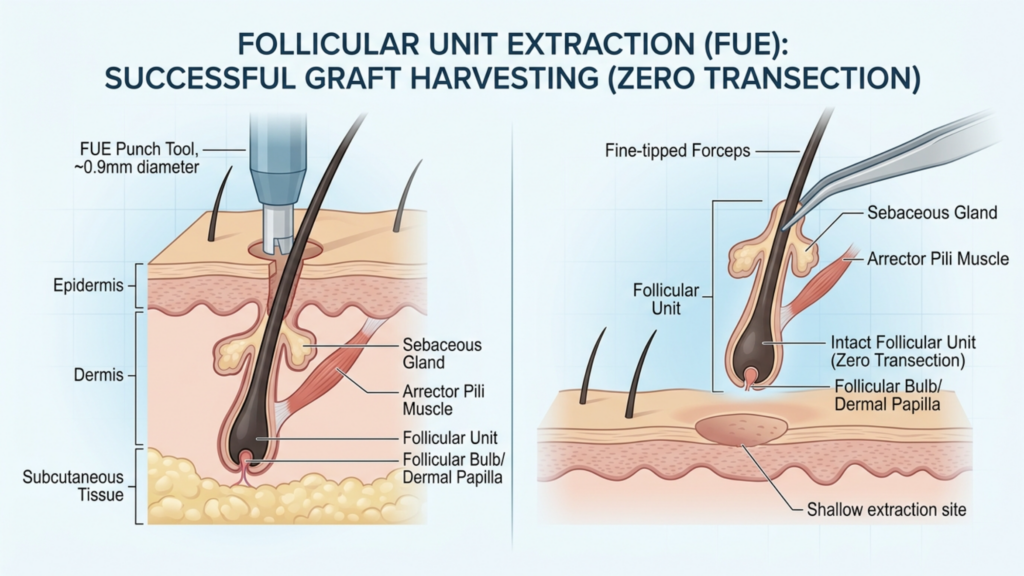
La prima fase di un trapianto di capelli, ovvero l'estrazione degli innesti dalla zona donatrice, è dove fino a 40% guasti hanno origine (Chirurgia dermatologica, 2025). Spesso le cliniche lesinano su questo aspetto, causando danni irreversibili.
Il dibattito FUE vs. FUT: perché la tecnica conta più di quanto si pensi.
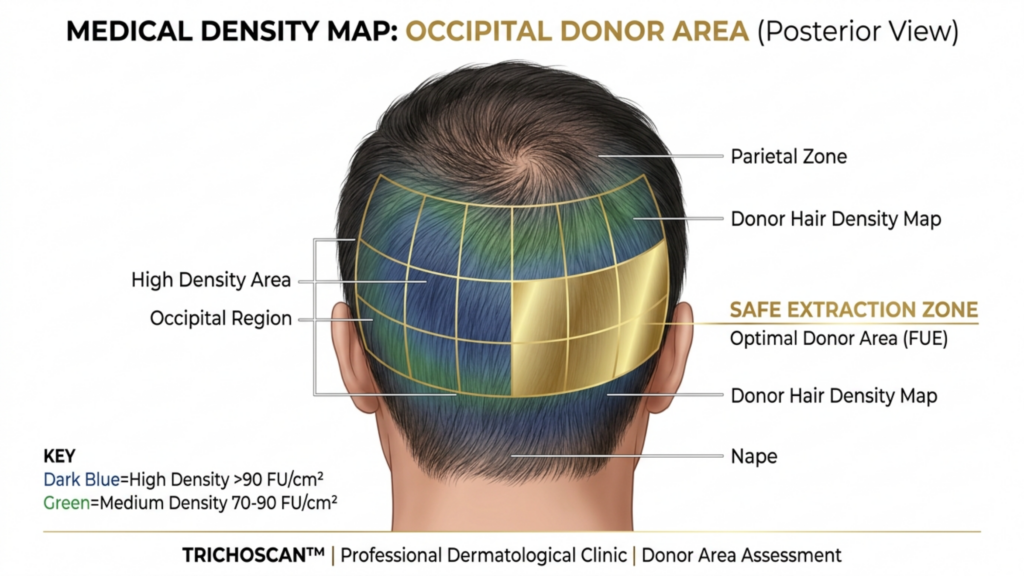
L'estrazione di unità follicolari (FUE) è il gold standard per le sue cicatrici minime, ma è anche dove sezione dell'innesto—il taglio del follicolo pilifero durante l'estrazione—è l'evento più probabile. Gli studi dimostrano che tecnici inesperti sezionano fino a 15% di innesti durante la FUE, rendendoli inutili prima ancora di essere impiantati (Chirurgia Plastica e Ricostruttiva, 2025). Il trapianto di unità follicolari (FUT), sebbene più invasivo, spesso produce tassi di sopravvivenza dell'innesto più elevati se eseguito da un esperto chirurgo. Il trucco? Nella maggior parte delle cliniche, per le estrazioni vengono impiegati tecnici, non chirurghi.—una misura di risparmio che aumenta drasticamente i tassi di fallimento.
La trappola dell'area donatrice: prelievo eccessivo e cicatrici permanenti
Un altro errore critico è sfruttamento eccessivo—prelevare troppi innesti dalla zona donatrice, il che può portare a:
- Assottigliamento dell'area donatrice, facendolo apparire a chiazze o trasparente.
- Necrosi (morte tissutale) se i siti di estrazione sono troppo vicini tra loro, interrompendo l'afflusso di sangue.
- Cicatrici permanenti che è visibile anche con i tagli di capelli corti.
Uno studio del 2025 nel Rivista di scienze dermatologiche hanno scoperto che 1 paziente su 10 Chi si è sottoposto a FUE ha riscontrato danni permanenti all'area donatrice a causa di un prelievo eccessivo. La soluzione? Limitare l'estrazione a 25-30 innesti per cm² e garantendo che la procedura venga eseguita da un chirurgo, non sono un tecnico.
Il disastro della disidratazione: perché gli innesti muoiono prima dell'impianto
Una volta estratti, gli innesti sono fragili. Ogni minuto che trascorrono fuori dal corpo riduce il loro tasso di sopravvivenza di 1% (Hair Transplant Forum International, 2025). Molte cliniche lasciano gli innesti esposti all'aria o in soluzioni di conservazione non ottimali, causando disidratazione e morte cellulare. Il protocollo ideale?
- Gli innesti devono essere conservati in soluzione salina ipotermica (4°C) per rallentare il metabolismo e preservare la vitalità.
- L'impianto dovrebbe iniziare entro 1-2 ore di estrazione per massimizzare la sopravvivenza.
- Gli innesti non devono mai essere maneggiati con le pinze, ma solo strumenti delicati e non traumatici per evitare lo schiacciamento.
Fase 2: L'impianto: dove nascono le attaccature dei capelli innaturali
Anche se gli innesti sopravvivono all'estrazione, Tecniche di impianto inadeguate possono compromettere l'intera procedura.. I due principali colpevoli? Errori di angolazione E design innaturale dell'attaccatura dei capelli.
La crisi dell'angolazione: perché i tuoi capelli sporgono come uno spazzolino da denti
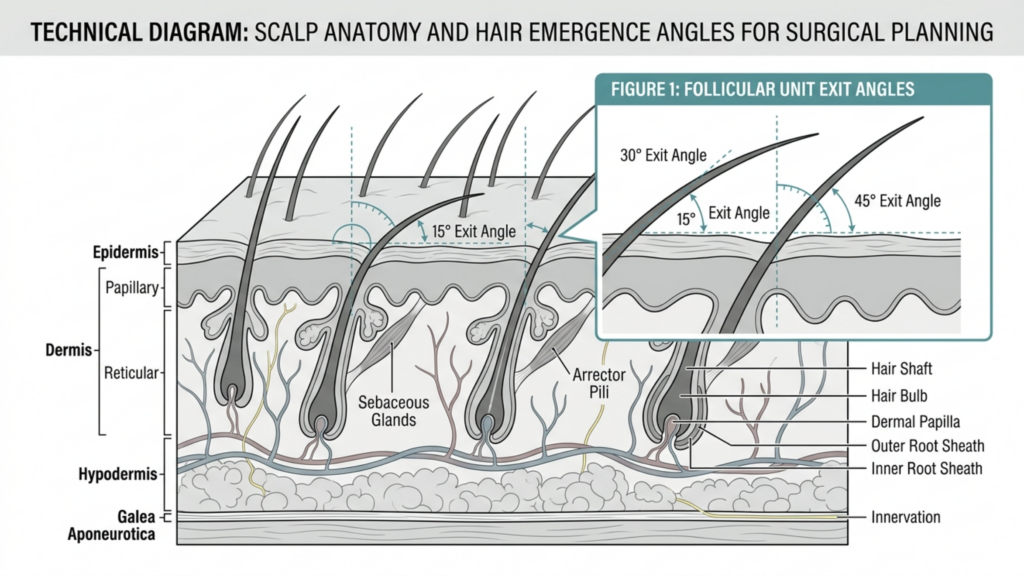
I capelli non crescono dritti dal cuoio capelluto, escono da un'estremità. angolo di 10–45°, a seconda della regione. Quando gli innesti vengono impiantati con l'angolazione sbagliata, il risultato è un effetto "capelli di bambola", in cui i capelli sporgono in modo innaturale. Uno studio del 2025 in Rivista di chirurgia estetica hanno scoperto che 40% di scarsi risultati del trapianto di capelli erano dovuti a un'angolazione errata. La soluzione?
- Attaccatura frontale dei capelliAngolo di 10–20°, con leggera inclinazione in avanti.
- Parte centrale del cuoio capellutoAngolo di 20–30°, che tende gradualmente verso una direzione più verticale.
- CoronaAngolo di 30–45°, con un disegno a spirale per un flusso naturale.
Il disastro del design dell'attaccatura dei capelli: perché la maggior parte dei trapianti sembra finta
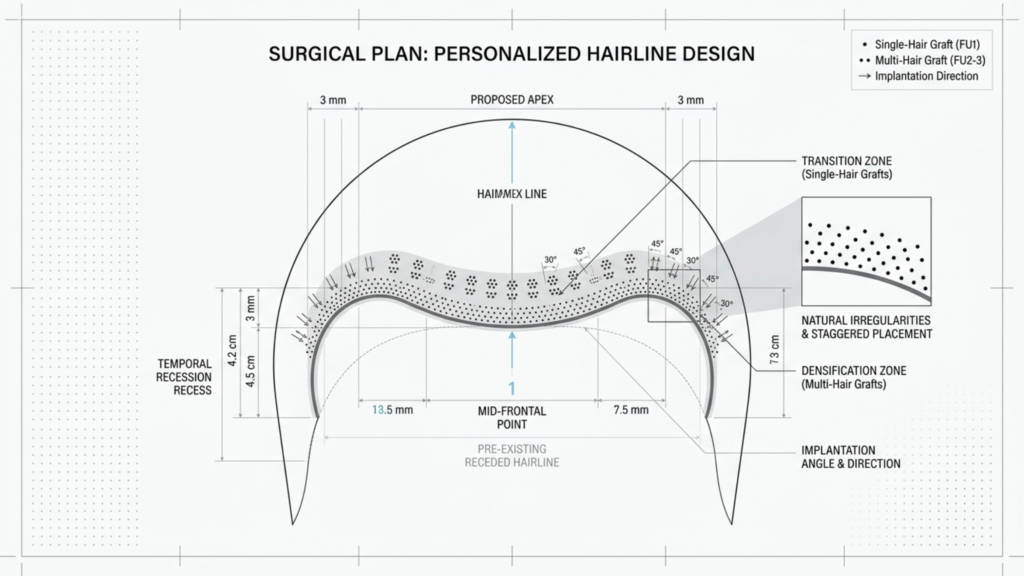
L'attaccatura naturale dei capelli non è una linea retta, è irregolare, con microirregolarità, innesti di singoli capelli nella parte anteriore e aumenti graduali della densità. Tuttavia, molte cliniche creano:
- Attaccatura dei capelli dritta, "da bambola Barbie". che gridano “trapianto”.”
- Attaccatura dei capelli troppo bassa che assumono un aspetto innaturale con l'avanzare dell'età del paziente.
- densità eccessiva nella zona frontale, conferendo un aspetto "a tappo".
La soluzione? Design personalizzato dell'attaccatura dei capelli basato su:
- Simmetria e proporzioni del viso.
- Altezza dell'attaccatura dei capelli adeguata all'età (più alta per i pazienti più anziani per tenere conto di un'eventuale futura recessione cranica).
- Transizioni graduali di densità, con innesti a singolo capello nella parte anteriore e innesti a più capelli nella parte posteriore.
Il disastro della profondità: perché alcuni innesti non attecchiscono mai
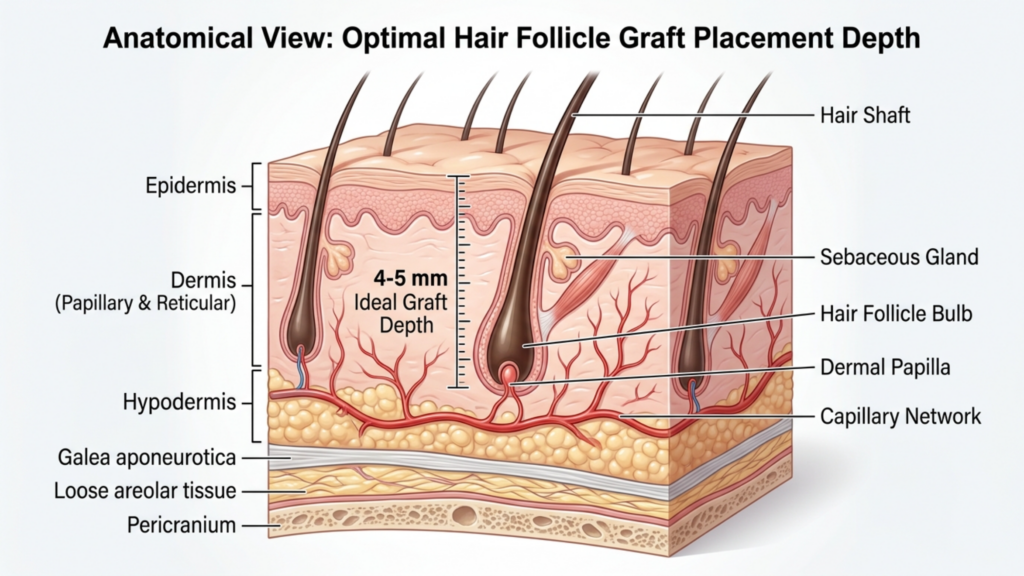
Innesti impiantati troppo superficialmente o troppo in profondità non riceverà un flusso sanguigno adeguato, con conseguente scarsa probabilità di sopravvivenza. Qual è la profondità ideale?
- 4–5 mm sotto la superficie cutanea, assicurando che il bulbo si trovi nello strato del derma dove l'apporto di sangue è più abbondante.
- Evitare posizionamento sottocutaneo (troppo profondo), il che priva gli innesti di ossigeno.
Fase 3: La ripresa: dove si verificano shock, perdite e infezioni
Anche un trapianto eseguito alla perfezione può fallire durante la fase di recupero. Le due minacce maggiori? perdita da shock E infezione.
Perdita da shock: il killer silenzioso dei capelli esistenti
perdita da shock—perdita temporanea (o talvolta permanente) dei capelli esistenti—colpisce 30% di pazienti (International Journal of Trichology, 2025). È causato da un trauma al cuoio capelluto durante l'impianto ed è più comune in:
- Pazienti con capelli sottili o miniaturizzati.
- Coloro che stanno subendo impacchettamento denso (troppi innesti in una sola area).
- Pazienti che fumare o avere una cattiva circolazione.
Le strategie di prevenzione includono:
- Minoxidil preoperatorio per rinforzare i capelli esistenti.
- Evitare l'impacchettamento troppo denso nelle zone con capelli radi.
- PRP postoperatorio (Plasma Ricco di Piastrine) per accelerare la guarigione.
Infezione e necrosi: quando un trapianto diventa pericoloso
Le infezioni si verificano in 5–10% dei trapianti di capelli (Chirurgia Dermatologica, 2025), spesso a causa di scarsa igiene o di cure post-operatorie inadeguate. Se non trattate, le infezioni possono portare a:
- Follicolite (follicoli piliferi infiammati).
- Ascessi (sacche piene di pus).
- Necrosi (morte dei tessuti) nei casi gravi.
La prevenzione richiede:
- Profilassi antibiotica (antibiotici preoperatori e postoperatori).
- Cure postoperatorie sterili, compreso un lavaggio delicato ed evitando di toccare il cuoio capelluto.
- Controlli periodici per monitorare eventuali segni di infezione.
Il dilemma tra chirurgo e tecnico: perché la tua scelta può determinare il successo o il fallimento del tuo lavoro.
Ecco la dura verità: Nella maggior parte delle cliniche per il trapianto di capelli, per le fasi critiche come l'estrazione e l'impianto vengono impiegati tecnici, non chirurghi.. Sebbene ciò riduca i costi, aumenta drasticamente il rischio di:
- Transezione dell'innesto (taglio dei follicoli durante l'estrazione).
- Controllo dell'angolazione e della profondità inadeguato durante l'impianto.
- Sfruttamento eccessivo dell'area del donatore.
- Attaccatura dei capelli dall'aspetto innaturale a causa della mancanza di formazione artistica.
Uno studio del 2025 in Chirurgia plastica e ricostruttiva hanno scoperto che I pazienti trattati dai chirurghi hanno avuto un tasso di sopravvivenza dell'innesto più elevato del 25% rispetto a quelli trattati dai tecnici. La conclusione? Insistete affinché ogni fase dell'intervento sia eseguita da un chirurgo certificato.—non solo supervisione.

Come riconoscere un trapianto di capelli mal riuscito prima che sia troppo tardi
Se stai prendendo in considerazione un trapianto di capelli, ecco come evitare di diventare un'altra statistica:
Segnali d'allarme nella consultazione
- Nessuna discussione sui rischiUn chirurgo qualificato spiegherà eventuali complicazioni come la perdita di capelli dovuta allo shock, le infezioni e le attaccature dei capelli innaturali.
- densità garantitaNessun chirurgo può garantire la sopravvivenza dell'innesto 100%: attenzione alle false promesse.
- Tecnici che eseguono interventi chirurgiciInsistete affinché l'estrazione e l'impianto vengano eseguiti da un chirurgo.
- Nessuna foto del prima e dopo di pazienti reali (o solo immagini pesantemente modificate).
Segnali di allarme nella procedura
- Estrazione affrettataSe l'équipe preleva gli innesti troppo rapidamente, il tasso di transezione aumenterà vertiginosamente.
- Nessun protocollo di conservazione dell'innestoGli innesti lasciati esposti all'aria o conservati in modo improprio moriranno.
- Angolazione errataSe l'équipe non utilizza strumenti specializzati per controllare l'angolazione degli innesti, l'attaccatura dei capelli apparirà innaturale.
Segnali d'allarme nella fase di recupero
- Nessun piano di assistenza post-operatoriaDovresti ricevere istruzioni dettagliate su lavaggio, farmaci e controlli successivi.
- Segni di infezione (arrossamento, gonfiore, pus) ignorati dalla clinica.
- Caduta precoce dell'innesto senza spiegazioni (una certa perdita di capelli è normale, ma una perdita eccessiva può indicare un cattivo impianto).
Il piano in 7 fasi per garantire il successo del tuo trapianto di capelli
Segui questa lista di controllo per massimizza le tue possibilità di ottenere un risultato naturale, denso e permanente:
- Scegliete un chirurgo, non una clinica.: Verificare le loro credenziali, esperienza e risultati prima e dopo.
- Richiedi un design personalizzato per l'attaccatura dei capelliEvitate modelli preconfezionati. L'attaccatura dei capelli dovrebbe essere in armonia con la simmetria del viso e con l'età.
- Insistete affinché l'estrazione e l'impianto siano eseguiti da un chirurgo.I tecnici devono solo fornire assistenza, non eseguire le operazioni critiche.
- Confermare i protocolli di conservazione dell'innesto.Gli innesti devono essere conservati in soluzione salina ipotermica e impiantati entro 2 ore.
- Prepara il tuo cuoio capellutoUtilizzare minoxidil o PRP prima dell'intervento per rinforzare i capelli esistenti e ridurre la perdita da shock.
- Seguire scrupolosamente le cure post-operatorie.Evitare di fumare, di bere alcolici e di svolgere attività faticose per almeno 2 settimane. Dormire in posizione eretta per ridurre il gonfiore.
- Partecipare a tutti i successivi incontri.Monitorare la presenza di infezioni, shock e la sopravvivenza dell'innesto. Intervenire tempestivamente per prevenire danni permanenti.
Conclusione: il successo del tuo trapianto di capelli inizia con la conoscenza.
Il trapianto di capelli è una procedura che cambia la vita, ma solo se eseguita correttamente. La differenza tra un risultato naturale e impercettibile e un disastro spesso si riduce a Scegliere il chirurgo giusto, comprendere i rischi e seguire un piano meticoloso. Non lasciare che il costo o la comodità influenzino la tua decisione. I tuoi capelli sono un investimento nella tua autostima e nella tua identità, e meritano solo il meglio.
Se sei pronto a fare il passo successivo, consultare un chirurgo certificato che dà priorità all'arte, alla precisione e alla tua soddisfazione a lungo termine. Il tuo io futuro ti ringrazierà.

Domande frequenti
Perché alcuni trapianti di capelli hanno un aspetto innaturale?
I trapianti di capelli dall'aspetto innaturale sono solitamente il risultato di un'angolazione errata, di una progettazione inadeguata dell'attaccatura dei capelli o di un'eccessiva densità di innesti. Un chirurgo esperto creerà un'attaccatura dei capelli con micro-irregolarità e impianterà gli innesti con l'angolazione corretta (10-45°) per imitare i modelli di crescita naturali.
Come posso evitare la caduta improvvisa dei capelli dopo un trapianto?
Per ridurre al minimo la perdita di capelli dovuta allo shock, si consiglia di utilizzare minoxidil preoperatorio per rinforzare i capelli esistenti, evitare un riempimento troppo denso nelle aree con capelli radi e valutare trattamenti postoperatori con PRP (Plasma Ricco di Piastrine) per accelerare la guarigione e ridurre la caduta dei capelli.
Qual è la differenza tra FUE e FUT, e quale delle due è migliore?
La FUE (Estrazione di Unità Follicolari) è meno invasiva e lascia cicatrici minime, ma presenta un rischio maggiore di lesione degli innesti se non eseguita da un chirurgo esperto. La FUT (Trapianto di Unità Follicolari) offre tassi di sopravvivenza degli innesti più elevati, ma lascia una cicatrice lineare. La scelta migliore dipende dal tipo di perdita di capelli e dall'esperienza del chirurgo.
Come faccio a sapere se il chirurgo che mi affiderà il trapianto di capelli è qualificato?
Un chirurgo qualificato dovrebbe essere certificato, avere una vasta esperienza nel trapianto di capelli e fornire foto trasparenti del prima e dopo di pazienti reali. Evitate le cliniche in cui i tecnici eseguono fasi cruciali come l'estrazione e l'impianto.
È possibile rimediare a un trapianto di capelli non riuscito?
Sì, ma è complesso. Le procedure di riparazione spesso richiedono la rimozione di innesti posizionati in modo errato, la correzione del tessuto cicatriziale e il reimpianto di innesti con angolazione e densità adeguate. Per ottenere i migliori risultati, è consigliabile scegliere un chirurgo con esperienza in casi di riparazione.
Quanto tempo occorre per vedere i risultati finali di un trapianto di capelli?
La crescita iniziale si manifesta dopo 3-4 mesi, ma i risultati definitivi si ottengono dopo 12-18 mesi. La pazienza è fondamentale: affrettare i tempi o aspettarsi una densità immediata può portare a delusioni.
Quali sono i segnali di un trapianto di capelli mal riuscito?
Tra i segnali si annoverano un'attaccatura dei capelli dritta o troppo bassa, capelli che sporgono ad angolazioni innaturali, cicatrici visibili, densità irregolare e arrossamento o gonfiore persistenti. Se notate questi sintomi, consultate immediatamente uno specialista.