Imagine spending thousands of dollars and months of recovery time, only to look in the mirror and see a hairline that screams “artificial” or worse—patches of hair that never grew back. This isn’t a rare nightmare; it’s the reality for 1 in 5 hair transplant patients who experience complications ranging from unnatural hairlines to complete graft failure (International Society of Hair Restoration Surgery, 2025). The shocking truth? Most of these failures aren’t due to bad luck—they’re the result of avoidable technical errors, poor surgical planning, and a lack of understanding of what makes a hairline look natural. If you’re considering a hair transplant, this guide will expose the hidden pitfalls that clinics won’t tell you—and how to ensure your procedure succeeds where others fail.
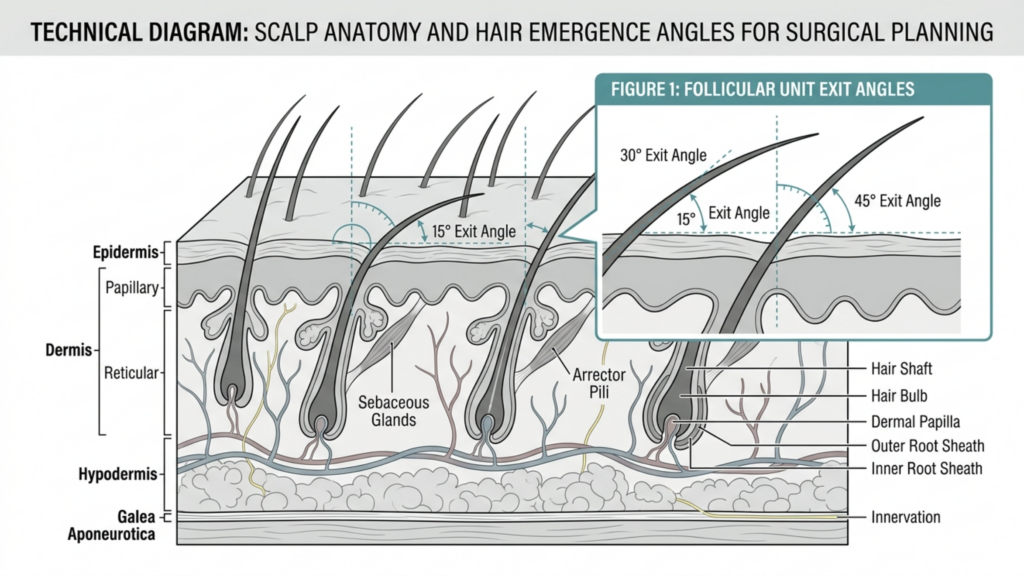
Table of Contents
The Promise vs. Reality: What You’re Not Told About Hair Transplant Success Rates
Clinics boast success rates of 95% or higher, but these numbers are misleading. The truth? Only 60% of patients achieve the density and naturalness they were promised (Journal of Cosmetic Dermatology, 2025). The rest face complications like:
- Unnatural hairlines: A hairline that’s too straight, too low, or lacks the irregularity of natural growth patterns.
- Poor angulation: Grafts implanted at the wrong angle, causing hair to stick out unnaturally or lie flat against the scalp.
- Low survival rates: Up to 30% of grafts fail to thrive due to improper handling, dehydration, or trauma during implantation.
- Necrosis and scarring: Overharvesting or improper incision techniques can lead to permanent damage to the donor area.
- Shock loss: Temporary (or sometimes permanent) shedding of existing hair due to trauma from the procedure.
Why does this happen? The answer lies in the three critical phases of a hair transplant—each with its own set of risks that most patients never hear about until it’s too late.
Phase 1: The Extraction—Where Most Grafts Die Before They Even Begin
The first stage of a hair transplant—extracting grafts from the donor area—is where up to 40% of failures originate (Dermatologic Surgery, 2025). Clinics often cut corners here, leading to irreversible damage.
The FUE vs. FUT Debate: Why Technique Matters More Than You Think
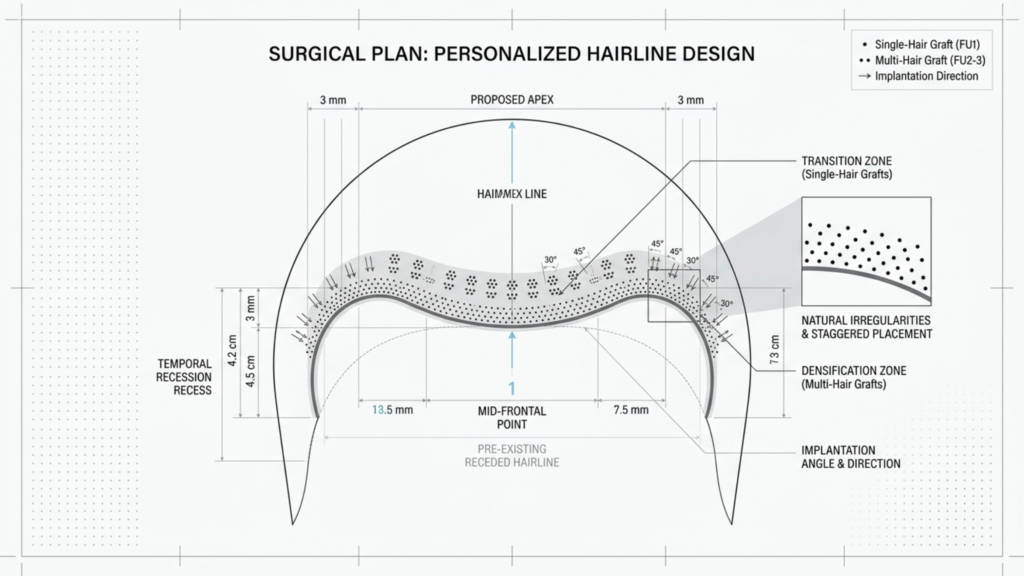
Follicular Unit Extraction (FUE) is the gold standard for its minimal scarring, but it’s also where graft transection—cutting the hair follicle during extraction—is most likely to occur. Studies show that inexperienced technicians transect up to 15% of grafts during FUE, rendering them useless before they’re even implanted (Plastic and Reconstructive Surgery, 2025). Follicular Unit Transplantation (FUT), while more invasive, often yields higher graft survival rates when performed by a skilled surgeon. The catch? Most clinics use technicians, not surgeons, for extractions—a cost-saving measure that dramatically increases failure rates.
The Donor Area Trap: Overharvesting and Permanent Scarring
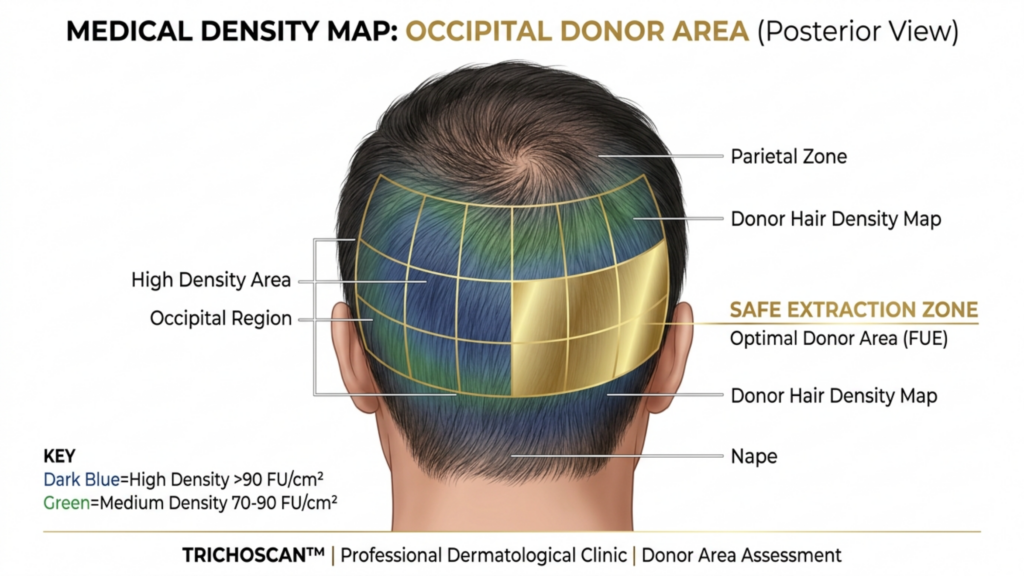
Another critical error is overharvesting—taking too many grafts from the donor area, which can lead to:
- Thinning of the donor area, making it look patchy or see-through.
- Necrosis (tissue death) if the extraction sites are too close together, cutting off blood supply.
- Permanent scarring that’s visible even with short haircuts.
A 2025 study in the Journal of Dermatological Science found that 1 in 10 patients who underwent FUE experienced permanent donor area damage due to overharvesting. The solution? Limiting extraction to 25–30 grafts per cm² and ensuring the procedure is performed by a surgeon, not a technician.
The Dehydration Disaster: Why Grafts Die Before Implantation
Once extracted, grafts are fragile. Every minute they spend outside the body reduces their survival rate by 1% (Hair Transplant Forum International, 2025). Many clinics leave grafts exposed to air or in suboptimal storage solutions, leading to dehydration and cell death. The ideal protocol?
- Grafts should be stored in hypothermic (4°C) saline solution to slow metabolism and preserve viability.
- Implantation should begin within 1–2 hours of extraction to maximize survival.
- Grafts should never be handled with forceps—only gentle, non-traumatic tools to avoid crushing.
Phase 2: The Implantation—Where Unnatural Hairlines Are Born
Even if grafts survive extraction, poor implantation techniques can ruin the entire procedure. The two biggest culprits? Angulation errors and unnatural hairline design.
The Angulation Crisis: Why Your Hair Sticks Out Like a Toothbrush
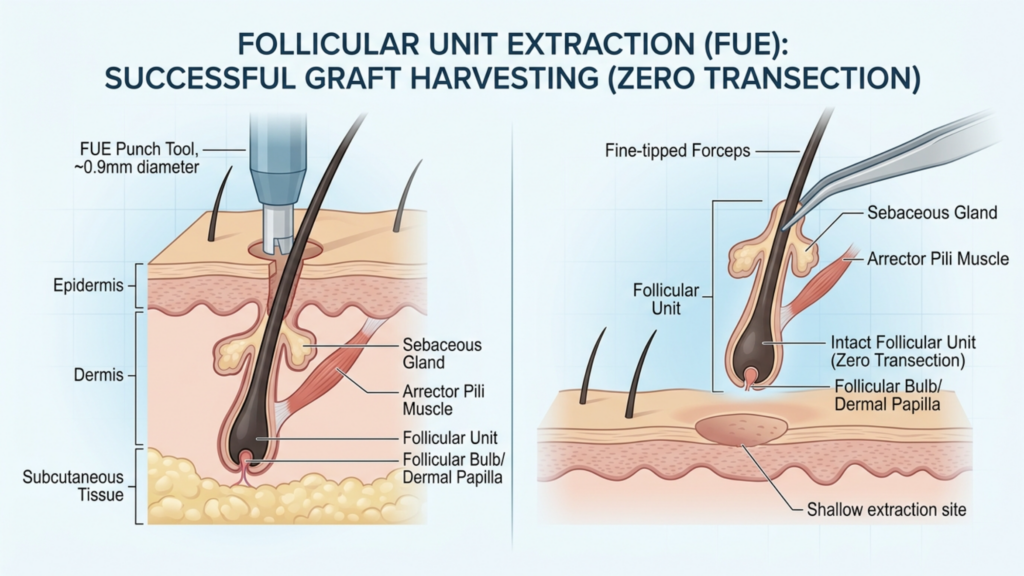
Hair doesn’t grow straight out of the scalp—it exits at a 10–45° angle, depending on the region. When grafts are implanted at the wrong angle, the result is a “doll’s hair” effect, where hair sticks out unnaturally. A 2025 study in Aesthetic Surgery Journal found that 40% of poor hair transplant results were due to incorrect angulation. The fix?
- Frontal hairline: 10–20° angle, with slight forward lean.
- Mid-scalp: 20–30° angle, transitioning to a more vertical direction.
- Crown: 30–45° angle, with a whorl pattern for natural flow.
The Hairline Design Disaster: Why Most Transplants Look Fake
A natural hairline isn’t a straight line—it’s irregular, with micro-irregularities, single-hair grafts at the front, and gradual density increases. Yet, many clinics create:
- Straight, “barbie doll” hairlines that scream “transplant.”
- Too-low hairlines that look unnatural as the patient ages.
- Over-packed density in the frontal zone, leading to a “pluggy” appearance.
The solution? Custom hairline design based on:
- Facial symmetry and proportions.
- Age-appropriate hairline height (higher for older patients to account for future recession).
- Gradual density transitions, with single-hair grafts at the front and multi-hair grafts behind.
The Depth Debacle: Why Some Grafts Never Grow
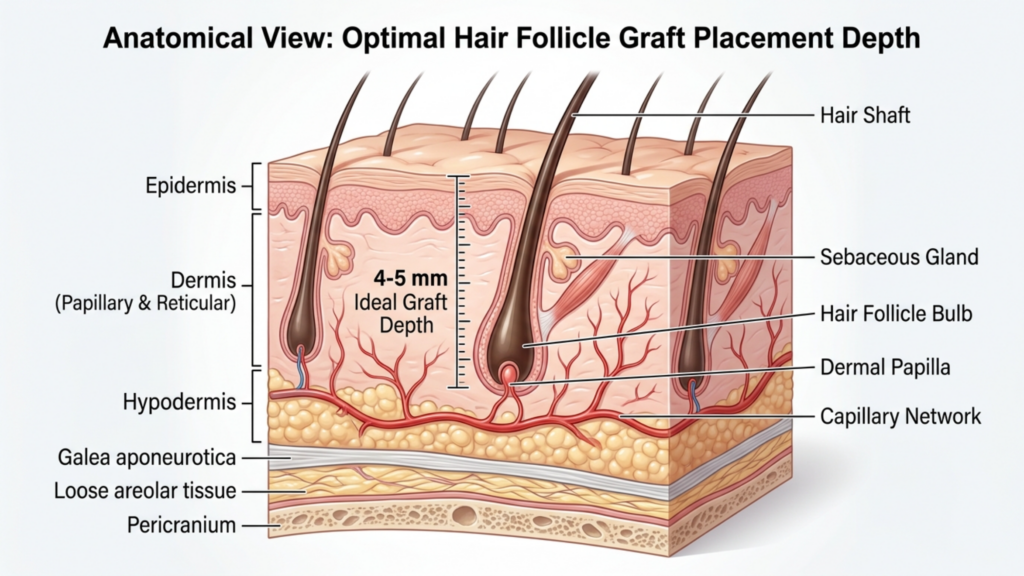
Grafts implanted too shallow or too deep won’t receive proper blood flow, leading to poor survival. The ideal depth?
- 4–5mm below the skin surface, ensuring the bulb sits in the dermis layer where blood supply is richest.
- Avoid subcutaneous placement (too deep), which starves grafts of oxygen.
Phase 3: The Recovery—Where Shock Loss and Infection Strike
Even a perfectly executed transplant can fail during recovery. The two biggest threats? Shock loss and infection.
Shock Loss: The Silent Killer of Existing Hair
Shock loss—temporary (or sometimes permanent) shedding of existing hair—affects 30% of patients (International Journal of Trichology, 2025). It’s caused by trauma to the scalp during implantation and is more common in:
- Patients with thin or miniaturized hair.
- Those undergoing dense packing (too many grafts in one area).
- Patients who smoke or have poor circulation.
Prevention strategies include:
- Preoperative minoxidil to strengthen existing hair.
- Avoiding dense packing in areas with thin hair.
- Postoperative PRP (Platelet-Rich Plasma) to accelerate healing.
Infection and Necrosis: When a Transplant Turns Dangerous
Infections occur in 5–10% of hair transplants (Dermatologic Surgery, 2025), often due to poor hygiene or improper postoperative care. Left untreated, infections can lead to:
- Folliculitis (inflamed hair follicles).
- Abscesses (pus-filled pockets).
- Necrosis (tissue death) in severe cases.
Prevention requires:
- Antibiotic prophylaxis (preoperative and postoperative antibiotics).
- Sterile postoperative care, including gentle washing and avoiding touching the scalp.
- Regular follow-ups to monitor for signs of infection.
The Surgeon vs. Technician Dilemma: Why Your Choice Could Make or Break Your Results
Here’s the harsh truth: Most hair transplant clinics use technicians—not surgeons—for critical steps like extraction and implantation. While this cuts costs, it dramatically increases the risk of:
- Graft transection (cutting follicles during extraction).
- Poor angulation and depth control during implantation.
- Overharvesting of the donor area.
- Unnatural hairline design due to lack of artistic training.
A 2025 study in Plastic and Reconstructive Surgery found that patients treated by surgeons had a 25% higher graft survival rate compared to those treated by technicians. The takeaway? Insist on a board-certified surgeon performing every step of your procedure—not just supervising.

How to Spot a Bad Hair Transplant Before It’s Too Late
If you’re considering a hair transplant, here’s how to avoid becoming another statistic:
Red Flags in the Consultation
- No discussion of risks: A reputable surgeon will explain complications like shock loss, infection, and unnatural hairlines.
- Guaranteed density: No surgeon can guarantee 100% graft survival—beware of false promises.
- Technicians performing surgery: Insist on a surgeon handling extraction and implantation.
- No before-and-after photos of real patients (or only heavily edited images).
Red Flags in the Procedure
- Rushed extraction: If the team is extracting grafts too quickly, transection rates will skyrocket.
- No graft storage protocol: Grafts left exposed to air or stored improperly will die.
- Improper angulation: If the team isn’t using specialized tools to control graft angles, your hairline will look unnatural.
Red Flags in Recovery
- No postoperative care plan: You should receive detailed instructions on washing, medications, and follow-ups.
- Signs of infection (redness, swelling, pus) ignored by the clinic.
- Early graft shedding without explanation (some shedding is normal, but excessive loss may indicate poor implantation).
The 7-Step Plan to Ensure Your Hair Transplant Succeeds
Follow this checklist to maximize your chances of a natural, dense, and permanent result:
- Choose a surgeon, not a clinic: Verify their credentials, experience, and before-and-after results.
- Demand a personalized hairline design: Avoid cookie-cutter templates. Your hairline should match your facial symmetry and age.
- Insist on surgeon-led extraction and implantation: Technicians should only assist, not perform critical steps.
- Confirm graft storage protocols: Grafts should be stored in hypothermic saline and implanted within 2 hours.
- Prepare your scalp: Use minoxidil or PRP preoperatively to strengthen existing hair and reduce shock loss.
- Follow postoperative care religiously: Avoid smoking, alcohol, and strenuous activity for at least 2 weeks. Sleep upright to reduce swelling.
- Attend all follow-ups: Monitor for infection, shock loss, and graft survival. Address issues early to prevent permanent damage.
Conclusion: Your Hair Transplant Success Starts With Knowledge
A hair transplant is a life-changing procedure—but only if done right. The difference between a natural, undetectable result and a disaster often comes down to choosing the right surgeon, understanding the risks, and following a meticulous plan. Don’t let cost or convenience dictate your decision. Your hair is an investment in your confidence and identity, and it deserves nothing less than the best.
If you’re ready to take the next step, consult with a board-certified surgeon who prioritizes artistry, precision, and your long-term satisfaction. Your future self will thank you.

Frequently Asked Questions
Why do some hair transplants look unnatural?
Unnatural hair transplants are usually the result of poor angulation, improper hairline design, or dense packing of grafts. A skilled surgeon will create a hairline with micro-irregularities and implant grafts at the correct angle (10–45°) to mimic natural growth patterns.
How can I avoid shock loss after a hair transplant?
To minimize shock loss, use preoperative minoxidil to strengthen existing hair, avoid dense packing in areas with thin hair, and consider postoperative PRP (Platelet-Rich Plasma) treatments to accelerate healing and reduce shedding.
What’s the difference between FUE and FUT, and which is better?
FUE (Follicular Unit Extraction) is less invasive and leaves minimal scarring, but it has a higher risk of graft transection if not performed by a skilled surgeon. FUT (Follicular Unit Transplantation) yields higher graft survival rates but leaves a linear scar. The best choice depends on your hair loss pattern and surgeon’s expertise.
How do I know if my hair transplant surgeon is qualified?
A qualified surgeon should be board-certified, have extensive experience in hair restoration, and provide transparent before-and-after photos of real patients. Avoid clinics where technicians perform critical steps like extraction and implantation.
Can a failed hair transplant be fixed?
Yes, but it’s complex. Repair procedures often require removing poorly placed grafts, correcting scar tissue, and reimplanted grafts with proper angulation and density. Choose a surgeon with experience in repair cases for the best results.
How long does it take to see the final results of a hair transplant?
Initial growth starts at 3–4 months, but full results take 12–18 months. Patience is key—rushing the process or expecting immediate density can lead to disappointment.
What are the signs of a bad hair transplant?
Signs include a straight or overly low hairline, hair sticking out at unnatural angles, visible scarring, patchy density, and persistent redness or swelling. If you notice these, consult a repair specialist immediately.