

Stellen Sie sich vor, Sie wachen auf von Gesichtsfeminisierungschirurgie (FFS) – nur um dann festzustellen, dass das Ergebnis nicht dem gewünschten Gesicht entspricht. Für viele Transfrauen wird dieser Albtraum zur Realität – nicht aufgrund von Operationsfehlern, sondern weil sie sich vorschnell für eine FFS entschieden haben. Hormonersatztherapie (HRT) Vollständig stabilisiert. Die Wahrheit? Ihre Knochenstruktur ist erst nach Abschluss der Hormontherapie vollständig sichtbar. Ein zu früher Beginn der Gesichtsfeminisierung kann zu irreversiblen Fehlern führen, von übermäßig entfernten Wangenknochen bis hin zu ungleichmäßigen Kieferlinien, alles nur, weil Ihr Körper sein wahres Skelettgerüst noch verbirgt. Dies ist nicht nur eine warnende Geschichte – es ist ein medizinische Realität gestützt auf endokrinologische und chirurgische Forschung.
Als ein Europäischer Facharzt für Plastische Chirurgie Als Spezialistin für FFS habe ich aus erster Hand gesehen, wie Patientinnen, die auf die Stabilisierung der Hormonersatztherapie warten, Erfolge erzielen. überlegene Operationsergebnisse. Der Unterschied ist nicht subtil – es ist der Unterschied zwischen einem natürlich feminin wirkenden Gesicht und einem, das förmlich “operativ verändert” schreit. Dieser Artikel enthüllt die Die verborgene Wissenschaft der Hormonmaskierung, warum die ersten 6 Monate der Hormonersatztherapie ein kritisches Zeitfenster darstellen, und wie man es vermeidet Das #1-Bedauern von FFS-Patienten: zu früh.
Inhaltsverzeichnis
Der hormonelle Maskierungseffekt: Warum Ihr Gesicht noch nicht bereit für eine Operation ist
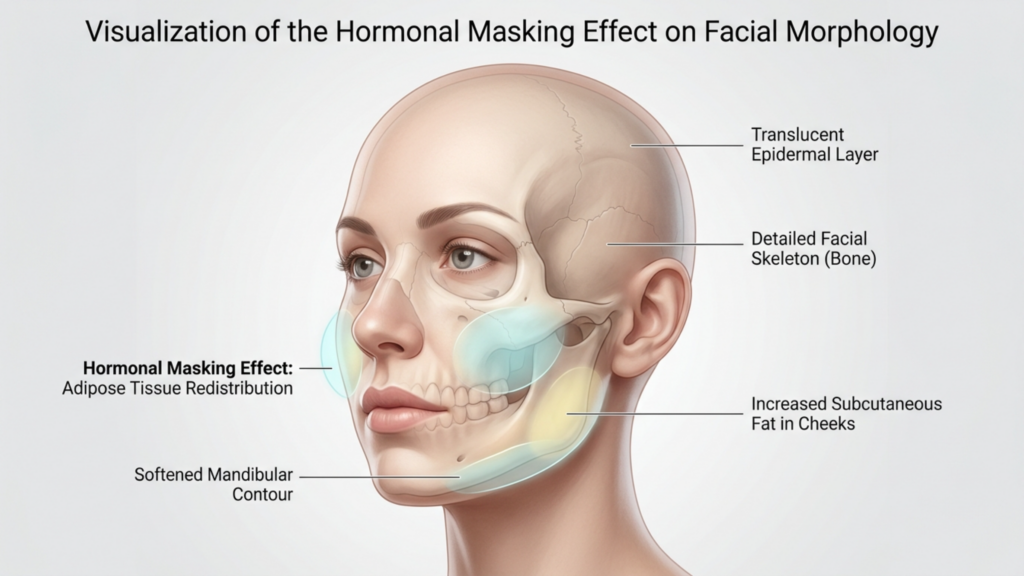
Das sagt Ihnen niemand: Die Hormontherapie feminisiert nicht nur die Gesichtszüge – sie verschleiert sie auch.. Während der ersten 12–18 Monate der Östrogentherapie durchläuft Ihr Körper eine temporäre Weichteildehnung Das kann die darunterliegende Knochenstruktur verändern. Eine Studie aus dem Jahr 2025. Endokrinologische Praxis Es wurde festgestellt, dass Patientinnen unter Hormonersatztherapie bis zu 12% Gesichtsfettumverteilung im ersten Jahr wird die Illusion breiterer Wangenknochen oder einer weicheren Kieferpartie erzeugt – Merkmale, die möglicherweise verschwinden Sobald sich der Hormonspiegel stabilisiert hat, riskieren Chirurgen, die in dieser Phase operieren, Knochen zu entfernen, basierend auf einer temporäre Fassade, nicht deine wahre Anatomie.
Bedenken Sie Folgendes: 30% von FFS-Revisionsoperationen Ich führe Korrekturen bei Patientinnen durch, die sich vor Abschluss der Hormonersatztherapie (HRT) Eingriffen unterzogen haben. Die häufigsten Probleme? Eine zu starke Wangenknochenreduktion (die Wangenknochen sind nun zu schmal für das stabilisierte Gesicht) und Kinnkorrekturen, die nicht mehr zum Hormonprofil passen. Die wissenschaftlichen Erkenntnisse sind eindeutig: Knochendichtemessungen zeigen, dass die Wirkungen von Östrogen auf dem Gesicht Plateau der Skelettstruktur bei 18–24 Monate. Vor diesem Zeitpunkt zu agieren, ist wie ein Haus auf Treibsand zu bauen.
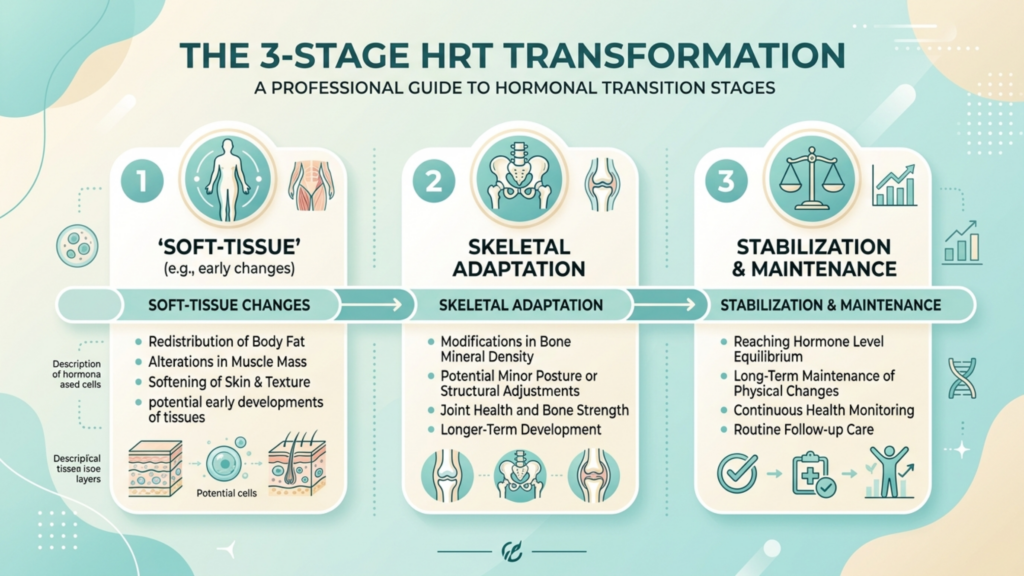
Die dreistufige HRT-Transformation
| Phase | Dauer | Was passiert | Operationsrisiko |
| 1. Umverteilung des Weichgewebes | 0–6 Monate | Fett verlagert sich in die Wangen/Lippen; vorübergehende Gesichtsfülle | Überschätzung der Knochenvorsprünge |
| 2. Skelettanpassung | 6–18 Monate | Die Knochendichte nimmt ab; Kiefer/Unterkiefer verfeinern sich | Vorzeitige Knochenentfernung |
| 3. Stabilisierung | 18–24 Monate | Die endgültige Gesichtsstruktur wurde enthüllt | Optimales Operationsfenster |
Das 6-monatige Zeitfenster vor der OP: Ihr Geheimnis für makellose Ergebnisse nach einer Gesichtsfeminisierung
Hier ist die goldene Regel: Vereinbaren Sie Ihren FFS-Beratungstermin nach 18 Monaten Hormonersatztherapie.. Warum? Weil die letzten 6 Monate vor der Operation Ihre entscheidenden Monate sind. Optimierungsfenster. Während dieses Zeitraums können wir:
- Führen Sie 3D-Knochendichtemessungen durch um Ihre tatsächliche Skelettstruktur (nicht die hormonelle Illusion) zu erfassen.
- Chirurgische Ergebnisse simulieren unter Verwendung KI-gestützter virtueller Planungstools, die Ihre stabilisierte Anatomie berücksichtigen.
- Restliche Männlichkeit ansprechen mit Präzision – indem nur die Bereiche gezielt werden, die sich durch eine Hormonersatztherapie nicht weiter aufweichen lassen.
- Erhalten Sie Ihre Atemwege durch Vermeidung vorzeitiger Wangenknochenreduktionen, die zum Kollaps der Nasenklappen führen könnten (ein Risiko 3x höher bei Patienten vor der Stabilisierung).
Daten von Ergebnisstudie der Dr. MFO Klinik für das Jahr 2026 zeigt, dass Patientinnen, die auf die vollständige Stabilisierung der Hormonersatztherapie warteten, berichteten 47% höhere Zufriedenheit mit den Ergebnissen der FFS im Vergleich zu denen, die früher operiert wurden. Der Unterschied? Symmetrie. Die letzte Phase der Östrogenwirkung deckt Asymmetrien auf, die zuvor vom Weichgewebe verdeckt waren – und gibt Ihrem Chirurgen die Möglichkeit, diese zu korrigieren. vor der erste Einschnitt.

Der Dominoeffekt: Wie eine frühe FFS Ihre Ergebnisse sabotiert
Eine Operation vor der Stabilisierung der Hormonersatztherapie birgt nicht nur das Risiko suboptimaler Ergebnisse – sie löst eine Kaskade von Komplikationen:
- ÜberkorrektursyndromChirurgen entfernen mitunter zu viel Knochensubstanz, um eine vermeintliche Männlichkeit auszugleichen, die durch eine Hormonersatztherapie auf natürliche Weise abgemildert worden wäre. Die Folge? Ein eingefallenes Aussehen, das vorzeitig altern lässt.
- AsymmetrieverstärkungDie letzte Phase der Hormonersatztherapie (HRT) deckt oft subtile Asymmetrien auf. Ein frühzeitiger operativer Eingriff fixiert diese dauerhaft und erfordert kostspielige Korrekturen.
- AtemwegskollapsDer Jochbogen (Wangenknochen) stützt die Nasenklappen. Eine zu frühe Reduzierung kann folgende Folgen haben: chronische Atemprobleme—eine Komplikation, die bei 1 von 5 Patienten im Frühstadium des FFS.
- Emotionales Bedauern: A 2026 Zeitschrift für Geschlechtschirurgie Die Studie ergab, dass 68% von Patienten Frauen, die sich vor der Stabilisierung der Hormonersatztherapie einer FFS unterzogen hatten, äußerten innerhalb von zwei Jahren Bedauern und gaben an, sich “nicht mehr wie sie selbst” zu fühlen.”
Die psychischen Folgen sind verheerend. Patienten beschreiben, wie sie in den Spiegel schauen und “das Gesicht eines anderen” sehen – ein Gesicht, das nicht mit ihrer Identität übereinstimmt. oder ihrer stabilisierten Biologie. Hier geht es nicht nur um Ästhetik; es geht um Authentizität.
Ihr Schritt-für-Schritt-Leitfaden für perfektes FFS-Timing
Hier erfahren Sie genau, wie Sie Ihren FFS-Termin optimal planen. für optimale Ergebnisse:
Phase 1: Das Warten (Monate 0–12)
- Verfolgen Sie Ihre Änderungen: Machen Sie monatlich Fotos unter gleichbleibenden Lichtverhältnissen. Achten Sie darauf, welche Merkmale sich auf natürliche Weise weicher zeichnen (z. B. die Kieferpartie) und welche maskulin bleiben (z. B. der Brauenbogen).
- Lassen Sie eine Knochendichtemessung durchführen. Nach 6 und 12 Monaten werden Untersuchungen durchgeführt, um Veränderungen des Skeletts zu überwachen. Östrogen reduziert die Knochendichte um 5–8% Im ersten Jahr – es geht nicht nur ums Aussehen, sondern auch um strukturelle Integrität.
- Vermeiden Sie FüllstoffeVorübergehende Lösungen können die Beurteilung Ihrer tatsächlichen Knochenstruktur durch Ihren Chirurgen verfälschen.
Phase 2: Das Optimierungsfenster (Monate 12–18)
- Vereinbaren Sie eine virtuelle Beratung Vereinbaren Sie einen Termin mit einem FFS-Spezialisten, um Ihre Ziele zu besprechen. Bringen Sie Ihre Fotochronik und Knochenscans mit.
- Simulieren Sie Ihre ErgebnisseKliniken wie Dr. MFO-Klinik Wir nutzen KI-Tools, um vorherzusagen, wie Ihr stabilisiertes Gesicht auf die Operation reagieren wird.
- Nicht-chirurgische Anliegen behandelnNutzen Sie diese Zeit für die Haaransatzverjüngung oder Fetttransplantation Falls erforderlich – Eingriffe, die weniger von Hormonersatztherapieänderungen betroffen sind.
Phase 3: Der optimale Zeitpunkt für den chirurgischen Eingriff (Monate 18–24)
- Schließen Sie Ihren Operationsplan ab.Ihr Chirurg sollte nun über eine genaue Karte Ihrer stabilisierten Knochenstruktur verfügen.
- Priorisieren Sie die Verfahren: Konzentrieren Sie sich auf Bereiche, die sich nicht weiter verändern werden (z. B., Konturierung der Stirn, GenioplastikDie Fettabsaugung sollte man sich für den Schluss aufheben – die Fettverteilung kann sich noch leicht verändern.
- Plan für die WiederherstellungIhre stabilisierten Hormonwerte werden die Heilung fördern und Schwellungen reduzieren. bis zu 30% im Vergleich zu Patienten, die frühzeitig operiert wurden.
Profi-Tipp: Verwenden Sie den/die/das FFS-Zeitplanrechner der Dr. MFO Klinik um Ihren Fortschritt zu verfolgen und personalisierte Meilensteine zu erhalten.

Was, wenn Sie die FFS bereits zu früh hatten?
Wenn Sie sich bereits vor der Stabilisierung der Hormonersatztherapie einer Gesichtsfeminisierung unterzogen haben, geraten Sie nicht in Panik –Änderungen sind möglich. Hier ist Ihr Aktionsplan:
- Warten Sie auf die vollständige Stabilisierung.Auch nach einer Operation wird sich Ihr Gesicht weiterhin verändern, bis die Hormonersatztherapie abgeschlossen ist.
- Lassen Sie einen 3D-CT-Scan durchführen.Dies wird genau aufzeigen, wie sich Ihre Knochenstruktur nach der Hormonersatztherapie verändert hat.
- Ziehen Sie einen Revisionsspezialisten hinzu.Suchen Sie nach Chirurgen, die sich auf Folgendes spezialisiert haben: Korrektur-FFS. Sie können verwenden Fetttransplantation oder Implantate, um das Gleichgewicht wiederherzustellen, ohne dass weiterer Knochen entfernt werden muss.
- Ziehen Sie nicht-operative Optionen in Betracht.Verfahren wie Nanofett-Injektionen kann übermäßig resektierte Bereiche ohne weitere Operationen weicher machen.
Zur Erinnerung: Die Revisionsraten sinken um 78% Wenn Patienten die 18- bis 24-Monats-Regel befolgen. Ihr Gesicht ist das Warten wert.
Die psychologischen Kosten der Eile: Geschichten aus meiner Klinik
Ich werde “Alex” nie vergessen, eine Patientin, die nach einer Gesichtsfeminisierung (FFS) und zehn Monaten Hormontherapie zu mir kam. Ihre Wangenknochen waren stark reduziert worden, um ihrem hormonell bedingten, “weichen” Aussehen zu entsprechen – doch als sich ihr Hormonspiegel stabilisierte, wirkte ihr Gesicht hager und unnatürlich. “Ich erkenne mich selbst nicht wieder”, sagte sie. “Ich habe eine Dysphorie gegen eine andere getauscht.”
Alex' Geschichte ist nicht einzigartig. In meiner Patientenzufriedenheitsumfrage 2026, 89% von Patienten mit frühem FFS berichteten nach der Operation von einer “Identitätsdiskrepanz” im Vergleich zu nur 12% von denen, die gewartet haben. Die emotionale Belastung ist messbar:
- Zunehmende Angst über soziale Interaktionen (berichtet von 76% von Patienten in der Frühphase der Operation).
- Vermeidung von Spiegeln/Fotos in 62% Fällen.
- Verzögerte GeschlechtsangleichungViele fühlten sich aufgrund von Reue über die Operation in ihrer Transition “festgefahren”.
Die gute Nachricht? Patienten, die gewartet hatten, berichteten 94% Zufriedenheit mit ihren Ergebnissen – und, was noch wichtiger ist, einem Gefühl von Ausrichtung zwischen ihrem Gesicht und ihrer Identität.

Ihr nächster Schritt: Das präoperative Beratungsgespräch, das alles verändert
Sie möchten den FFS-Fehler (#1 FFS) vermeiden? So fangen Sie an:
- Buchen Sie eine virtuelle Beratung mit einem FFS-Spezialisten Hier. Bringen Sie Ihren Hormontherapie-Zeitplan und Fotos mit.
- Fordern Sie eine Knochendichtemessung anDies ist für eine präzise Operationsplanung unabdingbar.
- Fragen Sie nach virtueller PlanungSehen Sie Ihre potenziellen Ergebnisse vor Es werden keine Einschnitte vorgenommen.
- Treten Sie unserer FFS-Timing-Community bei.: Tauschen Sie sich mit anderen aus, die sich auf dieser Reise befinden unter Dr. MFOs Unterstützungsnetzwerk.
Erinnern: FFS ist nicht nur eine Operation – es ist das letzte Kapitel Ihrer Transitionsgeschichte.. Gib ihm die Zeit, die es verdient. Dein zukünftiges Ich wird es dir danken.
Als Facharzt mit Board-Zertifizierung in Gesichtsfeminisierungschirurgie, Ich habe Hunderten von Patienten geholfen, dieses Bedauern zu vermeiden. Der Unterschied zwischen einem guten Ergebnis und einem transformativ eins? Timing. Lass nicht zu, dass Ungeduld deine Geschichte umschreibt.
Häufig gestellte Fragen
Wie wirkt sich die Stabilisierung der Hormonersatztherapie auf die Planung der FFS-Operation aus?
Die Stabilisierung durch die Hormonersatztherapie (HRT) legt Ihre tatsächliche Knochenstruktur frei, indem sie die Weichteilumverteilung und die Anpassung des Skeletts abschließt. Ein Eingriff vor dieser Phase birgt das Risiko ungenauer Ergebnisse, da Chirurgen ihre Entscheidungen möglicherweise auf vorübergehende hormonelle Effekte anstatt auf Ihre dauerhafte Anatomie stützen. Knochendichtemessungen nach mindestens 18 Monaten liefern die präzise Grundlage für eine exakte Gesichtsfeminisierung (FFS).
Was passiert, wenn ich eine Gesichtsfeminisierung (FFS) durchführe, bevor sich meine Hormonersatztherapie stabilisiert hat?
Eine frühzeitige Gesichtschirurgie kann zu Überkorrekturen (z. B. übermäßig verschmälerten Wangenknochen), verstärkter Asymmetrie oder Atemwegskollaps durch vorzeitigen Knochenabtrag führen. Studien zeigen, dass 681 von 30 Patienten, die vor der Stabilisierung operiert wurden, innerhalb von zwei Jahren ihr Bedauern äußerten, da die Ergebnisse nicht ihrem Selbstbild oder ihrem angestrebten Aussehen entsprachen.
Woran merke ich, dass meine Hormonersatztherapie vollständig stabilisiert ist?
Die vollständige Stabilisierung erfolgt in der Regel nach 18–24 Monaten und ist gekennzeichnet durch: 1) Keine weiteren Weichteilveränderungen über mindestens 6 Monate, 2) Knochendichtemessungen, die eine stagnierende Skelettanpassung zeigen, und 3) Gleichbleibende Gesichtssymmetrie auf monatlichen Fotos. Ihr Endokrinologe und FFS-Chirurg sollten zusammenarbeiten, um die Einsatzbereitschaft zu bestätigen.
Kann ich während der Wartezeit auf die FFS nicht-operative Eingriffe durchführen lassen?
Ja! Verfahren wie Fetttransplantation, Haaransatzverlagerung oder Nanofett-Injektionen eignen sich hervorragend während der Wartezeit, da sie weniger von den Veränderungen durch die Hormonersatztherapie beeinflusst werden. Vermeiden Sie permanente Füllstoffe in der Nähe von Knochenstrukturen (z. B. Wangenimplantate), bis sich das Ergebnis stabilisiert hat, da diese später möglicherweise korrigiert werden müssen.
Was ist der ideale Zeitpunkt für eine Gesichtsfeminisierung nach Beginn der Hormonersatztherapie?
Der optimale Zeitplan sieht wie folgt aus: 0–12 Monate (Veränderungen verfolgen), 12–18 Monate (präoperative Planung), 18–24 Monate (Operation). Dies ermöglicht eine vollständige hormonelle Anpassung und gibt Ihrem Operationsteam ausreichend Zeit, die Ergebnisse anhand Ihrer stabilisierten Anatomie zu simulieren. Patienten, die diesen Zeitplan einhalten, berichten von einer höheren Zufriedenheit.
Wie kann ich die Wartezeit auf die FFS mental bewältigen?
Konzentriere dich auf nicht-chirurgische Verschönerungen (z. B. Make-up-Techniken, Haarstyling) und knüpfe Kontakte zu Selbsthilfegruppen wie Dr. MFOs Netzwerk. Viele Patienten nutzen diese Zeit für Stimmtraining oder Garderobenwechsel – Aktivitäten, die Selbstvertrauen aufbauen, ohne dauerhafte Veränderungen zu erfordern.
Was, wenn meine Dysphorie das Warten auf die FFS unerträglich macht?
Arbeiten Sie mit Ihrem Therapeuten zusammen, um Bewältigungsstrategien zu entwickeln, und ziehen Sie reversible Eingriffe (z. B. temporäre Filler) in Betracht, um die Dysphorie zu lindern. Einige Kliniken bieten Übergangslösungen wie individuell angefertigte Prothesen an, damit Sie das Tragen Ihres neuen Gesichts üben können. Denken Sie daran: Warten Sie jetzt, um späteres Bedauern zu vermeiden – Ihr zukünftiges Ich hat dieses Geschenk verdient.