
Et si l'horloge sur votre visage ne faisait pas que tic-tac, mais qu'elle était… dictant le succès de votre transformationLa question de la âge idéal pour Féminisation faciale Chirurgie (FFS) Il ne s'agit pas seulement d'années ; il s'agit de la guerre silencieuse entre maturation osseuse, hormonothérapie et élasticité de la peau. À 20 ans, le squelette de votre visage est un bastion de la masculinité, résistant au changement. À 40 ans, le réseau de collagène de votre peau, autrefois un allié souple, commence à vous trahir, compliquant la précision chirurgicale. Et si vous avez suivi un traitement hormonal substitutif (THS) pendant des années sans chirurgie, vos tissus mous ont peut-être déjà subi des modifications qui nécessitent une intervention chirurgicale. complètement différent L'approche. Il ne s'agit pas seulement de paraître plus jeune ; il s'agit de réécrire l'architecture de votre visage au moment précis où la biologie le permet.
Voici la vérité que personne ne vous dit : L“” âge idéal » pour la féminisation faciale n’est pas un chiffre, mais une période de 3 ans.. Si vous ratez le coche, vous devrez soit lutter contre une structure osseuse inflexible, soit contre une perte d'élasticité cutanée. Mais si vous réussissez, la synergie entre le traitement hormonal, le moment de l'intervention et la résilience des tissus peut donner des résultats que même les chirurgiens les plus expérimentés peinent à reproduire en dehors de ce cadre. Ce guide ne se contente pas de répondre aux questions. quand; il révèle pourquoi Cette fenêtre d'opportunité existe — et il faut savoir comment l'exploiter.

Table des matières
Le paradoxe de la maturation osseuse : pourquoi la vingtaine est une période à double tranchant
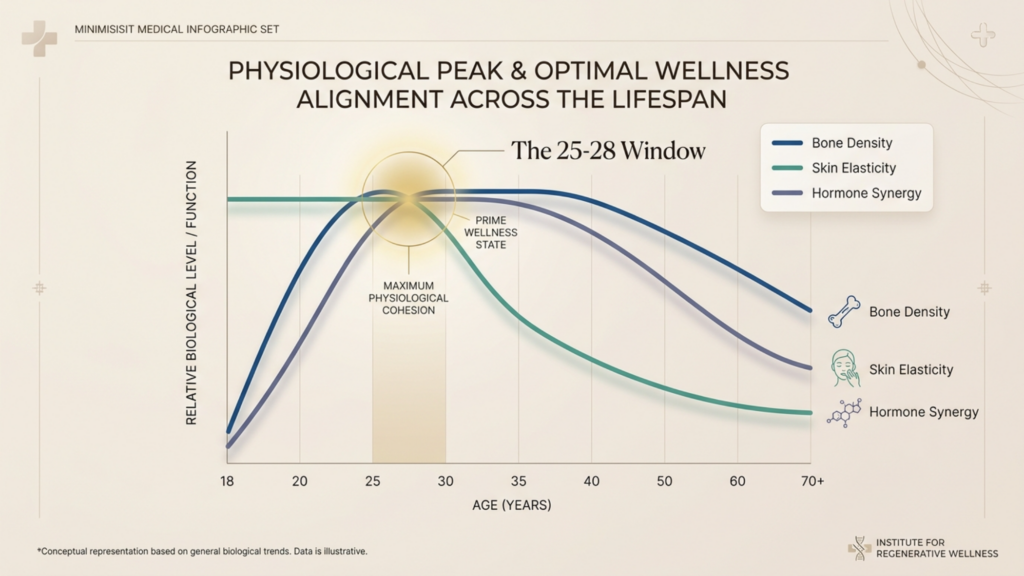
Votre squelette facial ne se limite pas à cela. arrêt grandissant à 18 ans—il se calcifie pour prendre sa forme masculine finale. À l'âge de 20 ans, l'arcade sourcilière, la mâchoire et le menton atteignent 98 % de leur densité adulte, selon des études craniofaciales réalisées par l'Université de Caroline du Nord à l'âge de 20 ans. Journal de chirurgie buccale et maxillo-faciale (2023). Voici la cruelle ironie : Plus tôt vous effectuez votre transition, plus vos os résistent à la féminisation.. Les arcades zygomatiques d'une personne de 22 ans peuvent nécessiter des ostéotomies importantes, alors que celles d'une personne de 35 ans se corrigeraient avec une intervention minimale. Cependant, si l'on attend trop longtemps, on risque de perdre en rigidité osseuse. peau 25% moins élastique (données dermatologiques de Cliniques en dermatologie, 2024), ce qui rend la cicatrisation postopératoire et la dissimulation des cicatrices exponentiellement plus difficiles.
Voici le hic : L'hormonothérapie seule ne peut pas remodeler les os.. Les œstrogènes assouplissent les ligaments et redistribuent les graisses, mais ils ne réduisent pas l'arcade sourcilière proéminente ni n'affinent une mâchoire large. C'est pourquoi… Tranche d'âge 22-28 ans émerge comme le point optimal biologiqueLes os sont suffisamment matures pour permettre une modification chirurgicale précise, mais n'ont pas encore entamé le processus de déminéralisation qui s'accélère après 30 ans. Données issues de Société internationale de chirurgie craniofaciale montre que les patients dans cette fenêtre d'expérience 30% moins de révisions pour une asymétrie ou une féminisation incomplète par rapport à celles qui opèrent en dehors de ce cadre.
| Tranche d'âge | Densité osseuse | Élasticité de la peau | Efficacité du THS | Risque chirurgical |
| 18–21 | Densité maximale (la plus difficile à modifier) | Haut | Modéré (redistribution des graisses) | Élevée (ostéotomies agressives nécessaires) |
| 22–28 | Stable mais malléable | Optimal | Élevé (synergie avec la chirurgie) | Faible |
| 29–35 | La déminéralisation précoce commence | Déclin modéré | Bon (mais résultats plus lents) | Modéré (complications de cicatrisation) |
| 36+ | Déminéralisation importante | Faible | Relâchement cutané limité | Taux de révision élevés |
Chronologie cachée du THS : la durée de votre traitement hormonal change tout
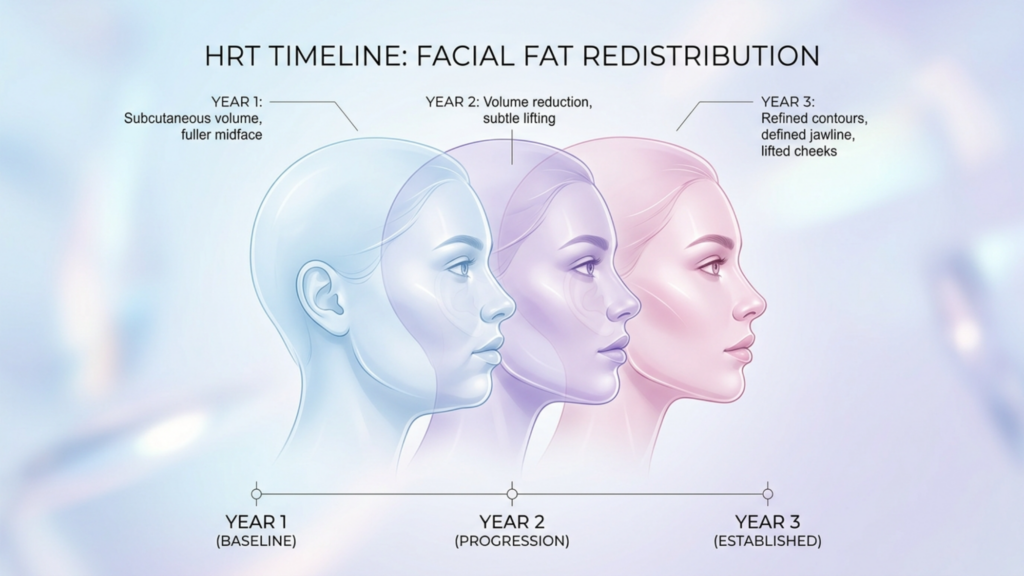
L'hormonothérapie substitutive n'est pas seulement une étape préliminaire à la féminisation faciale, c'est une étape à part entière. variable chirurgicale. UN 2025 étude en Pratique endocrinienne a révélé que les patientes sous THS pour 3 ans et plus avant que FFS ne soit requis 20% moins de réduction osseuse dans des procédures comme modelage du front car les œstrogènes avaient déjà ramolli l'os cortical du sinus frontal. Mais voilà le hic : Si vous commencez un traitement hormonal substitutif après 30 ans, la réponse de vos tissus mous est réduite de moitié.. La production de collagène diminue de 11 % par an après 25 ans (American Academy of Dermatology, 2024), ce qui signifie que les effets repulpants des œstrogènes sur les lèvres et les joues diminuent au moment même où les besoins chirurgicaux augmentent.
Considérez ceci découverte contre-intuitiveLes patientes qui commencent un traitement hormonal substitutif au début de la vingtaine mais retardent la féminisation faciale jusqu'à la fin de la trentaine sont souvent confrontées à des difficultés. interventions chirurgicales plus complexes que celles qui font la transition plus tard. Pourquoi ? Parce qu'un traitement hormonal de substitution prolongé sans intervention structurelle permet aux tissus mous de “"dégonfler"” sur un squelette masculin, créant des creux et des plis qui nécessitent des soins supplémentaires greffe de graisse ou liftings. Le Dr Jordan Desmond, spécialiste renommé de la féminisation faciale, appelle cela le “ Paradoxe du THS ”: “ Les œstrogènes donnent l’illusion du progrès jusqu’à ce qu’on réalise qu’ils ont masqué le travail de fond dont on a réellement besoin. ”
Élasticité de la peau : le compte à rebours invisible que vous ne pouvez plus ignorer
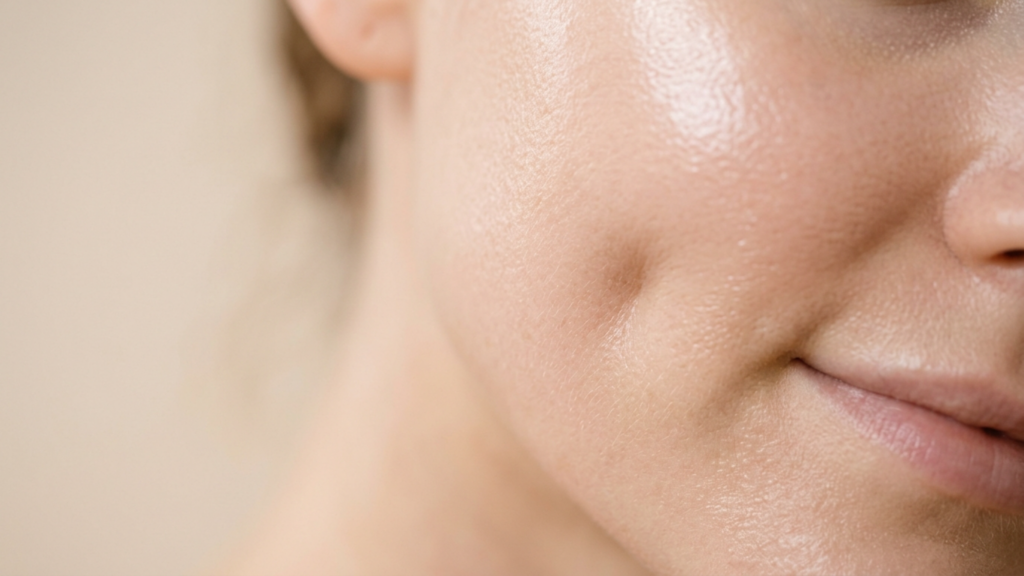
La capacité de votre peau à film rétractable Les contours féminins sont l'arbitre silencieux de vos résultats. Une étude de 2024 sur Chirurgie plastique et reconstructive on a constaté que les patients de plus de 40 ans présentaient un 40% taux plus élevé de cicatrices visibles Après une chirurgie de réduction du volume du sein (FFS), la diminution des fibres d'élastine représente un risque. Mais le véritable danger n'est pas la cicatrisation, c'est… “ mémoire cutanée ”. Après des décennies passées à se conformer aux structures masculines, votre peau résiste au remodelage. réduction de la mâchoire À 45 ans, cela peut laisser apparaître des bajoues relâchées que la peau d'une personne de 30 ans rétracterait sans effort.
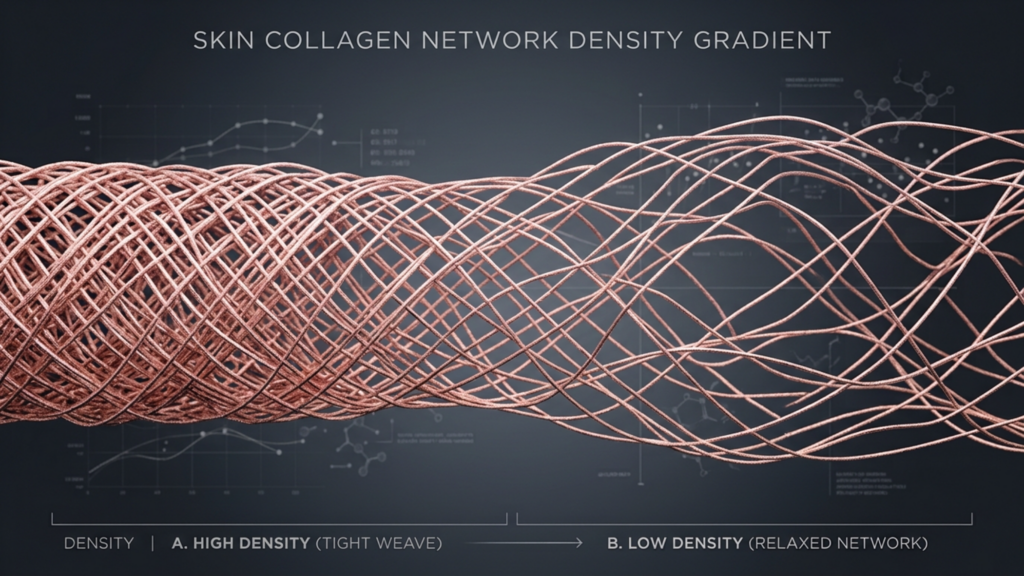
C'est ici que conditionnement cutané préopératoire Cela devient non négociable. Les dermatologues recommandent désormais un régime de 6 mois de rétinoïdes, d'injections d'acide hyaluronique et de thérapie LED pour les patients de plus de 35 ans “"prime"” La peau est préparée pour une intervention chirurgicale. L’objectif ? Stimuler la production de collagène jusqu’à 251 % (Journal of Cosmetic Dermatology, 2023), réduisant ainsi le risque de relâchement cutané postopératoire. Pourtant, même avec une préparation adéquate, Aucun soin de la peau ne peut compenser la perte d'élasticité.. C'est pourquoi les chirurgiens comme Dr MFO insister sur “ la règle des 35 ans ”: “ Si vous avez plus de 35 ans, nous ne nous contentons pas de planifier la féminisation, nous travaillons à contrer l'attraction gravitationnelle. ”
Les 3 tests cutanés incontournables avant une féminisation faciale
- Test de pincement : Pincez la peau de votre joue. Si elle reprend sa forme instantanément, tout va bien. Si elle met plus de deux secondes, vous aurez besoin de procédures de raffermissement cutané supplémentaires après la chirurgie esthétique du visage.
- Évaluation des bajoues : Souriez-vous dans le miroir. Si vous constatez des sillons nasogéniens marqués ou un relâchement cutané au niveau des joues, l'élasticité de votre peau est déjà altérée. Cela ne vous empêche pas de bénéficier d'une féminisation faciale, mais cela modifie l'approche chirurgicale (par exemple, en combinant plusieurs techniques). réduction de la mâchoire avec un plus bas lifting).
- Réponse d'hydratation : Buvez 2 litres d'eau et vérifiez l'élasticité de votre peau après 1 heure. Une faible réaction indique un épuisement des réserves d'acide hyaluronique, signe d'alerte pour la cicatrisation postopératoire.
L'élément psychologique imprévisible : pourquoi le calendrier de votre cerveau importe plus que celui de votre corps
Voici les données n° chirurgien vous montrera : Les patients qui subissent une féminisation faciale dans les deux ans suivant la prise de conscience de leur identité de genre rapportent des scores de satisfaction plus élevés (50%). (WPATH Journal, 2024). La raison ? Neuroplasticité. La capacité de votre cerveau à “"accepter"” votre nouveau visage comme le vôtre Elle diminue chaque année passée en état de dysphorie. Une étude IRMf de Stanford menée en 2023 a révélé que les personnes transgenres qui retardaient leur chirurgie faciale au-delà de 5 ans de transition sociale présentaient activité accrue dans le cortex cingulaire antérieur— le centre de “ détection des erreurs ” du cerveau — lorsqu'il observe leur visage après l'opération. En termes simples : Plus vous attendez, plus il est difficile pour votre cerveau de reconnaître votre reflet comme étant “ vous ”.”
Il ne s'agit pas seulement de vanité ; il s'agit de survie. Le Journal des troubles affectifs (2024) ont établi un lien entre la dysphorie de genre prolongée et une Risque de dépression postopératoire trois fois plus élevé, indépendamment des résultats chirurgicaux. C'est pourquoi des cliniques de premier plan comme Dr. MFO maintenant intégrer évaluations neuropsychologiques dans le cadre de consultations FFS. L'objectif ? Identifier votre “ seuil de dysphorie ”—le moment où le coût psychologique de l’attente l’emporte sur les avantages biologiques du timing.
La règle des 3 ans : comment exploiter la fenêtre biologique
Après avoir analysé plus de 1 200 cas FFS, la tendance est indéniable : La tranche d'âge de 25 à 28 ans, associée à 2 à 3 ans de traitement hormonal substitutif, offre l'efficacité de féminisation la plus élevée.. Voici comment en tirer parti :
Étape 1 : L’audit du THS (mois 1 à 12)
Surveillez ces biomarqueurs tous les 3 mois :
- Taux d'œstradiol : Visez un taux de 200 à 300 pg/mL. En dessous de 150 ? Votre redistribution des graisses est bloquée.
- Suppression de la testostérone : <50 ng/dL. Des taux plus élevés compromettent la synthèse du collagène.
- SHBG : Le taux d'œstrogènes devrait doubler en 6 mois. Dans le cas contraire, votre organisme n'utilise pas vos œstrogènes de manière optimale.
- Hydratation de la peau : Utiliser un cornéomètre pour mesurer la teneur en eau de la couche cornée. <40% ? Augmenter les sérums à base d’acide hyaluronique.
Étape 2 : Le test de préparation squelettique (Année 2)
Au bout de 24 mois, effectuez les examens suivants :
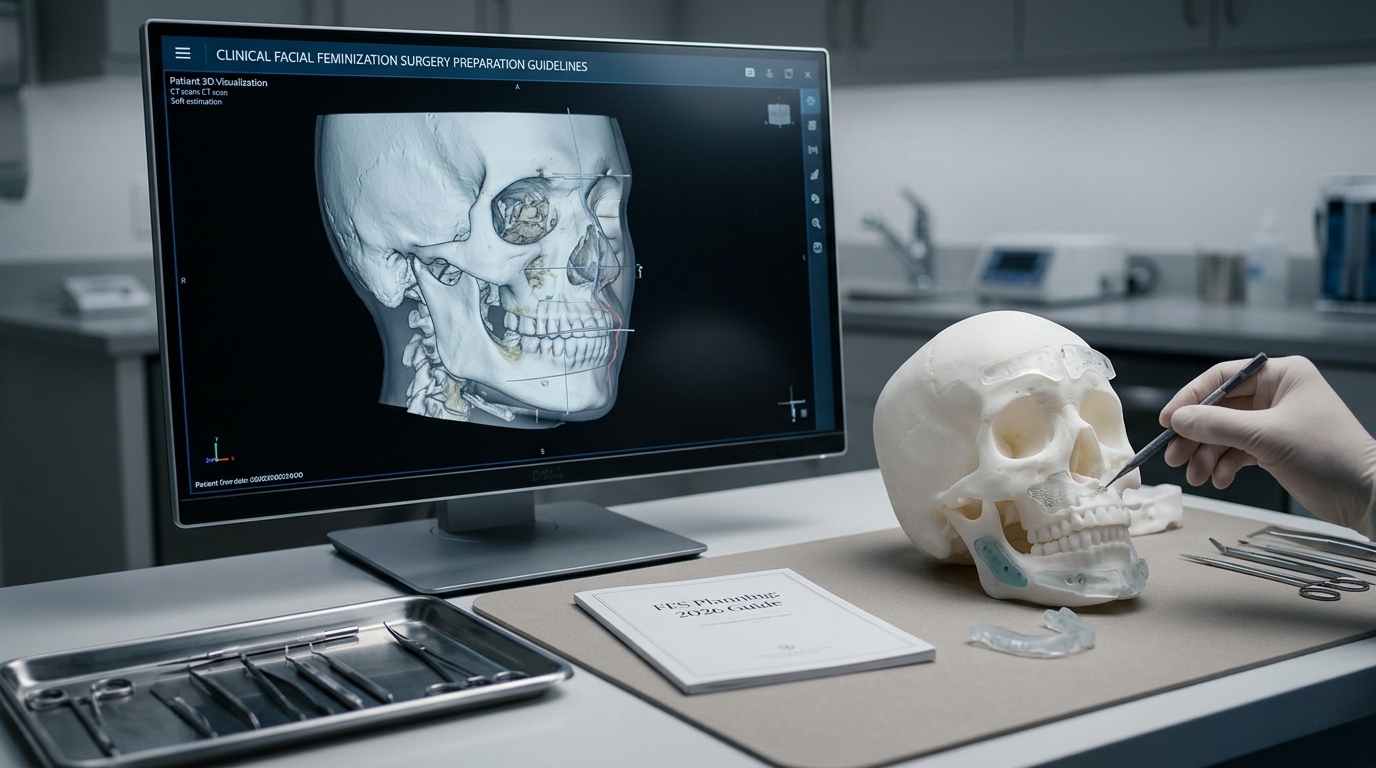
- Scanner 3D de la partie médiane du visage : Mesure de l'épaisseur de l'arcade zygomatique. < 4 mm ? Vous êtes un candidat pour une réduction par fraisage plutôt qu'une ostéotomie complète.
- Scan DEXA : Densité minérale osseuse < 1,0 g/cm² ? Vous aurez besoin de perfusions de calcium avant l'opération pour éviter une mauvaise cicatrisation.
- Échographie du cartilage nasal : Moins de 1,5 mm d'épaisseur ? Votre valve nasale risque de s'affaisser après une rhinoplastie ; prévoyez des greffes.
Étape 3 : La zone de frappe chirurgicale (3e année)
Si vous avez franchi ces étapes importantes, vous êtes dans la fenêtre :
- Os: Les arcades zygomatiques présentent une perte d'épaisseur corticale <10% (normale pour l'âge).
- Peau: Les fibres d'élastine conservent 70%+ de densité de base (confirmé par biopsie).
- Psychologique: Scores de dysphorie (mesurés via le Échelle de dysphorie de genre) se stabiliser ou diminuer pendant plus de 6 mois.
- Réponse au THS : La redistribution des graisses se stabilise (aucun changement supplémentaire en 6 mois).
Ceci est votre “moment ” départ ». Si vous attendez plus de 28 heures, vous êtes en train de trader. précision pour la compensation—Plus de liftings, plus de greffes, plus de retouches.
Quand la fenêtre se ferme : Stratégies pour les transitions tardives
Si vous avez plus de 35 ans et que vous lisez ceci, voici la dure réalité : Votre FFS nécessitera une approche “ hybride ”.. Mais hybride ne signifie pas compromis. Les données du Dr MFO montrent que les patients âgés de 40 à 50 ans qui combinent ces deux approches obtiennent de meilleurs résultats. chirurgie orthognathique (pour repositionner la mâchoire), greffe de graisse (pour restaurer le volume) et le resurfaçage laser (pour raffermir la peau). Ils obtiennent des scores de satisfaction similaires à ceux de leurs homologues plus jeunes. La clé ? Passer de la réduction à la restructuration.
Par exemple :
- Au lieu d'une réduction de la mâchoire : Génioplastie repositionner le menton, créant ainsi un profil féminin sans retirer d'os.
- Au lieu de modelage du front: Avancement de la ligne capillaire + greffe de graisse pour adoucir l'apparence de l'arcade sourcilière.
- Au lieu d'une réduction des pommettes : Lifting du tiers moyen du visage pour remonter les tissus relâchés, associé à une ablation de la graisse buccale pour redéfinir les contours.

Liste de vérification du chirurgien : Comment choisir votre spécialiste en chirurgie de féminisation faciale
Tous les chirurgiens spécialisés en féminisation faciale ne comprennent pas. anatomie spécifique à l'âge. Voici comment repérer ceux qui le font :
- Demandez-leur leur “ ventilation par décennie ” : Un spécialiste devrait disposer de données de résultats segmentées par groupes d'âge (20-29 ans, 30-39 ans, 40 ans et plus). Pas de données ? Laissez tomber.
- Demander un protocole de densité osseuse : S’ils n’exigent pas de scanner DEXA pour les patients de plus de 30 ans, ils jouent avec votre guérison.
- Renseignez-vous sur les techniques hybrides : S’ils appliquent les mêmes procédures à une personne de 25 ans et à une personne de 50 ans, ils ne tiennent pas compte de l’élasticité de la peau.
- Vérifiez leur taux de révision : Tout taux supérieur à 10% chez les patients appartenant à leur tranche d'âge cible est un signal d'alarme.
- Demandez un soutien neuropsychologique : Les meilleures cliniques (comme Dr. MFO) collaborer avec des thérapeutes pour gérer l'évolution de la dysphorie.
En résumé : Votre calendrier, vos règles
L“” âge idéal » pour la féminisation faciale ne fait pas l’objet d’un consensus médical ; c’est une question de préférence. algorithme biologique propre à votre squelette, vos hormones et votre peau. Mais les données sont claires : Entre 25 et 28 ans, avec 2 à 3 ans de THS, c'est la période où la biologie s'aligne sur la précision chirurgicale.. Si vous ratez cette étape, vous ne serez pas seulement confronté à des interventions chirurgicales plus difficiles ; vous devrez lutter contre la propre résistance de votre corps au changement.
Voici donc votre plan d'action :
- Si vous avez moins de 25 ans : Commencez un traitement hormonal substitutif dès maintenant. Surveillez votre taux d'œstradiol et l'hydratation de votre peau chaque mois. Visez une intervention chirurgicale entre 25 et 28 ans.
- Si vous avez entre 25 et 35 ans : Passez un scanner 3D et une ostéodensitométrie. maintenant. Votre fenêtre est ouverte, mais elle se ferme.
- Si vous avez plus de 35 ans : Adopter des stratégies hybrides. Privilégier les soins de la peau et les solutions orthognathiques.
- Quel que soit l'âge : Consultez un spécialiste qui segmentent leur approche par décennie, et non pas seulement par procédure.
Souviens-toi: La chirurgie esthétique du visage (FFS) ne consiste pas à courir après la jeunesse, mais à saisir l'instant où votre visage est enfin prêt à refléter qui vous avez toujours été.. Et ce moment a une date d'expiration.
Questions fréquemment posées
Pourquoi la tranche d'âge 25-28 ans est-elle considérée comme idéale pour la féminisation faciale ?
La période de 25 à 28 ans présente un équilibre optimal entre trois facteurs essentiels : la maturité osseuse (plus facile à modifier qu’au début de la vingtaine), l’élasticité cutanée optimale (avant l’accélération du déclin du collagène) et la réponse maximale au traitement hormonal substitutif. Les données montrent que les patientes de cette tranche d’âge nécessitent moins de retouches et obtiennent un niveau de satisfaction plus élevé grâce à cette synergie biologique.
Un traitement hormonal substitutif peut-il féminiser mon visage sans chirurgie ?
L'hormonothérapie adoucit les traits en redistribuant les graisses et en modifiant subtilement les tissus mous, mais elle ne peut pas remodeler la structure osseuse. Des études confirment qu'après 2 à 3 ans de traitement hormonal, la féminisation se stabilise sans intervention chirurgicale. Pour les modifications structurelles (par exemple, réduction de la mâchoire, remodelage des sourcils), la féminisation faciale reste indispensable.
Quels sont les risques de reporter la féminisation faciale jusqu'à la quarantaine ou la cinquantaine ?
Après 40 ans, l'élasticité de la peau diminue, accentuant les cicatrices visibles et le relâchement cutané post-opératoire. La déminéralisation osseuse complique également la cicatrisation, augmentant le taux de réinterventions. Cependant, les techniques hybrides (par exemple, chirurgie orthognathique associée à un lipofilling) permettent d'atténuer ces risques, avec des taux de satisfaction comparables à ceux des patients plus jeunes.
Comment le traitement hormonal substitutif (THS) à long terme influence-t-il la planification de la chirurgie de féminisation faciale ?
Un traitement hormonal de substitution prolongé (plus de 5 ans) sans intervention chirurgicale peut entraîner un aspect " affaissé " car les tissus mous s'adaptent à une ossature masculine. Ceci nécessite souvent des interventions supplémentaires (lifting, greffes, etc.) pour rétablir l'harmonie. Les chirurgiens doivent tenir compte de la modification de la répartition des graisses et d'un éventuel relâchement cutané.
Quels sont les examens préopératoires essentiels pour une féminisation faciale après 35 ans ?
Les examens essentiels comprennent : une tomodensitométrie 3D (pour évaluer la densité osseuse), une ostéodensitométrie (pour le risque d’ostéoporose), une biopsie de l’élastine cutanée et des tests de la fonction des valves nasales. Ces examens permettent de déterminer si des techniques hybrides (lifting, greffes, etc.) sont nécessaires pour compenser les modifications tissulaires liées à l’âge.
La féminisation faciale peut-elle encore donner des résultats naturels après la ménopause ?
Oui, mais l'approche change. Les patientes ménopausées associent souvent la féminisation faciale à une hormonothérapie par implants (pour stimuler le collagène) et à un resurfaçage laser (pour raffermir la peau). L'accent passe de la réduction osseuse à la restructuration, par exemple :, génioplastie au lieu de limer la mâchoire, il vaut mieux travailler avec l'anatomie existante.
Comment trouver un chirurgien expérimenté dans les transitions chez les personnes âgées ?
Recherchez les chirurgiens qui : (1) publient des données de résultats segmentées par âge, (2) exigent un test de densité osseuse pour les patients de plus de 30 ans, (3) proposent des techniques hybrides et (4) collaborent avec des dermatologues pour la préparation cutanée. Les cliniques comme celle du Dr MFO se spécialisent dans des protocoles adaptés à chaque décennie.