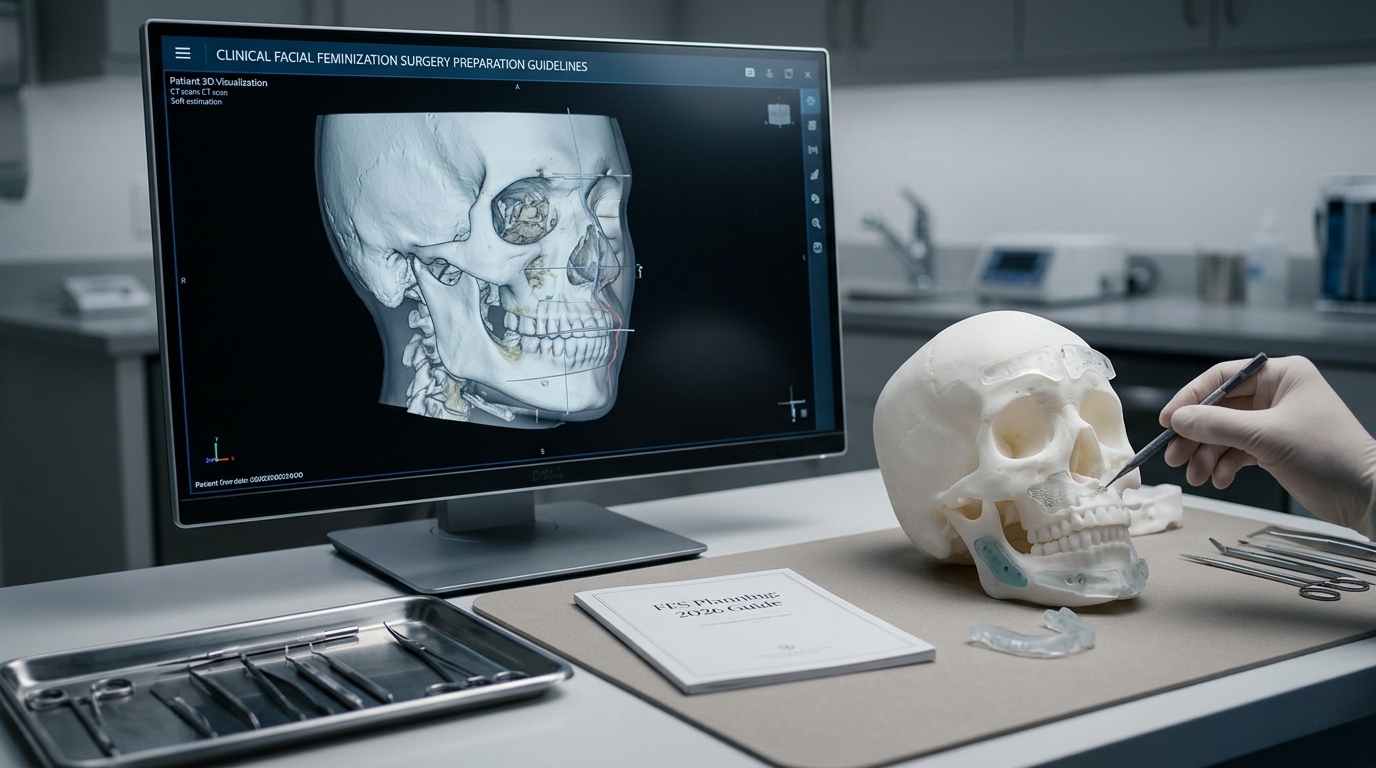

Féminisation faciale La chirurgie (FFS) ne concerne pas seulement l'esthétique, mais aussi l'alignement de votre apparence extérieure avec votre véritable identité. Pour les femmes transgenres et les personnes non binaires, une mâchoire masculine peut être une source persistante de dysphorie de genre. La mâchoire, avec ses contours anguleux et ses muscles masséters proéminents, représente souvent l'un des obstacles les plus tenaces à l'obtention d'une structure faciale plus douce, traditionnellement féminine. Et si vous pouviez la remodeler avec précision, sécurité et des résultats durables ?
Dans ce guide, nous explorerons les techniques chirurgicales les plus avancées pour la féminisation de la mâchoire, de la chirurgie esthétique à la chirurgie de la mâchoire. réduction de l'angle mandibulaire et ostéotomie du menton à réduction musculaire masséter— Appuyée par des études cliniques et l'expertise de spécialistes. Vous découvrirez le fonctionnement de ces interventions, leurs risques et le déroulement de la convalescence. À la fin de cet ouvrage, vous disposerez d'un plan d'action clair pour obtenir une mâchoire qui reflète votre personnalité.
Table des matières
La science derrière la féminisation des mâchoires : pourquoi c’est important
La mâchoire est un élément déterminant dans la perception du genre facial. Des études montrent que… mâchoire carrée ou large est souvent associé à la masculinité, tandis que mâchoire plus douce et effilée est perçue comme féminine (Albert & Choe, 2025). Cette différence n'est pas seulement superficielle : elle est ancrée dans la structure osseuse, la masse musculaire et même l'angle de la mandibule. Pour de nombreuses femmes transgenres, la féminisation de la mâchoire est une étape cruciale pour parvenir à une harmonie faciale et atténuer la dysphorie de genre.
Mais voilà le hic : Toutes les techniques de féminisation de la mâchoire ne se valent pas.. Certaines méthodes, comme le limage osseux agressif, peuvent entraîner des complications telles que des lésions nerveuses ou un aspect inesthétique. D'autres, comme la réduction non chirurgicale du masséter, offrent des résultats plus subtils mais nécessitent un suivi régulier. L'essentiel est de choisir la méthode la plus adaptée à votre anatomie, vos objectifs et votre mode de vie.
Techniques chirurgicales de féminisation de la mâchoire : une description étape par étape
1. Réduction de l'angle mandibulaire : remodelage de la mâchoire
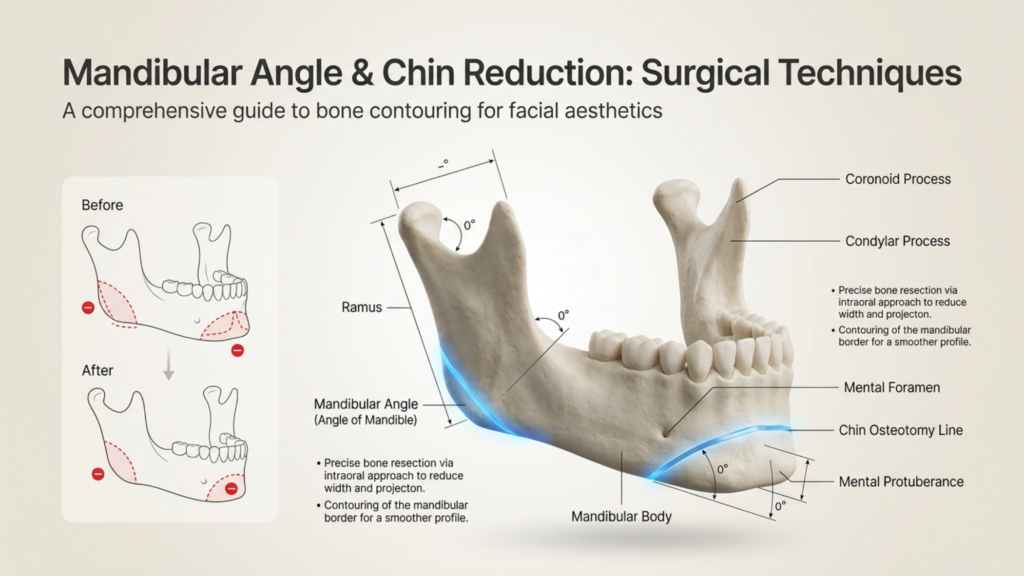
La réduction de l'angle mandibulaire est l'une des interventions les plus efficaces pour féminiser la mâchoire. Elle consiste à remodelage chirurgical des bords angulaires de la mâchoire inférieure Pour obtenir un visage plus harmonieux et affiné, cette technique est particulièrement efficace pour les personnes ayant une mâchoire carrée ou proéminente.
Comment ça marche :
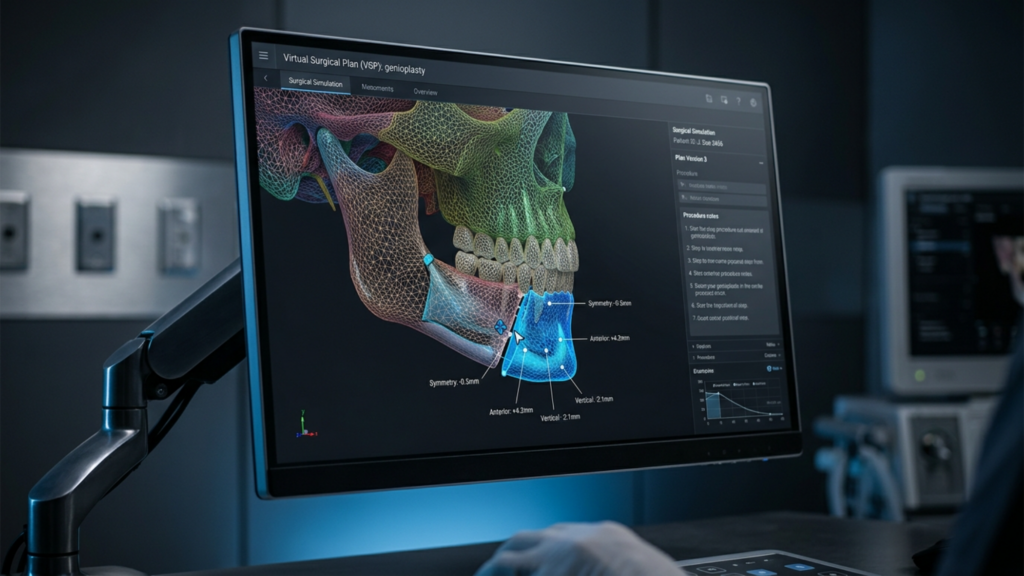
- Planification préopératoire : Un scanner 3D permet de cartographier l'anatomie de la mâchoire et de planifier avec précision les réductions osseuses. La planification chirurgicale virtuelle (PCV) garantit la précision et minimise les risques (Hiossen, 2025).
- Approche chirurgicale : Le chirurgien Le chirurgien pratique une incision à l'intérieur de la bouche (intra-orale) pour accéder à l'angle mandibulaire. À l'aide d'instruments spécialisés, il taille ou résèque délicatement l'os afin d'adoucir le contour de la mâchoire.
- Préservation des nerfs : Le nerf mental, La zone qui assure la sensibilité de la lèvre inférieure est méticuleusement protégée afin d'éviter tout engourdissement ou picotement après l'intervention chirurgicale.
- Fermeture: L'incision est refermée à l'aide de sutures résorbables, et un bandage compressif est appliqué pour réduire l'enflure.
Rétablissement et résultats : La plupart des patients présentent un gonflement et des ecchymoses pendant 1 à 2 semaines, les résultats définitifs étant visibles en 3 à 6 mois. Le résultat est un mâchoire plus douce et plus féminine qui se fond parfaitement avec le reste du visage.
Aperçu clinique : Une étude de 2025 publiée dans Frontières de la chirurgie Il a été constaté que les patients ayant subi une réduction de l'angle mandibulaire ont rapporté un Taux de satisfaction 92% avec leurs résultats, citant une meilleure harmonie faciale et une réduction de la dysphorie de genre (Frontiers in Surgery, 2025).
2. Ostéotomie du menton : Affinement du bas du visage
Le menton joue un rôle primordial dans l'équilibre du visage. menton carré ou proéminent peut masculiniser le bas du visage, tandis qu'un menton plus petit et plus effilé accentue la féminité. Ostéotomie du menton, ou génioplastie, est une intervention chirurgicale qui remodèle le menton pour obtenir une apparence plus douce et plus harmonieuse.
Comment ça marche :
- Évaluation préopératoire : Une analyse céphalométrique est réalisée afin de déterminer la position et la forme idéales du menton. Des outils de planification virtuelle permettent de simuler le résultat.
- Technique chirurgicale : Le chirurgien Il pratique une incision à l'intérieur de la bouche et coupe soigneusement l'os du menton. L'os est ensuite repositionné ou remodelé pour créer un contour plus féminin.
- Fixation: Des plaques et des vis en titane sont utilisées pour fixer l'os dans sa nouvelle position. Cela assure sa stabilité pendant la guérison.
- Récupération: L'enflure se résorbe en 2 à 3 semaines, et les patients peuvent s'attendre à voir les résultats définitifs en 3 à 6 mois.
Aperçu clinique : Recherches issues de Journal de chirurgie craniofaciale souligne que l'ostéotomie du menton, lorsqu'elle est combinée à une réduction de l'angle mandibulaire, permet d'obtenir un bas du visage plus équilibré et féminin (SagePub, 2023).
3. Réduction du muscle masséter : adoucissement de la mâchoire
Le muscle masséter, responsable de la mastication, peut contribuer à une mâchoire large ou carrée, notamment chez les personnes qui serrent ou grincent des dents. Réduire ce muscle, que ce soit chirurgicalement ou par injections de neurotoxines comme le Botox, peut donner une apparence plus fine et plus féminine.
Réduction chirurgicale :
- Approche: On accède au muscle masséter par une incision intra-orale, et une partie du muscle est retirée ou réduite.
- Avantages: Cette méthode permet résultats permanents et est idéal pour les personnes présentant une hypertrophie musculaire importante.
- Récupération: Les patients peuvent ressentir un léger gonflement et une gêne pendant 1 à 2 semaines, les résultats définitifs étant visibles en 2 à 3 mois.
Réduction non chirurgicale (Botox) :
- Procédure: Le Botox est injecté dans le muscle masséter, ce qui provoque son relâchement et son rétrécissement progressif.
- Résultats: UN 30% réduction de l'épaisseur musculaire est généralement obtenu en 3 mois, avec des effets durant 6 à 12 mois (La Belle Vie Med Spa, 2025).
- Entretien: Des traitements réguliers sont nécessaires pour maintenir l'effet amincissant.
Aperçu clinique : Une étude de 2025 dans le Journal de dermatologie cosmétique a constaté que 95% de femmes transgenres ont rapporté une satisfaction quant à la réduction des masséters par Botox, citant une féminité faciale améliorée et une réduction du serrement de la mâchoire (Wiley, 2026).
Risques et complications : ce que vous devez savoir
Bien que les interventions de féminisation des mâchoires soient généralement sûres, elles ne sont pas sans risques. Comprendre ces complications potentielles vous permettra de prendre une décision éclairée.
Risques courants :
- Lésion nerveuse : Le nerf mental et nerf marginal mandibulaire sont exposés à des risques lors de la réduction de l'angle mandibulaire. Une blessure peut entraîner un engourdissement ou une faiblesse temporaire ou permanente de la lèvre inférieure ou du menton (Europe PMC, 2025).
- Infection: Comme pour toute intervention chirurgicale, il existe un risque d'infection, qui peut généralement être géré par des antibiotiques.
- Asymétrie: Une réduction osseuse inégale ou une atrophie musculaire peuvent entraîner une asymétrie faciale, nécessitant une chirurgie de révision.
- Sur-résection : Un limage osseux agressif peut donner un aspect artificiel ou “ trop féminisé ”, ce qui peut ne pas correspondre aux objectifs de la patiente.
- Gonflement et ecchymose : Ce sont des effets secondaires courants mais temporaires, qui disparaissent généralement en 2 à 3 semaines.
Aperçu clinique : Un bilan de 2025 Europe PMC Il a été noté que le risque de lésion nerveuse lors de la réduction de l'angle mandibulaire varie de 0,5% à 5%, la plupart des patients parvenant à une guérison complète dans un délai de six mois (Europe PMC, 2025).
Récupération et suivi : à quoi s'attendre
La convalescence après une féminisation des mâchoires varie selon l'intervention, mais suit généralement un calendrier similaire. Voici à quoi vous pouvez vous attendre :
Les 48 premières heures :
- Appliquez des compresses de glace pour réduire l'enflure.
- Prenez les médicaments contre la douleur prescrits au besoin.
- Évitez les activités physiques intenses et privilégiez un régime alimentaire composé d'aliments mous.
Les 2 premières semaines :
- L’enflure et les ecchymoses atteindront leur maximum autour du 3e au 5e jour et diminueront progressivement.
- Gardez la tête surélevée pendant votre sommeil pour minimiser l'enflure.
- Évitez de fumer et de boire de l’alcool, car ils peuvent nuire à la guérison.
3 à 6 semaines :
- La majeure partie de l'enflure aura disparu et vous pourrez reprendre vos activités normales.
- Les rendez-vous de suivi permettront d'évaluer la guérison et de répondre à toutes les préoccupations.
3 à 6 mois :
- Les résultats définitifs deviennent visibles une fois que les os et les tissus se sont complètement stabilisés.
- Toute altération de l'engourdissement ou asymétrie doit être évaluée par votre chirurgien.
Conseil de pro : La planification chirurgicale virtuelle (VSP) et les guides chirurgicaux imprimés en 3D peuvent réduire le temps de récupération et améliorer la précision, ce qui conduit à des résultats plus prévisibles (Springer, 2025).

Alternatives non chirurgicales : sont-elles faites pour vous ?
Tout le monde n'est pas prêt à subir une intervention chirurgicale, et c'est normal. Les options non chirurgicales peuvent apporter des améliorations significatives avec un temps de convalescence minimal.
1. Botox pour la réduction du masséter :
- Comment ça marche : Le Botox est injecté dans le muscle masséter, ce qui provoque son relâchement et son rétrécissement progressif.
- Résultats: Amincissement visible en 2 à 3 mois, avec des effets durant de 6 à 12 mois.
- Idéal pour : Personnes présentant un élargissement de la mâchoire léger à modéré dû à une hypertrophie musculaire.
2. Produits de comblement cutané pour le remodelage de la mâchoire :
- Comment ça marche : Des injections de produit de comblement sont stratégiquement placées le long de la mâchoire pour créer une apparence plus douce et plus effilée.
- Résultats: Immédiat mais temporaire (dure 12 à 18 mois).
- Idéal pour : Pour celles et ceux qui recherchent des améliorations subtiles sans chirurgie.
3. Thérapie par radiofréquence (RF) :
- Comment ça marche : L'énergie RF est utilisée pour raffermir la peau et réduire la graisse le long de la mâchoire.
- Résultats: Amélioration progressive sur 2 à 3 mois, avec un temps d'arrêt minimal.
- Idéal pour : Pour les personnes présentant de légères préoccupations au niveau de la mâchoire ou celles qui souhaitent compléter les résultats d'une intervention chirurgicale.
Aperçu clinique : Une étude de 2025 sur ScienceDirect a constaté que 90% de femmes transgenres Les femmes qui ont opté pour une réduction des masséters par Botox ont rapporté une amélioration de la féminité du visage et une réduction du serrement de la mâchoire, ce qui en fait un choix non chirurgical populaire (ScienceDirect, 2025).
Choisir le bon chirurgien : les points à prendre en compte
Choisir un chirurgien qualifié est l'étape la plus cruciale pour votre mâchoire. féminisation Parcours. Voici les points à privilégier :
- Certification du conseil : Assurez-vous que votre chirurgien est certifié par un organisme reconnu, tel que le Conseil européen de chirurgie plastique, reconstructive et esthétique ou le Conseil américain de chirurgie plastique et reconstructive du visage.
- Expérience en FFS : Recherchez un chirurgien spécialisé dans féminisation faciale chirurgie et possède un portfolio de photos avant-après.
- Planification chirurgicale virtuelle : Un chirurgien qui utilise Imagerie 3D et VSP peut offrir des résultats plus précis et prévisibles.
- Témoignages de patients : Lisez les avis et, si possible, discutez avec d'anciens patients de leur expérience.
- Pratiques inclusives envers les personnes transgenres : Choisissez une clinique qui connaît les soins d'affirmation de genre et qui respecte votre identité.
Conseil de pro : Demandez à votre chirurgien à propos de leur taux de complications et comment ils gèrent les retouches. Un chirurgien transparent fournira des réponses honnêtes et fixera des attentes réalistes.
Témoignages de patients : Avant et après
Les témoignages de personnes ayant subi une féminisation de la mâchoire peuvent apporter des informations précieuses. Voici quelques expériences vécues :
Cas 1 : Réduction de l'angle mandibulaire + ostéotomie du menton
“ J’ai toujours eu l’impression que ma mâchoire était la partie la plus masculine de mon visage. Après mon opération avec Dr MFO, Je vois enfin une version plus douce et plus féminine de moi-même dans le miroir. La convalescence a été difficile la première semaine, mais chaque instant en valait la peine.” — Jamie, 32

Cas 2 : Botox du masséter + injections d’acide hyaluronique
“ Je n’étais pas prête pour la chirurgie, alors j’ai commencé par des injections de Botox dans mes muscles masséters. Les résultats étaient subtils mais visibles : j’ai enfin une mâchoire qui correspond à ce que je ressens intérieurement. ” — Alex, 28

Questions fréquemment posées
Quelle est la différence entre la réduction de l'angle mandibulaire et l'ostéotomie du menton ?
La réduction de l'angle mandibulaire vise à adoucir les contours angulaires de la mâchoire inférieure pour un visage plus effilé. L'ostéotomie du menton, quant à elle, remodèle le menton lui-même (en réduisant sa taille ou en modifiant sa projection) pour un résultat plus féminin. Ces deux interventions peuvent être combinées pour un résultat optimal.
Combien de temps faut-il pour se remettre d'une chirurgie de féminisation de la mâchoire ?
La durée de la convalescence varie selon l'intervention, mais suit généralement le calendrier suivant : 1 à 2 semaines pour la disparition de l'œdème et des ecchymoses initiales, 3 à 6 semaines pour la reprise des activités normales et 3 à 6 mois pour l'obtention des résultats définitifs. La plupart des patients reprennent le travail dans les 2 semaines.
La réduction du muscle masséter est-elle permanente ?
La réduction chirurgicale du masséter offre des résultats permanents, car le tissu musculaire est physiquement retiré. Les options non chirurgicales comme le Botox nécessitent un entretien tous les 6 à 12 mois pour maintenir l'effet amincissant.
Quels sont les risques de lésions nerveuses lors d'une chirurgie de féminisation de la mâchoire ?
Lors d'une réduction de l'angle mandibulaire, le nerf mentonnier et le nerf marginal mandibulaire sont exposés à un risque de lésion. Une atteinte nerveuse peut entraîner un engourdissement ou une faiblesse, temporaire ou permanente, de la lèvre inférieure ou du menton. Cependant, des études montrent que la plupart des patients récupèrent complètement en six mois (Europe PMC, 2025).
Puis-je combiner la féminisation de la mâchoire avec d'autres interventions de féminisation faciale ?
Oui ! La féminisation de la mâchoire est souvent associée à des interventions comme… modelage du front, rhinoplastie, ou augmentation des joues Pour obtenir un visage harmonieux et féminin, la planification chirurgicale virtuelle (PCV) garantit la coordination de toutes les interventions pour un résultat optimal.
Comment choisir entre une féminisation de la mâchoire chirurgicale et non chirurgicale ?
Les interventions chirurgicales offrent des résultats spectaculaires et permanents, mais nécessitent une période de convalescence et comportent des risques. Les options non chirurgicales, comme le Botox ou les injections de comblement, offrent des améliorations subtiles avec une récupération minimale. Votre chirurgien pourra vous aider à choisir la solution la plus adaptée à votre morphologie, vos objectifs et votre mode de vie.
À quoi dois-je m'attendre lors d'une consultation pour une féminisation de la mâchoire ?
Lors de votre consultation, votre chirurgien évaluera la structure de votre visage, discutera de vos objectifs et vous recommandera les interventions les plus adaptées. Il pourra utiliser l'imagerie 3D pour simuler les résultats potentiels et vous expliquera en détail les risques, la convalescence et les résultats attendus.
Les résultats de la chirurgie de féminisation de la mâchoire sont-ils d'apparence naturelle ?
Pratiquée par un chirurgien expérimenté, la féminisation de la mâchoire offre un résultat naturel et harmonieux. L'objectif est d'adoucir les traits masculins tout en préservant l'équilibre du visage et en évitant un aspect artificiel.