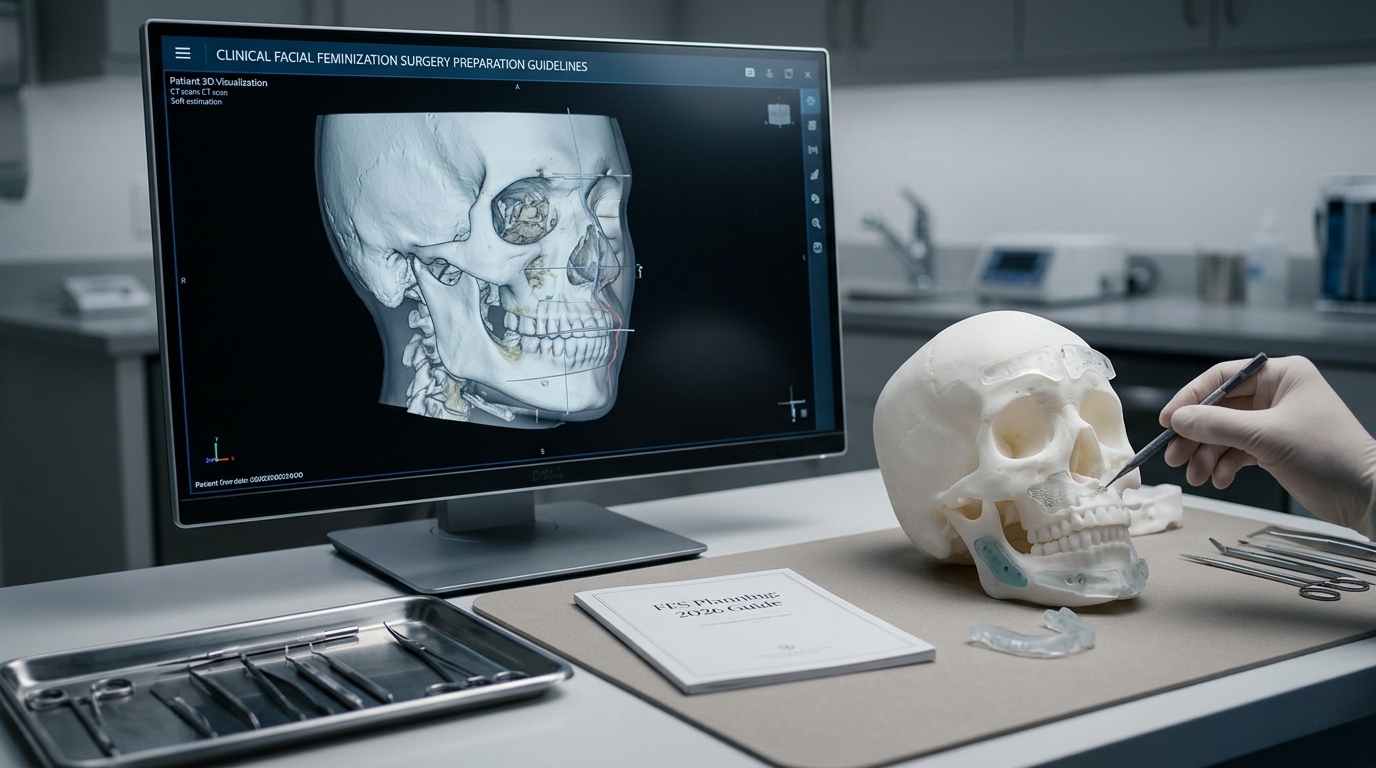

Gezichtsfeminisering Bij een gezichtsverjongingsoperatie (FFS) gaat het niet alleen om esthetiek, maar ook om het in overeenstemming brengen van je uiterlijk met je ware identiteit. Voor transgender vrouwen en non-binaire personen kan een mannelijke kaaklijn een aanhoudende bron van genderdysforie zijn. De kaak, met zijn hoekige contouren en prominente kauwspieren, vormt vaak een van de meest hardnekkige obstakels voor het verkrijgen van een zachtere, traditioneel vrouwelijke gelaatsstructuur. Maar wat als je die kaaklijn met precisie, veiligheid en blijvend resultaat zou kunnen hervormen?
In deze gids verkennen we de meest geavanceerde chirurgische technieken voor kaakvervrouwing – van mandibulaire hoekreductie En kinosteotomie naar reductie van de kauwspier—onderbouwd door klinische studies en inzichten van experts. Je ontdekt hoe deze procedures werken, welke risico's eraan verbonden zijn en wat je kunt verwachten tijdens het herstel. Aan het einde heb je een duidelijk stappenplan om een kaaklijn te bereiken die jouw authentieke zelf weerspiegelt.
Inhoudsopgave
De wetenschap achter kaakvervrouwing: waarom het belangrijk is
De kaaklijn is een bepalend kenmerk voor de perceptie van het geslacht op basis van het gezicht. Studies tonen aan dat een vierkante of brede kaaklijn wordt vaak geassocieerd met mannelijkheid, terwijl een zachtere, taps toelopende kaak wordt als vrouwelijk ervaren (Albert & Choe, 2025). Dit verschil is niet alleen oppervlakkig, maar is geworteld in de botstructuur, spiermassa en zelfs de hoek van de onderkaak. Voor veel transgender vrouwen is het feminiseren van de kaak een cruciale stap om gezichtsharmonie te bereiken en genderdysforie te verminderen.
Maar hier zit de adder onder het gras: Niet alle kaakvervrouwelijkingstechnieken zijn hetzelfde.. Sommige methoden, zoals het agressief afschaven van bot, kunnen leiden tot complicaties zoals zenuwschade of een onnatuurlijk uiterlijk. Andere methoden, zoals niet-chirurgische reductie van de kauwspier, bieden subtielere resultaten, maar vereisen wel doorlopend onderhoud. De sleutel is het kiezen van de juiste aanpak op basis van uw anatomie, doelen en levensstijl.
Chirurgische technieken voor kaakvervrouwing: een stapsgewijze uitleg
1. Verkleining van de kaakhoek: Vormgeving van de kaaklijn
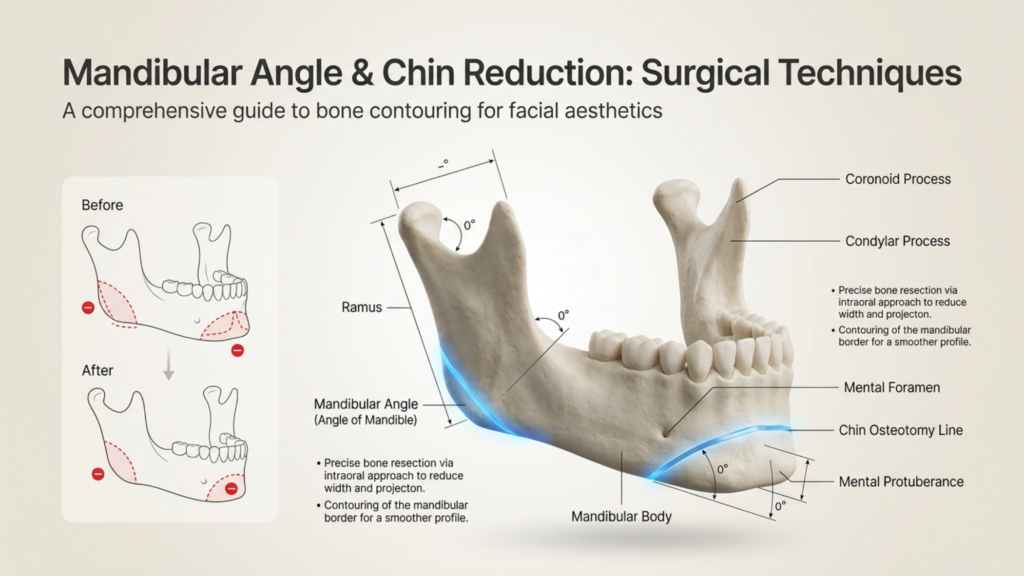
De kaakhoekverkleining is een van de meest effectieve ingrepen voor het feminiseren van de kaak. Deze ingreep omvat: chirurgische contourcorrectie van de hoekige randen van de onderkaak Om een vloeiender, meer taps toelopend uiterlijk te creëren. Deze techniek is met name effectief voor mensen met een prominente of hoekige kaaklijn.
Hoe het werkt:
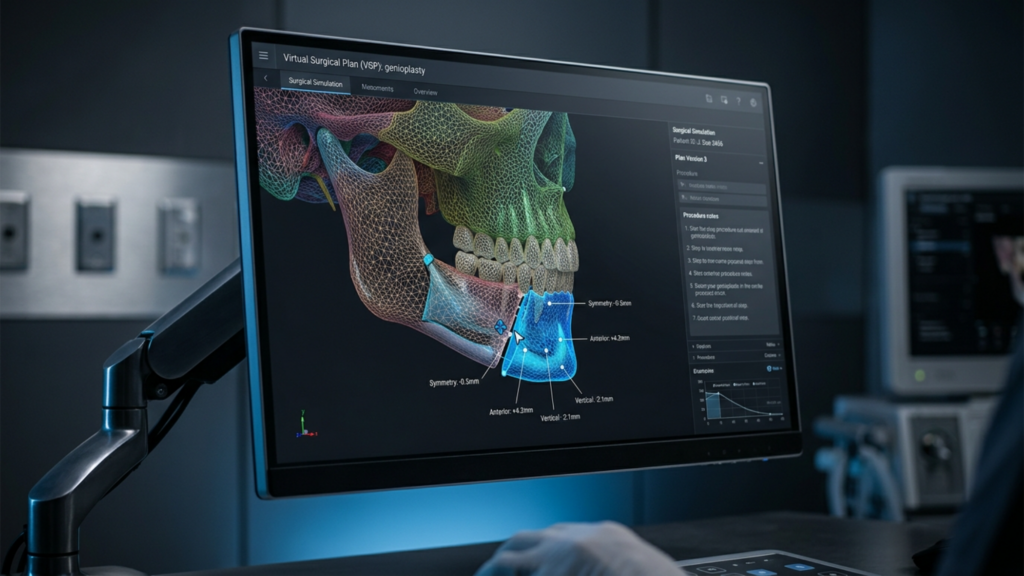
- Preoperatieve planning: Een 3D CT-scan wordt gebruikt om de anatomie van de kaak in kaart te brengen en nauwkeurige botreducties te plannen. Virtuele chirurgische planning (VSP) zorgt voor nauwkeurigheid en minimaliseert risico's (Hiossen, 2025).
- Chirurgische aanpak: De chirurg Er wordt een incisie in de mond gemaakt (intraoraal) om toegang te krijgen tot de kaakhoek. Met behulp van speciale instrumenten wordt het bot voorzichtig afgeschaafd of verwijderd om de kaaklijn te verzachten.
- Zenuwbehoud: De mentale zenuw, Het weefsel dat de onderlip van gevoel voorziet, wordt zorgvuldig beschermd om gevoelloosheid of tintelingen na de operatie te voorkomen.
- Sluiting: De incisie wordt gesloten met oplosbare hechtingen en er wordt een drukverband aangebracht om de zwelling te verminderen.
Herstel en resultaten: De meeste patiënten ervaren zwelling en blauwe plekken gedurende 1-2 weken, waarbij het volledige resultaat binnen 3-6 maanden zichtbaar is. Het resultaat is een een zachtere, meer vrouwelijke kaaklijn dat naadloos aansluit bij de rest van het gezicht.
Klinisch inzicht: Een studie uit 2025 gepubliceerd in Grenzen in de chirurgie Uit onderzoek bleek dat patiënten die een kaakhoekreductie ondergingen, het volgende rapporteerden: tevredenheidspercentage van 92% met hun resultaten, waarbij ze een verbeterde gezichtsharmonie en een verminderde genderdysforie aanhaalden (Frontiers in Surgery, 2025).
2. Kinosteotomie: Verfijning van het onderste deel van het gezicht
De kin speelt een cruciale rol in de gezichtsbalans. vierkante of uitstekende kin kan het onderste deel van het gezicht een mannelijkere uitstraling geven, terwijl een kleinere, meer taps toelopende kin versterkt de vrouwelijkheid. Kinosteotomie, of genioplastiek, Het is een chirurgische ingreep waarbij de kin wordt hervormd om een zachtere, meer harmonieuze uitstraling te verkrijgen.
Hoe het werkt:
- Preoperatieve beoordeling: Een cefalometrische analyse wordt uitgevoerd om de ideale kinpositie en -vorm te bepalen. Virtuele planningstools helpen bij het simuleren van het resultaat.
- Chirurgische techniek: De chirurg Er wordt een incisie in de mond gemaakt en het kinbeen wordt voorzichtig doorgesneden. Het bot wordt vervolgens verplaatst of hervormd om een meer vrouwelijke contour te creëren.
- Fixatie: Titanium platen en schroeven worden gebruikt om het bot in de nieuwe positie te fixeren. Dit zorgt voor stabiliteit tijdens het genezingsproces.
- Herstel: De zwelling neemt binnen 2-3 weken af en patiënten kunnen het uiteindelijke resultaat na 3-6 maanden verwachten.
Klinisch inzicht: Onderzoek van de Tijdschrift voor Craniofaciale Chirurgie benadrukt dat een kinosteotomie, in combinatie met een reductie van de kaakhoek, een een evenwichtiger en vrouwelijker onderste deel van het gezicht (SagePub, 2023).
3. Vermindering van de kauwspier: Verzachting van de kaak
De kauwspier (musculus masseter) kan bijdragen aan een brede of vierkante kaaklijn, Vooral bij mensen die hun tanden klemmen of knarsen. Het verminderen van deze spier – chirurgisch of met neurotoxinen zoals Botox – kan een slanker, vrouwelijker uiterlijk creëren.
Chirurgische reductie:
- Benadering: De kauwspier wordt bereikt via een incisie in de mond, waarna een deel van de spier wordt verwijderd of verkleind.
- Voordelen: Deze methode biedt permanente resultaten en is ideaal voor personen met aanzienlijke spierhypertrofie.
- Herstel: Patiënten kunnen gedurende 1-2 weken lichte zwelling en ongemak ervaren, waarbij het volledige resultaat na 2-3 maanden zichtbaar is.
Niet-chirurgische reductie (Botox):
- Procedure: Botox wordt in de kauwspier geïnjecteerd, waardoor deze na verloop van tijd ontspant en krimpt.
- Resultaten: A 30% vermindering van de spierdikte Dit wordt doorgaans binnen 3 maanden bereikt, met effecten die 6 tot 12 maanden aanhouden (La Belle Vie Med Spa, 2025).
- Onderhoud: Regelmatige behandelingen zijn nodig om het afslankeffect te behouden.
Klinisch inzicht: Een studie uit 2025 in de Tijdschrift voor cosmetische dermatologie ontdekte dat 95% van transgender vrouwen Er werd melding gemaakt van tevredenheid met botox-verkleining van de kauwspieren, waarbij een verbeterde vrouwelijke uitstraling van het gezicht en minder kaakspanning werden genoemd (Wiley, 2026).
Risico's en complicaties: Wat u moet weten
Hoewel kaakvervrouwelijkingsprocedures over het algemeen veilig zijn, zijn ze niet zonder risico's. Inzicht in deze mogelijke complicaties kan u helpen een weloverwogen beslissing te nemen.
Algemene risico's:
- Zenuwletsel: De mentale zenuw En marginale mandibulaire zenuw lopen risico tijdens kaakhoekreductie. Letsel kan leiden tot tijdelijke of permanente gevoelloosheid of zwakte in de onderlip of kin (Europe PMC, 2025).
- Infectie: Zoals bij elke operatie bestaat er een risico op infectie, dat meestal met antibiotica te behandelen is.
- Asymmetrie: Ongelijkmatige botafbraak of spieratrofie kan leiden tot asymmetrie in het gezicht, waardoor een hersteloperatie nodig is.
- Over-resectie: Het agressief afschaven van botweefsel kan leiden tot een onnatuurlijk of "overdreven vrouwelijk" uiterlijk, wat mogelijk niet overeenkomt met de wensen van de patiënt.
- Zwelling en blauwe plekken: Dit zijn veelvoorkomende, maar tijdelijke bijwerkingen die doorgaans binnen 2-3 weken verdwijnen.
Klinisch inzicht: Een evaluatie uit 2025 in Europe PMC merkte op dat het risico op zenuwletsel tijdens kaakhoekreductie varieert van 0,5% tot 5%, waarbij de meeste patiënten binnen zes maanden volledig herstellen (Europe PMC, 2025).
Herstel en nazorg: wat u kunt verwachten
Het herstel na een kaakvervrouwelijkingsoperatie varieert afhankelijk van de ingreep, maar verloopt over het algemeen volgens een vergelijkbaar tijdschema. Dit kunt u verwachten:
Eerste 48 uur:
- Gebruik ijspakken om de zwelling te verminderen.
- Neem de voorgeschreven pijnstillers naar behoefte.
- Vermijd inspannende activiteiten en houd je aan een dieet met zachte voeding.
Eerste 2 weken:
- De zwelling en blauwe plekken bereiken hun hoogtepunt rond dag 3-5 en nemen daarna geleidelijk af.
- Houd uw hoofd tijdens het slapen hoger om zwelling te minimaliseren.
- Vermijd roken en alcohol, omdat dit het genezingsproces kan belemmeren.
3-6 weken:
- De meeste zwellingen zullen verdwenen zijn en u kunt uw normale activiteiten hervatten.
- Tijdens vervolgafspraken wordt het herstel beoordeeld en worden eventuele problemen besproken.
3–6 maanden:
- Het uiteindelijke resultaat wordt zichtbaar zodra de botten en weefsels volledig zijn uitgehard.
- Eventueel resterend gevoelloosheid of asymmetrie dient door uw chirurg te worden beoordeeld.
Professionele tip: Virtuele chirurgische planning (VSP) en 3D-geprinte chirurgische geleiders kunnen verkort de hersteltijd en de precisie verbeteren, wat leidt tot meer voorspelbare resultaten (Springer, 2025).

Niet-chirurgische alternatieven: zijn ze geschikt voor u?
Niet iedereen is klaar voor een operatie, en dat is prima. Niet-chirurgische opties kunnen aanzienlijke verbeteringen opleveren met minimale hersteltijd.
1. Botox voor het verkleinen van de kauwspier:
- Hoe het werkt: Botox wordt in de kauwspier geïnjecteerd, waardoor deze na verloop van tijd ontspant en krimpt.
- Resultaten: Zichtbaar gewichtsverlies binnen 2-3 maanden, met effecten die 6-12 maanden aanhouden.
- Het meest geschikt voor: Personen met een lichte tot matige verbreding van de kaak als gevolg van spierhypertrofie.
2. Huidfillers voor kaakcontouren:
- Hoe het werkt: Fillers worden strategisch langs de kaaklijn aangebracht om een zachtere, meer taps toelopende uitstraling te creëren.
- Resultaten: Direct, maar tijdelijk (duurt 12-18 maanden).
- Het meest geschikt voor: Voor diegenen die op zoek zijn naar subtiele verbeteringen zonder operatie.
3. Radiofrequentietherapie (RF-therapie):
- Hoe het werkt: RF-energie wordt gebruikt om de huid strakker te maken en vet langs de kaaklijn te verminderen.
- Resultaten: Geleidelijke verbetering over 2-3 maanden, met minimale uitval.
- Het meest geschikt voor: Personen met lichte kaaklijnproblemen of personen die de resultaten van een kaakoperatie willen aanvullen.
Klinisch inzicht: Een onderzoek uit 2025 in WetenschapDirect ontdekte dat 90% van transgender vrouwen Vrouwen die kozen voor botox-verkleining van de kauwspier rapporteerden een verbeterde vrouwelijke uitstraling van het gezicht en minder kaakspanning, waardoor het een populaire niet-chirurgische optie is geworden (ScienceDirect, 2025).
De juiste chirurg kiezen: waar moet je op letten?
Het kiezen van een gekwalificeerde chirurg is de meest cruciale stap in uw kaakoperatie. feminisering reis. Dit zijn de prioriteiten:
- Certificering door de Raad van Bestuur: Zorg ervoor dat uw chirurg gecertificeerd is door een erkende instantie, zoals de Europees bestuur voor plastische, reconstructieve en esthetische chirurgie of de Amerikaanse Raad voor Plastische en Reconstructieve Chirurgie van het Gezicht.
- Ervaring in FFS: Zoek een chirurg die gespecialiseerd is in gezichtsfeminisering chirurgie en heeft een portfolio met voor-en-na-foto's.
- Virtuele chirurgische planning: Een chirurg die gebruik maakt van 3D-beeldvorming en VSP kan nauwkeurigere en voorspelbaardere resultaten opleveren.
- Getuigenissen van patiënten: Lees recensies en spreek, indien mogelijk, met voormalige patiënten over hun ervaringen.
- Transgender-inclusieve praktijk: Kies een kliniek die kennis heeft van genderbevestigende zorg en uw identiteit respecteert.
Professionele tip: Vraag uw chirurg naar hun complicatiepercentages en hoe ze omgaan met revisies. Een transparante chirurg geeft eerlijke antwoorden en schept realistische verwachtingen.
Echte patiëntenverhalen: voor en na
Het is waardevol om te luisteren naar anderen die een kaakvervrouwelijking hebben ondergaan. Hier zijn een paar voorbeelden uit de praktijk:
Casus 1: Verkleining van de kaakhoek + kinosteotomie
“Ik heb altijd het gevoel gehad dat mijn kaak het meest mannelijke deel van mijn gezicht was. Na mijn operatie met Dokter MFO, Eindelijk zie ik de zachtere, meer vrouwelijke versie van mezelf in de spiegel. Het herstel was de eerste week zwaar, maar het was elke seconde waard.” — Jamie, 32

Casus 2: Botox in de kauwspier + huidfillers
“Ik was nog niet klaar voor een operatie, dus ben ik begonnen met botox in mijn kauwspieren. Het resultaat was subtiel maar wel zichtbaar – ik heb eindelijk een kaaklijn die past bij hoe ik me vanbinnen voel.” — Alex, 28

Veelgestelde vragen
Wat is het verschil tussen kaakhoekreductie en kinosteotomie?
Bij een kaakhoekreductie wordt de hoek van de onderkaak aangepast om een zachtere, taps toelopende vorm te creëren. Een kinosteotomie daarentegen hervormt de kin zelf – door de grootte te verkleinen of de projectie aan te passen – om een meer vrouwelijke uitstraling te verkrijgen. Beide procedures kunnen worden gecombineerd voor optimale resultaten.
Hoe lang duurt het herstel na een kaakvervrouwelijkingsoperatie?
Het herstel verschilt per ingreep, maar verloopt over het algemeen volgens dit tijdschema: 1-2 weken voor het afnemen van de eerste zwelling en blauwe plekken, 3-6 weken om de normale activiteiten te hervatten en 3-6 maanden voor het uiteindelijke resultaat. De meeste patiënten kunnen binnen 2 weken weer aan het werk.
Is een vermindering van de kauwspier permanent?
Een chirurgische reductie van de kauwspier geeft een permanent resultaat, omdat het spierweefsel fysiek wordt verwijderd. Niet-chirurgische opties zoals Botox vereisen een onderhoudsbehandeling om de 6-12 maanden om het afslankende effect te behouden.
Wat zijn de risico's op zenuwschade tijdens kaakvervrouwelijkingschirurgie?
De nervus mentalis en de nervus mandibularis marginaal lopen risico tijdens een kaakhoekreductie. Zenuwletsel kan tijdelijke of permanente gevoelloosheid of zwakte in de onderlip of kin veroorzaken. Studies tonen echter aan dat de meeste patiënten binnen zes maanden volledig herstellen (Europe PMC, 2025).
Kan ik kaakvervrouwing combineren met andere FFS-procedures?
Ja! Kaakvervrouwing wordt vaak gecombineerd met procedures zoals voorhoofd contouren, neuscorrectie, of wangvergroting Om een harmonieuze, vrouwelijke gelaatsuitstraling te bereiken. Virtuele chirurgische planning (VSP) zorgt ervoor dat alle procedures op elkaar zijn afgestemd voor optimale resultaten.
Hoe maak ik de keuze tussen chirurgische en niet-chirurgische kaakvervrouwing?
Chirurgische ingrepen bieden permanente, spectaculaire resultaten, maar vereisen hersteltijd en brengen risico's met zich mee. Niet-chirurgische opties zoals Botox of fillers bieden subtiele verbeteringen met minimaal herstel. Uw chirurg kan u helpen bij het maken van een keuze op basis van uw anatomie, doelen en levensstijl.
Wat kan ik verwachten tijdens een consult voor kaakvervrouwing?
Tijdens uw consultatie beoordeelt uw chirurg uw gezichtsstructuur, bespreekt uw wensen en adviseert hij of zij de beste procedures voor u. Er kan gebruik worden gemaakt van 3D-beeldvorming om mogelijke resultaten te simuleren en de risico's, het herstel en de verwachte uitkomsten in detail toe te lichten.
Zien de resultaten van een kaakvervrouwelijkingsoperatie er natuurlijk uit?
Wanneer een kaakvervrouwelijking wordt uitgevoerd door een ervaren chirurg, resulteert dit in een natuurlijke, harmonieuze uitstraling. Het doel is om mannelijke gelaatstrekken te verzachten, de gezichtsbalans te behouden en een overdreven uiterlijk te vermijden.