
Feminización facial La cirugía de feminización facial (FFS) no se trata solo de estética, sino de alinear tu apariencia externa con tu verdadera identidad. Para las mujeres transgénero y las personas no binarias, una mandíbula masculina puede ser una fuente constante de disforia de género. La mandíbula, con sus contornos angulares y sus prominentes músculos maseteros, suele ser uno de los mayores obstáculos para lograr una estructura facial más suave y tradicionalmente femenina. Pero, ¿y si pudieras remodelarla con precisión, seguridad y resultados duraderos?
En esta guía, exploraremos las técnicas quirúrgicas más avanzadas para la feminización de la mandíbula, desde reducción del ángulo mandibular y osteotomía del mentón a reducción del músculo masetero—respaldado por estudios clínicos y la opinión de expertos. Descubrirás cómo funcionan estos procedimientos, sus riesgos y qué esperar durante la recuperación. Al finalizar, tendrás una guía clara para lograr una mandíbula que refleje tu verdadera personalidad.
Tabla de contenido
La ciencia detrás de la feminización de la mandíbula: por qué es importante
La mandíbula es un rasgo definitorio de la percepción del género facial. Los estudios muestran que una mandíbula cuadrada o ancha a menudo se asocia con la masculinidad, mientras que una mandíbula más suave y cónica Se percibe como femenino (Albert y Choe, 2025). Esta diferencia no es superficial, sino que tiene sus raíces en la estructura ósea, la masa muscular e incluso el ángulo de la mandíbula. Para muchas mujeres transgénero, feminizar la mandíbula es un paso fundamental para lograr la armonía facial y reducir la disforia de género.
Pero aquí está el truco: No todas las técnicas de feminización de la mandíbula son iguales.. Algunos métodos, como el limado óseo agresivo, pueden provocar complicaciones como daño nervioso o una apariencia poco natural. Otros, como la reducción no quirúrgica del masetero, ofrecen resultados más sutiles, pero requieren un mantenimiento continuo. La clave está en elegir el método adecuado según tu anatomía, objetivos y estilo de vida.
Técnicas quirúrgicas para la feminización de la mandíbula: un análisis paso a paso.
1. Reducción del ángulo mandibular: remodelación de la línea de la mandíbula
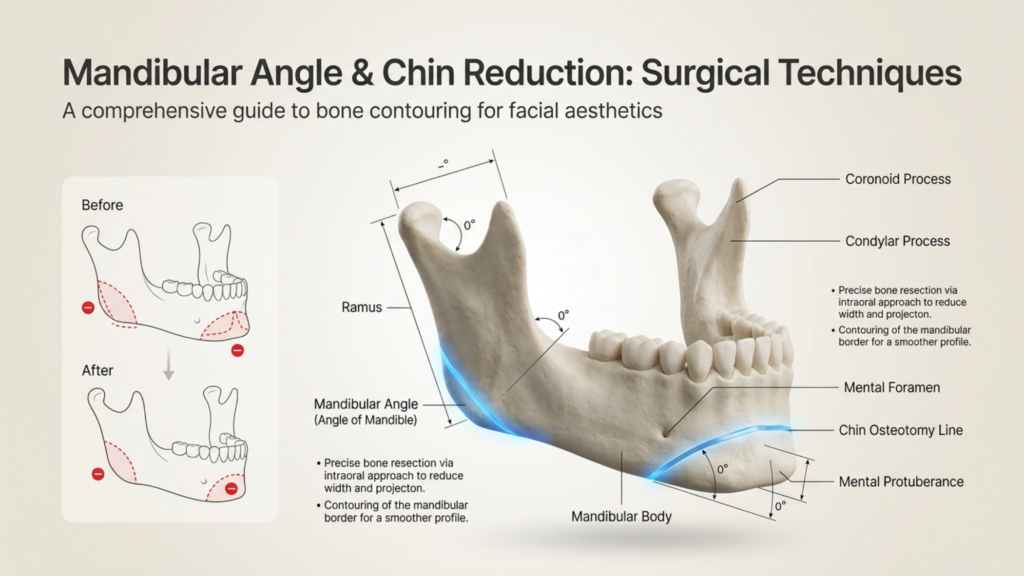
La reducción del ángulo mandibular es uno de los procedimientos más impactantes para feminizar la mandíbula. Implica Contorneado quirúrgico de los bordes angulares de la mandíbula inferior para lograr una apariencia más suave y definida. Esta técnica es particularmente efectiva para personas con una mandíbula prominente o cuadrada.
Cómo funciona:
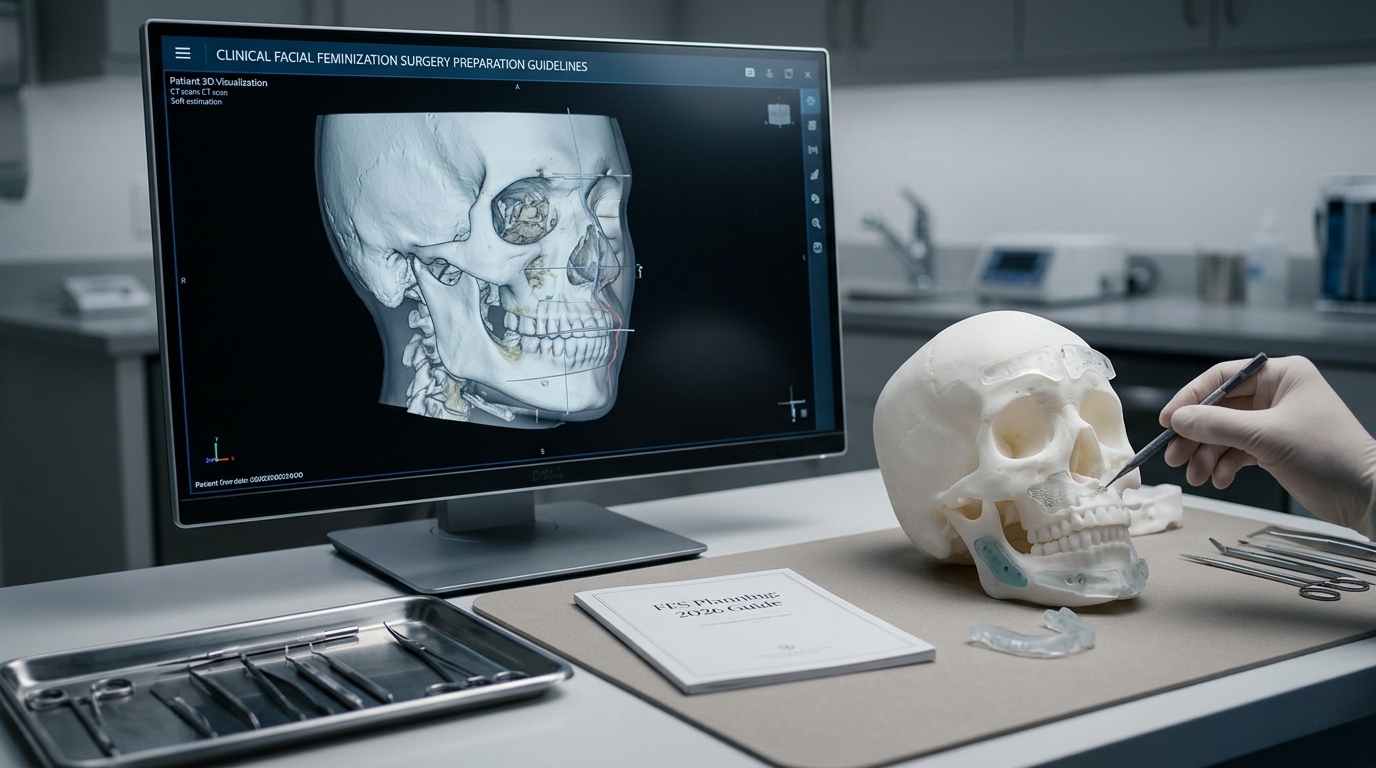
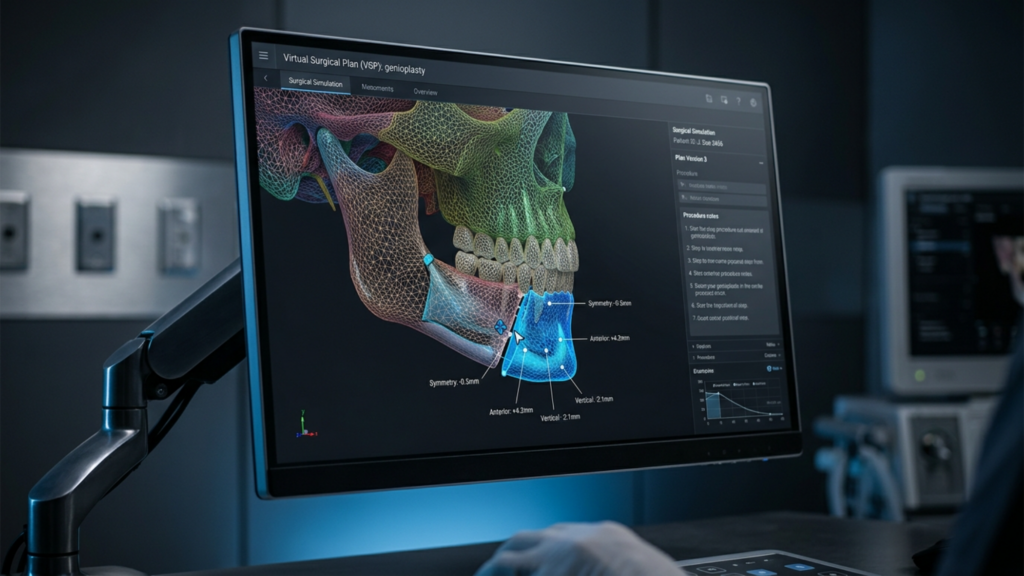
- Planificación preoperatoria: Se utiliza una tomografía computarizada 3D para mapear la anatomía de la mandíbula y planificar reducciones óseas precisas. La planificación quirúrgica virtual (VSP) garantiza la precisión y minimiza los riesgos (Hiossen, 2025).
- Abordaje quirúrgico: El cirujano Realiza una incisión dentro de la boca (intraoral) para acceder al ángulo mandibular. Utilizando instrumentos especializados, recorta o reseca cuidadosamente el hueso para suavizar el contorno de la mandíbula.
- Preservación de los nervios: El nervio mental, La zona que proporciona sensibilidad al labio inferior se protege meticulosamente para evitar el entumecimiento o el hormigueo después de la cirugía.
- Cierre: La incisión se cierra con suturas reabsorbibles y se aplica un vendaje compresivo para reducir la hinchazón.
Recuperación y resultados: La mayoría de los pacientes experimentan hinchazón y hematomas durante 1 a 2 semanas, y los resultados completos son visibles en 3 a 6 meses. El resultado es un Mandíbula más suave y femenina que se integra a la perfección con el resto del rostro.
Perspectiva clínica: Un estudio de 2025 publicado en Fronteras en Cirugía Se encontró que los pacientes sometidos a reducción del ángulo mandibular informaron una Índice de satisfacción 92% con sus resultados, citando una mejor armonía facial y una reducción de la disforia de género (Frontiers in Surgery, 2025).
2. Osteotomía del mentón: Refinamiento de la parte inferior del rostro.
El mentón juega un papel fundamental en el equilibrio facial. mentón cuadrado o prominente puede masculinizar la parte inferior del rostro, mientras que un mentón más pequeño y afilado realza la feminidad. Osteotomía de mentón, o genioplastia, Es un procedimiento quirúrgico que remodela el mentón para lograr una apariencia más suave y armoniosa.
Cómo funciona:
- Evaluación preoperatoria: Se realiza un análisis cefalométrico para determinar la posición y la forma ideales del mentón. Las herramientas de planificación virtual ayudan a simular el resultado.
- Técnica Quirúrgica: El cirujano Realiza una incisión en el interior de la boca y corta cuidadosamente el hueso del mentón. A continuación, se recoloca o remodela el hueso para crear un contorno más femenino.
- Fijación: Se utilizan placas y tornillos de titanio para fijar el hueso en su nueva posición. Esto garantiza la estabilidad durante la cicatrización.
- Recuperación: La hinchazón disminuye en 2-3 semanas y los pacientes pueden esperar ver los resultados finales en 3-6 meses.
Perspectiva clínica: Investigación de la Revista de cirugía craneofacial destaca que la osteotomía del mentón, cuando se combina con la reducción del ángulo mandibular, logra una Rostro inferior más equilibrado y femenino (SagePub, 2023).
3. Reducción del músculo masetero: Suavizando la mandíbula
El músculo masetero, responsable de la masticación, puede contribuir a una mandíbula ancha o cuadrada, especialmente en personas que aprietan o rechinan los dientes. Reducir este músculo, ya sea mediante cirugía o con neurotoxinas como el Botox, puede crear una apariencia más delgada y femenina.
Reducción quirúrgica:
- Acercarse: Se accede al músculo masetero a través de una incisión intraoral, y se extirpa o se reduce el tamaño de una porción del músculo.
- Beneficios: Este método proporciona resultados permanentes y es ideal para personas con hipertrofia muscular significativa.
- Recuperación: Los pacientes pueden experimentar una leve hinchazón y molestias durante 1-2 semanas, y los resultados completos serán visibles en 2-3 meses.
Reducción no quirúrgica (Botox):
- Procedimiento: El Botox se inyecta en el músculo masetero, lo que provoca que se relaje y se encoja con el tiempo.
- Resultados: A 30% reducción del grosor muscular Por lo general, se logra en 3 meses, y sus efectos duran entre 6 y 12 meses (La Belle Vie Med Spa, 2025).
- Mantenimiento: Se requieren tratamientos regulares para mantener el efecto adelgazante.
Perspectiva clínica: Un estudio de 2025 en el Revista de Dermatología Cosmética descubrió que 95% de mujeres transgénero Los pacientes manifestaron satisfacción con la reducción del músculo masetero mediante Botox, citando una mejora en la feminidad facial y una disminución del bruxismo (Wiley, 2026).
Riesgos y complicaciones: lo que debes saber
Si bien los procedimientos de feminización de la mandíbula suelen ser seguros, no están exentos de riesgos. Comprender estas posibles complicaciones puede ayudarle a tomar una decisión informada.
Riesgos comunes:
- Lesión nerviosa: El nervio mental y nervio mandibular marginal corren riesgo durante la reducción del ángulo mandibular. Las lesiones pueden provocar entumecimiento o debilidad temporal o permanente en el labio inferior o el mentón (Europe PMC, 2025).
- Infección: Como en cualquier intervención quirúrgica, existe riesgo de infección, que normalmente se puede controlar con antibióticos.
- Asimetría: La reducción ósea desigual o la atrofia muscular pueden provocar asimetría facial, lo que requiere una cirugía de revisión.
- Resección excesiva: El limado óseo agresivo puede dar lugar a una apariencia poco natural o "excesivamente feminizada", que puede no coincidir con los objetivos de la paciente.
- Hinchazón y moretones: Estos son efectos secundarios comunes pero temporales, que generalmente desaparecen en 2 o 3 semanas.
Perspectiva clínica: Una revisión de 2025 en PMC de Europa Se observó que el riesgo de lesión nerviosa durante la reducción del ángulo mandibular varía desde 0,5% a 5%, y la mayoría de los pacientes logran una recuperación completa en un plazo de seis meses (Europe PMC, 2025).
Recuperación y cuidados posteriores: qué esperar
La recuperación tras una cirugía de feminización de mandíbula varía según el procedimiento, pero generalmente sigue un cronograma similar. Esto es lo que puede esperar:
Primeras 48 horas:
- Aplique compresas de hielo para reducir la hinchazón.
- Tome los analgésicos recetados según sea necesario.
- Evite las actividades extenuantes y siga una dieta de alimentos blandos.
Primeras 2 semanas:
- La hinchazón y los hematomas alcanzarán su punto máximo entre el tercer y el quinto día y disminuirán gradualmente.
- Mantén la cabeza elevada mientras duermes para minimizar la hinchazón.
- Evite fumar y beber alcohol ya que pueden perjudicar la curación.
3–6 semanas:
- La mayor parte de la hinchazón habrá desaparecido y podrá retomar sus actividades normales.
- Las citas de seguimiento servirán para evaluar la recuperación y abordar cualquier inquietud.
3–6 meses:
- Los resultados finales se hacen visibles a medida que los huesos y los tejidos se asientan por completo.
- Cualquier entumecimiento o asimetría residual debe ser evaluado por su cirujano.
Consejo profesional: La planificación quirúrgica virtual (VSP) y las guías quirúrgicas impresas en 3D pueden reducir el tiempo de recuperación y mejorar la precisión, lo que conduce a resultados más predecibles (Springer, 2025).

Alternativas no quirúrgicas: ¿Son adecuadas para usted?
No todo el mundo está preparado para la cirugía, y eso está bien. Las opciones no quirúrgicas pueden proporcionar mejoras significativas con un tiempo de recuperación mínimo.
1. Botox para la reducción del músculo masetero:
- Cómo funciona: El Botox se inyecta en el músculo masetero, lo que provoca que se relaje y se encoja con el tiempo.
- Resultados: Se observa una reducción visible del peso en 2-3 meses, con efectos que duran de 6 a 12 meses.
- Ideal para: Personas con ensanchamiento mandibular leve a moderado debido a hipertrofia muscular.
2. Rellenos dérmicos para el contorno de la mandíbula:
- Cómo funciona: Los rellenos se colocan estratégicamente a lo largo de la línea de la mandíbula para crear una apariencia más suave y definida.
- Resultados: Inmediato pero temporal (dura entre 12 y 18 meses).
- Ideal para: Para quienes buscan mejoras sutiles sin cirugía.
3. Terapia de radiofrecuencia (RF):
- Cómo funciona: La energía de radiofrecuencia se utiliza para tensar la piel y reducir la grasa a lo largo de la línea de la mandíbula.
- Resultados: Mejora gradual a lo largo de 2-3 meses, con un tiempo de inactividad mínimo.
- Ideal para: Personas con leves preocupaciones sobre la forma de la mandíbula o aquellas que buscan complementar los resultados de una cirugía.
Perspectiva clínica: Un estudio de 2025 en Ciencia Directa descubrió que 90% de mujeres transgénero Quienes optaron por la reducción del músculo masetero con Botox reportaron una mejora en la feminidad facial y una reducción del bruxismo, lo que la convierte en una opción no quirúrgica popular (ScienceDirect, 2025).
Cómo elegir al cirujano adecuado: qué buscar
Seleccionar un cirujano cualificado es el paso más importante en su cirugía maxilofacial. feminización viaje. Esto es lo que debes priorizar:
- Certificación de la Junta: Asegúrese de que su cirujano esté certificado por una junta reconocida, como la Junta Europea de Cirugía Plástica, Reconstructiva y Estética o el Junta Estadounidense de Cirugía Plástica y Reconstructiva Facial.
- Experiencia en FFS: Busque un cirujano que se especialice en feminización facial cirugía y tiene un portafolio de fotos del antes y el después.
- Planificación quirúrgica virtual: Un cirujano que utiliza Imágenes 3D y VSP pueden ofrecer resultados más precisos y predecibles.
- Testimonios de pacientes: Lee las reseñas y, si es posible, habla con antiguos pacientes sobre sus experiencias.
- Práctica inclusiva para personas transgénero: Elige una clínica que tenga conocimientos sobre atención de afirmación de género y que respete tu identidad.
Consejo profesional: Pregúntele a su cirujano sobre su tasas de complicaciones y cómo gestionan las revisiones. Un cirujano transparente dará respuestas honestas y establecerá expectativas realistas.
Historias reales de pacientes: antes y después
Escuchar las experiencias de otras personas que se han sometido a una feminización de la mandíbula puede brindar información valiosa. Aquí presentamos algunas experiencias reales:
Caso 1: Reducción del ángulo mandibular + osteotomía del mentón
“Siempre sentí que mi mandíbula era la parte más masculina de mi rostro. Después de mi cirugía con Dr. OFM, Por fin veo en el espejo mi versión más dulce y femenina. La recuperación fue dura la primera semana, pero valió la pena cada momento.” — Jamie, 32

Caso 2: Botox en el masetero + rellenos dérmicos
“No estaba preparada para la cirugía, así que empecé con bótox en los músculos maseteros. Los resultados fueron sutiles pero perceptibles: por fin tengo una mandíbula que refleja cómo me siento por dentro.” — Alex, 28

Preguntas frecuentes
¿Cuál es la diferencia entre la reducción del ángulo mandibular y la osteotomía del mentón?
La reducción del ángulo mandibular se centra en contornear los bordes angulares de la mandíbula inferior para lograr una apariencia más suave y estilizada. La osteotomía de mentón, por otro lado, remodela el mentón —ya sea reduciendo su tamaño o modificando su proyección— para conseguir una apariencia más femenina. Ambos procedimientos pueden combinarse para obtener resultados óptimos.
¿Cuánto tiempo se tarda en recuperarse de una cirugía de feminización de mandíbula?
La recuperación varía según el procedimiento, pero generalmente sigue este cronograma: de 1 a 2 semanas para que disminuyan la hinchazón y los hematomas iniciales, de 3 a 6 semanas para retomar las actividades normales y de 3 a 6 meses para que los resultados finales sean visibles. La mayoría de los pacientes regresan al trabajo en 2 semanas.
¿La reducción del músculo masetero es permanente?
La reducción quirúrgica del músculo masetero ofrece resultados permanentes, ya que el tejido muscular se elimina físicamente. Las opciones no quirúrgicas, como el Botox, requieren retoques cada 6 a 12 meses para mantener el efecto adelgazante.
¿Cuáles son los riesgos de daño nervioso durante la cirugía de feminización de la mandíbula?
El nervio mentoniano y el nervio mandibular marginal corren riesgo durante la reducción del ángulo mandibular. La lesión nerviosa puede causar entumecimiento o debilidad temporal o permanente en el labio inferior o el mentón. Sin embargo, los estudios demuestran que la mayoría de los pacientes se recuperan por completo en un plazo de seis meses (Europe PMC, 2025).
¿Puedo combinar la feminización de la mandíbula con otros procedimientos de feminización facial?
¡Sí! La feminización de la mandíbula a menudo se combina con procedimientos como contorno de la frente, rinoplastia, o aumento de mejillas Para lograr una apariencia facial armoniosa y femenina, la planificación quirúrgica virtual (VSP) garantiza la coordinación de todos los procedimientos para obtener resultados óptimos.
¿Cómo puedo elegir entre la feminización de la mandíbula mediante cirugía o sin cirugía?
Las opciones quirúrgicas ofrecen resultados permanentes y espectaculares, pero requieren un periodo de recuperación y conllevan riesgos. Las opciones no quirúrgicas, como el bótox o los rellenos, ofrecen mejoras sutiles con una recuperación mínima. Su cirujano le ayudará a decidir en función de su anatomía, sus objetivos y su estilo de vida.
¿Qué debo esperar durante una consulta para la feminización de la mandíbula?
Durante la consulta, el cirujano evaluará la estructura facial, hablará sobre sus objetivos y le recomendará los procedimientos más adecuados. Es posible que utilice imágenes 3D para simular posibles resultados y explicarle en detalle los riesgos, la recuperación y los resultados esperados.
¿Los resultados de la cirugía de feminización de mandíbula tienen un aspecto natural?
Cuando la realiza un cirujano experimentado, la feminización de la mandíbula da como resultado una apariencia natural y armoniosa. El objetivo es suavizar los rasgos masculinos manteniendo el equilibrio facial y evitando un aspecto exagerado.