

Gesichtsfeminisierung Bei einer Gesichtschirurgie geht es nicht nur um Ästhetik – es geht darum, Ihr äußeres Erscheinungsbild mit Ihrer wahren Identität in Einklang zu bringen. Für Transfrauen und nicht-binäre Personen kann eine maskuline Kinnlinie eine anhaltende Quelle von Geschlechtsdysphorie sein. Der Kiefer mit seinen kantigen Konturen und den ausgeprägten Kaumuskeln stellt oft eines der größten Hindernisse für eine weichere, traditionell feminine Gesichtsstruktur dar. Doch was wäre, wenn Sie ihn präzise, sicher und mit dauerhaftem Ergebnis umformen könnten?
In diesem Leitfaden werden wir die fortschrittlichsten chirurgischen Techniken zur Kieferfeminisierung untersuchen – von Reduzierung des Unterkieferwinkels Und Kinnosteotomie Zu MassetermuskelreduktionGestützt auf klinische Studien und Expertenmeinungen. Sie erfahren, wie diese Verfahren funktionieren, welche Risiken bestehen und was Sie während der Genesung erwartet. Am Ende haben Sie einen klaren Plan, um eine Kieferpartie zu erreichen, die Ihre Persönlichkeit perfekt widerspiegelt.
Inhaltsverzeichnis
Die Wissenschaft hinter der Kieferfeminisierung: Warum sie wichtig ist
Der Kiefer ist ein prägendes Merkmal der geschlechtsbezogenen Gesichtswahrnehmung. Studien zeigen, dass ein eckige oder breite Kinnlinie wird oft mit Männlichkeit in Verbindung gebracht, während ein weichere, spitz zulaufende Kieferpartie wird als feminin wahrgenommen (Albert & Choe, 2025). Dieser Unterschied ist nicht nur oberflächlich – er wurzelt in der Knochenstruktur, der Muskelmasse und sogar im Winkel des Unterkiefers. Für viele Transfrauen ist die Feminisierung des Kiefers ein entscheidender Schritt, um ein harmonisches Gesichtsbild zu erreichen und die Geschlechtsdysphorie zu reduzieren.
Aber hier ist der Haken: Nicht alle Techniken zur Kieferfeminisierung sind gleich.. Manche Methoden, wie das aggressive Abtragen von Knochengewebe, können zu Komplikationen wie Nervenschäden oder einem unnatürlichen Aussehen führen. Andere, wie die nicht-operative Masseterreduktion, erzielen subtilere Ergebnisse, erfordern jedoch eine kontinuierliche Nachbehandlung. Entscheidend ist die Wahl der richtigen Methode, abgestimmt auf Ihre Anatomie, Ihre Ziele und Ihren Lebensstil.

Chirurgische Techniken zur Kieferfeminisierung: Eine schrittweise Anleitung
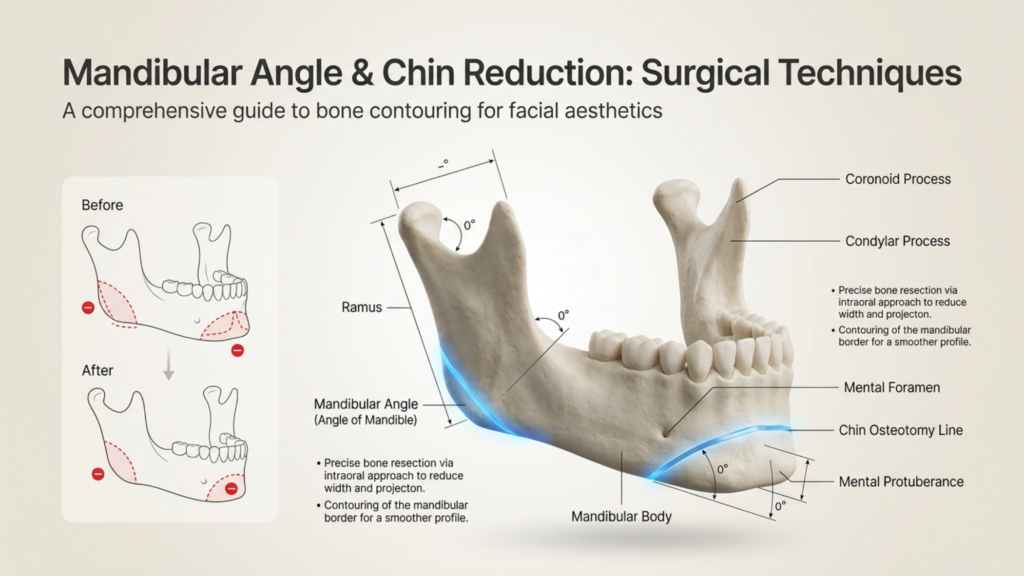
1. Verkleinerung des Unterkieferwinkels: Umformung der Kieferlinie
Die Verkleinerung des Unterkieferwinkels ist einer der wirkungsvollsten Eingriffe zur Feminisierung des Kiefers. Dabei wird Folgendes durchgeführt: Chirurgische Konturierung der kantigen Ränder des Unterkiefers Um ein weicheres, harmonischeres Erscheinungsbild zu erzielen. Diese Technik ist besonders wirksam bei Personen mit einer markanten oder eckigen Kinnlinie.
So funktioniert es:
- Präoperative Planung: Mithilfe einer 3D-Computertomographie (CT) wird die Anatomie des Kiefers erfasst und eine präzise Knochenreduktion geplant. Die virtuelle Operationsplanung (VSP) gewährleistet Genauigkeit und minimiert Risiken (Hiossen, 2025).
- Chirurgisches Vorgehen: Der der Chirurg Dabei wird ein Schnitt im Mundinneren (intraoral) vorgenommen, um den Kieferwinkel zu erreichen. Mithilfe spezieller Instrumente wird der Knochen vorsichtig abgetragen oder entfernt, um die Kieferkontur zu glätten.
- Nervenerhaltung: Der Nervus mentalis, Die Nervenfaser, die für die Empfindung der Unterlippe zuständig ist, wird sorgfältig geschützt, um nach der Operation Taubheitsgefühle oder Kribbeln zu vermeiden.
- Schließung: Der Einschnitt wird mit selbstauflösenden Fäden verschlossen, und ein Kompressionsverband wird angelegt, um die Schwellung zu reduzieren.
Genesung und Ergebnisse: Bei den meisten Patienten treten Schwellungen und Blutergüsse für 1–2 Wochen auf, das endgültige Ergebnis ist nach 3–6 Monaten sichtbar. Das Ergebnis ist ein weichere, femininere Kieferpartie das sich nahtlos in den Rest des Gesichts einfügt.
Klinische Erkenntnisse: Eine im Jahr 2025 veröffentlichte Studie Grenzen der Chirurgie stellten fest, dass Patienten, die sich einer Kieferwinkelreduktion unterzogen, über Folgendes berichteten: 92% Zufriedenheitsrate mit ihren Ergebnissen, wobei sie eine verbesserte Gesichtsharmonie und eine verringerte Geschlechtsdysphorie erwähnen (Frontiers in Surgery, 2025).
2. Kinnosteotomie: Verfeinerung des unteren Gesichts
Das Kinn spielt eine entscheidende Rolle für die Gesichtsharmonie. eckiges oder vorstehendes Kinn kann das untere Gesicht maskulinisieren, während ein kleineres, spitzeres Kinn verstärkt die Weiblichkeit. Kinnosteotomie, oder Genioplastik, ist ein chirurgischer Eingriff, der das Kinn umformt, um ein weicheres, harmonischeres Aussehen zu erzielen.
So funktioniert es:
- Präoperative Beurteilung: Zur Bestimmung der idealen Kinnposition und -form wird eine kephalometrische Analyse durchgeführt. Virtuelle Planungstools helfen bei der Simulation des Ergebnisses.
- Operationstechnik: Der der Chirurg Es wird ein Schnitt im Mundinneren vorgenommen und der Kinnknochen vorsichtig durchtrennt. Anschließend wird der Knochen neu positioniert oder umgeformt, um eine femininere Kontur zu erzielen.
- Fixierung: Zur Fixierung des Knochens in seiner neuen Position werden Titanplatten und -schrauben verwendet. Dies gewährleistet Stabilität während des Heilungsprozesses.
- Erholung: Die Schwellung klingt innerhalb von 2–3 Wochen ab, und die endgültigen Ergebnisse sind nach 3–6 Monaten zu erwarten.
Klinische Erkenntnisse: Forschungsergebnisse der Zeitschrift für kraniofaziale Chirurgie hebt hervor, dass eine Kinnosteotomie in Kombination mit einer Reduktion des Unterkieferwinkels Folgendes bewirkt: Ausgewogenere und femininere untere Gesichtshälfte (SagePub, 2023).
3. Masseter-Muskelreduktion: Weichmachung des Kiefers
Der für das Kauen zuständige Massetermuskel kann zu Folgendem beitragen: breite oder eckige Kinnlinie, Dies gilt insbesondere für Menschen, die mit den Zähnen knirschen oder pressen. Die Reduzierung dieses Muskels – entweder operativ oder mit Neurotoxinen wie Botox – kann ein schlankeres, feminineres Aussehen bewirken.
Chirurgische Reduktion:
- Ansatz: Der Zugang zum Musculus masseter erfolgt über einen intraoralen Schnitt, wobei ein Teil des Muskels entfernt oder verkleinert wird.
- Vorteile: Diese Methode bietet dauerhafte Ergebnisse und eignet sich ideal für Personen mit ausgeprägter Muskelhypertrophie.
- Erholung: Patienten können für 1–2 Wochen leichte Schwellungen und Beschwerden verspüren, das endgültige Ergebnis ist nach 2–3 Monaten sichtbar.
Nicht-chirurgische Verkleinerung (Botox):
- Verfahren: Botox wird in den Massetermuskel injiziert, wodurch dieser sich mit der Zeit entspannt und zusammenzieht.
- Ergebnisse: A 30% Reduktion der Muskeldicke wird typischerweise innerhalb von 3 Monaten erreicht, die Wirkung hält 6–12 Monate an (La Belle Vie Med Spa, 2025).
- Wartung: Regelmäßige Behandlungen sind erforderlich, um den Schlankheitseffekt aufrechtzuerhalten.
Klinische Erkenntnisse: Eine Studie aus dem Jahr 2025 in der Zeitschrift für kosmetische Dermatologie stellte fest, dass 95% von Transfrauen berichteten von Zufriedenheit mit der Botox-Masseterreduktion und nannten eine verbesserte Weiblichkeit des Gesichts sowie ein reduziertes Zähneknirschen (Wiley, 2026).
Risiken und Komplikationen: Was Sie wissen müssen
Obwohl Kieferfeminisierungsverfahren im Allgemeinen sicher sind, bergen sie Risiken. Das Wissen um diese potenziellen Komplikationen hilft Ihnen, eine fundierte Entscheidung zu treffen.
Häufige Risiken:
- Nervenverletzung: Der Nervus mentalis Und Randnerv des Unterkiefers Bei der Kieferwinkelreduktion besteht ein Risiko. Verletzungen können zu vorübergehender oder dauerhafter Taubheit oder Schwäche der Unterlippe oder des Kinns führen (Europe PMC, 2025).
- Infektion: Wie bei jedem chirurgischen Eingriff besteht ein Infektionsrisiko, das sich in der Regel mit Antibiotika behandeln lässt.
- Asymmetrie: Ungleichmäßiger Knochenabbau oder Muskelatrophie können zu Gesichtsasymmetrie führen, die eine Korrekturoperation erforderlich macht.
- Überresektion: Aggressives Abtragen der Knochen kann zu einem unnatürlichen oder “überfeminisierten” Aussehen führen, was möglicherweise nicht den Zielen der Patientin entspricht.
- Schwellung und Blutergüsse: Dies sind häufige, aber vorübergehende Nebenwirkungen, die in der Regel innerhalb von 2–3 Wochen wieder verschwinden.
Klinische Erkenntnisse: Ein Rückblick auf 2025 in Europe PMC wurde festgestellt, dass das Risiko einer Nervenverletzung bei der Kieferwinkelreduktion zwischen 0,5% bis 5%, Die meisten Patienten erholen sich innerhalb von sechs Monaten vollständig (Europe PMC, 2025).
Genesung und Nachsorge: Was Sie erwartet
Die Genesung nach einer Kieferfeminisierungsoperation verläuft je nach Eingriff unterschiedlich, folgt aber im Allgemeinen einem ähnlichen Zeitrahmen. Hier erfahren Sie, was Sie erwarten können:
Erste 48 Stunden:
- Zur Linderung der Schwellung Eisbeutel auflegen.
- Nehmen Sie die verschriebenen Schmerzmittel nach Bedarf ein.
- Vermeiden Sie anstrengende Aktivitäten und ernähren Sie sich von weicher Kost.
Die ersten 2 Wochen:
- Schwellungen und Blutergüsse erreichen ihren Höhepunkt etwa am 3. bis 5. Tag und klingen dann allmählich wieder ab.
- Lagern Sie Ihren Kopf beim Schlafen hoch, um Schwellungen zu minimieren.
- Vermeiden Sie Rauchen und Alkohol, da diese die Heilung beeinträchtigen können.
3–6 Wochen:
- Die meisten Schwellungen sollten abgeklungen sein, und Sie können Ihre normalen Aktivitäten wieder aufnehmen.
- Bei den Nachfolgeterminen werden der Heilungsverlauf beurteilt und eventuelle Bedenken besprochen.
3–6 Monate:
- Das Endergebnis wird sichtbar, sobald sich Knochen und Gewebe vollständig gesetzt haben.
- Etwaige verbleibende Taubheitsgefühle oder Asymmetrien sollten von Ihrem Chirurgen beurteilt werden.
Profi-Tipp: Virtuelle Operationsplanung (VSP) und 3D-gedruckte Operationsschablonen können Erholungszeit verkürzen und die Präzision zu verbessern, was zu besser vorhersagbaren Ergebnissen führt (Springer, 2025).

Nicht-operative Alternativen: Sind sie das Richtige für Sie?
Nicht jeder ist für eine Operation geeignet, und das ist völlig in Ordnung. Nicht-operative Behandlungsmethoden können mit minimaler Ausfallzeit deutliche Verbesserungen erzielen.
1. Botox zur Masseterverkleinerung:
- So funktioniert es: Botox wird in den Massetermuskel injiziert, wodurch dieser sich mit der Zeit entspannt und zusammenzieht.
- Ergebnisse: Sichtbare Gewichtsabnahme innerhalb von 2–3 Monaten, die Wirkung hält 6–12 Monate an.
- Am besten geeignet für: Personen mit leichter bis mittelschwerer Kieferverbreiterung aufgrund von Muskelhypertrophie.
2. Dermalfiller zur Kieferkonturierung:
- So funktioniert es: Die Füllstoffe werden strategisch entlang der Kieferlinie platziert, um ein weicheres, gleichmäßigeres Erscheinungsbild zu erzielen.
- Ergebnisse: Sofort, aber vorübergehend (dauert 12–18 Monate).
- Am besten geeignet für: Für alle, die sich dezente Verschönerungen ohne Operation wünschen.
3. Radiofrequenztherapie (RF-Therapie):
- So funktioniert es: Radiofrequenzenergie wird eingesetzt, um die Haut zu straffen und Fett entlang der Kieferlinie zu reduzieren.
- Ergebnisse: Allmähliche Besserung über 2–3 Monate, mit minimalen Ausfallzeiten.
- Am besten geeignet für: Personen mit leichten Problemen im Bereich der Kieferlinie oder solche, die das Ergebnis einer Operation optimieren möchten.
Klinische Erkenntnisse: Eine Studie aus dem Jahr 2025 in ScienceDirect stellte fest, dass 90% von Transfrauen Patienten, die sich für eine Botox-Masseterreduktion entschieden, berichteten von einer verbesserten Weiblichkeit des Gesichts und einem reduzierten Zähneknirschen, was die Methode zu einer beliebten nicht-chirurgischen Option macht (ScienceDirect, 2025).
Den richtigen Chirurgen auswählen: Worauf Sie achten sollten
Die Wahl eines qualifizierten Chirurgen ist der wichtigste Schritt bei Ihrer Kieferoperation. Feminisierung Reise. Hier ist, was Priorität haben sollte:
- Zertifizierung durch das Board: Stellen Sie sicher, dass Ihr Chirurg von einer anerkannten Stelle, wie z. B. der Europäisches Fachgremium für Plastische, Rekonstruktive und Ästhetische Chirurgie oder die Amerikanisches Fachgremium für Gesichtsplastische und Rekonstruktive Chirurgie.
- Erfahrung im FFS: Suchen Sie nach einem Chirurgen, der spezialisiert ist auf Gesichtsfeminisierung Operation und verfügt über ein Portfolio mit Vorher-Nachher-Fotos.
- Virtuelle Operationsplanung: Ein Chirurg, der verwendet 3D-Bildgebung und VSP können präzisere und besser vorhersagbare Ergebnisse liefern.
- Patientenberichte: Lesen Sie Rezensionen und sprechen Sie, wenn möglich, mit ehemaligen Patienten über deren Erfahrungen.
- Transgender-inklusive Praxis: Wählen Sie eine Klinik, die sich mit geschlechtsangleichender Behandlung auskennt und Ihre Identität respektiert.
Profi-Tipp: Fragen Sie Ihren Chirurgen nach ihren Komplikationsraten und wie sie mit Nachkorrekturen umgehen. Ein transparenter Chirurg wird ehrliche Antworten geben und realistische Erwartungen wecken.
Echte Patientengeschichten: Vorher und Nachher
Die Erfahrungsberichte anderer Frauen, die eine Kieferfeminisierung hatten, können wertvolle Einblicke liefern. Hier sind einige Beispiele aus der Praxis:
Fall 1: Kieferwinkelreduktion + Kinnosteotomie
“Ich hatte immer das Gefühl, dass mein Kiefer der männlichste Teil meines Gesichts war. Nach meiner Operation mit Dr.MFO, ”Endlich sehe ich im Spiegel meine sanftere, femininere Seite. Die Genesung war in der ersten Woche hart, aber es hat sich jede Minute gelohnt.“ — Jamie, 32

Fall 2: Masseter-Botox + Dermalfiller
“Ich war noch nicht bereit für eine Operation, also habe ich mit Botox in meinen Kaumuskeln angefangen. Die Ergebnisse waren subtil, aber sichtbar – ich habe endlich eine Kieferpartie, die zu meinem inneren Wohlbefinden passt.” — Alex, 28

Häufig gestellte Fragen
Worin besteht der Unterschied zwischen einer Unterkieferwinkelreduktion und einer Kinnosteotomie?
Die Unterkieferwinkelreduktion zielt darauf ab, die kantigen Konturen des Unterkiefers zu modellieren, um ein weicheres, spitz zulaufendes Aussehen zu erzielen. Die Kinnosteotomie hingegen formt das Kinn selbst um – entweder durch Verkleinerung oder Veränderung seiner Projektion –, um ein feminineres Erscheinungsbild zu erreichen. Beide Eingriffe können für optimale Ergebnisse kombiniert werden.
Wie lange dauert die Genesung nach einer Kieferfeminisierungsoperation?
Die Genesungszeit variiert je nach Eingriff, verläuft aber im Allgemeinen wie folgt: 1–2 Wochen, bis die anfänglichen Schwellungen und Blutergüsse abklingen, 3–6 Wochen, bis die normalen Aktivitäten wieder aufgenommen werden können, und 3–6 Monate, bis das endgültige Ergebnis sichtbar ist. Die meisten Patienten können innerhalb von 2 Wochen wieder arbeiten.
Ist die Verkleinerung des Kaumuskels dauerhaft?
Die operative Verkleinerung des Musculus masseter führt zu dauerhaften Ergebnissen, da das Muskelgewebe physisch entfernt wird. Nicht-operative Verfahren wie Botox erfordern eine Auffrischung alle 6–12 Monate, um den schlankmachenden Effekt aufrechtzuerhalten.
Welche Risiken bestehen für Nervenschäden bei einer Kieferfeminisierungsoperation?
Bei einer Kieferwinkelreduktion besteht die Gefahr einer Schädigung des Nervus mentalis und des Nervus marginalis mandibulae. Eine Nervenverletzung kann zu vorübergehender oder dauerhafter Taubheit oder Schwäche der Unterlippe oder des Kinns führen. Studien zeigen jedoch, dass die meisten Patienten innerhalb von sechs Monaten vollständig genesen (Europe PMC, 2025).
Kann ich eine Kieferfeminisierung mit anderen FFS-Eingriffen kombinieren?
Ja! Die Feminisierung des Kiefers wird oft mit Eingriffen wie den folgenden kombiniert: Konturierung der Stirn, Nasenkorrektur, oder Wangenvergrößerung Um ein harmonisches, feminines Gesichtsbild zu erzielen, sorgt die virtuelle Operationsplanung (VSP) für die optimale Abstimmung aller Eingriffe.
Wie entscheide ich mich zwischen einer chirurgischen und einer nicht-chirurgischen Kieferfeminisierung?
Chirurgische Eingriffe bieten dauerhafte und beeindruckende Ergebnisse, erfordern jedoch Ausfallzeiten und bergen Risiken. Nicht-chirurgische Verfahren wie Botox oder Filler ermöglichen dezente Verbesserungen mit minimaler Erholungszeit. Ihr Chirurg berät Sie gerne individuell zu Ihrer Anatomie, Ihren Zielen und Ihrem Lebensstil.
Was kann ich bei einem Beratungsgespräch zur Kieferfeminisierung erwarten?
Im Rahmen Ihres Beratungsgesprächs wird Ihr Chirurg Ihre Gesichtsstruktur beurteilen, Ihre Wünsche mit Ihnen besprechen und Ihnen die für Sie optimalen Verfahren empfehlen. Mithilfe von 3D-Bildgebung kann er mögliche Ergebnisse simulieren und Ihnen die Risiken, die Genesungsphase und die zu erwartenden Resultate detailliert erläutern.
Sehen die Ergebnisse einer Kieferfeminisierungsoperation natürlich aus?
Wird die Kieferfeminisierung von einem erfahrenen Chirurgen durchgeführt, führt sie zu einem natürlichen, harmonischen Erscheinungsbild. Ziel ist es, maskuline Gesichtszüge abzumildern, die Gesichtsproportionen zu wahren und ein übertriebenes Aussehen zu vermeiden.