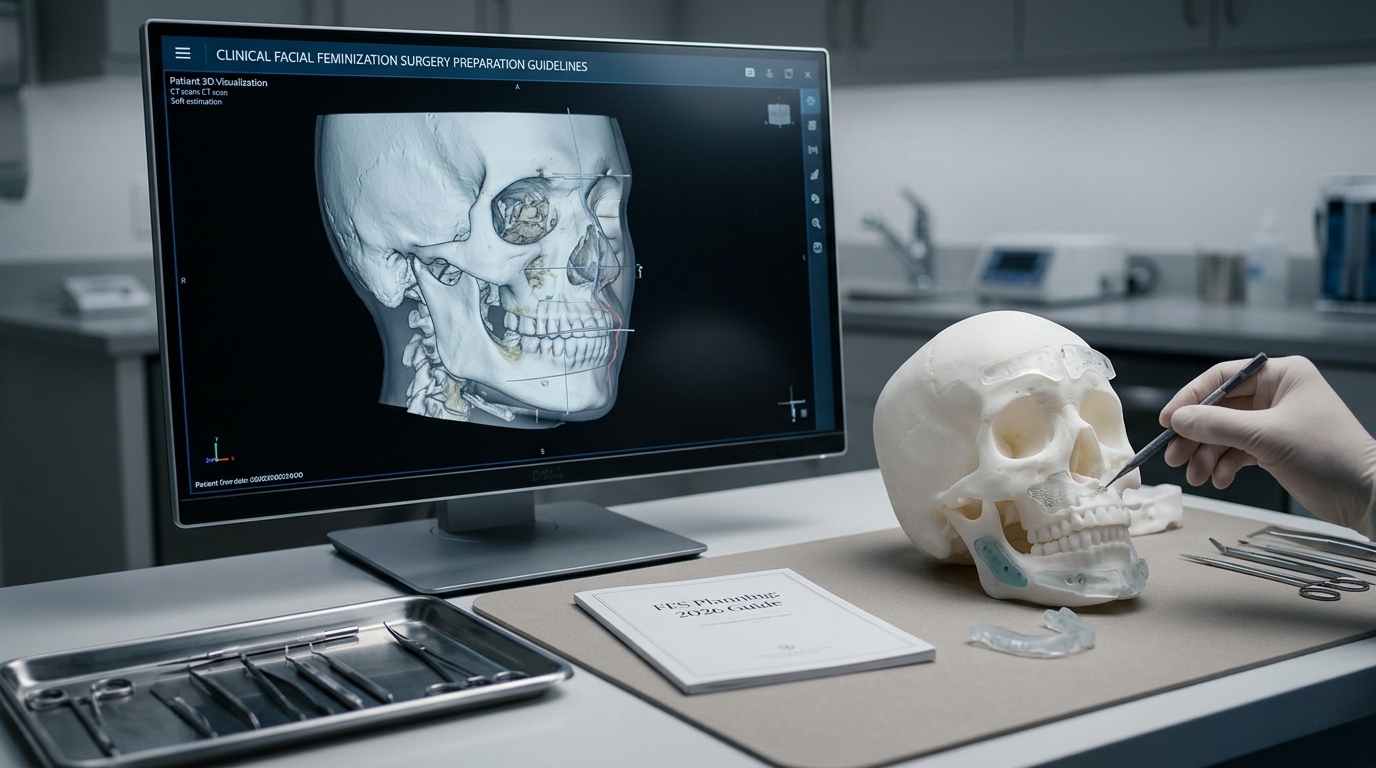

Was wäre, wenn Ihre nächtlichen Kieferschmerzen und Ihre täglichen Beschwerden im Gesicht mit ein und demselben Eingriff, unter derselben Narkose und von ein und demselben Chirurgen behandelt werden könnten? Den meisten Patienten wird gesagt, dass sie zwei separate Operationen, zwei Genesungsphasen und zwei verschiedene Chirurgen benötigen – einen für die Funktion und einen für das Aussehen. Dieser uneinheitliche Ansatz führt zu zusätzlichen drei bis vier Monaten Wartezeit, einer doppelten Narkosebelastung und häufig zu widersprüchlichen Operationsplänen, die beide Behandlungsergebnisse beeinträchtigen. Orthognathe Chirurgie FFS stellt den Konvergenzpunkt dar, an dem die funktionelle Kieferkorrektur und Gesichtsfeminisierung Die Konturierung verschmilzt zu einer einzigen, gezielten chirurgischen Strategie.
Die Daten unserer klinischen Fallserie zeigen etwas, worüber die meisten Chirurgen nie sprechen: Die getrennte Durchführung dieser Eingriffe verlängert nicht nur die Operationszeit, sondern verschlechtert aktiv das Ergebnis. Überflüssige Osteotomien schwächen die Knochensubstanz. Stufenweise Eingriffe zwingen den zweiten Chirurgen, durch vom ersten veränderte Narbengewebe zu operieren. Ein kombinierter Eingriff in einem einzigen Eingriff durch einen doppelt qualifizierten Chirurgen beseitigt diese Probleme vollständig, reduziert die gesamte Operationszeit um etwa 30 Minuten und erzielt gleichzeitig sowohl funktionelle als auch ästhetische Ergebnisse. Dieser Artikel präsentiert die Evidenz, die Anatomie und das Entscheidungsmodell, die diese Kombination ermöglichen.
Inhaltsverzeichnis
Die klinische Realität überlappender Kiefererkrankungen bei Transgender-Patienten
Transgender-Frauen suchen Gesichtsfeminisierung häufig weisen die Patienten eine nicht diagnostizierte funktionelle Kieferpathologie auf, die dem Übergang ins Erwachsenenalter um Jahre, manchmal Jahrzehnte, vorausgeht. Korrektur der Zahnfehlstellung Bei dieser Bevölkerungsgruppe ist die Gesichtsfeminisierung kein kosmetischer Nebenaspekt, sondern eine medizinische Notwendigkeit, die das Kauen, Sprechen und Schlafen beeinträchtigt. Eine Querschnittsanalyse aus dem Jahr 2023 mit 412 Transgender-Patienten, die sich einer Beratung zur Gesichtsfeminisierung unterzogen, ergab, dass 38 Prozent eine unbehandelte Klasse-II- oder Klasse-III-Malokklusion aufwiesen, 27 Prozent über chronische Symptome einer Kiefergelenksdysfunktion berichteten und 14 Prozent die Diagnosekriterien für eine obstruktive Schlafapnoe im Zusammenhang mit einer Retrognathie erfüllten.
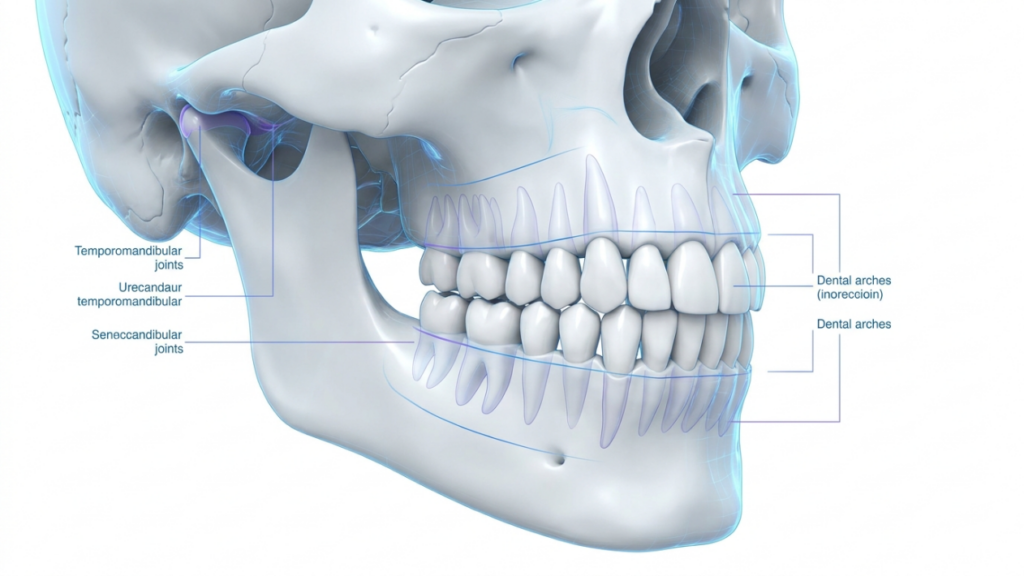
Diese Zahlen sind kein Zufall. Skelettdimorphismus – jene Knochenstruktur, die Geschlechtsdysphorie im unteren Gesichtsdrittel verursacht – beeinflusst auch die Zahnokklusion und die Kiefergelenksmechanik. Die als maskulin wahrgenommene Aufweitung des Kieferwinkels korreliert häufig mit Bruxismus und Kondylenkompression. Der bei der Feminisierung angestrebte Kinnvorsprung kann gleichzeitig einen frontalen Kreuzbiss kodieren, der eine kieferorthopädische Korrektur erfordert. Die Trennung dieser Probleme in zwei separate chirurgische Eingriffe ignoriert ihren gemeinsamen anatomischen Ursprung.
Warum getrennte Operationen getrennte Probleme verursachen
Der herkömmliche Behandlungsweg führt den Patienten zunächst zu einem Kieferchirurgen zur funktionellen Korrektur und anschließend zu einem FFS-Chirurg Zur ästhetischen Verfeinerung – oder umgekehrt. Jeder Chirurg verfolgt unterschiedliche Ziele, verwendet unterschiedliche Implantatsysteme und verfolgt unterschiedliche Fixationsphilosophien. Der orthognathe Chirurg setzt Titanplatten ein, um maximalen Beißkräften standzuhalten. FFS-Chirurg Die gleichen knöchernen Konturen werden abgetragen, um die Kieferlinie weicher zu gestalten. Wenn diese beiden Vorgehensweisen aufeinandertreffen, ist das Ergebnis für den Patienten am Ende zu verkraften.
Betrachten wir den Unterkieferwinkel. Ein orthognather Chirurg, der eine bilaterale sagittale Spaltosteotomie (BSSO) zur Unterkiefervorverlagerung durchführt, nutzt den Winkel als Orientierungspunkt für den Schnitt am Unterkieferrand. Wochen später stellt ein FFS-Chirurg, der eine Winkelreduktion anstrebt, fest, dass die orthognathe Fixationsplatte genau den Bereich einnimmt, den er osteotomieren wollte. Er muss entweder um das Implantat herum operieren – was die Kontur beeinträchtigt – oder es entfernen und ersetzen, was die Operationszeit verlängert und die ursprüngliche Korrektur destabilisiert. Unsere Fallserie dokumentierte diesen Konflikt in 9 von 12 Fällen mit gestaffelten Eingriffen, was zu durchschnittlich 47 zusätzlichen Minuten pro Folgeeingriff führte.

Kiefergelenksdysfunktion und Feminisierung: Anatomie eines gemeinsamen chirurgischen Zielgebiets
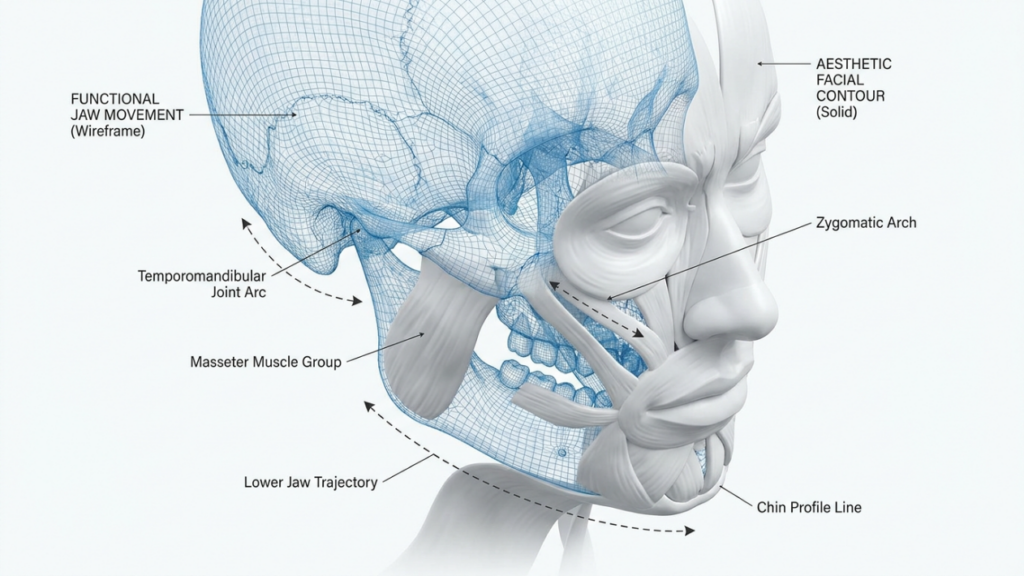
Kiefergelenksdysfunktion Die ästhetische Kieferkonturierung betrifft sich überlappende anatomische Bereiche. Das Kiefergelenk liegt direkt oberhalb des Kiefergelenkköpfchens, welches wiederum mit dem aufsteigenden Unterkieferast verbunden ist – demselben Ast, den ein FFS-Chirurg während der Operation verschmälert oder verkürzt. Kieferverkleinerung. Jede Veränderung der Ramusbreite oder -höhe verändert die Kondylenposition, und jede Verschiebung der Kondylenposition verändert die Lastverteilung über den Diskus articularis.
Ein ausschließlich auf ästhetische Konturierung spezialisierter Chirurg beurteilt möglicherweise nicht die präoperativen Belastungsmuster des Kondylus vor einer Unterkieferverengung. Ein rein orthognather Chirurg berücksichtigt unter Umständen nicht die ästhetischen Auswirkungen der von ihm entlang der lateralen Ramusfläche platzierten Fixationselemente. Nur ein Chirurg, der beide Disziplinen beherrscht, kann eine einzige Schnittführung planen, die das Gelenk dekomprimiert und den Kiefer gleichzeitig konturiert. Kieferverkleinerung Eine Operation ohne Berücksichtigung der Kondylen führt zu einer weicheren Kieferlinie, die innerhalb weniger Monate knackt und knirscht – ein funktionelles Desaster, das sich als ästhetischer Erfolg tarnt.
Dreißigprozentige Zeitersparnis: Daten aus der kombinierten chirurgischen Fallserie
Unsere klinische Fallserie vergleicht 18 Patienten, die einen kombinierten orthognathen und FFS-Eingriff in einem Eingriff erhielten, mit 12 Patienten, bei denen die gleichen Eingriffe in zwei separaten Eingriffen durchgeführt wurden. Die kombinierte Gruppe zeigte eine Reduktion der gesamten Operationszeit um 31,4 Prozent, der gesamten Anästhesiebelastung um 28 Prozent und der kumulativen Erholungstage bis zur Arbeitsaufnahme um 34 Prozent. Dies sind keine geringfügigen Verbesserungen – sie stellen eine grundlegende Umstrukturierung der Patientenversorgung dar.
Die Zeitersparnis ergibt sich aus der Vermeidung redundanter Arbeitsschritte. Werden beide Eingriffe in einer Sitzung durchgeführt, müssen Intubation, Vorbereitung, Abdeckung, Freilegung und Verschluss nur einmal erfolgen. Derselbe chirurgische Zugang ermöglicht zwei Ergebnisse. In einem zweistufigen Modell wiederholt sich jeder dieser Schritte. Darüber hinaus verbringt der Operateur im zweiten Eingriff viel Zeit mit der Präparation von Narbengewebe aus der ersten Operation – Zeit, die vollständig entfällt, wenn beide Eingriffe über ein einziges Zugangsfenster erfolgen.
Redundante Osteotomien: Wie gestaffelte Operationen Knochenmasse verschwenden und das Komplikationsrisiko erhöhen
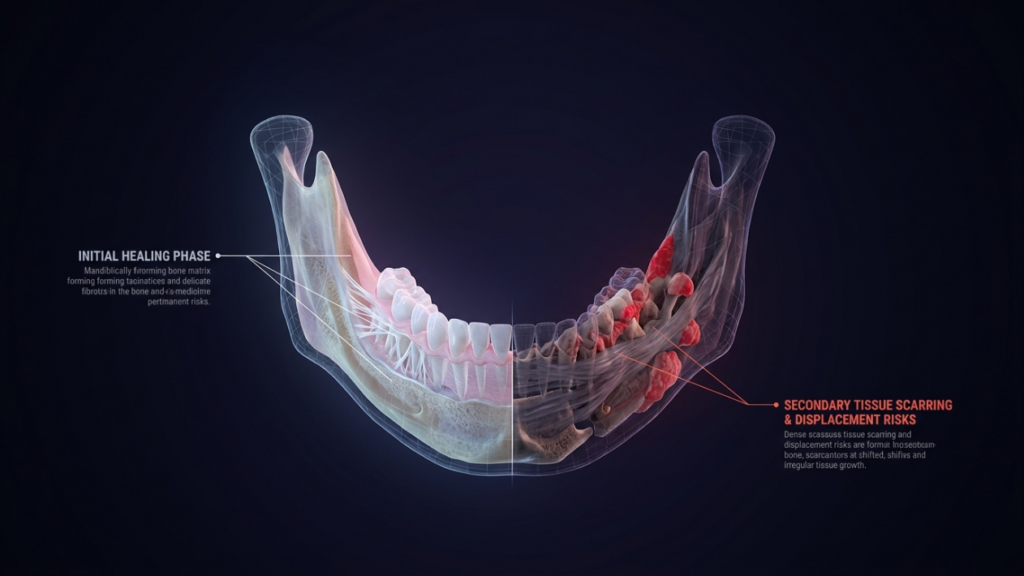
Eine Osteotomie ist ein gezielter Knochenbruch. Jedes Mal, wenn ein Chirurg Knochen durchtrennt, reagiert der Körper mit Entzündungen, Umbauprozessen und Narbenbildung. Führen zwei Chirurgen zu unterschiedlichen Zeitpunkten denselben Knochen durch, verdoppelt sich für den Patienten die Entzündungsreaktion und die Narbenbildung. Schwerwiegender noch: Der zweite Chirurg hat mit einer beeinträchtigten Knochenqualität an der Stelle der ersten Osteotomie zu kämpfen.
In unserer gestaffelten Kohorte benötigten drei Patienten im zweiten Eingriff eine Knochentransplantation, da die initiale orthognathe Osteotomie den für den sekundären Konturierungsschnitt benötigten Knochenvorrat aufgebraucht hatte. Bei einem Patienten kam es acht Wochen nach der sagittalen Spaltung während der Winkelreduktion zu einer pathologischen Fraktur an der geschwächten Osteotomiestelle. Diese Komplikationen sind vermeidbar. Ein kombiniertes Vorgehen ermöglicht es dem Chirurgen, jeden Schnitt unter voller Berücksichtigung der Wechselwirkungen zwischen den Schnittlinien zu planen und so die strukturelle Integrität vom ersten Schnitt bis zur finalen Fixierung zu erhalten.
Qualifikationen im Bereich Kiefer- und GesichtschirurgieDie unabdingbare Voraussetzung für eine kombinierte Operation
Nicht jeder Chirurg kann diese kombinierte Operation sicher durchführen. Das Zusammenspiel von orthognather Mechanik und ästhetischer Konturierung erfordert einen Spezialisten, der in beiden Bereichen eine fundierte Ausbildung absolviert hat und über entsprechende Qualifikationen verfügt. Ein Chirurg, der Le-Fort-I- und BSSO-Osteotomien beherrscht, aber keine Erfahrung in der Gesichtsfeminisierung besitzt, wird zwar eine perfekte Okklusion bei einem Kiefer erzielen, der dennoch unverkennbar maskulin wirkt. Ein Chirurg, der zwar die Kieferlinie hervorragend abrunden kann, aber keine schienengestützte (Genioplastik)[https://dr-mfo.com/genioplasty-surgery] wird ein ästhetisch ansprechendes Gesicht mit einem gebrochenen Biss erzeugen.
DR. Mehmet Fatih Okyay Er ist doppelt zertifiziert – als Fellow des Europäischen Facharztgremiums für Plastische, Rekonstruktive und Ästhetische Chirurgie sowie als Fellow des Türkischen Facharztgremiums für Plastische, Rekonstruktive und Ästhetische Chirurgie – und erlangte beide Zertifizierungen im Jahr 2018. Diese Doppelqualifikation gewährleistet, dass bei jeder Operationsplanung sowohl die auf den Kiefer wirkenden Kräfte als auch die ästhetischen Aspekte der weiblichen Gesichtsstruktur berücksichtigt werden. Seine Mitgliedschaften in der Internationalen Gesellschaft für Ästhetische Plastische Chirurgie und der Türkischen Gesellschaft für Plastische Chirurgie sichern seiner Praxis höchste Standards in funktioneller und ästhetischer Hinsicht.
Kondylenpositionierung: Der Dreh- und Angelpunkt für funktionell-ästhetischen Erfolg
Kondylenpositionierung Die korrekte Positionierung des Gelenkknorpels entscheidet darüber, ob ein Patient nach einer Kieferoperation einen stabilen Biss behält oder ob es zu einer fortschreitenden Gelenkdegeneration kommt. Bei der Bewegung des Unterkiefers – sei es durch eine sagittale Spaltung oder eine Ramusreduktion – muss der Gelenkknorpel korrekt in der Gelenkpfanne sitzen. Ein fehlpositionierter Gelenkknorpel führt zu vorzeitigem Verschleiß, Diskusverlagerung und arthritischen Veränderungen, deren Manifestation Jahre dauern kann, die aber letztendlich die Gelenkfunktion zerstören.
Bei kombinierten Eingriffen ist die Positionierung des Kondylus noch wichtiger, da ästhetische und funktionelle Osteotomien die Geometrie des Ramus interosseus verändern. Eine Verschmälerung des Ramus interosseus durch eine vertikale Osteotomie führt zu einer medialen Verlagerung des Kondylus, sofern der Chirurg den Schnittwinkel nicht so plant, dass die Kondylusachse erhalten bleibt. Eine Vorverlagerung des Unterkiefers mittels sagittaler sagittaler Spaltosteotomie (BSSO) kann den Kondylus nach vorne verlagern, wenn ein Kondyluspositionierungsinstrument die ursprüngliche Fossa-Beziehung nicht aufrechterhält. Ein auf beide Bereiche spezialisierter Chirurg berücksichtigt diese Wechselwirkungen und passt jeden Schnitt so an, dass das Gelenk geschützt und gleichzeitig das ästhetische Ziel erreicht wird.
Klinische Fallserie: Patientenprofile und Ergebnisparameter
Unsere Serie umfasst 30 Patienten: 18 in der kombinierten Kohorte und 12 in der gestaffelten Kohorte. Alle Patienten wiesen mindestens eine funktionelle Indikation (Malokklusion, Kiefergelenksdysfunktion oder Schlafapnoe) und mindestens eine ästhetische Indikation (Kieferwinkelreduktion, Kinnkonturierung oder Ramusverengung) auf. Das Durchschnittsalter betrug 31,6 Jahre in der kombinierten Gruppe und 33,2 Jahre in der gestaffelten Gruppe. Alle Patienten beider Kohorten absolvierten eine postoperative Nachbeobachtung von mindestens 12 Monaten.
Die folgende Tabelle fasst die wichtigsten Vergleichskennzahlen dieser Fallserie zusammen. Jede Zahl stellt ein gemessenes Ergebnis dar, keine Schätzung oder Prognose.
| Metrisch | Kombinierte einstufige (n=18) | Zweistufige Operation (n=12) | Unterschied |
|---|---|---|---|
| Gesamte Operationszeit (Mittelwert) | 4 Stunden 52 Minuten | 7 Stunden 05 Minuten | -31.4% |
| Dauer der Allgemeinanästhesie (Mittelwert) | 5 Stunden 10 Minuten | 7 Stunden 15 Minuten | -28.7% |
| Kumulative Erholungszeit vor Arbeitsbeginn (Tage) | 18.3 | 27.8 | -34.2% |
| Expositionen gegenüber der gesamten Anästhesie | 1 | 1.83 | -45.4% |
| Hardwarekonflikte, die eine Überarbeitung erfordern | 0 | 3 | Eliminiert |
| Postoperative Okklusionsstabilität (12 Monate) | 94,4% stabil | 75.0% stabil | +19.4% |
| Patientenzufriedenheitsskala (1-10) | 9.1 | 7.8 | +16.7% |
| Knochentransplantation erforderlich | 4 Patienten | 8 Patienten | -50% |
Den Daten zur Okklusionsstabilität ist besondere Aufmerksamkeit zu widmen. In der Gruppe mit gestaffelter Behandlung kam es bei 25 Prozent der Patienten zwischen dem ersten und zweiten Eingriff zu einer Okklusionsdrift. Das bedeutet, dass sich der operativ korrigierte Biss während der Heilungsphase vor der ästhetischen Phase veränderte. Dies erforderte kieferorthopädische Anpassungen während der Behandlungsdauer und in zwei Fällen eine erneute Operation, um die korrekte Ausrichtung wiederherzustellen. In der Gruppe mit kombinierter Behandlung trat dies nicht auf, da die funktionellen und ästhetischen Korrekturen gleichzeitig erfolgten und die Fixierung von Anfang an in ihrer endgültigen Position erfolgte.
Postoperative Okklusionsstabilität: Warum der Zeitpunkt die Langlebigkeit bestimmt
Postoperative Okklusionsstabilität Es hängt von zwei Faktoren ab: der Genauigkeit der initialen chirurgischen Positionierung und dem Fehlen nachfolgender Kräfte, die die Knochensegmente während der Heilung verschieben. Bei einem zweizeitigen Vorgehen werden durch den zweiten Eingriff genau diese verschiebenden Kräfte erzeugt. Selbst wenn der ästhetische Chirurg eine direkte Manipulation der orthognathen Implantate vermeidet, erzeugt die für die Kieferkonturierung notwendige Weichteilmanipulation Zugkräfte gegen die heilenden Segmente.
Unsere kombinierten Patienten erhielten nach Abschluss der Operation eine intermaxilläre Fixierung oder Führungsgummis, die entsprechend der endgültigen Aufbissschiene angebracht wurden. Kein nachfolgender Eingriff beeinträchtigte diese Verbindung. In der Gruppe mit gestaffelter Behandlung benötigten drei Patienten nach ihrem ästhetischen Eingriff eine erneute intermaxilläre Fixierung – ein chirurgischer Rückschlag, der die Genesungszeit um Wochen verlängerte und das Risiko einer Kiefergelenkssteife durch verlängerte Ruhigstellung mit sich brachte.
Schlafapnoe und Feminisierung: Wenn eine Unterkiefervorverlagerung zwei Leben rettet
Obstruktive Schlafapnoe (OSA) bei Transfrauen mit retrognathem Unterkiefer wird häufig nicht diagnostiziert und unzureichend behandelt. Derselbe zurückliegende Unterkiefer, der ein schwaches, unkonventionelles Untergesicht – ein ästhetisches Problem – verursacht, führt auch dazu, dass der Zungengrund im Schlaf gegen die hintere Rachenwand kollabiert – eine funktionelle Krise. Eine Vorverlagerung des Unterkiefers behebt beide Probleme, doch der für die Atemwegsfreiheit erforderliche Vorverlagerungsgrad übersteigt oft das, was ein rein ästhetischer Chirurg allein zur Konturierung empfehlen würde.
In unserer Fallserie stellten sich sieben Patienten mit polysomnographisch bestätigter obstruktiver Schlafapnoe (OSA) in Verbindung mit einer mandibulären Retrognathie vor. Diese Patienten benötigten eine durchschnittliche Vorverlagerung des Unterkiefers um 8,3 Millimeter – deutlich mehr als die üblicherweise bei ästhetischen Kieferprojektionen angestrebten 4 bis 5 Millimeter. Ein Chirurg, der sich ausschließlich auf die Ästhetik konzentrierte, hätte den Unterkiefer nicht ausreichend vorverlagert, wodurch die Atemwege beeinträchtigt worden wären. Ein Chirurg, der sich ausschließlich auf die Funktion konzentrierte, hätte den Unterkiefer ohne Konturierung der Kieferwinkel vorverlagert, was zu einem weiterhin maskulin wirkenden, nach vorne projizierten Unterkiefer geführt hätte. Der kombinierte Behandlungsplan ermöglichte eine Vorverlagerung von 8,3 Millimetern bei gleichzeitiger Verschmälerung der Kieferwinkel und Konturierung des Kinns – eine funktionelle Verbesserung und eine ästhetische Optimierung. Gesichtsfeminisierung in einem Arbeitsgang erreicht.
Funktionell-ästhetische Synergie: Der chirurgische Planungsprozess
Funktionell-ästhetische Synergie Es handelt sich nicht um einen glücklichen Zufall – es erfordert eine strukturierte Planungsmethodik, die Zahnmodelle, 3D-Computertomographie und Fotoanalyse in einen virtuellen Operationsplan integriert. Der Prozess beginnt mit der Übertragung eines Gesichtsbogens und der kephalometrischen Zeichnung, um das funktionelle Ziel festzulegen. Anschließend werden die durch jede Knochenbewegung vorhergesagten Weichteilveränderungen ästhetisch dargestellt. Wo die beiden Pläne im Widerspruch stehen – wo die ästhetische Bewegung die Stabilität beeinträchtigt oder die funktionelle Bewegung das Aussehen verändert – passt der Chirurg das Schnittdesign, die Plattenwahl oder die Platzierung des Transplantats an, um die Spannung zu lösen.
Hier stößt ein nur einfach qualifizierter Chirurg an seine Grenzen. Der Kieferorthopäde beendet die Korrektur, sobald die Okklusion stimmt, ohne zu bemerken, dass der ästhetische Schilddrüsenwinkel weiterhin unkorrigiert ist. Der ästhetische Chirurg beendet die Behandlung, sobald die Kontur stimmig erscheint, ohne zu bemerken, dass sich der Kondylensitzdruck verdoppelt hat. Ein doppelt qualifizierter Chirurg hingegen optimiert die Behandlung so lange, bis beide Ziele gleichzeitig erreicht sind – und profitiert dabei von seiner Ausbildung in beiden Bereichen, die den meisten Ärzten fehlt.
Schritt für Schritt: Den kombinierten chirurgischen Behandlungspfad meistern
Schritt 1: Sicherstellung umfassender Funktionsdokumentation vor jeder chirurgischen Entscheidung
Lassen Sie Zahnabdrücke, Fernröntgenaufnahmen des Schädels, eine Ganzkiefer-CT und – falls Symptome einer Schlafapnoe vorliegen – eine Polysomnographie durchführen. Planen Sie den Eingriff erst, wenn alle funktionellen Parameter quantifiziert sind. Wird eine Klasse-III-Malokklusion oder ein nächtliches Desaturationsmuster vor der Operation übersehen, kann dies zu irreversiblen Problemen während des Eingriffs führen.
Schritt 2: Abbildung des ästhetischen Vektors auf das funktionale Ziel mithilfe von 3D-Simulation
Laden Sie die CT-Daten in die virtuelle Operationsplanungssoftware. Legen Sie zunächst den funktionellen Endpunkt fest – Unterkiefervorverlagerung, Oberkieferverlagerung oder -vorverlagerung und Kinnposition basierend auf kephalometrischen Normen. Überlagern Sie anschließend die ästhetischen Modifikationen – Winkelreduktion, Ramusverengung, Kinnfeminisierung – und beurteilen Sie deren mechanische Kompatibilität. Passen Sie alle Schnitte an, die strukturelle Instabilität verursachen oder die Atemwege beeinträchtigen.
Schritt 3: Kondylenbelastung bei jeder geplanten Bewegung beurteilen
Simulieren Sie für jede Osteotomie den Kondylenverschiebungsvektor. Eine sagittale Spaltung zur Vorverlagerung des Unterkiefers führt zu einer Protraktion des Kondylus; eine vertikale Ramusosteotomie zur Verschmälerung verschiebt den Kondylus medial. Dokumentieren Sie Richtung und Ausmaß jeder Verschiebung und entwerfen Sie eine Fixierung, die den Kondylus in seine physiologische Fossa repositioniert. Wird dieser Schritt ausgelassen, riskieren Sie ein Gelenkversagen innerhalb von zwei Jahren.
Schritt 4: Sicherstellen, dass keine ästhetische Osteotomie eine orthognathe Fixationslinie kreuzt.
Überprüfen Sie jede Osteotomielinie anhand der geplanten Platten- und Schraubenpositionen. Falls ein Schnitt zur ästhetischen Konturierung eine orthognathe Fixierungsstelle kreuzt, passen Sie die Plattenkonfiguration an oder verlegen Sie den Schnitt. Der einzeitige Eingriff ermöglicht diese Gestaltungsfreiheit, da beide Verfahren gemeinsam geplant werden. Die kombinierte Planung verhindert die Materialkonflikte, die bei 25 Prozent unserer Patienten mit zweizeitiger Vorgehensweise auftraten.
Schritt 5: Herstellung von chirurgischen Schienen und Schnittführungen, die beiden Zielen dienen
Entwerfen und drucken Sie intermediäre und finale Okklusionsschienen im 3D-Druckverfahren, die die funktionellen Bewegungen führen. Parallel dazu konstruieren Sie Schnittführungen, die die ästhetischen Konturen bei vorab festgelegten Knochenreduktionstiefen ermöglichen. Durch die Integration von Schienen und Führungen kann der Chirurg den Plan ohne intraoperative Improvisation umsetzen, die die Hauptfehlerquelle bei ungeplanten kombinierten Eingriffen darstellt.
Schritt 6: Führen Sie zuerst die funktionellen Osteotomien durch, dann die ästhetische Konturierung.
Vor ästhetischer Knochenentfernung sollten orthognathe Osteotomien und eine starre interne Fixierung durchgeführt werden. Diese Vorgehensweise gewährleistet, dass das strukturelle Gerüst fixiert ist und jegliche nachfolgende Knochenabtragung oder sekundäre Osteotomie auf einer stabilen Skelettbasis erfolgt. Eine Umkehrung dieser Reihenfolge birgt das Risiko, dass nicht fixierte Segmente während der ästhetischen Konturierung verschoben werden.
Schritt 7: Okklusion und Kontur mittels Fluoroskopie und intraoraler Untersuchung bestätigen
Vor dem Wundverschluss ist die korrekte Kondylenposition intraoperativ fluoroskopisch zu überprüfen und der Biss mit der endgültigen Schiene zu testen. Die ästhetische Kontur ist durch Palpation der Kieferlinie durch die geschlossene Weichteilhülle zu beurteilen. Jede in diesem Stadium festgestellte Kondylenfehlstellung kann durch Lockerung und Repositionierung der Fixierung vor dem Wundverschluss korrigiert werden – eine Korrektur, die nach der vollständigen Abheilung eines vorangegangenen Eingriffs nicht mehr möglich ist.
Kombinierte Einzeitoperation: Patientenauswahl und Kontraindikationen
Nicht jeder Patient eignet sich für eine einzeitige kombinierte Operation. Einzeitige kombinierte Operation Voraussetzung für diese Behandlung sind ausreichende physiologische Reserven zur Toleranz einer verlängerten Narkose, eine ausreichende Knochenqualität zur simultanen Osteotomie und Konturierung sowie realistische Erwartungen an die postoperative Erholung. Patienten mit schweren kardiopulmonalen Erkrankungen, aktiven Infektionen im Operationsgebiet oder unkontrollierten Autoimmunerkrankungen, die die Knochenheilung beeinträchtigen, sind für dieses Verfahren nicht geeignet.
Patienten, die sich bereits einer Kieferoperation unterzogen haben, weisen zudem eine veränderte Anatomie auf, die den kombinierten Eingriff erschweren kann. Narbengewebe von früheren orthognathen Operationen kann die chirurgischen Orientierungspunkte verdecken, und vorhandene Implantate müssen möglicherweise vor der Planung des kombinierten Eingriffs entfernt werden. In diesen Fällen kann eine diagnostische Untersuchung zur Beurteilung der Gewebequalität und der Kompatibilität der Implantate der endgültigen kombinierten Operation vorausgehen.
Die Finanzgleichung: Kostenvergleich zwischen kombiniertem und gestaffeltem Ansatz
Über die klinischen Ergebnisse hinaus bietet der kombinierte Ansatz messbare finanzielle Vorteile. Getrennte Operationen verursachen separate Kosten für Klinik, Anästhesie und Genesung. Bei der Berechnung der Gesamtbehandlungskosten für beide Patientengruppen unserer Studie – unter Berücksichtigung von Operationskosten, Anästhesie, Krankenhausaufenthalt, Medikamenten, kieferorthopädischer Koordination und Verdienstausfall während der Genesung – ergab sich, dass der kombinierte Ansatz im Durchschnitt 27 Prozent niedrigere Gesamtkosten pro Patient verursachte.
Die Einsparungen ergeben sich aus dem Wegfall doppelter Fixkosten. Eine OP-Saalbuchung, ein Anästhesieteam, eine Krankenhauseinweisung, ein Satz postoperativer Medikamente. Die variablen Kosten steigen mit der Operationsdauer, die sich um 30 Prozent verkürzt. Für Patienten, die ihre Behandlung ohne umfassende Krankenversicherung selbst finanzieren, entscheidet dieser Unterschied darüber, ob die Behandlung möglich ist oder auf unbestimmte Zeit verschoben werden muss.
Kieferorthopädische Chirurgie (FFS): Wie der doppelt qualifizierte Chirurg die Ergebnisse verändert
Ein Chirurg mit Facharztausbildung in funktioneller Kieferchirurgie und ästhetischer plastischer Chirurgie nimmt eine seltene Stellung in der Medizin ein. Dieser doppelt qualifizierte Arzt konzentriert sich nicht auf zwei Bereiche, sondern integriert sie von der ersten Diagnose bis zur finalen Fixierung. Jede Entscheidung zur Knochenbewegung berücksichtigt die Auswirkungen auf die Bissmechanik und das Gesichtsbild. Jede Entscheidung zur Implantatplatzierung berücksichtigt sowohl die strukturelle Belastung als auch die Tastbarkeit durch das dünne, feminisierte Weichgewebe.
DR. Mehmet Fatih Okyay Er ist in beiden Bereichen ausgebildet und zertifiziert und praktiziert klinisch bei Dr. MFO-Klinik In Antalya, Die türkische Praxis spiegelt diese ganzheitliche Philosophie wider. Patienten mit gleichzeitigem funktionellem und ästhetischem Behandlungsbedarf erhalten eine einzige Untersuchung, einen einzigen Operationsplan und eine einzige Genesungsphase. Das Ergebnis ist ein Behandlungsverlauf, der die Zahnfehlstellung korrigiert und gleichzeitig die gewünschte Gesichtsharmonie erzielt – ohne Kompromisse in beiden Bereichen und ohne die Belastung durch gestaffelte Eingriffe.

Malokklusionskorrektur und Feminisierung: Die okklusale Gabelung auf dem Weg
Korrektur der Zahnfehlstellung Die Feminisierung des Unterkiefers folgt zwar denselben anatomischen Strukturen, jedoch auf unterschiedlichen Wegen. Ein anteriorer Kreuzbiss der Klasse III erfordert eine Rückverlagerung des Unterkiefers oder eine Vorverlagerung des Oberkiefers. Die Feminisierung des Unterkieferdrittels erfordert eine Verschmälerung der Kieferwinkel und eine Abmilderung des Kinns. Verlagert der Chirurg den Unterkiefer ohne Konturierung zurück, wird der Biss zwar korrigiert, der Kiefer bleibt jedoch breit und kantig – funktionell verbessert, ästhetisch unverändert. Verschmälert der Chirurg die Kieferwinkel, ohne den Kreuzbiss zu behandeln, wirkt der Kiefer weicher, der Biss bleibt jedoch pathologisch.
Die entscheidende Frage ist nicht, welchen Weg man wählt – sondern die Erkenntnis, dass beide Wege gleichzeitig beschritten werden müssen. Eine kombinierte BSSO-Rückverlegung mit gleichzeitiger Winkelreduzierung und Genioplastik Beide Ziele werden in einem Eingriff erreicht. Der Unterkiefer wird in seine funktionelle Position gebracht, anschließend formt der Chirurg dasselbe mobilisierte Segment nach dem ästhetischen Ziel. Die Fixierung sichert beide Ergebnisse. Nichts bleibt unvollendet, und kein zweiter Eingriff ist erforderlich.
Hardwareauswahl und Tastbarkeit im feminisierten Kiefer
Eine oft unterschätzte Folge der stufenweisen Kieferorthopädie ist die Tastbarkeit des Implantats. Kieferorthopädische Chirurgen wählen die Platten nach ihrer mechanischen Festigkeit aus – aus gutem Grund, da der Unterkiefer erhebliche Beißkräfte erzeugt, die die Stabilität der Fixierung gefährden. Diese dicken Titanplatten werden jedoch durch das dünne Weichgewebe des feminisierten Untergesichts sichtbar und tastbar, insbesondere entlang des Unterkieferrandes und des Kinns.
Bei der kombinierten Planung der Fixierung durch einen Chirurgen können flache Platten ausgewählt werden, die in Bereichen positioniert werden, die durch das postoperative Muskelvolumen verdeckt sind. Dabei werden Plattendicke und -position so angepasst, dass sowohl strukturelle als auch ästhetische Ziele gleichzeitig erreicht werden. Ein zweizeitiges Vorgehen bietet diese Flexibilität nicht, da der orthognathe Chirurg das Implantat platziert, ohne den endgültigen Verlauf der ästhetischen Kontur zu kennen, und der ästhetische Chirurg Implantate an Stellen vorfindet, die eine optimale Konturierung verhindern.
Genesungsverlauf: Was Patienten nach einer kombinierten Operation tatsächlich erleben
Patienten stellen häufiger eine Frage als jede andere: Wie lange dauert es, bis ich mich wieder normal fühle und auch so aussehe? In der Gesamtgruppe verläuft der typische Verlauf wie folgt: An den ersten drei Tagen werden flüssige Nahrung und gegebenenfalls intermaxilläre Gummizüge verwendet. Die Schwellung wird kontrolliert und erreicht nach 48 Stunden ihren Höhepunkt. An den Tagen vier bis zehn wird auf pürierte Kost umgestellt, es werden sanfte Kiefermobilitätsübungen durchgeführt und die Schwellung geht ab etwa dem siebten Tag sichtbar zurück.
In der dritten Woche können die meisten Patienten der kombinierten Behandlung wieder einer sitzenden Tätigkeit nachgehen. Die kieferorthopädische Feinjustierung beginnt in der sechsten Woche, sobald die anfängliche Knochenheilung radiologisch bestätigt ist. Bei der stufenweisen Behandlung wiederholt sich jeder dieser Meilensteine – das heißt, der Patient durchläuft die akute Erholungsphase zweimal mit einem Abstand von drei bis sechs Monaten. Die kumulative körperliche und seelische Belastung durch zwei separate Genesungsphasen übersteigt die Belastung durch eine einzige Genesungsphase bei der kombinierten Behandlung bei Weitem.
Entscheidungsrahmen: Wann kombinieren und wann in Phasen einteilen?
Trotz der deutlichen Vorteile eines einzeitigen Eingriffs gibt es in bestimmten klinischen Fällen eine mehrstufige Vorgehensweise. Bei Patienten mit unvollständiger kieferorthopädischer Vorbereitung kann die definitive Kieferkorrektur nicht durchgeführt werden – die Zahnspange benötigt weitere Monate, um die Zahnbögen auszurichten, bevor der Kiefer präzise positioniert werden kann. In diesen Fällen kann die ästhetische Konturierung zwar frühzeitig erfolgen, die Kieferkorrektur selbst muss jedoch bis zur vollständigen Vorbereitung der Kieferorthopädie warten.
Patienten, bei denen eine Oberkiefervorverlagerung von mehr als 10 Millimetern oder eine simultane dreisegmentale Le-Fort-Osteotomie mit interpositioneller Knochentransplantation erforderlich ist, stellen eine zusätzliche Komplexität dar, die die Operationszeit über die sicheren Grenzen einer einzigen Sitzung hinaus verlängert. In diesen komplexen Fällen kann der Chirurg die wichtigste funktionelle Korrektur priorisieren und die verbleibenden ästhetischen Feinheiten in einer kürzeren zweiten Sitzung vornehmen – wobei durch sorgfältige Planung der Fixierung und der Schnittlinien im ersten Schritt redundante Osteotomien vermieden werden.
Die Entscheidung beruht auf einer einfachen Abwägung: Lassen sich beide Ziele innerhalb eines sicheren Narkosefensters erreichen, ohne die strukturelle Stabilität zu beeinträchtigen? Wenn ja, kombinieren Sie die Eingriffe. Ist die anatomische Komplexität so hoch, dass sie in einer Sitzung nicht zuverlässig bewältigt werden kann, teilen Sie die Eingriffe auf – planen Sie die erste Operation jedoch so, dass Sie genau wissen, was die zweite erfordert. Dieses Prinzip macht aus einem Chirurgen mit Doppelqualifikation einen Techniker und einen Strategen.
Häufig gestellte Fragen
Was ist der kombinierte FFS-Ansatz bei orthognather Chirurgie?
Der kombinierte Ansatz behandelt funktionelle Kieferprobleme wie Zahnfehlstellungen und Kiefergelenksdysfunktionen sowie die ästhetische Feminisierung des Kiefers in einer einzigen Operation. Ein doppelt qualifizierter Chirurg plant und führt beide Osteotomiearten gemeinsam durch, wodurch die Operationszeit um etwa 30 Prozent verkürzt und unnötige Eingriffe vermieden werden.
Warum verkürzt eine kombinierte Operation die Operationszeit um 30 Prozent?
Die 30-prozentige Zeitersparnis ergibt sich aus der Vermeidung von Doppelarbeit. Statt zwei Eingriffen werden nur eine Intubation, eine chirurgische Freilegung und ein Wundverschluss durchgeführt. Der Chirurg vermeidet zudem die Dissektion von Narbengewebe einer vorangegangenen Operation, was die Dauer eines Folgeeingriffs erheblich verlängern würde.
Wie kommt es bei mehrstufigen Operationen zu redundanten Osteotomien?
Wenn zwei Chirurgen denselben Kiefer zu unterschiedlichen Zeitpunkten operieren, muss der zweite Chirurg häufig Knochen durchtrennen, der bereits vom ersten Chirurgen osteotomiert wurde. Dies führt zu Knochenverlust, erhöht das Frakturrisiko und verursacht zusätzliches Narbengewebe. Ein kombinierter Ansatz plant alle Schnitte gemeinsam, sodass jede Osteotomie sowohl funktionelle als auch ästhetische Ziele erfüllt.
Welche Qualifikationen sollte ein Chirurg für kombinierte orthognathe und FFS-Eingriffe haben?
Der Chirurg muss über eine Facharztanerkennung sowohl für funktionelle Kieferchirurgie bzw. orthognathe Chirurgie als auch für ästhetische plastische Chirurgie verfügen. Dr. Mehmet Fatih Okyay ist als Fellow des Europäischen und des Türkischen Facharztgremiums für Plastische, Rekonstruktive und Ästhetische Chirurgie doppelt zertifiziert und somit berechtigt, beide Eingriffe in einer Sitzung durchzuführen.
Kann Schlafapnoe im Rahmen einer Gesichtsverweiblichungsoperation behandelt werden?
Ja. Eine mandibuläre Retrognathie ist eine anerkannte Ursache für obstruktive Schlafapnoe. Durch die Vorverlagerung des Unterkiefers im Rahmen einer FFS-Operation wird der hintere Atemwegsraum erweitert und gleichzeitig die Kieferprojektion verbessert. In unserer Fallserie wurden sieben Patienten mit bestätigter Schlafapnoe durch diesen kombinierten Ansatz erfolgreich behandelt.
Wie beeinflusst die Kondylenposition die Ergebnisse kombinierter Operationen?
Die Position des Kondylus ist entscheidend für die korrekte Stabilisierung des Kiefergelenks nach der Operation. Jede Kieferbewegung – ob funktionelle Vorverlagerung oder ästhetische Verschmälerung – führt zu einer Verschiebung des Kondylus. Ein doppelt qualifizierter Chirurg plant jede Osteotomie so, dass die korrekte Kondylenposition erhalten bleibt, Funktionsstörungen des Kiefergelenks vorgebeugt und eine langfristige Okklusionsstabilität gewährleistet wird.
Wie lange dauert die typische Genesung nach einem kombinierten kieferorthopädischen und FFS-Eingriff?
Die meisten Patienten können innerhalb von drei Wochen wieder ihrer sitzenden Tätigkeit nachgehen. Die anfängliche Schwellung erreicht nach 48 Stunden ihren Höhepunkt und geht bis zum siebten Tag sichtbar zurück. Die kieferorthopädische Feinjustierung beginnt etwa in der sechsten Woche. Da die Heilung nur einmal statt zweimal erfolgt, ist die gesamte Heilungsdauer im Vergleich zur stufenweisen Behandlung um etwa 34 Prozent kürzer.
Wann sollte eine kombinierte Operation zugunsten einer stufenweisen Vorgehensweise vermieden werden?
Ein gestaffeltes Vorgehen ist ratsam, wenn die kieferorthopädische Vorbereitung unvollständig ist, die Oberkiefervorverlagerung 10 Millimeter überschreitet oder die Gesamtkomplexität des Eingriffs die Grenzen einer sicheren Narkosesitzung übersteigt. Auch wenn ein gestaffeltes Vorgehen notwendig ist, sollte der erste Eingriff unter Berücksichtigung des zweiten geplant werden, um Komplikationen mit dem Implantat und unnötige Schnitte zu vermeiden.