

En 2026, la intersección entre la salud metabólica y el contorno corporal de afirmación de género para mujeres transgénero (MTF) es más importante que nunca. A medida que crece la demanda de procedimientos de feminización seguros, eficaces y personalizados, también aumenta la necesidad de comprender cómo la terapia de reemplazo hormonal (TRH) a largo plazo afecta la estabilidad metabólica y los resultados quirúrgicos. Esta guía está dirigida tanto a pacientes como a cirujanos y ofrece una hoja de ruta para optimizar el momento oportuno, minimizar los riesgos y lograr los mejores resultados posibles en el contorno corporal de MTF.
Tabla de contenido
Por qué la estabilidad metabólica es importante en el contorno corporal de las mujeres trans.
Contorno corporal, ya sea a través de liposucción, injerto de grasa, La terapia hormonal sustitutiva (THS), ya sea mediante implantes o cirugía de reasignación de género, no se trata solo de estética. Se trata de alinear la forma física con la identidad de género de manera segura, sostenible y armoniosa con el estado metabólico del cuerpo. Para las pacientes transgénero de hombre a mujer (MTF), la THS a largo plazo induce cambios profundos en la composición corporal, la distribución de la grasa y la función metabólica. Estos cambios, si bien son transformadores, también plantean desafíos únicos para la planificación quirúrgica y la recuperación.
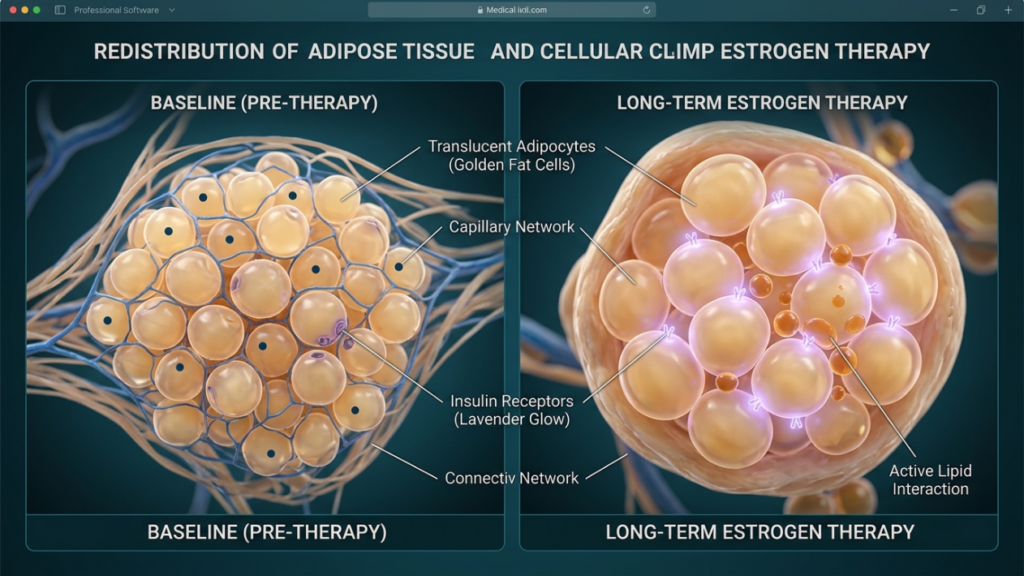
Cómo la terapia de reemplazo hormonal modifica el metabolismo y la composición corporal.
Los estrógenos y los antiandrógenos, pilares fundamentales de la terapia hormonal de reemplazo en mujeres transgénero, desencadenan una cascada de cambios metabólicos y fisiológicos:
- Redistribución de la grasa: El estrógeno promueve el almacenamiento de grasa en las caderas, los muslos y los glúteos, creando una silueta más femenina. Este proceso comienza a los pocos meses de iniciar la terapia hormonal sustitutiva (THS), pero continúa durante 2 a 5 años, observándose los cambios máximos generalmente después de 18 a 24 meses. (PMC8311086).
- Masa y fuerza muscular: La supresión de testosterona conlleva una disminución gradual de la masa y la fuerza muscular, especialmente en la parte superior del cuerpo. Si bien esto suaviza los rasgos masculinos, también reduce el metabolismo, lo que puede afectar el control del peso y la recuperación tras una cirugía (Musculoskeletal Key, 2024).
- Tasa metabólica: El estrógeno reduce la tasa metabólica basal (TMB), lo que significa que el cuerpo quema menos calorías en reposo. Este cambio puede provocar aumento de peso si no se ajustan los hábitos alimenticios y de actividad física, lo que podría complicar los procedimientos de contorno corporal. (TransVitae, 2026).
- Sensibilidad a la insulina y perfil lipídico: La terapia de reemplazo hormonal (TRH) puede mejorar la sensibilidad a la insulina en algunos pacientes, pero también puede alterar el perfil lipídico, aumentando el riesgo de síndrome metabólico si no se realiza un seguimiento. Es fundamental realizar un control metabólico periódico para detectar y abordar estos cambios precozmente. (Naturaleza, 2024).
- Densidad ósea: La terapia con estrógenos a largo plazo ayuda a mantener la densidad ósea, pero el uso prolongado sin un control adecuado puede provocar una disminución de la densidad mineral ósea (DMO), especialmente en pacientes con factores de riesgo adicionales. (PMC6616494).
Estos cambios metabólicos no son solo efectos secundarios, sino la base de tu transformación. Sin embargo, también implican que el momento y el enfoque del contorno corporal deben calibrarse cuidadosamente para garantizar la seguridad y obtener resultados óptimos.

La ciencia del momento oportuno para la cirugía: cuándo proceder con el contorno corporal.
No todos los procedimientos de remodelación corporal requieren la misma preparación, pero la estabilidad metabólica es un requisito universal. Esto es lo que nos dice la evidencia más reciente sobre el momento óptimo:
1. Duración mínima de la terapia de reemplazo hormonal antes de la cirugía.
La mayoría de los cirujanos recomiendan un mínimo de 12-24 meses de terapia hormonal sustitutiva continua antes de someterse a procedimientos importantes de contorno corporal. Este cronograma permite:
- Máxima redistribución natural de la grasa, lo que garantiza la mejor base posible para el aumento quirúrgico.
- Estabilización de los parámetros metabólicos, incluyendo la sensibilidad a la insulina, el perfil lipídico y la presión arterial.
- Reducción de los riesgos quirúrgicos, ya que los cambios metabólicos inducidos por la terapia de reemplazo hormonal pueden afectar la cicatrización y recuperación de las heridas. (Fronteras en Cirugía, 2025).
Para procedimientos como aumento de senos, Algunos cirujanos pueden recomendar esperar hasta 24 meses para permitir el máximo desarrollo natural de los senos antes de considerar la colocación de implantes. (Dr. MFO, 2025).
2. Estabilidad metabólica: la clave para una cirugía segura.
La estabilidad metabólica no se trata solo del tiempo de terapia hormonal sustitutiva, sino de asegurar que el cuerpo esté en las mejores condiciones posibles para afrontar la cirugía y recuperarse de forma óptima. Los indicadores clave de estabilidad metabólica incluyen:
- Peso estable: Su peso debe mantenerse estable durante al menos 3 a 6 meses antes de la cirugía. Las fluctuaciones significativas de peso pueden comprometer los resultados quirúrgicos y aumentar las complicaciones.
- Presión arterial normalizada: Los estrógenos pueden afectar la presión arterial, por lo que es importante controlar y gestionar la hipertensión antes de la cirugía.
- Niveles óptimos de lípidos y glucosa: Los análisis de sangre periódicos deberían confirmar que sus niveles de colesterol, triglicéridos y glucosa en sangre se encuentran dentro de rangos saludables.
- Densidad ósea saludable: Una densitometría ósea (DEXA) puede evaluar la salud ósea, especialmente si ha estado en tratamiento hormonal sustitutivo durante varios años o si tiene otros factores de riesgo de osteoporosis.
Si alguno de estos marcadores está fuera de rango, su cirujano Es posible que se recomiende posponer la cirugía hasta que su salud metabólica esté optimizada. Esto no es un retroceso, sino una medida preventiva para garantizar su seguridad y la durabilidad de los resultados.

3. Directrices sobre los plazos específicos del procedimiento.
| Procedimiento | Duración recomendada de la terapia de reemplazo hormonal | Consideraciones clave |
|---|---|---|
| liposucción (p. ej., cintura, brazos, muslos) | 12–18 meses | Permite la redistribución natural de la grasa; garantiza un peso y parámetros metabólicos estables. |
| Injerto de grasa (p. ej., caderas, nalgas, senos) | 18–24 meses | Maximiza la disponibilidad de grasa natural; mejora la supervivencia del injerto y la simetría. |
| Aumento de senos | 18–24 meses | Permite un desarrollo mamario natural máximo; reduce la necesidad de implantes más grandes. |
| Implantes de cadera/glúteos | 18–24 meses | Garantiza una composición corporal estable; reduce el riesgo de desplazamiento o asimetría del implante. |
| Extracción/remodelación de costillas | Más de 24 meses | Requiere un peso estable y buena salud metabólica; es un procedimiento complejo con una recuperación más prolongada. |
Fuente: Adaptado de las guías clínicas y el consenso de expertos, 2026.
Optimización metabólica: Preparando su cuerpo para la cirugía
Optimizar tu metabolismo antes de la cirugía no solo sirve para evitar complicaciones, sino que también prepara el terreno para obtener los mejores resultados posibles. Aquí te explicamos cómo prepararte:
1. Estrategias nutricionales
Tu alimentación juega un papel fundamental en la salud metabólica y la recuperación postoperatoria. Concéntrate en:
- Macronutrientes equilibrados: Asegúrese de consumir suficiente proteína para mantener la masa muscular y favorecer la cicatrización de heridas. Las grasas saludables y los carbohidratos complejos proporcionan energía sostenida y contribuyen a la producción de hormonas.
- Optimización de micronutrientes: Entre los nutrientes clave para la salud metabólica y la recuperación se incluyen la vitamina D, el calcio, el magnesio y el zinc. Considere realizarse un análisis de sangre para identificar y corregir cualquier deficiencia.
- Alimentos antiinflamatorios: Incorpora alimentos ricos en ácidos grasos omega-3 (por ejemplo, pescado azul, semillas de lino), antioxidantes (por ejemplo, bayas, verduras de hoja verde) y fibra para reducir la inflamación y favorecer la función metabólica.
Evite las dietas drásticas o la restricción calórica extrema, ya que pueden alterar la estabilidad metabólica y comprometer los resultados quirúrgicos.
2. Ejercicio y actividad física
El ejercicio regular favorece la salud metabólica, mejora la circulación y acelera la recuperación. Concéntrese en:
- Entrenamiento de fuerza: Ayuda a mantener la masa muscular, lo cual es especialmente importante ya que la terapia hormonal sustitutiva reduce la densidad muscular. Concéntrese en fortalecer la parte inferior del cuerpo y el tronco para mantener su nueva figura.
- Ejercicio cardiovascular: Mejora la salud cardiovascular y la función metabólica. Procure realizar al menos 150 minutos de ejercicio cardiovascular de intensidad moderada por semana.
- Flexibilidad y movilidad: Las rutinas de yoga o estiramiento pueden mejorar la circulación, reducir el estrés y preparar el cuerpo para la cirugía.
Si eres principiante en el ejercicio, empieza poco a poco y consulta con un entrenador o fisioterapeuta para crear una rutina segura y eficaz.
3. Optimización médica
Colabore con su equipo de atención médica para abordar cualquier desequilibrio metabólico u hormonal subyacente:
- Monitorización de la terapia de reemplazo hormonal: Los análisis de sangre periódicos deben controlar los niveles hormonales, la función hepática, el perfil lipídico y el metabolismo de la glucosa. Es posible que se requieran ajustes en el tratamiento de reemplazo hormonal para optimizar la salud metabólica.
- Detección metabólica: Los análisis metabólicos completos pueden identificar la resistencia a la insulina, la dislipidemia u otros problemas que pueden afectar el riesgo quirúrgico o la recuperación.
- Salud ósea: Si lleva varios años en tratamiento de reemplazo hormonal, una densitometría ósea (DEXA) puede evaluar su densidad ósea. Si se detecta osteoporosis u osteopenia, su médico podría recomendarle suplementos o medicamentos para fortalecer sus huesos antes de la cirugía.
4. Preparación mental y emocional
La cirugía no es solo un proceso físico, sino también emocional. Prepararse mental y emocionalmente puede mejorar la recuperación y la experiencia en general.
- Establezca expectativas realistas: Es importante comprender que el contorno corporal es un proceso, no un evento aislado. Es posible que se necesiten varios procedimientos para lograr los resultados deseados, y la recuperación requiere tiempo.
- Construye un sistema de apoyo: Rodéate de amigos, familiares o grupos de apoyo que comprendan y validen tu proceso. El apoyo emocional es fundamental para una recuperación sin complicaciones.
- Cómo afrontar la ansiedad y el estrés: La cirugía puede ser estresante. Técnicas como la atención plena, la meditación o la terapia pueden ayudar a controlar la ansiedad y fomentar la resiliencia emocional.
Técnicas quirúrgicas y consideraciones metabólicas
No todas las técnicas de remodelación corporal son iguales, especialmente para pacientes transgénero de hombre a mujer (MTF). Los últimos avances en tecnología y técnica quirúrgica priorizan la seguridad, los resultados naturales y la compatibilidad con los cambios metabólicos inducidos por la terapia de reemplazo hormonal (TRH).
1. Liposucción e injerto de grasa
La liposucción es un pilar fundamental del contorno corporal en mujeres transgénero (MTF), utilizada para eliminar la grasa no deseada de zonas como la cintura, el abdomen y los flancos, y para extraer grasa que se injerta en las caderas, los glúteos o los senos.
- Consideraciones metabólicas: La redistribución de grasa inducida por la terapia de reemplazo hormonal (TRH) implica que la grasa extraída para injertos suele ser más blanda y metabólicamente más activa que en pacientes cisgénero. Esto puede mejorar la supervivencia del injerto, pero también requiere un manejo cuidadoso para evitar complicaciones como la necrosis grasa o los quistes oleosos.
- Técnicas avanzadas: La liposucción asistida por potencia (PAL) y la liposucción asistida por láser (LAL) se utilizan cada vez más por su precisión y menor traumatismo, lo que puede acortar el tiempo de recuperación y mejorar los resultados. (Thieme, 2024).
2. Implantes: Caderas y glúteos
Para pacientes que desean curvas más pronunciadas, los implantes pueden realzar las caderas y los glúteos. Sin embargo, en pacientes transgénero de hombre a mujer, los implantes requieren una consideración cuidadosa debido a los cambios en la calidad de los tejidos y la salud metabólica inducidos por la terapia de reemplazo hormonal.
- Consideraciones metabólicas: El estrógeno puede aumentar la grasa subcutánea y alterar la elasticidad de los tejidos. Esto significa que los implantes pueden sentirse más suaves y naturales, pero también requieren una colocación precisa para evitar desplazamientos o asimetrías.
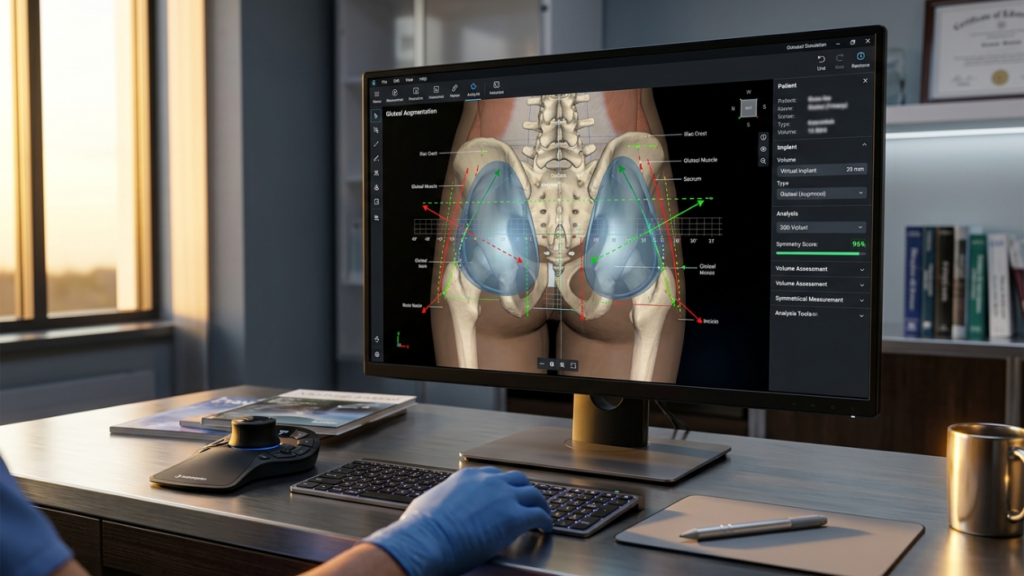
- Técnicas avanzadas: Las imágenes 3D y la planificación quirúrgica virtual permiten a los cirujanos simular resultados y optimizar la colocación de implantes, reduciendo el riesgo de complicaciones y mejorando la simetría. (Fronteras en Cirugía, 2025).
3. Eliminación de costillas y estrechamiento de la cintura
La extirpación o remodelación de costillas es un procedimiento complejo que puede crear una cintura más definida. Generalmente se reserva para pacientes que han alcanzado un estado metabólico estable y tienen expectativas realistas sobre los riesgos y la recuperación.
- Consideraciones metabólicas: Este procedimiento requiere una salud ósea óptima, ya que la terapia de reemplazo hormonal puede afectar la densidad ósea. Se recomienda una densitometría ósea (DEXA) para evaluar la resistencia ósea antes de la cirugía.
- Técnicas avanzadas: La extracción endoscópica de costillas minimiza las cicatrices y reduce el tiempo de recuperación. La planificación quirúrgica virtual garantiza una extracción precisa y simétrica.
4. Aumento de senos
Si bien la terapia hormonal sustitutiva induce el desarrollo natural de los senos, muchas pacientes transgénero optan por el aumento mamario para lograr el tamaño y la forma deseados. El momento y el enfoque para el aumento mamario deben considerar tanto los objetivos estéticos como la salud metabólica.
- Consideraciones metabólicas: El tejido mamario inducido por estrógenos suele ser más blando y glandular que en las mujeres cisgénero. Esto puede afectar la colocación del implante y la elección del tipo de implante (silicona frente a solución salina).
- Técnicas avanzadas: El injerto de grasa combinado con implantes (aumento híbrido) puede crear una apariencia y sensación más naturales. Las imágenes 3D ayudan a adaptar el procedimiento a su anatomía particular.

Cuidados postoperatorios y manejo metabólico a largo plazo
Tu recuperación no termina al salir del quirófano. Los cuidados postoperatorios y el control metabólico a largo plazo son fundamentales para mantener los resultados y garantizar tu salud.
1. Cuidados postoperatorios inmediatos
- El manejo del dolor: Siga las instrucciones de su cirujano para el alivio del dolor. Evite los AINE si tiene antecedentes de trastornos hemorrágicos o riesgo de problemas renales.
- Prendas de compresión: Utilice prendas de compresión según las indicaciones para reducir la hinchazón, dar soporte a sus nuevos contornos y mejorar la circulación.
- Actividad y movilidad: Reintroduzca gradualmente la actividad física ligera, como caminar, para favorecer la circulación y reducir el riesgo de coágulos sanguíneos. Evite el ejercicio intenso o levantar objetos pesados durante al menos 4 a 6 semanas.
- Citas de seguimiento: Asista a todas las citas de seguimiento programadas para controlar la recuperación, abordar las complicaciones a tiempo y ajustar su plan de tratamiento según sea necesario.
2. Manejo metabólico a largo plazo
Tras la cirugía, su atención debe centrarse en mantener la salud metabólica y preservar los resultados:
- Continuar con la terapia hormonal: No interrumpa la terapia hormonal sustitutiva sin supervisión médica. La interrupción repentina de la terapia hormonal puede provocar desequilibrios metabólicos, pérdida ósea y otros problemas de salud.
- Controles metabólicos periódicos: Continúe controlando su perfil lipídico, sus niveles de glucosa y su densidad ósea según las recomendaciones de su médico.
- Mantener un peso estable: Las fluctuaciones significativas de peso pueden alterar los resultados de la cirugía. Céntrese en una dieta equilibrada y en el ejercicio regular para mantener su nueva figura.
- Protección solar y cuidado de la piel: Protege tu piel del daño solar para mantener su elasticidad y reducir el riesgo de cicatrices. Usa protector solar a diario y sigue una rutina de cuidado facial adaptada a tus necesidades.
Preocupaciones comunes e ideas erróneas
A pesar del creciente número de investigaciones, persisten ideas erróneas sobre la terapia de reemplazo hormonal, la salud metabólica y el contorno corporal. A continuación, presentamos algunas de las preocupaciones más comunes y la información para abordarlas:
1. “La terapia hormonal por sí sola me dará el cuerpo que deseo”.”
Si bien la terapia hormonal sustitutiva (THS) induce cambios significativos en la distribución de la grasa y la composición corporal, tiene limitaciones. Muchas mujeres transgénero (MTF) consideran que los procedimientos de contorno corporal son necesarios para lograr la silueta deseada, especialmente en zonas como la cintura, las caderas y los glúteos. La THS y la cirugía son complementarias, no mutuamente excluyentes.
2. “Puedo operarme en cuanto empiece la terapia hormonal sustitutiva”.”
La estabilidad metabólica es un requisito indispensable para una cirugía segura. La mayoría de los cirujanos recomiendan esperar al menos 12 a 24 meses con la terapia de reemplazo hormonal (TRH) para permitir la redistribución natural de la grasa, la estabilización de los parámetros metabólicos y la reducción de los riesgos quirúrgicos. Apresurarse a someterse a una cirugía antes de que el cuerpo esté preparado puede comprometer los resultados y aumentar las complicaciones.
3. “El contorno corporal solo tiene que ver con la estética”
El contorno corporal va más allá de la apariencia: se trata de alinear la forma física con la identidad de género. Para muchas mujeres transgénero, estos procedimientos son un paso vital en su transición, mejorando la salud mental, la autoestima y la calidad de vida en general. Los beneficios psicológicos del contorno corporal están bien documentados y pueden ser tan importantes como los cambios físicos. (Universidad de Cornell, 2025).
4. “La terapia de reemplazo hormonal aumenta mi riesgo de síndrome metabólico”.”
La terapia de reemplazo hormonal (TRH) puede alterar el perfil lipídico y la sensibilidad a la insulina, pero el riesgo de síndrome metabólico depende de factores individuales como la genética, el estilo de vida y el estado de salud inicial. El seguimiento regular y el manejo proactivo pueden mitigar estos riesgos. De hecho, muchas pacientes transgénero de hombre a mujer experimentan una mejoría en su salud metabólica con la TRH debido a la reducción de los niveles de testosterona y al aumento de la actividad física.
5. “No necesito controlar mi salud después de la cirugía”
El control metabólico a largo plazo es esencial para mantener sus resultados y su salud general. Los seguimientos regulares con su cirujano Un endocrinólogo se asegurará de que cualquier problema se detecte y se trate a tiempo, lo que le permitirá disfrutar de su nueva figura durante muchos años.
El futuro del contorno corporal en mujeres trans: innovaciones en el horizonte
El campo de la cirugía de afirmación de género está evolucionando rápidamente, con nuevas tecnologías y técnicas que mejoran la seguridad, los resultados y la satisfacción del paciente. Esto es lo que se vislumbra en el horizonte para el contorno corporal de mujeres transgénero:
- Inteligencia artificial y planificación quirúrgica virtual: La inteligencia artificial está transformando la planificación quirúrgica, permitiendo simulaciones más precisas y resultados personalizados. Las herramientas basadas en IA pueden analizar su anatomía, predecir resultados y optimizar los abordajes quirúrgicos según sus necesidades específicas.
- Medicina regenerativa: Se están investigando la terapia con células madre y el plasma rico en plaquetas (PRP) para mejorar la supervivencia de los injertos de grasa, aumentar la elasticidad de la piel y acelerar la cicatrización. Estas técnicas podrían revolucionar el contorno corporal al reducir el tiempo de recuperación y mejorar los resultados.
- Técnicas mínimamente invasivas: Los avances en cirugía endoscópica y robótica están haciendo que procedimientos como la extirpación de costillas y la liposucción sean menos invasivos, con incisiones más pequeñas, cicatrices reducidas y una recuperación más rápida.
- Regímenes de terapia de reemplazo hormonal personalizados: A medida que aumenta nuestro conocimiento sobre el metabolismo hormonal, los tratamientos de terapia de reemplazo hormonal (TRH) se vuelven más personalizados. La terapia hormonal a medida puede optimizar la salud metabólica, mejorar los resultados quirúrgicos y reducir los efectos secundarios.
Estas innovaciones prometen hacer que el contorno corporal en mujeres transgénero sea más seguro, más eficaz y más accesible que nunca.
Conclusión: Tu viaje, tu cronograma
La optimización metabólica es fundamental para un contorno corporal MTF seguro y exitoso. Al comprender cómo la terapia hormonal (TH) remodela tu cuerpo y metabolismo, puedes tomar decisiones informadas sobre el momento adecuado, la preparación y las técnicas quirúrgicas. Recuerda que no existe un enfoque único para todos: tu experiencia es única y tu atención debe adaptarse a tus necesidades individuales.
Ya sea que estés comenzando la terapia hormonal sustitutiva o lista para explorar el contorno corporal, la clave es trabajar con un equipo de atención médica experto y comprensivo. Juntos, pueden crear un plan que priorice tu salud, seguridad y bienestar, garantizando que tu transición sea lo más fluida y gratificante posible.
En 2026, el futuro del contorno corporal para mujeres transgénero se presenta prometedor. Gracias a los avances en técnicas quirúrgicas, control metabólico y atención personalizada, tienes más opciones que nunca para lograr el cuerpo que siempre has soñado. Tú decides cómo será tu proceso: vívelo, celébralo y confía en que los resultados valdrán la pena.

Preguntas frecuentes
¿Cuánto tiempo debo estar en terapia hormonal sustitutiva antes de considerar la cirugía de contorno corporal?
La mayoría de los cirujanos recomiendan un mínimo de 12 a 24 meses de terapia hormonal sustitutiva (THS) continua antes de someterse a procedimientos de contorno corporal importantes. Este plazo permite una redistribución óptima de la grasa corporal, la estabilización de los parámetros metabólicos y la reducción de los riesgos quirúrgicos. Para procedimientos como el aumento de senos, algunos cirujanos pueden recomendar esperar hasta 24 meses para permitir el máximo desarrollo natural de los senos antes de considerar la colocación de implantes.
¿Qué cambios metabólicos induce la terapia de reemplazo hormonal en pacientes transgénero de hombre a mujer?
La terapia de reemplazo hormonal en pacientes transgénero de hombre a mujer induce diversos cambios metabólicos y fisiológicos, como la redistribución de la grasa hacia las caderas, los muslos y los glúteos; la disminución de la masa y la fuerza muscular; la reducción del metabolismo basal; y posibles alteraciones en el perfil lipídico y la sensibilidad a la insulina. Estos cambios son transformadores, pero también requieren una monitorización y un manejo cuidadosos para garantizar la seguridad quirúrgica y obtener resultados óptimos.
¿Cómo afecta la estabilidad metabólica a los resultados quirúrgicos?
La estabilidad metabólica es fundamental para una cirugía segura y una recuperación óptima. Los indicadores clave incluyen un peso estable, presión arterial normalizada, niveles saludables de lípidos y glucosa, y una densidad ósea óptima. Si alguno de estos indicadores se encuentra fuera de los rangos normales, su cirujano podría recomendarle posponer la cirugía hasta que su salud metabólica se optimice, garantizando así su seguridad y la durabilidad de los resultados.
¿Cuáles son los riesgos de someterse a una cirugía de contorno corporal demasiado pronto después de comenzar la terapia hormonal sustitutiva?
Someterse a una cirugía de contorno corporal demasiado pronto después de comenzar la terapia hormonal sustitutiva (THS) puede aumentar el riesgo de complicaciones, como mala cicatrización, asimetría y resultados subóptimos. Los cambios metabólicos inducidos por la THS, como la redistribución de la grasa y la alteración de la calidad del tejido, requieren tiempo para estabilizarse. Apresurarse a someterse a una cirugía antes de que el cuerpo esté preparado puede comprometer tanto la seguridad como la calidad de los resultados.
¿Cómo puedo optimizar mi metabolismo antes de la cirugía?
Para optimizar tu metabolismo antes de la cirugía, concéntrate en una dieta equilibrada rica en proteínas, grasas saludables y carbohidratos complejos; ejercicio regular, incluyendo entrenamiento de fuerza y actividad cardiovascular; y optimización médica, como el control de los niveles hormonales, el perfil lipídico y la densidad ósea. La preparación mental y emocional, que incluye establecer expectativas realistas y crear una red de apoyo, también es esencial para una recuperación sin complicaciones.
¿Cuáles son los últimos avances en las técnicas de contorno corporal para mujeres transgénero?
Los últimos avances en el contorno corporal en mujeres transgénero incluyen inteligencia artificial y planificación quirúrgica virtual para obtener resultados personalizados, técnicas de medicina regenerativa como la terapia con células madre y el plasma rico en plaquetas (PRP) para mejorar la supervivencia del injerto de grasa y acelerar la cicatrización, y procedimientos mínimamente invasivos como la cirugía endoscópica y robótica. Estas innovaciones prometen hacer que el contorno corporal sea más seguro, más eficaz y más accesible que nunca.
¿Es seguro continuar con la terapia de reemplazo hormonal después de una cirugía de contorno corporal?
Sí, continuar con la terapia hormonal sustitutiva (THS) después de una cirugía de contorno corporal no solo es seguro, sino también esencial, a menos que su médico le indique lo contrario. La interrupción repentina de la terapia hormonal puede provocar desequilibrios metabólicos, pérdida ósea y otros problemas de salud. Las consultas de seguimiento periódicas con su endocrinólogo y cirujano garantizarán que su régimen de THS esté optimizado tanto para su transición como para su salud a largo plazo.