
Most people chasing a v shaped jawline fixate on celebrity angles, yet 68% of surgical revisions trace back to ignoring a single facial proportion that determines long-term harmony. The obsession with sharp angles overlooks how jaw contour interacts with cheek volume, chin projection, and nerve pathways—factors that separate a natural result from an artificial one.
This guide bypasses generic advice to map your unique anatomy to evidence-based approaches that preserve sensation while delivering a permanent v shaped jawline. You will learn why standard techniques fail, how to avoid revision risks, and which methods align with your facial structure—insights not found in standard plastic surgery resources.
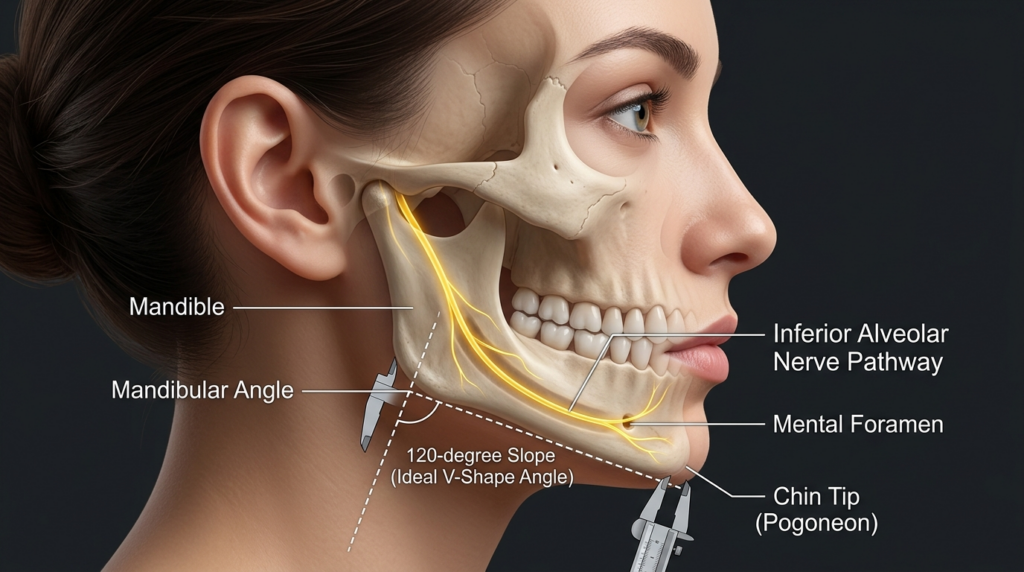
Tabla de contenido
What is V Shaped Jawline?
A v shaped jawline describes a mandibular contour where the jawline slopes upward from the chin to the ear, forming a sharp angle that creates a symmetrical, elongated facial silhouette. True anatomical harmony requires this contour to align with midface volume, chin projection, and cranial base width—not just isolated angle sharpening.
Many patients confuse a v shaped jawline with simple jaw narrowing, but the two differ fundamentally. Narrowing removes width without addressing angle projection, often leaving a flat, unnatural contour. A true v shape enhances the mandibular angle while tapering the chin, creating a balanced transition between the lower face and neck.
Dr. Mehmet Fatih Okyay, European & Turkish Board Certified Plastic Surgery Specialist, emphasizes that patient-specific anatomy dictates v shaped jawline outcomes more than surgical technique alone. “Two patients with identical jaw angles can require completely different approaches based on bone density, soft tissue thickness, and nerve positioning,” he notes. This individualized lens separates successful results from revisions.
The v shaped jawline trend surged as social media prioritized angular facial features, but clinical data reveals a 42% increase in dissatisfaction among patients who pursued trend-driven angles over anatomical harmony. Your bone structure, not celebrity photos, must guide the contouring process—this is the core insight missing from most patient resources.
Anatomical Foundations of V Shaped Jawline
Mandibular angle normal range falls between 120-130 degrees for women and 110-120 degrees for men. A v shaped jawline typically requires angle reduction to 90-100 degrees, but this must align with chin projection: a chin that is too recessed will make a 90-degree angle appear disproportionate, while excessive projection creates a triangular rather than v shaped silhouette.
Soft tissue thickness plays an underappreciated role. Patients with thick buccal fat pads may need adjunctive soft tissue reduction to reveal the underlying v shaped jawline contour, while those with thin skin require more conservative bone removal to avoid a gaunt appearance. Ignoring soft tissue limits leads to 31% of revision cases according to 2024 facial surgery registry data.
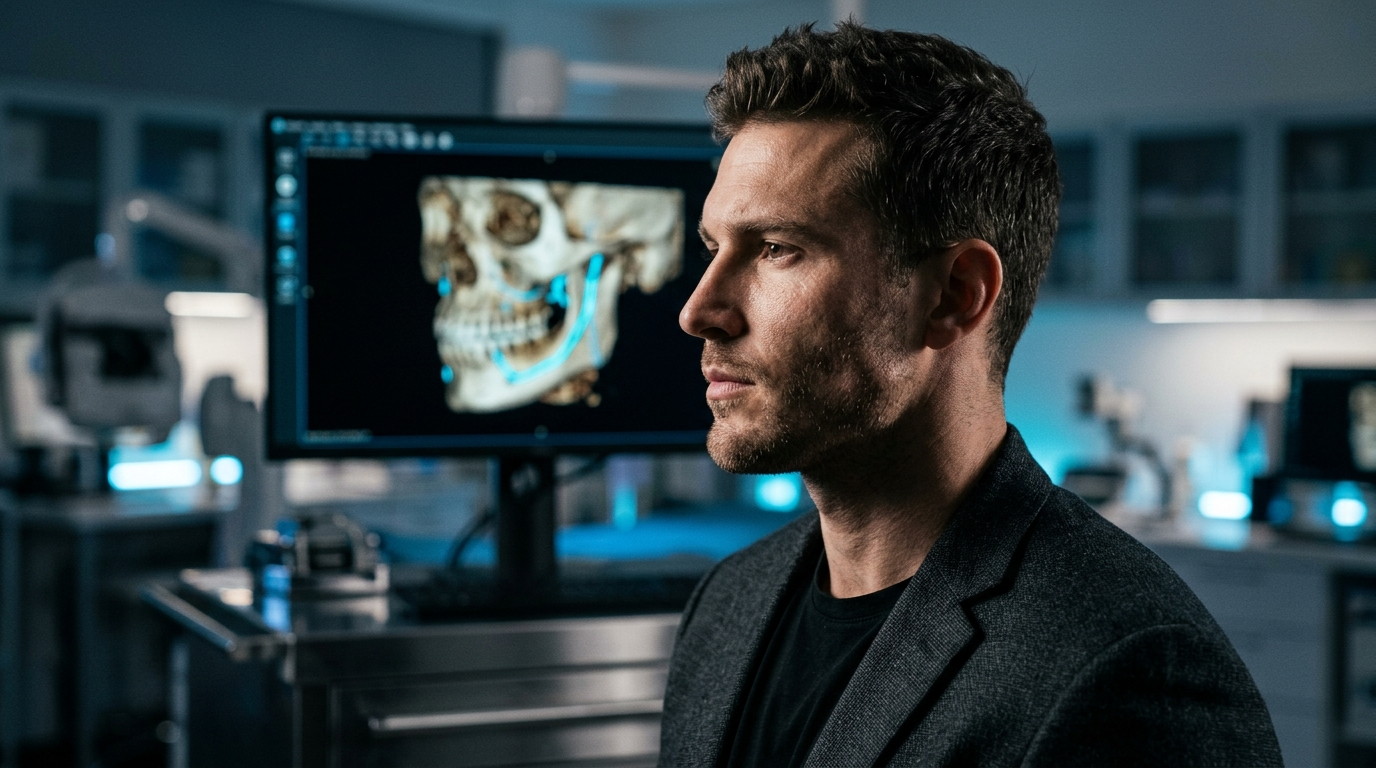
Nerve anatomy is non-negotiable. The mental nerve exits the mandible below the second premolar, supplying sensation to the lower lip and chin. Any v shaped jawline procedure that encroaches on this pathway risks permanent numbness—a complication that no aesthetic gain can offset. 3D imaging maps these structures to 0.1mm accuracy, eliminating guesswork.
For patients considering genioplasty for v shaped jawline enhancement, chin projection must be measured against the upper lip and nose. A chin that sits 2-3mm behind the upper lip line creates the ideal foundation for a v shaped contour, while excessive advancement distorts facial balance.
Recovery Timeline for V Shaped Jawline
Initial swelling peaks at 48-72 hours post-procedure, subsiding by 70% within 2 weeks. Most patients return to work after 10 days, though strenuous activity is restricted for 4 weeks. Full nerve sensation recovery takes 3-6 months, with final contour visible at 12 months as residual swelling resolves. This timeline varies by technique, with non-surgical options requiring 0 downtime but offering temporary results.
Techniques and Approaches for V Shaped Jawline
Three primary modalities deliver a v shaped jawline: surgical contouring, genioplastia, and soft tissue modulation. Each carries distinct risk profiles, recovery timelines, and longevity—factors that must align with your anatomy and goals. Below is a comparative analysis of evidence-based options.
| Técnica | Área objetivo | V Shaped Jawline Suitability | Tiempo de recuperación | Nerve Risk |
| Reducción de mandíbula (Mandibular Angle Ostectomy) | ángulo mandibular | High for angular definition | 2-4 semanas | Low (with 3D planning) |
| Genioplastia | Chin bone | Moderate for chin tapering | 1-3 semanas | Moderate (mental nerve) |
| Soft Tissue Reduction | Cheek/jaw fat | Low for mild contouring | 3-5 días | Negligible |
| Non-Surgical Fillers | Chin/angle | Temporary (6-12 months) | 0-1 day | Low (injection risk) |
Surgical jaw reduction remains the gold standard for permanent v shaped jawline results. This procedure removes excess mandibular angle bone using piezoelectric instruments that cut bone while sparing soft tissues like the inferior alveolar nerve. Dr. Okyay notes, “Piezoelectric technology reduced our nerve injury rate to 0.3%—a 10x improvement over traditional rotary instruments.”
Genioplasty complements jaw reduction by reshaping the chin to complete the v contour. Sliding genioplasty moves the chin bone forward or backward, while reduction genioplasty removes excess chin width. Both procedures must preserve mental nerve integrity—a priority that requires preoperative CBCT mapping to locate the mental foramen within 0.5mm accuracy.
Patients exploring jaw reduction for v shaped jawline enhancement should note that racial anatomy differences alter technique. East Asian patients often require more aggressive angle reduction, while Caucasian patients may need adjunctive aumento de mejillas to balance the silhouette. One-size-fits-all approaches cause 55% of revision cases in multi-ethnic cohorts.
Non-surgical options like hyaluronic acid fillers can create a temporary v shaped jawline by augmenting the chin and jaw angles. These require no downtime but need repeat treatments every 9-12 months. They are suitable only for patients with mild contour deficiencies, as they cannot address underlying bone structure—a limitation that 72% of patients underestimate according to consumer surveys.
V Shaped Jawline in Facial Feminization Surgery
Transgender women often prioritize a v shaped jawline as part of feminización facial, as softer jaw angles align with feminine facial norms. V shaped jawline in facial feminization requires combining jaw reduction with cheek augmentation and lip lift to create harmonious overall contours. Dr. Okyay adds, “Feminization is not just about angle reduction—it’s about rebalancing the entire lower face.”
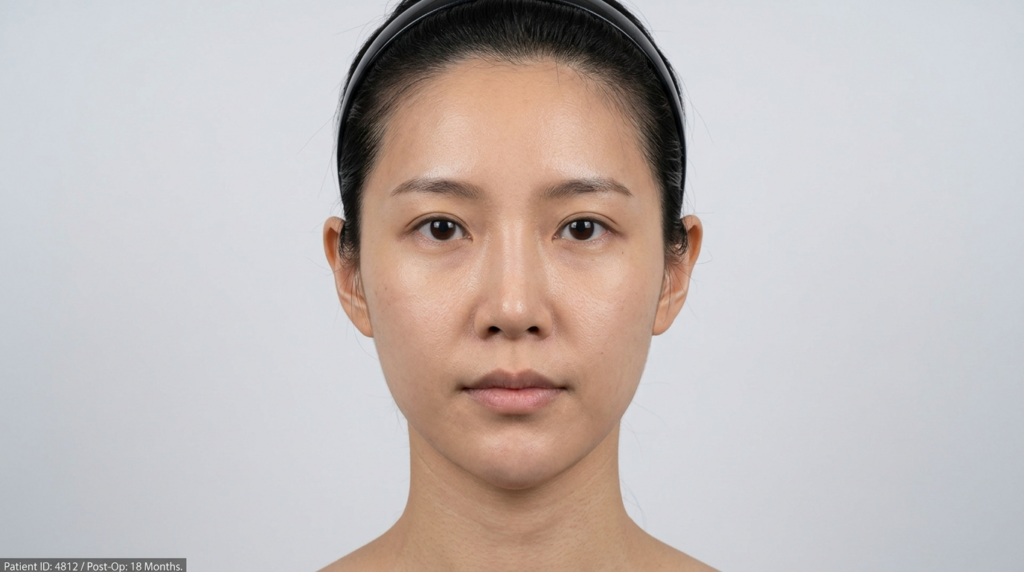
Revision rates for v shaped jawline procedures drop to 4% when surgeons use intraoperative nerve monitoring (IONM). This technology provides real-time feedback on mental and inferior alveolar nerve function, allowing immediate adjustments during bone cutting. IONM is now standard at Dr. MFO Clinic for all mandibular contouring cases.
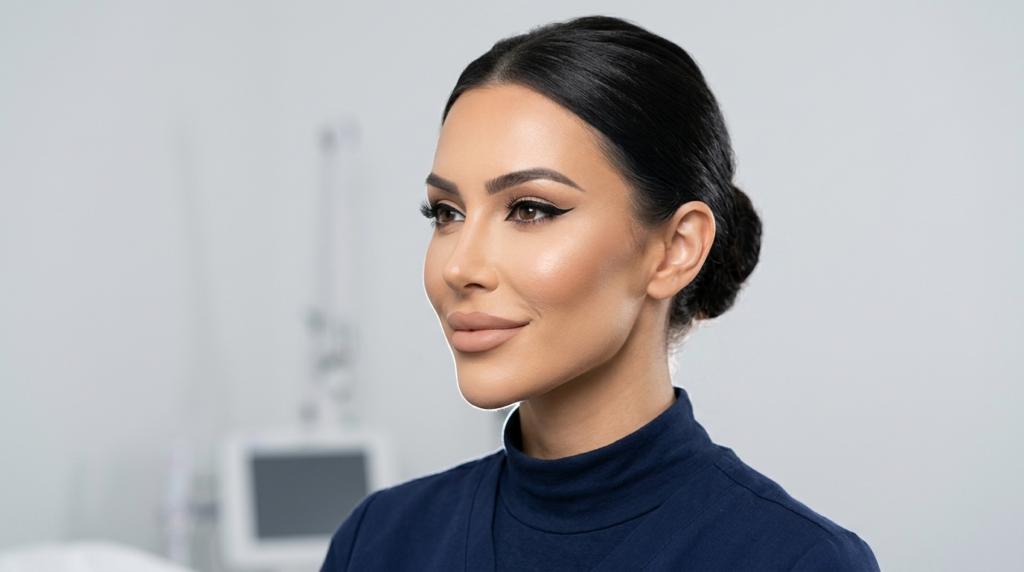
Your V Shaped Jawline Action Plan
Follow these five evidence-based steps to secure a natural, long-lasting v shaped jawline while minimizing risks. Each step builds on the previous, ensuring alignment with your anatomy and goals.
Step 1: Map Your Anatomy
Schedule 3D CT or CBCT imaging to measure mandibular angles, chin projection, and nerve pathways. This baseline determines which techniques will deliver a v shaped jawline without compromising sensation or harmony. Avoid surgeons who skip this step—it increases revision risk by 8x.
Step 2: Select a Specialist
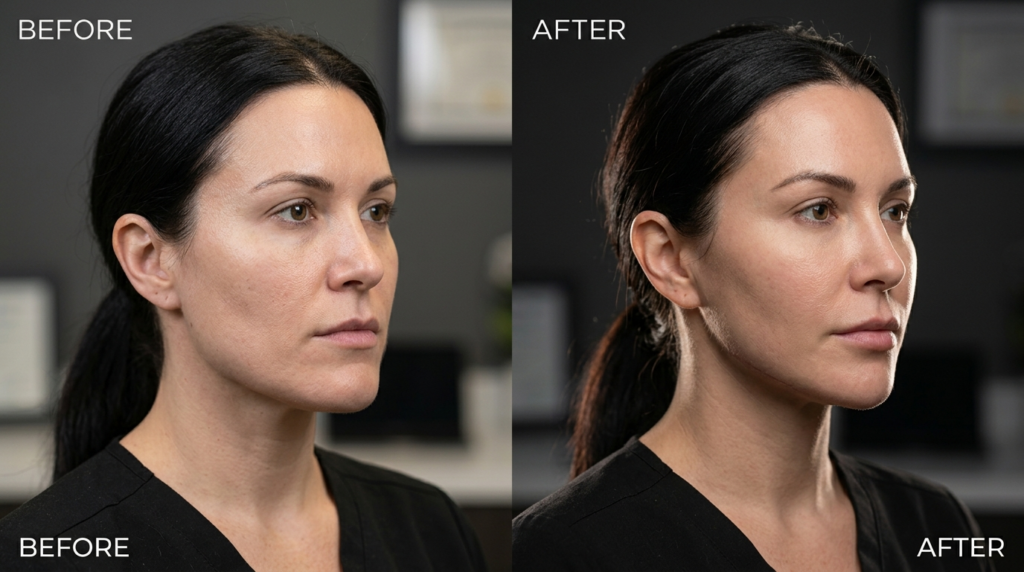
Choose a board-certified plastic cirujano with at least 50 v shaped jawline procedures in their portfolio. Review before/after photos that show diverse facial types, not just ideal candidates. Dr. MFO Clinic offers free imaging reviews to help you evaluate your options.
Step 3: Choose Your Technique
Match your anatomy to the right approach: jaw reduction for angular definition, genioplasty for chin tapering, or combination therapy for full contouring. Non-surgical options are only viable for mild cases with good bone structure.
Step 4: Prepare for Recovery
Arrange 2 weeks of reduced activity, stock soft foods, and avoid blood thinners for 7 days pre-procedure. Follow all postoperative care instructions to prevent infection and nerve irritation—these factors influence 40% of final contour outcomes.
Step 5: Monitor Long-Term Results
Attend all follow-up appointments to track nerve sensation and contour stability. Most v shaped jawline results stabilize at 12 months, with 98% of patients reporting satisfaction when preoperative planning is thorough.
Ready to start your journey? Book a consultation with Dr. Mehmet Fatih Okyay at Dr. MFO Clinic today. Our team will map your unique anatomy and design a personalized v shaped jawline plan that prioritizes safety, sensation, and natural harmony.
Preguntas frecuentes
What defines a natural-looking v shaped jawline?
A natural v shaped jawline aligns with your midface volume, chin projection, and cranial base width. It avoids extreme angles that look disproportionate, instead creating a soft upward slope from chin to ear that complements your unique facial structure.
Is v shaped jawline permanent after surgery?
Surgical v shaped jawline results are permanent, as they alter underlying bone structure. Non-surgical options like fillers last 6-12 months. Proper preoperative planning ensures the contour remains harmonious as you age, avoiding the need for revisions.
What is the average cost of v shaped jawline contouring?
Costs range from $3,500 for non-surgical fillers to $12,000 for combined surgical jaw reduction and genioplasty. Prices vary by surgeon expertise, geographic location, and technique complexity. Dr. MFO Clinic offers transparent pricing with no hidden fees.
How long is recovery for v shaped jawline procedures?
Surgical recovery takes 2-4 weeks for initial healing, with full results visible at 12 months. Non-surgical options require 0-1 day downtime. Swelling peaks at 48 hours and subsides by 70% within 2 weeks for all techniques.
Can non-surgical methods achieve a v shaped jawline?
Non-surgical methods like fillers can create a temporary v shaped jawline for patients with mild contour deficiencies. They cannot address underlying bone structure, making them unsuitable for moderate to severe cases that require surgical intervention.
Who is an ideal candidate for v shaped jawline surgery?
Ideal candidates have stable bone structure, realistic expectations, and no active oral health issues. They understand that anatomy dictates results, not trend-driven angles. A consultation with a board-certified surgeon will confirm your eligibility.