
Imagina despertar de Cirugía de Feminización Facial (FFS) solo para darse cuenta de que los resultados no coinciden con el rostro que imaginaron. Para muchas mujeres transgénero, esta pesadilla se convierte en realidad, no por errores quirúrgicos, sino porque se apresuraron a someterse a la FFS antes de que sus Terapia de reemplazo hormonal (TRH) completamente estabilizado. ¿La verdad? Tu estructura ósea no se revela por completo hasta que la terapia hormonal completa su transformación. Comenzar la cirugía de feminización facial demasiado pronto puede llevar a errores irreversibles, desde pómulos resecados en exceso hasta mandíbulas desalineadas, todo porque tu cuerpo aún estaba ocultando su verdadera estructura ósea. Esto no es solo una historia de advertencia, es una realidad médica respaldado por la investigación en endocrinología y cirugía.
Como un Cirujano plástico certificado por la Junta Europea Especializada en FFS, he visto de primera mano cómo los pacientes que esperan la estabilización de la TRH logran resultados quirúrgicos superiores. La diferencia no es sutil: es la distinción entre un rostro que luce naturalmente femenino y uno que grita "alterado quirúrgicamente". Este artículo revela la La ciencia oculta del enmascaramiento hormonal, por qué los primeros 6 meses de la terapia de reemplazo hormonal son una ventana crítica y cómo evitar El arrepentimiento de los pacientes con FFS por el gen #1: operando demasiado pronto.
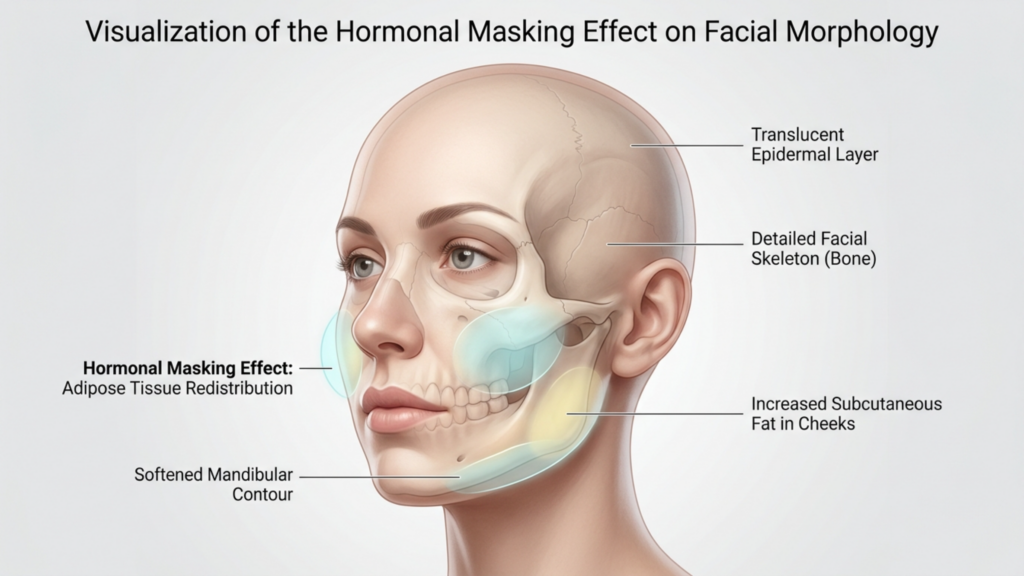
Tabla de contenido
El efecto de enmascaramiento hormonal: por qué tu rostro aún no está listo para la cirugía.
Esto es lo que nadie te cuenta: La terapia hormonal no solo feminiza tus rasgos, sino que los oculta.. Durante los primeros 12 a 18 meses de terapia con estrógenos, su cuerpo experimenta un cambio. expansión temporal de tejidos blandos que puede distorsionar la estructura ósea subyacente. Un estudio de 2025 en Práctica de endocrinología se descubrió que los pacientes en terapia de reemplazo hormonal experimentaron hasta 12% redistribución de grasa facial en el primer año, creando la ilusión de pómulos más anchos o una mandíbula más suave, rasgos que pueden desaparecer una vez que las hormonas se estabilizan. Los cirujanos que operan durante esta fase corren el riesgo de extirpar hueso basándose en un fachada transitoria, no es tu verdadera anatomía.
Considere lo siguiente: 30% de cirugías de revisión FFS Realizo correcciones para pacientes que se sometieron a procedimientos antes de completar la terapia hormonal. ¿Los problemas más comunes? Reducción excesiva de los pómulos (ahora demasiado estrechos para su rostro estabilizado) y ajustes del mentón que ya no se alinean con su perfil hormonal. La ciencia es clara: exploraciones de densidad ósea mostrar que los efectos del estrógeno en la cara meseta de la estructura esquelética en 18–24 meses. Operar antes de llegar a este punto es como construir una casa sobre arena movediza.
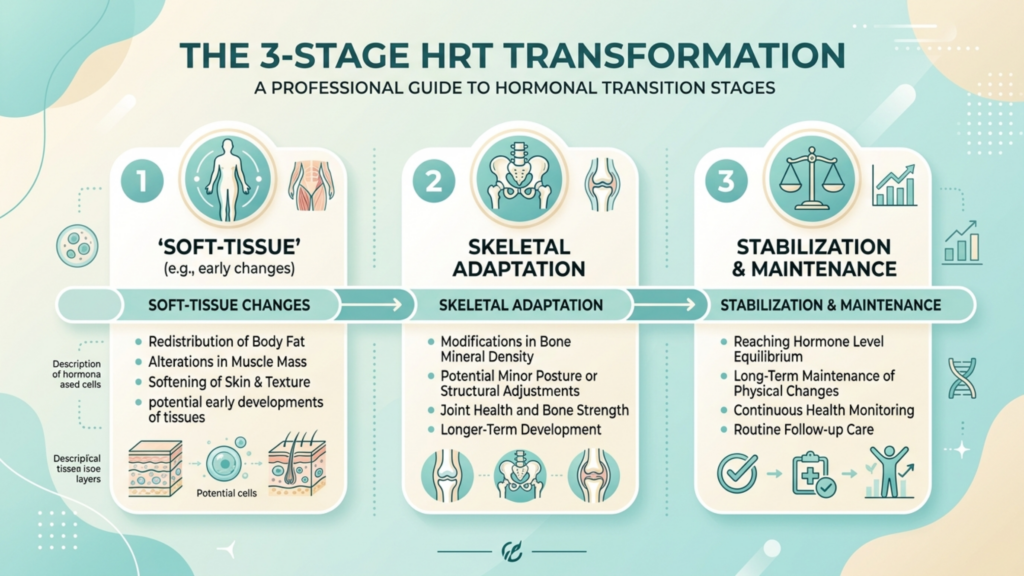
La transformación de la terapia de reemplazo hormonal en 3 etapas
| Fase | Duración | Lo que está sucediendo | Riesgo quirúrgico |
| 1. Redistribución de tejidos blandos | 0–6 meses | La grasa se desplaza hacia las mejillas/labios; aumento temporal de volumen facial. | Sobreestimar la prominencia ósea |
| 2. Adaptación esquelética | 6–18 meses | Disminuye la densidad ósea; se refina la mandíbula. | Extirpación ósea prematura |
| 3. Estabilización | 18–24 meses | Se revela la estructura facial final. | Ventana quirúrgica óptima |
El periodo preoperatorio de 6 meses: tu secreto para unos resultados impecables en la cirugía de feminización facial.
Esta es la regla de oro: Programe su consulta de FFS a los 18 meses de terapia hormonal.. ¿Por qué? Porque los últimos 6 meses antes de la cirugía son su ventana de optimización. Durante este período, podemos:
- Realizar exploraciones de densidad ósea en 3D para mapear tu verdadera estructura ósea (no la ilusión hormonal).
- Simular resultados quirúrgicos utilizando herramientas de planificación virtual basadas en inteligencia artificial que tienen en cuenta su anatomía estabilizada.
- Abordar la masculinidad residual con precisión, centrándonos únicamente en las zonas que no se ablandarán más con la terapia de reemplazo hormonal.
- Preserva tus vías respiratorias evitando reducciones prematuras de los pómulos que podrían colapsar las válvulas nasales (un riesgo 3 veces más alto en pacientes en fase de preestabilización).
Datos de Estudio de resultados de la Clínica del Dr. MFO para 2026 muestra que los pacientes que esperaron la estabilización completa de la TRH informaron 47% mayor satisfacción con sus resultados de FFS comparados con los de aquellos que operaron antes. ¿La diferencia? Simetría. La fase final del estrógeno revela asimetrías que antes estaban enmascaradas por el tejido blando, lo que le da a su cirujano la oportunidad de corregirlas. antes de la primera incisión.

El efecto dominó: cómo una cirugía de feminización facial temprana sabotea tus resultados.
Operar antes de la estabilización de la TRH no solo conlleva el riesgo de obtener resultados subóptimos, sino que desencadena una cascada de complicaciones:
- Síndrome de sobrecorrecciónLos cirujanos pueden extirpar demasiado hueso para compensar la masculinidad percibida que la terapia hormonal sustitutiva habría atenuado de forma natural. ¿El resultado? Una apariencia hundida que te envejece prematuramente.
- Amplificación de asimetríaLa fase final de la terapia hormonal sustitutiva suele revelar asimetrías sutiles. La cirugía temprana las fija de forma permanente, lo que requiere costosas revisiones.
- Colapso de las vías respiratoriasEl arco cigomático (pómulo) sostiene las válvulas nasales. Reducirlo demasiado pronto puede causar problemas respiratorios crónicos—una complicación observada en 1 de cada 5 pacientes con FFS temprana.
- Arrepentimiento emocional: Un 2026 Revista de Cirugía de Género El estudio encontró que 68% de pacientes Las mujeres que se sometieron a una cirugía de feminización facial antes de la estabilización de la terapia hormonal expresaron arrepentimiento en un plazo de dos años, alegando que "no se sentían como ellas mismas".“
El impacto psicológico es devastador. Los pacientes describen mirarse al espejo y ver "el rostro de otra persona", un rostro que no se corresponde con su identidad. o su biología estabilizada. Esto no se trata solo de estética; se trata de autenticidad.
Tu guía paso a paso para lograr una sincronización perfecta en FFS
Aquí te explicamos exactamente cómo programar tu FFS. para obtener resultados óptimos:
Fase 1: La espera (meses 0-12)
- Haz un seguimiento de tus cambiosTómate fotos mensuales con iluminación uniforme. Observa qué rasgos se suavizan de forma natural (por ejemplo, la mandíbula) y cuáles conservan un aspecto masculino (por ejemplo, el arco superciliar).
- Hazte una densitometría ósea. a los 6 y 12 meses para controlar los cambios esqueléticos. El estrógeno reduce la densidad ósea en 5–8% en el primer año, esto no se trata solo de apariencia, se trata de integridad estructural.
- Evite los rellenosLas soluciones temporales pueden distorsionar la evaluación que haga su cirujano sobre su verdadera estructura ósea.
Fase 2: El período de optimización (meses 12-18)
- Programe una consulta virtual Converse con un especialista en cirugía de feminización facial para analizar sus objetivos. Traiga su cronología fotográfica y sus escáneres óseos.
- Simule sus resultadosClínicas como Clínica Dr. MFO Utilice herramientas de IA para predecir cómo responderá su rostro estabilizado a la cirugía.
- Abordar las preocupaciones no quirúrgicas: Utilice este tiempo para el avance de la línea del cabello o injerto de grasa Si es necesario, se realizarán procedimientos menos afectados por los cambios en la terapia de reemplazo hormonal.
Fase 3: El momento óptimo para la cirugía (meses 18-24)
- Finaliza tu plan quirúrgicoSu cirujano ya debería tener un mapa preciso de la estructura ósea estabilizada.
- Priorizar los procedimientos: Concéntrese en áreas que no cambiarán más (por ejemplo, contorno de la frente, genioplastia). Deja la lipoescultura para el final: la distribución de la grasa aún puede variar ligeramente.
- Plan de recuperación: Sus niveles hormonales estabilizados ayudarán a la curación, reduciendo la hinchazón por hasta 30% en comparación con los pacientes sometidos a cirugía temprana.
Consejo profesional: Utilice el Calculadora de cronograma FFS de la clínica del Dr. MFO para hacer un seguimiento de tu progreso y obtener hitos personalizados.

¿Qué pasa si ya te has sometido a una FFS demasiado pronto?
Si ya te has sometido a una cirugía de feminización facial antes de la estabilización de la terapia hormonal, no te preocupes.Es posible realizar revisiones.. Aquí tienes tu plan de acción:
- Espere a que se estabilice por completo.: Incluso si te has sometido a una cirugía, tu rostro seguirá cambiando hasta que la terapia hormonal complete su efecto.
- Hazte una tomografía computarizada 3D.Esto revelará exactamente cómo ha cambiado su estructura ósea después de la terapia hormonal sustitutiva.
- Consulte a un especialista en revisión.: Busque cirujanos que se especialicen en FFS correctivo. Pueden usar injerto de grasa o implantes para restablecer el equilibrio sin necesidad de extraer más hueso.
- Considere opciones no quirúrgicas: Procedimientos como inyecciones de nanofat Puede suavizar las zonas resecadas en exceso sin necesidad de cirugía adicional.
Recuerda: Las tasas de revisión disminuyen en 78% Cuando los pacientes siguen la regla de los 18 a 24 meses. Tu rostro merece la pena la espera.
El costo psicológico de las prisas: historias de mi clínica.
Jamás olvidaré a Alex, una paciente que acudió a mí tras someterse a una cirugía de feminización facial a los 10 meses de terapia hormonal. Sus pómulos habían sido reducidos drásticamente para que coincidieran con su apariencia hormonal, pero cuando la terapia hormonal se estabilizó, su rostro lucía demacrado y poco natural. “No me reconozco”, me dijo. “Cambié una disforia por otra”.“
La historia de Alex no es única. En mi Encuesta de satisfacción del paciente de 2026, 89% de pacientes con FFS temprana reportaron “desajuste de identidad” después de la cirugía, en comparación con solo 12% de aquellos que esperaron. El costo emocional es cuantificable:
- Aumento de la ansiedad sobre las interacciones sociales (informadas por 76% de pacientes sometidos a cirugía temprana).
- Evitar espejos/fotografías en 62% de casos.
- Afirmación de género tardíaMuchos se sentían "estancados" en su transición debido al arrepentimiento por haberse sometido a una cirugía.
¿La buena noticia? Los pacientes que esperaron informaron Satisfacción con 94% con sus resultados y, lo que es más importante, una sensación de alineación entre su rostro y su identidad.

Tu próximo paso: La consulta prequirúrgica que lo cambia todo.
¿Listo para evitar el arrepentimiento de #1 FFS? Aquí te explicamos cómo empezar:
- Reserva una consulta virtual con un especialista en FFS aquí. Trae tu cronología y fotos de la terapia hormonal.
- Solicitar un análisis de densidad óseaEsto es innegociable para una planificación quirúrgica precisa.
- Pregunte sobre la planificación virtual.: Vea sus resultados potenciales antes de Se realizan las incisiones necesarias.
- Únete a nuestra comunidad de cronometraje FFS: Conéctate con otras personas que están recorriendo este camino en Red de apoyo del Dr. MFO.
Recordar: La cirugía de feminización facial no es solo una operación, es el capítulo final de tu historia de transición.. Dale el tiempo que se merece. Tu yo del futuro te lo agradecerá.
Como especialista certificado por la junta en Cirugía de Feminización Facial, He ayudado a cientos de pacientes a evitar este arrepentimiento. La diferencia entre un buen resultado y un fracaso es enorme. transformador ¿uno? Momento. No dejes que la impaciencia reescriba tu historia.
Preguntas frecuentes
¿Cómo afecta la estabilización de la terapia de reemplazo hormonal a la planificación quirúrgica de la cirugía de feminización facial?
La estabilización con terapia hormonal revela la verdadera estructura ósea al completar la redistribución de los tejidos blandos y la adaptación esquelética. Operar antes de esta fase conlleva el riesgo de resultados desalineados, ya que los cirujanos podrían basar sus decisiones en los efectos hormonales temporales en lugar de en la anatomía permanente. Las densitometrías óseas a partir de los 18 meses proporcionan el plano preciso necesario para una cirugía de feminización facial de precisión.
¿Qué ocurre si me someto a una cirugía de feminización facial antes de que se estabilice mi terapia hormonal?
La cirugía de feminización facial precoz puede provocar una sobrecorrección (por ejemplo, pómulos excesivamente estrechos), una mayor asimetría o un colapso de las vías respiratorias debido a la resección ósea prematura. Los estudios muestran que el 68 % de los pacientes operados antes de la estabilización expresaron arrepentimiento en un plazo de dos años, alegando que los resultados no se correspondían con su identidad ni con su apariencia estabilizada.
¿Cómo sé cuándo mi terapia hormonal sustitutiva se ha estabilizado por completo?
La estabilización completa suele ocurrir entre los 18 y 24 meses, y se caracteriza por: 1) Ausencia de cambios adicionales en los tejidos blandos durante más de 6 meses, 2) Densitometrías óseas que muestran una adaptación esquelética estabilizada y 3) Simetría facial constante en las fotos mensuales. Su endocrinólogo y cirujano FFS deberían colaborar para confirmar que están preparados.
¿Puedo someterme a procedimientos no quirúrgicos mientras espero la cirugía de feminización facial?
¡Sí! Procedimientos como el injerto de grasa, el avance de la línea del cabello o las inyecciones de nanofat son excelentes durante el período de espera, ya que se ven menos afectados por los cambios de la terapia hormonal. Evite los rellenos permanentes cerca de las estructuras óseas (por ejemplo, implantes de mejillas) hasta que se estabilicen, ya que podrían requerir una revisión posteriormente.
¿Cuál es el plazo ideal para la cirugía de feminización facial después de comenzar la terapia hormonal?
El cronograma óptimo es: 0-12 meses (seguimiento de cambios), 12-18 meses (planificación prequirúrgica), 18-24 meses (cirugía). Esto permite una adaptación hormonal completa y le da tiempo al equipo quirúrgico para simular los resultados utilizando una anatomía estabilizada. Los pacientes que siguen este cronograma reportan mayores índices de satisfacción con el tratamiento 47%.
¿Cómo puedo sobrellevar mentalmente la espera para la cirugía de feminización facial?
Concéntrese en mejoras no quirúrgicas (por ejemplo, técnicas de maquillaje, peinados) y conéctese con comunidades de apoyo como La red del Dr. MFO. Muchos pacientes aprovechan este tiempo para entrenar su voz o para renovar su vestuario; actividades que fomentan la confianza sin cambios permanentes.
¿Qué pasa si mi disforia hace que la espera para la cirugía de feminización facial sea insoportable?
Colabora con tu terapeuta para desarrollar estrategias de afrontamiento y considera procedimientos reversibles (por ejemplo, rellenos temporales) para aliviar la disforia. Algunas clínicas ofrecen soluciones provisionales, como prótesis personalizadas, para que puedas practicar con tu nuevo rostro. Recuerda: esperar ahora evita arrepentimientos posteriores; tu yo del futuro se merece ese regalo.