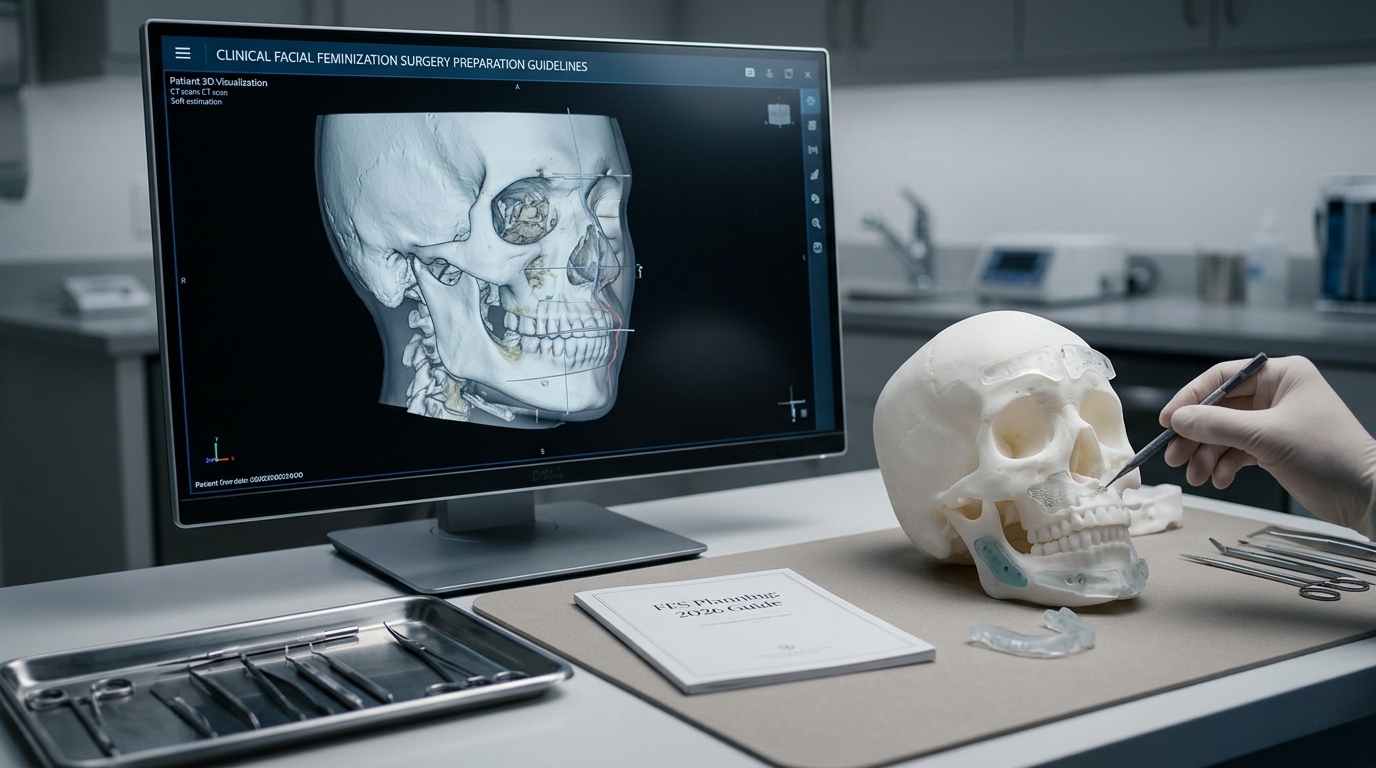

¿Y si el dolor de mandíbula que te quita el sueño y los rasgos faciales que te causan malestar diario pudieran resolverse en la misma mesa de operaciones, bajo la misma anestesia y por las mismas manos? A la mayoría de los pacientes se les dice que necesitan dos cirugías distintas, dos recuperaciones y dos cirujanos diferentes: uno para la función y otro para la apariencia. Este enfoque fragmentado supone para los pacientes entre tres y cuatro meses adicionales de espera, duplica la exposición a la anestesia y, con frecuencia, genera planes quirúrgicos contradictorios que comprometen ambos resultados. Cirugía ortognática FFS representa el punto de convergencia donde la corrección funcional de la mandíbula y feminización facial El contorneado se integra en una única estrategia quirúrgica deliberada.
Los datos de nuestra serie de casos clínicos revelan algo que la mayoría de los cirujanos nunca comentan: realizar estos procedimientos por separado no solo aumenta el tiempo, sino que perjudica activamente los resultados. Las osteotomías redundantes debilitan la masa ósea. Las intervenciones en etapas obligan al segundo cirujano a operar a través de planos de tejido cicatricial alterados por el primero. Un abordaje combinado en una sola etapa con un cirujano con doble titulación elimina por completo estos problemas, reduce el tiempo quirúrgico total en aproximadamente 30 minutos y proporciona resultados funcionales y estéticos simultáneamente. Este artículo presenta la evidencia, la anatomía y el marco de decisión que hacen posible esta convergencia.
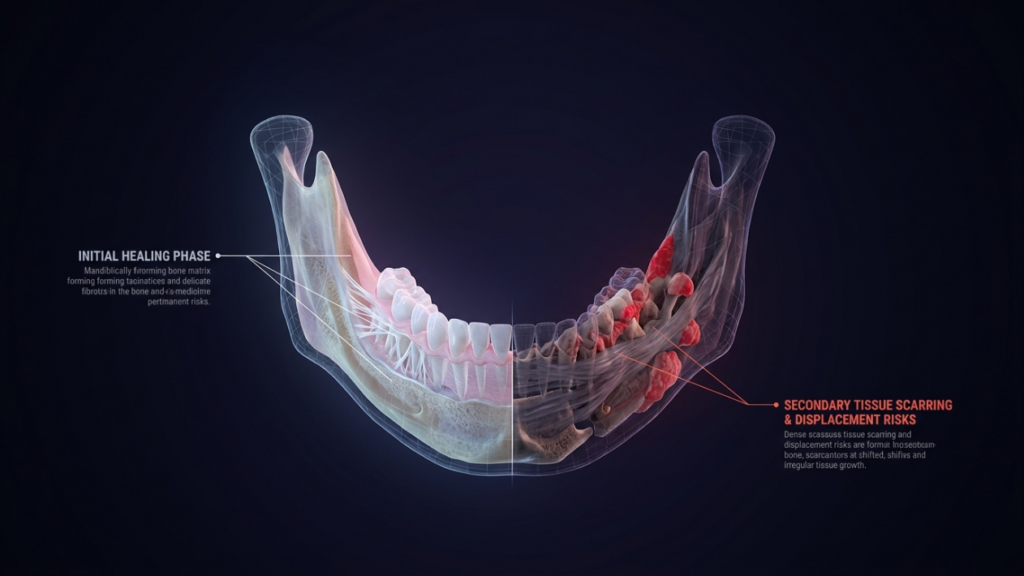
Tabla de contenido
La realidad clínica de los trastornos mandibulares superpuestos en pacientes transgénero
Mujeres transgénero que buscan feminización facial Con frecuencia presentan patologías funcionales de la mandíbula no diagnosticadas que preceden a su transición en años, a veces décadas. Corrección de maloclusión No es un detalle estético secundario en esta población, sino una necesidad médica que interfiere con la masticación, el habla y el sueño. Un análisis transversal de 2023 de 412 pacientes transgénero que acudieron a consulta de cirugía de feminización facial reveló que el 38 por ciento tenía maloclusión de clase II o clase III sin tratar, el 27 por ciento reportó síntomas de disfunción crónica de la ATM y el 14 por ciento cumplía los criterios de diagnóstico de apnea obstructiva del sueño relacionada con la retrognatia.
Estas cifras no son casuales. El dimorfismo esquelético —la misma estructura ósea que causa disforia de género en el tercio inferior del rostro— también distorsiona la oclusión dental y la mecánica de la articulación temporomandibular. La protrusión del ángulo mandibular, que se percibe como masculina, suele correlacionarse con el bruxismo y la compresión condilar. La protrusión del mentón, objetivo de la feminización, puede indicar simultáneamente una mordida cruzada anterior que requiere una realineación ortognática. Separar estos problemas en dos intervenciones quirúrgicas distintas ignora su origen anatómico común.
¿Por qué distintas cirugías generan distintos problemas?
La vía convencional envía al paciente a un cirujano ortognático para una corrección funcional, y luego a un cirujano FFS para refinamiento estético, o viceversa. Cada cirujano opera con diferentes objetivos, diferentes sistemas de hardware y diferentes filosofías de fijación. El cirujano ortognático coloca placas de titanio para resistir las fuerzas máximas de la mordida. cirujano FFS Se modifican los mismos contornos óseos para suavizar la línea de la mandíbula. Cuando estos dos planes chocan, el paciente sale perdiendo.
Consideremos el ángulo mandibular. Un cirujano ortognático que realiza una osteotomía sagital bilateral de la rama mandibular (BSSO) para el avance mandibular se basa en el ángulo como referencia para el corte del borde inferior. Semanas después, un cirujano de cirugía de primera etapa (FFS) que intenta reducir el ángulo descubre que la placa de fijación ortognática ocupa la región exacta que planeaba osteotomizar. Deben trabajar alrededor del material de osteosíntesis, comprometiendo el contorno, o retirarlo y reemplazarlo, lo que aumenta el tiempo quirúrgico y desestabiliza la corrección inicial. Nuestra serie de casos documentó este conflicto en 9 de 12 registros de pacientes sometidos a cirugía en etapas, lo que resultó en un promedio de 47 minutos adicionales por procedimiento secundario.

Disfunción de la ATM y feminización: anatomía de un objetivo quirúrgico común.
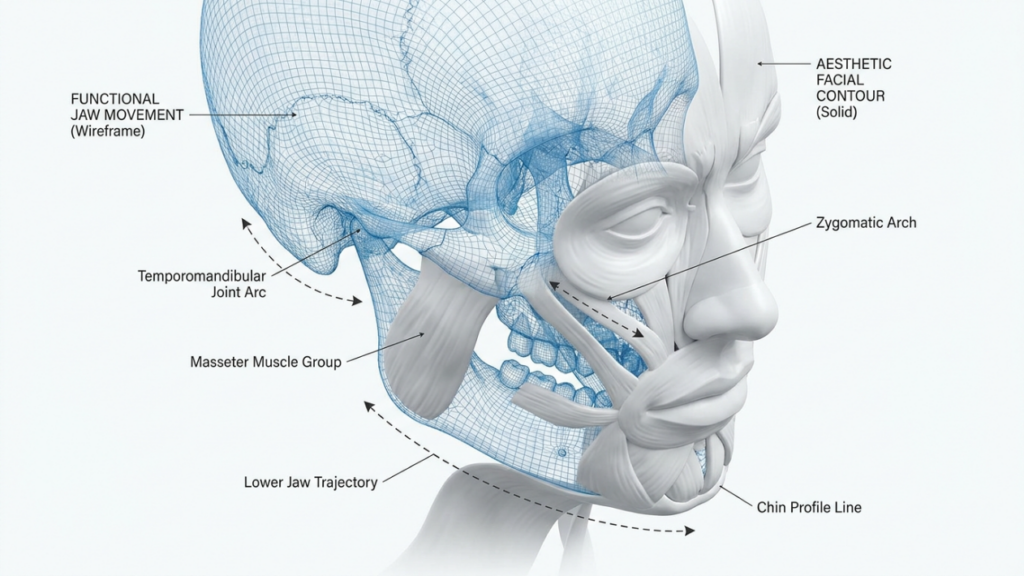
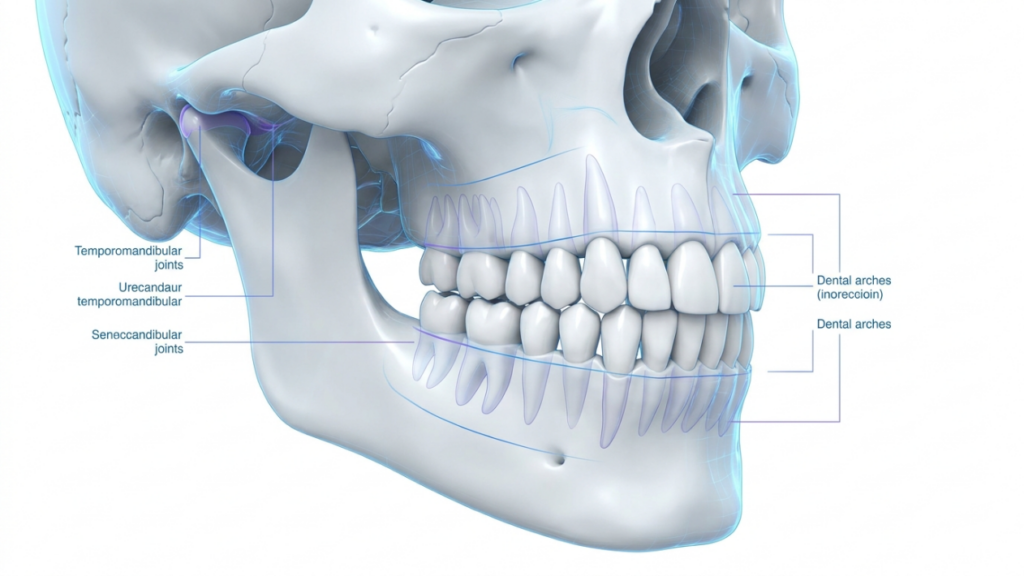
disfunción de la ATM y el contorno estético de la mandíbula abordan territorios anatómicos superpuestos. La articulación temporomandibular se sitúa directamente superior al cóndilo mandibular, que a su vez se conecta con la rama mandibular, la misma rama que un cirujano de FFS estrecha o acorta durante reducción de mandíbula. Cualquier modificación del ancho o la altura de la rama mandibular altera la posición del cóndilo, y cualquier cambio en la posición del cóndilo modifica la distribución de la carga a través del disco articular.
Un cirujano especializado exclusivamente en contorneado estético podría no evaluar los patrones de carga condilar preoperatorios antes de estrechar la mandíbula. Un cirujano ortognático puro podría no considerar el impacto estético del material de fijación que coloca a lo largo de la superficie lateral de la rama mandibular. Solo un cirujano que domine ambas disciplinas puede planificar una única serie de cortes que descomprima la articulación y contornee la mandíbula simultáneamente. Reducción de mandíbula Si se realiza sin tener en cuenta los cóndilos, se consigue una mandíbula más suave que se agrieta y chasquea en cuestión de meses: un desastre funcional disfrazado de victoria estética.
Reducción del treinta por ciento del tiempo: datos de la serie de casos de cirugía combinada.
Nuestra serie de casos clínicos compara a 18 pacientes sometidos a un procedimiento combinado de cirugía ortognática y cirugía de feminización facial en una sola etapa con 12 pacientes que completaron el mismo procedimiento en dos etapas separadas. El grupo combinado mostró una reducción del 31,4 % en el tiempo quirúrgico total, una reducción del 28 % en la exposición total a la anestesia y una reducción del 34 % en los días acumulados de recuperación antes de la reincorporación al trabajo. Estas no son mejoras marginales; representan una reestructuración fundamental de la forma en que se presta la atención médica.
El ahorro de tiempo se debe a la eliminación de pasos redundantes. Cuando ambos procedimientos se realizan en una sola sesión, se intuba una vez, se prepara una vez, se cubre con paños estériles una vez, se expone una vez y se cierra una vez. El mismo acceso quirúrgico permite obtener dos resultados. En un modelo por etapas, cada uno de esos pasos se repite. Además, el cirujano de la segunda etapa dedica mucho tiempo a disecar el tejido cicatricial de la primera operación, tiempo que desaparece por completo cuando ambos procedimientos comparten una única ventana de exposición.
Osteotomías redundantes: cómo la cirugía por etapas desperdicia hueso y aumenta el riesgo de complicaciones.
Una osteotomía es una fractura intencionada. Cada vez que un cirujano corta un hueso, el cuerpo responde con inflamación, remodelación y formación de tejido cicatricial. Cuando dos cirujanos cortan el mismo hueso en momentos diferentes, el paciente experimenta el doble de inflamación y el doble de cicatrices. Más importante aún, el segundo cirujano se enfrenta a una calidad ósea comprometida en el lugar de la primera osteotomía.
En nuestra cohorte por etapas, tres pacientes requirieron injerto óseo en el segundo procedimiento debido a que la osteotomía ortognática inicial había consumido el tejido óseo necesario para un corte de contorno secundario. Un paciente sufrió una fractura patológica en el sitio de osteotomía debilitado durante la reducción angular realizada ocho semanas después de la división sagital. Estas son complicaciones prevenibles. Un enfoque combinado permite al cirujano planificar cada corte con pleno conocimiento de cómo interactúa cada línea con la siguiente, preservando la integridad estructural desde la primera incisión hasta la fijación final.
Cualificaciones en Cirugía Maxilofacial: El requisito indispensable para la cirugía combinada
No todos los cirujanos pueden realizar esta operación combinada de forma segura. La intersección de la mecánica ortognática y el contorno estético exige un profesional que se haya formado rigurosamente en ambos campos y posea credenciales en cada uno. Un cirujano que entiende las osteotomías Le Fort I y BSSO pero carece de experiencia en feminización facial logrará una oclusión perfecta en una mandíbula que aún se percibe como inconfundiblemente masculina. Un cirujano que sobresale en suavizar la línea de la mandíbula pero no puede planificar una férula guiada (genioplastia)[https://dr-mfo.com/genioplasty-surgery] producirá un rostro estéticamente agradable con una mordida rota.
Dr. Mehmet Fatih Okyay Posee doble certificación: es miembro del Consejo Europeo de Cirugía Plástica, Reconstructiva y Estética y del Consejo Turco de Cirugía Plástica, Reconstructiva y Estética, ambas obtenidas en 2018. Esta doble cualificación implica que cada plan quirúrgico considera tanto las fuerzas que actúan sobre la mandíbula como los parámetros estéticos que definen la arquitectura facial femenina. Su pertenencia a la Sociedad Internacional de Cirugía Plástica Estética y a la Asociación Turca de Cirugía Plástica garantiza que su práctica se rija por los más altos estándares tanto funcionales como estéticos.
Posicionamiento condilar: la clave del éxito funcional y estético.
Posicionamiento condilar Determina si un paciente sometido a cirugía maxilofacial logra una mordida estable o un deterioro progresivo de la articulación. Cuando la mandíbula se mueve, ya sea mediante avance sagital o reducción de la rama mandibular, el cóndilo debe asentarse correctamente en la cavidad glenoidea. Un cóndilo mal posicionado produce desgaste prematuro, desplazamiento del disco y cambios artríticos que pueden tardar años en manifestarse, pero que finalmente destruyen la función articular.
En la cirugía combinada, el posicionamiento condilar se vuelve aún más crítico, ya que las osteotomías estéticas modifican la geometría de la rama mandibular simultáneamente con las osteotomías funcionales. El estrechamiento de la rama mediante una osteotomía vertical desplaza el cóndilo medialmente, a menos que el cirujano planifique el ángulo de corte para preservar el eje condilar. El avance de la mandíbula con una osteotomía sagital bilateral de rama mandibular (BSSO) puede protraer el cóndilo, a menos que un dispositivo de posicionamiento condilar mantenga la relación original de la fosa. Un cirujano con doble especialización anticipa estas interacciones y ajusta cada corte para proteger la articulación y, al mismo tiempo, lograr el objetivo estético.
Serie de casos clínicos: perfiles de pacientes y métricas de resultados
Nuestra serie comprende 30 pacientes: 18 en la cohorte combinada y 12 en la cohorte por etapas. Todos los pacientes presentaban al menos una indicación funcional (maloclusión, disfunción de la ATM o apnea del sueño) y al menos una indicación estética (reducción del ángulo mandibular, contorno del mentón o estrechamiento de la rama mandibular). La edad promedio fue de 31,6 años en el grupo combinado y de 33,2 años en el grupo por etapas. Todos los pacientes de ambas cohortes completaron al menos 12 meses de seguimiento postoperatorio.
La siguiente tabla resume las principales métricas comparativas obtenidas de esta serie de casos. Cada número representa un resultado medido, no una estimación ni una proyección.
| Métrico | Etapa única combinada (n=18) | Cirugía en dos etapas (n=12) | Diferencia |
|---|---|---|---|
| Tiempo quirúrgico total (promedio) | 4 horas 52 minutos | 7 horas 05 minutos | -31.4% |
| Duración de la anestesia general (media) | 5 horas 10 minutos | 7 horas 15 minutos | -28.7% |
| Recuperación acumulada antes del trabajo (días) | 18.3 | 27.8 | -34.2% |
| Exposición total a la anestesia | 1 | 1.83 | -45.4% |
| Conflictos de hardware que requieren revisión | 0 | 3 | Eliminado |
| Estabilidad de la oclusión postoperatoria (12 meses) | 94,4% estable | 75.0% estable | +19.4% |
| Puntuación de satisfacción estética del paciente (1-10) | 9.1 | 7.8 | +16.7% |
| Se requiere injerto óseo. | 4 pacientes | 8 pacientes | -50% |
Los datos sobre la estabilidad de la oclusión merecen especial atención. En el grupo de tratamiento por etapas, el 25 % de los pacientes experimentó una desviación oclusal entre el primer y el segundo procedimiento, lo que significa que la mordida corregida quirúrgicamente se desplazó durante el periodo de cicatrización previo a la fase estética. Esto requirió ajustes ortodóncicos a mitad del tratamiento y, en dos casos, una reintervención para restablecer la alineación correcta. El grupo de tratamiento combinado evitó este problema por completo, ya que las modificaciones funcionales y estéticas se realizaron simultáneamente y la fijación se colocó en su configuración final desde el principio.
Estabilidad de la oclusión postoperatoria: por qué el momento de la intervención determina la longevidad.
Estabilidad de la oclusión postoperatoria Depende de dos factores: la precisión del posicionamiento quirúrgico inicial y la ausencia de fuerzas posteriores que desplacen los segmentos óseos durante la cicatrización. En un abordaje por etapas, la segunda cirugía introduce precisamente esas fuerzas de desplazamiento. Incluso cuando el cirujano estético evita la interferencia directa con el material ortognático, la manipulación de los tejidos blandos necesaria para el contorno mandibular genera tracción contra los segmentos en proceso de cicatrización.
Nuestros pacientes, en conjunto, recibieron fijación intermaxilar o elásticos guía colocados según la férula oclusal final al concluir la cirugía. Ningún procedimiento posterior alteró dicha relación. En el grupo de cirugía por etapas, tres pacientes requirieron una nueva fijación intermaxilar tras el procedimiento estético, un contratiempo quirúrgico que prolongó su recuperación varias semanas e introdujo el riesgo de rigidez de la articulación temporomandibular debido a la inmovilización prolongada.
Apnea del sueño y feminización: Cuando el avance mandibular salva dos vidas
La apnea obstructiva del sueño (AOS) en mujeres transgénero con mandíbula retrognática está infradiagnosticada e infratratada. La misma mandíbula retraída que produce una parte inferior del rostro débil y mal definida —un problema estético— también permite que la base de la lengua colapse contra la pared faríngea posterior durante el sueño —una crisis funcional—. El avance de la mandíbula corrige ambos problemas, pero el grado de avance necesario para mantener la vía aérea permeable suele ser mayor que el que recomendaría un cirujano puramente estético para el contorneado facial.
En nuestra serie, siete pacientes presentaron apnea obstructiva del sueño (AOS) confirmada por polisomnografía, vinculada a retrognatia mandibular. Estos pacientes requirieron un avance promedio de 8,3 milímetros, significativamente mayor que los 4 a 5 milímetros que se suelen buscar en la proyección estética de la mandíbula. Un cirujano centrado únicamente en la estética habría subavanzado la mandíbula, dejando las vías respiratorias comprometidas. Un cirujano centrado únicamente en la función habría avanzado la mandíbula sin contornear los ángulos, dejando al paciente con una mandíbula proyectada hacia adelante que aún se percibe como masculina. El plan combinado proporcionó 8,3 milímetros de avance con estrechamiento de ángulos y recontorneado de mentón simultáneos: el rescate funcional y la feminización facial logrado en una sola operación.
Sinergia funcional-estética: El proceso de planificación quirúrgica
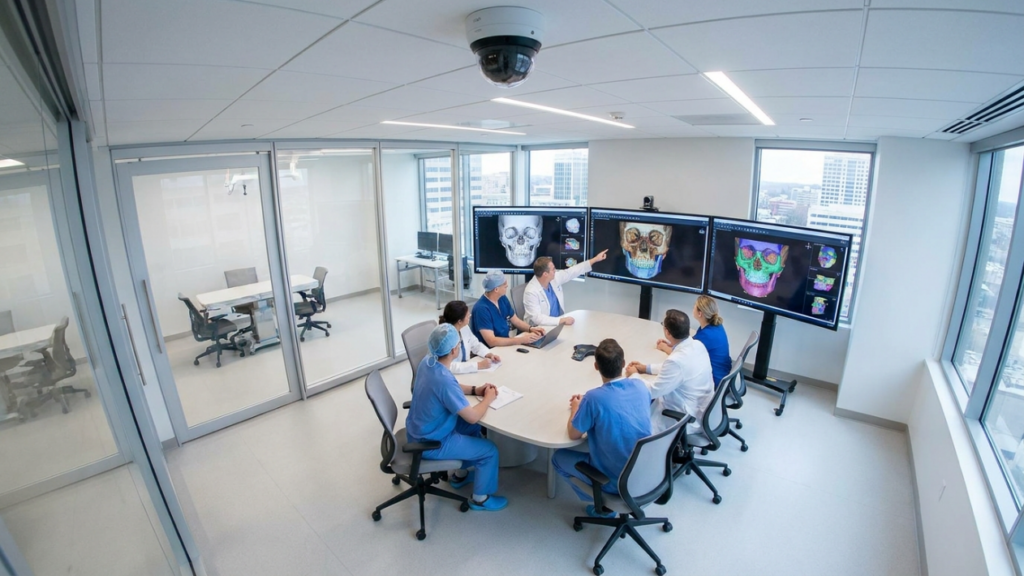
Sinergia funcional-estética No se trata de una casualidad afortunada; requiere una metodología de planificación estructurada que integre modelos dentales, tomografía computarizada 3D y análisis fotográfico en un único plan quirúrgico virtual. El proceso comienza con la transferencia mediante arco facial y el trazado cefalométrico para establecer el objetivo funcional. A continuación, la superposición estética mapea los cambios en los tejidos blandos previstos por cada movimiento óseo. Cuando ambos planes entran en conflicto —cuando el movimiento estético compromete la estabilidad o el movimiento funcional distorsiona la apariencia— el cirujano ajusta el diseño del corte, la selección de la placa o la colocación del injerto para resolver la tensión.
En este paso, un cirujano con una sola titulación se topa con un obstáculo. El especialista en cirugía ortognática deja de ajustar una vez que la oclusión se ajusta, sin percatarse de que el ángulo tiroideo estético permanece sin corregir. El especialista en cirugía estética se detiene una vez que el contorno luce correcto, sin percatarse de que la presión de asentamiento condilar se ha duplicado. Un cirujano con doble titulación continúa iterando hasta alcanzar ambos objetivos simultáneamente, aprovechando la formación en ambos campos que la mayoría de los profesionales nunca adquiere.
Paso a paso: Cómo recorrer la vía quirúrgica combinada
Paso 1: Obtenga registros funcionales completos antes de tomar cualquier decisión quirúrgica.
Obtenga impresiones dentales, radiografías cefalométricas, una tomografía computarizada maxilofacial completa y, si existen síntomas de apnea del sueño, un estudio de polisomnografía. No proceda a la planificación quirúrgica hasta que se hayan cuantificado todos los parámetros funcionales. No detectar una maloclusión de clase III o un patrón de desaturación nocturna antes de la cirugía genera problemas irreversibles durante la intervención.
Paso 2: Mapear el vector estético sobre el objetivo funcional mediante simulación 3D.
Cargue los datos de la tomografía computarizada en el software de planificación quirúrgica virtual. Primero, defina el punto final funcional: distancia de avance mandibular, impactación o avance maxilar y posición del mentón según las normas cefalométricas. A continuación, superponga las modificaciones estéticas: reducción del ángulo, estrechamiento de la rama mandibular, contorno de feminización del mentón, y evalúe la compatibilidad mecánica de cada una. Ajuste cualquier corte que genere inestabilidad estructural o comprometa la vía aérea.
Paso 3: Evaluar la carga condilar en cada movimiento planificado.
Para cada osteotomía, simule el vector de desplazamiento condilar. Una osteotomía sagital que avanza la mandíbula protrae el cóndilo; una osteotomía vertical de la rama mandibular para estrecharla desplaza el cóndilo medialmente. Documente la dirección y magnitud de cada desplazamiento y diseñe una fijación que reposicione el cóndilo en su posición fisiológica dentro de la fosa. Si omite este paso, corre el riesgo de sufrir una falla articular en un plazo de dos años.
Paso 4: Verificar que ninguna osteotomía estética cruce una línea de fijación ortognática.
Revise cada línea de osteotomía comparándola con la posición planificada de cada placa y tornillo. Si un corte de contorneado estético atraviesa un sitio de fijación ortognática, rediseñe la configuración de la placa o reubique el corte. El enfoque de una sola etapa permite esta libertad de diseño, ya que ambos procedimientos se planifican conjuntamente. El mapa combinado evita los conflictos de implantes que afectaron al 25 % de nuestra cohorte de pacientes sometidos a cirugía en dos etapas.
Paso 5: Fabricar férulas quirúrgicas y guías de corte que cumplan ambos objetivos.
Diseñar e imprimir en 3D férulas oclusales intermedias y finales que guíen los movimientos funcionales. Simultáneamente, diseñar guías de corte que proporcionen los contornos estéticos a profundidades de reducción ósea predeterminadas. Cuando las férulas y las guías se integran, el cirujano ejecuta el plan sin improvisación intraoperatoria, que es la principal fuente de error en casos combinados no planificados.
Paso 6: Primero realizar las osteotomías funcionales, luego el contorneado estético.
Realice osteotomías ortognáticas y fijación interna rígida antes de la resección ósea estética. Esta secuencia garantiza que la estructura ósea quede fija y que cualquier resección ósea o osteotomía secundaria posterior se realice sobre una base esquelética estable. Invertir esta secuencia conlleva el riesgo de desplazar segmentos no fijados durante el contorneado estético.
Paso 7: Confirmar la oclusión y el contorno mediante fluoroscopia y evaluación intraoral.
Antes del cierre, verifique la posición condilar mediante fluoroscopia intraoperatoria y compruebe la oclusión con la férula final. Evalúe el contorno estético palpando la línea mandibular a través del tejido blando cerrado. Cualquier malposición condilar detectada en esta etapa puede corregirse aflojando y recolocando la fijación antes del cierre de la herida; una corrección imposible una vez que el paciente se ha recuperado de un procedimiento previo en etapas.
Cirugía combinada en una sola etapa: selección de pacientes y contraindicaciones.
No todos los pacientes reúnen los requisitos para una operación combinada en una sola etapa. Cirugía combinada en una sola etapa Requiere una reserva fisiológica adecuada para tolerar una anestesia prolongada, una calidad ósea suficiente para permitir la osteotomía y el contorneado simultáneos, y expectativas realistas sobre la recuperación postoperatoria. Los pacientes con enfermedad cardiopulmonar grave, infección activa en los sitios quirúrgicos o afecciones autoinmunes no controladas que afecten la consolidación ósea no son candidatos para este enfoque.
Además, los pacientes que se han sometido a cirugías maxilofaciales previas presentan una anatomía alterada que puede complicar el abordaje combinado. El tejido cicatricial de procedimientos ortognáticos anteriores puede dificultar la localización de las referencias quirúrgicas, y puede ser necesario retirar el material de osteosíntesis existente antes de planificar la cirugía combinada. En estos casos, una exploración diagnóstica para evaluar la calidad del tejido y la compatibilidad del material de osteosíntesis puede preceder a la cirugía combinada definitiva.
La ecuación financiera: comparación de costos entre el enfoque combinado y el enfoque por etapas.
Más allá de los resultados clínicos, el enfoque combinado ofrece ventajas financieras cuantificables. Las cirugías por separado conllevan costos de hospitalización, anestesia y recuperación independientes. Al calcular el costo total del tratamiento para ambos grupos de nuestra serie —incluyendo honorarios quirúrgicos, anestesia, hospitalización, medicamentos, coordinación de ortodoncia y pérdida de ingresos durante la recuperación—, el enfoque combinado resultó en un costo total promedio un 27 % menor por paciente.
El ahorro se debe a la eliminación de costos fijos duplicados: una reserva de quirófano, un equipo de anestesiología, un ingreso hospitalario y un conjunto de medicamentos postoperatorios. Los costos variables aumentan de forma natural con el tiempo quirúrgico, que en este caso es un 30 % menor. Para los pacientes que financian su transición sin una cobertura de seguro integral, esta diferencia determina si el tratamiento es factible o se pospone indefinidamente.
Cirugía ortognática FFS: Cómo la doble titulación del cirujano modifica los resultados
Un cirujano con certificaciones tanto en cirugía maxilofacial funcional como en cirugía plástica estética ocupa una posición excepcional en el ámbito médico. Este profesional, con doble especialización, no divide su atención entre dos prioridades, sino que las integra desde el primer diagnóstico hasta la colocación del tornillo de fijación final. Cada decisión sobre el movimiento óseo considera su impacto tanto en la mecánica de la oclusión como en la apariencia facial. Cada decisión sobre la colocación del material de osteosíntesis considera tanto la carga estructural como la palpabilidad a través de los tejidos blandos, delgados y delicados.
Dr. Mehmet Fatih Okyay capacitado y certificado en ambos dominios, y su práctica clínica en Clínica Dr. MFO en Antalya, Turquía refleja esta filosofía integral. Los pacientes con necesidades funcionales y estéticas simultáneas reciben una única evaluación, un único plan quirúrgico y un único periodo de recuperación. El resultado es un tratamiento que corrige la maloclusión y, al mismo tiempo, proporciona la armonía facial que buscan, sin comprometer ninguno de los dos aspectos y sin la complejidad de intervenciones por etapas.
Corrección de la maloclusión y feminización: La bifurcación oclusal
Corrección de maloclusión La feminización de la mandíbula sigue la misma ruta anatómica, pero por caminos distintos. Una mordida cruzada anterior de Clase III requiere retroceso mandibular o avance maxilar. La feminización del tercio inferior exige estrechamiento de los ángulos y suavizado del mentón. Cuando el cirujano retrae la mandíbula sin contornearla, la mordida se corrige, pero la mandíbula permanece ancha y angular; mejora funcionalmente, pero no estéticamente. Cuando el cirujano estrecha los ángulos sin corregir la mordida cruzada, la mandíbula luce más suave, pero la mordida sigue siendo patológica.
La bifurcación en el camino no es qué camino elegir, sino reconocer que ambos caminos deben recorrerse simultáneamente. Un retroceso BSSO combinado con reducción de ángulo concurrente y genioplastia Se logran ambos objetivos en una sola intervención. La mandíbula se mueve a su posición funcional y, a continuación, el cirujano da forma al segmento movilizado para lograr el resultado estético deseado. La fijación asegura ambos resultados. No queda nada incompleto ni se requiere una segunda intervención.
Selección de implantes y palpabilidad en la mandíbula feminizada
Una consecuencia poco reconocida de la cirugía por etapas es la palpabilidad del material de osteosíntesis. Los cirujanos ortognáticos seleccionan las placas en función de su resistencia mecánica, y con razón, ya que la mandíbula genera fuerzas de mordida considerables que comprometen la estabilidad de la fijación. Sin embargo, estas gruesas placas de titanio se vuelven visibles y palpables a través del delgado tejido blando de la parte inferior del rostro feminizada, especialmente a lo largo del borde inferior de la mandíbula y el mentón.
Cuando un cirujano multidisciplinario planifica la fijación, puede seleccionar placas de bajo perfil ubicadas en zonas ocultas por el volumen muscular posoperatorio, ajustando tanto el grosor como la ubicación de la placa para lograr simultáneamente objetivos estructurales y estéticos. Un enfoque por etapas carece de esta flexibilidad, ya que el cirujano ortognático coloca el material de osteosíntesis sin saber dónde quedará finalmente el contorno estético, y el cirujano estético descubre que el material se encuentra en ubicaciones que impiden un contorno ideal.
Cronograma de recuperación: Lo que experimentan realmente los pacientes después de una cirugía combinada
Los pacientes hacen una pregunta más que ninguna otra: ¿cuánto tiempo tardaré en verme y sentirme normal de nuevo? En el grupo combinado, el cronograma típico es el siguiente. Del primer al tercer día se incluye nutrición líquida, elásticos intermaxilares (si se colocaron) y una inflamación controlada que alcanza su punto máximo a las 48 horas. Del cuarto al décimo día se pasa a alimentos en puré, ejercicios suaves de movilidad mandibular y una reducción visible de la inflamación a partir del séptimo día.
En la tercera semana, la mayoría de los pacientes que reciben el tratamiento combinado retoman sus actividades laborales sedentarias. El ajuste ortodóncico comienza en la sexta semana, una vez confirmada la consolidación ósea inicial mediante radiografía. En el grupo de tratamiento por etapas, cada uno de estos hitos se repite, lo que significa que el paciente pasa por la fase de recuperación aguda dos veces, con un intervalo de tres a seis meses entre ciclos. El desgaste físico y emocional acumulado de dos recuperaciones separadas supera con creces el de una sola recuperación con el enfoque combinado.
Marco de decisión: cuándo combinar y cuándo establecer etapas
A pesar de las claras ventajas de la cirugía en una sola etapa, ciertos escenarios clínicos favorecen la cirugía por etapas. Un paciente cuya preparación ortodóncica está incompleta no puede someterse a un movimiento ortognático definitivo, ya que los brackets requieren meses adicionales para alinear las arcadas dentales antes de que las mandíbulas puedan reposicionarse con precisión. En estos casos, el contorneado estético puede realizarse de forma temprana, pero la corrección ortognática debe esperar hasta que el paciente esté preparado para la cirugía ortodóncica.
Los pacientes que requieren un avance maxilar superior a 10 milímetros o una osteotomía Le Fort simultánea de tres segmentos con injerto interposicional presentan una complejidad adicional que prolonga el tiempo quirúrgico más allá de los límites seguros de una sola sesión. En estos casos de alta complejidad, el cirujano puede priorizar la corrección funcional más crítica y abordar el refinamiento estético restante en una segunda sesión más corta, evitando osteotomías redundantes mediante una planificación cuidadosa de la fijación y las líneas de corte de la primera etapa.
La decisión se basa en una evaluación sencilla: ¿se pueden lograr ambos objetivos dentro de un margen anestésico seguro sin comprometer la estabilidad estructural? Si la respuesta es sí, se combinan. Si la complejidad anatómica excede lo que una sola sesión puede ofrecer de forma fiable, se realiza en dos etapas, pero planificando la primera cirugía teniendo muy presente lo que requerirá la segunda. Este es el principio que transforma a un cirujano con doble titulación de técnico a estratega.
Preguntas frecuentes
¿Qué es el enfoque combinado de cirugía ortognática FFS?
Este enfoque combinado aborda problemas funcionales de la mandíbula, como la maloclusión y la disfunción de la articulación temporomandibular (ATM), junto con la feminización estética de la mandíbula en una sola intervención quirúrgica. Un cirujano con doble titulación planifica y ejecuta ambas osteotomías simultáneamente, lo que reduce el tiempo quirúrgico en aproximadamente un 30 % y elimina procedimientos innecesarios.
¿Por qué una cirugía combinada reduce el tiempo operatorio en un 30 por ciento?
La reducción del 30 % en el tiempo se debe a la eliminación de pasos duplicados. Se realiza una sola intubación, una sola exposición quirúrgica y un solo cierre en lugar de dos. Además, el cirujano evita diseccionar tejido cicatricial de una operación anterior, lo que añade un tiempo considerable a cualquier procedimiento secundario.
¿Cómo se producen las osteotomías redundantes en la cirugía por etapas?
Cuando dos cirujanos operan la misma mandíbula en momentos diferentes, el segundo cirujano suele tener que cortar hueso que ya ha sido osteotomizado por el primero. Esto supone un desperdicio de tejido óseo, aumenta el riesgo de fractura y genera tejido cicatricial adicional. Un enfoque combinado planifica todos los cortes de forma conjunta, de modo que cada osteotomía cumpla objetivos tanto funcionales como estéticos.
¿Qué cualificaciones debe tener un cirujano para realizar procedimientos combinados de cirugía ortognática y cirugía de feminización facial?
El cirujano debe estar certificado tanto en cirugía maxilofacial funcional u ortognática como en cirugía plástica estética. El Dr. Mehmet Fatih Okyay posee doble certificación como miembro del Consejo Europeo y del Consejo Turco de Cirugía Plástica, Reconstructiva y Estética, lo que le permite realizar ambos procedimientos en una sola sesión.
¿Se puede tratar la apnea del sueño durante una cirugía de feminización facial?
Sí. La retrognatia mandibular es una causa reconocida de apnea obstructiva del sueño. El avance de la mandíbula durante una cirugía de FFS abre el espacio de la vía aérea posterior y, al mismo tiempo, mejora la proyección mandibular. En nuestra serie de casos, siete pacientes con apnea del sueño confirmada recibieron un tratamiento eficaz mediante este enfoque combinado.
¿Cómo afecta el posicionamiento condilar a los resultados de la cirugía combinada?
El posicionamiento condilar determina si la articulación temporomandibular se estabiliza correctamente tras la cirugía. Cualquier movimiento mandibular, ya sea avance funcional o estrechamiento estético, desplaza el cóndilo. Un cirujano con doble titulación planifica cada osteotomía para mantener el correcto asentamiento condilar, previniendo la disfunción de la ATM y garantizando la estabilidad oclusal a largo plazo.
¿Cuál es el tiempo de recuperación típico después de un procedimiento combinado de cirugía ortognática y cirugía de feminización facial?
La mayoría de los pacientes retoman sus actividades laborales sedentarias en tres semanas. La inflamación inicial alcanza su punto máximo a las 48 horas y disminuye visiblemente al séptimo día. El ajuste ortodóncico comienza alrededor de la sexta semana. Dado que la recuperación se produce una sola vez en lugar de dos, el período de curación total es aproximadamente un 34 % más corto que con el tratamiento por etapas.
¿Cuándo debe evitarse la cirugía combinada y optar por la cirugía por etapas?
La cirugía en etapas es preferible cuando la preparación ortodóncica es incompleta, cuando el avance maxilar supera los 10 milímetros o cuando la complejidad total de la intervención excede los límites de seguridad de la anestesia en una sola sesión. Incluso cuando la cirugía en etapas es necesaria, la primera intervención debe planificarse teniendo en cuenta la segunda para evitar conflictos con el material de osteosíntesis y cortes innecesarios.