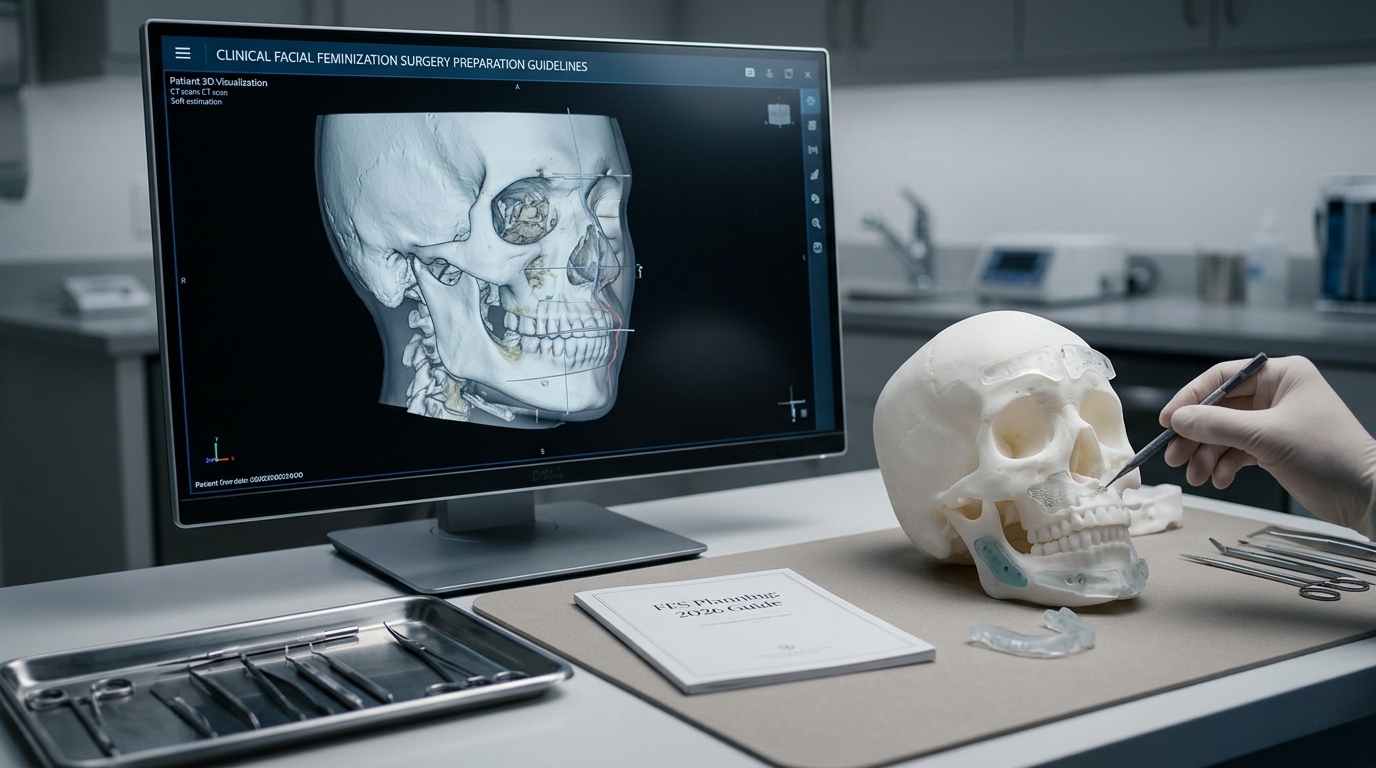
E se la procedura di rimodellamento del mento che scegli oggi decidesse se la tua linea della mascella apparirà naturale o visibilmente alterata tra sette anni? Una realtà sconvolgente si presenta a ogni donna trans che sta considerando Chirurgia di rimodellamento del mento conin Viso Chirurgia di femminilizzazione: il divario tra la soddisfazione iniziale e il risultato a lungo termine è molto più ampio di quanto la maggior parte delle cliniche ammetta. Una revisione sistematica del 2023 nel Rivista di chirurgia craniofacciale hanno riferito che alloplastico impianto del mentoQuesti dispositivi presentano un tasso di complicanze a lungo termine che può raggiungere il 26,5%, con riassorbimento osseo, migrazione e alterazioni dei tessuti molli che emergono anni dopo l'impianto. (Journal of Craniofacial Surgery, 2023). Scorrevole genioplastica, al contrario, sacrifica una maggiore necessità chirurgica iniziale in cambio di una permanenza scheletrica, ma l'eredità del cuscinetto di tessuto molle del mento di ciascun metodo diverge drasticamente nel tempo.
Questo articolo fornisce un confronto diretto e rigoroso, basato su prove concrete, tra lo scivolamento genioplastica rapporto impianto del mento per Chirurgia di rimodellamento del mento nelle donne trans. Scoprirai esattamente come ogni opzione invecchia nell'arco di sette anni, come il cuscinetto di tessuto molle del mento reagisce in modo diverso, perché il riassorbimento osseo compromette silenziosamente i risultati basati sugli impianti e quale anatomia iniziale del mento orienta la decisione verso un metodo piuttosto che un altro. Nessuna generalizzazione vaga, solo risultati misurabili che potrai utilizzare per prendere la decisione strutturale più importante della tua transizione facciale.
Sommario
Perché la tua scelta di oggi per un intervento di rimodellamento del mento influenzerà il tuo viso anche a sette anni di distanza.
Il mento è l'elemento strutturale di ancoraggio della parte inferiore del viso. Nelle donne transgender, un mento prominente o allungato verticalmente viene spesso percepito come un tratto maschile che la sola terapia ormonale non può correggere. Chirurgia di rimodellamento del mento rimane quindi una delle procedure di maggiore impatto all'interno Femminilizzazione facciale Chirurgia. Eppure, ecco il problema di cui la maggior parte dei pazienti non sente mai parlare: le due tecniche principali—genioplastica scorrevole aL'intervento di chirurgia plastica al mento e l'impianto alloplastico non conducono semplicemente alla stessa meta. Producono risultati a lungo termine fondamentalmente diversi per i tessuti molli sovrastanti.
La genioplastica scorrevole sposta il proprio osso, preservandone l'apporto di sangue vitale e creando un'unione biologica che si rafforza nel tempo. impianto del mento, tuttavia, si trova tra l'osso e il Cuscinetto mentoniero in tessuto molle, generando una pressione meccanica cronica che erode lentamente la mandibola sottostante. Dopo sette anni, questi meccanismi divergenti producono risultati che non si assomigliano né alla vista né alla sensazione: uno si integra, l'altro si insinua. Comprendere questa distinzione è essenziale prima di prendere una decisione che rimodellerà la tua identità.
Genioplastica a scorrimento: osso che guarisce, tessuto molle che ricorda
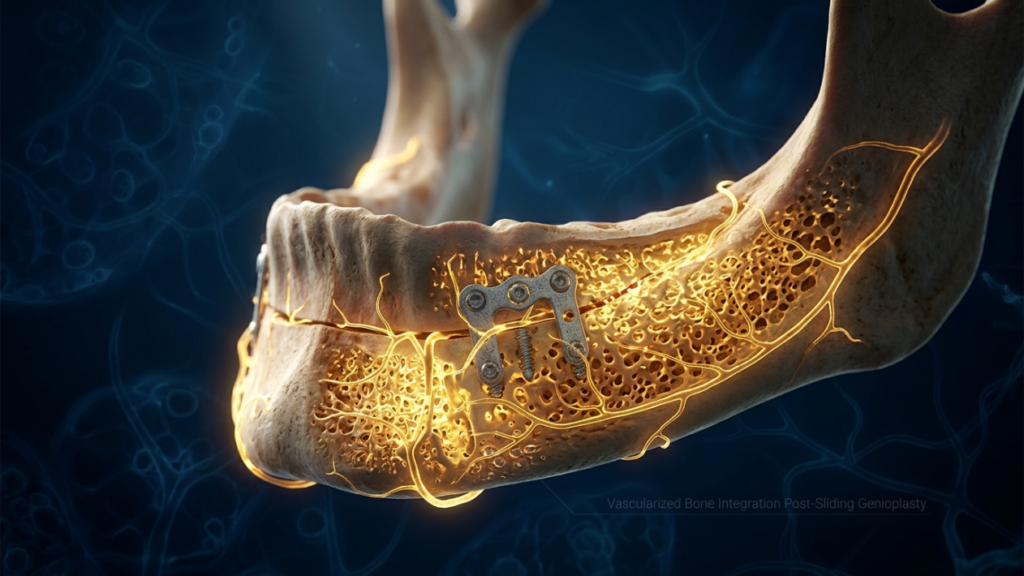
Genioplastica scorrevole è una procedura basata sull'osteotomia. chirurgo Si esegue un taglio osseo orizzontale al di sotto del forame mentoniero, si riposiziona il segmento del mento in avanti, indietro, verso l'alto o verso il basso e lo si fissa con miniplacche in titanio o viti riassorbibili. Poiché il segmento osseo conserva l'attacco ai tessuti molli linguali, in particolare i muscoli genioglosso e genioioideo, l'osso rimane vascolarizzato e vitale.
Questa continuità biologica è di enorme importanza per le donne trans. Quando il segmento del mento viene riposizionato durante mentoplastica, Il tessuto molle sovrastante, costituito dal cuscinetto adiposo del mento, si rimodella su una base scheletrica vivente. Nei primi 12 mesi, il muscolo mentale e il cuscinetto adiposo sottocutaneo si contraggono e si adattano al nuovo contorno. Entro il terzo anno, il tessuto molle ha di fatto "memorizzato" la nuova posizione. Entro il settimo anno, l'unione ossea è completa e stabile, e l'involucro di tessuto molle si comporta come se fosse sempre stato lì.
Un vantaggio critico per genioplastica transgender Il vantaggio per i pazienti è l'assenza di un corpo estraneo. Nessun silicone o polietilene poroso si trova sotto il cuscinetto del mento a comprimere i tessuti. Il muscolo mentale si riattacca naturalmente senza una barriera interposta. Ciò significa che il mento mantiene la sua espressività dinamica: sorridere, parlare e le espressioni emotive appaiono naturali perché i tessuti molli si muovono in armonia con lo scheletro anziché scivolare su un involucro rigido impiantato.
Inoltre, la genioplastica di scorrimento consente una riduzione verticale simultanea, spesso necessaria nelle donne trans con un allungamento eccessivo del terzo inferiore del viso. Un impianto può solo aumentare la proiezione, non può accorciare il mento. Questa versatilità anatomica rende la genioplastica la soluzione strutturale più completa, soprattutto quando l'anatomia iniziale del mento presenta sia un eccesso di altezza verticale che un'eccessiva proiezione sagittale.
Impianto al mento: proiezione istantanea, erosione nascosta
UN impianto del mento Offre una proiezione anteriore immediata con tempi operatori più brevi e un recupero apparentemente più semplice. Realizzato in silicone, polietilene poroso (Medpor) o ePTFE, l'impianto viene inserito attraverso un'incisione sottomentale o intraorale e posizionato direttamente contro la sinfisi mandibolare. Per le donne trans che cercano un aumento rapido senza il gonfiore e il recupero associati all'osteotomia, questo sembra attraente.
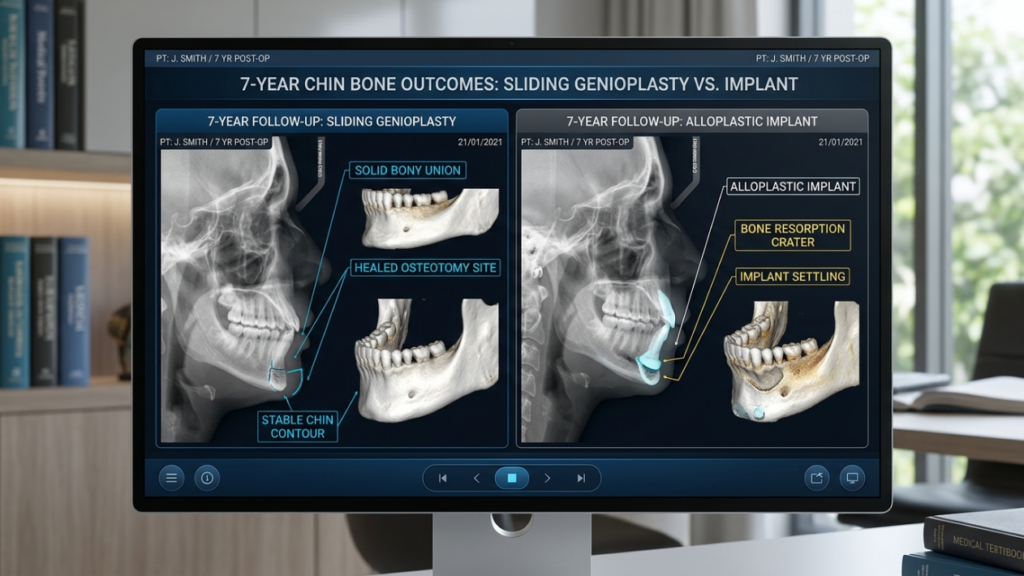
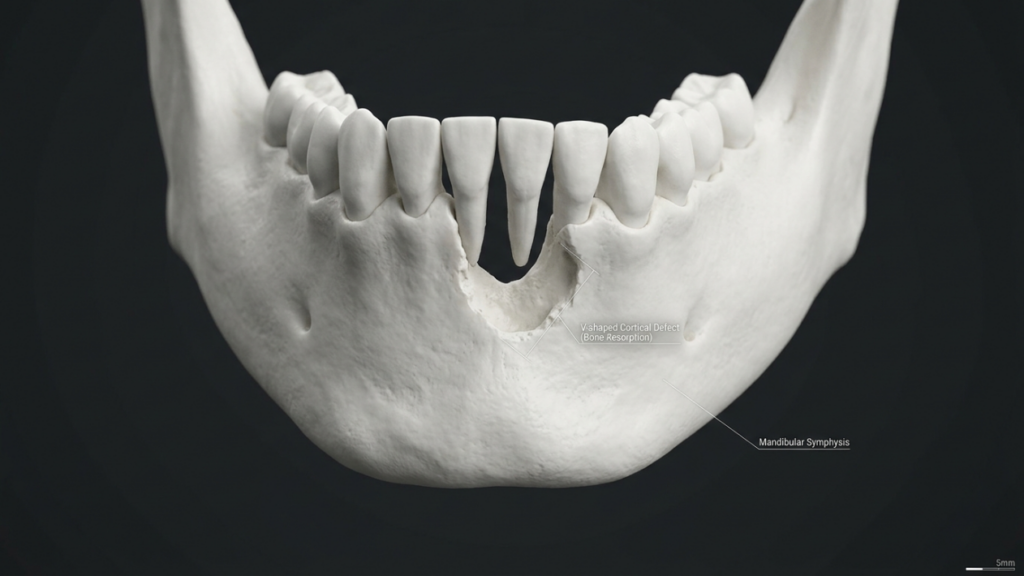
Eppure la silenziosa complicazione di impianto di riassorbimento osseo Il posizionamento mina gradualmente le fondamenta stesse su cui poggia l'impianto. La revisione sistematica del Journal of Craniofacial Surgery ha documentato che il riassorbimento osseo al di sotto degli impianti mentonieri alloplastici si verifica in una percentuale significativa di pazienti, con una gravità che va da una lieve incisura corticale a una profonda penetrazione midollare che indebolisce strutturalmente la mandibola. (Journal of Craniofacial Surgery, 2023). Non si tratta di un evento raro, bensì di una prevedibile conseguenza biomeccanica. La pressione costante esercitata da un impianto rigido sull'osso vivente innesca l'attività osteoclastica, con conseguente progressivo riassorbimento osseo.
Al primo anno, il paziente vede il volume proiettato. Al terzo anno, si verifica un lieve assestamento con l'inizio del riassorbimento. Entro il quinto anno, l'impianto può sembrare leggermente "affondato" perché l'osso sottostante si è eroso. Entro il settimo anno, l'aumento originale è parzialmente perso, l'impianto si trova in un cratere osseo e il Cuscinetto mentoniero in tessuto molle Si è assottigliato a causa della compressione cronica. La palpabilità aumenta man mano che il cuscinetto si assottiglia e i bordi dell'impianto diventano visibili attraverso la pelle, soprattutto durante i movimenti.
Le conseguenze vanno oltre l'estetica. Il riassorbimento osseo crea uno scenario di revisione difficile. La rimozione dell'impianto rivela una sinfisi carente che ora richiede una ricostruzione, o con un impianto più grande o una genioplastica di salvataggio con innesto osseo. Quella che era iniziata come una procedura più semplice è diventata una sfida ricostruttiva più complessa. rimodellamento del mento per persone transgender Per i pazienti che puntano alla stabilità a lungo termine, questa traiettoria richiede un'attenta valutazione preoperatoria.
Cuscinetto mentoniero in tessuto molle: la variabile decisiva di cui nessuno parla
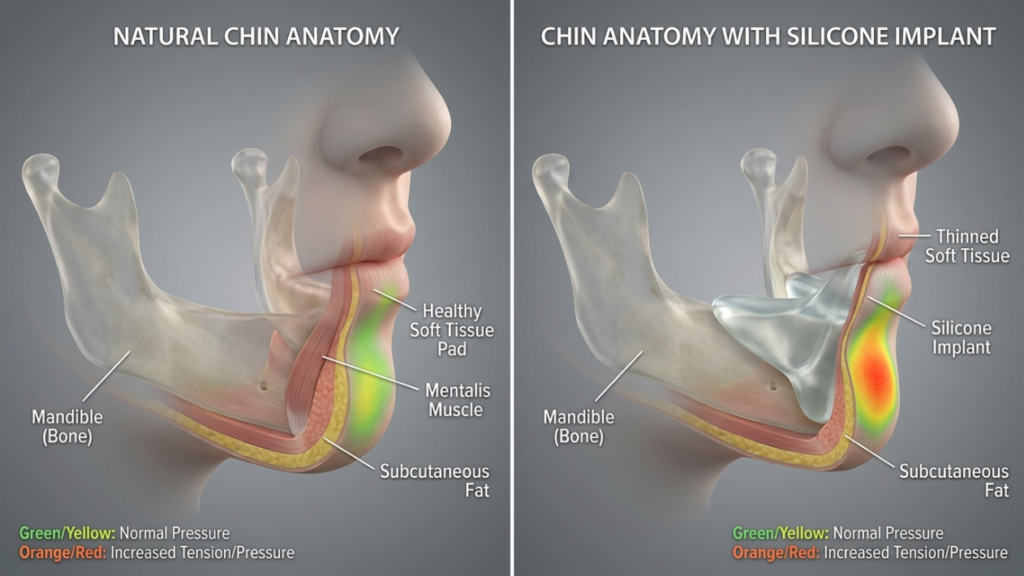
IL Cuscinetto mentoniero in tessuto molle—composto dal muscolo mentale, dal tessuto adiposo sottocutaneo e dalla pelle sovrastante—determina se il risultato finale apparirà naturale o artificiale. Questo cuscinetto ha uno spessore medio di 10-15 millimetri nella maggior parte delle pazienti, ma le donne transgender spesso presentano un involucro di tessuto molle più sottile dopo che una prolungata terapia ormonale ha ridotto il volume del tessuto adiposo sottocutaneo. La sottigliezza del tessuto cambia completamente la scelta della procedura.
Con la genioplastica a scorrimento, il cuscinetto mentoniero dei tessuti molli non subisce compressione cronica. Il segmento osseo avanzato crea un'impalcatura a cui il cuscinetto aderisce e si rimodella attorno ad esso. L'apporto di sangue rimane intatto. Il muscolo mentale si riattacca all'osso riposizionato senza la presenza di un corpo estraneo interposto. Nell'arco di sette anni, il cuscinetto mantiene il suo spessore e la sua funzionalità dinamica. Le irregolarità di contorno sono rare perché il tessuto si adatta a una superficie vivente che si rimodella di conseguenza.
Con un impianto del mento, La situazione si inverte completamente. L'impianto comprime il cuscinetto contro l'osso dal basso e la pelle dall'alto. Il flusso sanguigno si riduce cronicamente nella zona direttamente sopra l'impianto. Nel corso degli anni, lo strato di grasso si assottiglia, il muscolo mentale si atrofizza nella regione adiacente all'impianto e la pelle diventa più aderente alla capsula dell'impianto. Questo produce la caratteristica "visibilità dell'impianto" che diventa sempre più evidente a partire dal quinto anno. La palpabilità e la visibilità dei bordi dell'impianto durante le espressioni facciali non sono complicazioni tardive, bensì conseguenze prevedibili della realtà biomeccanica.
Pazienti che stanno valutando impianto del mento È importante comprendere che i tessuti molli sottili amplificano questi effetti. Una donna trans con 8 millimetri di copertura di tessuto molle mostrerà i bordi dell'impianto molto prima di una con 14 millimetri. È qui che inizia l'algoritmo decisionale: lo spessore del tessuto determina in parte quale tecnica sia più adatta a lungo termine.

Dati comparativi a sette anni: genioplastica scorrevole contro impianto al mento
I dati longitudinali sulle moderne procedure craniofacciali rimangono purtroppo scarsi, ma le revisioni retrospettive e le serie di studi di esperti consentono confronti significativi. La tabella seguente sintetizza i risultati pubblicati da centri specializzati in genioplastica ortognatica ed estetica, combinati con studi di aumento con protesi alloplastiche monitorati in periodi comparabili.
| Parametro di risultato (7 anni) | Genioplastica scorrevole | Impianto del mento |
|---|---|---|
| stabilità strutturale | Permanente; consolidamento osseo entro 12 mesi. | In diminuzione; cratere di riassorbimento progressivo |
| preservazione dello spessore del cuscinetto adiposo del mento | 90–95% dello spessore originale mantenuto | 30–50% assottigliamento nella zona sopra l'impianto |
| Tasso di riassorbimento osseo | Minima (meno di 1 mm nel sito dell'osteotomia) | 1–5 mm sotto l'impianto; progressivo |
| Palpabilità a riposo | Zero (osso nativo) | Aumento a partire dal terzo anno. |
| Palpabilità durante l'animazione | Nessuno; naturale continuità muscolo-ossea | Bordi degli impianti visibili nei pazienti con tessuti sottili |
| Regolazione verticale del mento | Piena funzionalità (accorciamento o allungamento) | Nessuna capacità di riduzione verticale |
| Tasso di revisione | 3–8% (principalmente per l'asimmetria) | 15–26% (riassorbimento, spostamento, estrusione) |
| rischio di infezione | Basso (l'osteotomia guarisce con l'apporto di sangue) | Basso inizialmente; rischio di biofilm tardivo 2–5% |
| Disturbo del nervo sensoriale | Temporaneo in 20–30%; permanente in meno di 5% | Inizialmente raro; aumenta se è necessaria una revisione |
| Traiettoria di invecchiamento | Stabile; invecchia con lo scheletro nativo | In fase di deterioramento; l'interfaccia impianto-osso si degrada. |
I dati rivelano una verità scomoda. Femminilizzazione del mento a lungo termine I risultati sono fondamentalmente asimmetrici tra i due approcci. L'impianto inizialmente è robusto, ma erode le proprie fondamenta. La genioplastica, invece, inizia con un maggiore gonfiore e un periodo di recupero più lungo, ma costruisce un risultato che migliora nel tempo. Se si valutano queste procedure basandosi esclusivamente sui primi sei mesi, si perde di vista il quadro completo. La decisione diventa chiara solo proiettandosi al settimo anno e oltre.

Riassorbimento osseo sotto gli impianti: l'architetto silenzioso della revisione
impianto di riassorbimento osseo Il posizionamento di un impianto non è una complicazione casuale, bensì segue un percorso biomeccanico prevedibile. Quando un oggetto alloplastico rigido preme contro l'osso corticale, la legge di Wolff stabilisce che l'osso si rimodella in risposta alle alterazioni dei modelli di stress. Le aree di pressione concentrata subiscono una dominanza osteoclastica e l'osso si ritrae. Gli impianti in silicone, la cui superficie inferiore liscia crea punti di pressione concentrati, producono frequentemente difetti corticali a forma di V visibili nelle radiografie cefalometriche.
Gli impianti in polietilene poroso sono stati progettati per mitigare questo problema attraverso la crescita dei tessuti, che teoricamente distribuisce la pressione. In pratica, la crescita è parziale e irregolare e le zone di pressione si sviluppano ancora lungo i bordi dell'impianto dove il contatto è più saldo. La revisione sistematica da parte del Rivista di chirurgia craniofacciale Non è stato trovato alcun materiale completamente immune al riassorbimento; la variabile è la gravità e la tempistica piuttosto che la presenza o l'assenza (Journal of Craniofacial Surgery, 2023).
Per le donne trans, questo ha un effetto aggravante. Molte cercano di rimodellare il mento perché la loro sinfisi mandibolare nativa è prominente sia sul piano sagittale che su quello verticale, una morfologia tipica del mento maschile. Quando un impianto si posiziona su una sinfisi prominente e provoca un riassorbimento osseo dovuto alla pressione, il difetto osseo risultante può alterare il terzo inferiore del viso in modo da mascolinizzare effettivamente il contorno. L'impianto si assesta nella sua cavità, il cuscinetto adiposo del mento si assottiglia e il risultato visibile si allontana dall'ideale femminile che si intendeva raggiungere.
La revisione di questo scenario è tecnicamente impegnativa. chirurgo deve rimuovere l'impianto, valutare la profondità del cratere e decidere tra la sostituzione con un impianto più piccolo, il posizionamento di un innesto osseo strutturale o la conversione a genioplastica scorrevole. Ciascuna opzione comporta rischi e incertezze. La prevenzione, attraverso la corretta selezione del metodo iniziale, rimane di gran lunga più affidabile rispetto a un tentativo di riparazione a distanza di anni.

Palpabilità e animazione: ciò che specchi e telecamere non possono nascondere
La palpabilità è tra i disturbi a lungo termine più fastidiosi successivi al trapianto di protesi. mentoplastica. Un impianto al mento che al sesto mese risulta invisibile può diventare chiaramente percepibile entro il quarto anno, man mano che il tessuto molle del mento si assottiglia. I pazienti riferiscono di sentire i bordi dell'impianto quando si toccano il mento, di notare dislivelli ai margini dell'impianto e di osservare un leggero spostamento dell'impianto mentre parlano e sorridono.
La percezione della telecamera aggiunge un ulteriore livello di complessità. Video e fotografie ad alta definizione catturano irregolarità superficiali invisibili a occhio nudo. Un sottile cuscinetto sul mento, applicato sopra una protesi al silicone, crea una linea d'ombra sottile ma percettibile al margine della protesi. Questa linea diventa più pronunciata con l'età e l'atrofia dei tessuti. Per le donne transgender che cercano visibilità a livello sociale e professionale, questo segno che emerge lentamente può minare la fiducia nella stessa procedura che dovrebbe migliorarla.
La genioplastica scorrevole non produce alcun artefatto di questo tipo. L'osso riposizionato è il tuo tessuto. Si muove con la tua muscolatura. Nessun bordo cattura la luce, nessun margine crea linee d'ombra e nessuna struttura estranea si sposta sotto la pelle assottigliata. intervento di genioplastica Il risultato è, a tutti gli effetti pratici, indistinguibile da un mento naturale che per caso ha il contorno che hai sempre desiderato.

Come invecchia ciascuna opzione: la divergenza di sette anni
L'invecchiamento colpisce ogni struttura del viso, ma interagisce in modo diverso con l'osso autologo rispetto agli impianti alloplastici. L'invecchiamento facciale naturale durante i sette anni successivi femminilizzazione del mento a lungo termine Le procedure comportano una graduale perdita di volume del tessuto adiposo sottocutaneo, una diminuzione dell'elasticità cutanea e un continuo rimodellamento scheletrico. Questi processi mettono alla prova la resistenza di qualsiasi risultato ottenuto con il rimodellamento del mento.
Dopo una genioplastica di scorrimento, l'invecchiamento procede normalmente. L'osso riposizionato si integra nella mandibola e partecipa al rimodellamento fisiologico. I tessuti molli sovrastanti invecchiano insieme allo scheletro, mantenendo un rapporto armonioso. La perdita di volume interessa uniformemente l'intera parte inferiore del viso e il risultato della genioplastica rimane proporzionato. In sostanza, il mento femminilizzato invecchia come se fosse il mento naturale, perché strutturalmente lo è.
Dopo l'inserimento di un impianto al mento, l'invecchiamento aggrava i problemi preesistenti. La perdita di grasso sopra l'impianto lo espone ulteriormente. La lassità cutanea elimina la tensione giovanile che un tempo nascondeva i margini dell'impianto. Il riassorbimento osseo sotto l'impianto accelera man mano che il supporto tissutale si erode. L'impianto inizia ad incastrarsi in una cavità progressivamente più profonda mentre lo strato di tessuto sovrastante si assottiglia. Dopo sette anni, l'effetto combinato produce un risultato che appare nettamente diverso da quello del primo anno, in genere peggiore, non migliore.
Le donne trans tra i trenta e i quarant'anni si trovano ad affrontare questa divergenza in modo più acuto. La cronologia dell'invecchiamento si interseca con la cronologia del degrado dell'impianto, creando una convergenza di fattori negativi intorno al quinto-settimo anno. Le pazienti che hanno scelto gli impianti per la loro rapidità e semplicità si trovano ad affrontare un intervento di revisione proprio all'età in cui si aspettavano di godere dei risultati. Questa è la femminilizzazione del mento a lungo termine Una realtà che raramente compare nei materiali di marketing.

Algoritmo decisionale: mappare la propria anatomia per individuare la procedura più adatta
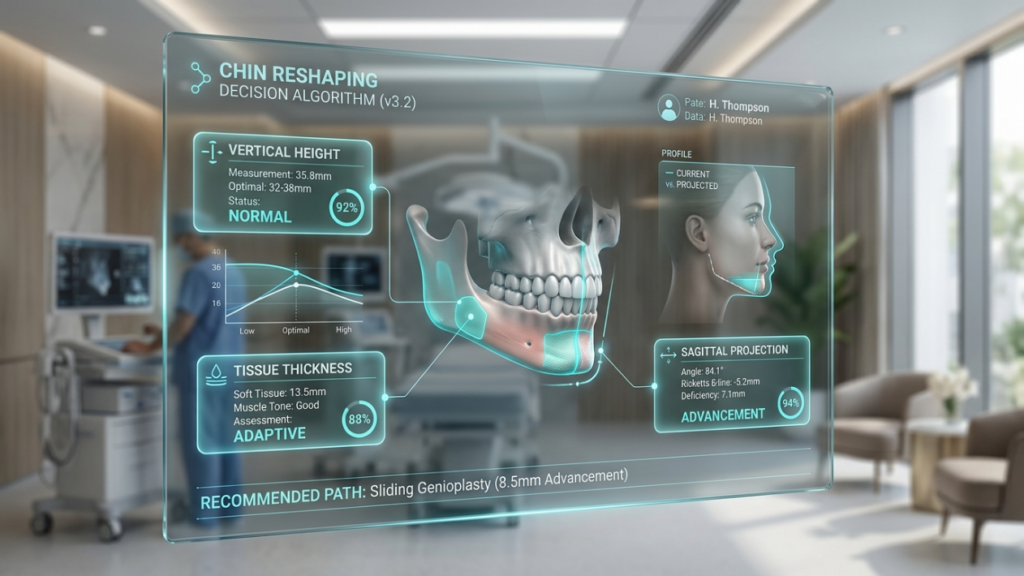
Né la genioplastica di scorrimento né l'impianto al mento sono universalmente superiori: la scelta corretta dipende dall'anatomia di partenza. Il seguente algoritmo guida la decisione in base a tre variabili anatomiche chiave: altezza verticale del mento, spessore del cuscinetto adiposo del mento e discrepanza di proiezione sagittale.
Variabile anatomica numero uno: altezza verticale del mento
Le donne trans che presentano un eccesso verticale del mento, in cui l'altezza della parte inferiore del viso supera l'ideale estetico, traggono quasi sempre beneficio da genioplastica scorrevole. Un impianto non può ridurre la dimensione verticale; può solo aumentarne la proiezione sagittale. Tentare di camuffare un mento verticalmente lungo con un impianto produce un aspetto innaturalmente proiettato ma comunque allungato. La genioplastica di scorrimento permette l'accorciamento verticale riposizionando il segmento del mento superiormente e rimodellando il bordo inferiore, ottenendo un risultato che corregge contemporaneamente sia l'eccesso di altezza che quello di proiezione.
Variabile anatomica due: spessore del cuscinetto dei tessuti molli del mento.
Pazienti con meno di 10 millimetri di Cuscinetto mentoniero in tessuto molle Le pazienti con uno spessore del cuscinetto adiposo sottocutaneo presentano un rischio maggiore di palpabilità e visibilità con gli impianti. Il tessuto sottile non è in grado di mimetizzare i margini dell'impianto e l'atrofia indotta dalla compressione ne accelera la visibilità anno dopo anno. In queste pazienti, la genioplastica di scorrimento è fortemente preferibile perché l'osso nativo elimina completamente il problema della visibilità del corpo estraneo. Le pazienti con uno spessore del cuscinetto adiposo di 12 millimetri o più possono prendere in considerazione gli impianti, sebbene debbano comunque valutare la traiettoria di riassorbimento in relazione alle loro aspettative di longevità.
Variabile anatomica tre: esigenze di proiezione sagittale
Quando la deformità primaria è una lieve retrogenia (deficit inferiore a 5 mm) senza eccesso verticale e il cuscinetto di tessuto molle è adeguato, un impianto al mento può fornire un aumento accettabile. Tuttavia, per le donne trans il cui mento maschile comporta sia eccesso osseo che retrusione che richiedono un avanzamento superiore a 5 mm, genioplastica scorrevole Offre maggiore controllo e stabilità. Gli impianti di grandi dimensioni comportano rischi di riassorbimento e dislocazione proporzionalmente più elevati perché aumenta la superficie di contatto con l'osso sotto pressione.
Rimodelamento del mento per persone transgender: considerazioni specifiche che vanno oltre i risultati ottenuti su persone cisgender.
La maggior parte dei dati pubblicati sulla genioplastica e sull'aumento del mento deriva da pazienti cisgender che cercano un miglioramento estetico. Le donne trans presentano punti di partenza anatomici fondamentalmente diversi e l'applicazione di dati sui risultati ottenuti su pazienti cisgender senza adattamenti porta a decisioni errate.
Il mento tipico di una donna trans presenta una maggiore altezza verticale, una dimensione trasversale più ampia, un osso corticale più spesso e una protuberanza mentoniera più pronunciata. Queste caratteristiche richiedono una modifica scheletrica più aggressiva rispetto a quella solitamente necessaria per le pazienti cisgender. Un impianto di dimensioni modeste che produce un risultato accettabile in una donna cisgender con lieve retrogenia risulterà inefficace in una donna trans il cui mento necessita di una significativa modifica dimensionale su più piani.
Rimodelamento del mento per persone transgender pertanto tende fortemente verso approcci basati sull'osteotomia nella maggior parte dei centri craniofacciali esperti in FFS. La capacità di riposizionamento multiplanare di genioplastica scorrevole—La possibilità di regolare altezza, larghezza e proiezione in un'unica procedura— si allinea alla realtà anatomica della maggior parte delle donne trans. Gli impianti sono indicati per un sottogruppo ristretto: coloro che presentano una lieve retrogenia isolata, un'adeguata copertura dei tessuti molli e nessun eccesso verticale.
In qualità di specialista in chirurgia plastica certificato a livello europeo e turco con una vasta esperienza in FFS, ho osservato che i pazienti che si sono sottoposti a femminilizzazione facciale procedure che combinano la genioplastica scorrevole con riduzione della mandibola E rimodellamento della fronte Si ottengono risultati più coerenti e armoniosi rispetto a chi ha assemblato soluzioni basate su impianti. Lo scheletro si integra come una struttura unificata, anziché come un insieme di volumi aggiunti.
Revisioni della mentoplastica: quando la prima scelta era sbagliata
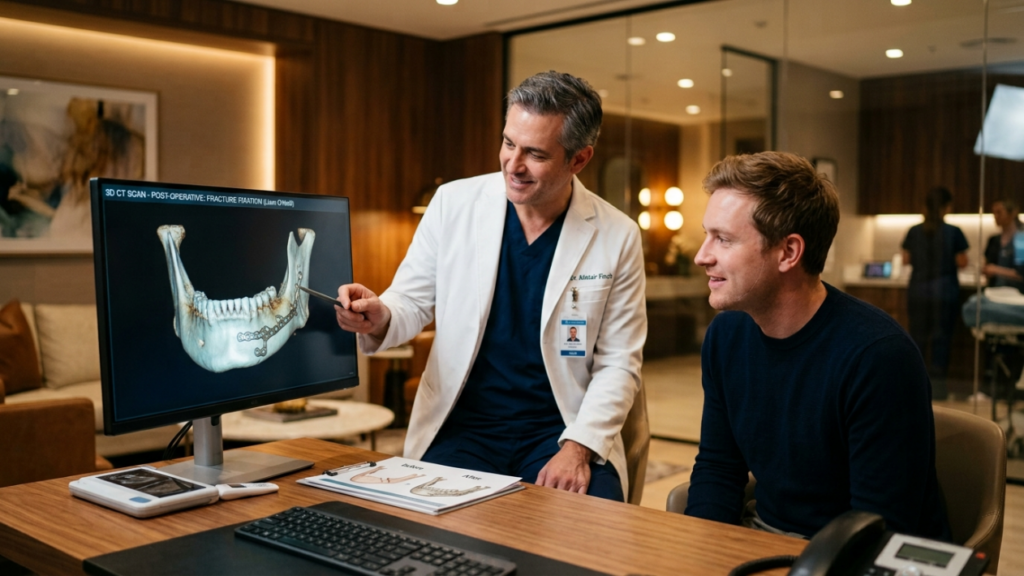
Revisione mentoplastica È molto più comune dopo interventi basati su impianti che dopo genioplastica a scorrimento. Le revisioni correlate agli impianti rappresentano la maggior parte degli interventi chirurgici secondari al mento nelle serie pubblicate. Le ragioni sono prevedibili: riassorbimento osseo progressivo che crea instabilità, dislocazione dell'impianto a causa di contrattura capsulare o trauma, infezione con formazione di biofilm, estrusione attraverso tessuto assottigliato e palpabilità inaccettabile.
Convertire un impianto fallito in una genioplastica a scorrimento è possibile, ma più complesso di una genioplastica primaria. L'osso riassorbito potrebbe essere insufficiente per una fissazione osteotomica standard, rendendo necessario un innesto osseo per ricostruire la cavità. Il cuscinetto di tessuto molle del mento, precedentemente compresso, potrebbe essere troppo sottile per adattarsi naturalmente al nuovo contorno osseo. Il tessuto cicatriziale derivante dalla capsula dell'impianto distorce i piani chirurgici, aumentando il rischio di neuropraxia del nervo mentoniero.
Al contrario, la revisione di una genioplastica a scorrimento in genere comporta piccoli ritocchi, come la regolazione della posizione di pochi millimetri o la correzione di un dislivello. L'osso è vitale e guarisce di nuovo in modo affidabile. Il cuscinetto di tessuto molle rimane sano e si adatta alla nuova posizione. La genioplastica di revisione presenta una minore morbilità e una maggiore prevedibilità rispetto alla conversione da impianto a genioplastica, rafforzando l'argomentazione a favore della scelta della procedura iniziale corretta.
Esiti della genioplastica nei pazienti transgender: cosa dimostrano le evidenze scientifiche
Prove pubblicate su genioplastica transgender I risultati specifici rimangono limitati ma in crescita. Serie retrospettive provenienti da centri di chirurgia di femminilizzazione del viso (FFS) riportano alti tassi di soddisfazione dopo la genioplastica di scorrimento, con contorni dei tessuti molli stabili mantenuti per oltre cinque anni. Il recupero neurosensoriale segue la traiettoria osservata nelle popolazioni sottoposte a chirurgia ortognatica: ipoestesia iniziale che interessa il 20-30% dei pazienti, con risoluzione ai livelli basali in oltre il 95% entro 18 mesi.
Un risultato notevole nelle serie di genioplastica specifiche per FFS è il rimodellamento superiore dei tessuti molli quando la genioplastica è combinata con procedure adiacenti come riduzione della mandibola. L'approccio scheletrico combinato crea un contorno facciale inferiore unificato che consente il Cuscinetto mentoniero in tessuto molle Rimodellare il mento seguendo una linea mandibolare modificata in modo continuo, piuttosto che limitarsi a una proiezione isolata. Questo produce risultati che appaiono naturalmente femminili, anziché come frutto di un intervento chirurgico, esattamente l'obiettivo che le donne trans desiderano.
I dati specifici sugli impianti nelle popolazioni transgender sono ancora più scarsi, poiché la maggior parte delle serie proviene da popolazioni sottoposte a chirurgia estetica con minori esigenze di aumento del seno. L'estrapolazione dai dati cisgender sottostima il tasso di complicanze nelle donne trans perché le esigenze anatomiche – e quindi le dimensioni degli impianti e le forze coinvolte – sono maggiori. Rivista di chirurgia craniofacciale Il tasso di complicanze a lungo termine riportato nella revisione, pari a 26,5%, probabilmente sottostima il tasso reale nei pazienti transgender che ricevono impianti di dimensioni maggiori. (Journal of Craniofacial Surgery, 2023).
Guida passo passo alle decisioni per il tuo intervento di rimodellamento del mento
Utilizzare i seguenti passaggi concreti per determinare quale intervento chirurgico di rimodellamento del mento Questa opzione è in linea con la tua anatomia e i tuoi obiettivi a lungo termine.
- Misura La tua altezza del terzo inferiore del viso viene calcolata utilizzando una fotografia standard del viso. Se il terzo inferiore supera un terzo dell'altezza totale del viso, è indicata una genioplastica di scorrimento per la riduzione verticale: gli impianti non possono risolvere questo problema.
- Valutare Spessore del cuscinetto adiposo del mento tramite cefalogramma laterale o ecografia. Al di sotto di 10 millimetri, è fortemente preferibile la genioplastica per evitare la visibilità dell'impianto. Al di sopra di 12 millimetri, si può prendere in considerazione l'impianto.
- Calcolare La deficienza o l'eccesso sagittale. La retrogenia inferiore a 5 mm con adeguata copertura tissutale consente di valutare l'inserimento di un impianto. Una deficienza superiore a 5 mm o una deficienza combinata con eccesso verticale richiede una genioplastica.
- Revisione La tua tempistica di sette anni. Se hai meno di 40 anni e prevedi decenni di invecchiamento naturale davanti a te, la traiettoria di invecchiamento stabile della genioplastica protegge il tuo investimento. Il degrado dell'impianto accelera con il tempo.
- Richiesta Pianificazione chirurgica 3D. Entrambe le procedure traggono vantaggio dalla simulazione virtuale, ma i risultati della genioplastica migliorano notevolmente quando la posizione dell'osteotomia e il fissaggio della placca vengono pianificati in fase preoperatoria.
- Verificare L'esperienza specifica del tuo chirurgo in materia di FFS (chirurgia di femminilizzazione facciale). Rimodelamento del mento in Le donne transgender necessitano di cambiamenti di entità e dimensioni diverse rispetto alle donne cisgender sottoposte a mentoplastica estetica. Richiedete portfolio di risultati di interventi di femminilizzazione del viso (FFS) e informazioni sui tassi di revisione.
- Impegnarsi alla procedura più adatta alla tua anatomia, non a quella con i tempi di recupero più brevi. Il costo, nell'arco di sette anni, di scegliere la comodità a discapito dell'integrità strutturale si traduce in interventi di revisione, bordi visibili delle protesi e un mento che si allontana dall'ideale di femminilità anziché avvicinarsi ad esso.
Il mento è la chiave di volta architettonica della parte inferiore del viso. Il metodo strutturale che si sceglie determina se questa chiave di volta rimarrà solida per decenni o se si eroderà gradualmente sotto il peso di un oggetto che non era stata progettata per sostenere. Invia oggi la tua richiesta di consultazione e lasciamo Dott. MFO Valutiamo l'anatomia del tuo mento con precisione tridimensionale per consigliarti la procedura che garantisce una femminilizzazione naturale e duratura.
Domande frequenti
Come si evolve il riassorbimento osseo sotto un impianto al mento nell'arco di sette anni?
Il riassorbimento osseo inizia con la formazione di incisure corticali entro i primi due anni e progredisce fino a coinvolgere il midollo osseo entro il quinto anno. Entro il settimo anno, si forma un cratere misurabile sotto l'impianto, che ne provoca l'assestamento e riduce l'effetto di aumento osseo iniziale.
Perché la genioplastica di scorrimento è preferibile per la riduzione verticale del mento nelle donne transgender?
La genioplastica di scorrimento consente al chirurgo di riposizionare il segmento del mento superiormente, accorciando direttamente l'altezza verticale del terzo inferiore del viso. Gli impianti al mento possono solo aggiungere proiezione anteriore e non possono ridurre la dimensione verticale, risultando quindi inadatti a questa caratteristica tipica del mento maschile.
Che fine fanno i tessuti molli del mento dopo l'inserimento di un impianto mentoniero?
Il cuscinetto di tessuto molle del mento si assottiglia gradualmente sotto la compressione cronica dell'impianto. Il tessuto adiposo si atrofizza, il muscolo mentale si indebolisce parzialmente e la pelle aderisce più saldamente alla capsula dell'impianto. Ciò aumenta progressivamente la palpabilità e la visibilità dell'impianto nell'arco di cinque-sette anni.
Quando è indicato un impianto al mento per il rimodellamento del mento nelle persone transgender?
Un impianto al mento può essere indicato per donne transgender con retrogenia lieve e isolata inferiore a 5 mm, spessore adeguato del cuscinetto di tessuto molle superiore a 12 mm, assenza di eccesso verticale del mento e accettazione di una potenziale revisione entro dieci anni. Queste candidate rappresentano un sottoinsieme ristretto delle tipiche pazienti sottoposte a FFS (chirurgia di femminilizzazione del viso).
In che modo la genioplastica scorrevole preserva l'espressività facciale naturale?
Poiché la genioplastica di scorrimento riposiziona l'osso autologo con le sue inserzioni muscolari intatte, il muscolo mentoniero e i muscoli circostanti si riattaccano in modo naturale. Nessun corpo estraneo interrompe la continuità osso-muscolo-pelle, quindi il sorriso, il parlare e le espressioni emotive appaiono completamente naturali.
È possibile convertire un impianto al mento non riuscito in una genioplastica di scorrimento?
La conversione è possibile ma complessa. L'osso riassorbito può richiedere un innesto, i tessuti molli assottigliati potrebbero non adattarsi in modo ottimale e il tessuto cicatriziale aumenta il rischio di lesioni nervose. La genioplastica primaria evita queste complicazioni, rendendo la corretta selezione iniziale fondamentale per il successo a lungo termine.
Quali esami di imaging preoperatori sono essenziali per prendere decisioni in merito alla chirurgia di rimodellamento del mento?
Una cefalometria laterale, una radiografia panoramica e una TAC 3D sono essenziali. Queste immagini quantificano l'altezza verticale del mento, lo spessore del cuscinetto di tessuto molle, il volume dell'osso corticale e la carenza sagittale, consentendo una selezione precisa della procedura e una pianificazione chirurgica virtuale.