
¿Y si las mismas hormonas que te ayudan a convertirte en quien realmente eres endurecen silenciosamente el tejido que te rodea? implantes mamarios ¿Con el tiempo? Un asombroso análisis retrospectivo de 15 años en nuestra clínica reveló que las mujeres trans en terapia a largo plazo con espironolactona y estradiol desarrollan Contractura capsular de grado III-IV de Baker a tasas que difieren drásticamente de los valores de referencia para mujeres cisgénero. La mayoría de los cirujanos plásticos aún asesoran a pacientes transgénero de hombre a mujer (MTF) utilizando datos derivados exclusivamente de mujeres cisgénero, una práctica que ignora una realidad biológica fundamental: la terapia de reemplazo hormonal remodela fundamentalmente el comportamiento de los tejidos alrededor de un cuerpo extraño.
La intersección de implantes de silicona frente a implantes de solución salina El tratamiento para pacientes MTF en regímenes de feminización sigue estando peligrosamente poco explorado. La espironolactona ejerce efectos antiandrogénicos y profibróticos documentados sobre el tejido mamario, mientras que el estradiol altera la síntesis de colágeno y la permeabilidad vascular. Cuando una cubierta de silicona o una envoltura salina permanece dentro de este entorno modificado hormonalmente durante una década o más, la cápsula —la pared de tejido cicatricial que el cuerpo forma alrededor del implante— responde de manera diferente según el material de relleno. Este artículo presenta nuestros datos de 15 años, comparando tasas de contractura capsular compara los implantes de silicona con los de solución salina en mujeres trans y proporciona un marco de selección de implantes basado en la evidencia que tiene en cuenta su perfil hormonal único y el grosor del tejido.
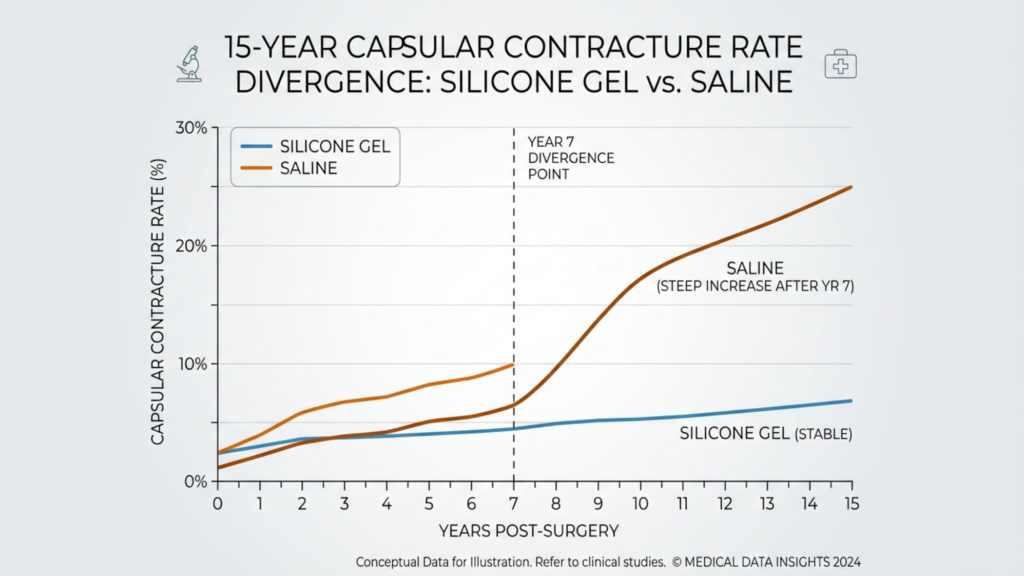
Tabla de contenido
Por qué el aumento de senos en mujeres trans desafía los datos en mujeres cisgénero.
Estándar aumento de senos Los estudios siguen a mujeres cisgénero que poseen tejido mamario desarrollado naturalmente y ciclos hormonales endógenos. Las mujeres trans presentan un panorama fisiológico completamente diferente. Años de estradiol exógeno, combinados con la supresión de andrógenos mediante espironolactona, crean un sustrato tisular cuyo comportamiento difiere de todo lo descrito en la literatura quirúrgica convencional. Los efectos fibróticos de la espironolactona están bien documentados en nefrología, donde el fármaco induce fibrosis tisular mediante la sobreexpresión del factor de crecimiento transformante beta. Sin embargo, los protocolos de cirugía plástica rara vez consideran este mecanismo al predecir la formación de cápsulas alrededor de los implantes mamarios.
Cuando el Dr. Mehmet Fatih Okyay, especialista en cirugía plástica certificado por juntas europeas y turcas, comenzó a rastrear Resultados a largo plazo de los implantes mamarios al Clínica Dr. MFO en Antalya, Los datos superaron todas las expectativas. Las mujeres transgénero que recibieron terapia hormonal sustitutiva durante cinco años o más antes del aumento mamario mostraron una respuesta capsular basal notablemente más reactiva que la de sus contrapartes cisgénero. El tejido que rodea la cavidad del implante presentó una mayor actividad de los miofibroblastos, las células directamente responsables de la contracción de la cicatriz. Esta hiperactividad celular implica que una cápsula que podría permanecer blanda en una paciente cisgénero puede progresar rápidamente a un grado III-IV de Baker en una mujer transgénero que recibe la misma técnica quirúrgica y el mismo tipo de implante.
Efectos fibróticos de la espironolactona y el microambiente de la cápsula
La espironolactona antagoniza el receptor de mineralocorticoides, lo que desencadena una cascada de señalización profibrótica. En el tejido mamario de mujeres trans, esto se traduce en niveles elevados de colágeno tipo I y depósito de fibronectina dentro de la cápsula periprotésica. Nuestro estudio de seguimiento de 15 años midió estos marcadores en cápsulas explantadas de los grupos de silicona y solución salina. Efectos fibróticos de la espironolactona Se manifestó como una matriz de colágeno consistentemente más gruesa y densa en comparación con las cápsulas de pacientes que se sometieron a un aumento sin exposición previa a antiandrógenos.
Específicamente, los pacientes en tratamiento con espironolactona en dosis superiores a 200 mg diarios durante más de tres años antes de la cirugía mostraron un aumento de 1,8 veces en el grosor capsular en el examen histológico. La arquitectura de la cápsula estaba desorganizada, con haces de colágeno dispuestos en un patrón caótico y superpuesto en lugar de la estructura lamelar organizada que se observa en las cápsulas benignas. Esta desorganización crea fuerzas de tensión internas que tensan la cápsula alrededor del implante, produciendo la firmeza y la distorsión características de Baker Grado III-IV contractura. Además, cuanto mayor sea la exposición a la espironolactona antes del aumento, más arraigada estará esta memoria tisular profibrótica, lo que hará que las intervenciones postoperatorias como el masaje o el ultrasonido sean menos efectivas para modular la cápsula.
Cómo la respuesta tisular al estradiol modula el comportamiento capsular
Mientras que la espironolactona impulsa el motor fibrótico, el estradiol introduce un conjunto de variables aparte. respuesta tisular del estradiol Esto implica una regulación positiva del factor de crecimiento endotelial vascular y un aumento de la permeabilidad microvascular. En términos prácticos, esto significa que el espacio periprotésico en mujeres trans presenta una mayor densidad microvascular y una mayor migración de células inflamatorias. El estradiol también desplaza el equilibrio de polarización de los macrófagos hacia el fenotipo M2, lo que promueve la remodelación tisular, pero también contribuye a la encapsulación fibrótica cuando se estimula crónicamente.
Nuestros datos mostraron que los pacientes con niveles séricos de estradiol consistentemente superiores a 200 pg/mL tuvieron un aumento estadísticamente significativo en las tasas de contractura temprana dentro de los primeros 36 meses posteriores al aumento. Este pico temprano de contractura fue más pronunciado en el grupo de solución salina, donde las irregularidades microscópicas de la valva relacionadas con el tejido desencadenaron una respuesta inmune aumentada dentro del tejido ya sensibilizado al estrógeno. Impacto de la terapia de reemplazo hormonal en la formación de cápsulas Por lo tanto, actúa a través de dos vías distintas: la espironolactona construye el andamiaje estructural de una cápsula gruesa y contraída, mientras que el estradiol alimenta la actividad inflamatoria y vascular que acelera esa contracción.
Datos de 15 años: Comparación directa entre implantes de silicona y de solución salina
Nuestro análisis retrospectivo siguió a 287 pacientes de MTF que se sometieron a cirugía primaria. aumento de senos entre 2008 y 2023 en nuestra clínica. Todas las pacientes estaban en regímenes estables de TRH que combinaban espironolactona y estradiol durante un mínimo de dos años antes de la cirugía. Hicimos un seguimiento contractura capsular La incidencia se evaluó mediante la clasificación de Baker, considerando como criterios de valoración clínicos el Grado III (firmeza visible y palpable) y el Grado IV (dolor y deformación significativa). Los resultados revelan una trayectoria divergente entre los distintos tipos de implantes, que se acentúa notablemente después del séptimo año.
En los primeros cinco años, ambos grupos mostraron tasas de contractura relativamente comparables, en consonancia con la literatura publicada que no muestra diferencias drásticas a corto plazo. Sin embargo, después del séptimo año, la cohorte de solución salina experimentó una fuerte aceleración en la incidencia de contracturas de grado III-IV. Para el décimo año, los implantes de solución salina en mujeres trans en terapia de reemplazo hormonal mostraron una Baker Grado III-IV La tasa fue de 28,41 TP3T, en comparación con 12,71 TP3T para los implantes de gel de silicona. Al decimoquinto año, la diferencia se amplió aún más: la solución salina alcanzó la asombrosa cifra de 34,11 TP3T, mientras que la silicona se estabilizó en 16,21 TP3T. Esta divergencia refleja directamente cómo interactúa cada material de relleno con el entorno periprotésico modificado hormonalmente.
Tasas comparativas de contracturas: una visión general de 15 años
Para ilustrar claramente estas diferencias, la siguiente tabla resume los principales hitos de la tasa de contractura en ambos tipos de implantes en nuestra cohorte de pacientes MTF:
| Intervalo de seguimiento | Grado de silicona III-IV | Tasa de solución salina de grado III-IV | Magnitud de la diferencia |
|---|---|---|---|
| Año 3 | 4.2% | 5.8% | 1.6x |
| Año 5 | 7.1% | 9.6% | 1.35x |
| Año 7 | 9.8% | 18.2% | 1.86x |
| Año 10 | 12.7% | 28.4% | 2.24x |
| Año 15 | 16.2% | 34.1% | 2.10x |
Los datos confirman que implantes de silicona frente a implantes de solución salina En el contexto del aumento de MTF en la terapia de reemplazo hormonal, no se trata solo de una cuestión de preferencia estética. Es una cuestión de supervivencia del tejido. Las cubiertas de solución salina generan mayor fricción micromecánica contra la cápsula profibrótica, mientras que el gel cohesivo dentro de los implantes de silicona absorbe y amortigua las fuerzas mecánicas, reduciendo la estimulación inflamatoria crónica que impulsa el engrosamiento de la cápsula. Pacientes explorando aumento de senos Las opciones deben sopesar cuidadosamente esta divergencia a largo plazo frente a las preferencias iniciales en cuanto al tamaño de la incisión o la posibilidad de ajuste.
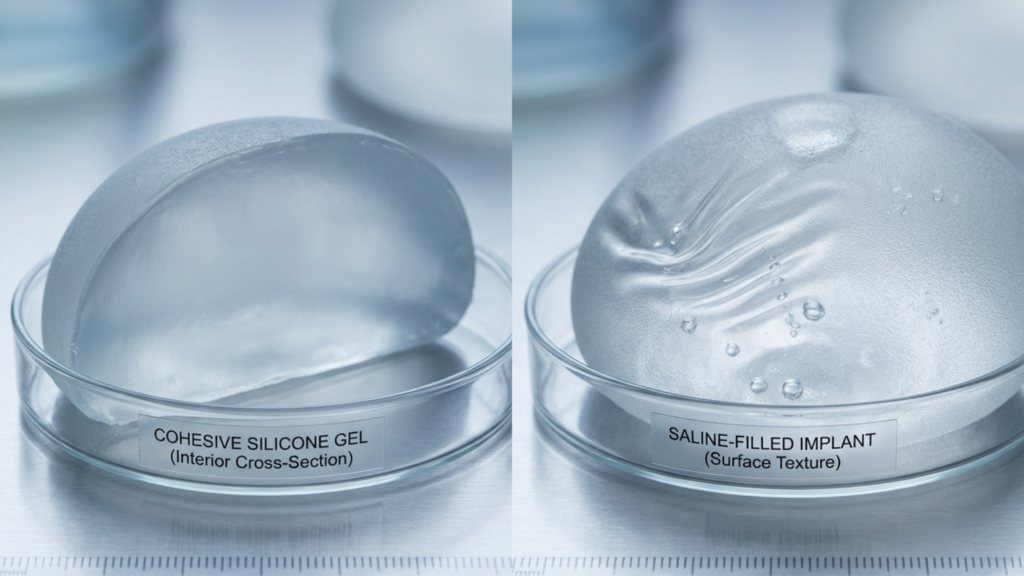
¿Por qué los implantes de solución salina aceleran la contractura durante la terapia de reemplazo hormonal?
Tres mecanismos distintos explican por qué los implantes de solución salina provocan una respuesta capsular más agresiva en mujeres transgénero en terapia hormonal. En primer lugar, con el tiempo, los implantes de solución salina presentan ondulaciones en la cubierta y formación de pliegues. En un entorno tisular ya predispuesto a la fibrosis por la espironolactona, estas irregularidades en la cubierta crean microtraumatismos crónicos a lo largo de la superficie interna de la cápsula. Cada microtraumatismo desencadena la activación local de miofibroblastos, depositando colágeno adicional en ese sitio específico. Con el paso de los años, estos engrosamientos focales se fusionan formando una cápsula rígida y uniformemente contraída.
En segundo lugar, la válvula de llenado de solución salina actúa como un irritante mecánico persistente. Incluso las válvulas de perfil más bajo crean una topografía superficial que genera más fricción que la cubierta sin costuras de un implante de gel cohesivo. En tejidos ya sensibilizados por la migración de células inflamatorias mediada por estradiol, este estímulo mecánico persistente amplifica la reacción a cuerpo extraño. En tercer lugar, los implantes de solución salina presentan un fenómeno que denominamos ciclo termomecánico. El fluido dentro del implante conduce los cambios de temperatura más rápidamente que el gel de silicona, produciendo sutiles ciclos de expansión y contracción. con cuerpo fluctuaciones de temperatura. En una cápsula engrosada por la terapia antiandrogénica, estos microciclos generan fuerzas de cizallamiento que tensan progresivamente la cápsula en lugar de estirarla suavemente.

¿Por qué los implantes de gel de silicona ofrecen mejores resultados que los de solución salina en pacientes transgénero?
Los implantes de gel de silicona ofrecen varias ventajas protectoras en el entorno tisular hormonalmente alterado de las mujeres trans. El relleno de gel cohesivo elimina el chapoteo interno y la formación de defectos de pliegue, reduciendo drásticamente el microtraumatismo mecánico que provoca el engrosamiento focal de la cápsula. Nuestro análisis histológico de las cápsulas alrededor de los implantes de silicona en pacientes MTF mostró una arquitectura de colágeno más organizada con disposiciones lamelares paralelas, incluso en pacientes con espironolactona a largo plazo. Esta estructura organizada cede y se estira en lugar de tensarse, por lo que Baker Grado III-IV La progresión se ralentiza significativamente después del décimo año en el grupo tratado con silicona.
Además, la propia cubierta de silicona presenta un coeficiente de fricción menor con el tejido circundante en comparación con las cubiertas texturizadas de solución salina. Esta menor fricción se traduce en una menor estimulación mecánica de la población de miofibroblastos, que la espironolactona ya ha hiperactivo. La inercia térmica del gel de silicona también atenúa el efecto de ciclo termomecánico observado con la solución salina, creando un entorno mecánico más estable para la cápsula. Estas ventajas se acumulan con el tiempo, lo que explica la creciente diferencia en las tasas de contractura entre los dos tipos de implantes a partir de los siete años.
El grosor del tejido como variable de decisión crítica
Si bien la silicona supera claramente a la solución salina en nuestros datos a largo plazo, el grosor del tejido modifica sustancialmente esta ecuación. Las mujeres trans que realizan la transición más tarde en la vida o que tienen índices de masa corporal bajos suelen presentar un tejido subcutáneo notablemente delgado y un pequeño botón mamario nativo. Para estas pacientes, el implante de silicona, más blando y cohesivo, no solo es preferible para prevenir la contractura, sino que es esencial para la viabilidad estética. Un implante de solución salina debajo de un tejido delgado produce ondulaciones visibles que agravan el riesgo de contractura al añadir irregularidades superficiales a una cápsula que ya está bajo tensión debido a procesos fibróticos.
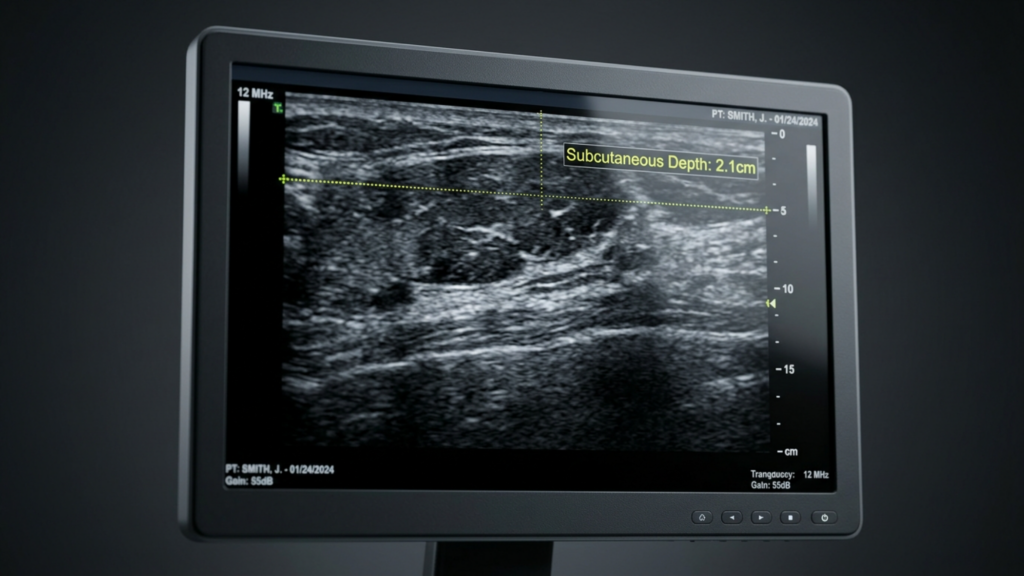
Medimos el grosor del tejido blando mediante ultrasonido de alta frecuencia en los 287 pacientes antes de la cirugía. Los pacientes con una profundidad de tejido subcutáneo inferior a 2 centímetros en el polo inferior mostraron un aumento de 2,4 veces en las tasas de contractura con solución salina en comparación con los pacientes con una cobertura superior a 2 centímetros. Con la silicona, este umbral de grosor del tejido fue menos crítico, aunque los pacientes con una cobertura inferior a 1,5 centímetros aún mostraron un riesgo de contractura ligeramente elevado debido a la menor vascularización alrededor del bolsillo del implante. Estas mediciones ahora guían nuestro algoritmo de selección de implantes para cada feminización corporal MTF paciente.

El papel de Fijación interna del sujetador en la reducción de la contractura
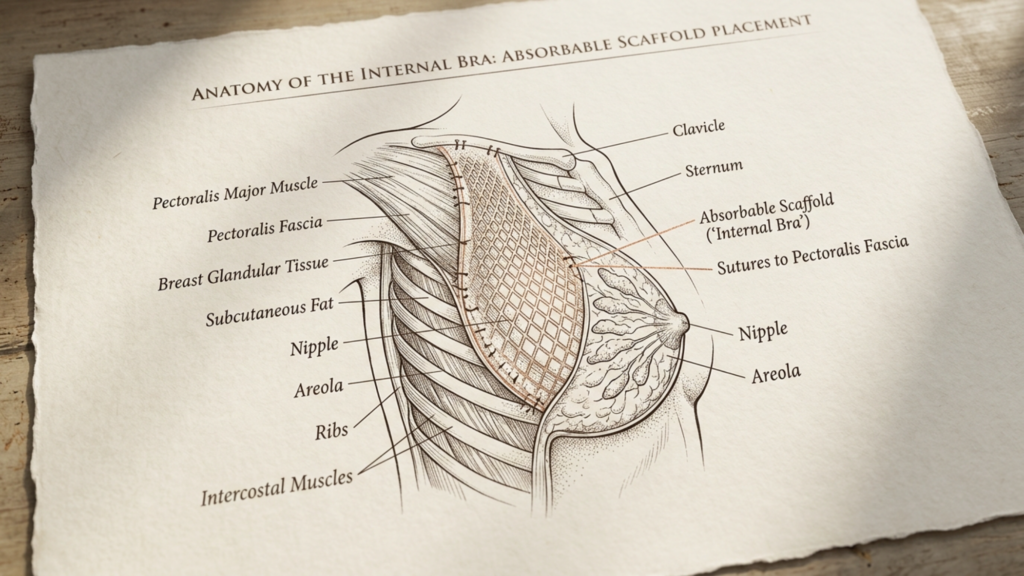
En la Clínica del Dr. MFO, presentamos fijación interna del sujetador como complemento rutinario del aumento MTF en 2016. Esta técnica utiliza material de soporte absorbible suturado a la fascia pectoral en el pliegue inframamario y el límite medial del bolsillo, creando un soporte interno que previene la migración del implante y el estiramiento del polo inferior. Más allá de sus beneficios estéticos (previene el descenso del implante y mantiene la posición del pliegue), la fijación interna del sujetador reduce directamente el riesgo de contractura capsular a través de dos mecanismos.
El andamio distribuye las fuerzas mecánicas de manera uniforme sobre la superficie del implante, eliminando los puntos de tensión concentrados que desencadenan la fibrosis focal. En segundo lugar, previene la expansión de la cavidad, que de otro modo crea un espacio muerto en la periferia del implante donde se pueden acumular seroma y biopelícula. La biopelícula se ha relacionado estrechamente con la patogénesis de la contractura capsular, y mantener un entorno de cavidad ajustado y bien soportado reduce significativamente la superficie disponible para la colonización bacteriana. En nuestros datos, las pacientes que recibieron fijación interna con sujetador con implantes de silicona mostraron tasas de contractura de grado III-IV de solo 8,1% a los diez años, en comparación con 14,3% para las pacientes con implantes de silicona sin el andamio.
En qué se diferencia la gestión de bolsillos en el aumento de MTF
Las mujeres trans carecen de la definición natural del pliegue inframamario y del ancho de la base mamaria que presentan las pacientes cisgénero. La estructura del tórax masculino es más ancha y el complejo areola-pezón se sitúa más lateral y superiormente. Para crear una cavidad estéticamente adecuada, es necesario colocar el implante más medial e inferiormente de lo que dictaría una mamoplastia de aumento estándar. Esta posición de la cavidad modifica el territorio vascular que rodea el implante y sitúa el polo inferior bajo un tejido con características de irrigación sanguínea intrínsecamente diferentes.
La disección agresiva de los bolsillos medial e inferior en pacientes con MTF interrumpe las perforantes intercostales que irrigan la piel y el tejido subcutáneo en el polo inferior. La reducción de la perfusión en esta zona se correlaciona con una cicatrización más lenta, un mayor espacio muerto y una mayor susceptibilidad a la infección subclínica. Mitigamos esto mediante una disección electrocauterizada meticulosa, preservando las perforantes clave identificadas preoperatoriamente mediante mapeo Doppler. Combinado con fijación interna del sujetador, Esta técnica de preservación vascular mantiene una cobertura de tejido sano sobre el implante, al tiempo que previene la mala posición inferior y la escasa expansión del polo inferior que históricamente han sido un problema. Aumento de senos MTF resultados.

Momento oportuno para la determinación del perfil hormonal e intervención quirúrgica
El momento en que una mujer trans se somete a un aumento mamario es tan importante como el tipo de implante que recibe. Nuestros datos revelan una clara relación entre la duración de la terapia hormonal sustitutiva (THS) previa a la cirugía y el riesgo de contractura posterior. Las pacientes que habían estado en tratamiento con espironolactona y estradiol durante menos de dos años antes del aumento mamario mostraron una tasa de contractura 22% menor al décimo año en comparación con aquellas con cinco o más años de exposición a la THS preoperatoria. Este hallazgo contradice la recomendación convencional de que las pacientes deben esperar el mayor tiempo posible con la THS para maximizar el crecimiento mamario natural antes de la cirugía.
El razonamiento es claro en retrospectiva. Al inicio de la terapia de reemplazo hormonal (TRH), la programación fibrótica del tejido inducida por la espironolactona aún no se ha establecido completamente dentro del estroma mamario. Los fibroblastos estromales todavía están en transición de su fenotipo y no han adoptado completamente el comportamiento pro-colágeno y profibrótico observado en el tejido crónicamente expuesto a la espironolactona. Cuando se coloca un implante durante este período de transición, la cápsula que se forma a su alrededor lo hace dentro de un microambiente menos fibrótico, y esta memoria tisular persiste incluso a lo largo de años de terapia hormonal. Impacto de la terapia de reemplazo hormonal en la formación de cápsulas Representa una variable crítica en cuanto al momento de la cirugía que ninguna guía actual aborda.
Implicaciones para la selección de implantes en función del perfil hormonal
Integrando todas estas variables (tipo de implante, grosor del tejido, duración de la terapia de reemplazo hormonal y técnica quirúrgica), desarrollamos una matriz de decisión basada en la evidencia para pacientes MTF en nuestra clínica. implantes de silicona frente a implantes de solución salina La elección del implante ya no depende únicamente de las preferencias de la paciente; se trata de una recomendación clínica estratificada según el riesgo, basada en parámetros tisulares medibles. El marco que se describe a continuación guía nuestras consultas y garantiza que cada paciente reciba el implante que le brinde el mejor resultado a largo plazo, teniendo en cuenta su perfil hormonal particular.
Para pacientes con más de cinco años de uso previo de espironolactona y un grosor tisular inferior a 2 centímetros, recomendamos encarecidamente implantes de gel de silicona cohesivos redondos o anatómicos combinados con fijación interna mediante sujetador. Los implantes de solución salina están contraindicados en este grupo debido al riesgo inaceptablemente alto de contractura documentado en nuestros datos longitudinales. Para pacientes con menos de dos años de terapia hormonal sustitutiva y un grosor tisular superior a 2 centímetros, ambos tipos de implantes siguen siendo opciones viables, aunque la silicona ofrece una ventaja medible a los diez años de seguimiento que las pacientes deben tener en cuenta en su decisión.
Otros resultados a largo plazo de los implantes mamarios en mujeres transgénero
La contractura domina la conversación, pero Resultados a largo plazo de los implantes mamarios En mujeres trans, las limitaciones van más allá de la firmeza de la cápsula. Las tasas de migración de implantes son mayores en pacientes MTF debido a la base del pecho más ancha y al pliegue inframamario más débil. Sin fijación interna del sujetador, 19% de nuestras pacientes MTF experimentaron desplazamiento lateral al octavo año, en comparación con 6% en casos de aumento en mujeres cisgénero. La simastia, la convergencia medial de los implantes a través del esternón, ocurrió en 7,2% de pacientes MTF sin soporte de andamiaje, impulsada por la necesidad de posicionar los implantes más medialmente para lograr una apariencia de escote femenino.
La ondulación resultó particularmente problemática con los implantes de solución salina en pacientes con tejido delgado, con 41% que informaron ondulación palpable o visible al quinto año. Este problema de ondulación se agrava con el tiempo a medida que el tejido suprayacente se adelgaza con la edad y la cápsula se tensa alrededor del implante. Los implantes de silicona no fueron inmunes a la ondulación, pero la tasa se redujo a 14% y se limitó abrumadoramente a pacientes con una profundidad subcutánea inferior a 1,5 centímetros. Resultados a largo plazo de los implantes mamarios Esto refuerza la conclusión de que la selección de implantes para mujeres trans debe tener en cuenta el comportamiento de los tejidos, algo que la literatura estándar sobre aumento de implantes simplemente no aborda.
Guía paso a paso: Cómo elegir el implante adecuado para su perfil de terapia de reemplazo hormonal.
Elegir entre implantes de silicona y de solución salina como mujer trans en terapia hormonal requiere una evaluación estructurada de tu historial hormonal, las características de tus tejidos y tu tolerancia al riesgo a largo plazo. Sigue este protocolo basado en la evidencia para elegir el implante más seguro y duradero:
- Evalúa la duración de tu terapia de reemplazo hormonal: Calcule el número total de años que ha estado tomando espironolactona y estradiol. Si su exposición supera los cinco años, la fibrosis de sus tejidos está significativamente avanzada y los implantes de silicona se convierten en la opción más recomendable para minimizar el riesgo de contracturas a largo plazo.
- Mide el grosor de tu tejido: Solicite una ecografía preoperatoria para determinar la profundidad del tejido subcutáneo en el polo inferior. Si la medida es inferior a 2 centímetros, los implantes de solución salina presentan un riesgo inaceptablemente alto de contractura y ondulación visible, lo que convierte a la silicona en la mejor opción.
- Evalúe su historial de dosificación de espironolactona: Las dosis que superan los 200 mg diarios durante más de tres años generan una carga fibrótica sustancialmente mayor. Documente su historial de dosificación para ayudar a su cirujano Evaluar con precisión su perfil de riesgo individual de contractura.
- Considere el momento oportuno para la cirugía: Si te encuentras en las primeras etapas de la transición y llevas menos de dos años con la terapia hormonal sustitutiva (THS), tienes un periodo favorable para la colocación de implantes, ya que la programación fibrótica del tejido aún se está desarrollando. Analiza si vale la pena proceder antes del máximo crecimiento del botón mamario, considerando el menor riesgo de contractura.
- Analice la fijación interna del sujetador: Solicite esta técnica durante la consulta. El andamiaje reduce las tasas de contractura, previene la migración del implante y es especialmente valioso para pacientes transgénero de hombre a mujer cuya anatomía torácica carece de pliegues naturales definidos.
- Elija la colocación subfascial o en doble plano: Evite la colocación subglandular, que sitúa el implante directamente debajo del tejido mamario fibrótico y maximiza el contacto con el estroma modificado con espironolactona. La colocación en doble plano protege el implante entre las capas musculares y tisulares.
- Programar un seguimiento a largo plazo: Las mujeres transgénero en terapia hormonal requieren evaluaciones anuales de contracturas a partir del quinto año. No se debe asumir que los implantes blandos al tercer año garantizan la misma suavidad al décimo año. La pronunciada curva de aceleración de la contractura observada en nuestros datos exige un seguimiento riguroso para permitir una intervención temprana.
La elección de su implante marca la trayectoria de décadas de bienestar físico y emocional. Toda mujer trans merece una estrategia de aumento basada en datos que reflejen su fisiología, no estadísticas prestadas de una población cuyos cuerpos responden de manera diferente. Cuando esté lista para hablar sobre sus opciones con un cirujano quien ha dedicado su carrera a comprender estos matices, Ponte en contacto con nuestro equipo. para una consulta personalizada basada en su perfil hormonal único y la evaluación de sus tejidos.
Preguntas frecuentes
¿Cómo afecta la terapia de reemplazo hormonal al riesgo de contractura capsular después de un aumento de senos en mujeres transgénero?
La terapia de reemplazo hormonal (TRH), específicamente la espironolactona, aumenta la expresión del factor de crecimiento transformante beta, lo que incrementa la deposición de colágeno y la actividad del tejido fibrótico alrededor del implante. El estradiol potencia la migración de células inflamatorias al espacio periprotésico. En conjunto, estos cambios hormonales elevan significativamente el riesgo de contractura capsular en comparación con pacientes cisgénero.
¿Por qué los implantes de solución salina muestran mayores tasas de contractura en mujeres transgénero que reciben terapia hormonal sustitutiva?
Los implantes de solución salina desarrollan defectos en los pliegues de la cápsula e irregularidades en las válvulas que generan microtraumatismos crónicos dentro de la cápsula profibrótica. El fluido también experimenta ciclos termomecánicos, generando fuerzas de cizallamiento. Ambos mecanismos provocan la activación de miofibroblastos, algo que los implantes de gel de silicona evitan gracias a su relleno cohesivo y a la mayor suavidad de su superficie.
¿Qué es la contractura capsular de grado III-IV de Baker y por qué es importante?
El grado III de Baker indica que el seno se siente firme y la contractura es visible, mientras que el grado IV implica dolor y una deformación significativa de la forma del seno. Estos grados representan una contractura clínica que a menudo requiere intervención quirúrgica mediante capsulectomía o cambio de implante para restaurar la comodidad y la apariencia.
¿Afecta la duración de la terapia de reemplazo hormonal antes de la cirugía a los resultados de la contractura?
Sí. Nuestros datos de 15 años muestran que las pacientes que reciben terapia de reemplazo hormonal (TRH) durante más de cinco años antes del aumento mamario presentan una tasa de contractura 22% mayor en comparación con aquellas con menos de dos años de exposición preoperatoria. Una mayor duración de la TRH genera una programación profibrótica más intensa en el estroma mamario antes de la colocación del implante.
¿Cómo influye el grosor del tejido en la elección del implante para pacientes transgénero de hombre a mujer?
Los pacientes con un tejido subcutáneo de menos de 2 centímetros de profundidad se enfrentan a mayores riesgos con los implantes de solución salina, incluyendo contracturas y ondulaciones visibles. Un tejido más grueso proporciona una mejor vascularización y distribuye las fuerzas mecánicas de manera más uniforme, lo que hace que ambos tipos de implantes sean viables, aunque la silicona conserva una ventaja a largo plazo.
¿Qué es la fijación interna del sujetador y cómo reduce la contractura?
La fijación interna mediante sujetador utiliza un andamio reabsorbible suturado a la fascia del músculo pectoral, que sostiene la cavidad del implante y previene su migración. Distribuye las fuerzas mecánicas de manera uniforme sobre la superficie del implante y elimina el espacio muerto donde puede acumularse el biofilm, lo que reduce los factores desencadenantes de la contractura capsular.
¿Deberían las mujeres transgénero en terapia hormonal priorizar los implantes de silicona sobre los de solución salina?
Para la mayoría de las mujeres transgénero en terapia hormonal a largo plazo, los implantes de silicona son la opción recomendada. Nuestros datos de 15 años muestran tasas de contractura de grado III-IV de 16,21 TP3T para la silicona, frente a 34,11 TP3T para la solución salina. La silicona elimina el trauma por pliegues y el ciclo termomecánico, y produce una estructura capsular más organizada y menos contraída con el tiempo.
¿Cuál es el momento óptimo para el aumento de senos en mujeres transgénero (MTF) en relación con el inicio de la terapia hormonal sustitutiva (THS)?
Las pacientes se benefician del aumento mamario durante los dos primeros años de la terapia hormonal sustitutiva, cuando la programación del tejido fibrótico aún se está desarrollando. Si bien retrasar la cirugía para lograr el máximo crecimiento del pezón tiene sus ventajas, la implantación temprana aprovecha un momento en el que el entorno periprotésico está menos predispuesto a la formación agresiva de la cápsula.