
Imaginez dépenser $15 000 pour un greffe de cheveux, pour se rendre compte six mois plus tard que la zone donneuse ressemble à un patchwork de cicatrices, que le cuir chevelu est tendu comme un tambour et que la densité promise a complètement disparu. Ce n'est pas un cauchemar dystopique, c'est la réalité pour 1 patient sur 5 qui subissent des méga-sessions de greffes de cheveux (3 000 à 7 000 greffons) dans des cliniques non agréées, selon une 2025 étude dans le Journal de chirurgie dermatologique. L’attrait d’une chevelure abondante obtenue en une seule séance est indéniable, mais les coûts financiers et physiologiques sont souvent dissimulés derrière un marketing agressif et des grilles tarifaires trompeuses. Ce guide vous dévoile… coût réel des interventions de méga-greffes — au-delà du prix affiché — et vous fournit les données nécessaires pour éviter de devenir une statistique de plus.
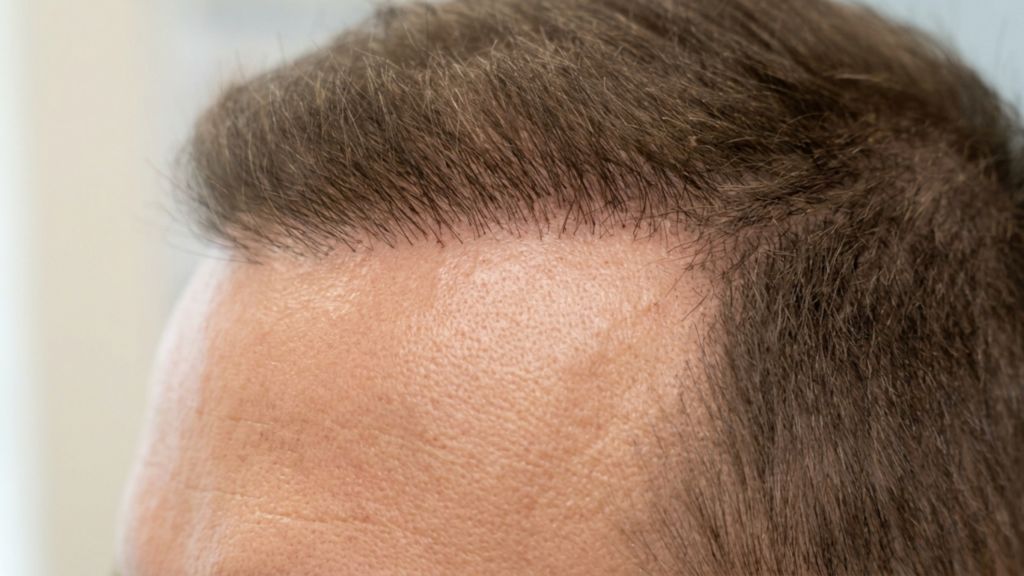
Table des matières
Pourquoi les méga-sessions sont une arme à double tranchant : les compromis cachés des 3 000 à 7 000 greffes
Les greffes de cheveux en plusieurs séances promettent une transformation spectaculaire en une seule intervention, mais elles comportent des inconvénients. trois compromis essentiels La plupart des cliniques ne le divulguent pas d'emblée :
- Épuisement des zones donneuses : Récolte de 7 000 greffes dans une session nécessite la suppression ~14 000 unités folliculaires (car toutes les greffes ne survivent pas). Il reste alors la zone donneuse, généralement l'arrière et les côtés du cuir chevelu.épuisement permanent, avec un amincissement ou des cicatrices visibles. A 2024 étude en Chirurgie plastique et reconstructive On a constaté que les patients ayant subi une méga-greffe en une seule séance présentaient 40% risque plus élevé de l'hypopigmentation de la zone donneuse et d'une mauvaise cicatrisation par rapport aux interventions en plusieurs étapes (PRS, 2024).
- Les taux de survie des greffes chutent : Plus le nombre de greffons transplantés en une seule séance est élevé, plus le taux de survie est faible. Les cliniques qui mettent en avant un “ taux de survie de 95% ” omettent de préciser que cela s'applique également à petites séances (1 000 à 1 500 greffons). Pour les méga-sessions, la survie chute à 70–80% en raison de la durée prolongée de l'intervention (8 à 12 heures) et de l'apport sanguin limité à la zone receveuse. Cela signifie que vous payez en réalité pour 1 500 à 2 000 “ greffes fantômes ” qui ne grandissent jamais (NCBI, 2025).
- Arnaque financière : Le modèle de tarification “ par greffe ” est conçu pour masquer coût réel. Les cliniques annoncent un prix de $2 à $3 par greffon pour 3 000 greffons, mais augmentent le prix à $4 à $6 par greffon pour 7 000 greffons, invoquant une “ complexité accrue ”. Pire encore, frais cachés Les frais d'anesthésie, de thérapie PRP ou de soins postopératoires peuvent faire grimper la facture finale de 30–50%.
Ce guide vous aidera à éviter ces pièges en décomposer le coûts réels, seuils de sécurité, et stratégies budgétaires pour les interventions de méga-greffe — vous pouvez ainsi prendre une décision qui ne vous coûte pas votre zone donneuse ou vos économies.
Le véritable coût des méga-greffes : une analyse transparente
La plupart des cliniques proposent un prix unique “ par greffon ”, mais coût réel Une méga-session comprend six dépenses souvent négligées :
| Catégorie de dépenses | Estimation basse (3 000 greffes) | Estimation haut de gamme (7 000 greffes) | Pourquoi est-il souvent caché ? |
|---|---|---|---|
| Coût de la procédure de base | $6 000–$9 000 | $14 000–$28 000 | Présenté comme une formule “ tout compris ”, ce service peut toutefois être proposé en option par certaines cliniques pour des greffes “ haut de gamme ”. |
| Anesthésie et sédation | $500–$1,200 | $1 500–$3 000 | Des séances plus longues nécessitent une sédation plus profonde, ce qui augmente les coûts. |
| PRP ou thérapie par cellules souches | $800–$1500 | $2 000–$4 000 | Commercialisé comme “ essentiel à la survie du greffon ”, mais souvent facultatif. |
| Médicaments postopératoires | $300–$600 | $800–$1500 | Les antibiotiques, les analgésiques et les anti-inflammatoires finissent par coûter cher. |
| Voyage et hébergement | $1 500–$3 000 | $3 000–$6 000 | La plupart des méga-séances nécessitent 7 à 10 jours à l'étranger pour le suivi. |
| Chirurgie de révision | $3 000–$6 000 | $10 000–$20 000 | 1 patient sur 3 ayant recours à une méga-session nécessite une correction pour une faible densité dentaire ou des cicatrices. |
Le coût total pour une procédure de 7 000 greffes peut dépasser $40,000— le double du prix annoncé. Pourtant, les cliniques le mentionnent rarement d'emblée. Elles préfèrent se concentrer sur… prix par greffe, Ce tarif diminue à mesure que la taille de la session augmente. Voici comment fonctionne la tarification :

Vous remarquez la régularité ? Plus vous achetez de greffons, moins chaque greffon coûte cher, mais… coût total monte en flèche, et le risque de complications augmente de façon exponentielle. Voici pourquoi procédures par étapes (1 500 à 2 500 greffons par séance) donnent souvent de meilleurs résultats à long terme, même s'ils coûtent un peu plus cher au départ.
Le seuil de sécurité : combien de greffes votre corps peut-il supporter ?
Votre cuir chevelu n'est pas une toile vierge, c'est un écosystème vivant avec des ressources limitées. limite de sécurité L'extraction et la transplantation du greffon dépendent de trois facteurs biologiques :
- Densité de la zone donneuse : La personne moyenne a 80 à 100 unités folliculaires par cm² dans la zone donatrice. Récolter plus de 50% de cette densité Une greffe en une seule séance risque d'entraîner un amincissement permanent. Pour une intervention de 7 000 greffons, cela signifie prélever des follicules de ~140 cm² du cuir chevelu — une zone de la taille d'une carte postale.
- Approvisionnement en sang de la zone receveuse : Le cuir chevelu ne peut supporter que le cuir chevelu 20 à 30 greffons par cm² en une seule séance. Au-delà de cela, les greffons se disputent le flux sanguin, ce qui entraîne nécrose (mort des tissus) ou une faible survie. Les méga-séances dépassent souvent ce seuil, notamment au niveau de la ligne frontale, où la densité est cruciale.
- Durée de fonctionnement : Procédures durant plus de 8 heures augmenter le risque de hypothermie, caillots sanguins et complications liées à l'anesthésie. UN 2026 étude en Chirurgie dermatologique on a constaté que les patients participant à des séances de plus de 10 heures présentaient un risque 3 fois plus élevé des infections postopératoires (NCBI, 2026).
Pour visualiser les risques, considérez ceci : matrice de sécurité:
| Nombre de greffons | Stress de la zone donneuse | Taux de survie du greffon | Risque de complications | Recommandé? |
|---|---|---|---|---|
| 1,000–2,000 | Faible | 90–95% | Minimal | ✅ Idéal pour la plupart des patients |
| 2,500–3,500 | Modéré | 80–85% | Modéré (cicatrices, gonflement) | ⚠️ Uniquement avec une planification par étapes |
| 4,000–5,000 | Haut | 70–75% | Élevé (infection, faible survie) | ❌ À éviter sauf nécessité médicale |
| 6,000–7,000 | Extrême | <70% | Très élevé (épuisement du donneur, nécrose) | ❌ Non recommandé |
Les données sont claires : Les méga-sessions sont un pari à haut risque et à haut rendement.. Bien qu'elles puissent donner des résultats spectaculaires, les loi des rendements décroissants Cela s'applique. Au-delà de 4 000 greffes, le bénéfice marginal d'une densité accrue est contrebalancé par l'augmentation exponentielle des complications.
Établir un budget pour une méga-session : Comment éviter Ruine financière et médicale
Si vous êtes décidé pour une méga-session, voici’comment minimiser les risques et maximiser la valeur:
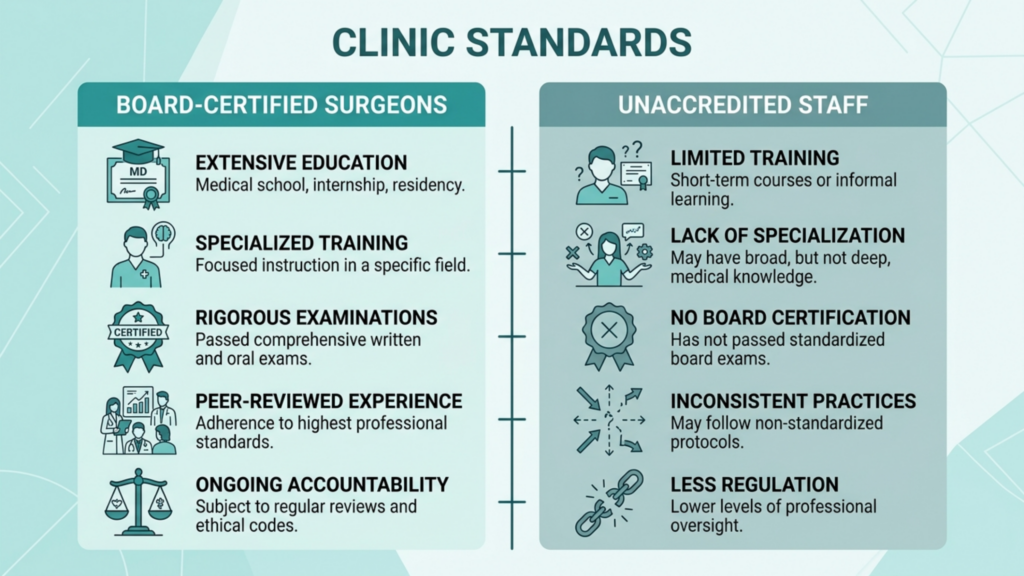
1. Choisir la bonne clinique : signes d’alerte et signes positifs
| Signaux d'alarme (à éviter) | Drapeaux verts (Prioriser) |
|---|---|
| Aucun chirurgien certifié par le conseil n'est présent dans l'équipe. | Chirurgiens certifiés par l'ISHRS ou l'ABHRS |
| “Allégations de ” greffes illimitées “ ou de ” densité garantie » | données transparentes sur le taux de survie (par exemple, “ 70–80% pour 7 000 greffes ”) |
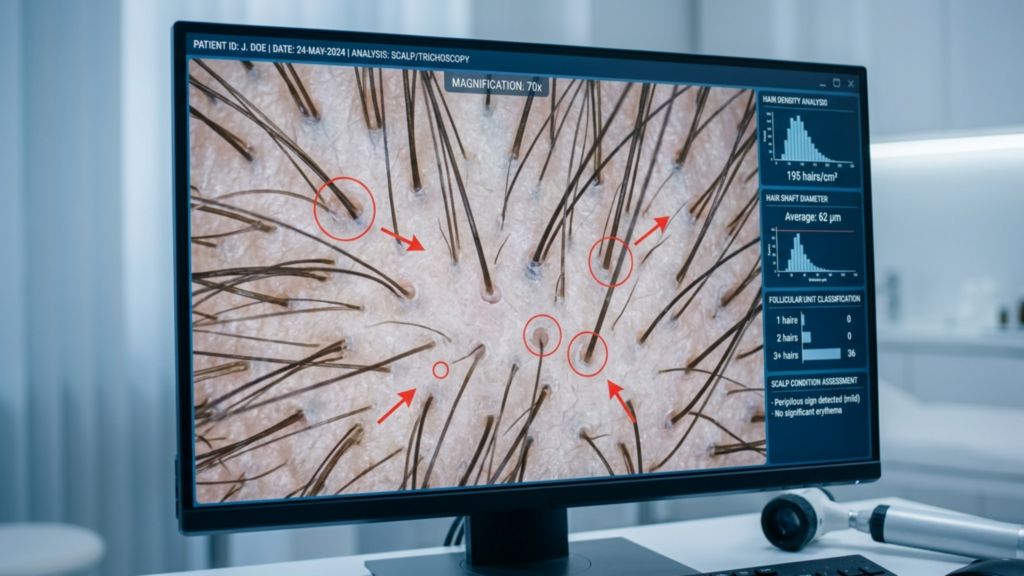
| Aucun test sanguin préopératoire ni analyse du cuir chevelu n'ont été effectués. | Évaluation obligatoire de la zone donneuse par trichoscopie |
| Pression pour réserver immédiatement (“ réduction à durée limitée ”) | Encourage les interventions par étapes et les deuxièmes avis. |
| Aucun plan de soins postopératoires | Comprend un suivi de 12 mois et une thérapie PRP |
Cliniques à Turquie, le Mexique et la Thaïlande sont populaires pour leurs prix bas, mais 60% de complications Les interventions chirurgicales de grande envergure signalées se déroulent dans des établissements non accrédités à l'étranger. Si vous voyagez pour une intervention chirurgicale, vérifiez les qualifications de la clinique. Accréditation JCI (Joint Commission International) et s'assurer qu'ils utilisent FUE (Extraction d'Unités Folliculaires) plutôt que la technique FUT (méthode par bandelettes), désormais obsolète et qui laisse des cicatrices linéaires.
2. Négocier un contrat à prix fixe
Exigez un accord écrit qui verrouille :
- Le nombre exact de greffons (et non “ jusqu’à 7 000 ”).
- UN taux de survie garanti (par exemple, “ 70% ou nous vous offrons une retouche gratuite ”).
- Aucuns frais cachés pour l'anesthésie, les médicaments ou les soins postopératoires.
- UN politique de révision (par exemple, corrections gratuites dans les 12 mois si la densité tombe en dessous de 60%).
Les cliniques qui refusent de le mettre par écrit cachent probablement quelque chose. Fuyez.
3. Prévoyez les coûts cachés
Prévoir un budget supplémentaire 30–50% du coût de la procédure pour :
- Assurance voyage prise en charge des complications médicales à l'étranger.
- Séjours prolongés à l'hôtel (7 à 10 jours pour la récupération).
- Médicaments postopératoires (antibiotiques, analgésiques, minoxidil).
- Perte de salaire si vous avez besoin 2 à 3 semaines de congé.
- Fonds d'urgence pour les révisions ou les infections.
4. Envisager des procédures par étapes
Diviser votre greffe en deux ou trois séances (par exemple, 2 500 greffes tous les 6 mois) offre trois avantages :
- Survie du greffon plus élevée (85–90% par session contre 70% pour les méga-sessions).
- Risque de complications plus faible (durée des interventions plus courte, moins de traumatismes).
- Meilleure maîtrise du budget (paiement à l'utilisation, avec le temps d'évaluer les résultats).
Gestion des donneurs : Comment protéger l'avenir de votre cuir chevelu
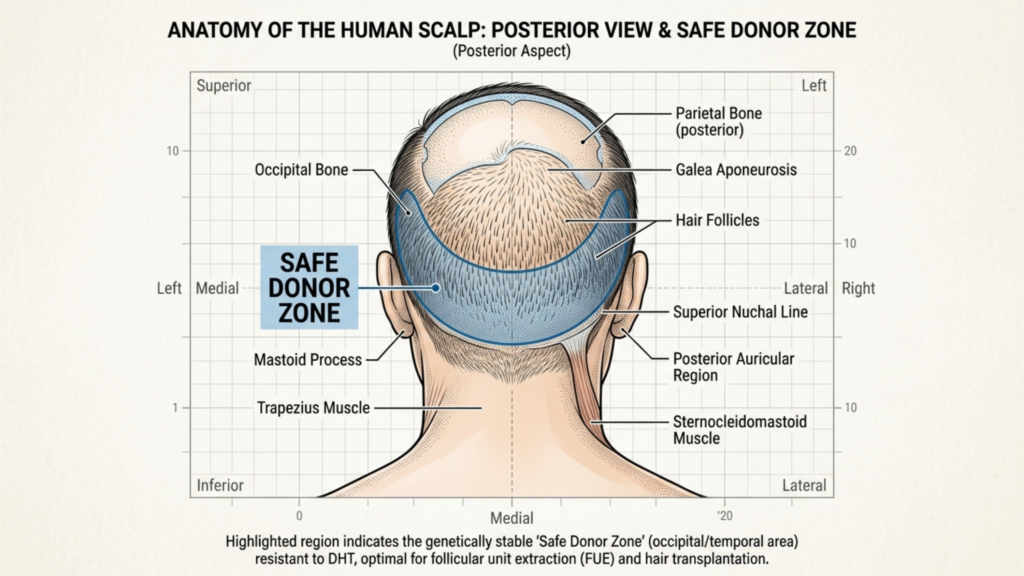
La zone donneuse est votre bouée de sauvetage pour les futures transplantations. Un prélèvement excessif en une seule séance peut vous laisser avec aucune option Si vous avez besoin de corrections ultérieurement, voici comment le conserver :
- Demandez une analyse trichoscopique : Ce scan non invasif mesure la densité de votre zone donneuse et définit les zones de prélèvement sûres. Les cliniques qui négligent cet examen prennent un risque avec votre cuir chevelu.
- Limiter l'extraction à 30–40% de densité de donneur : Cela vous assure de disposer d'un nombre suffisant de follicules pour les interventions ultérieures. Par exemple, si votre zone donneuse contient 100 UF/cm², ne prélevez pas plus de 30 à 40 UF/cm² en une seule séance.
- Évitez le piège de la “ maximisation des greffes ” : Certaines cliniques insistent pour obtenir le nombre de greffons le plus élevé possible, même si cela signifie surexploitation. Insistez sur un approche conservatrice—Votre futur vous remerciera.
- Utiliser le PRP ou la thérapie par cellules souches : Bien qu'il ne s'agisse pas d'un remède miracle, ces traitements peuvent améliorer la survie du greffon de 10 à 15% et réduire les traumatismes de la zone donneuse (NCBI, 2023).
- Plan de soins de longue durée : Utiliser minoxidil ou finastéride Après la greffe, il est essentiel de préserver la santé des cheveux existants et de la zone donneuse. Sans cela, le risque d'un affinement supplémentaire est important, ce qui complique les retouches.
N'oubliez pas : votre zone donneuse est non renouvelable. Une fois vos réserves épuisées, vous n'aurez plus aucune possibilité de greffes futures. Protégez-les comme vous le feriez pour votre épargne-retraite.
Le coût psychologique : ce qu’aucune clinique ne vous dira
Les méga-séances ne font pas que malmener votre cuir chevelu ; elles mettent aussi votre… résilience mentale. Les patients signalent souvent :
- “ Dépression post-transplantation ” : Durant les 3 à 6 premiers mois suivant l'opération, vos nouveaux cheveux tomberont (perte par choc), vous laissant à la recherche pire qu'auparavant. Cette phase déclenche de l'anxiété chez 70% de patients, selon une étude de 2025 Image corporelle (ScienceDirect, 2025).
- Attentes irréalistes: Les cliniques présentent des photos “ avant et après ” prises sous un éclairage et des angles idéaux. En réalité, seulement 30% de patients atteindre la densité visible dans les supports marketing.
- Isolement social: La phase dite “ de points rouges ” (formation de croûtes autour de chaque greffon) peut durer de 10 à 14 jours, rendant les interactions sociales difficiles. De nombreux patients prennent… 2 à 3 semaines de congé de travail pour éviter les questions.
- Regrets de l'acheteur : Lorsque les résultats ne sont pas à la hauteur des attentes, les patients ont souvent tendance à se blâmer eux-mêmes (” Ai-je choisi la mauvaise clinique ? Aurais-je dû attendre ? ”) plutôt que de remettre en question les promesses excessives de la clinique.
Pour atténuer ces risques :
- Ensemble attentes réalistes avec votre chirurgien — demandez non filtré Des photos de patients, pas seulement des photos à visée marketing.
- Préparez-vous pour le phase du vilain petit canard (mois 1 à 4) en sollicitant le soutien d’amis ou d’un thérapeute.
- Éviter comparer vos progrès Pour d'autres, les délais de guérison varient considérablement.
- Si vous êtes sujet à l'anxiété, envisagez procédures par étapes décomposer le processus en étapes gérables.
Alternatives aux méga-sessions : des voies plus sûres vers la densité
Si les risques d'une méga-session l'emportent les avantages, considérez ces alternatives :
| Alternative | Coût | Avantages | Les inconvénients |
|---|---|---|---|
| FUE en plusieurs étapes (2 à 3 séances) | $12 000–$20 000 | Taux de survie plus élevés, risque de cicatrices plus faible | Délai plus long (12 à 18 mois) |
| Barbe ou corps Greffe de cheveux (BHT) | $10 000–$18 000 | Utilise des cheveux prélevés sur un donneur autre que le cuir chevelu ; idéal pour les réparations. | Taux de survie plus faibles (60–70%) |
| Micropigmentation du cuir chevelu (SMP) | $2 000–$5 000 | Illusion de densité instantanée, sans chirurgie | Nécessite des retouches tous les 3 à 5 ans |
| Thérapie laser de faible intensité (LLLT) | $500–$2000 | Non invasif, améliore les cheveux existants | Résultats minimes pour la calvitie avancée |
| Plasma riche en plaquettes (PRP) + Minoxidil | $1 500–$3 000/an | Ralentit la chute des cheveux, épaissit les cheveux existants | Nécessite un entretien à vie |
Pour les patients atteints de Chute de cheveux avancée (Norwood 6–7), un approche combinée fonctionne souvent le mieux. Par exemple :
- Séance 1 : 2 500 greffons sur la ligne frontale des cheveux.
- Séance 2 (6 mois plus tard) : 2 000 greffes au niveau du cuir chevelu moyen + thérapie PRP.
- Entretien: Minoxidil + LLLT pour préserver les cheveux naturels.
Cette approche permet de répartir les coûts et les risques tout en maximisant la densité à long terme.
En résumé : une méga-session en vaut-elle la peine ?
Les méga-greffes de cheveux sont pas pour tout le monde. Ils sont particulièrement adaptés à :
- Patients atteints densité de donneurs exceptionnelle (>100 FU/cm²).
- Ceux qui ne peut pas s'engager à plusieurs séances en raison de contraintes de voyage ou de travail.
- Les individus qui comprendre pleinement les risques et avoir un plan de révision en place.
Pour tous les autres, procédures par étapes ou traitements alternatifs offrir une voie plus sûre et plus prévisible vers la restauration capillaire. La clé est de donner la priorité à la santé du cuir chevelu à long terme plutôt que de se focaliser sur la densité à court terme — et de choisir une clinique qui privilégie la transparence aux ventes.
Si vous êtes prêt à explorer vos options, planifier une consultation avec un certificat de conseil chirurgien qui se spécialise dans procédures de greffe à haut risque et peut fournir un plan personnalisé en fonction de vos capacités de don et de vos objectifs.
Questions fréquemment posées
Quel est le nombre maximal de greffons que je peux extraire en toute sécurité en une seule séance ?
La limite de sécurité dépend de la densité de votre zone donneuse, mais la plupart des experts recommandent de ne pas prélever davantage d'unités folliculaires dans cette zone en une seule séance. Pour une personne moyenne, cela correspond à 3 000 à 4 000 greffons. Au-delà, le risque d'amincissement permanent ou de cicatrices augmente considérablement.
Pourquoi les greffes de cheveux réalisées en plusieurs séances présentent-elles des taux de survie des greffons plus faibles ?
Les mégasessions (plus de 5 000 greffons) durent souvent de 8 à 12 heures, période pendant laquelle les greffons passent plus de temps hors du corps, ce qui réduit leur viabilité. De plus, la vascularisation de la zone receveuse est fortement sollicitée, ce qui entraîne une mauvaise oxygénation et un apport insuffisant en nutriments aux greffons. Le taux de survie des greffons passe de 90 à 95 % pour les séances plus courtes à 70 à 80 % pour les mégasessions.
Comment puis-je vérifier si une clinique exagère le nombre de greffes qu'elle réalise ?
Demandez une analyse trichoscopique de votre zone donneuse afin d'en évaluer la capacité. Si une clinique garantit 7 000 greffons sans cette évaluation, il y a fort à parier qu'elle exagère. Demandez également des photos de patients non retouchées (et non de simples documents marketing) ainsi que les données sur le taux de survie des greffons pour les patients ayant bénéficié de séances de micro-greffe.
Quels sont les signes de surexploitation des zones donneuses ?
Les signes incluent un amincissement ou une irrégularité visible dans la zone donneuse, des rougeurs ou des cicatrices persistantes, et un aspect « mité » là où les follicules ont été prélevés de manière excessive. Si votre zone donneuse présente un aspect plus dégradé après la greffe, il est possible qu'elle ait été sur-prélevée, ce qui limite les interventions ultérieures.
Existe-t-il des options de financement pour les interventions de greffes de grande envergure ?
De nombreuses cliniques proposent des facilités de paiement, mais attention aux prêts à taux d'intérêt élevés et aux frais cachés. Certains patients utilisent des cartes de crédit médicales (comme CareCredit) ou des prêts personnels. Calculez toujours le coût total, intérêts compris, avant de vous engager. Les interventions en plusieurs étapes permettent également d'étaler les coûts.
Comment puis-je me préparer mentalement à la phase du « vilain petit canard » après une transplantation ?
Les 3 à 4 premiers mois suivant une greffe de cheveux peuvent être éprouvants émotionnellement, notamment en raison de la chute des nouveaux cheveux et de la repousse. Pour vous y préparer, fixez-vous des attentes réalistes, évitez de vous comparer aux autres sur les réseaux sociaux et sollicitez le soutien de vos proches ou d'un thérapeute. N'oubliez pas que cette phase est temporaire et nécessaire pour obtenir des résultats durables.
Quelles sont les alternatives si je ne suis pas admissible à une méga-session ?
Les alternatives comprennent les interventions FUE en plusieurs étapes, les greffes de barbe ou de poils corporels, la micropigmentation du cuir chevelu et les traitements non chirurgicaux comme le PRP ou la thérapie laser à faible intensité. Un médecin certifié chirurgien peut vous aider à déterminer la meilleure approche en fonction de votre type de perte de cheveux et de la capacité de votre zone donneuse.
Comment trouver une clinique réputée pour une intervention de greffe osseuse importante ?
Recherchez les cliniques qui emploient des chirurgiens certifiés, qui sont accréditées par la JCI et qui pratiquent des prix transparents. Évitez celles qui vous incitent à prendre rendez-vous immédiatement ou qui vous promettent des résultats irréalistes. Demandez des références de patients et des photos avant/après de cas complexes, et pas seulement d'interventions mineures.