
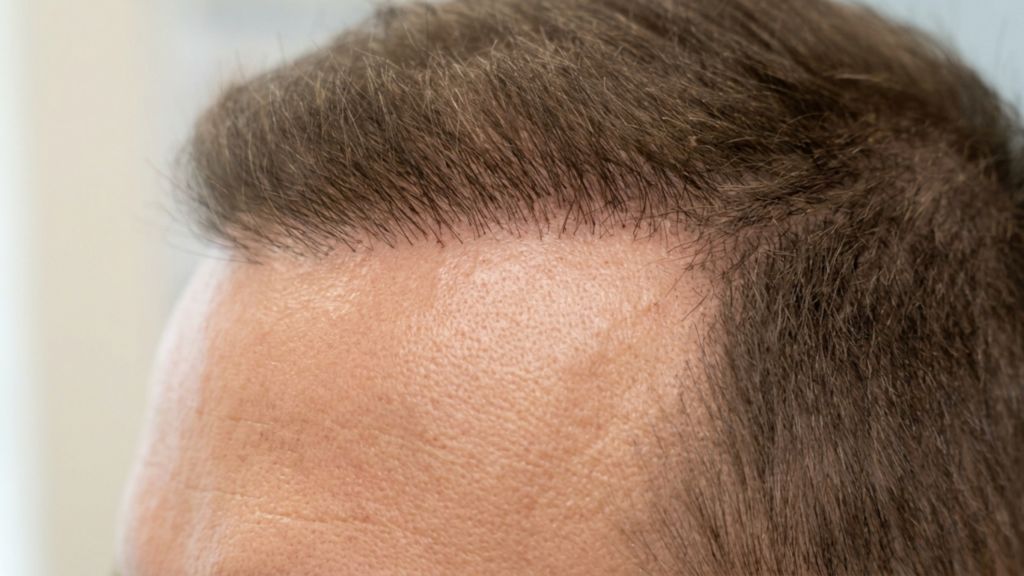
Stel je voor dat je $15.000 uitgeeft aan een haartransplantatie, ...om er vervolgens zes maanden later achter te komen dat je donorgebied eruitziet als een lappendeken van littekens, je hoofdhuid strakker aanvoelt dan een trommel en de dichtheid waar je voor betaald hebt nergens te bekennen is. Dit is geen dystopische nachtmerrie, dit is de realiteit voor 1 op de 5 patiënten die megasessies haartransplantaties (3.000-7.000 grafts) ondergaan in niet-geaccrediteerde klinieken, aldus een onderzoek. 2025 studie in de Tijdschrift voor dermatologische chirurgie. De aantrekkingskracht van een volle haardos in één sessie is onmiskenbaar, maar de financiële en fysiologische kosten worden vaak verborgen achter agressieve marketing en misleidende prijsstructuren. Deze gids onthult de nadelen. werkelijke kosten van grootschalige transplantatieprocedures – voorbij de prijs – en geeft je de gegevens om te voorkomen dat je een van de vele slachtoffers wordt.
Inhoudsopgave
Waarom megasessies een tweesnijdend zwaard zijn: de verborgen afwegingen bij 3.000-7.000 entingen
Mega-sessie haartransplantaties beloven een dramatische transformatie in één behandeling, maar ze brengen wel risico's met zich mee. drie cruciale afwegingen De meeste klinieken zullen dit niet van tevoren bekendmaken:
- Uitputting van het donorgebied: Oogsten van 7.000 enten in één sessie vereist verwijdering ~14.000 follikel-eenheden (aangezien niet alle transplantaten overleven). Dit laat het donorgebied over – meestal de achterkant en zijkanten van de hoofdhuid –permanent uitgeput, met zichtbare verdunning of littekenvorming. A 2024 studeren in Plastische en reconstructieve chirurgie Uit onderzoek bleek dat patiënten die een megatransplantatie in één sessie ondergingen, een 40% hoger risico hypopigmentatie van het donorgebied en slechte wondgenezing in vergelijking met procedures in meerdere fasen. (PRS, 2024).
- De overlevingskansen van transplantaten dalen drastisch: Hoe meer grafts er in één sessie worden getransplanteerd, hoe lager de overlevingskans. Klinieken die adverteren met "95% overleving" vermelden niet dat dit ook geldt voor kleine sessies (1.000-1.500 grafts). Bij megasessies daalt de overlevingskans tot 70–80% vanwege de lange operatietijden (8-12 uur) en de beperkte bloedtoevoer naar het ontvangende gebied. Dit betekent dat u in feite betaalt voor... 1.500–2.000 “spooktransplantaties” die nooit groeien (NCBI, 2025).
- Financiële misleiding: Het prijsmodel "per ent" is bedoeld om de werkelijke kosten te verbergen. werkelijke kosten. Klinieken adverteren met $2–$3 per graft voor 3.000 grafts, maar verhogen de prijs naar $4–$6 per graft voor 7.000 grafts, onder verwijzing naar "toegenomen complexiteit". Erger nog, verborgen kosten Kosten voor anesthesie, PRP-therapie of postoperatieve zorg kunnen de uiteindelijke rekening verhogen. 30–50%.
Deze handleiding helpt u deze valkuilen te vermijden door het ontleden van de werkelijke kosten, veiligheidsdrempels, En budgetstrategieën voor megatransplantaties, zodat u een beslissing kunt nemen die u uw donorgebied niet kost. of uw spaargeld.
De werkelijke kosten van megatransplantaties: een transparante analyse
De meeste klinieken hanteren één prijs per graft, maar de werkelijke kosten Een megasessie omvat zes vaak over het hoofd geziene kostenposten:
| Uitgavencategorie | Laagste schatting (3.000 transplantaten) | Hoogste schatting (7.000 transplantaten) | Waarom het vaak verborgen blijft |
|---|---|---|---|
| Basiskosten van de procedure | $6.000–$9.000 | $14.000–$28.000 | Het wordt aangeprezen als "all-inclusive", maar klinieken kunnen "premium" transplantaties aanbieden. |
| Anesthesie en sedatie | $500–$1,200 | $1.500–$3.000 | Langere sessies vereisen een diepere sedatie, wat de kosten verhoogt. |
| PRP- of stamceltherapie | $800–$1,500 | $2,000–$4,000 | Wordt aangeprezen als "essentieel voor het overleven van de transplantatie", maar is vaak optioneel. |
| Medicatie na de operatie | $300–$600 | $800–$1,500 | Antibiotica, pijnstillers en ontstekingsremmende medicijnen tellen allemaal mee. |
| Reizen & Accommodatie | $1.500–$3.000 | $3.000–$6.000 | De meeste megasessies vereisen 7-10 dagen in het buitenland voor nazorg. |
| Revisiechirurgie | $3.000–$6.000 | $10.000–$20.000 | Bij 1 op de 3 patiënten die een megasessie ondergaan, is een correctie nodig vanwege een lage haardichtheid of littekens. |
De totale kosten Voor een procedure met 7.000 grafts kunnen de kosten hoger uitvallen dan $40,000—het dubbele van wat er geadverteerd wordt. Toch maken klinieken dit zelden van tevoren bekend. In plaats daarvan richten ze zich op de prijs per ent, wat afneemt naarmate de sessiegrootte toeneemt. Zo werkt de prijsstelling:

Ziet u het patroon? Hoe meer grafts u koopt, hoe "goedkoper" elke graft wordt, maar de totale kosten schiet omhoog, en de risico op complicaties stijgt exponentieel. Dit is de reden. gefaseerde procedures (1.500-2.500 grafts per sessie) leveren vaak betere resultaten op de lange termijn, ook al zijn de kosten vooraf iets hoger.
De veiligheidsdrempel: hoeveel transplantaties kan uw lichaam aan?
Je hoofdhuid is geen blanco canvas, maar een levend ecosysteem met beperkte middelen. veilige limiet Voor het verkrijgen en transplanteren van een transplantaat zijn drie biologische factoren van belang:
- Dichtheid van het donorgebied: De gemiddelde persoon heeft 80–100 follikeleenheden per cm² in het donorgebied. Meer oogsten dan 50% van deze dichtheid Een behandeling met 7.000 grafts in één sessie brengt het risico met zich mee van permanente haaruitval. Bij deze procedure betekent het verwijderen van haarzakjes uit de ~140 cm² van de hoofdhuid – een gebied ter grootte van een postkaart.
- Ontvangstgebied Bloedvoorziening: De hoofdhuid kan slechts een beperkt aantal onderdelen ondersteunen. 20–30 enten per cm² in één enkele sessie. Daarnaast concurreren de transplantaten om de bloedtoevoer, wat leidt tot necrose (weefselsterfte) of een slechte overlevingskans. Megasessies overschrijden deze drempel vaak, vooral bij de voorste haargrens, waar dichtheid cruciaal is.
- Bedrijfstijd: Procedures die duren meer dan 8 uur het risico verhogen onderkoeling, bloedstolsels en complicaties door anesthesie. A 2026 studeren in Dermatologische chirurgie Uit onderzoek bleek dat patiënten die langer dan 10 uur in een sessie zaten, een 3x hoger risico postoperatieve infecties (NCBI, 2026).
Om de risico's te visualiseren, kunt u het volgende overwegen: veiligheidsmatrix:
| Transplantatieaantal | Stress in het donorgebied | Overlevingspercentage van het transplantaat | Risico op complicaties | Aanbevolen? |
|---|---|---|---|---|
| 1,000–2,000 | Laag | 90–95% | Minimaal | ✅ Ideaal voor de meeste patiënten |
| 2,500–3,500 | Gematigd | 80–85% | Matig (littekenvorming, zwelling) | ⚠️ Alleen met gefaseerde planning |
| 4,000–5,000 | Hoog | 70–75% | Hoog (infectie, slechte overlevingskansen) | ❌ Vermijd dit tenzij medisch noodzakelijk |
| 6,000–7,000 | Extreem | <70% | Zeer hoog (donoruitputting, necrose) | ❌ Niet aanbevolen |
De gegevens zijn duidelijk: Megasessies zijn een gok met een hoog risico en een hoge potentiële opbrengst.. Hoewel ze spectaculaire resultaten kunnen opleveren, wet van de afnemende meeropbrengst Dit geldt. Bij meer dan 4000 transplantaties wegen de marginale voordelen van een hogere dichtheid niet op tegen de exponentiële toename van complicaties.
Budgettering voor een megasessie: Hoe te voorkomen Financiële en medische ondergang
Als je zin hebt in een megasessie, dan is dit iets voor jou.’hoe risico's minimaliseren En waarde maximaliseren:
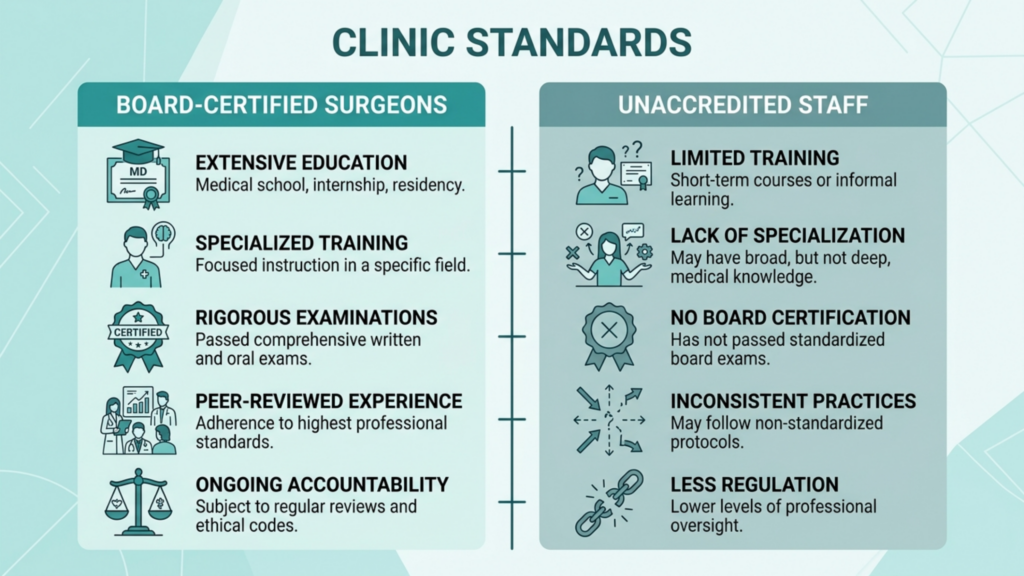
1. Kies de juiste kliniek: rode vlaggen versus groene vlaggen
| Waarschuwingssignalen (vermijd) | Groene vlaggen (prioriteit geven) |
|---|---|
| Er zijn geen gecertificeerde chirurgen in dienst. | Chirurgen gecertificeerd door ISHRS of ABHRS |
| “beweringen over "onbeperkt aantal enten" of "gegarandeerde dichtheid". | Transparante gegevens over de overlevingskans (bijv. "70–80% voor 7.000 transplantaten"). |
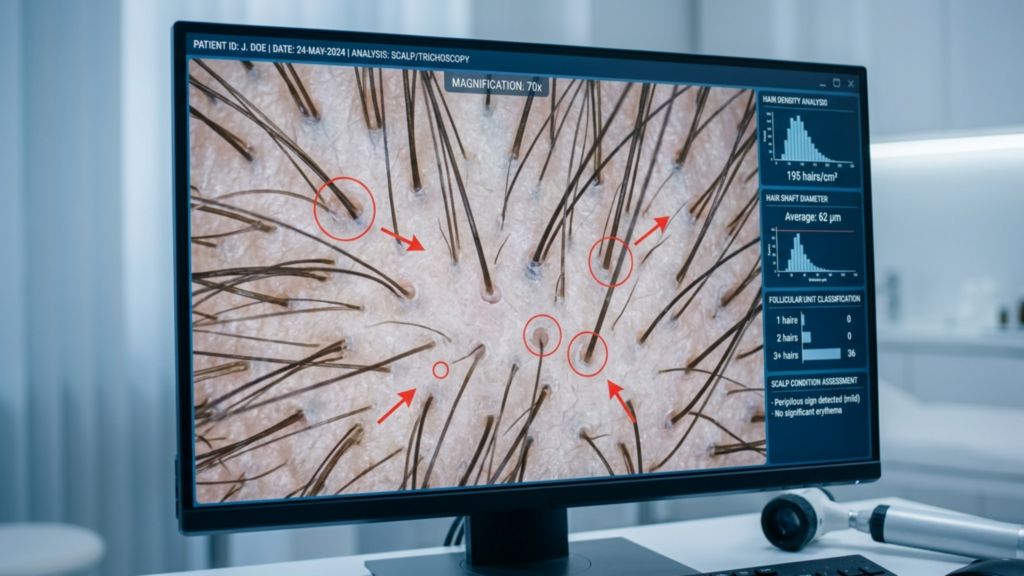
| Geen preoperatieve bloedtesten of hoofdhuidanalyse. | Verplichte beoordeling van het donorgebied door middel van trichoscopie. |
| Druk om direct te boeken ("tijdelijke korting") | Stimuleert gefaseerde procedures en second opinions. |
| Geen postoperatief zorgplan | Inclusief 12 maanden follow-up en PRP-therapie. |
Klinieken in Kalkoen, Mexico en Thailand zijn populair vanwege hun lage prijzen, maar 60% van complicaties Er wordt melding gemaakt van megasessies die plaatsvinden in niet-geaccrediteerde faciliteiten in het buitenland. Als u voor een operatie reist, controleer dan de accreditatie van de kliniek. JCI (Joint Commission International) accreditatie en ervoor zorgen dat ze gebruikmaken van FUE (folliculaire eenheidsextractie) in plaats van de verouderde FUT-methode (stripmethode), die lineaire littekens achterlaat.
2. Onderhandel over een contract met een vaste prijs
Eis een schriftelijke overeenkomst dat vastzet:
- De exact aantal enten (niet “tot 7.000”).
- A gegarandeerde overlevingskans (bijv. “70% of wij verzorgen een gratis retouche”).
- Geen verborgen kosten voor anesthesie, medicatie of nazorg na een operatie.
- A herzieningsbeleid (bijv. gratis correcties binnen 12 maanden als de dichtheid onder de 60% daalt).
Klinieken die dit niet schriftelijk willen vastleggen, verbergen waarschijnlijk iets. Ga er niet heen.
3. Houd rekening met de verborgen kosten
Budgetteer een extra 30–50% van de procedurekosten voor:
- Reisverzekering dekking van medische complicaties in het buitenland.
- Langdurige hotelverblijven (7-10 dagen herstel).
- Medicatie na de operatie (antibiotica, pijnstillers, minoxidil).
- Gederfde inkomsten als je hebt nodig 2-3 weken vrij van werk.
- Noodfondsen voor revisies of infecties.
4. Overweeg gefaseerde procedures
Uw transplantatie opsplitsen in twee of drie sessies (bijv. 2.500 transplantaties elke 6 maanden) biedt drie voordelen:
- Hogere overlevingskans van het transplantaat (85–90% per sessie versus 70% voor megasessies).
- Lager risico op complicaties (kortere operatietijden, minder trauma).
- Betere budgetbeheersing (Betalen per gebruik, met tijd om de resultaten te beoordelen).
Donormanagement: Hoe bescherm je de toekomst van je hoofdhuid?
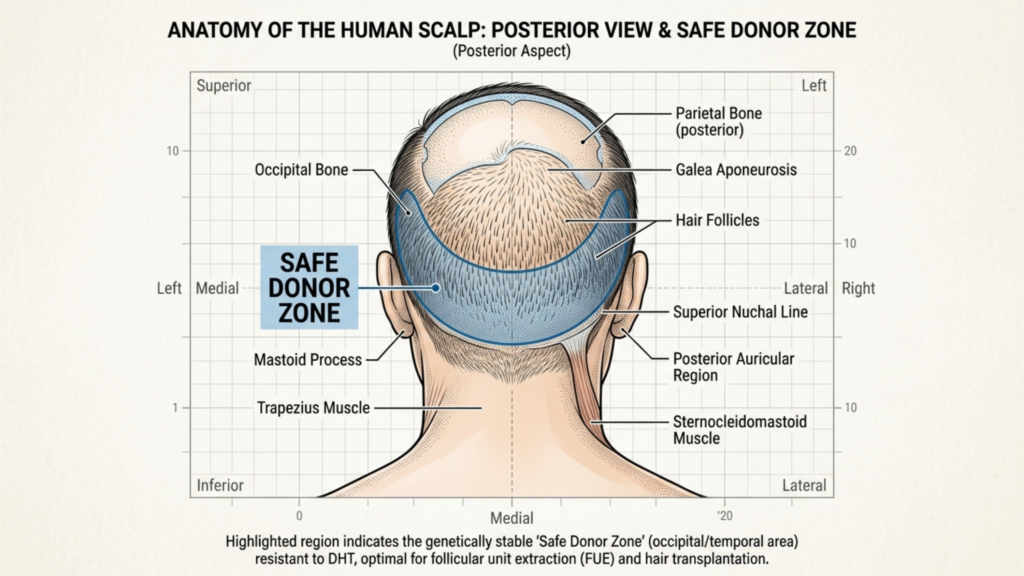
Het donorgebied is uw reddingslijn voor toekomstige transplantaties. Te veel oogsten in één sessie kan leiden tot overmatige oogst. geen opties Mocht je later correcties nodig hebben, dan kun je die als volgt bewaren:
- Vraag om een trichoscopische analyse: Deze niet-invasieve scan meet de dichtheid van uw donorgebied en brengt veilige extractiezones in kaart. Klinieken die deze scan overslaan, nemen een risico met uw hoofdhuid.
- Beperk de extractie tot een donordichtheid van 30–40%: Dit zorgt ervoor dat je voldoende follikels hebt voor toekomstige ingrepen. Als je donorgebied bijvoorbeeld 100 follikels per cm² heeft, oogst dan niet meer dan 30–40 FUs/cm² in één sessie.
- Vermijd de valkuil van "maximaliseer het aantal enten": Sommige klinieken streven naar een zo hoog mogelijk aantal transplantaten, zelfs als dat betekent dat overbevissing. Sta erop dat... conservatieve aanpak—je toekomstige zelf zal je dankbaar zijn.
- Gebruik PRP- of stamceltherapie: Hoewel het geen wondermiddel is, kunnen deze behandelingen wel degelijk helpen. Verbeter de overleving van het transplantaat met 10–15% en het trauma in het donorgebied verminderen (NCBI, 2023).
- Plan voor langdurige zorg: Gebruik minoxidil of finasteride Na de transplantatie is het belangrijk om het bestaande haar en de gezondheid van het donorgebied te beschermen. Zonder deze maatregelen loop je het risico op verdere haaruitval, waardoor correcties moeilijker worden.
Onthoud: uw donorzone is niet hernieuwbaar. Als het eenmaal op is, verdwijnen je mogelijkheden voor toekomstige transplantaties. Bescherm het alsof het je pensioenpot is.
De psychologische kosten: wat geen enkele kliniek je zal vertellen
Megasessies belasten niet alleen je hoofdhuid, ze stellen je ook op de proef. mentale veerkracht. Patiënten melden vaak:
- “"Transplantatiedepressie": De eerste 3-6 maanden na de operatie zal uw nieuwe haar uitvallen (schokverlies), waardoor je eruitziet alsof slechter dan voorheen. Deze fase veroorzaakt angst in 70% van patiënten, volgens een onderzoek uit 2025 in Lichaamsbeeld (ScienceDirect, 2025).
- Onrealistische verwachtingen: Klinieken tonen 'voor en na'-foto's die onder ideale belichting en vanuit de juiste hoeken zijn genomen. In werkelijkheid..., slechts 30% van patiënten Bereik de dichtheid die in marketingmateriaal te zien is.
- Sociale onthouding: De fase met de "rode stip" (waarin zich korstjes vormen rond elke transplantatie) kan 10 tot 14 dagen duren, waardoor sociale interacties ongemakkelijk kunnen zijn. Veel patiënten nemen 2-3 weken vrij van werk om vragen te vermijden.
- Spijt van de aankoop: Als de resultaten tegenvallen, geven patiënten vaak zichzelf de schuld – "Heb ik de verkeerde kliniek gekozen? Had ik moeten wachten?" – in plaats van de kliniek te verwijten dat ze te veel beloofd hebben.
Om deze risico's te beperken:
- Set realistische verwachtingen met uw chirurg—vraag naar ongefilterd Foto's van patiënten, niet alleen marketingfoto's.
- Bereid je voor op de lelijke eendjesfase (maanden 1-4) door steun te zoeken bij vrienden of een therapeut.
- Voorkomen je voortgang vergelijken Voor anderen lopen de hersteltijden sterk uiteen.
- Als je aanleg hebt voor angst, overweeg dan... gefaseerde procedures om het proces op te delen in beheersbare stappen.
Alternatieven voor megasessies: veiligere wegen naar een hogere bezettingsgraad
Als de risico's van een megasessie opwegen tegen de nadelen de voordelen, Overweeg deze alternatieven:
| Alternatief | Kosten | Voordelen | Nadelen |
|---|---|---|---|
| FUE in twee fasen (2-3 sessies) | $12.000–$20.000 | Hogere overlevingskansen, lager risico op littekenvorming | Langere termijn (12-18 maanden) |
| Baard of lichaam Haartransplantatie (BHT) | $10.000–$18.000 | Gebruikt donorhaar dat niet van de hoofdhuid afkomstig is; goed voor reparaties. | Lagere overlevingskansen (60–70%) |
| Hoofdhuidmicropigmentatie (SMP) | $2.000–$5.000 | Directe illusie van een vollere dichtheid, zonder operatie. | Vereist elke 3-5 jaar een bijwerking. |
| Laagenergetische lasertherapie (LLLT) | $500–$2.000 | Niet-invasief, verbetert bestaand haar | Minimale resultaten bij gevorderde kaalheid |
| Bloedplaatjesrijk plasma (PRP) + Minoxidil | $1.500–$3.000/jaar | Vertraagt haaruitval en verdikt bestaand haar. | Vereist levenslang onderhoud. |
Voor patiënten met gevorderd haarverlies (Norwood 6-7), A gecombineerde aanpak werkt vaak het beste. Bijvoorbeeld:
- Sessie 1: 2500 grafts naar de voorste haarlijn.
- Sessie 2 (6 maanden later): 2000 grafts in het midden van de hoofdhuid + PRP-therapie.
- Onderhoud: Minoxidil + LLLT om het eigen haar te behouden.
Deze aanpak spreidt de kosten en risico's en maximaliseert tegelijkertijd de dichtheid op lange termijn.
De kernvraag: is een megasessie de moeite waard?
Mega-graft haartransplantaties zijn niet voor iedereen. Ze zijn het meest geschikt voor:
- Patiënten met uitzonderlijke donordichtheid (>100 FUs/cm²).
- Degenen die kan zich niet vastleggen naar meerdere sessies vanwege reis- of werkbeperkingen.
- Personen die de risico's volledig begrijpen en hebben een herzieningsplan op zijn plaats.
Voor alle anderen, gefaseerde procedures of alternatieve behandelingen een veiligere en voorspelbaardere weg naar haarrestauratie bieden. De sleutel is om Geef prioriteit aan een gezonde hoofdhuid op de lange termijn. boven kortetermijndichtheid – en om te kiezen voor een kliniek die transparantie boven winst stelt.
Als je klaar bent om je opties te verkennen, een consultatie plannen met een door de raad gecertificeerde chirurg die gespecialiseerd is in procedures met hoge transplantatie en kan een plan op maat afhankelijk van uw donatiecapaciteit en doelstellingen.
Veelgestelde vragen
Wat is het maximale aantal grafts dat ik veilig in één sessie kan extraheren?
De veilige limiet hangt af van de dichtheid van uw donorgebied, maar de meeste experts raden aan om niet meer haarfollikels uit uw donorgebied in één sessie te verwijderen. Voor de gemiddelde persoon komt dit neer op 3.000-4.000 grafts. Daarboven neemt het risico op blijvende haaruitval of littekenvorming aanzienlijk toe.
Waarom hebben haartransplantaties met meerdere sessies een lagere overlevingskans van de grafts?
Megasessies (meer dan 5000 grafts) duren vaak 8 tot 12 uur, gedurende welke tijd de grafts langer buiten het lichaam verblijven, waardoor hun levensvatbaarheid afneemt. Bovendien raakt de bloedtoevoer naar het ontvangende gebied overbelast, wat leidt tot een slechte zuurstofvoorziening en toevoer van voedingsstoffen naar de grafts. De overlevingskansen dalen van 90-951 TP3T bij kleinere sessies naar 70-801 TP3T bij megasessies.
Hoe kan ik controleren of een kliniek te veel belooft over het aantal transplantaten?
Vraag om een trichoscopische analyse van uw donorgebied om de capaciteit ervan te beoordelen. Als een kliniek 7.000 grafts garandeert zonder deze beoordeling, beloven ze waarschijnlijk te veel. Vraag ook om onbewerkte foto's van patiënten (niet alleen marketingmateriaal) en gegevens over de overlevingskans van hun megasessies.
Wat zijn de tekenen van overmatige oogst in een donorgebied?
Tekenen van een mislukte transplantatie zijn onder andere zichtbare dunner wordende of kale plekken in het donorgebied, langdurige roodheid of littekenvorming, en een 'mottenvraat'-achtig uiterlijk als de haarzakjes te agressief zijn verwijderd. Als uw donorgebied er na de transplantatie slechter uitziet, kan het zijn dat er te veel haar is weggeoogst, waardoor toekomstige procedures beperkter worden.
Zijn er financieringsmogelijkheden voor megatransplantaties?
Veel klinieken bieden betalingsregelingen aan, maar wees voorzichtig met leningen met hoge rentes of verborgen kosten. Sommige patiënten gebruiken medische creditcards (zoals CareCredit) of persoonlijke leningen. Bereken altijd de totale kosten, inclusief rente, voordat u een overeenkomst sluit. Behandelingen in meerdere fasen kunnen de kosten ook over een langere periode spreiden.
Hoe bereid ik me mentaal voor op de 'lelijke eendjesfase' na een transplantatie?
De eerste 3-4 maanden na een haartransplantatie kunnen emotioneel zwaar zijn, omdat er nieuw haar uitvalt en er nieuwe haren groeien. Bereid je hierop voor door realistische verwachtingen te stellen, vergelijkingen op sociale media te vermijden en steun te zoeken bij vrienden of een therapeut. Onthoud dat deze fase tijdelijk is en noodzakelijk voor een goed resultaat op de lange termijn.
Welke alternatieven zijn er als ik niet in aanmerking kom voor een megasessie?
Alternatieven zijn onder andere gefaseerde FUE-procedures, baard- of lichaamshaartransplantaties, hoofdhuidmicropigmentatie en niet-chirurgische behandelingen zoals PRP of lasertherapie met lage intensiteit. Een gecertificeerd specialist chirurg Wij kunnen u helpen de beste aanpak te bepalen op basis van uw haaruitvalpatroon en de beschikbaarheid van donorhaar.
Hoe vind ik een gerenommeerde kliniek voor een high-graft procedure?
Zoek naar klinieken met gecertificeerde chirurgen, JCI-accreditatie en transparante prijzen. Vermijd klinieken die je onder druk zetten om direct een afspraak te maken of onrealistische resultaten beloven. Vraag naar referenties van patiënten en voor- en nafoto's van grote behandelingen, niet alleen van kleinere ingrepen.