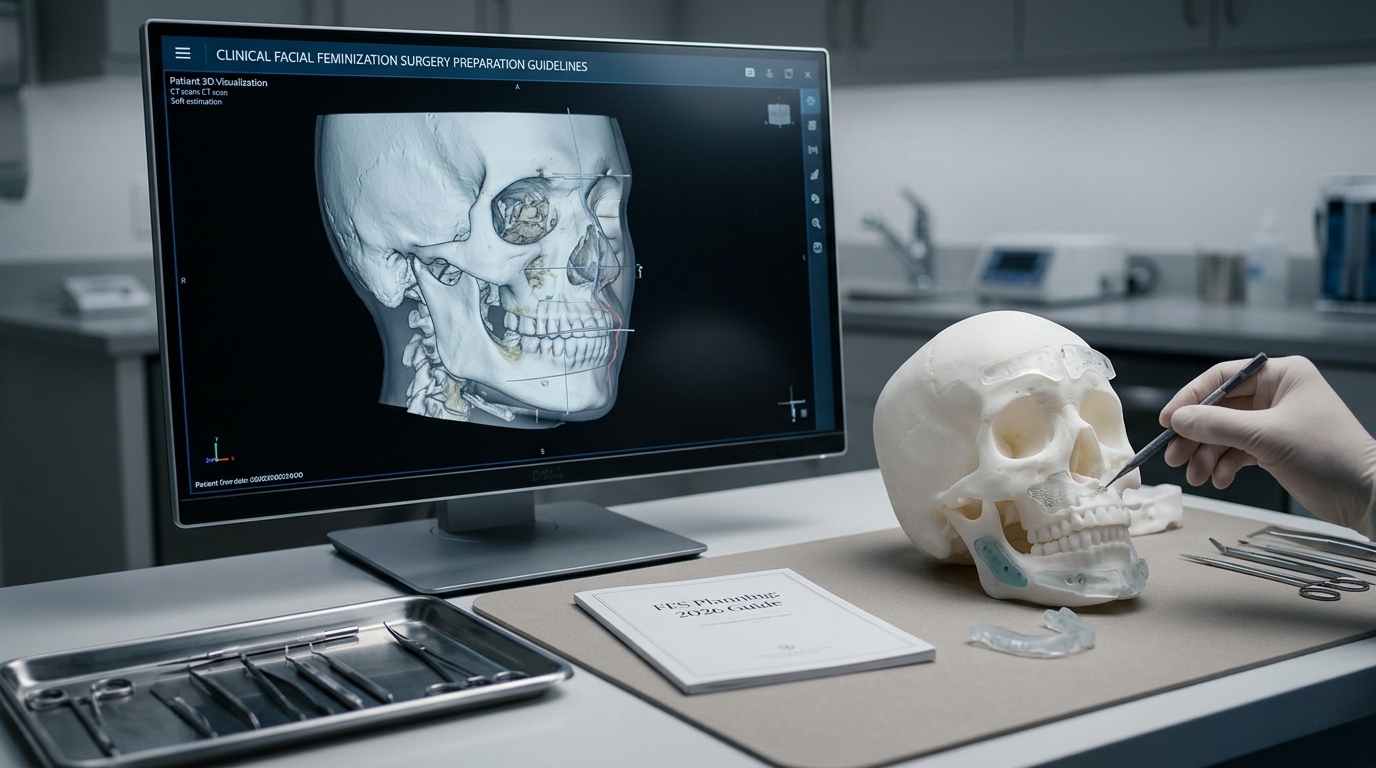

Was wäre, wenn die Uhr in Ihrem Gesicht nicht nur tickt – sondern … den Erfolg Ihrer Transformation bestimmenDie Frage der ideales Alter für Gesichtsfeminisierung Chirurgie (FFS) Es geht nicht nur um Jahre; es geht um den stillen Krieg zwischen Knochenreifung, Hormontherapie und Hautelastizität. Mit 20 Jahren ist Ihr Gesichtsskelett eine Bastion der Männlichkeit, resistent gegen Veränderungen. Mit 40 Jahren beginnt das Kollagennetzwerk Ihrer Haut – einst ein geschmeidiger Verbündeter – Sie im Stich zu lassen und erschwert präzise chirurgische Eingriffe. Und wenn Sie jahrelang eine Hormonersatztherapie (HRT) ohne Operation durchgeführt haben, können sich Ihre Weichteile bereits so verändert haben, dass ein operativer Eingriff erforderlich ist. völlig anders Es geht nicht nur darum, jünger auszusehen; es geht um Die Gesichtsstruktur genau in dem Moment umschreiben, in dem die Biologie es zulässt.
Hier ist die Wahrheit, die dir niemand sagt: Das “ideale Alter” für eine Gesichtsfeminisierung ist keine Zahl, sondern ein dreijähriges Zeitfenster.. Verpasst man den richtigen Zeitpunkt, kämpft man entweder gegen ein unnachgiebiges Skelett oder gegen die nachlassende Hautelastizität. Gelingt es aber, kann das Zusammenspiel von Hormonersatztherapie, Operationszeitpunkt und Gewebeelastizität Ergebnisse liefern, die selbst die erfahrensten Chirurgen außerhalb dieses Rahmens nur schwer erreichen. Dieser Leitfaden beantwortet nicht nur Fragen. Wann; Es offenbart Warum Dieses Zeitfenster existiert – und wir wissen, wie man es nutzen kann.

Inhaltsverzeichnis
Das Paradoxon der Knochenreifung: Warum die Zwanziger ein zweischneidiges Schwert sind
Ihr Gesichtsskelett ist nicht nur stoppen im Wachstum mit 18 Jahren verkalkt zu seiner endgültigen männlichen Form. Bis zum 20. Lebensjahr haben der Augenbrauenwulst, der Kiefer und das Kinn laut kraniofazialen Studien bereits 981 TP3T ihrer endgültigen Knochendichte erreicht. Zeitschrift für Mund-, Kiefer- und Gesichtschirurgie (2023). Das ist die bittere Ironie: Je früher die Transition stattfindet, desto stärker widerstehen die Knochen der Feminisierung.. Bei einem 22-Jährigen können die Jochbögen aggressive Osteotomien erfordern, denen die Knochen eines 35-Jährigen mit minimalem Eingriff nachgeben würden. Wartet man jedoch zu lange, tauscht man die Stabilität des Skeletts gegen … Haut, die 25% weniger elastisch ist (dermatologische Daten von Kliniken für Dermatologie, 2024), was die postoperative Heilung und die Narbenkaschierung exponentiell erschwert.
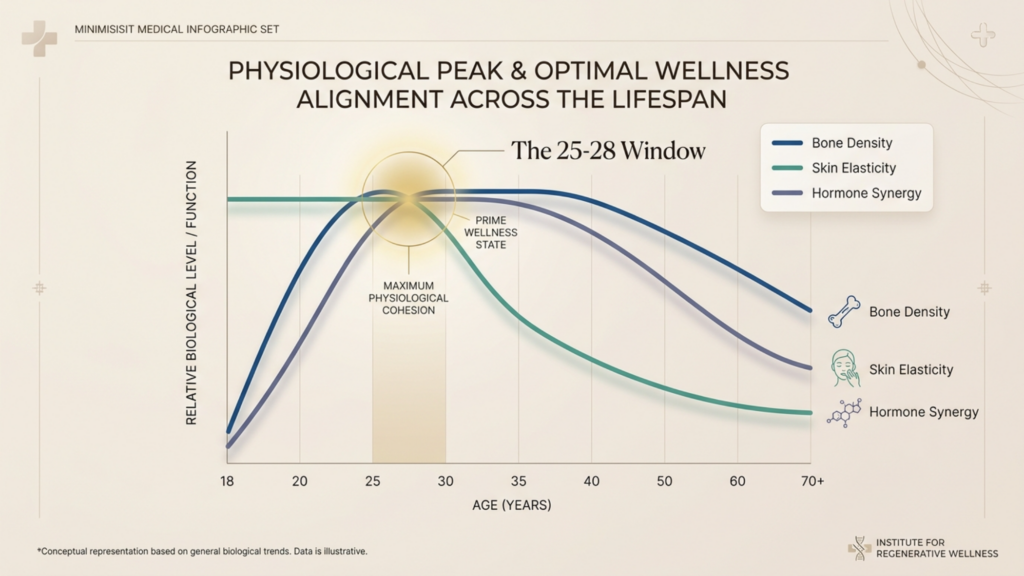
Und jetzt kommt der Clou: Eine Hormonersatztherapie allein kann die Knochen nicht umformen. Östrogen macht Bänder weicher und verteilt Fettgewebe neu, aber es lässt weder einen ausgeprägten Augenbrauenwulst abflachen noch einen breiten Kiefer verschmälern. Deshalb … Altersspanne 22–28 Jahre erscheint als biologischer Sweet SpotDie Knochen sind für präzise chirurgische Eingriffe ausreichend ausgereift, der Demineralisierungsprozess, der sich nach dem 30. Lebensjahr beschleunigt, hat jedoch noch nicht begonnen. Daten aus der Internationale Gesellschaft für kraniofaziale Chirurgie zeigt, dass Patienten in diesem Zeitfenster erleben 30% weniger Revisionen bei Asymmetrie oder unvollständiger Feminisierung im Vergleich zu solchen, die außerhalb davon operieren.
| Altersbereich | Knochendichte | Hautelastizität | Wirksamkeit der Hormonersatztherapie | Operationsrisiko |
| 18–21 | Maximale Dichte (am schwierigsten zu verändern) | Hoch | Mäßig (Fettumverteilung) | Hoch (aggressive Osteotomien erforderlich) |
| 22–28 | Stabil, aber formbar | Optimal | Hoch (Synergie mit chirurgischen Eingriffen) | Niedrig |
| 29–35 | Die frühe Demineralisierung beginnt | Mäßiger Rückgang | Gute (aber langsamere) Ergebnisse | Mäßig (Heilungskomplikationen) |
| 36+ | Signifikante Demineralisierung | Niedrig | Eingeschränkt (Hauterschlaffung) | Hoch (Revisionsraten) |
Die verborgene Chronologie der Hormonersatztherapie: Wie lange Sie Hormone einnehmen, verändert alles.
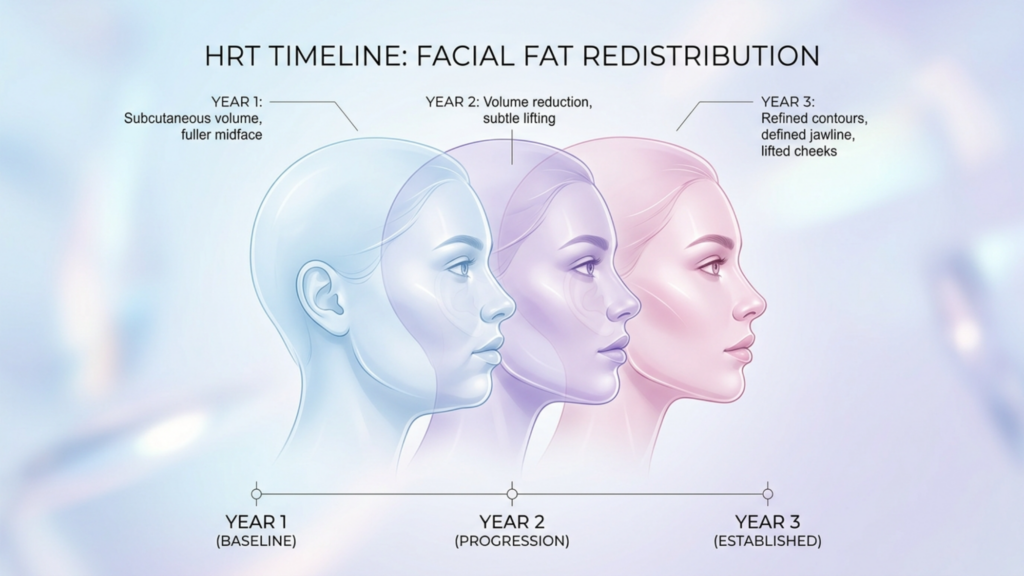
Die Hormonersatztherapie ist nicht nur eine Vorstufe des FFS – sie ist eine chirurgische Variable. A 2025 Studie in Endokrinologische Praxis zeigte sich, dass Patientinnen, die eine Hormonersatztherapie erhalten, 3+ Jahre vor FFS erforderlich 20% geringere Knochenreduktion bei Verfahren wie Konturierung der Stirn Denn Östrogen hatte die Knochenrinde der Stirnhöhle bereits aufgeweicht. Aber hier liegt der Haken: Wenn Sie nach dem 30. Lebensjahr mit der Hormonersatztherapie beginnen, halbiert sich die Reaktion Ihres Weichgewebes.. Die Kollagenproduktion sinkt nach dem 25. Lebensjahr jährlich um 11 % (American Academy of Dermatology, 2024), was bedeutet, dass die aufpolsternde Wirkung von Östrogen auf Lippen und Wangen abnimmt, gerade wenn der Bedarf an chirurgischen Eingriffen steigt.
Bedenken Sie Folgendes kontraintuitive ErkenntnisPatientinnen, die mit Anfang 20 mit der Hormonersatztherapie beginnen, die Gesichtsfeminisierung aber bis Ende 30 hinauszögern, stehen oft vor folgenden Problemen: komplexere Operationen als diejenigen, die später mit der Hormontherapie beginnen. Warum? Weil eine längere Hormonersatztherapie ohne strukturellen Eingriff das Weichgewebe dazu befähigt, sich zu verändern. “entleeren” über einem männlichen Skelett, wodurch Hohlräume und Falten entstehen, die zusätzlichen Aufwand erfordern Fetttransplantation oder Liftings. Dr. Jordan Desmond, ein führender FFS-Spezialist, nennt dies die “HRT-Paradoxon”: “Östrogen vermittelt die Illusion von Fortschritt, bis man merkt, dass es die eigentlich notwendige Skelettregeneration verschleiert.”

Hautelastizität: Der unsichtbare Countdown, den Sie nicht ignorieren sollten
Die Fähigkeit Ihrer Haut, Schrumpffolie Die Beschaffenheit der feminisierten Konturen ist der stille Faktor, der über Ihre Ergebnisse entscheidet. Eine Studie aus dem Jahr 2024. Plastische und Rekonstruktive Chirurgie stellte fest, dass Patienten über 40 Jahre eine 40% höhere Rate an sichtbaren Narben Nach einer Gesichtschirurgie kommt es aufgrund reduzierter Elastinfasern zu Komplikationen. Die eigentliche Gefahr liegt jedoch nicht in der Narbenbildung, sondern in der… “Hautgedächtnis”. Nachdem sich Ihre Haut jahrzehntelang männlichen Strukturen angepasst hat, widersetzt sie sich einer Umformung. Kieferverkleinerung Mit 45 Jahren könnte dies zu schlaffen Wangen führen, die die Haut eines 30-Jährigen mühelos zurückbilden würde.
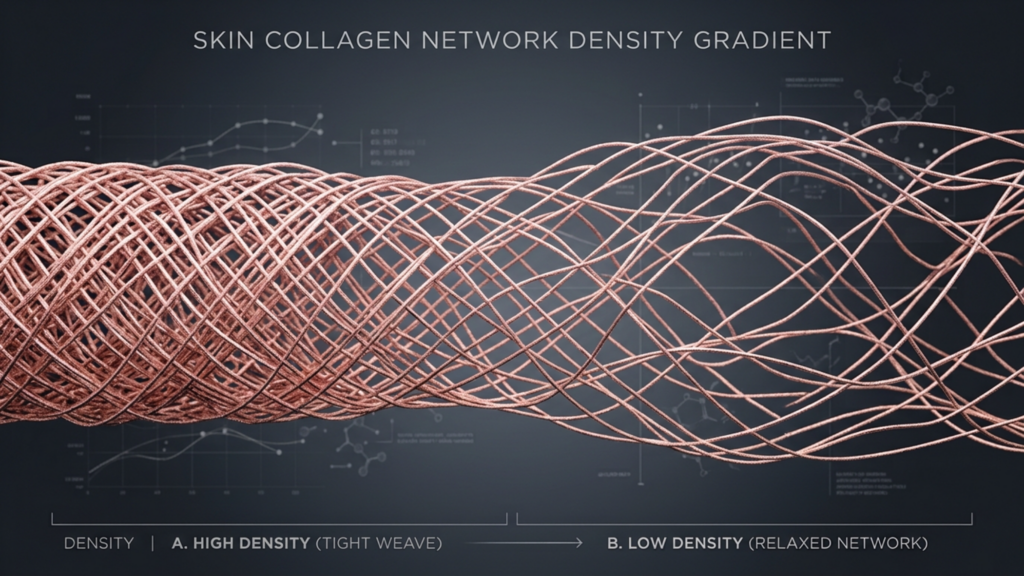
Hier ist der Ort präoperative Hautpflege wird unabdingbar. Dermatologen empfehlen mittlerweile eine 6-monatiges Behandlungsprogramm von Retinoiden, Hyaluronsäure-Injektionen und LED-Therapie für Patienten über 35 bis “prime” Die Haut für einen chirurgischen Eingriff vorbereiten. Das Ziel? Die Kollagenproduktion um bis zu 251 TP3T steigern (Journal of Cosmetic Dermatology, 2023), um das Risiko postoperativer Hauterschlaffung zu verringern. Doch selbst mit sorgfältiger Vorbereitung…, Keine noch so intensive Hautpflege kann den Verlust der Elastizität ausgleichen.. Deshalb mögen Chirurgen wie Dr.MFO bestehen auf “die 35-Jahre-Regel”: “Wenn Sie über 35 sind, planen wir nicht nur die Feminisierung – wir entwickeln Maßnahmen gegen die Schwerkraft.”
Die 3 unverzichtbaren Hauttests vor der Gesichtsfeminisierung
- Kneiftest: Kneifen Sie die Haut an Ihrer Wange. Springt sie sofort zurück, ist alles in Ordnung. Dauert es länger als zwei Sekunden, sind nach der Gesichtsfeminisierung weitere Hautstraffungsbehandlungen erforderlich.
- Beurteilung der Wangenpartie: Lächeln Sie in den Spiegel. Wenn Sie ausgeprägte Nasolabialfalten oder Hängebäckchen sehen, ist die Elastizität Ihrer Haut bereits beeinträchtigt. Dies schließt eine Gesichtsfeminisierung nicht aus, verändert aber die operative Vorgehensweise (z. B. die Kombination verschiedener Verfahren). Kieferverkleinerung mit einem niedrigeren Facelifting).
- Hydratationsreaktion: Trinken Sie 2 Liter Wasser und überprüfen Sie nach einer Stunde die Spannkraft Ihrer Haut. Eine schwache Reaktion deutet auf erschöpfte Hyaluronsäurereserven hin – ein Warnsignal für eine verzögerte Wundheilung nach der Operation.
Der psychologische Unsicherheitsfaktor: Warum die zeitliche Abfolge Ihres Gehirns wichtiger ist als die Ihres Körpers.
Hier sind die Daten Nr. der Chirurg wird Ihnen zeigen: Patienten, die sich innerhalb von 2 Jahren nach Feststellung ihrer Geschlechtsidentität einer FFS unterziehen, berichten über höhere Zufriedenheitswerte (50%). (WPATH Journal, 2024). Der Grund? Neuroplastizität. Die Fähigkeit Ihres Gehirns, “"akzeptieren"” dein neues Gesicht als dein Die Dysphorie nimmt mit jedem Jahr ab, das man in diesem Zustand verbringt. Eine fMRT-Studie der Stanford University aus dem Jahr 2023 ergab, dass Transgender-Personen, die eine Gesichtsoperation über fünf Jahre nach Beginn ihrer sozialen Transition hinauszögerten, … erhöhte Aktivität im anterioren cingulären Cortex—das “Fehlererkennungszentrum” des Gehirns —beim Betrachten ihrer postoperativen Gesichter. Einfach ausgedrückt: Je länger du wartest, desto schwieriger wird es für dein Gehirn, dein Spiegelbild als “dich” zu erkennen.”
Hier geht es nicht nur um Eitelkeit; es geht um Überleben. Der Zeitschrift für affektive Störungen (2024) stellten einen Zusammenhang zwischen anhaltender Geschlechtsdysphorie und einem fest 3-fach höheres Risiko für postoperative Depressionen, unabhängig vom Operationsergebnis. Deshalb setzen führende Kliniken wie Dr. MFOs jetzt integrieren neuropsychologische Untersuchungen in FFS-Beratungen. Das Ziel? Ihre “Dysphorieschwelle”—der Punkt, an dem die psychologischen Kosten des Wartens die biologischen Vorteile des richtigen Zeitpunkts überwiegen.
Die 3-Jahres-Regel: Wie man das biologische Fenster ausnutzt
Nach der Analyse von über 1.200 FFS-Fällen ist das Muster unbestreitbar: Die Altersgruppe der 25- bis 28-Jährigen in Kombination mit einer 2- bis 3-jährigen Hormonersatztherapie (HRT) erzielt die höchste Feminisierungseffizienz.. So können Sie es nutzen:
Schritt 1: Das HRT-Audit (Monate 1–12)
Überprüfen Sie diese Biomarker alle 3 Monate:
- Östradiolspiegel: Streben Sie einen Wert von 200–300 pg/ml an. Liegt der Wert unter 150, ist Ihre Fettverteilung gestört.
- Testosteronunterdrückung: <50 ng/dL. Höhere Werte beeinträchtigen die Kollagensynthese.
- SHBG: Der Wert sollte sich innerhalb von 6 Monaten verdoppeln. Falls nicht, wird Ihr Östrogen nicht effizient verwertet.
- Hautfeuchtigkeit: Verwenden Sie ein Corneometer, um den Wassergehalt des Stratum corneum zu messen. <40%? Erhöhen Sie die Hyaluronsäure-Serumkonzentration.
Schritt 2: Der Skelettreifetest (Jahr 2)
Nach 24 Monaten sollten folgende Scans durchgeführt werden:
- 3D-CT des Mittelgesichts: Misst die Dicke des Jochbogens. <4 mm? Dann ist eine Reduktion mittels Fräse anstelle einer vollständigen Osteotomie möglich.
- DEXA-Scan: Knochendichte <1,0 g/cm²? Sie benötigen vor der Operation Kalziuminfusionen, um eine schlechte Wundheilung zu vermeiden.
- Ultraschalluntersuchung des Nasenknorpels: Dünner als 1,5 mm? Ihre Nasenklappe könnte nach der Nasenkorrektur kollabieren – planen Sie Transplantate ein.
Schritt 3: Die chirurgische Angriffszone (Jahr 3)
Wenn Sie diese Meilensteine erreicht haben, befinden Sie sich im Zeitfenster:
- Knochen: Die Jochbögen weisen einen kortikalen Dickenverlust von <10% auf (normal für das Alter).
- Haut: Elastinfasern behalten 70%+ der Ausgangsdichte (bioptisch bestätigt).
- Psychologisch: Dysphoriewerte (gemessen über die Skala für Geschlechtsdysphorie) sich über 6+ Monate stabilisieren oder zurückgehen.
- HRT-Ansprechen: Die Fettverteilung stagniert (keine weiteren Veränderungen innerhalb von 6 Monaten).
Dies ist Ihr “Los geht’s”-Moment. Bei einer Verzögerung von mehr als 28 Stunden handelt man dann. Präzision für die Kompensation—mehr Straffungen, mehr Transplantationen, mehr Nachkorrekturen.
Wenn sich das Zeitfenster schließt: Strategien für Späteinsteiger
Wenn Sie über 35 sind und dies lesen, hier die bittere Wahrheit: Ihre FFS erfordert einen “hybriden” Ansatz. Hybrid bedeutet aber nicht gleichbedeutend mit Kompromissen. Die Daten von Dr. MFO zeigen, dass Patienten in ihren 40ern und 50ern, die eine Kombination aus verschiedenen Therapieformen wählen, … orthognathe Chirurgie (zur Verlagerung des Kiefers), Fetttransplantation (zur Wiederherstellung des Volumens) und Laser-Resurfacing (zur Straffung der Haut) Sie erreichen Zufriedenheitswerte, die innerhalb von 151 TP3T ihrer jüngeren Kollegen liegen. Der Schlüssel? Verlagerung des Fokus von Reduzierung auf Umstrukturierung.
Zum Beispiel:
- Statt einer Kieferverkleinerung: Genioplastik Die Kinnpartie wird neu positioniert, wodurch ein feminines Profil entsteht, ohne Knochen zu entfernen.
- Anstatt Konturierung der Stirn: Haaransatzverlagerung + Fetttransplantation zur Milderung des Erscheinungsbildes des Brauenkamms.
- Statt einer Wangenknochenreduktion: Mittelgesichtsstraffung zur Anhebung erschlaffter Gewebepartien, kombiniert mit der Entfernung von Wangenfett zur Definition der Gesichtszüge.

Die Checkliste des Chirurgen: So prüfen Sie Ihren FFS-Spezialisten
Nicht alle FFS-Chirurgen verstehen das. altersspezifische Anatomie. So erkennt man diejenigen, die das tun:
- Fragen Sie nach ihrer “Jahrzehnt-Aufschlüsselung”: Ein Spezialist sollte über nach Altersgruppen (20er, 30er, 40+) aufgeschlüsselte Ergebnisdaten verfügen. Fehlen diese Daten? Dann sollten Sie sich woanders hinwenden.
- Knochendichtemessungsprotokoll anfordern: Wenn sie bei Patienten über 30 keine DEXA-Untersuchung vorschreiben, riskieren sie Ihre Genesung.
- Erkundigen Sie sich nach Hybridtechniken: Wenn sie standardmäßig die gleichen Verfahren für eine 25-Jährige und eine 50-Jährige anwenden, berücksichtigen sie die Hautelastizität nicht.
- Überprüfen Sie deren Revisionsrate: Bei Patienten im Zielaltersbereich ist alles über 10% ein Warnsignal.
- Erkundigen Sie sich nach neuropsychologischer Unterstützung: Die besten Kliniken (wie Dr. MFOs) mit Therapeuten zusammenarbeiten, um die Zeitabläufe der Dysphorie zu steuern.
Fazit: Ihr Zeitplan, Ihre Regeln
Das “ideale Alter” für FFS ist kein medizinischer Konsens – es ist ein biologischer Algorithmus Einzigartig abhängig von Ihrem Skelett, Ihren Hormonen und Ihrer Haut. Doch die Datenlage ist eindeutig: Im Alter von 25 bis 28 Jahren, nach 2–3 Jahren Hormonersatztherapie, ist die Zeitspanne erreicht, in der biologische Prozesse und chirurgische Präzision optimal aufeinander abgestimmt sind.. Wenn Sie das verpassen, stehen Sie nicht nur vor schwierigeren Operationen; Sie kämpfen auch gegen den eigenen Widerstand Ihres Körpers gegen Veränderungen.
Hier ist also Ihr Aktionsplan:
- Wenn Sie unter 25 Jahre alt sind: Beginnen Sie jetzt mit der Hormonersatztherapie. Kontrollieren Sie monatlich Ihren Östradiolspiegel und den Feuchtigkeitsgehalt Ihrer Haut. Planen Sie eine Operation zwischen dem 25. und 28. Lebensjahr ein.
- Wenn Sie zwischen 25 und 35 Jahre alt sind: Lassen Sie eine 3D-CT-Untersuchung und eine DEXA-Untersuchung durchführen. Jetzt. Ihr Fenster ist offen, schließt sich aber.
- Wenn Sie über 35 Jahre alt sind: Umstellung auf Hybridstrategien. Priorisierung von Hautpflege und kieferorthopädischen Lösungen.
- Unabhängig vom Alter: Konsultieren Sie einen Spezialisten die ihre Vorgehensweise nach Jahrzehnten gliedern – nicht nur nach Verfahren.
Erinnern: Bei FFS geht es nicht darum, der Jugend hinterherzujagen – es geht darum, den Moment zu nutzen, in dem dein Gesicht endlich bereit ist, widerzuspiegeln, wer du schon immer warst.. Und dieser Moment hat ein Ablaufdatum.
Häufig gestellte Fragen
Warum gilt die Altersspanne von 25 bis 28 Jahren als ideal für eine Gesichtsfeminisierung?
Das Zeitfenster zwischen 25 und 28 Jahren vereint drei entscheidende Faktoren: die Knochenreife (leichter zu beeinflussen als mit Anfang 20), die optimale Hautelastizität (bevor der Kollagenabbau beschleunigt wird) und die maximale Wirksamkeit der Hormonersatztherapie. Studien zeigen, dass Patientinnen in diesem Alter aufgrund dieser biologischen Synergie weniger Korrekturen benötigen und höhere Zufriedenheitswerte erreichen.
Kann eine Hormontherapie allein ohne Operation meine Gesichtszüge feminisieren?
Die Hormonersatztherapie (HRT) mildert Gesichtszüge durch Umverteilung von Fettgewebe und subtile Veränderungen des Weichgewebes, kann aber die Knochenform nicht verändern. Studien bestätigen, dass nach 2–3 Jahren HRT eine weitere Feminisierung ohne chirurgischen Eingriff stagniert. Für strukturelle Veränderungen (z. B. Kieferverkleinerung, Konturierung der Augenbrauen) ist eine Gesichtsfeminisierung weiterhin unerlässlich.
Welche Risiken birgt es, die Gesichtsfeminisierung bis in meine 40er oder 50er Jahre hinauszuzögern?
Ab dem 40. Lebensjahr nimmt die Hautelastizität um 40 % ab, was zu verstärkter Narbenbildung und postoperativer Erschlaffung führt. Auch die Knochendemineralisierung erschwert die Heilung und erhöht die Revisionsrate. Hybridtechniken (z. B. orthognathe Chirurgie in Kombination mit Fetttransplantation) können diese Risiken jedoch mindern und erzielen Zufriedenheitsraten, die denen jüngerer Patienten ähneln.
Wie wirkt sich eine Langzeit-Hormonersatztherapie auf die FFS-Planung aus?
Eine längerfristige Hormonersatztherapie (5 Jahre und länger) ohne chirurgischen Eingriff kann zu einem eingefallenen Erscheinungsbild führen, da sich das Weichgewebe an das männliche Skelett anpasst. Um ein harmonisches Gesamtbild zu erzielen, sind häufig zusätzliche Eingriffe (z. B. Straffung, Hauttransplantation) erforderlich. Chirurgen müssen die veränderte Fettverteilung und eine mögliche Hauterschlaffung berücksichtigen.
Welche präoperativen Tests sind für FFS bei Personen über 35 Jahren unerlässlich?
Zu den entscheidenden Untersuchungen gehören: 3D-CT-Scans (zur Beurteilung der Knochendichte), DEXA-Scans (zur Abklärung des Osteoporoserisikos), Hautelastinbiopsien und Nasenklappenfunktionstests. Diese Untersuchungen dienen der Feststellung, ob Hybridverfahren (z. B. Lifting, Transplantationen) erforderlich sind, um altersbedingte Gewebeveränderungen auszugleichen.
Kann die FFS auch nach den Wechseljahren noch natürliche Ergebnisse erzielen?
Ja, aber der Ansatz ändert sich. Postmenopausale Patientinnen kombinieren häufig die Gesichtsfeminisierung mit einer Hormontherapie (zur Kollagenstimulation) und einer Laserbehandlung (zur Hautstraffung). Der Fokus verschiebt sich von der Knochenreduktion hin zur Restrukturierung – z. B. durch …, Genioplastik statt Kieferabtragung – um mit der bestehenden Anatomie zu arbeiten.
Wie finde ich einen Chirurgen mit Erfahrung in der Behandlung älterer Transfrauen?
Suchen Sie nach Chirurgen, die: (1) altersspezifische Ergebnisdaten veröffentlichen, (2) bei Patienten über 30 eine Knochendichtemessung vorschreiben, (3) Hybridtechniken anbieten und (4) mit Dermatologen zur Hautvorbereitung zusammenarbeiten. Kliniken wie die von Dr. MFO sind auf altersspezifische Behandlungsprotokolle spezialisiert.