
¿Y si el reloj en tu cara no solo está haciendo tictac, sino que...? dictando el éxito de tu transformación¿La pregunta de la edad ideal para Feminización Facial Cirugía (FFS) No se trata solo de años; se trata de la guerra silenciosa entre maduración ósea, terapia hormonal y elasticidad de la piel. A los 20 años, el esqueleto facial es una fortaleza de masculinidad, resistente al cambio. A los 40, la red de colágeno de la piel, que antes era una aliada flexible, ha comenzado a traicionarte, lo que complica la precisión quirúrgica. Y si has pasado años en terapia de reemplazo hormonal (TRH) sin cirugía, es posible que tus tejidos blandos ya se hayan modificado de forma que requieran una intervención quirúrgica. completamente diferente enfoque. No se trata solo de parecer más joven; se trata de reescribiendo tu arquitectura facial en el momento exacto en que la biología lo permite..
Esta es la verdad que nadie te cuenta: La “edad ideal” para la cirugía de feminización facial no es un número, sino un período de 3 años.. Si fallas, estarás luchando contra un esqueleto inflexible o contra la pérdida de elasticidad de la piel. Pero si lo haces bien, la sinergia de la terapia hormonal, el momento quirúrgico y la resiliencia del tejido puede ofrecer resultados que incluso los cirujanos más expertos tienen dificultades para replicar fuera de este marco. Esta guía no solo responde cuando; revela por qué Esa oportunidad existe, y aquí te explicamos cómo aprovecharla.

Tabla de contenido
La paradoja de la maduración ósea: por qué los 20 años son un arma de doble filo.
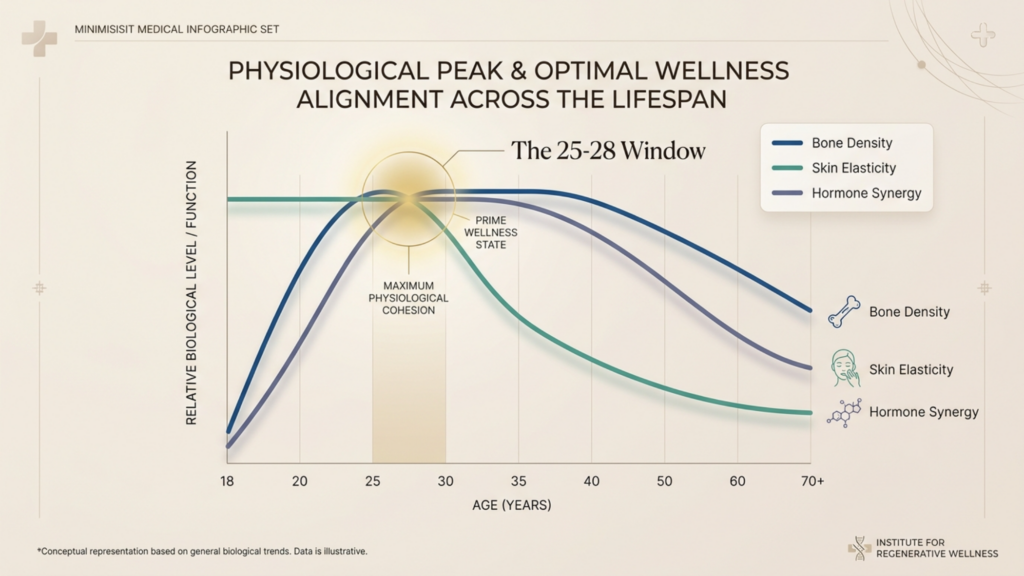
Tu esqueleto facial no solo detener crecer a los 18—es se calcifica en su forma masculina final. A los 20 años, el arco superciliar, la mandíbula y el mentón han alcanzado el 98% de su densidad adulta, según estudios craneofaciales de la Revista de Cirugía Oral y Maxilofacial (2023). Esta es la cruel ironía: Cuanto antes hagas la transición, más se resistirán tus huesos a la feminización.. Los arcos cigomáticos de una persona de 22 años podrían requerir osteotomías agresivas que los huesos de una persona de 35 años tolerarían con una intervención mínima. Sin embargo, si espera demasiado, estará cambiando la rigidez esquelética por piel que es 25% menos elástica (datos dermatológicos de Clínicas de Dermatología, (2024), lo que dificulta exponencialmente la recuperación postoperatoria y la ocultación de las cicatrices.
Y aquí viene lo mejor: La terapia hormonal sustitutiva por sí sola no puede remodelar el hueso.. El estrógeno suaviza los ligamentos y redistribuye la grasa, pero no reduce el arco superciliar prominente ni estrecha la mandíbula ancha. Por eso, Rango de edad de 22 a 28 años emerge como el punto óptimo biológico: los huesos son lo suficientemente maduros para una modificación quirúrgica precisa, pero aún no han comenzado el proceso de desmineralización que se acelera después de los 30. Datos de la Sociedad Internacional de Cirugía Craneofacial muestra que los pacientes en esta ventana experimentan 30% menos revisiones por asimetría o feminización incompleta en comparación con aquellas que operan fuera de ella.
| Rango de edad | Densidad ósea | Elasticidad de la piel | Eficacia de la terapia de reemplazo hormonal | Riesgo quirúrgico |
| 18–21 | Densidad máxima (la más difícil de modificar) | Alto | Moderada (redistribución de grasa) | Alto (se requieren osteotomías agresivas) |
| 22–28 | Estable pero maleable | Óptimo | Alta (sinergia con la cirugía) | Bajo |
| 29–35 | Comienza la desmineralización temprana | Disminución moderada | Buenos resultados (pero más lentos). | Moderadas (complicaciones en la cicatrización) |
| 36+ | Desmineralización significativa | Bajo | Limitado (flacidez de la piel) | Altas (tasas de revisión) |
La cronología oculta de la terapia hormonal sustitutiva: el tiempo que llevas con las hormonas lo cambia todo.
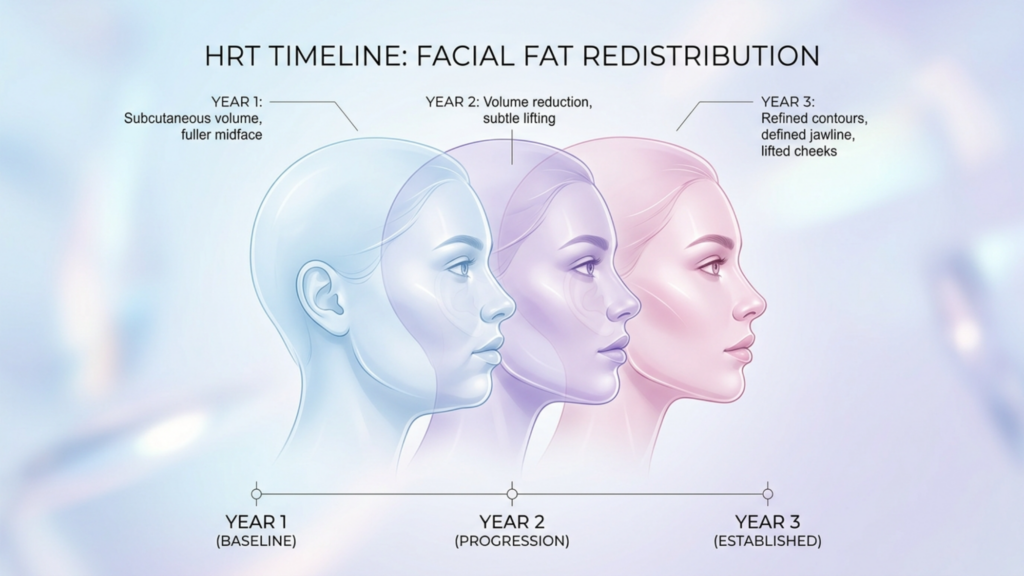
La terapia de reemplazo hormonal no es solo un precursor de la FFS, sino un variable quirúrgica. A 2025 estudio en Práctica de endocrinología reveló que los pacientes en TRH para Más de 3 años antes de que se requiera FFS 20% menor reducción ósea en procedimientos como contorno de la frente porque el estrógeno ya había ablandado el hueso cortical del seno frontal. Pero aquí está el problema: Si comienzas la terapia de reemplazo hormonal después de los 30, la respuesta de tus tejidos blandos se reduce a la mitad.. La producción de colágeno disminuye un 11% anualmente después de los 25 años (Academia Estadounidense de Dermatología, 2024), lo que significa que los efectos de relleno del estrógeno en los labios y las mejillas disminuyen a medida que aumentan las demandas quirúrgicas.
Considere esto hallazgo contraintuitivo: Las pacientes que comienzan la terapia hormonal a principios de sus 20 pero retrasan la cirugía de feminización facial hasta finales de sus 30 a menudo se enfrentan cirugías más complejas que aquellos que hacen la transición más tarde. ¿Por qué? Porque la terapia de reemplazo hormonal prolongada sin intervención estructural permite que los tejidos blandos se “"desinflar"” sobre un esqueleto masculino, creando huecos y pliegues que requieren más injerto de grasa o levantamientos. El Dr. Jordan Desmond, un destacado especialista en FFS, llama a esto el “La paradoja de la terapia hormonal sustitutiva”: “El estrógeno te da la ilusión de progreso hasta que te das cuenta de que está enmascarando el trabajo óseo que realmente necesitas.”
Elasticidad de la piel: La cuenta regresiva invisible que no puedes ignorar
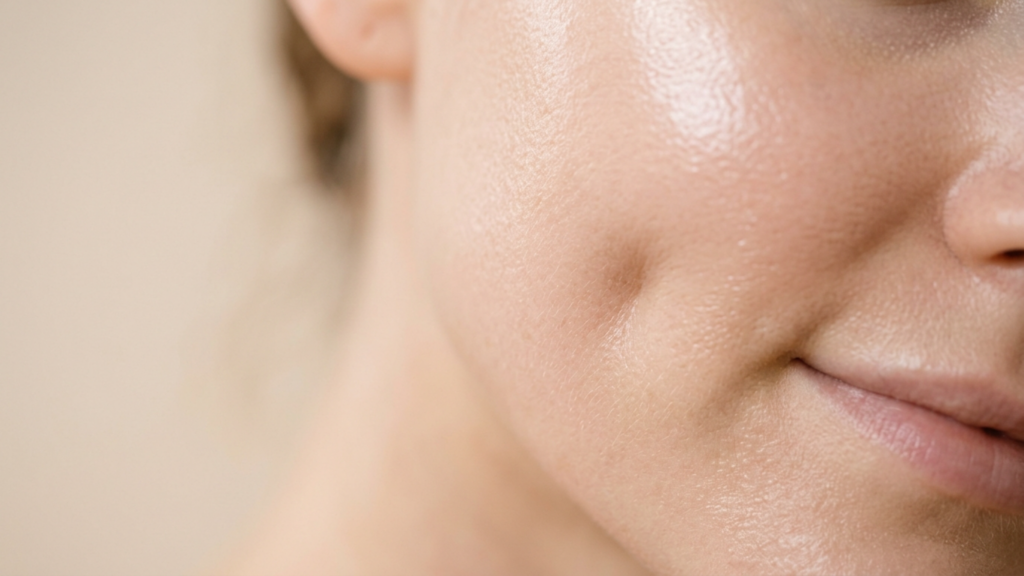
La capacidad de tu piel para envoltura retráctil alrededor de los contornos feminizados es el árbitro silencioso de tus resultados. Un estudio de 2024 en Cirugía Plástica y Reconstructiva descubrió que los pacientes mayores de 40 años tenían una 40% mayor tasa de cicatrices visibles después de FFS debido a la reducción de las fibras de elastina. Pero la verdadera amenaza no son las cicatrices, sino... “memoria de la piel”. Después de décadas de adaptarse a las estructuras masculinas, tu piel se resiste a ser remodelada. reducción de mandíbula A los 45 años, es posible que la piel de una persona de 30 años le quede flácida, algo que su piel retraería sin esfuerzo.
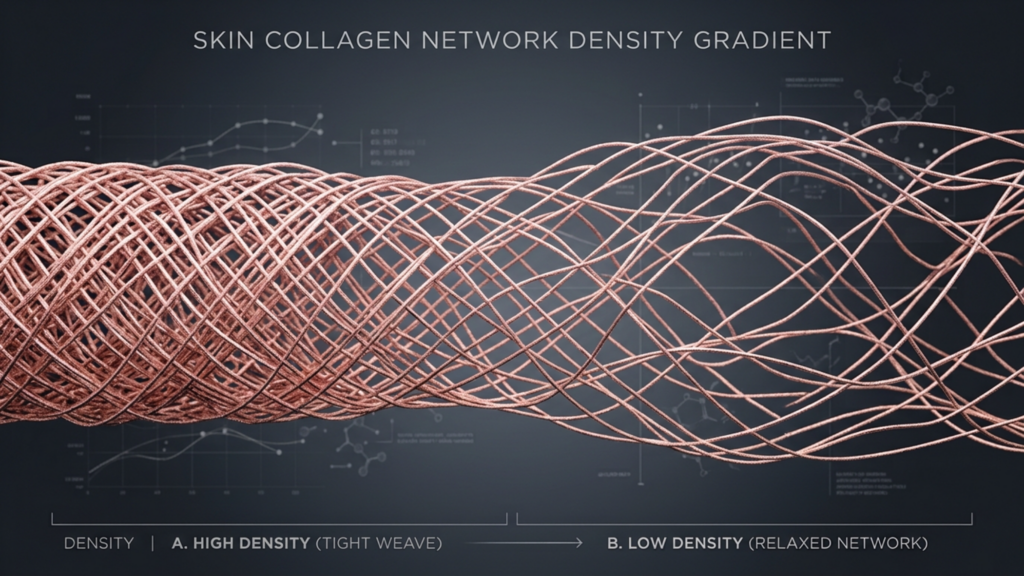
Aquí es donde Acondicionamiento preoperatorio de la piel se vuelve innegociable. Los dermatólogos ahora recomiendan un régimen de 6 meses de retinoides, inyecciones de ácido hialurónico y terapia LED para pacientes mayores de 35 años. “"principal"” la piel para la cirugía. ¿El objetivo? Aumentar la producción de colágeno hasta en 25% (Journal of Cosmetic Dermatology, 2023), reduciendo el riesgo de flacidez postoperatoria. Sin embargo, incluso con la preparación, Ningún tratamiento para la piel puede compensar la pérdida de elasticidad.. Por eso los cirujanos como Dr. OFM exigir “la regla de los 35 años”: “Si tienes más de 35 años, no solo estamos planificando la feminización, sino que estamos diseñando en contra de la fuerza de la gravedad.”
Las 3 pruebas cutáneas imprescindibles antes de la cirugía de feminización facial
- Prueba del pellizco: Pellizca la piel de tu mejilla. Si vuelve a su posición original al instante, estás en la zona segura. Si tarda más de dos segundos, necesitarás procedimientos adicionales para tensar la piel después de la cirugía de feminización facial.
- Evaluación de la papada: Sonríe al espejo. Si ves pliegues nasolabiales pronunciados o papada, la elasticidad de tu piel ya está comprometida. Esto no te descalifica para la FFS, pero cambia el enfoque quirúrgico (por ejemplo, combinar reducción de mandíbula con un menor estiramiento facial).
- Respuesta de hidratación: Beba 2 litros de agua y compruebe la firmeza de su piel después de 1 hora. Una respuesta deficiente indica un agotamiento de las reservas de ácido hialurónico, lo cual es una señal de alerta para la cicatrización postoperatoria.
El comodín psicológico: por qué la línea de tiempo de tu cerebro importa más que la de tu cuerpo.
Aquí están los datos no cirujano te mostrará: Los pacientes que se someten a FFS dentro de los 2 años posteriores a la toma de conciencia de su identidad de género informan puntuaciones de satisfacción más altas (50%). (Revista WPATH, 2024). ¿La razón? Neuroplasticidad. La capacidad de tu cerebro para “"aceptar"” tu nuevo rostro como tuyo disminuye con cada año que pasas con disforia. Un estudio de resonancia magnética funcional de Stanford de 2023 encontró que las personas transgénero que retrasaron la cirugía facial más allá de los 5 años de transición social mostraron mayor actividad en la corteza cingulada anterior—el centro de “detección de errores” del cerebro— al observar sus rostros después de la operación. En términos sencillos: Cuanto más esperes, más difícil le resultará a tu cerebro reconocer tu reflejo como "tú".“
Esto no es solo vanidad; se trata de supervivencia. El Revista de trastornos afectivos (2024) vincularon la disforia de género prolongada con una Riesgo tres veces mayor de depresión postoperatoria, independientemente de los resultados quirúrgicos. Por eso, clínicas líderes como El Dr. MFO ahora integre evaluaciones neuropsicológicas en consultas de FFS. ¿El objetivo? Identificar su “umbral de disforia”—el punto en el que el coste psicológico de la espera supera los beneficios biológicos de la sincronización.
La regla de los 3 años: cómo aprovechar la ventana biológica.
Tras analizar más de 1200 casos de pago por servicio, el patrón es innegable: El rango de edad de 25 a 28 años, combinado con 2 a 3 años de terapia hormonal sustitutiva, ofrece la mayor eficacia de feminización.. Aquí te explicamos cómo aprovecharlo:
Paso 1: La auditoría de la terapia de reemplazo hormonal (meses 1-12)
Realice un seguimiento de estos biomarcadores cada 3 meses:
- Niveles de estradiol: El objetivo es alcanzar entre 200 y 300 pg/ml. ¿Por debajo de 150? La redistribución de grasa se ha estancado.
- Supresión de testosterona: <50 ng/dL. Niveles más altos sabotean la síntesis de colágeno.
- SHBG: Debería duplicarse en 6 meses. Si no es así, significa que tu estrógeno no se está utilizando de forma eficiente.
- Hidratación de la piel: Utilice un cornómetro para medir el contenido de agua del estrato córneo. <40%? Aumente los sueros de ácido hialurónico.
Paso 2: La prueba de preparación esquelética (Año 2)
A los 24 meses, hágase estas ecografías:
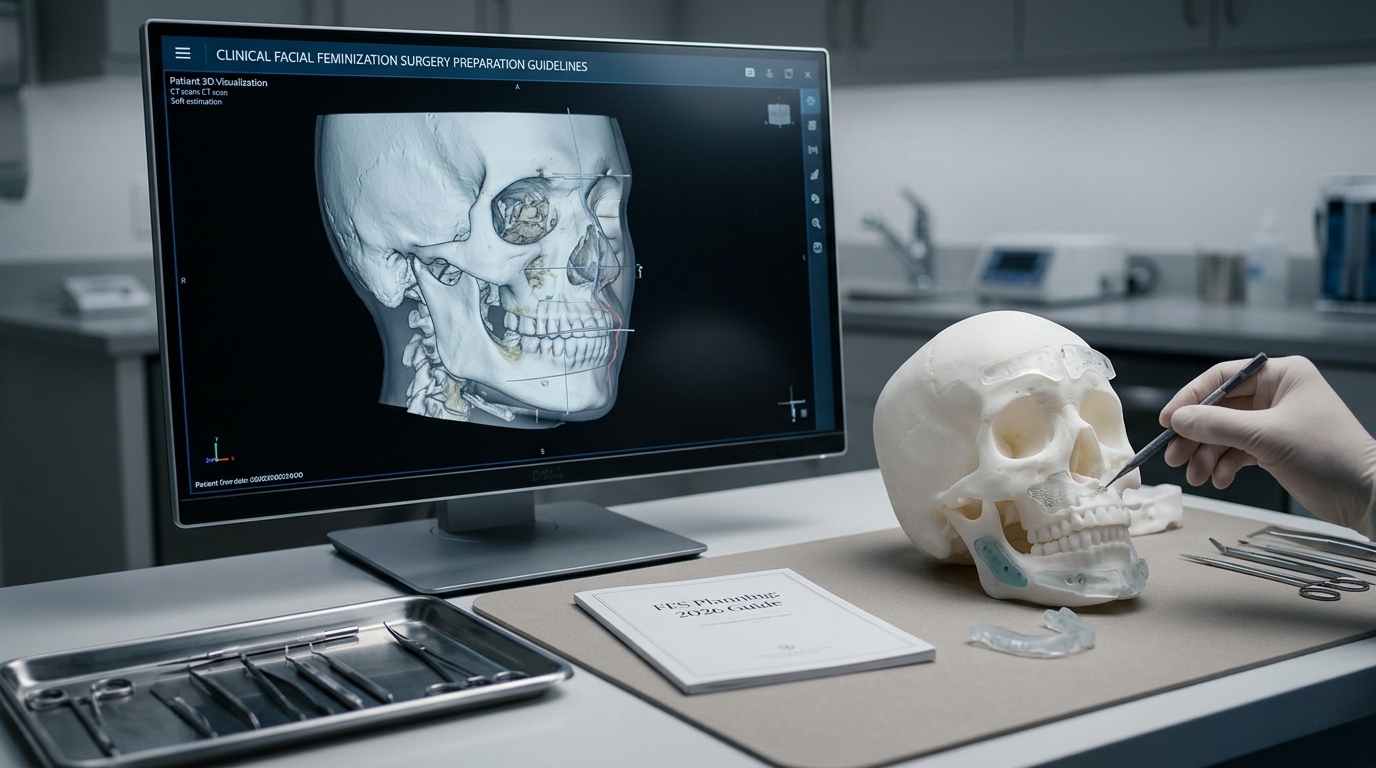
- Tomografía computarizada 3D de la zona media del rostro: Mide el grosor del arco cigomático. ¿Menos de 4 mm? Usted es candidato para una reducción con fresa en lugar de una osteotomía completa.
- Escaneo DEXA: ¿Densidad mineral ósea <1,0 g/cm²? Necesitará infusiones de calcio antes de la cirugía para evitar una mala cicatrización.
- Ecografía del cartílago nasal: ¿Tiene menos de 1,5 mm de grosor? Es posible que la válvula nasal colapse después de una rinoplastia; planifique la colocación de injertos.
Paso 3: La zona de ataque quirúrgico (Año 3)
Si has alcanzado estos hitos, estás dentro del plazo:
- Hueso: Los arcos cigomáticos muestran una pérdida de espesor cortical <10% (normal para la edad).
- Piel: Las fibras de elastina conservan una densidad basal de 70%+ (confirmado por biopsia).
- Psicológico: Puntuaciones de disforia (medidas a través de la Escala de disforia de género) estabilizarse o disminuir durante 6 meses o más.
- Respuesta de la terapia de reemplazo hormonal: La redistribución de la grasa se estabiliza (no se observan más cambios en 6 meses).
Este es tu “momento ”adelante”. Si el retraso supera los 28 días, estarás operando. precisión para compensación—Más levantamientos, más injertos, más revisiones.
Cuando se cierra la ventana: Estrategias para quienes se incorporan tarde al mercado laboral.
Si estás leyendo esto y tienes más de 35 años, aquí está la cruda verdad: Su FFS requerirá un enfoque “híbrido”.. Pero híbrido no significa comprometido. Los datos del Dr. MFO muestran que los pacientes de entre 40 y 50 años que combinan cirugía ortognática (para reposicionar la mandíbula), injerto de grasa (para restaurar el volumen) y rejuvenecimiento láser (para tensar la piel). lograr puntuaciones de satisfacción dentro de 15% de sus homólogos más jóvenes. ¿La clave? Cambiar el enfoque de la reducción a la reestructuración..
Por ejemplo:
- En lugar de reducción de mandíbula: Genioplastia para reposicionar el mentón, creando un perfil femenino sin eliminar hueso.
- En lugar de contorno de la frente: Avance de la línea del cabello + injerto de grasa para suavizar la apariencia del arco superciliar.
- En lugar de reducción de pómulos: Lifting de la zona media del rostro para elevar los tejidos flácidos, combinado con la eliminación de grasa bucal para lograr mayor definición.

Lista de verificación del cirujano: Cómo evaluar a su especialista en cirugía de feminización facial.
No todos los cirujanos de FFS entienden anatomía específica de la edad. Aquí te explicamos cómo identificar a quienes lo hacen:
- Solicita su “desglose por década”: Un especialista debería tener datos de resultados segmentados por grupos de edad (20-29, 30-39, 40+). ¿No hay datos? Mejor descartar la opción.
- Solicitar un protocolo de densidad ósea: Si no exigen una densitometría ósea a los pacientes mayores de 30 años, están poniendo en riesgo su recuperación.
- Infórmese sobre las técnicas híbridas: Si aplican los mismos procedimientos a una persona de 25 años y a una de 50, no están teniendo en cuenta la elasticidad de la piel.
- Comprueba su tasa de revisiones: Cualquier valor superior a 10% en pacientes dentro de su rango de edad objetivo es una señal de alerta.
- Pregunte sobre el apoyo neuropsicológico: Las mejores clínicas (como El Dr. MFO) colaborar con terapeutas para gestionar los plazos de la disforia.
En resumen: Tu cronograma, tus reglas.
La “edad ideal” para la FFS no es un consenso médico, es una algoritmo biológico único para tu esqueleto, hormonas y piel. Pero los datos son claros: Entre los 25 y los 28 años, con 2 o 3 años de terapia hormonal sustitutiva, es el periodo en el que la biología se alinea con la precisión quirúrgica.. Si no lo haces, no solo te enfrentarás a cirugías más difíciles, sino que también lucharás contra la propia resistencia de tu cuerpo al cambio.
Aquí tienes tu plan de acción:
- Si tienes menos de 25 años: Comienza la terapia hormonal sustitutiva ahora. Controla mensualmente tus niveles de estradiol e hidratación de la piel. Procura operarte entre los 25 y los 28 años.
- Si tienes entre 25 y 35 años: Realícese una tomografía computarizada 3D y una densitometría ósea (DEXA). ahora. Tu ventana está abierta, pero se está cerrando.
- Si tienes más de 35 años: Transición a estrategias híbridas. Priorizar el acondicionamiento de la piel y las soluciones ortognáticas.
- Sin importar la edad: Consulte a un especialista. quienes segmentan su enfoque por década, no solo por procedimiento.
Recordar: FFS no se trata de perseguir la juventud, sino de aprovechar el momento en que tu rostro finalmente está listo para reflejar quién siempre has sido.. Y ese momento tiene fecha de caducidad.
Preguntas frecuentes
¿Por qué se considera que el rango de edad ideal para la cirugía de feminización facial es de 25 a 28 años?
El periodo comprendido entre los 25 y los 28 años ofrece un equilibrio entre tres factores clave: la madurez ósea (más fácil de modificar que a principios de los 20), la elasticidad óptima de la piel (antes de que se acelere la disminución del colágeno) y la máxima respuesta a la terapia de reemplazo hormonal. Los datos muestran que los pacientes en este rango requieren menos revisiones y obtienen puntuaciones de satisfacción más altas gracias a esta sinergia biológica.
¿Puede la terapia hormonal por sí sola feminizar mi estructura facial sin cirugía?
La terapia hormonal suaviza los rasgos al redistribuir la grasa y modificar sutilmente los tejidos blandos, pero no puede remodelar el hueso. Los estudios confirman que, tras 2 o 3 años de terapia hormonal, la feminización se estanca sin intervención quirúrgica. Para cambios estructurales (por ejemplo, reducción de la mandíbula, contorno de las cejas), la cirugía de feminización facial sigue siendo esencial.
¿Cuáles son los riesgos de retrasar la cirugía de feminización facial hasta los 40 o 50 años?
Después de los 40 años, la elasticidad de la piel disminuye en un 40%, lo que aumenta la visibilidad de las cicatrices y la flacidez tras la cirugía. La desmineralización ósea también complica la cicatrización, elevando las tasas de reintervención. Sin embargo, las técnicas híbridas (por ejemplo, cirugía ortognática + injerto de grasa) pueden mitigar estos riesgos, con índices de satisfacción similares a los de pacientes más jóvenes.
¿Cómo afecta la terapia hormonal a largo plazo a la planificación de la cirugía de feminización facial?
La terapia hormonal sustitutiva prolongada (más de 5 años) sin cirugía puede generar una apariencia de flacidez, ya que los tejidos blandos se adaptan a un esqueleto masculino. Esto suele requerir procedimientos adicionales (por ejemplo, lifting, injertos) para lograr armonía. Los cirujanos deben compensar la alteración en la distribución de la grasa y la posible flacidez de la piel.
¿Qué pruebas preoperatorias son esenciales para la cirugía de feminización facial en mujeres mayores de 35 años?
Las pruebas críticas incluyen: tomografías computarizadas 3D (para evaluar la densidad ósea), densitometrías óseas (para detectar el riesgo de osteoporosis), biopsias de elastina cutánea y pruebas de función de la válvula nasal. Estas pruebas determinan si se necesitan técnicas híbridas (por ejemplo, lifting, injertos) para compensar los cambios tisulares relacionados con la edad.
¿Puede la cirugía de feminización facial seguir ofreciendo resultados naturales después de la menopausia?
Sí, pero el enfoque cambia. Las pacientes posmenopáusicas a menudo combinan la cirugía de feminización facial con la terapia de implantes hormonales (para estimular el colágeno) y el rejuvenecimiento con láser (para tensar la piel). El enfoque pasa de la reducción ósea a la reestructuración, por ejemplo, genioplastia en lugar de limar la mandíbula, se trabaja con la anatomía existente.
¿Cómo puedo encontrar un cirujano con experiencia en personas mayores en transición a la vida real?
Busque cirujanos que: (1) publiquen datos de resultados segmentados por edad, (2) requieran pruebas de densidad ósea para pacientes mayores de 30 años, (3) ofrezcan técnicas híbridas y (4) colaboren con dermatólogos para el preacondicionamiento de la piel. Clínicas como la del Dr. MFO se especializan en protocolos específicos para cada década.