
Gezichtsfeminisering Chirurgie van het gezicht (FFS) vertegenwoordigt een zeer complexe en diep persoonlijke reis, die een transformerende weg biedt voor individuen die hun uiterlijk willen afstemmen op hun bevestigde vrouwelijke identiteit. Dit zeer gespecialiseerde vakgebied binnen de craniofaciale en plastische chirurgie gaat verder dan louter esthetische verbeteringen en vereist een nauwgezette, individuele aanpak die rekening houdt met de diepgaande en inherente variaties in de menselijke gezichtsanatomie. Het fundamentele principe dat succesvolle ingrepen mogelijk maakt, is het volgende: gezichtsfeminisering Het is belangrijk te beseffen dat geen twee gezichten identiek zijn, noch dezelfde mannelijke kenmerken vertonen die aangepakt moeten worden. Daarom is een 'one-size-fits-all'-methode inherent ontoereikend om optimale, natuurlijk ogende en zeer bevredigende resultaten te bereiken. In plaats daarvan vereist het proces een op maat gemaakte chirurgische strategie, nauwgezet afgestemd op de unieke onderliggende skelet- en weke-delenstructuur van elke patiënt. Deze structuur is een complex samenspel van genetische aanleg, ontwikkelingsfactoren en hormonale invloeden.
Deze uitgebreide gids verdiept zich in de cruciale rol van de onderscheidende gezichtsanatomie bij het vormgeven van de precieze chirurgische ingrepen en technieken die tijdens FFS worden gebruikt. We benadrukken hoe een genuanceerde waardering van individuele kenmerken resulteert in een werkelijk gepersonaliseerde en effectieve transformatie. We onderzoeken hoe deskundige chirurgen navigeren door het complexe landschap van craniofaciale verschillen tussen de seksen, variërend van de subtiele contouren van de wenkbrauw tot de meer uitgesproken hoeken van de kaak. Bovendien onderzoeken we hoe deze anatomische nuances direct van invloed zijn op de selectie en uitvoering van feminiserende ingrepen. Het doel is niet alleen om openlijk mannelijke trekken te verzachten, maar ook om een samenhangend en evenwichtig gelaat te creëren dat de genderidentiteit van het individu authentiek weerspiegelt, waardoor het psychologisch welzijn wordt verbeterd, genderdysforie wordt verlicht en sociale bevestiging wordt bevorderd (Barnett et al., 2023).
Deze verkenning belicht de geavanceerde diagnostische tools, zoals 3D-beeldvorming met hoge resolutie en geavanceerde virtuele chirurgische planningssystemen, waarmee chirurgen een gedetailleerde, driedimensionale blauwdruk van het gezicht van de patiënt kunnen maken. Deze technologische integratie maakt een ongekende precisie mogelijk bij het preoperatief bepalen van strategieën, wat leidt tot gesimuleerde resultaten en chirurgische gidsen op maat. Daarnaast onderzoeken we hoe verschillende chirurgische technieken, waaronder zowel botmodificaties (die de fundamentele structuur van het gezicht aanpakken) als verfijningen van het zachte weefsel (die de delicate finishing touch vormen), synergetisch worden geïntegreerd om een harmonieus resultaat te bereiken dat natuurlijk blijft en tegelijkertijd een diepgaande vervrouwelijking bereikt.
De discussie zal zich uitstrekken tot de cruciale overwegingen bij het managen van de verwachtingen van de patiënt, het waarborgen dat deze gebaseerd zijn op chirurgisch realisme en het begrijpen van de unieke uitdagingen die aanzienlijke anatomische variaties met zich meebrengen. We zullen ook het allerbelangrijkste benadrukken van het selecteren van een zeer ervaren specialist met een diepgaand begrip van zowel esthetische principes als complexe craniofaciale reconstructie. Uiteindelijk is deze gedetailleerde analyse erop gericht de diepgaande wisselwerking tussen individuele gezichtsanatomie en chirurgische kunstzinnigheid te belichten, en te laten zien hoe een zeer persoonlijke aanpak niet alleen gunstig is, maar absoluut de hoeksteen vormt van transformerende, duurzame en zeer impactvolle resultaten op het gebied van gezichtsvervrouwing. Inzicht in de specifieke technieken, zoals genioplastiek Voor kincorrectie is het cruciaal om de diepte van deze specialisatie te kunnen waarderen. De mogelijkheid om de projectie, hoogte en breedte van de kin aan te passen, zorgt voor een dramatische verandering in de gezichtsperceptie, waardoor een typisch mannelijk kenmerk wordt getransformeerd in een kenmerk dat harmonieert met een zachter, meer vrouwelijk profiel.Dokter MFO, 2025a).

Inhoudsopgave
Het begrijpen van de blauwdruk: fundamentele anatomie voor gezichtsfeminisering
Voordat een chirurgische ingreep wordt gestart, is een diepgaand begrip van de fundamentele gezichtsanatomie van de patiënt van het grootste belang. Een deskundige gezichtsfeminisatie chirurg Hierbij wordt de complexe wisselwerking tussen de onderliggende botstructuren en de erbovenliggende weke delen nauwgezet beoordeeld. Deze uitgebreide evaluatie is cruciaal, omdat inherente verschillen in skeletproporties en de verdeling van de weke delen belangrijke bepalende factoren zijn voor de waargenomen genderidentiteit. Specifieke skeletkenmerken zoals de glabella, de frontale bult en de kaakhoek dragen bijvoorbeeld significant bij aan deze verschillen.
Typische mannelijke gelaatstrekken kenmerken zich door een prominentere wenkbrauwboog, een bredere en meer hoekige kaaklijn, een grotere en meer naar voren uitstekende kin en een uitgesproken neusprofiel met een hogere neusbrug en minder opwaartse rotatie van de neuspunt. Daarentegen hebben vrouwelijke gelaatstrekken een gladder voorhoofd, een meer taps toelopende kaaklijn, een fijnere kin en een kleinere, verfijndere neus. De mate waarin deze kenmerken tot uiting komen, verschilt echter aanzienlijk per individu als gevolg van genetische, etnische en ontwikkelingsfactoren (Alraddadi, 2021). Het herkennen van deze individuele anatomische nuances is niet slechts een observatiestap, maar een fundamentele voorwaarde voor het opstellen van een werkelijk op maat gemaakt en effectief chirurgisch plan. Deze precisie voorkomt een onnatuurlijk of 'geopereerd' uiterlijk en zorgt ervoor dat de resultaten natuurlijk zijn en passen bij de unieke schoonheid van het individu.
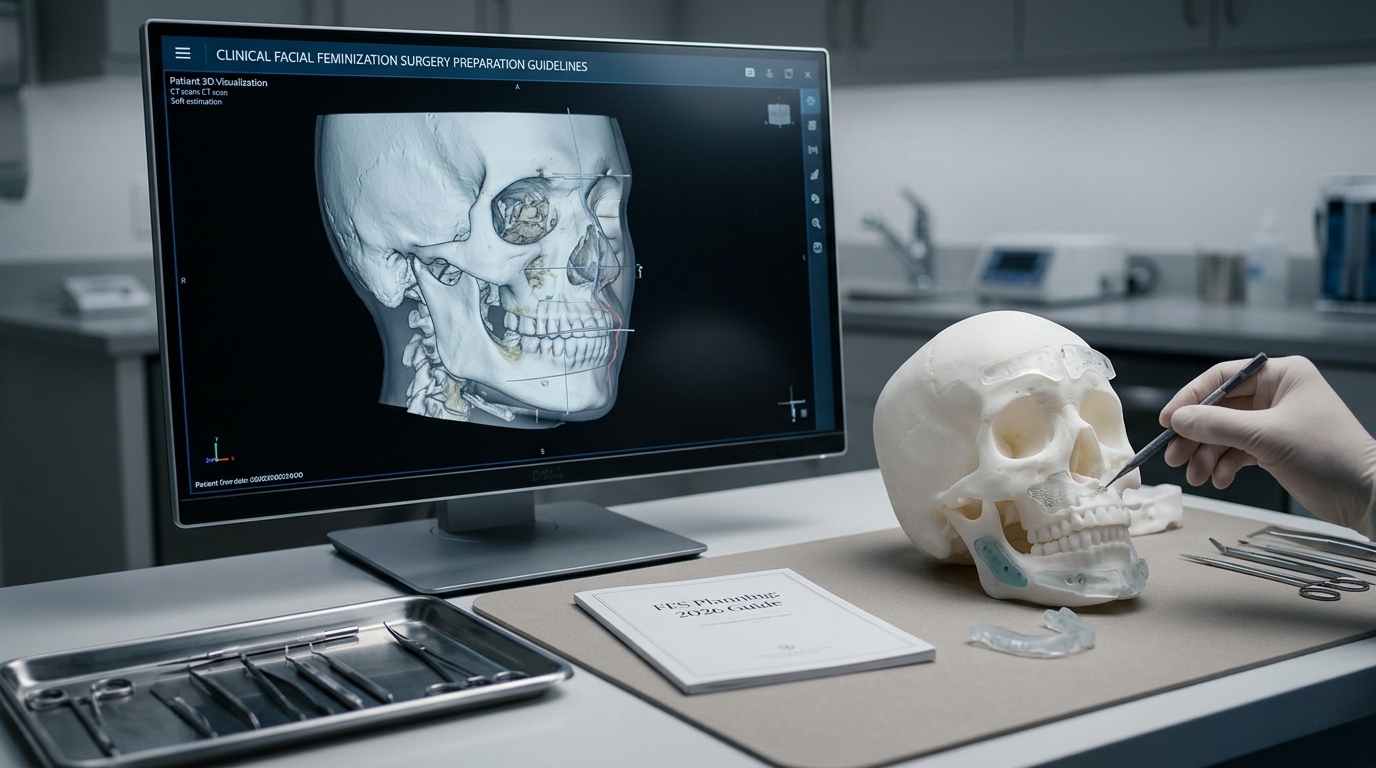
Om deze gedetailleerde anatomische blauwdruk te verkrijgen, speelt geavanceerde diagnostische beeldvorming een onmisbare rol. Driedimensionale computertomografie (3D CT)-scans worden veelvuldig gebruikt en bieden een driedimensionale reconstructie met hoge resolutie van de unieke skelet- en weke-delenstructuur van de patiënt. Deze scans bieden een ongeëvenaard beeld van de botdichtheid, sinuspneumatisatie, zenuwbanen en de precieze contouren van het aangezichtsskelet (Barnett et al., 2023). Deze gegevens worden vervolgens gebruikt in combinatie met software voor virtuele chirurgische planning (VSP), waardoor chirurgen bestaande structuren nauwkeurig kunnen meten en mogelijke chirurgische aanpassingen kunnen simuleren. De mogelijkheid om virtuele osteotomieën uit te voeren en de plooiing van de weke delen te voorspellen, zorgt voor een ongekende precisie bij de planning van elke stap van de operatie.
Naast statische beelden worden ook dynamische beoordelingen van de beweeglijkheid van zacht weefsel, de elasticiteit van de huid en de spieractiviteit uitgevoerd. Inzicht in de variaties in weefseldikte en -elasticiteit is bijvoorbeeld cruciaal om te voorspellen hoe het bovenliggende zachte weefsel zich zal hervormen na botreducties of -augmentaties. Deze dynamische evaluatie zorgt ervoor dat de feminiserende veranderingen, met name die met betrekking tot de kaaklijn en kin, naadloos integreren met het omringende zachte weefsel, waardoor onnatuurlijke overgangen worden vermeden. De combinatie van een uitgebreid lichamelijk onderzoek en geavanceerde beeldvorming biedt de chirurg Met een holistisch begrip van het gelaat van de patiënt kunnen ze een feminiseringsstrategie formuleren die zowel anatomisch verantwoord als esthetisch harmonieus is, en verder gaat dan generieke idealen om resultaten te bereiken die authentiek zijn voor het individu.

Regionale diepgaande analyse: Anatomische impact op specifieke feminiseringstechnieken
Het voorhoofd en de oogkasranden: een vrouwelijke basis creëren
Het bovenste derde deel van het gezicht, bestaande uit het voorhoofd en de oogkassen, is een belangrijk gebied voor geslachtsbepaling. Variaties in het voorhoofdsbeen en de supraorbitale richel (wenkbrauwbeen) behoren tot de meest significante seksueel dimorfe kenmerken. Mannelijke voorhoofden kenmerken zich vaak door een prominente wenkbrauwbult, een zwaardere en horizontaler geplaatste wenkbrauw ten opzichte van de bovenste oogkasrand, en een naar achteren terugwijkend voorhoofd. Het onderliggende volume van de voorhoofdsholte en de dikte van de voorwand ervan bepalen in belangrijke mate de mate van mogelijke reductie. Daarentegen worden vrouwelijke voorhoofden doorgaans gekenmerkt door een gladdere, rondere contour, een meer verticaal georiënteerd profiel en wenkbrauwen die hoger gebogen zijn en boven de oogkasrand gepositioneerd zijn (Barnett et al., 2023). De mate van voorhoofdsbult kan aanzienlijk variëren tussen individuen, wat direct van invloed is op de complexiteit en de keuze van de chirurgische ingreep en dus een zeer persoonlijke aanpak vereist.
Deze anatomische variaties hebben direct invloed op de selectie van voorhoofd contouren De procedures worden hoofdzakelijk onderverdeeld in Type 1 (schaven), Type 2 (combinatie) of Type 3 (terugzetten) technieken. Bij personen met een relatief dikke voorste sinuswand en een minder uitgesproken wenkbrauwbult kan een Type 1-procedure, waarbij het prominente bot direct wordt afgeschoren of afgeschaafd, volstaan om een vloeiendere overgang te creëren. Deze techniek is minder invasief en het herstel verloopt sneller. Wanneer het bot van de sinus frontalis echter dunner is of de wenkbrauwbult aanzienlijk prominent is, is vaak een meer uitgebreide aanpak nodig om een adequate feminisering te bereiken zonder de structurele integriteit in gevaar te brengen of ongewenste esthetische resultaten te veroorzaken.
Een cranioplastiek van type 3, ook wel frontale sinus-terugplaatsing genoemd, omvat het zorgvuldig verwijderen van de voorwand van de frontale sinus, het nauwkeurig hervormen ervan en het vervolgens opnieuw bevestigen in een meer terugliggende en vrouwelijke positie (Barnett et al., 2023). Deze reconstructieve techniek maakt een grotere mate van reductie en een diepgaander feminiserend effect mogelijk, waardoor de supraorbitale contour fundamenteel verandert en de gewenste convexe kromming van een vrouwelijk voorhoofd wordt bereikt. De precisie die voor deze procedure vereist is, is enorm, aangezien er om delicate structuren heen gewerkt moet worden en een symmetrische hervorming gewaarborgd moet worden. Na de operatie integreert het opnieuw bevestigde botsegment met het omringende bot, wat een stabiel en blijvend resultaat oplevert.
In samenwerking met voorhoofd contouren, Het contouren van de oogkasrand wordt vaak uitgevoerd om de vrouwelijke uitstraling van het bovenste deel van het gezicht verder te versterken. Bij mannelijke gezichten kunnen de botranden rond de oogkassen zwaarder en hoekiger lijken, waardoor vaak schaduwen ontstaan die de ogen een mannelijkere uitstraling geven. Door deze randen zorgvuldig glad te maken en af te ronden, lijken de ogen groter, opener en minder in de schaduw te liggen, wat bijdraagt aan een zachtere, meer uitnodigende blik. De precieze uitvoering van deze aanpassingen, met name in de buurt van kritieke structuren zoals de supraorbitale en supratrochleaire zenuwen, is van cruciaal belang om sensorische stoornissen te voorkomen. Chirurgische vaardigheid in het vermijden van deze zenuwbanen is essentieel voor het comfort van de patiënt en het voorkomen van complicaties op de lange termijn.
Daarnaast spelen de natuurlijke positie van de haarlijn en eventuele verzakking van de wenkbrauwen een rol bij de keuze van de wenkbrauwlifttechniek. Een coronale incisie, die zich over de hoofdhuid uitstrekt, kan worden gekozen voor een aanzienlijke verplaatsing van de haarlijn in combinatie met contourcorrectie van het voorhoofd. Een endoscopische wenkbrauwlift, waarbij kleinere incisies binnen de haarlijn worden gebruikt, kan daarentegen een verhoging van de wenkbrauwen bereiken met minimale verandering van de haarlijn, met name wanneer het verlagen van de haarlijn geen primair doel is. Virtuele chirurgische planning, zoals beschreven door Barnett et al. (2023), is uitgegroeid tot een onmisbaar hulpmiddel waarmee chirurgen de gewenste resultaten nauwkeurig kunnen visualiseren en osteotomieën met verbeterde precisie kunnen plannen. Dit verkort de operatietijd aanzienlijk en minimaliseert complicaties zoals overresectie of zenuwletsel. Deze nauwgezette preoperatieve planning zorgt ervoor dat de veranderde contouren naadloos aansluiten op de rest van het gezicht, wat resulteert in een harmonieuze en uitgesproken vrouwelijke esthetiek van het bovenste deel van het gezicht. De interactie tussen deze procedures in het bovenste deel van het gezicht is cruciaal, aangezien veranderingen in het ene gebied de perceptie van een ander gebied aanzienlijk kunnen beïnvloeden. Dit vereist een geïntegreerde en holistische aanpak.
Middengezicht en wangen: zachtheid en projectie modelleren
Het middengezicht, prominent gedefinieerd door het jukbeencomplex en de daarbovenliggende zachte weefsels, speelt een cruciale rol in de perceptie van vrouwelijke en jeugdige gelaatsuitdrukkingen. Er bestaan aanzienlijke verschillen in de projectie en contouren van het middengezicht tussen mannelijke en vrouwelijke fysionomieën. Mannelijke middengezichten vertonen vaak plattere jukbeenderen met minder naar voren uitstekende delen, wat bijdraagt aan een minder driehoekige gelaatsvorm. Dit kan een meer strenge of hoekige uitstraling geven. Daarentegen worden vrouwelijke wangen doorgaans gekenmerkt door hogere, meer naar voren geplaatste jukbeenderen, wat een gewenste convexiteit creëert en bijdraagt aan een zachtere, jeugdigere en vaak "hartvormige" gelaatscontour (Barnett et al., 2023). De verdeling en het volume van het onderhuidse vet, inclusief het jukbeenvet en het buccale vet, variëren ook aanzienlijk en beïnvloeden de algehele uitstraling van het middengezicht verder. Een zorgvuldige beoordeling van deze factoren is bepalend voor de chirurgische strategie.
Chirurgische strategieën voor feminisering van het middengezicht zijn zeer individueel en afhankelijk van de bestaande anatomische structuur en de gewenste esthetiek van de patiënt. Bij onvoldoende jukbeenprojectie of een van nature vlakker middengezicht, wangvergroting wordt vaak aanbevolen. Dit kan via verschillende methoden worden bereikt. Autoloog vet enten, Deze techniek, waarbij vet via liposuctie uit andere delen van het lichaam van de patiënt (bijvoorbeeld de buik of dijen) wordt geoogst, bewerkt en vervolgens in de wangen wordt geïnjecteerd, biedt een natuurlijke oplossing. Deze techniek zorgt voor een zachte, natuurlijk ogende vergroting en kan tegelijkertijd de kwaliteit van de bovenliggende huid verbeteren. De levensvatbaarheid van de vettransplantaten is cruciaal voor resultaten op lange termijn.
Als alternatief kunnen op maat gemaakte alloplastische implantaten, doorgaans vervaardigd van biocompatibele materialen zoals siliconen, over de jukbeenderen worden geplaatst om permanent volume en definitie te creëren. Deze implantaten zijn ofwel vooraf ontworpen ofwel op maat gemaakt op basis van 3D virtuele chirurgische planning om precies aan te sluiten op de gewenste contouren (Barnett et al., 2023). Op maat gemaakte implantaten bieden een voorspelbare en stabiele augmentatie, met name bij aanzienlijke skeletafwijkingen. De keuze tussen vet enten De keuze voor implantaten hangt af van de gewenste mate van vergroting, de beschikbaarheid van donorvet en de voorkeur van de patiënt. Beide technieken zijn erop gericht een prominentere en esthetisch aantrekkelijkere wangcontour te creëren, wat bijdraagt aan een jeugdige en vrouwelijke uitstraling.
Omgekeerd kan een chirurg in zeldzame gevallen, waarbij de jukbeenderen overmatig breed zijn of een uitgesproken mannelijke hoek hebben, overwegen om de jukbeenboog te verkleinen om de breedte van het middengezicht te verzachten. Bovendien kan de verdeling van het buccale vet – een diep vetkussen in de wang – de volheid van het gezicht beïnvloeden. Bij personen met een voller, ronder ondergezicht dat afbreuk doet aan een vrouwelijke uitstraling, kan verwijdering van het buccale vetkussen worden overwogen om een meer gedefinieerde en holle submalaire regio te creëren, waardoor de jukbeenderen hoger lijken. Deze gerichte vetreductie helpt om een verfijnder en meer gecontoureerd middengezicht te creëren, waarbij de jukbeenderen worden benadrukt.
De delicate wisselwerking tussen deze procedures maakt het mogelijk om een "ogee curve" te creëren – een sierlijke, dubbele S-vormige contour van de slaap tot de wang, die sterk duidt op jeugdige, vrouwelijke wangen. Bij het combineren van neus- en wangprocedures, zoals benadrukt door Dokter MFO (2025c) Synergetische anatomische planning is cruciaal vanwege de onderlinge afhankelijkheid van de esthetiek van de neus en het middengezicht. Een te prominente neus kan er bijvoorbeeld voor zorgen dat het middengezicht teruggetrokken lijkt, terwijl goed geprononceerde jukbeenderen een neus visueel in balans kunnen brengen. Aanpassingen in het ene gebied beïnvloeden daarom de perceptie van het andere gebied sterk, waardoor een geïntegreerde aanpak nodig is om algehele gezichtsharmonie en een werkelijk natuurlijk ogende transformatie te bereiken. De precieze vector van wangvergroting, Zo kan bijvoorbeeld de waargenomen lengte en vorm van de neus aanzienlijk veranderen, wat het belang van een holistische planning onderstreept.
De neus: delicate proporties bereiken
De neus, centraal in het gezicht geplaatst, is een cruciaal kenmerk dat de algehele gezichtsbalans en de waargenomen genderidentiteit aanzienlijk beïnvloedt. Neusstructuren vertonen een enorme diversiteit, maar specifieke patronen dragen bij aan genderherkenning. Mannelijke neuzen hebben vaak een bredere neusbrug, een prominentere neusrugbult, bredere neusgaten (alaire basis) en een minder naar boven gerichte, soms zelfs naar beneden uitstekende, neuspunt. Deze kenmerken kunnen een sterke, soms harde, uitstraling geven. Vrouwelijke neuzen daarentegen worden doorgaans gekenmerkt door een kleinere totale omvang, een smallere neusbrug, een zachter of licht concaaf profiel en een verfijndere, licht naar boven gerichte neuspunt, wat bijdraagt aan een stompere nasolabiale hoek (Barnett et al., 2023). Het bereiken van deze subtiele maar impactvolle veranderingen vereist een deskundige kennis van de neusanatomie en geavanceerde technieken. neuscorrectie technieken.
Dit brede spectrum van neusanatomie vereist een uitgebreid scala aan neuscorrectie Technieken tijdens gezichtsvervrouwing. Het verkleinen van de neusrugbult is een veelvoorkomende ingreep, waarbij overtollig bot en kraakbeen langs de neusrug zorgvuldig wordt verwijderd of afgeschraapt om een gladder, verfijnder profiel te creëren. Tegelijkertijd helpt het versmallen van de neusbeenderen door middel van osteotomieën (gecontroleerde botincisies) om de algehele breedte van de neusrug te verminderen, wat bijdraagt aan een verfijnder uiterlijk. De precieze plaatsing en controle van deze osteotomieën zijn essentieel om de neuspiramide niet te destabiliseren. Tipcorrectietechnieken zijn cruciaal voor het vervrouwen van de neuspunt; deze omvatten het zorgvuldig hervormen van de onderste laterale kraakbeenderen door middel van excisies, hechtingen en transplantaten om de punt kleiner, meer gedefinieerd en op de juiste manier naar boven te roteren (Barnett et al., 2023). Het verkleinen van de neusvleugelbasis kan worden uitgevoerd om te wijde neusgaten, die een mannelijk kenmerk kunnen zijn, te versmallen, zodat de neusbasis in verhouding staat tot de vervrouwelijkte punt en neusrug. De specifieke doelstellingen zijn het creëren van een neus die in harmonie is met het nieuw gevormde voorhoofd en middengezicht, waarbij een te agressieve of onnatuurlijke uitstraling wordt vermeden, en zo een evenwichtige gezichtsesthetiek wordt gewaarborgd.
Een open rhinoplastiektechniek, waarbij gebruik wordt gemaakt van een kleine incisie over de columella en interne incisies, heeft vaak de voorkeur bij gezichtsvervrouwing vanwege de optimale toegang tot en zichtbaarheid van het onderliggende skelet en kraakbeen. Dit stelt de chirurg in staat om structuren nauwkeurig te manipuleren en specifieke vervrouwelijkingsdoelen te bereiken, zoals het bijwerken van het caudale septum voor een opwaartse rotatie van de neustip (Barnett et al., 2023). De complexe relatie tussen de bot- en kraakbeencomponenten van de neus vereist een zeer bekwame chirurg om stabiele en esthetisch aantrekkelijke resultaten te bereiken. Zorgvuldige preservatie van de septumsteun en de neuskleppen is ook cruciaal voor het behoud van de ademhalingsfunctie en het voorkomen van veelvoorkomende problemen na een rhinoplastiek.
Bovendien speelt het omhulsel van zacht weefsel, bestaande uit huid, onderhuids vet en spieren, een belangrijke rol in het uiteindelijke resultaat; de dikte en elasticiteit ervan bepalen hoe gemakkelijk onderliggende veranderingen zichtbaar worden. Het is cruciaal om rekening te houden met de vasculaire voorziening van de neus, voornamelijk afkomstig van takken van de oogslagader en de aangezichtsslagader, en de innervatie door de trigeminuszenuw, om complicaties zoals bloedingen of sensorische veranderingen te minimaliseren. Het uiteindelijke doel is om een neus te creëren die in harmonie is met de algehele vrouwelijke gelaatstrekken, waardoor het zelfbeeld en het sociale comfort van de patiënt worden verbeterd (Dr. MFO, 2025b). Deze balans zorgt ervoor dat de neus, hoewel vrouwelijk, proportioneel en natuurlijk blijft binnen de unieke gelaatscontext van het individu.
Kaaklijn en kin: het verzachten van de onderkant van het gezicht
Het onderste derde deel van het gezicht, met name de kaaklijn en kin, zijn de belangrijkste indicatoren van seksueel dimorfisme en dragen aanzienlijk bij aan de perceptie van het geslacht. Mannelijke kaaklijnen zijn doorgaans breder, vierkanter en hoekiger, vaak met prominente hoeken in de onderkaak en een dikkere, externe schuine rand. De kin in mannelijke gezichten kan breder, vierkanter of juist overmatig prominent zijn, wat bijdraagt aan een sterk, soms stomp, lager gezichtsbeeld. Vrouwelijke kaaklijnen daarentegen zijn over het algemeen smaller, meer taps toelopend en vertonen vaak een sierlijke V-vorm of ovale contour met zachtere hoeken. De kin in vrouwelijke gezichten is doorgaans delicater, met minder breedte en projectie, wat bijdraagt aan een verfijnder lager gezichtsprofiel (Barnett et al., 2023).
Chirurgische strategieën voor het feminiseren van de kaaklijn en kin omvatten nauwkeurig op maat gemaakte botmodificaties. Het verkleinen van de kaakhoek is een belangrijke procedure die is ontworpen om de achterste kaaklijn te verzachten. Dit houdt in dat een deel van het bot bij de prominente kaakhoeken zorgvuldig wordt afgeschaafd of verwijderd, waardoor een vierkante contour wordt omgevormd tot een vloeiendere, meer taps toelopende overgang van het oor naar de kin. Deze procedure wordt vaak uitgevoerd via intraorale incisies (in de mond) om zichtbare littekens aan de buitenkant te vermijden, waardoor een precieze osteotomie en contourvorming mogelijk is en schade aan vitale structuren zoals de nervus alveolaris inferior wordt beperkt (Barnett et al., 2023). De mate van botverwijdering wordt zorgvuldig gepland met behulp van 3D-beeldvorming om symmetrie en optimale contourvorming te garanderen.
Kincorrectie, of genioplastiek, De kin wordt direct aangepast aan de grootte, projectie en vorm ervan en speelt een cruciale rol bij de feminisering van het onderste deel van het gezicht (Dr. MFO, 2025a). Bij gezichtsvervrouwing is het doel vaak om de breedte van de kin te verminderen, de verticale hoogte te verkorten als deze te lang is, en/of de kin een meer puntige of ronde vorm te geven, afhankelijk van het gewenste resultaat van de patiënt en de bestaande anatomie. De belangrijkste techniek voor significante kinvervrouwing is de glijdende genioplastiek. Bij deze procedure wordt een horizontale osteotomie (botdoorsnijding) in het kinbot gemaakt, waardoor het onderste deel nauwkeurig kan worden verplaatst. Het kan naar achteren worden bewogen (recessie) om de projectie te verminderen, naar boven (verticale reductie) om de hoogte te verkorten, en subtiel worden versmald om een fijner profiel te creëren (Dr. MFO, 2025a). Het verplaatste segment wordt vervolgens vastgezet met kleine titanium plaatjes en schroeven voor een stabiele en voorspelbare genezing (Barnett et al., 2023).
Voor kinoperaties waarbij voornamelijk subtiele veranderingen in breedte of projectie nodig zijn zonder ingrijpende repositionering, kan een osseuze genioplastiek (contouring/reductie van het kinbot) worden uitgevoerd. Bij deze techniek worden speciale frezen gebruikt om het bestaande bot te schaven en te modelleren, waardoor de kin smaller en ronder wordt of hoekige vormen worden gladgestreken (Dr. MFO, 2025a). Hoewel minder invasief dan een sliding genioplastiek, is deze techniek meer geschikt voor kleine verfijningen. Een andere techniek, de kinvleugelosteotomie, is complexer en komt minder vaak voor bij primaire feminisering, maar kan worden toegepast voor ingewikkelde 3D-remodellering, het aanpakken van asymmetrieën of in revisiegevallen waarbij uitgebreide botmanipulatie nodig is. Implantaten, meestal van siliconen, worden over het algemeen vermeden bij primaire feminiserende genioplastiek, omdat hun belangrijkste functie augmentatie is, wat vaak in strijd is met de reductiedoelen van feminisering. Implantaten brengen risico's met zich mee zoals een onnatuurlijk uiterlijk, infectie of verschuiving, waardoor technieken voor botvorming de voorkeur genieten voor natuurlijke, langdurige resultaten bij FFS (Dr. MFO, 2025a).
De integratie van deze procedures culmineert vaak in een "V-lijn"-operatie, waarbij de kaakhoek wordt verkleind en een genioplastiek wordt uitgevoerd om een aanzienlijk slankere en vrouwelijkere contour van het onderste deel van het gezicht te creëren. In sommige gevallen kan ook een reductie van de kauwspier (musculus masseter) worden overwogen, hetzij chirurgisch, hetzij door middel van botulinumtoxine-injecties, bij personen met hypertrofische (vergrote) kaakspieren die bijdragen aan een overmatige breedte van het onderste deel van het gezicht. Het gecombineerde effect van deze zorgvuldig geplande ingrepen resulteert in een sierlijker, harmonieuzer en uitgesproken vrouwelijk onderste deel van het gezicht, waardoor de gemodificeerde kenmerken in het boven- en middengezicht in balans worden gebracht (Dr. MFO, 2025b). Het bereiken van een harmonieuze V-vorm vereist een nauwgezette planning om ervoor te zorgen dat alle componenten van het onderste deel van het gezicht naadloos op elkaar aansluiten.
De Trachea: een gladdere halslijn
De adamsappel, ook wel bekend als de larynxprominentie, is een opvallend secundair geslachtskenmerk dat zich ontwikkelt en prominenter wordt tijdens de mannelijke puberteit door de vergroting en scherpe hoek van het schildkraakbeen. De aanwezigheid ervan kan voor veel transgender vrouwen een belangrijke bron van genderdysforie zijn, omdat het een zeer zichtbaar kenmerk is dat direct wijst op een mannelijk nekprofiel. Een tracheale shave, ook wel chondrolaryngoplastiek genoemd, is een eenvoudige maar zeer effectieve feminiserende ingreep die specifiek is ontworpen om de grootte en prominentie van de adamsappel te verminderen (Barnett et al., 2023). Deze procedure richt zich op het modelleren van het kraakbeen om een gladdere, meer vrouwelijke nek te creëren. De mate van reductie wordt zorgvuldig bepaald om esthetische doelen te bereiken zonder de stemfunctie te beïnvloeden.
De procedure omvat doorgaans een kleine, discrete dwarse insnijding in een natuurlijke huidplooi in de nek, vaak halverwege de submentale plooi en de cervi-kinale hoek, om de zichtbaarheid van een eventueel litteken te minimaliseren. Door deze insnijding scheert de chirurg voorzichtig het meest prominente deel van het schildkraakbeen af, waardoor de uitsteeksels worden verminderd en een gladdere, zachtere contour van de nek ontstaat. Er wordt uiterste zorg besteed aan het behoud van een rand van kraakbeen die hoger is dan het niveau van de stembanden voor stabilisatie en, cruciaal, om beschadiging van de stembanden zelf, die zich net achter het kraakbeen bevinden, te voorkomen (Barnett et al., 2023). Deze nauwgezette aanpak zorgt ervoor dat de stemfunctie behouden blijft. Hoewel de tracheale schaaf in eerste instantie een modificatie is van kraakbeen, een vorm van skeletweefsel, heeft deze een grote impact op het algehele uiterlijk van de nek en het profiel, wat bijdraagt aan een vrouwelijker silhouet en een belangrijke bron van dysforie verlicht.
Het herstel van een tracheale shave verloopt over het algemeen sneller dan van uitgebreidere botprocedures, waarbij de meeste acute zwellingen en ongemakken binnen enkele weken afnemen. Patiënten kunnen direct na de operatie tijdelijke stemveranderingen of een strak gevoel ervaren, maar deze verdwijnen meestal naarmate de genezing vordert. In sommige gevallen kunnen submentale vetverwijdering en platysmaplastiek (versteviging van de nekspieren) gelijktijdig worden uitgevoerd om het gewenste neksilhouet verder te verbeteren en maximale huidversteviging te bereiken, vooral bij oudere patiënten bij wie huidverslapping een groter probleem is (Barnett et al., 2023). Voor veel mensen biedt het bereiken van een gladdere halslijn enorme psychologische verlichting, waardoor ze zich comfortabeler en zelfverzekerder voelen in hun uiterlijk, vooral bij het dragen van kleding die de nek blootlegt. Deze relatief beperkte procedure heeft een aanzienlijke impact op de algehele genderbevestiging door een van de meest zichtbare mannelijke kenmerken van het hoofd-halsgebied aan te pakken.

Integrerende technieken voor holistische feminisering: de kunst van synergie
Echte gezichtsvervrouwing omvat zelden één enkele ingreep. Het is eerder een complexe symfonie van gecoördineerde chirurgische interventies, die elk zorgvuldig zijn gepland om elkaar aan te vullen en de unieke anatomie van de patiënt holistisch te benaderen. De ervaren chirurg fungeert als architect en orkestreert een reeks aanpassingen – variërend van fundamentele botreconstructie tot subtiele verfijningen van het zachte weefsel – om een evenwichtig, harmonieus en natuurlijk vrouwelijk resultaat te bereiken. Deze geïntegreerde aanpak zorgt ervoor dat het eindresultaat samenhangend en congruent is met de genderidentiteit van de patiënt, in plaats van een verzameling geïsoleerde, losgekoppelde veranderingen. De synergie tussen de procedures is van cruciaal belang, omdat het veranderen van één gezichtscomponent onvermijdelijk de perceptie en esthetiek van aangrenzende en verder gelegen gelaatstrekken beïnvloedt. Een werkelijk artistiek resultaat ontstaat wanneer alle delen van het gezicht als een eenheid worden beschouwd, die natuurlijk meebeweegt met expressie en emotie.
Een vermindering van de wenkbrauwuitstulpingen bijvoorbeeld, maakt niet alleen het voorhoofd vrouwelijker, maar vergroot ook optisch de ogen, waardoor het effect van een subtiele neuscorrectie nog sterker wordt. Evenzo zorgen kaaklijn- en kincorrecties, met name de glijdende genioplastiek voor projectie en verticale reductie (Dr. MFO, 2025a), voor een smallere basis waarover de zachte weefsels zich delicater draperen, waardoor het effect van wangvergroting en lipcorrecties wordt versterkt. De doordachte volgorde en combinatie van deze technieken verheffen gezichtsvervrouwing van louter chirurgische ingreep tot een verfijnde kunstvorm. Dit synergetische effect levert vaak resultaten op die groter zijn dan de som van de individuele ingrepen, waardoor een natuurlijk samenhangende vrouwelijke esthetiek ontstaat die eruitziet alsof ze er altijd al is geweest.
De keuze tussen een eenstapsbehandeling en een gefaseerde aanpak (meerdere operaties over een bepaalde periode) wordt sterk beïnvloed door de anatomische complexiteit van het geval, de algehele fysieke gezondheid van de patiënt en persoonlijke voorkeuren. Hoewel een eenstapsbehandeling het gemak biedt van één herstelperiode en vaak aanzienlijke kostenbesparingen oplevert, blijft de veiligheid van de patiënt de hoogste prioriteit. Studies tonen aan dat een groter aantal procedures per anesthesie bij patiënten die een gezichtsvervrouwelijking ondergaan, niet noodzakelijkerwijs leidt tot hogere complicatiepercentages. Dit suggereert dat goed geplande, uitgebreide eenstapsbehandelingen veilig kunnen worden uitgevoerd onder de juiste medische expertise (Barnett et al., 2023). Dit vereist echter een zorgvuldige patiëntselectie en een grondige preoperatieve beoordeling om te garanderen dat de patiënt een langere operatieduur kan verdragen.
Voor personen met uitgebreide chirurgische behoeften, aanzienlijke medische comorbiditeiten of die de voorkeur geven aan een gefaseerd herstel na kleinere ingrepen, kan een aanpak in stappen geschikter zijn. In dergelijke gevallen worden structurele harde weefselingrepen zoals het terugplaatsen van de voorhoofdsholte, het contouren van de bovenoogleden, het versmallen van de kaaklijn en een neuscorrectie vaak geprioriteerd, gevolgd door latere zachte weefselingrepen zoals facelifts, halslifts en ooglidcorrecties, met name bij oudere patiënten waar huidverslapping een rol speelt (Barnett et al., 2023). Deze strategische volgorde zorgt ervoor dat de fundamentele skeletveranderingen worden aangebracht voordat de bovenliggende zachte weefsels worden verfijnd, waardoor zowel de esthetische als de functionele resultaten worden geoptimaliseerd. Ongeacht de gekozen stapsgewijze aanpak is het overkoepelende doel een naadloze integratie te bereiken, waarbij elke chirurgische aanpassing harmonieus bijdraagt aan de uiteindelijke vrouwelijke gezichtscontouren. Deze op maat gemaakte aanpak zorgt ervoor dat elk aspect van de transformatie zorgvuldig wordt overwogen en uitgevoerd, wat leidt tot zeer bevredigende en natuurlijk ogende resultaten.
Preoperatieve planning en technologische vooruitgang voor precisie
Het succes van geavanceerde gezichtsvervrouwelijkingschirurgie, met name in gevallen met aanzienlijke anatomische variaties, hangt cruciaal af van een uitgebreide en nauwkeurige preoperatieve planning. Deze cruciale fase heeft een ingrijpende revolutie ondergaan door de integratie van geavanceerde beeldvormingsmodaliteiten en virtuele technologieën, die een ongekend niveau van nauwkeurigheid en voorspelbaarheid bieden. Beeldvorming met hoge resolutie, zoals conebundelcomputertomografie (CBCT) en standaard computertomografie (CT)-scans, levert gedetailleerde driedimensionale anatomische gegevens van de schedel en de daarbovenliggende weke delen van de patiënt (Barnett et al., 2023). Deze geavanceerde beeldvormingstechnieken leggen de unieke complexiteit van de craniofaciale structuur van elke patiënt vast en bieden een digitale blauwdruk voor chirurgische interventie.
Deze gedetailleerde gegevens zijn absoluut essentieel voor een nauwkeurige diagnose van bestaande skeletafwijkingen, waaronder botvolumetekorten, subtiele asymmetrieën, verkeerde positionering van gezichtssegmenten en een precieze beoordeling van cruciale onderliggende structuren zoals zenuwbanen en sinusholtes. Het gedetailleerde inzicht dat uit deze beelden wordt verkregen, vormt de fundamentele basis waarop de gehele chirurgische strategie is gebouwd, waardoor chirurgen de bestaande anatomie nauwgezet in kaart kunnen brengen en alle gebieden kunnen lokaliseren die correctie of augmentatie vereisen. Zo is bijvoorbeeld een gedetailleerde visualisatie van de mentale zenuwbaan cruciaal voor een veilige genioplastiek, waardoor het risico op postoperatieve gevoelloosheid wordt geminimaliseerd (Dr. MFO, 2025a). Dit diepgaande diagnostische inzicht vormt de basis voor elke volgende stap in het planningsproces, waardoor de chirurgische aanpak zowel effectief als veilig is.
Voortbouwend op deze rijke beeldgegevens zijn driedimensionale virtuele chirurgische planningssystemen (VSP) onmisbare instrumenten geworden in de hedendaagse gezichtsvervrouwing. VSP omvat het importeren van de CT- of CBCT-gegevens van de patiënt in gespecialiseerde software, waar een nauwkeurig 3D digitaal model van het gezicht en de schedel wordt gegenereerd. Binnen deze geavanceerde virtuele omgeving kunnen chirurgen elke osteotomie (botdoorsnijding), bottransplantatie en positionering van op maat gemaakte implantaten nauwgezet plannen. Dit digitale platform maakt de simulatie van verschillende chirurgische scenario's mogelijk, waardoor chirurgen virtueel de bewegingen van botsegmenten kunnen aanpassen, contouren kunnen verfijnen en de potentiële esthetische en functionele resultaten kunnen visualiseren voordat er fysieke incisies worden gemaakt. Dit iteratieve planningsproces garandeert een nauwkeurige meting van botreducties of -augmentaties, waardoor wordt gewaarborgd dat de uiteindelijke contouren niet alleen aansluiten bij de principes van vervrouwing, maar ook bij de specifieke reconstructieve behoeften van de patiënt. Zo kunnen bijvoorbeeld op maat gemaakte snijgeleiders en boorsjablonen virtueel worden ontworpen en vervolgens 3D-geprint, die vervolgens intraoperatief worden gebruikt om de geplande osteotomieën met opmerkelijke nauwkeurigheid uit te voeren, waardoor menselijke fouten worden geminimaliseerd en de chirurgische precisie wordt verbeterd (Barnett et al., 2023). VSP maakt het mogelijk om subtiele veranderingen in kinprojectie en -hoogte vooraf te visualiseren, wat cruciaal is voor optimale resultaten bij genioplastiek.
Naast virtuele planning biedt de opkomende rol van kunstmatige intelligentie (AI) bij preoperatieve morphing verdere vooruitgang. AI-gebaseerde software, zoals DeepSurface AI, kan driedimensionale morphs van het gezicht van de patiënt genereren, die vervolgens in realtime kunnen worden aangepast om potentiële chirurgische resultaten in verschillende gezichtsregio's te demonstreren (Barnett et al., 2023). Hoewel dit nog steeds een gebied in ontwikkeling is dat verder onderzoek vereist, heeft deze technologie een enorm potentieel om de verwachtingen van de patiënt af te stemmen op realistische chirurgische mogelijkheden, waardoor effectievere communicatie tussen patiënt en chirurg over de gewenste resultaten wordt bevorderd. Deze tool helpt de kloof tussen chirurgische mogelijkheden en de perceptie van de patiënt te overbruggen en zorgt voor een gedeeld begrip van de verwachte transformatie.
Bovendien verhogen intraoperatieve navigatiesystemen de precisie tijdens de operatie zelf. Deze systemen, vaak vergeleken met een GPS voor de chirurg, volgen in realtime de exacte positie van de chirurgische instrumenten ten opzichte van de anatomie van de patiënt en het vooraf geplande virtuele model. Deze continue validatie van de plaatsing van instrumenten en de herpositionering van bot zorgt ervoor dat de operatie precies volgens het virtuele plan verloopt, zelfs in complexe gevallen met een vervormde of atypische anatomie. Deze technologie is met name waardevol in gebieden zoals de kaak en kin, waar precieze botsneden cruciaal zijn voor het bereiken van symmetrie en de gewenste projectie. De combinatie van geavanceerde beeldvorming, virtuele chirurgische planning en intraoperatieve navigatiesystemen verbetert niet alleen de nauwkeurigheid, veiligheid en efficiëntie van gezichtsvervrouwelijkingschirurgie aanzienlijk, maar verhoogt ook de voorspelbaarheid van de resultaten, wat uiteindelijk leidt tot een hogere patiënttevredenheid en zeer natuurlijk ogende resultaten.
Intraoperatieve overwegingen en uitdagingen bij complexe feminisatieprocedures
De uitvoering van complexe gezichtsvervrouwelijkingschirurgie, met name bij patiënten met aanzienlijke skeletafwijkingen of eerdere ingrepen, brengt een unieke en veeleisende reeks intraoperatieve overwegingen en uitdagingen met zich mee. Deze omstandigheden vereisen niet alleen uitzonderlijke chirurgische vaardigheid, maar ook een aanzienlijk aanpassingsvermogen en een diepgaand begrip van anatomische variaties. In tegenstelling tot meer routinematige esthetische ingrepen, betreffen deze gevallen vaak sterk veranderde of atypische anatomie, waardoor normale chirurgische oriëntatiepunten kunnen worden verhuld en de complexiteit van dissectie en botmanipulatie aanzienlijk toeneemt. De chirurg moet voorbereid zijn op onverwachte bevindingen en de vooraf geplande strategie in realtime aanpassen, terwijl de overkoepelende vervrouwelijkingsdoelen behouden blijven. Het vermogen om zich aan te passen met behoud van esthetische principes is een kenmerk van een deskundige chirurg.
Een van de meest cruciale uitdagingen ligt in het nauwgezette beheer en behoud van vitale neurovasculaire structuren. De aangezichtszenuw en de vele delicate vertakkingen ervan, die de gezichtsuitdrukkingen controleren, zijn bijzonder kwetsbaar tijdens uitgebreide dissectie van zacht weefsel en botremodellering in gebieden zoals het middengezicht en de kaaklijn. Ook de vertakkingen van de trigeminuszenuw, verantwoordelijk voor de sensatie, kunnen risico lopen, wat mogelijk kan leiden tot tijdelijke of permanente gevoelloosheid of een veranderde sensatie. Dit is vooral relevant tijdens genioplastiek, waarbij de mentale zenuw de onderkaak verlaat (Dr. MFO, 2025a). Nauwkeurige kennis van anatomische variaties in zenuwbanen, zoals benadrukt door Alraddadi (2021), in combinatie met een nauwgezette chirurgische techniek, is cruciaal om de zenuwfunctie te behouden en het risico op aangezichtsverlamming of sensorische stoornissen te minimaliseren. Het oordeelkundig gebruik van intraoperatieve zenuwmonitoring kan een onschatbaar hulpmiddel zijn, dat realtime feedback geeft om deze delicate structuren te identificeren en te beschermen tijdens complexe dissecties.
Vasculaire problemen zijn ook groter bij reconstructieve en uitgebreide feminisatiegevallen. Weefsels die littekens hebben opgelopen door eerdere operaties of die zijn blootgesteld aan trauma, kunnen een verminderde bloedtoevoer hebben, wat het risico op flapnecrose, vertraagde wondgenezing of overmatig bloeden tijdens de operatie verhoogt. Zorgvuldige, gecontroleerde dissectie, voorzichtige weefselbehandeling en nauwgezette hemostase zijn van cruciaal belang om het delicate vasculaire netwerk te behouden. Bij gebruik van grote bottransplantaten is het garanderen van voldoende vasculariteit van het ontvangende bed absoluut cruciaal voor de overleving en succesvolle integratie van het transplantaat. In situaties met een ernstig verminderde bloedtoevoer kunnen gespecialiseerde technieken zoals gevasculariseerde bottransplantaten, waarbij een botsegment samen met de voedende slagader en ader wordt getransplanteerd en met behulp van microchirurgische technieken opnieuw wordt verbonden, vereist zijn. Dit vertegenwoordigt het toppunt van reconstructief vakmanschap, maar verhoogt ook aanzienlijk de operatietijd en technische eisen.
Het omgaan met inherente anatomische variaties is een andere belangrijke uitdaging. Zoals Alraddadi (2021) benadrukt, zijn anatomische variaties normale verschijnselen, maar kunnen ze de uitkomsten in de klinische praktijk sterk beïnvloeden. Geen twee gevallen van gezichtsskeletdeficiëntie of -dimorfisme zijn identiek, waardoor chirurgen hun technieken dynamisch moeten aanpassen aan de unieke presentatie. Hoewel geavanceerde virtuele chirurgische planning een robuuste routekaart biedt, kan de realiteit van het operatieveld nog steeds onvoorziene anatomische afwijkingen met zich meebrengen. Dit vereist een chirurg met uitgebreide ervaring in craniofaciale en reconstructieve chirurgie die weloverwogen en snelle beslissingen kan nemen, waarbij hij of zij indien nodig kan afwijken van het oorspronkelijke plan, zonder de veiligheid of esthetische doelstellingen in gevaar te brengen. Factoren zoals onverwachte botdichtheid, de aanwezigheid van vezelig littekenweefsel of een ongebruikelijke sinusanatomie kunnen allemaal van invloed zijn op de precieze uitvoering van osteotomieën en de stabiliteit van plaatfixatiestrategieën. De chirurg moet daarom zowel bedreven zijn in het volgen van het plan als in het veilig en effectief improviseren.
Bovendien vereist het bereiken van precieze symmetrie en harmonieuze contouren in een gezicht dat mogelijk al vervormd is, continue intraoperatieve beoordeling. Dit omvat vaak herhaalde visuele inspectie en palpatie om ervoor te zorgen dat botreducties, -verplaatsingen of -vergrotingen in balans zijn en aansluiten bij de feminiserende doelen. De enorme hoeveelheid en complexiteit van gecombineerde bot- en weke delenwerkzaamheden kunnen leiden tot langere operatietijden, wat op zijn beurt de risico's van algehele anesthesie en het algehele herstel van de patiënt vergroot. Daarom zijn een goed gecoördineerd chirurgisch team, efficiënte instrumenten en een zorgvuldige patiëntselectie op basis van een grondige preoperatieve beoordeling essentiële voorwaarden om deze intraoperatieve complexiteiten succesvol te beheersen en optimale, veilige en transformerende resultaten te bereiken. De geïntegreerde aanpak zorgt ervoor dat alle gelaatstrekken bijdragen aan een samenhangend en natuurlijk vrouwelijk uiterlijk.
Postoperatief herstel en langetermijnmanagement: de transformatie koesteren
De postoperatieve fase na een uitgebreide gezichtsvervrouwelijkingsoperatie, met name wanneer complexe bot- en weefselaanpassingen zijn uitgevoerd, is een kritieke periode die nauwgezette zorg, geduld en een goed gestructureerd behandelplan vereist. Het herstel na uitgebreide ingrepen duurt doorgaans langer en kan intensiever zijn dan bij standaard esthetische behandelingen, gezien de aanzienlijke mate van botmanipulatie, weefselremodellering en de kans op uitgebreide zwelling en blauwe plekken. Patiënten moeten goed voorbereid zijn op dit traject en begrijpen dat het uiterlijk direct na de operatie in de loop van weken en maanden aanzienlijk zal veranderen. Realistische verwachtingen ten aanzien van het herstel zijn cruciaal voor de tevredenheid en het psychische welzijn van de patiënt.
Direct na de operatie kunnen patiënten aanzienlijke zwelling van het gezicht, blauwe plekken en ongemak verwachten. Zwelling is een vrijwel universele fysiologische reactie op chirurgisch trauma en is meestal het meest uitgesproken in de eerste paar dagen tot een week na de operatie, waarna het geleidelijk afneemt gedurende enkele weken tot maanden. Het volledig verdwijnen van de resterende zwelling, met name in gebieden met aanzienlijk botweefsel of transplantaten, kan tot een jaar of zelfs langer duren voordat de definitieve contouren volledig zichtbaar zijn. Blauwe plekken verdwijnen eveneens, meestal binnen 2 tot 4 weken, met kleurveranderingen van paarszwart naar groengeel voordat ze volledig vervagen. Pijnbestrijding is cruciaal en wordt meestal bereikt door een combinatie van voorgeschreven pijnstillers, ontstekingsremmende medicijnen en zorgvuldige toepassing van koude kompressen, die helpen de zwelling te minimaliseren en het ongemak te verlichten. De ziekenhuisopname kan enkele dagen duren, met name na complexe osteotomieën of het plaatsen van grote transplantaten, waardoor nauwkeurige monitoring van de vitale functies, vroege detectie van mogelijke complicaties zoals hematomen of infecties en effectieve pijnbestrijding mogelijk zijn.
De specifieke nazorginstructies zijn afgestemd op de uitgevoerde ingrepen. Voor patiënten die een osteotomie van de kaak of kin ondergaan, zoals een glijdende genioplastiek, wordt vaak gedurende enkele weken een zacht of vloeibaar dieet voorgeschreven om overmatige belasting van de genezende botsegmenten en intraorale incisies te voorkomen (Dr. MFO, 2025a). Nauwgezette mondhygiëne, vaak met behulp van antimicrobiële mondspoelingen, is van cruciaal belang om infecties in de mondholte te voorkomen. De eerste weken gelden er strikte activiteitsbeperkingen; patiënten wordt geadviseerd om inspannende activiteiten, zwaar tillen en alles wat de bloeddruk kan verhogen of de genezende gezichtsstructuren kan belasten, te vermijden. De activiteitsniveaus worden geleidelijk aan verhoogd naarmate het herstel vordert en het chirurgisch team hiervoor toestemming geeft. Het hoofd omhoog houden, zelfs tijdens de slaap, wordt gedurende enkele weken sterk aanbevolen om de lymfedrainage te optimaliseren en zwelling te verminderen. Fysiotherapie of zachte lymfedrainagemassages kunnen in latere stadia van het herstel ook worden aanbevolen om de afname van zwelling te versnellen en de soepelheid van het zachte weefsel te verbeteren, wat een soepeler herstelproces bevordert.
Complexe reconstructieve ingrepen brengen inherent potentiële complicaties met zich mee die verder gaan dan die van standaard esthetische chirurgie. Hoewel chirurgen nauwgezette technieken gebruiken om deze te beperken, zijn alertheid en zorgvuldige monitoring essentieel. Botresorptie, waarbij een deel van het getransplanteerde autologe bot door het lichaam kan worden geresorbeerd, kan leiden tot gedeeltelijk verlies van contour of volume, waardoor soms een revisie nodig is. Bij alloplastische implantaten omvatten potentiële risico's blootstelling of infectie van het implantaat, wat de integratie van het implantaat kan belemmeren en in ernstige gevallen verwijdering noodzakelijk kan maken. Non-union of malunion van osteotomieën, hoewel zeldzaam, kan optreden als botsegmenten niet goed genezen, wat mogelijk kan leiden tot blijvende asymmetrie of functionele problemen, die vaak verdere chirurgische correctie vereisen. Zenuwschade, ondanks zorgvuldige intraoperatieve inspanningen om zenuwen te behouden, kan zich postoperatief manifesteren als aanhoudende gevoelloosheid, veranderde sensatie (tintelingen, prikkelingen) of, in zeldzame gevallen, motorische zwakte, met name van invloed op de gezichtsuitdrukkingen (Dr. MFO, 2025a). Patiënten moeten volledig worden geïnformeerd over deze potentiële risico's.
Verwachtingen ten aanzien van de stabiliteit op lange termijn zijn een cruciaal aspect van de patiëntenvoorlichting. Hoewel de uitgebreide botreconstructie bij feminiseringschirurgie een stabiele en duurzame basis biedt, ondergaan gezichtsstructuren nog steeds natuurlijke verouderingsprocessen. Veranderingen in het zachte weefsel als gevolg van veroudering, gewichtsschommelingen of voortgezette hormoontherapie kunnen jaren na de eerste operatie kleine correcties of niet-chirurgische ingrepen noodzakelijk maken. Regelmatige controleafspraken zijn daarom essentieel om de integriteit van de reconstructie op lange termijn te bewaken, eventuele problemen aan te pakken en blijvende patiënttevredenheid te garanderen. Een commitment aan continue zorg en realistische verwachtingen op lange termijn zijn essentiële onderdelen van een succesvol en duurzaam feminiseringstraject. De initiële transformatie is een belangrijke stap, maar continue zorg zorgt voor de duurzaamheid en harmonie van het resultaat.
Functionele en esthetische restauratie: allesomvattende resultaten die verder gaan dan alleen het uiterlijk
Het overkoepelende doel van geavanceerde gezichtsvervrouwelijkingschirurgie, met name bij de behandeling van ernstige skeletafwijkingen in het gezicht als gevolg van aangeboren afwijkingen, trauma of complexe ontwikkelingsstoornissen, reikt veel verder dan louter esthetische transformatie. Hoewel de visuele afstemming van de uiterlijke kenmerken op de genderidentiteit van een individu van het grootste belang is, is het herstel van een optimale gezichtsfunctie eveneens cruciaal. Voor patiënten met reeds bestaande functionele beperkingen biedt een vervrouwelijkingsoperatie een uitstekende mogelijkheid om tegelijkertijd essentiële fysiologische functies te herstellen of te verbeteren, waardoor hun algehele levenskwaliteit wordt verhoogd en sociale interactie soepeler verloopt. Deze dubbele focus zorgt ervoor dat de patiënt zowel een visuele als functionele bevestiging van zijn of haar identiteit ervaart.
Functionele beperkingen in dergelijke complexe gevallen kunnen divers zijn en een aanzienlijke impact hebben op het dagelijks leven. Deze kunnen bestaan uit problemen met kauwen als gevolg van ernstige kaakafwijkingen of disfunctie van het kaakgewricht (TMJ). Deze kunnen worden aangepakt met nauwkeurige mandibulaire en maxillaire osteotomieën die niet alleen de kaaklijn feminiseren, maar ook de juiste occlusie van het gebit herstellen. Verminderd zicht of oogklachten als gevolg van orbitadystopie (verplaatste ogen) of een verkeerde positie van de infraorbitale rand kunnen worden verlicht door een zorgvuldige reconstructie van de orbitaregio, waardoor de ogen beter worden ondersteund en beschermd. Verminderde ademhaling, vaak een gevolg van ernstige neusobstructie, septumafwijking of hypoplasie van het middengezicht, kan worden gecorrigeerd door een uitgebreide neuscorrectie die de luchtstroom door de neus verbetert en tegelijkertijd een delicater uiterlijk creëert (Barnett et al., 2023). Spraakgebreken, die soms het gevolg zijn van afwijkende anatomie in de mond of keelholte in verband met skeletafwijkingen, kunnen ook verbeteren na een corrigerende botoperatie in de kaak en het midden van het gezicht.
Een werkelijk succesvol resultaat van gezichtsvervrouwelijking in deze gevorderde gevallen wordt daarom gekenmerkt door de synergetische realisatie van zowel een zeer vrouwelijke esthetiek als een robuust, duurzaam functioneel herstel. De complexe botreconstructie, met ingewikkelde osteotomieën, het strategische gebruik van autologe bottransplantaten en het plaatsen van op maat gemaakte implantaten, speelt een directe en fundamentele rol bij het herstellen van de juiste skeletale ondersteuning voor deze cruciale gezichtsstructuren. Het corrigeren van kaakafwijkingen zorgt bijvoorbeeld niet alleen voor een zachtere, meer taps toelopende kaaklijn, maar herstelt ook de juiste tandocclusie en kauwefficiëntie, wat leidt tot betere voeding en meer comfort. Genioplastiek kan, naast het feminiseren van de kin, ook de kin-nekhoek verbeteren, wat esthetisch aantrekkelijk is en kan bijdragen aan een gevoel van comfort en balans (Dr. MFO, 2025a).
Het reconstrueren van de oogkasranden en het middengezicht verbetert het gezichtsveld en biedt betere bescherming voor de ogen, terwijl een zorgvuldige neuscorrectie, naast het creëren van een verfijnder neusbeeld, de neusademhaling en de ademhalingsfunctie actief verbetert (Barnett et al., 2023). De integratie van precieze technieken voor het beheer van zacht weefsel verfijnt beide resultaten verder. Nauwkeurige herpositionering van de huid, spieren en vet over het nieuw gevormde skelet zorgt voor natuurlijk ogende overgangen en minimaliseert zichtbare chirurgische littekens, wat bijdraagt aan een harmonieus uiterlijk dat natuurlijk meebeweegt met de gezichtsuitdrukking. Autologe vettransplantatie, naast de esthetische voordelen van het toevoegen van vrouwelijk volume aan gebieden zoals de wangen en lippen, kan ook de lokale weefselkwaliteit aanzienlijk verbeteren, kleine onregelmatigheden camoufleren en mogelijk de vascularisatie verbeteren, wat verder bijdraagt aan een duurzame functionele en esthetische integratie. Deze alomvattende aanpak onderstreept de diepgaande impact van FFS op zowel het fysieke als het psychologische welzijn.
De nauwgezette preoperatieve planning, met behulp van virtuele chirurgische planning in 3D met hoge resolutie en intraoperatieve navigatie, draagt in grote mate bij aan het bereiken van dit dubbele doel. Door botbewegingen nauwkeurig te definiëren, de herpositionering van zacht weefsel te voorspellen en de plaatsing van transplantaten in kaart te brengen, kunnen chirurgen zowel de feminiserende esthetiek als de structurele integriteit optimaliseren die nodig zijn voor herstel van de functie. Uitkomstmaten die door patiënten worden gerapporteerd, tonen consistent aan dat personen die een uitgebreide gezichtsfeminisatie ondergaan, aanzienlijke psychologische voordelen ervaren, waaronder een sterke vermindering van genderdysforie, een verbeterd zelfbeeld en een verbeterd lichaamsbeeld (Barnett et al., 2023). Bij reconstructieve gevallen worden deze psychologische voordelen echter vaak versterkt door de transformerende impact van het herwinnen van verloren of nooit gehade functies, wat de algehele kwaliteit van leven verder verbetert, een grotere onafhankelijkheid bevordert en een zelfverzekerdere integratie in de maatschappij mogelijk maakt. Het opmerkelijke vermogen van moderne reconstructieve feminiserende chirurgie om tegelijkertijd een gezicht te creëren dat esthetisch vrouwelijk en volledig functioneel is, vertegenwoordigt het hoogtepunt van de hedendaagse craniofaciale en genderbevestigende chirurgische praktijk en biedt werkelijk levensveranderende resultaten voor mensen met de grootste anatomische uitdagingen.
Het selecteren van een specialist: de cruciale keuze voor complexe feminisering
De beslissing om een geavanceerde reconstructieve gezichtsvervrouwelijkingsoperatie te ondergaan vanwege ernstige skeletafwijkingen in het gezicht is van monumentale betekenis en vereist de keuze voor een zeer gespecialiseerde en uitzonderlijk ervaren chirurg. De inherente complexiteit van deze gevallen vereist een expertise die veel verder reikt dan die van een algemeen plastisch chirurg of zelfs een chirurg wiens praktijk zich uitsluitend richt op esthetische vervrouwelijking. Daarom kan het van het grootste belang zijn om een chirurg te kiezen met een dubbele expertise – diepgeworteld in zowel routinematige gezichtsvervrouwelijkingsprocedures als complexe maxillofaciale reconstructie. Zo'n specialist beschikt over een ongeëvenaard begrip van de complexe craniofaciale anatomie, de biomechanica van botremodellering en -genezing, en geavanceerde reconstructieve technieken, waaronder microvasculaire chirurgie wanneer gevasculariseerde grafts geïndiceerd zijn voor aangetast weefsel (Dr. MFO, 2025b). Hun uitgebreide vaardigheden zijn essentieel om de meest uitdagende anatomische scenario's het hoofd te bieden.
Deze hooggespecialiseerde chirurgen zijn bedreven in het behandelen van grote skeletafwijkingen, het corrigeren van ernstige aangeboren of verworven asymmetrieën en het nauwkeurig reconstrueren van aangetaste gezichtsstructuren. Cruciaal is dat deze dubbele expertise betekent dat de chirurg niet alleen begrijpt hoe esthetisch aantrekkelijke vrouwelijke contouren te creëren, maar ook beschikt over de fundamentele kennis en technische vaardigheden om een stabiel en functioneel gezichtsframe te reconstrueren vanuit een aanzienlijk aangetast of gebrekkig uitgangspunt. Dit omvat een diepgaande bekwaamheid in het nauwkeurig uitvoeren van complexe osteotomieën, het toepassen van geavanceerde bottransplantatietechnieken met behulp van autoloog weefsel of op maat gemaakte alloplastische materialen, en het vakkundig plaatsen van op maat gemaakte implantaten om verloren volume en projectie te herstellen. Hun opleiding omvat vaak een combinatie van plastische chirurgie, kaakchirurgie en een gespecialiseerde craniofaciale fellowship-opleiding, wat hen een robuuste set vaardigheden biedt voor de meest uitdagende anatomische situaties. Deze uitgebreide achtergrond is essentieel voor het garanderen van zowel esthetisch als functioneel succes, met name bij procedures zoals genioplastiek, waarbij precieze botsneden en -repositionering cruciaal zijn (Dr. MFO, 2025a).
Bovendien is een ideale reconstructieve feminisatiechirurg uitzonderlijk bedreven in het gebruik van geavanceerde technologieën die de precisie en veiligheid verhogen. Dit omvat een beheersing van virtuele chirurgische planningssystemen (VSP) met hoge resolutie in 3D, het vermogen om op maat gemaakte chirurgische geleiders en boorsjablonen te ontwerpen en te gebruiken, en vaardigheid met intraoperatieve navigatiesystemen (Barnett et al., 2023). Hun vermogen om deze geavanceerde tools te benutten, garandeert optimale chirurgische nauwkeurigheid, minimaliseert potentiële risico's en maximaliseert de voorspelbaarheid van de resultaten, met name in situaties die gekenmerkt worden door een vervormde of atypische anatomie. Naast technische vaardigheid zal de meest effectieve specialist een diepgaand patiëntgerichte aanpak hanteren. Dit houdt in dat er grondige en empathische consultaties plaatsvinden om de unieke doelen, specifieke zorgen en psychologische behoeften van de individuele patiënt volledig te begrijpen. Ze zijn toegewijd aan het scheppen van realistische verwachtingen met betrekking tot het chirurgische proces, de nuances van het herstel en de mogelijke resultaten op lange termijn, wat vooral belangrijk is gezien de inherente complexiteit en de lange herstelperiodes van reconstructieve ingrepen. Deze alomvattende aanpak zorgt voor vertrouwen bij de patiënt en optimale resultaten.
Het controleren van de kwalificaties van de chirurg, inclusief boardcertificering in relevante chirurgische specialismen en een uitgebreid portfolio met succesvolle resultaten in complexe reconstructieve gevallen, is een essentiële stap voor potentiële patiënten. Overleg met een chirurg die werkt binnen of samenwerkt met een multidisciplinair team, mogelijk bestaande uit kaakchirurgen, orthodontisten en psychologen, garandeert een holistische en alomvattende benadering van de zorg, waarbij alle aspecten van het welzijn van de patiënt worden aangepakt. Uiteindelijk is de keuze voor een dergelijke zeer ervaren en uniek gekwalificeerde chirurg de allerbelangrijkste factor voor het bereiken van veilige, functionele, esthetisch transformerende en duurzame resultaten bij geavanceerde reconstructieve gezichtsvervrouwelijking. Dit geeft patiënten het vertrouwen dat hun complexe behoeften in deskundige handen zijn. Deze keuze heeft een diepgaande invloed op het gehele chirurgische traject en de blijvende effecten ervan.

Conclusie: De cruciale rol van geïndividualiseerde anatomische strategie
Het traject van gezichtsvervrouwelijking door middel van chirurgie is een zeer persoonlijk en nauwgezet gepland proces, uniek gevormd door de specifieke gezichtsanatomie van elk individu. Zoals deze uitgebreide verkenning heeft aangetoond, vereist het bereiken van natuurlijke, harmonieuze en duurzame resultaten bij vervrouwelijking veel meer dan een algemene aanpak; het vereist een diepgaand begrip van de subtiele en zichtbare verschillen in skelet- en weefselstructuren die het geslacht van het gezicht bepalen. Het vermogen om chirurgische aanpassingen nauwkeurig te beoordelen, te plannen en uit te voeren op basis van de unieke biologische blauwdruk van een patiënt is het kenmerk van werkelijk transformerende en succesvolle resultaten. Deze geïndividualiseerde strategie zorgt ervoor dat de vervrouwelijkende veranderingen niet alleen esthetisch aantrekkelijk zijn, maar ook naadloos integreren met de algehele gezichtsharmonie van de patiënt en zo hun ware identiteit weerspiegelen.
We hebben onderzocht hoe variaties in het voorhoofdsbeen en de oogkasranden specifieke contourtechnieken voor het voorhoofd bepalen, hoe de projectie van het middengezicht strategieën voor wangvergroting of -verkleining beïnvloedt, en hoe het complexe kraakbeen- en botframe van de neus delicate neuscorrecties begeleidt. Evenzo vereisen de diverse vormen van de onderkaak en kin zeer individuele kaaklijn- en kincorrecties, waarbij genioplastietechnieken zoals sliding genioplastie en osseuze genioplastie precieze controle bieden over projectie, hoogte en breedte (Dr. MFO, 2025a). De prominentie van het strottenhoofd vereist een zorgvuldige reductie. Elk van deze regionale aanpassingen draagt, afzonderlijk bekeken, bij aan feminisering, maar hun ware kracht komt voort uit hun synergetische integratie. Dit holistische perspectief is cruciaal voor het creëren van een samenhangend en natuurlijk vrouwelijk gezicht.
De vooruitgang in preoperatieve planning, met name de integratie van 3D-beeldvorming met hoge resolutie en virtuele chirurgische planningssystemen, heeft een revolutie teweeggebracht in het vakgebied. Chirurgen kunnen hierdoor zeer gedetailleerde blauwdrukken maken van de gewenste transformatie. Deze technologische synergie verhoogt de precisie, minimaliseert risico's en optimaliseert de voorspelbaarheid, waardoor complexe gevallen niet langer worden beschouwd als een lastige kwestie van gissen, maar als een nauwkeurig ontworpen oplossing. Intraoperatieve uitdagingen, zoals het zorgvuldig behoud van neurovasculaire structuren en de dynamische aanpassing aan anatomische variaties, onderstrepen het veeleisende karakter van deze ingrepen en benadrukken de cruciale rol van diepgaande chirurgische ervaring. Bovendien vereist het postoperatieve herstel, dat vaak langdurig en intensief is, een alomvattend en patiëntgericht behandelplan om optimale genezing en stabiliteit op lange termijn te garanderen, met specifieke aandacht voor ongemak en gevoelloosheid na ingrepen zoals genioplastiek (Dr. MFO, 2025a). Het managen van de verwachtingen van de patiënt gedurende dit traject is van het grootste belang voor de algehele tevredenheid.
Naast de esthetische aanpassingen omvat een succesvolle gezichtsvervrouwing inherent het herstel of de verbetering van vitale gezichtsfuncties, waarbij mogelijke beperkingen met betrekking tot kauwen, zien en ademhalen worden aangepakt. Deze dubbele focus op vorm en functie zorgt ervoor dat de patiënt niet alleen een uiterlijk krijgt dat congruent is met zijn of haar identiteit, maar ook een aanzienlijke verbetering van de algehele levenskwaliteit ervaart. De keuze voor een hooggespecialiseerde chirurg, met diepgaande expertise in zowel gezichtsvervrouwing als complexe maxillofaciale reconstructie, is de meest cruciale beslissing voor mensen die aan dit traject beginnen. Hun unieke vaardigheden, die een artistieke visie combineren met een diepgaand anatomisch begrip, zijn onmisbaar om de complexiteit van geavanceerde gevallen te beheersen en resultaten te leveren die zowel veilig als esthetisch indrukwekkend zijn (Dr. MFO, 2025b).
Uiteindelijk is gezichtsvervrouwelijkingschirurgie, met name wanneer deze is afgestemd op de unieke anatomie van het individu, een krachtige bevestiging van de identiteit, die zelfvertrouwen bevordert en een dieper gevoel van authenticiteit geeft. Het is een bewijs van de voortdurende evolutie van de chirurgische wetenschap en kunst, en biedt levensveranderende mogelijkheden voor diegenen die harmonie zoeken tussen hun innerlijke zelf en uiterlijke presentatie. De voortdurende toewijding aan precisie, persoonlijke zorg en uitgebreide resultaten zal dit vitale en transformerende vakgebied blijven definiëren en hoop en tastbare resultaten bieden aan talloze mensen. Een gesprek aangaan met een gecertificeerde specialist met uitgebreide ervaring is de eerste cruciale stap naar een werkelijk harmonieuze en bevestigende transformatie. Aarzel niet om een uitgebreid consult aan te vragen om te begrijpen welk persoonlijk traject u te wachten staat.
Veelgestelde vragen
Waarom is de individuele gezichtsanatomie zo belangrijk bij de planning van gezichtsfeminiseringsoperaties?
De individuele gezichtsanatomie is cruciaal, omdat elk gezicht uniek is, met verschillende botstructuren en zachte weefselverdelingen. Een gepersonaliseerde chirurgische strategie, afgestemd op deze specifieke anatomische nuances, garandeert de meest natuurlijke, harmonieuze en effectieve feminiseringsresultaten, in tegenstelling tot een generieke aanpak.
Welke rol spelen 3D-beeldvorming en virtuele chirurgische planning bij het op maat maken van gezichtsfeminiseringsprocedures?
3D-beeldvorming, zoals CT-scans, biedt een gedetailleerde blauwdruk van de skelet- en wekedelenarchitectuur van de patiënt. Virtuele chirurgische planningssoftware stelt chirurgen in staat om procedures te simuleren, wijzigingen nauwkeurig te meten en aangepaste geleiders te ontwerpen, wat de chirurgische precisie, veiligheid en voorspelbaarheid aanzienlijk verbetert.
Hoe werken botmodificaties en procedures voor zacht weefsel synergetisch samen bij gezichtsfeminisering?
Botmodificaties (bijv. contourcorrectie van het voorhoofd, kaakverkleining) zorgen voor de fundamentele veranderingen en herdefiniëren de gelaatscontouren. Weefselcorrecties (bijv. neuscorrectie, wangvergroting, lipcorrectie) verfijnen vervolgens deze contouren, voegen volume toe en verbeteren de expressie. De synergetische combinatie van deze ingrepen zorgt voor een samenhangend, evenwichtig en natuurlijk vrouwelijk uiterlijk.
Wat zijn enkele belangrijke uitdagingen tijdens complexe gezichtsvervrouwelijkende operaties?
Uitdagingen zijn onder meer het nauwgezet behouden van vitale neurovasculaire structuren (zoals aangezichtszenuwen), het beheersen van de verminderde bloedtoevoer in littekenweefsel, het aanpassen aan onverwachte anatomische variaties en het waarborgen van een nauwkeurige symmetrie. Deze vereisen uitzonderlijke chirurgische vaardigheid en aanpassingsvermogen.
Welk herstel kan ik verwachten na een uitgebreide gezichtsfeminisatieoperatie?
Het herstel na uitgebreide ingrepen gaat doorgaans gepaard met aanzienlijke zwelling, blauwe plekken en ongemak, die geleidelijk afnemen in de loop van weken tot maanden. Het volledig verdwijnen van de zwelling en de botgenezing kan tot een jaar of langer duren. Het is cruciaal om de nazorginstructies op te volgen, waaronder rust, het hoofd omhoog houden en een zacht dieet. Specifieke aandachtspunten bij een genioplastie zijn tijdelijke gevoelloosheid en dieetbeperkingen (Dr. MFO, 2025a).
Welke andere voordelen biedt gezichtsvervrouwelijkende chirurgie naast de esthetische voordelen?
Naast esthetische correctie kan gezichtsfeminisatiechirurgie vitale gezichtsfuncties zoals kauwen, zicht en ademhaling aanzienlijk verbeteren of herstellen, vooral bij reeds bestaande skeletafwijkingen. Deze dubbele focus verbetert de algehele kwaliteit van leven, vermindert psychische klachten en bevordert meer sociaal zelfvertrouwen.
Welke kwalificaties moet je zoeken bij een chirurg die complexe gezichtsvervrouwelijking uitvoert?
Voor complexe gevallen is het raadzaam een chirurg te zoeken die zowel bekwaam is in routinematige gezichtsvervrouwelijking als in ingewikkelde maxillofaciale reconstructie. Deze specialist dient ruime ervaring te hebben, gecertificeerd te zijn in relevante specialismen, een sterk portfolio met resultaten te kunnen overleggen en expertise te bezitten in geavanceerde technologieën zoals 3D virtuele chirurgische planning. Daarnaast dient hij of zij een patiëntgerichte aanpak te hanteren (Dr. MFO, 2025b).
Bibliografie
- Alraddadi, A. (2021). Literatuuronderzoek naar anatomische variaties: klinische betekenis, identificatiebenadering en onderwijsstrategieën. Cureus, 13(4), e14451. https://pmc.ncbi.nlm.nih.gov/articles/PMC8117423/
- Barnett, SL, Choe, J., Aiello, C., & Bradley, JP (2023). Gezichtsfeminisatiechirurgie: anatomische verschillen, preoperatieve planning, technieken en ethische overwegingen. Medicina (Kaunas), 59(12), 2070. https://pmc.ncbi.nlm.nih.gov/articles/PMC10744788/
- Dr. MFO. (2025a, 12 februari). Vrouwelijkheid verfijnen: Genioplastiek in Facial Feminization Surgery (FFS). https://www.dr-mfo.com/genioplasty-in-facial-feminization-surgery/
- Dr. MFO. (2025b, 13 oktober). Geavanceerde reconstructieve FFS: chirurgische technieken voor ernstige skeletafwijkingen van het gezicht. https://www.dr-mfo.com/advanced-reconstructive-ffs-surgical-techniques/
- Dr. MFO. (2025c, 4 juli). Belangrijke anatomische overwegingen voor gecombineerde neus- en wangprocedures bij transgender FFS. https://www.dr-mfo.com/combined-nose-cheek-ffs-anatomical-considerations/
- Klarity Gezondheidsbibliotheek. (5 maart 2025). Orthopedische manifestaties van femoraal-faciaal syndroom. https://my.klarity.health/orthopedic-manifestations-of-femoral-facial-syndrome/