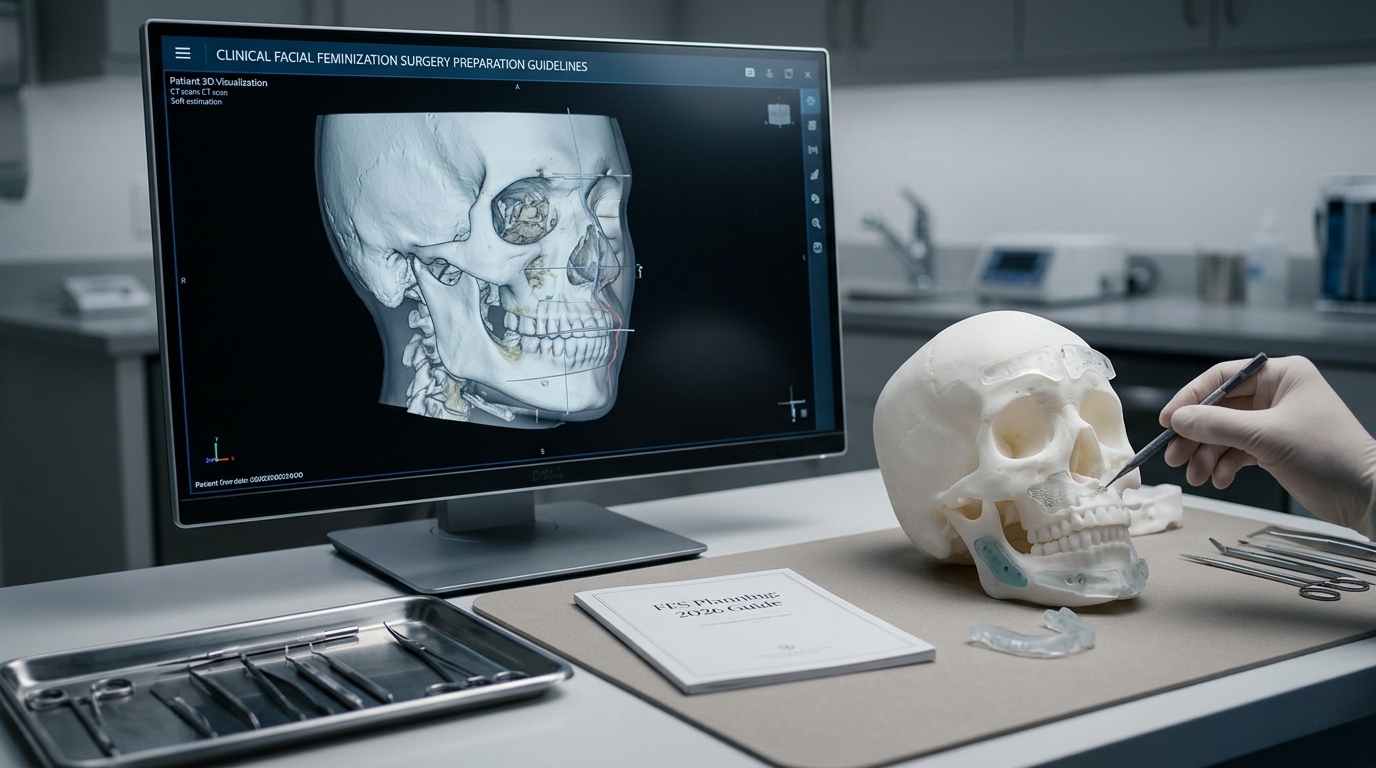

Gesichtsfeminisierung Die geschlechtsangleichende Operation (FFS) hat sich zu einem wegweisenden Bereich entwickelt, der Transfrauen die Möglichkeit bietet, ihre Gesichtszüge an ihre Geschlechtsidentität anzupassen. Zu den komplexesten und wirkungsvollsten Eingriffen gehört die Typ 3 Stirnverkleinerung, Es handelt sich um eine chirurgische Technik zur Korrektur ausgeprägter Augenbrauenwülste und Stirnknochenstrukturen. Bei diesem Eingriff geht es nicht nur um Ästhetik – es ist eine sorgfältige Rekonstruktion der vorderen Stirnhöhlenwand, um eine weichere, femininere Kontur zu erzielen. Die Komplexität dieser Operation erfordert jedoch ein tiefes Verständnis ihrer Funktionsweise. anatomische Feinheiten, Verfahrensschritte und potenzielle Risiken um sowohl Sicherheit als auch optimale Ergebnisse zu gewährleisten.
In diesem Leitfaden gehen wir näher auf die Operationstechniken, anatomische Gegebenheiten und Risiken im Zusammenhang mit Typ 3 Stirnverkleinerung. Ob Sie als Patient Ihre Optionen erkunden oder als medizinische Fachkraft nach Erkenntnissen suchen, dieser Artikel bietet Ihnen eine technische, aber dennoch verständliche Aufschlüsselung was dieses Verfahren zu einem Eckpfeiler der FFS macht.
Inhaltsverzeichnis
Stirnverkleinerung Typ 3 verstehen: Was zeichnet sie aus?
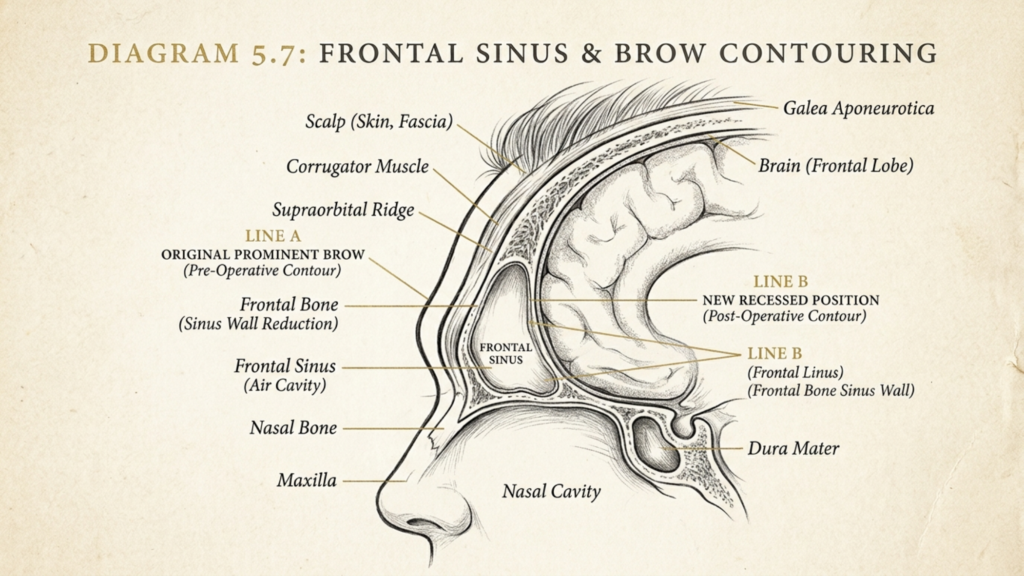
Typ 3 Stirnverkleinerung, auch bekannt als Rückverlagerung der Stirnhöhle oder Kranioplastik Typ 3, zeichnet sich durch seinen Fokus auf die Vorderwand der Stirnhöhle. Im Gegensatz zu den Verfahren des Typs 1 oder 2, bei denen Knochen abgetragen oder teilweise umgeformt werden, erfordert Typ 3 die vollständige Entfernung, Umformung und Neupositionierung der Vorderwand. Diese Technik eignet sich besonders für Personen mit markante Überaugenwülste und tiefe Stirnhöhlen, wenn einfachere Methoden unzureichend wären oder das Risiko bestünde, die Nasennebenhöhlen freizulegen (Mittermiller, 2025).
Der Hauptunterschied Der Vorteil von Typ 3 liegt in seiner Fähigkeit, ein dramatische Feminisierung Durch die Neupositionierung der vorderen Stirnwand wird die Stirnpartie geglättet. Dieser Ansatz reduziert nicht nur den Brauenbogen, sondern sorgt auch für eine sanftere, harmonischere Stirnkontur, die den femininen Gesichtszügen entspricht.
Schrittweise chirurgische Vorgehensweise: Entfernung, Umformung und Ersatz der Vorderwand
Das Stirnverkleinerungsverfahren Typ 3 ist ein mehrstufiger Prozess Dies erfordert Präzision, anatomische Fachkenntnisse und moderne chirurgische Instrumente. Nachfolgend finden Sie eine detaillierte Aufschlüsselung der einzelnen Phasen:
1. Präoperative Planung und Bildgebung
Vor der Operation, umfassende Bewertung wird durchgeführt mit 3D-CT-Scans und virtueller Operationsplanungssoftware. Dieser Schritt ist entscheidend für:
- Messung der Stirnhöhlenabmessungen um den Umfang der erforderlichen Knochenentfernung und -umformung zu bestimmen.
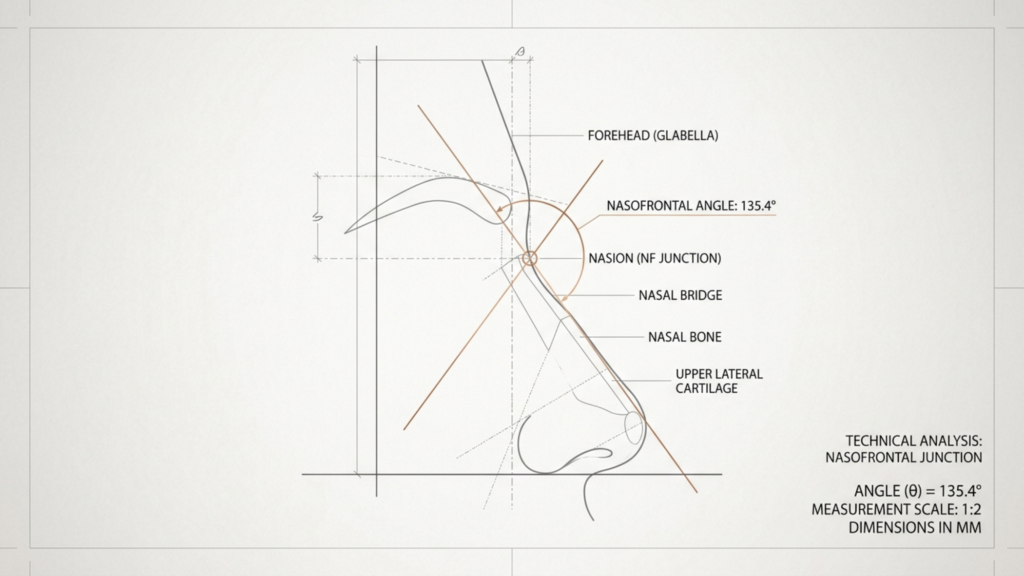
- Visualisierung des nasofrontalen Übergangs um Komplikationen wie Liquorverlust zu vermeiden.
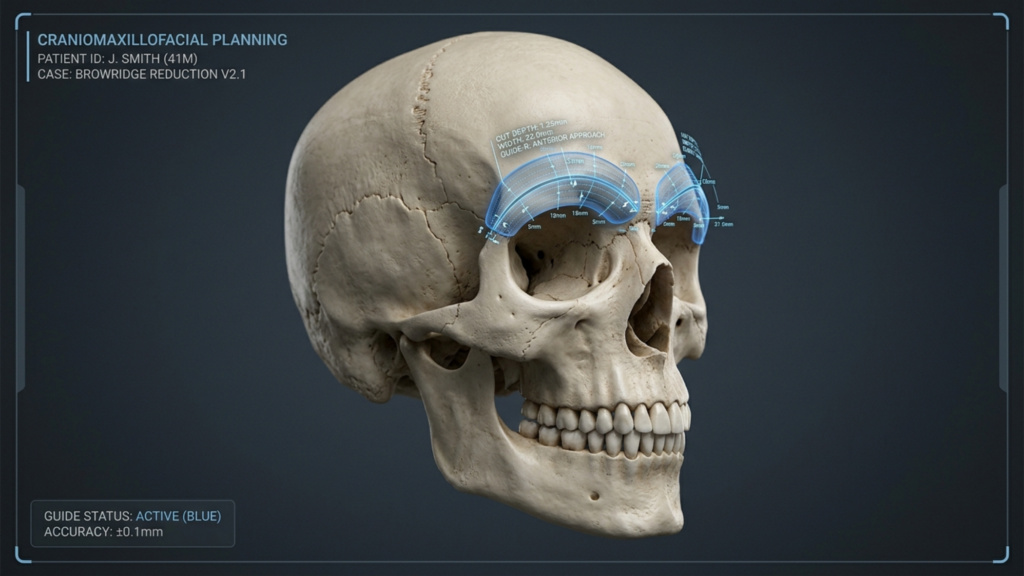
- Entwicklung patientenspezifischer Schnittführungen um Präzision während der Osteotomie zu gewährleisten (Narrative Review of Facial Gender Surgery, 2025).
2. Einschnitt und Freilegung
Der Chirurg macht eine Koronarschnitt (entlang des Haaransatzes oder innerhalb der Kopfhaut), um Zugang zum Stirnbein zu erhalten. Dieser Schnitt wird strategisch platziert, um:
- Sichtbare Narben minimieren indem man es im Haaransatz versteckt.
- Das Perikranium erhalten (die den Knochen bedeckende Membran), um die Blutversorgung aufrechtzuerhalten und das Infektionsrisiko zu verringern.
3. Osteotomie: Entfernung der Vorderwand
Verwenden Präzisionschirurgische Instrumente, Der Chirurg führt eine Osteotomie durch, um Entfernen Sie die Vorderwand der Stirnhöhle.. Dieser Schritt beinhaltet:
- Den Knochen durchtrennen entlang vorgeplanter Linien, um eine “Knochenklappe” zu bilden.”
- Das Knochensegment vorsichtig anheben um eine Beschädigung der Stirnhöhle oder umliegender Strukturen zu vermeiden.
- Entfernung etwaiger knöcherner Septen innerhalb der Nasennebenhöhlen, um eine glatte innere Kontur zu gewährleisten (Feminisierung der Stirn, 2024).
4. Umformung des Knochenlappens
Nach dem Entfernen ist der Knochenlappen auf einem sterilen Feld neu geformt. Dies beinhaltet:
- Ausfräsen der Innenfläche um die Projektion zu verringern und eine sanftere Kontur zu erzeugen.
- Die Form anpassen um der gewünschten femininen Ästhetik zu entsprechen, oft unter Verwendung von Titanplatten oder Schrauben zur Stabilisierung.
- Sicherstellung der Symmetrie mit dem Rest der Gesichtsstruktur (Multifragment-Onlay-Rekonstruktion in Stirnkonturierung Chirurgie, 2025).
5. Repositionierung und Fixierung
Der neu geformte Knochenlappen ist neu positioniert an einer weiter hinten liegenden und feminisierten Position. Dieser Schritt umfasst:
- Knochen sichern mit Titanplatten und Schrauben um Stabilität und eine ordnungsgemäße Heilung zu gewährleisten.
- Verschließen des Schnitts mit resorbierbaren Fäden, um die Narbenbildung zu minimieren.
- Anlegen eines Kompressionsverbandes um Schwellungen zu reduzieren und die neue Kontur zu stützen.
Anatomische Betrachtungen: Die Stirnhöhle und die umliegenden Strukturen
Der Stirnhöhle ist eine entscheidende anatomische Struktur bei der Stirnverkleinerung Typ 3. Größe, Tiefe und Beziehung Die Lage der umliegenden Knochen und Gewebe beeinflusst unmittelbar den chirurgischen Zugang und die potenziellen Risiken. Wichtige anatomische Aspekte sind:
1. Anatomie der Stirnhöhle
Die Stirnhöhle ist eine hohler, luftgefüllter Hohlraum Sie befindet sich im Stirnbein. Ihre Vorderwand bildet den Augenbrauenbogen, während die Hinterwand an die vordere Schädelgrube angrenzt. Zu den wichtigsten Merkmalen gehören:
- Variabilität in Größe und FormDie Tiefe der Nasennebenhöhlen kann von flach bis tief reichen, was die Komplexität des Eingriffs beeinflusst.
- Dicke der VorderwandDickere Knochen erfordern unter Umständen eine aggressivere Umformung, während dünnere Knochen das Risiko einer Freilegung der Nasennebenhöhlen erhöhen.
- Vorhandensein von KnochenseptenInnere Unterteilungen innerhalb der Nasennebenhöhlen können die Umformung erschweren und erfordern eine sorgfältige Entfernung.

2. Beziehung zum nasofrontalen Übergang
Der nasofrontale Verbindung Hier trifft die Stirnhöhle auf die Nasenbeine. Dieser Bereich ist von entscheidender Bedeutung, weil:
- Unsachgemäße Umformung kann die Nasenwege beeinträchtigen oder die Gesichtssymmetrie verändern.
- Überresektion kann zu einem “eingefallenen” Aussehen führen oder die Funktion der Nasennebenhöhlen beeinträchtigen.
- Präzise Messungen sind unerlässlich, um einen natürlichen Übergang zwischen Stirn und Nasenrücken aufrechtzuerhalten (Frontal Sinus Setback in Gesichtsfeminisierung Chirurgie, 2025).
3. Umgebendes Weichgewebe und Nerven
Die Stirnhöhle ist umgeben von Weichteile, Muskeln und Nerven Diese Strukturen müssen während der Operation erhalten bleiben. Zu den wichtigsten Strukturen gehören:
- Supratrochlear- und SupraorbitalnervenVerantwortlich für die Empfindungen in Stirn und Kopfhaut. Schäden können zu Taubheitsgefühlen oder chronischen Schmerzen führen.
- StirnmuskelHebt die Augenbrauen an und trägt zur Mimik bei. Eine übermäßige Präparation kann zu einer Brauenptose (Herabhängen der Brauen) führen.
- PerikraniumEine gut durchblutete Membran, die den Knochenlappen ernährt. Ihre Erhaltung ist entscheidend für die Heilung und die Verringerung des Infektionsrisikos.
Mögliche Risiken und Komplikationen: Was Patienten wissen sollten
Die Stirnreduktion Typ 3 ist zwar hochwirksam, aber nicht ohne Risiken. Es ist daher unerlässlich, diese potenziellen Komplikationen zu verstehen. fundierte Entscheidungsfindung und postoperative Versorgung. Im Folgenden sind die häufigsten Risiken aufgeführt:
1. Liquorverlust
Ein Liquorverlust tritt auf, wenn Hinterwand der Stirnhöhle wird während der Osteotomie versehentlich verletzt. Diese Komplikation ist schwerwiegend, weil:
- Es kann zu Infektionen führen. wie beispielsweise Meningitis, wenn sie nicht umgehend behandelt wird.
- Zu den Symptomen gehören Ausfluss von klarer Flüssigkeit aus der Nase oder der Operationswunde, Kopfschmerzen und Übelkeit.
- Die Behandlung umfasst Chirurgische Reparatur mit einem Dura-Transplantat und möglicher Einlage einer Lumbaldrainage (Stirnrekonstruktion Typ 1, 2 oder 3, 2025).
2. Infektion und Knochenresorption
An der Operationsstelle können Infektionen auftreten, insbesondere wenn Das Perikranium ist beschädigt. oder es werden Fremdmaterialien (z. B. Titanplatten) verwendet. Zu den Risiken gehören:
- KnochenresorptionDer Körper kann den umgeformten Knochenlappen resorbieren, was zu Asymmetrien oder Konturunregelmäßigkeiten führen kann.
- Chronische SinusitisWenn die Schleimhaut der Nasennebenhöhlen beschädigt wird, kann dies zu einer lang anhaltenden Entzündung führen.
- Hardware-KomplikationenPlatten oder Schrauben können tastbar werden oder sich infizieren, was eine Entfernung erforderlich macht (Multifragment-Onlay-Rekonstruktion in Stirnkonturierung Chirurgie, 2025).
3. Sensorische Veränderungen und Nervenschädigung
Beschädigung des Supratrochlear- oder Supraorbitalnerven kann zu vorübergehenden oder dauerhaften sensorischen Veränderungen führen. Patienten können Folgendes erleben:
- Taubheitsgefühl oder Kribbeln auf der Stirn oder der Kopfhaut.
- Chronischer Schmerz aufgrund von Nervenreizung oder Narbenbildung.
- Veränderte Gesichtsausdrücke wenn der Stirnmuskel betroffen ist.
4. Konturunregelmäßigkeiten und Asymmetrie
Selbst bei sorgfältigster Planung, Asymmetrie oder ungleichmäßige Konturen kann auftreten aufgrund von:
- Ungleichmäßige Knochenumformung während des Eingriffs.
- Postoperative Schwellung das sich ungleichmäßig auflöst.
- Hardware-Sichtbarkeit wenn Platten oder Schrauben nicht bündig mit dem Knochen positioniert sind.
5. Langfristige funktionelle und ästhetische Ergebnisse
Während die Stirnverkleinerung Typ 3 darauf abzielt, die Feminisierung zu verstärken, hängen die Langzeitergebnisse von folgenden Faktoren ab:
- Richtige Knochenheilung: Sicherstellen, dass sich der umgeformte Knochen reibungslos in die umgebenden Strukturen integriert.
- Narbenmanagement: Minimierung der sichtbaren Narbenbildung durch sorgfältige Schnittführung und postoperative Versorgung.
- Patientenzufriedenheit: Die Erwartungen an realistische Ergebnisse anpassen, da die individuelle Anatomie variiert.

Postoperative Versorgung und Genesung: Sicherstellung einer optimalen Heilung
Die Genesung nach einer Stirnverkleinerung Typ 3 ist eine schrittweiser Prozess Dies erfordert Geduld und die Einhaltung der postoperativen Anweisungen. Im Folgenden finden Sie wichtige Schritte zur Unterstützung der Heilung und zur Minimierung von Komplikationen:
1. Unmittelbare postoperative Versorgung
Konzentrieren Sie sich in den ersten 48 Stunden auf Folgendes:
- Schwellungen behandeln mit kalten Kompressen und Hochlagerung des Kopfes.
- Einnahme verschriebener Schmerzmittel Um Unannehmlichkeiten vorzubeugen.
- Vermeiden Sie Anstrengung und schweres Heben. um einen Anstieg des Hirndrucks zu verhindern.
2. Die ersten zwei Wochen: Überwachung und Hygiene
Während dieser Phase:
- Halten Sie die Operationsstelle sauber und trocken. um Infektionen vorzubeugen.
- Nehmen Sie die Nachsorgetermine wahr. um den Heilungsprozess zu überwachen und etwaige Bedenken auszuräumen.
- Vermeiden Sie Rauchen und Alkohol., da sie die Heilung beeinträchtigen und das Infektionsrisiko erhöhen können.
3. Wochen 3–6: Allmähliche Rückkehr zu normalen Aktivitäten
Wenn die Schwellung nachlässt:
- Nehmen Sie leichte Aktivitäten wieder auf. wie zum Beispiel Gehen oder Büroarbeit.
- Vermeiden Sie Kontaktsportarten oder anstrengende körperliche Betätigung bis Sie von Ihrem Chirurgen die Freigabe erhalten.
- Verwenden Sie Silikongel oder Silikonmatten. um die Narbenbildung zu minimieren.
4. Langzeitpflege: Erhaltung der Ergebnisse
Um dauerhafte Ergebnisse zu gewährleisten:
- Schützen Sie Ihre Stirn vor Verletzungen. um eine Verschiebung des Knochenlappens zu vermeiden.
- Vereinbaren Sie einen Nachsorgetermin mit Ihrem Chirurgen. jährlich, um die Knochenstabilität zu überwachen und eventuelle Spätkomplikationen zu behandeln.
- Erwägen Sie nicht-chirurgische Verbesserungsmöglichkeiten. beispielsweise mit Fillern oder Botox, um die Konturen weiter zu verfeinern.

Alternativen zur Stirnverkleinerung Typ 3: Weniger invasive Optionen
Die Stirnreduktion Typ 3 ist zwar sehr effektiv, aber möglicherweise nicht für jeden geeignet. Alternativen sind:
1. Stirnkonturierung Typ 1 und Typ 2
Für Personen mit mildere Augenbrauenwölbung, Verfahren des Typs 1 oder Typs 2 können ausreichend sein:
- Typ 1: Beinhaltet Knochenraspeln ohne Entfernung der Vorderwand. Ideal für kleinere Reduktionen.
- Typ 2: Kombiniert partielle Osteotomie Mit Formkorrektur, geeignet bei mäßig ausgeprägten Augenbrauenwülsten.
2. Nicht-operative Optionen
Für diejenigen, die suchen minimale Ausfallzeiten, Zu den nicht-chirurgischen Alternativen gehören:
- HautfüllerTemporäre Volumenzunahme zur Milderung der Augenbrauenwülste.
- Botox-Injektionen: Entspannen Sie den Stirnmuskel, um die Stirnwölbung zu reduzieren.
- Fetttransplantation: Verwendet körpereigenes Fett des Patienten zur Konturierung der Stirn.
3. Kombinierte Verfahren
Für eine umfassende Feminisierung kann die Stirnverkleinerung Typ 3 mit folgenden Methoden kombiniert werden:
- Haaransatzverlagerung um die Stirnhöhe zu reduzieren.
- Nasenkorrektur zur Verfeinerung der Nasenkonturen.
- Brauenlift um die Augenbrauen anzuheben und so ein jugendlicheres Aussehen zu erzielen.
Fazit: Ästhetik, Sicherheit und Patientenwünsche im Einklang
Stirnreduktion Typ 3 ist eine leistungsstarkes Werkzeug in der Gesichtsfeminisierungschirurgie, die transformative Ergebnisse für Transfrauen bietet, die sich eine femininere Stirnkontur wünschen. Ihre Komplexität erfordert jedoch Fachkompetenz, Präzision und ein umfassendes Verständnis der Anatomie um Risiken wie Liquorverlust, Infektionen und Konturunregelmäßigkeiten zu minimieren.
Patienten sollten die Entscheidung für eine Stirnverkleinerung Typ 3 in Absprache mit einem Facharzt treffen. staatlich geprüfter Chirurg der sich auf FFS spezialisiert hat. Durch Abwägen der Vorteile gegen die Risiken und Erforschung von Alternativen können Einzelpersonen ein harmonisches Gleichgewicht zwischen Ästhetik und Sicherheit, wodurch letztendlich ihr Selbstvertrauen und ihre Übereinstimmung mit ihrer Geschlechtsidentität gestärkt werden.
Für diejenigen, die diesen Eingriff in Erwägung ziehen, Dr. MFO-Klinik bietet spezialisierte Expertise in der Stirnreduktion Typ 3 und gewährleistet so eine individuelle Betreuung und optimale Ergebnisse. Kontaktieren Sie uns noch heute Vereinbaren Sie einen Beratungstermin und beginnen Sie Ihre Reise zu einem feminineren Aussehen.
Häufig gestellte Fragen
Worin besteht der Unterschied zwischen Stirnverkleinerung Typ 1, Typ 2 und Typ 3?
Typ 1 beinhaltet das Abtragen von Knochen zur Reduzierung geringfügiger Veränderungen, Typ 2 kombiniert eine partielle Osteotomie mit einer Umformung bei mäßig ausgeprägten Augenbrauenwülsten, und Typ 3 erfordert die vollständige Entfernung, Umformung und Repositionierung der vorderen Stirnhöhlenwand zur deutlichen Feminisierung. Typ 3 ist der komplexeste Eingriff und ist Personen mit ausgeprägten Augenbrauenwülsten und tiefen Stirnhöhlen vorbehalten.
Wie lange dauert die Genesung nach einer Stirnverkleinerung Typ 3?
Die Genesung verläuft individuell, folgt aber im Allgemeinen diesem Zeitplan: 1–2 Wochen für anfängliche Schwellungen und Beschwerden, 3–6 Wochen für die schrittweise Rückkehr zu normalen Aktivitäten und bis zu 6 Monate für das endgültige Ergebnis, wenn die Schwellung vollständig abgeklungen ist. Patienten sollten anstrengende Aktivitäten mindestens 6 Wochen lang vermeiden, um eine optimale Heilung zu gewährleisten.
Was sind die Anzeichen eines Liquorverlusts nach einer Stirnverkleinerung Typ 3?
Zu den Symptomen eines Liquorverlusts gehören klarer Ausfluss aus Nase oder Operationswunde, anhaltende Kopfschmerzen, Übelkeit und ein salziger Geschmack im Mund. Bei Auftreten dieser Symptome suchen Sie bitte umgehend einen Arzt auf, da unbehandelte Liquorverluste zu schweren Infektionen wie Meningitis führen können.
Kann eine Stirnverkleinerung Typ 3 mit anderen FFS-Eingriffen kombiniert werden?
Ja, eine Stirnverkleinerung Typ 3 wird häufig mit Eingriffen wie einer Haaransatzverlagerung kombiniert., Nasenkorrektur, und Augenbrauenliftings können zu einer umfassenden Feminisierung des Gesichts beitragen. Die Kombination verschiedener Eingriffe kann die Gesamtharmonie verbessern und die Notwendigkeit mehrerer Operationen reduzieren.
Welche Risiken birgt die Verwendung von Titanplatten bei einer Stirnreduktion Typ 3?
Titanplatten bieten zwar Stabilität, bergen aber Risiken wie das Tastbarsein der Platten unter der Haut, Infektionen und Knochenabbau im Bereich der Platten. In seltenen Fällen müssen die Platten entfernt werden, wenn sie Beschwerden oder Komplikationen verursachen.
Wie kann ich die Narbenbildung nach einer Stirnverkleinerung Typ 3 minimieren?
Um die Narbenbildung zu minimieren, befolgen Sie die Anweisungen Ihres Chirurgen zur Nachsorge. Diese können die Verwendung von Silikongel oder -pflastern, das Vermeiden von Sonneneinstrahlung und das Sauberhalten und Befeuchten der Operationswunde umfassen. Die meisten Narben verblassen mit der Zeit deutlich, insbesondere wenn sie im Haaransatz liegen.
Ist eine Stirnverkleinerung vom Typ 3 für jeden geeignet?
Die Stirnreduktion Typ 3 eignet sich ideal für Personen mit ausgeprägten Augenbrauenwülsten und tiefen Stirnhöhlen. Bei weniger stark ausgeprägten Augenbrauenwülsten können mit Eingriffen des Typs 1 oder 2 zufriedenstellende Ergebnisse erzielt werden. Eine Beratung mit einem spezialisierten Facharzt ist empfehlenswert. FFS-Chirurg Es ist unerlässlich, die beste Vorgehensweise auf Grundlage Ihrer Anatomie und Ihrer Ziele zu bestimmen.
Was kann ich während des Beratungsgesprächs zur Stirnverkleinerung Typ 3 erwarten?
Im Rahmen des Beratungsgesprächs wird Ihr Chirurg Ihre Krankengeschichte einsehen, eine körperliche Untersuchung durchführen und mithilfe von 3D-Bildgebung die Anatomie Ihrer Stirnhöhle beurteilen. Er wird mit Ihnen die einzelnen Schritte des Eingriffs, die Risiken und die zu erwartenden Ergebnisse sowie Alternativen wie nicht-operative oder minimalinvasive Operationsverfahren besprechen.