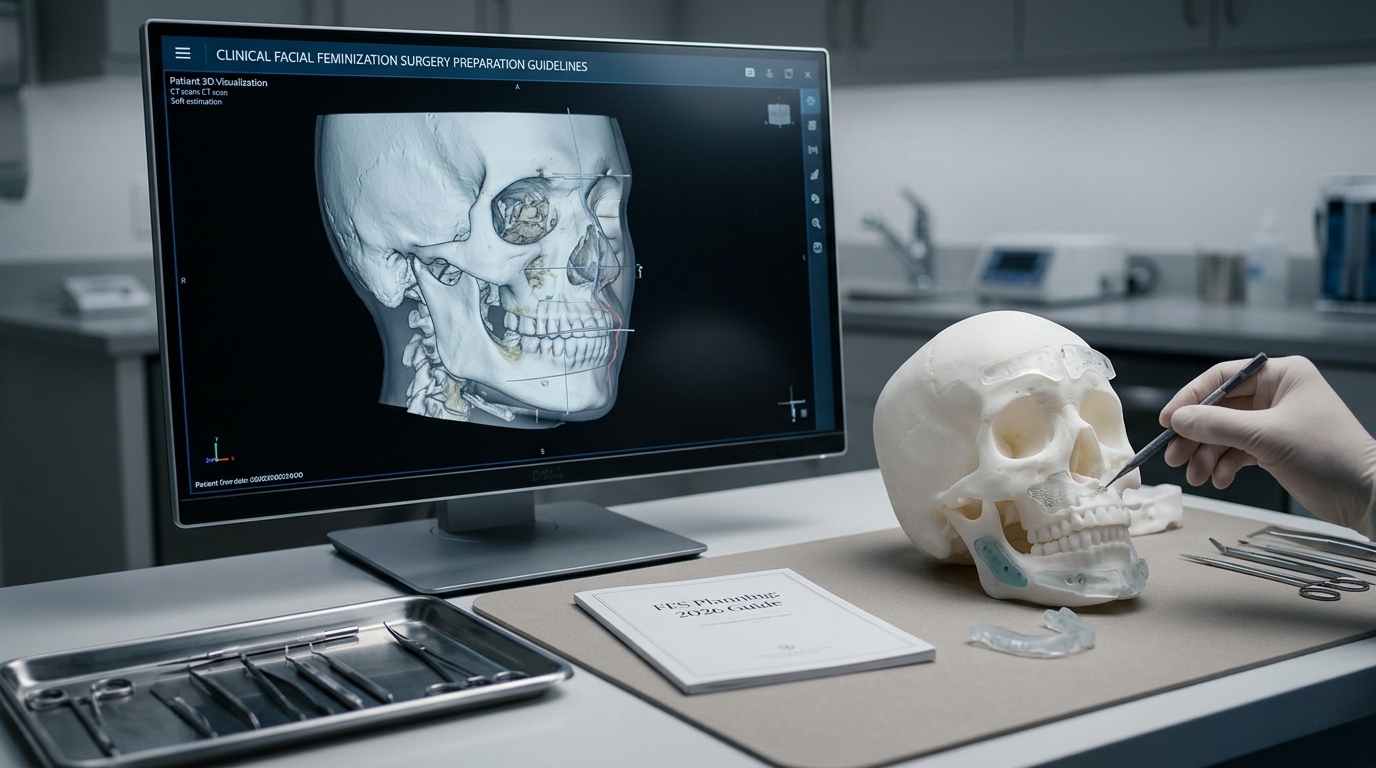

Feminización Facial La cirugía de feminización facial (FFS) se ha convertido en un campo transformador, que ofrece a las mujeres transgénero la oportunidad de alinear sus rasgos faciales con su identidad de género. Entre los procedimientos más complejos e impactantes se encuentra la cirugía de feminización facial (FFS). Tipo 3 Reducción de la frente, una técnica quirúrgica diseñada para abordar las prominentes crestas supraorbitarias y las estructuras del hueso frontal. Este procedimiento no se trata simplemente de estética, sino de una reconstrucción meticulosa de la pared anterior del seno frontal, remodelándola para lograr un contorno más suave y femenino. Sin embargo, la complejidad de esta cirugía exige una comprensión profunda de su complejidades anatómicas, pasos del procedimiento y riesgos potenciales para garantizar tanto la seguridad como los mejores resultados.
En esta guía, profundizamos en el técnicas quirúrgicas, consideraciones anatómicas y riesgos asociado con el Tipo 3 Reducción de la frente. Ya sea que usted sea un paciente que explora sus opciones o un profesional médico que busca información, este artículo le brinda una Desglose técnico pero accesible de lo que hace de este procedimiento una piedra angular de la FFS.
Tabla de contenido
Comprender la reducción de frente tipo 3: ¿Qué la diferencia de otras cirugías?
Tipo 3 Reducción de la frente, también conocido como retroceso del seno frontal o Craneoplastia tipo 3, se distingue por su enfoque en el pared anterior del seno frontal. A diferencia de los procedimientos de tipo 1 o tipo 2, que implican el limado o la remodelación parcial del hueso, el tipo 3 requiere la eliminación completa, remodelación y reposicionamiento. de la pared anterior. Esta técnica es particularmente adecuada para personas con arcos superciliares prominentes y senos frontales profundos, donde los métodos más sencillos serían insuficientes o correrían el riesgo de exponer el seno (Mittermiller, 2025).
El distinción clave de Tipo 3 radica en su capacidad para lograr una feminización dramática de la frente aprovechando el reposicionamiento de la pared anterior. Este enfoque no solo reduce el arco superciliar, sino que también crea un contorno de frente más suave y armonioso, acorde con la estética facial femenina.
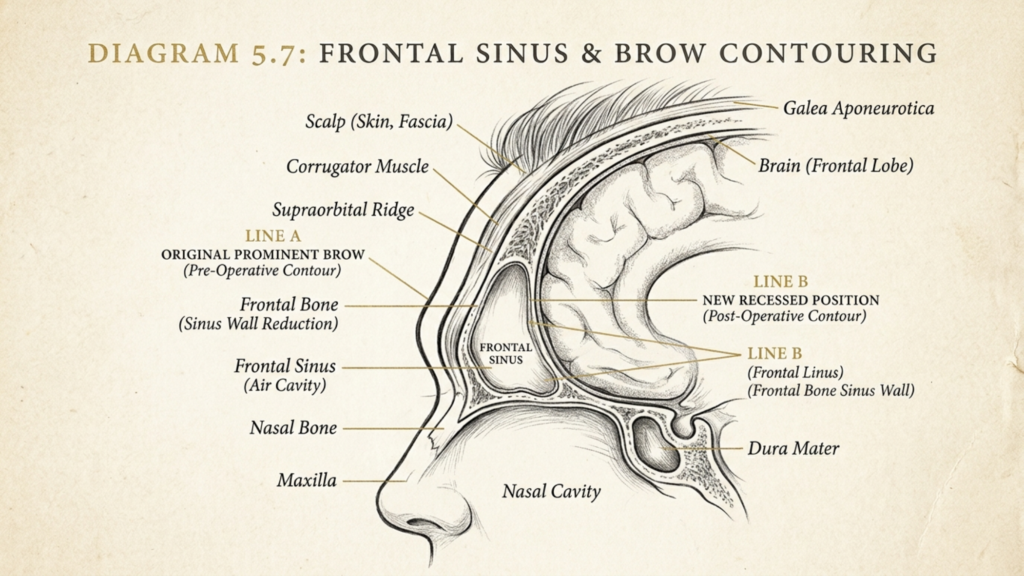
Procedimiento quirúrgico paso a paso: Extirpación, remodelación y reemplazo de la pared anterior.
El procedimiento de reducción de frente tipo 3 es un proceso de varios pasos Esto requiere precisión, conocimientos anatómicos y herramientas quirúrgicas avanzadas. A continuación se presenta un desglose detallado de cada etapa:
1. Planificación preoperatoria e imágenes
Antes de la cirugía, un evaluación integral se lleva a cabo utilizando tomografías computarizadas 3D y software de planificación quirúrgica virtual. Este paso es fundamental para:
- Medición de las dimensiones del seno frontal para determinar la extensión de la extirpación ósea y la remodelación necesarias.
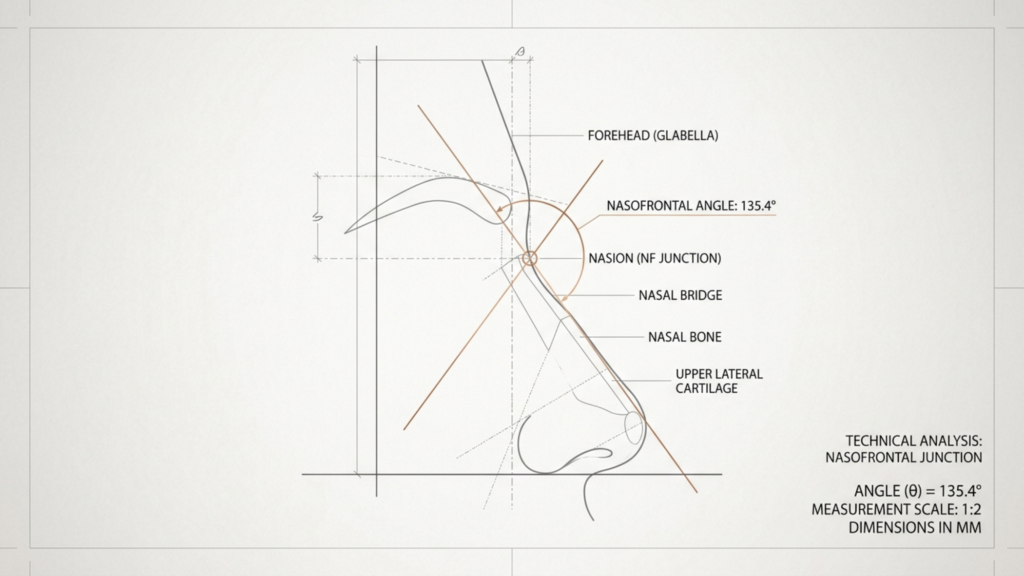
- Visualización de la unión nasofrontal para evitar complicaciones como fugas de líquido cefalorraquídeo (LCR).
- Diseño de guías de corte personalizadas para cada paciente. para garantizar la precisión durante la osteotomía (Revisión narrativa de la cirugía de género facial, 2025).
2. Incisión y exposición
El cirujano realiza una incisión coronal (a lo largo de la línea del cabello o dentro del cuero cabelludo) para acceder al hueso frontal. Esta incisión se coloca estratégicamente para:
- Minimizar las cicatrices visibles ocultándolo dentro de la línea del cabello.
- Conservar el pericráneo (la membrana que recubre el hueso) para mantener el suministro de sangre y reducir el riesgo de infección.
3. Osteotomía: Extracción de la pared anterior
Usando herramientas quirúrgicas de precisión, el cirujano realiza una osteotomía para extirpar la pared anterior del seno frontal. Este paso implica:
- Cortar el hueso siguiendo líneas preestablecidas para crear un “solapamiento óseo”.”
- Levantando con cuidado el segmento óseo para evitar dañar el seno frontal o las estructuras circundantes.
- Eliminar cualquier tabique óseo. dentro del seno para asegurar un contorno interno suave (Feminización de la frente, 2024).
4. Remodelación del colgajo óseo
Una vez retirado, el colgajo óseo es remodelada en un campo estéril. Esto implica:
- Desbastar la superficie interior para reducir su proyección y crear un contorno más suave.
- Ajustando la forma para que coincida con la estética femenina deseada, a menudo utilizando placas o tornillos de titanio para la estabilización.
- Garantizar la simetría con el resto de la estructura facial (Reconstrucción de superposición de múltiples fragmentos en Contorno de la frente Cirugía, 2025).
5. Reposicionamiento y fijación
El colgajo óseo remodelado es reposicionado en una ubicación más posterior y feminizada. Este paso incluye:
- Asegurar el hueso con placas y tornillos de titanio para garantizar la estabilidad y una correcta cicatrización.
- Cierre de la incisión con suturas reabsorbibles para minimizar las cicatrices.
- Aplicación de un vendaje compresivo para reducir la hinchazón y dar forma al nuevo contorno.
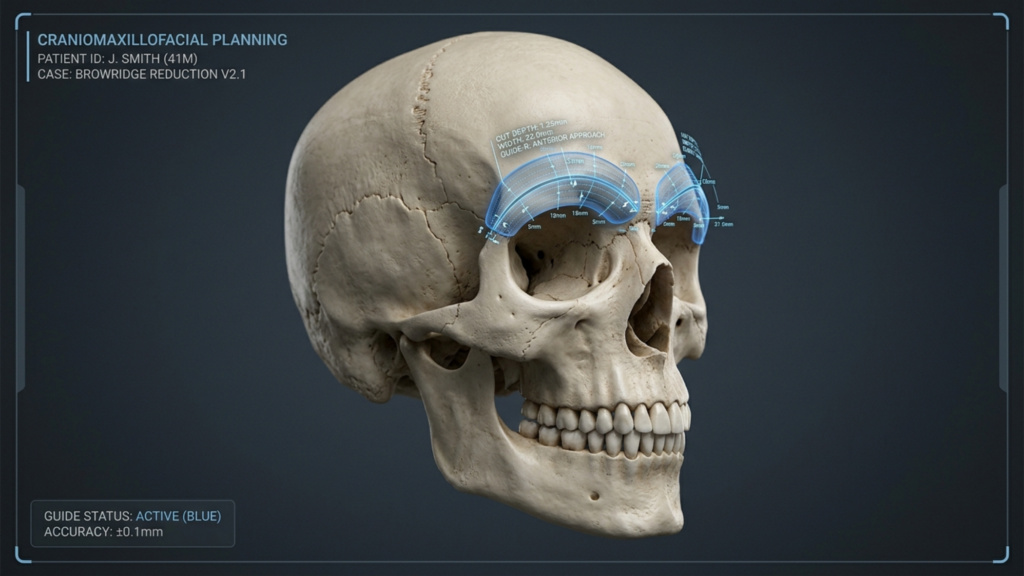
Consideraciones anatómicas: El seno frontal y las estructuras circundantes
El seno frontal es una estructura anatómica crítica en la reducción de frente tipo 3. tamaño, profundidad y relación La relación con los huesos y tejidos circundantes influye directamente en el abordaje quirúrgico y los riesgos potenciales. Las consideraciones anatómicas clave incluyen:
1. Anatomía del seno frontal
El seno frontal es un cavidad hueca llena de aire Se encuentra dentro del hueso frontal. Su pared anterior forma el arco superciliar, mientras que la pared posterior limita con la fosa craneal anterior. Sus características principales incluyen:
- Variabilidad en tamaño y formaEl seno paranasal puede variar desde poco profundo hasta profundamente retraído, lo que afecta la complejidad del procedimiento.
- Espesor de la pared anteriorUn hueso más grueso puede requerir una remodelación más agresiva, mientras que un hueso más delgado aumenta el riesgo de exposición del seno maxilar.
- Presencia de tabiques óseosLas divisiones internas dentro del seno pueden complicar la remodelación y requieren una extracción cuidadosa.

2. Relación con la unión nasofrontal
El unión nasofrontal Es donde el seno frontal se une a los huesos nasales. Esta zona es fundamental porque:
- Remodelación inadecuada puede obstruir las vías respiratorias nasales o alterar la simetría facial.
- Resección excesiva puede provocar una apariencia hundida o comprometer la función de los senos paranasales.
- Mediciones precisas son esenciales para mantener una transición natural entre la frente y el puente nasal (retroceso del seno frontal en Feminización Facial Cirugía, 2025).
3. Tejidos blandos y nervios circundantes
El seno frontal está rodeado por tejidos blandos, músculos y nervios que deben preservarse durante la cirugía. Las estructuras clave incluyen:
- Nervios supratroclear y supraorbitarioResponsable de la sensibilidad en la frente y el cuero cabelludo. Su daño puede provocar entumecimiento o dolor crónico.
- Músculo frontalEleva las cejas y contribuye a las expresiones faciales. Una disección excesiva puede provocar ptosis de las cejas (caída).
- Pericráneo: Membrana vascular que nutre el colgajo óseo. Preservarla es fundamental para la cicatrización y para reducir los riesgos de infección.
Riesgos y complicaciones potenciales: lo que los pacientes deben saber.
Si bien la reducción de frente tipo 3 es muy efectiva, no está exenta de riesgos. Comprender estas posibles complicaciones es esencial para toma de decisiones informada y cuidados postoperatorios. A continuación se detallan los riesgos más comunes:
1. Fuga de líquido cefalorraquídeo (LCR)
Se produce una fuga de LCR si la pared posterior del seno frontal Se produce una perforación accidental durante la osteotomía. Esta complicación es grave porque:
- Puede provocar infecciones como la meningitis si no se trata rápidamente.
- Los síntomas incluyen secreción de líquido transparente por la nariz o el lugar de la incisión, dolores de cabeza y náuseas.
- El tratamiento implica Reparación quirúrgica con injerto dural y posible colocación de drenaje lumbar (reconstrucción de frente tipo 1, 2 o 3, 2025).
2. Infección y reabsorción ósea
Pueden producirse infecciones en el sitio quirúrgico, especialmente si la El pericráneo está dañado o se utilizan materiales extraños (por ejemplo, placas de titanio). Los riesgos incluyen:
- reabsorción óseaEl cuerpo puede absorber el colgajo óseo remodelado, lo que puede provocar asimetría o irregularidades en el contorno.
- sinusitis crónicaSi la mucosa sinusal se ve afectada, puede producirse una inflamación a largo plazo.
- complicaciones de hardware: Las placas o tornillos pueden volverse palpables o infectarse, lo que requiere su extracción (Reconstrucción de superposición de múltiples fragmentos en Contorno de la frente Cirugía, 2025).
3. Alteraciones sensoriales y daño nervioso
Daños a la nervios supratrocleares o supraorbitarios puede provocar cambios sensoriales temporales o permanentes. Los pacientes pueden experimentar:
- Entumecimiento u hormigueo en la frente o el cuero cabelludo.
- Dolor crónico debido a irritación nerviosa o cicatrices.
- Expresiones faciales alteradas si el músculo frontal está afectado.
4. Irregularidades y asimetría del contorno
Incluso con una planificación meticulosa, asimetría o contornos desiguales puede ocurrir debido a:
- Remodelación ósea desigual durante el procedimiento.
- Hinchazón postoperatoria que se resuelve de forma desigual.
- Visibilidad del hardware si las placas o los tornillos no están colocados al ras del hueso.
5. Resultados funcionales y estéticos a largo plazo
Si bien la reducción de frente tipo 3 está diseñada para realzar la feminización, los resultados a largo plazo dependen de:
- Curación ósea adecuada: Asegurar que el hueso remodelado se integre sin problemas con las estructuras circundantes.
- Manejo de cicatrices: Minimizar las cicatrices visibles mediante una cuidadosa colocación de las incisiones y los cuidados postoperatorios.
- Satisfacción del paciente: Alinear las expectativas con resultados realistas, ya que la anatomía individual varía.

Cuidados y recuperación postoperatoria: Cómo garantizar una curación óptima
La recuperación de la reducción de frente tipo 3 es una proceso gradual Esto requiere paciencia y el cumplimiento de las instrucciones postoperatorias. A continuación, se detallan los pasos clave para favorecer la recuperación y minimizar las complicaciones:
1. Cuidados postoperatorios inmediatos
En las primeras 48 horas, concéntrese en:
- Controlar la hinchazón Con compresas frías y manteniendo la cabeza elevada.
- Tomar analgésicos recetados para anticiparse a la incomodidad.
- Evitar hacer esfuerzos o levantar objetos pesados para prevenir el aumento de la presión intracraneal.
2. Primeras dos semanas: Seguimiento e higiene
Durante esta fase:
- Mantenga la zona de la incisión limpia y seca. para prevenir la infección.
- Asista a las citas de seguimiento. para supervisar la recuperación y abordar cualquier inquietud.
- Evite fumar y consumir alcohol., ya que pueden dificultar la cicatrización y aumentar los riesgos de infección.
3. Semanas 3 a 6: Regreso gradual a las actividades normales.
A medida que disminuye la hinchazón:
- Reanudar las actividades ligeras como caminar o trabajar en un escritorio.
- Evite los deportes de contacto o el ejercicio extenuante. hasta que su cirujano lo autorice.
- Utilice gel o láminas de silicona. para minimizar las cicatrices.
4. Cuidados a largo plazo: Mantenimiento de los resultados
Para garantizar resultados duraderos:
- Proteja su frente de los traumatismos. para evitar el desplazamiento del colgajo óseo.
- Consulte con su cirujano para obtener más información. Anualmente para controlar la estabilidad ósea y abordar cualquier complicación tardía.
- Considere las mejoras no quirúrgicas. como rellenos o Botox para refinar aún más los contornos.

Alternativas a la reducción de frente tipo 3: Explorando opciones menos invasivas
Si bien la reducción de frente tipo 3 es muy efectiva, puede que no sea adecuada para todos. Las alternativas incluyen:
1. Contorneado de frente tipo 1 y tipo 2
Para personas con abombamiento de cejas más suave, Los procedimientos de tipo 1 o tipo 2 pueden ser suficientes:
- Tipo 1: Implica afeitado de huesos Sin extirpar la pared anterior. Ideal para reducciones menores.
- Tipo 2: Combinaciones osteotomía parcial Con remodelación, adecuada para cejas con un ligero relieve.
2. Opciones no quirúrgicas
Para aquellos que buscan tiempo de inactividad mínimo, Las alternativas no quirúrgicas incluyen:
- Rellenos dérmicos: Adición temporal de volumen para suavizar las cejas.
- inyecciones de bótox: Relaja el músculo frontal para reducir la prominencia de las cejas.
- Injerto de grasa: Utiliza la propia grasa del paciente para perfilar la frente.
3. Procedimientos combinados
Para una feminización completa, la reducción de frente tipo 3 se puede combinar con:
- avance de la línea del cabello para reducir la altura de la frente.
- rinoplastia para refinar los contornos nasales.
- levantamiento de cejas Para elevar las cejas y lograr una apariencia más juvenil.
Conclusión: Equilibrar la estética, la seguridad y los objetivos del paciente.
La reducción de frente tipo 3 es una herramienta poderosa en Cirugía de Feminización Facial, que ofrece resultados transformadores para mujeres transgénero que buscan un contorno de frente más femenino. Sin embargo, su complejidad exige experiencia, precisión y un profundo conocimiento de la anatomía. para mitigar riesgos como fugas de líquido cefalorraquídeo, infecciones e irregularidades en el contorno.
Para los pacientes, la decisión de someterse a una reducción de frente tipo 3 debe tomarse en consulta con un cirujano certificado que se especializa en FFS. Al sopesar los beneficios frente a los riesgos y explorar alternativas, las personas pueden lograr un equilibrio armonioso entre estética y seguridad, en última instancia, mejorando su confianza y su alineación con su identidad de género.
Para aquellos que estén considerando este procedimiento, Clínica Dr. MFO Ofrece experiencia especializada en la reducción de frente tipo 3, garantizando una atención personalizada y resultados óptimos. Contáctanos hoy Para programar una consulta y comenzar tu camino hacia una apariencia más femenina.
Preguntas frecuentes
¿Cuál es la diferencia entre la reducción de frente de tipo 1, tipo 2 y tipo 3?
El tipo 1 implica el limado óseo para reducciones menores, el tipo 2 combina la osteotomía parcial con la remodelación para abombamiento moderado de las cejas, y el tipo 3 requiere la extirpación, remodelación y reposicionamiento completos de la pared anterior del seno frontal para una feminización significativa. El tipo 3 es el más complejo y se reserva para personas con arcos superciliares prominentes y senos frontales profundos.
¿Cuánto tiempo dura la recuperación después de una reducción de frente tipo 3?
La recuperación varía, pero generalmente sigue este cronograma: de 1 a 2 semanas para la hinchazón y las molestias iniciales, de 3 a 6 semanas para retomar gradualmente las actividades normales y hasta 6 meses para obtener los resultados finales una vez que la hinchazón haya desaparecido por completo. Los pacientes deben evitar actividades extenuantes durante al menos 6 semanas para asegurar una correcta cicatrización.
¿Cuáles son los signos de una fuga de líquido cefalorraquídeo después de una reducción de frente tipo 3?
Los síntomas de una fuga de líquido cefalorraquídeo incluyen la salida de líquido transparente por la nariz o la incisión, dolores de cabeza persistentes, náuseas y un sabor salado en la boca. Si presenta alguno de estos síntomas, busque atención médica de inmediato, ya que las fugas de líquido cefalorraquídeo no tratadas pueden provocar infecciones graves como la meningitis.
¿Se puede combinar la reducción de frente tipo 3 con otros procedimientos de cirugía de feminización facial?
Sí, la reducción de frente tipo 3 a menudo se combina con procedimientos como el avance de la línea del cabello, rinoplastia, y levantamiento de cejas para lograr una feminización facial integral. La combinación de procedimientos puede mejorar la armonía general y reducir la necesidad de múltiples cirugías.
¿Cuáles son los riesgos del uso de placas de titanio en la reducción de frente tipo 3?
Si bien las placas de titanio brindan estabilidad, existen riesgos como la palpación del material de osteosíntesis (sentir las placas bajo la piel), infección y reabsorción ósea alrededor de las placas. En raras ocasiones, puede ser necesario retirar las placas si causan molestias o complicaciones.
¿Cómo puedo minimizar las cicatrices después de una reducción de frente tipo 3?
Para minimizar las cicatrices, siga las instrucciones de cuidados postoperatorios de su cirujano, que pueden incluir el uso de gel o láminas de silicona, evitar la exposición al sol y mantener la zona de la incisión limpia e hidratada. La mayoría de las cicatrices se atenúan considerablemente con el tiempo, especialmente si se encuentran ocultas en la línea del cabello.
¿La reducción de frente tipo 3 es adecuada para todos?
La reducción de frente tipo 3 es ideal para personas con arcos superciliares prominentes y senos frontales profundos. Quienes presenten una prominencia superciliar menor pueden obtener resultados satisfactorios con los procedimientos tipo 1 o tipo 2. Se recomienda una consulta con un especialista. cirujano FFS Es fundamental determinar el mejor enfoque en función de tu anatomía y tus objetivos.
¿Qué debo esperar durante la consulta para la reducción de frente tipo 3?
Durante la consulta, el cirujano revisará su historial médico, realizará un examen físico y utilizará imágenes 3D para evaluar la anatomía de sus senos frontales. Le explicará los pasos del procedimiento, los riesgos y los resultados esperados, así como las alternativas, como las opciones no quirúrgicas o las técnicas quirúrgicas menos invasivas.