

De meeste patiënten die een gezichtscontourcorrectie overwegen, richten zich op de visuele transformatie. De spiegel laat zien of het gelukt is. Een structurele verandering aan het gezicht is echter niet altijd nodig. jukbeenboog Dit zet een reeks akoestische verschuivingen in gang die onzichtbaar blijven voor het blote oog.
Het verkleinen van de jukbeenboog en de stemresonantie hebben een directe, mechanische relatie. Door botmassa in het middengezicht te verwijderen, veranderen chirurgen onbedoeld de afmetingen van de primaire resonantiekamer. Het resultaat is een stem die lichter, zachter en akoestisch anders aanvoelt dan vóór de operatie.
Inhoudsopgave
Verkleining van de jukbeenboog en stemresonantie: de verborgen akoestische kosten van jukbeencontouren
Door de akoestische principes te begrijpen die de resonantiekamers in het middengezicht beheersen, leert u chirurgische technieken te herkennen die de stemintegriteit behouden. Deze gids beschrijft de specifieke metingen en benaderingen die foniaters en gezichtschirurgen gebruiken om esthetische doelen in balans te brengen met akoestische stabiliteit. U zult in staat zijn om de stemresultaten te voorspellen op basis van metingen van botreductie.

De akoestische mechanica van resonantie in het midden van het gezicht
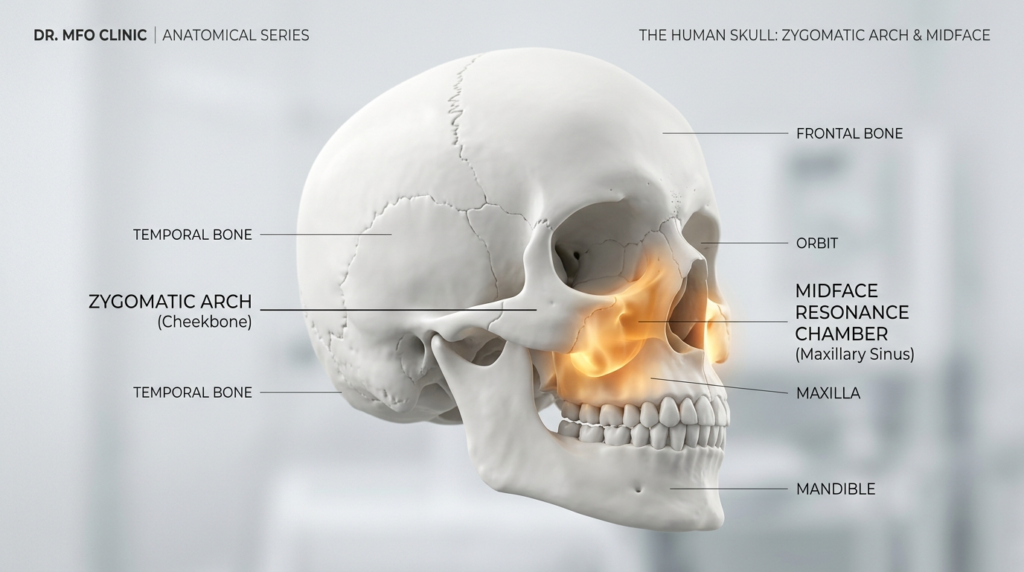
Het middengezicht fungeert als een primaire versterker voor de menselijke stem. Geluidsgolven die door de stembanden worden gegenereerd, reizen door de keelholte en weerkaatsen tegen de harde oppervlakken van de schedel. De jukbeenboog vormt de laterale wand van deze resonantiekamer. Wanneer chirurgen een operatie uitvoeren... reductie van de jukbeenboog, Ze verkleinen het volume van deze ruimte. Volgens de akoestische fysica verhoogt het verkleinen van het volume van een gesloten ruimte de eigenfrequentie. Deze verschuiving duwt de stem naar hogere, minder heldere frequenties.
Uit onderzoek naar de reductie van de jukbeenboog en de stemresonantie blijkt dat het verwijderen van meer dan 3 millimeter bot de formantfrequenties van de stem verandert. Formanten zijn de resonantiefrequenties van het spraakkanaal die de klinkerkwaliteit bepalen. Een kleinere middengezichtsholte verhoogt de eerste formant (F1), waardoor een perceptueel "lichter" stemtimbre ontstaat. Deze verandering is permanent, omdat bot na verwijdering niet meer aangroeit.
| Inkortingsdiepte | Kamer volumeverandering | Waargenomen stemverschuiving | Akoestische meting |
| 0-2 mm | Verwaarloosbaar | Geen | Formanten stabiel |
| 3-5 mm | 10-15% afname | Iets lichter | F1 neemt toe met 50 Hz. |
| 6 mm+ | 20%+ afname | Aanzienlijk dunner | F1 neemt toe met 100Hz+ |
Dokter Mehmet Fatih Okyay, een door de Europese Raad gecertificeerd plastic Chirurg gevestigd in Antalya, Hij merkt op dat de meeste patiënten de contouren belangrijker vinden dan de akoestiek. "We gebruiken 3D-beeldvorming om de nabijheid van de jukbeenboog tot de temporalisspier en de middengezichtsholte in kaart te brengen", legt hij uit. "Het doel is om voldoende bot te verwijderen voor een vrouwelijke contour, zonder de grens te overschrijden waar de afwijking optreedt." stemresonantie raakt in gevaar.”

Geluidsgolfvoortplanting en jukbeengeometrie
De voortplanting van geluidsgolven in het middengezicht is afhankelijk van de hoek van de jukbeenboog. Een bredere boog verspreidt de geluidsenergie, terwijl een smallere boog de energie concentreert op de voorste neuswervel. Deze heroriëntatie verandert de manier waarop de stem projecteert. Patiënten melden vaak dat hun stem na een operatie "gevangen" aanvoelt in de sinussen, een gevoel dat verband houdt met een veranderde geluidsgolfvoortplanting. middengezicht resonantiekamers.
Onderzoek naar jukbeenverkleining en stemresonantie toont aan dat de kromming van het jukbeen fungeert als een geluidsafbuiger. Een vlakkere contour zorgt ervoor dat geluidsgolven gemakkelijker via de mondholte kunnen ontsnappen, waardoor de nagalm in het middengezicht afneemt. Dit verklaart waarom sommige patiënten een afname van het stemvolume ervaren na een contourcorrectie, zelfs als de functie van hun stembanden intact blijft.
Chirurgische technieken voor het behoud van akoestiek
Chirurgen behouden de stemkwaliteit door de reductie te beperken tot de achterste boog. De voorste boog draagt meer bij aan het volume van de resonantiekamer, terwijl de achterste boog de breedte van het gezicht bepaalt. Door zich te richten op de achterkant bereiken chirurgen een versmalling met minimale akoestische impact. Piëzo-elektrische chirurgie beschermt bovendien de structuren in het middengezicht door bot te verwijderen zonder het zachte weefsel te beschadigen.
| Techniek | Botverwijderingslocatie | Akoestische impact | Esthetisch resultaat |
| Posterieure osteotomie | Achter de temporalis | Laag | Matige vernauwing |
| Voorste contouren | Wanguitstulping | Hoog | Aanzienlijke vernauwing |
| Hybride aanpak | 50/50 verdeling | Gematigd | Evenwichtig resultaat |

Stappen om je stem te beschermen tijdens het contouren
Breng je resonantiekamers in kaart
Vraag vóór de operatie een 3D CT-scan van het middengezicht aan. Meet de afstand tussen de jukbeenderen en de kaakholte. Deze basismeting bepaalt hoeveel botverwijdering uw resonantiekamer kan verdragen zonder dat uw stemfrequentie verandert.
Raadpleeg een foniatricus.
Maak een afspraak voor een stemonderzoek bij een foniater. Noteer uw preoperatieve formantfrequenties. Deel deze resultaten met uw chirurg om akoestische grenzen te bepalen voor de contoureringsprocedure.
Specificeer posterieure reductie
Geef uw chirurg de opdracht om prioriteit te geven aan het verkleinen van de achterste jukbeenboog. Beperk de verwijdering van bot aan de voorzijde tot 2 millimeter of minder om de laterale wand van de resonantiekamer te behouden. Dit zorgt voor voldoende volume voor reductie van de jukbeenboog en stemresonantie evenwicht.
Test het stembereik na de operatie
Voer drie maanden na de operatie een stemanalyse uit. Vergelijk de nieuwe formantfrequenties met uw basismeting van vóór de operatie. Kleine verschuivingen zijn normaal, maar significante veranderingen vereisen stemtherapie om zich aan te passen aan de nieuwe akoestiek van het middengezicht.
Neem contact op met de Dr. MFO-kliniek in Antalya Om contouringprocedures te bespreken die uw stemidentiteit respecteren. Maak een afspraak voor een consult waarbij zowel esthetische precisie als akoestisch behoud voorop staan.
Het verkleinen van de jukbeenboog en de stemresonantie zijn onlosmakelijk met elkaar verbonden door de mechanica van het middengezicht. Elke millimeter botverwijdering verandert de resonantiekamer en vormt de stem permanent. Door de hier beschreven akoestische principes toe te passen, zorgt u ervoor dat uw gezichtsverandering uw uiterlijk verbetert zonder uw stemgeluid aan te tasten.
Veelgestelde vragen
Welke invloed heeft het verkleinen van de jukbeenboog op de stemresonantie?
Het verkleinen van de jukbeenboog vermindert het volume van de resonantieholte in het middengezicht. Deze verkleining verhoogt de natuurlijke frequentie van de holte, waardoor de formantfrequenties hoger komen te liggen. Het resultaat is een stem die lichter en dunner klinkt, omdat de akoestische eigenschappen van het middengezicht na de botverwijdering permanent veranderen.
Kan het contouren van de jukbeenderen de stem zachter laten klinken?
Ja, het contouren van de jukbeenderen zorgt er vaak voor dat de stem zachter klinkt vanwege veranderingen in de geluidsgolfvoortplanting. Doordat de jukbeenboog smaller wordt, reflecteert de middengezichtsholte het geluid anders. Dit verandert het timbre van de stem, waardoor een perceptueel zachtere kwaliteit ontstaat die veel patiënten direct na de operatie merken.
Welke chirurgische technieken voorkomen stemveranderingen tijdens FFS?
Chirurgen voorkomen stemveranderingen door de reductie van de voorste kaakboog te beperken en piëzo-elektrische instrumenten te gebruiken. Reductie van de achterste kaakboog zorgt ervoor dat er meer volume in het middengezicht behouden blijft, waardoor de afmetingen van de resonantiekamer behouden blijven. Preoperatieve 3D-mapping helpt chirurgen bovendien te voorkomen dat er bot wordt verwijderd dat de stemformanten van de patiënt zou verschuiven.
Evalueren foniaters patiënten vóór een gezichtscontouringbehandeling?
Foniatrici beoordelen patiënten door de basisformantfrequenties en het stembereik te meten. Ze rapporteren aan de chirurg hoeveel bot er maximaal verwijderd kan worden in het middengezicht van de patiënt. Deze samenwerking zorgt ervoor dat de esthetische doelen de stemidentiteit of de resonantiekwaliteit van de patiënt niet in gevaar brengen.
Hoe lang duurt het voordat de stemresonantie na een operatie stabiliseert?
De stemresonantie stabiliseert zich drie tot zes maanden na een jukbeenverkleining. Zwelling in het middengezichtsweefsel verandert aanvankelijk de akoestiek, maar naarmate de ontsteking afneemt, wordt de permanente akoestische verschuiving duidelijk. Patiënten dienen zes maanden te wachten voordat een definitieve stembeoordeling wordt uitgevoerd om de formantfrequenties van vóór en na de operatie te vergelijken.