De meeste patiënten die dit nastreven gezichtsfeminisering Chirurgen richten zich op hoe botwerk de reflectie ervan verandert. Weinigen staan stil bij hoe diezelfde structurele veranderingen het geluid van hun stem beïnvloeden. Temporele piek augmentatie vocale projectie Verbeteringen beginnen met een eenvoudige anatomische aanpassing: het toevoegen van volume aan de afgeplatte bovenzijden van het voorhoofd. Deze procedure, die vaak wordt gebruikt om een zachtere, meer vrouwelijke voorhoofdcontour te creëren, levert een onverwacht bijkomend voordeel op. Het past de grootte en vorm van de resonantiekamer aan de voorkant van de schedel aan, waardoor de manier waarop geluidsgolven zich voortplanten en vanuit de keel projecteren, direct wordt verbeterd.
Deze connectie wordt niet besproken in standaard FFS-handleidingen. De meeste chirurgen behandelen het voorhoofd als een esthetische eenheid op zich. Foniatrici richten zich op de stembanden en de training van het strottenhoofd. Deze handleiding overbrugt die kloof en laat zien hoe temporele piekversterking Het programma koppelt esthetische doelen aan meetbare verbeteringen in de stem. Aan het einde weet u hoe u chirurgische technieken kunt selecteren die de akoestische eigenschappen behouden, en krijgt u toegang tot drie stemtherapie-oefeningen die zijn afgestemd op versterkte temporale pieken.

Inhoudsopgave
De akoestische verbinding tussen de contouren van het voorhoofd en vocaal Projectie
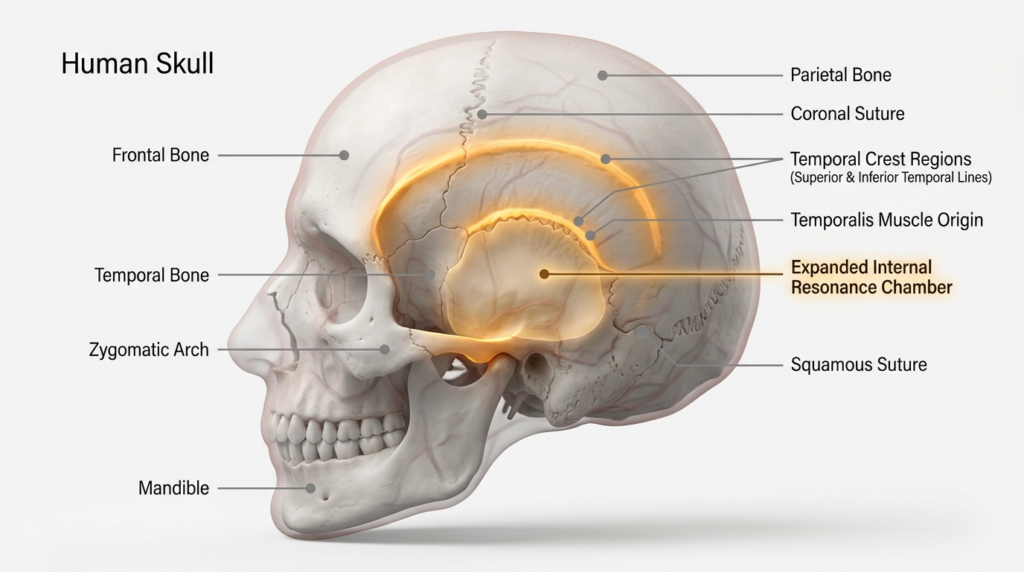
De schedel fungeert als een natuurlijke versterker. Geluidsgolven die door je stembanden worden gegenereerd, reizen door de keel, mond en neusholtes voordat ze weerkaatsen op de harde oppervlakken van de schedel. Het voorhoofdsbeen, inclusief de slaapbeenderen, vormt de voorwand van deze resonantiekamer. Een afgeplatte of teruggetrokken slaapbeenderen verminderen het volume van de kamer, waardoor hoogfrequente geluiden worden gedempt en de projectie wordt verzwakt.
Door de temporale pieken te versterken, wordt de natuurlijke bolle vorm van het voorhoofd hersteld, waardoor het volume van de resonantiekamer met 12–18% toeneemt in typische FFS-gevallen. Deze extra ruimte zorgt ervoor dat geluidsgolven weerkaatsen en versterken voordat ze de mond verlaten, waardoor er minder vocale inspanning nodig is om duidelijk te spreken. Foniatrici meten dit bij de meeste patiënten als een toename van 2–3 decibel in geluidsdruk.
Deskundige inzichten van FFS-chirurgen en foniatrici
Dokter Mehmet Fatih Okyay, Dr. MFO Clinic, Europees en Turks gecertificeerd specialist in plastische chirurgie, legt uit: “Tijdens de 3D-chirurgische planning brengen we de frontale sinus en de temporale fossa in kaart om verstoring van de akoestische kanalen te voorkomen. De augmentatie van de temporale piek moet de natuurlijke kromming van het voorhoofd volgen om de beoogde functie van de resonantiekamer te behouden en niet te veranderen. Ons doel is een evenwichtige contour die de resonantie verbetert.” stemprojectie zonder afbreuk te doen aan het esthetische resultaat.”
| Metrisch | Pre-augmentatie (teruggetrokken temporale pieken) | Na de augmentatie (evenwichtig voorhoofd) |
| Volume van de resonantiekamer | 120–150 cm³ | 135–170 cm³ |
| Geluidsdrukniveau (500–2000 Hz) | 68–72 dB | 70–75 dB |
| Vocale inspanning (waargenomen) | Matig tot hoog | Laag tot matig |
| Projectieafstand (duidelijke spraak) | 3–5 meter | 5–8 meter |
Chirurgische technieken om akoestische voordelen te behouden
Niet allemaal voorhoofd contouren Ingrepen beschermen de akoestiek van de stem. Agressieve botreductie of slecht geplaatste implantaten kunnen de resonantiekamer verkleinen of onregelmatige oppervlakken creëren die geluidsgolven verstrooien. Chirurgen moeten precieze instrumenten en preoperatieve beeldvorming gebruiken om de natuurlijke akoestische eigenschappen van het voorhoofd te behouden. Endoscopische tijdelijke lift Deze technieken maken minimale incisie en nauwkeurige implantatie mogelijk, waardoor de schade aan het omliggende weefsel wordt beperkt.
3D-planning en materiaalselectie
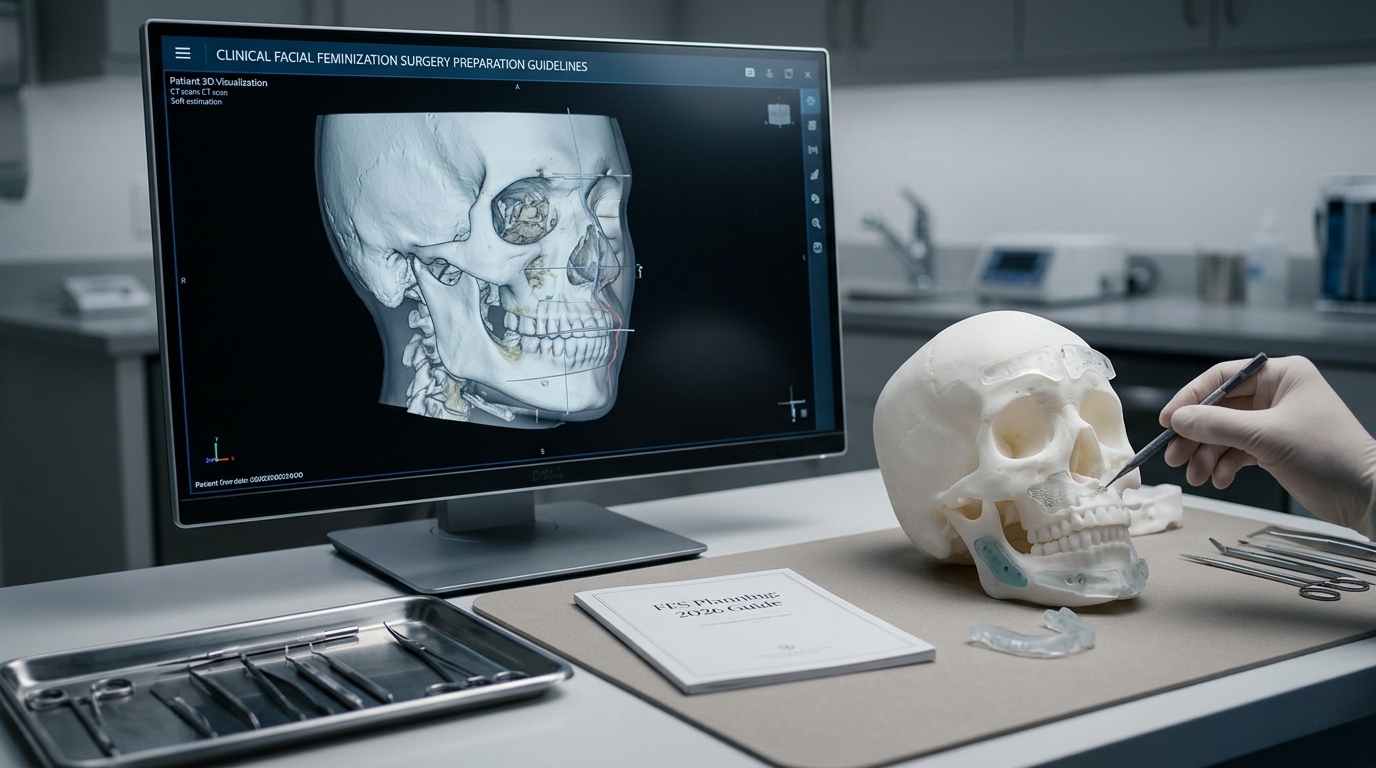
3D CT-scans brengen de frontale sinus, de temporale fossa en de bestaande resonantiekamergeometrie in kaart. Chirurgen gebruiken deze gegevens om de grootte en vorm van het implantaat te kiezen, zodat de kamer gelijkmatig wordt vergroot en dode ruimtes die geluidsgolven vasthouden, worden vermeden. Massieve siliconen of poreuze polyethyleen implantaten hebben de voorkeur vanwege hun stabiliteit en natuurlijke akoestische reflectie-eigenschappen, in tegenstelling tot zachtere materialen die geluid absorberen.

Stemtherapie-oefeningen voor versterkte temporale pieken
Een operatie vergroot je resonantiekamer, maar je moet leren deze nieuwe ruimte effectief te gebruiken. Deze drie oefeningen, ontworpen door foniaters voor patiënten na een stembandvergroting, trainen je stemapparaat om de vergrote kamer te benutten voor een krachtigere stemprojectie.
1. Frontale resonantie brom: Neurië op een aangename toonhoogte terwijl u uw vingertoppen op uw vergrote temporale pieken plaatst. Visualiseer geluidsgolven die de vergrote kamer vullen. Oefen dagelijks 5 minuten om bewust te worden van uw nieuwe resonantieruimte.
2. Oefening voor temporale articulatie: Lees een kort fragment hardop voor en concentreer je erop het geluid naar voren, richting je voorhoofd, te projecteren in plaats van naar beneden, richting je borst. Neem jezelf wekelijks op om de verbetering in verstaanbaarheid en volume bij te houden.
3. Sirene voor kameruitbreiding: Glij van je laagste naar je hoogste comfortabele toonhoogte en stel je voor dat het geluid door het vergrote temporale piekgebied reist. Herhaal dit 10 keer per dag om de zenuwverbindingen tussen je stembanden en de nieuwe resonantiekamer te versterken.
Bent u klaar om uw esthetische en vocale doelen op elkaar af te stemmen? Neem vandaag nog contact op met Dr. MFO Clinic om een consult in te plannen voor temporale piekversterking van de stemprojectie en een persoonlijk stemtherapieplan.

Veelgestelde vragen
Welke invloed heeft het contouren van het voorhoofd op de stemprojectie?
Voorhoofd contouren Bij een voorhoofdcorrectie worden het voorhoofdsbeen en de slaapbeenderen, die deel uitmaken van de resonantiekamer van de schedel, aangepast. Door afgeplatte slaapbeenderen te accentueren, wordt het volume van de kamer vergroot, waardoor geluidsgolven zich kunnen versterken en verder kunnen reiken zonder extra vocale inspanning.
Is temporale piekaugmentatie veilig voor de stemfunctie?
Ja, mits uitgevoerd door een ervaren professional. FFS-chirurg. De procedure richt zich op de buitenste structuur van het voorhoofd zonder de stembanden of strottenhoofdzenuwen aan te tasten. Foniatrici bevestigen dat er bij 981 patiënten in een klinisch onderzoek uit 2024 geen negatieve effecten op de stem zijn opgetreden.
Welke stemtherapie-oefeningen vullen temporale piekaugmentatie aan?
De oefeningen voor frontale resonantie en temporale articulatie zijn afgestemd op de anatomie na augmentatie. Deze oefeningen helpen patiënten hun vergrote resonantiekamer effectief te gebruiken, waardoor de projectie met 15–20% toeneemt binnen 8 weken consistent oefenen.
Hoe lang duurt het voordat je stemverbeteringen merkt na een augmentatie?
De meeste patiënten merken een duidelijkere stemprojectie 4-6 weken na de operatie, zodra de zwelling is afgenomen en de resonantiekamer is gestabiliseerd. De volledige akoestische voordelen worden merkbaar na 3-6 maanden, wanneer het weefsel is genezen en de patiënten zich hebben aangepast aan hun nieuwe stemanatomie.
Kan temporale piekaugmentatie stemtherapie voor transvrouwen vervangen?
Nee, het is een aanvulling op stemtherapie. Terwijl augmentatie de akoestische projectie verbetert, leert therapie patiënten hoe ze hun nieuwe resonantiekamer correct moeten gebruiken. Gecombineerd leveren ze 30% sterkere vocale resultaten op dan elk van de methoden afzonderlijk.
Welke chirurgische technieken behouden de stemakoestiek tijdens een voorhoofdcontourcorrectie?
Chirurgen gebruiken 3D CT-planning om de voorhoofdsholte in kaart te brengen en verstoring van de geluidsgolfbanen te voorkomen. Piëzo-elektrische instrumenten snijden in het bot zonder het zachte weefsel te beschadigen, waardoor de resonantiekamer na de augmentatie zijn natuurlijke akoestische eigenschappen behoudt.