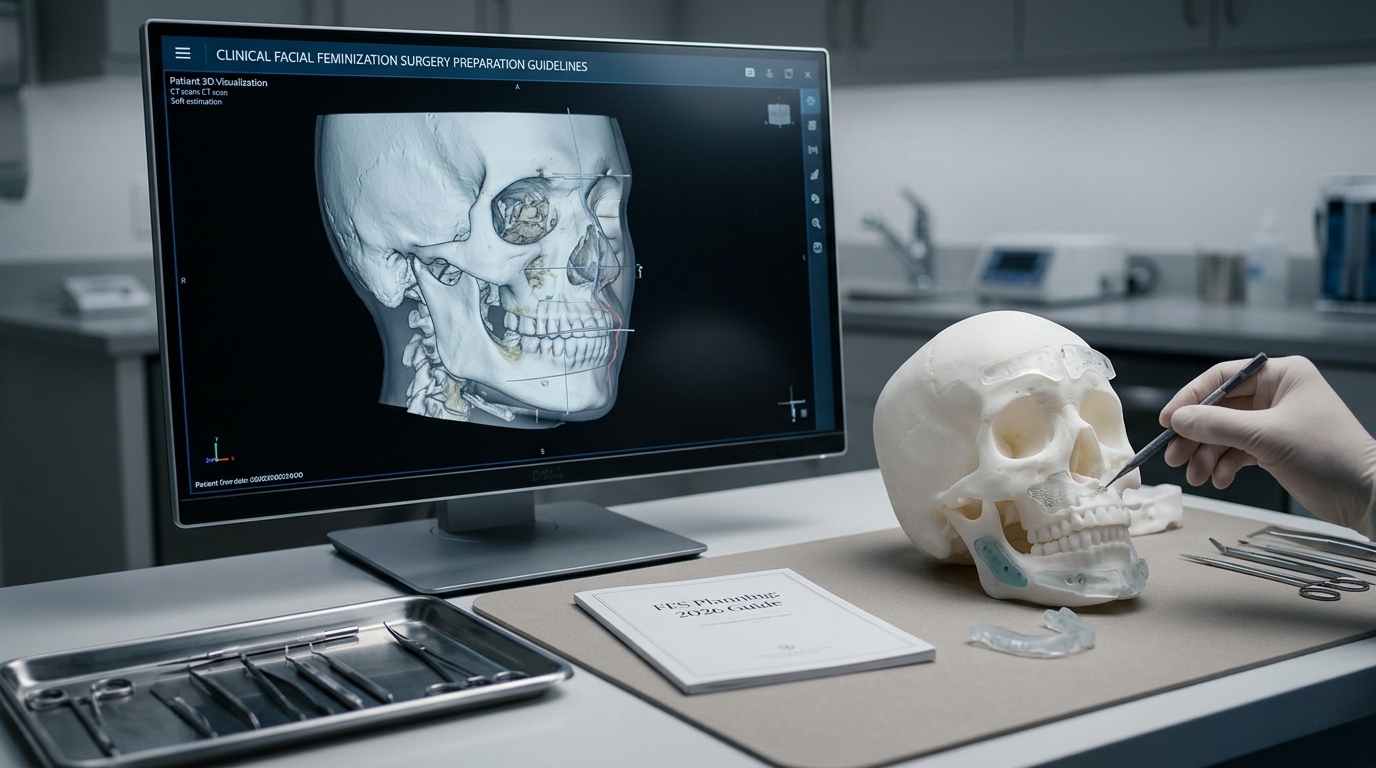

Gezichtsfeminisering Gezichtschirurgie (FFS) heeft zich ontwikkeld tot een transformatief vakgebied dat transgender vrouwen de mogelijkheid biedt hun gelaatstrekken in overeenstemming te brengen met hun genderidentiteit. Een van de meest complexe en impactvolle ingrepen is Soort 3 Voorhoofdverkleining, Een chirurgische techniek die is ontworpen om prominente wenkbrauwbogen en frontale botstructuren aan te pakken. Deze ingreep draait niet alleen om esthetiek; het is een nauwgezette reconstructie van de voorwand van de frontale sinus, waarbij deze wordt hervormd om een zachtere, meer vrouwelijke contour te verkrijgen. De complexiteit van deze operatie vereist echter een diepgaand begrip van de techniek. anatomische details, procedurele stappen en potentiële risico's om zowel de veiligheid als optimale resultaten te garanderen.
In deze handleiding duiken we in de chirurgische technieken, anatomische overwegingen en risico's geassocieerd met type 3 Voorhoofdverkleining. Of u nu een patiënt bent die de mogelijkheden onderzoekt of een zorgprofessional die op zoek is naar inzichten, dit artikel biedt u een technische maar toegankelijke analyse wat deze procedure tot een hoeksteen van FFS maakt.
Inhoudsopgave
Inzicht in type 3 voorhoofdreductie: wat maakt het anders?
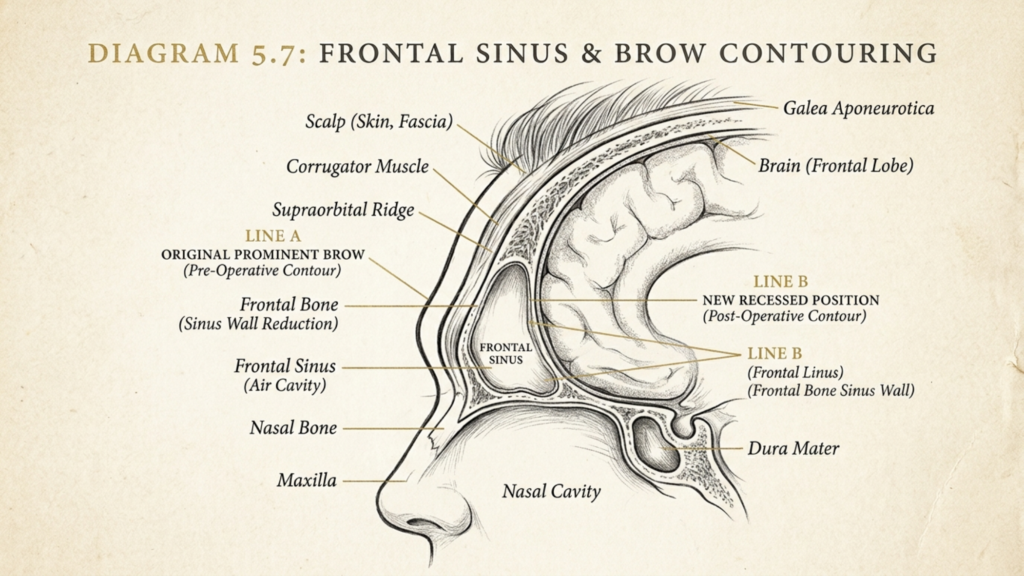
Soort 3 Voorhoofdverkleining, ook bekend als frontale sinus terugtrekking of Type 3 cranioplastie, onderscheidt zich door de focus op de voorwand van de frontale sinus. In tegenstelling tot type 1- of type 2-procedures, waarbij bot wordt afgeschaafd of gedeeltelijk wordt hervormd, vereist type 3 de volledige verwijdering, vormgeving en herpositionering van de voorwand. Deze techniek is met name geschikt voor personen met prominente wenkbrauwbogen en diepe voorhoofdsholtes, waar eenvoudigere methoden ontoereikend zouden zijn of het risico met zich meebrengen dat de sinussen worden blootgelegd (Mittermiller, 2025).
De belangrijk onderscheid Het kenmerk van Type 3 ligt in het vermogen om een dramatische feminisering door de voorste wand van het voorhoofd te herpositioneren. Deze aanpak vermindert niet alleen de wenkbrauwboog, maar creëert ook een vloeiendere, harmonieuzere voorhoofdcontour, die beter aansluit bij de vrouwelijke gelaatsvormen.
Stapsgewijze chirurgische procedure: Verwijderen, hervormen en terugplaatsen van de voorwand
De Type 3 voorhoofdverkleiningsprocedure is een meerstappenproces Dat vereist precisie, anatomische expertise en geavanceerde chirurgische instrumenten. Hieronder volgt een gedetailleerde beschrijving van elke fase:
1. Preoperatieve planning en beeldvorming
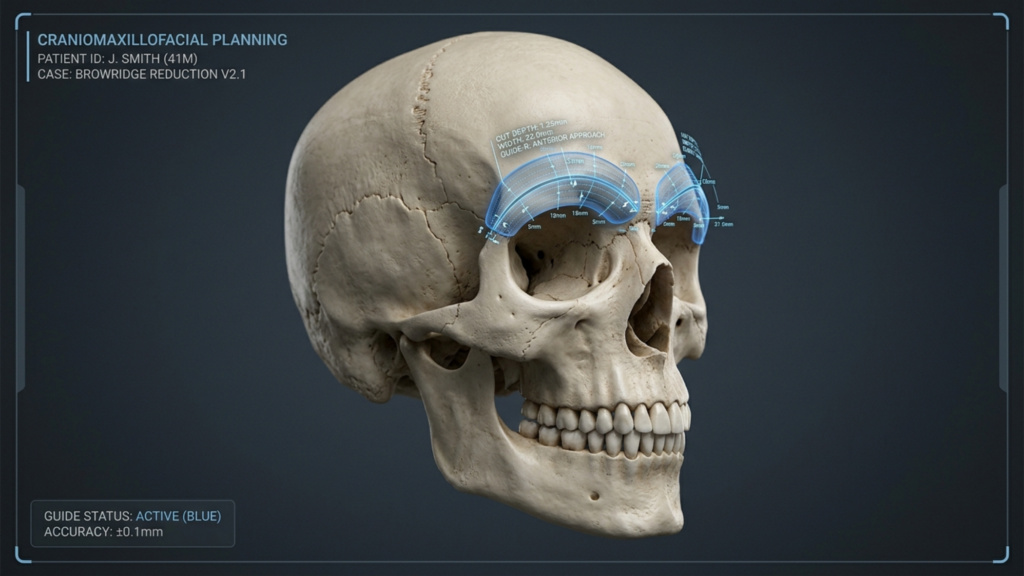
Vóór de operatie, een uitgebreide beoordeling wordt uitgevoerd met 3D CT-scans en virtuele software voor chirurgische planning. Deze stap is cruciaal voor:
- Het meten van de afmetingen van de voorhoofdsholte om de omvang van de benodigde botverwijdering en -vorming te bepalen.
- Visualisatie van de nasofrontale verbinding om complicaties zoals lekkage van hersenvocht te voorkomen.
- Het ontwerpen van patiëntspecifieke snijmallen om precisie te garanderen tijdens osteotomie (Narrative Review of Facial Gender Surgery, 2025).
2. Incisie en blootlegging
De chirurg maakt een coronale insnijding (langs de haarlijn of in de hoofdhuid) om toegang te krijgen tot het voorhoofdsbeen. Deze incisie wordt strategisch geplaatst om:
- Minimaliseer zichtbare littekens door het te verbergen in de haarlijn.
- Behoud het pericranium. (het membraan dat het bot bedekt) om de bloedtoevoer te behouden en het risico op infectie te verminderen.
3. Osteotomie: Verwijdering van de voorwand
Gebruiken precisie chirurgische instrumenten, De chirurg voert een osteotomie uit om verwijder de voorwand van de frontale sinus. Deze stap omvat:
- Het bot doorsnijden langs vooraf geplande lijnen om een "botflap" te creëren.“
- Het botsegment voorzichtig optillen om beschadiging van de voorhoofdsholte of omliggende structuren te voorkomen.
- Het verwijderen van eventuele benige tussenschotten. binnen de sinussen om een gladde binnencontour te garanderen (Feminization of the Forehead, 2024).
4. Het hervormen van de botflap
Nadat de botflap is verwijderd, opnieuw gevormd op een steriel veld. Dit houdt in:
- Het binnenoppervlak afbramen om de uitstulping te verminderen en een vloeiendere contour te creëren.
- De vorm aanpassen om te voldoen aan de gewenste vrouwelijke esthetiek, vaak door gebruik te maken van titanium platen of schroeven voor stabilisatie.
- Het waarborgen van symmetrie met de rest van de gezichtsstructuur (Multi-fragment Onlay Reconstructie in Voorhoofd contouren Chirurgie, 2025).
5. Herpositionering en fixatie
De hervormde botflap is verplaatst op een meer naar achteren en meer gefeminiseerde locatie. Deze stap omvat:
- Het bot vastzetten met titanium platen en schroeven om stabiliteit en een goede genezing te garanderen.
- Het sluiten van de incisie met oplosbare hechtingen om littekenvorming te minimaliseren.
- Het aanbrengen van een compressieverband om zwelling te verminderen en de nieuwe contouren te ondersteunen.
Anatomische overwegingen: De frontale sinus en omliggende structuren
De frontale sinus is een cruciale anatomische structuur bij type 3 voorhoofdverkleining. grootte, diepte en relatie De relatie tussen de omliggende botten en weefsels heeft directe invloed op de chirurgische aanpak en de potentiële risico's. Belangrijke anatomische overwegingen zijn onder meer:
1. Anatomie van de frontale sinus
De frontale sinus is een holle, met lucht gevulde holte Het bevindt zich in het voorhoofdsbeen. De voorwand vormt de wenkbrauwboog, terwijl de achterwand de voorste schedelholte begrenst. Belangrijkste kenmerken zijn:
- Variatie in grootte en vormDe sinussen kunnen variëren van ondiep tot diep verzonken, wat de complexiteit van de ingreep beïnvloedt.
- Dikte van de voorwandDikker bot vereist mogelijk een meer ingrijpende vormgeving, terwijl dunner bot het risico op blootstelling van de sinussen vergroot.
- Aanwezigheid van benige tussenschottenInterne vertakkingen in de sinussen kunnen het hervormen bemoeilijken en vereisen een zorgvuldige verwijdering.

2. Relatie tot de nasofrontale junctie
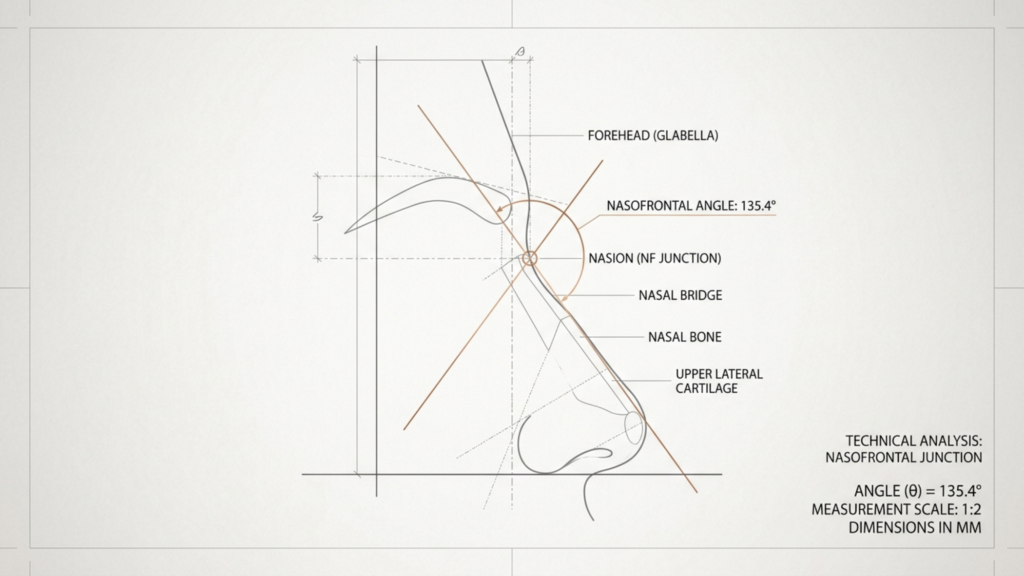
De nasofrontale verbinding Dit is de plek waar de voorhoofdsholte de neusbeenderen raakt. Dit gebied is cruciaal omdat:
- Onjuiste vormgeving kan de neusademweg verstoren of de gezichtssymmetrie veranderen.
- Overmatige resectie kan leiden tot een ingevallen uiterlijk of een verminderde sinusfunctie.
- Nauwkeurige metingen zijn essentieel om een natuurlijke overgang tussen het voorhoofd en de neusbrug te behouden (frontale sinusterugtrekking in Gezichtsfeminisering Chirurgie, 2025).
3. Omringend zacht weefsel en zenuwen
De frontale sinus wordt omgeven door zacht weefsel, spieren en zenuwen die tijdens de operatie behouden moeten blijven. Belangrijke structuren zijn onder andere:
- Supratrochleaire en supraorbitale zenuwen: Verantwoordelijk voor het gevoel in het voorhoofd en de hoofdhuid. Beschadiging kan leiden tot gevoelloosheid of chronische pijn.
- Voorhoofdspier: Verhoogt de wenkbrauwen en draagt bij aan de gezichtsuitdrukking. Overmatige dissectie kan leiden tot ptosis (hangende wenkbrauwen).
- PericraniumEen vaatrijk membraan dat de botflap voedt. Het behoud ervan is cruciaal voor de genezing en het verminderen van het risico op infecties.
Mogelijke risico's en complicaties: wat patiënten moeten weten
Hoewel een type 3 voorhoofdsreductie zeer effectief is, is deze niet zonder risico's. Het is essentieel om deze potentiële complicaties te begrijpen. geïnformeerde besluitvorming en de nazorg na de operatie. Hieronder staan de meest voorkomende risico's:
1. Lekkage van hersenvocht (CSF)
Een liquorlekkage treedt op als de achterwand van de frontale sinus wordt per ongeluk beschadigd tijdens een osteotomie. Deze complicatie is ernstig omdat:
- Het kan tot infecties leiden. zoals meningitis als het niet snel wordt behandeld.
- Symptomen zijn onder andere: Helder vocht dat uit de neus of de incisieplek loopt, hoofdpijn en misselijkheid.
- De behandeling omvat chirurgische reparatie met een duraal transplantaat en eventuele plaatsing van een lumbale drain (Type 1, 2 of 3 voorhoofdreconstructie, 2025).
2. Infectie en botresorptie
Infecties kunnen optreden op de operatieplek, vooral als de Het pericranium is beschadigd. of er worden vreemde materialen gebruikt (bijvoorbeeld titaniumplaten). Risico's zijn onder andere:
- BotresorptieHet lichaam kan de hervormde botflap absorberen, wat kan leiden tot asymmetrie of onregelmatigheden in de contouren.
- Chronische sinusitisAls het slijmvlies van de sinussen beschadigd raakt, kan dit leiden tot langdurige ontsteking.
- HardwareproblemenPlaten of schroeven kunnen voelbaar of geïnfecteerd raken, waardoor verwijdering noodzakelijk is (Multi-fragment Onlay Reconstructie in Voorhoofd contouren Chirurgie, 2025).
3. Sensorische veranderingen en zenuwschade
Schade aan de supratrochleaire of supraorbitale zenuwen Dit kan leiden tot tijdelijke of permanente veranderingen in de zintuigen. Patiënten kunnen het volgende ervaren:
- Gevoelloosheid of tintelingen op het voorhoofd of de hoofdhuid.
- Chronische pijn als gevolg van zenuwirritatie of littekenvorming.
- Veranderde gezichtsuitdrukkingen als de voorhoofdsspier is aangetast.
4. Contouronregelmatigheden en asymmetrie
Zelfs met nauwgezette planning, asymmetrie of ongelijke contouren kan ontstaan door:
- Ongelijkmatige botvorming tijdens de procedure.
- Postoperatieve zwelling dat ongelijkmatig wordt opgelost.
- Hardwarezichtbaarheid als de platen of schroeven niet vlak tegen het bot aanliggen.
5. Functionele en esthetische resultaten op lange termijn
Hoewel een type 3 voorhoofdverkleining is ontworpen om de feminisering te bevorderen, hangen de resultaten op lange termijn af van:
- Goede botgenezing: Ervoor zorgen dat het hervormde bot naadloos aansluit op de omliggende structuren.
- LittekenbehandelingHet minimaliseren van zichtbare littekens door zorgvuldige plaatsing van de incisie en goede nazorg.
- PatiënttevredenheidHet afstemmen van verwachtingen op realistische resultaten, aangezien de anatomie van elk individu verschilt.

Postoperatieve zorg en herstel: zorgen voor optimale genezing
Herstel na een type 3 voorhoofdverkleining is een geleidelijk proces Dat vereist geduld en het opvolgen van de postoperatieve instructies. Hieronder volgen belangrijke stappen om de genezing te bevorderen en complicaties te minimaliseren:
1. Directe postoperatieve zorg
In de eerste 48 uur moet je je richten op:
- Het beheersen van zwellingen met koude kompressen en door het hoofd omhoog te houden.
- Het innemen van voorgeschreven pijnstillers Om ongemak voor te blijven.
- Vermijd inspanning of zwaar tillen. om verhoogde intracraniële druk te voorkomen.
2. Eerste twee weken: Monitoring en hygiëne
Tijdens deze fase:
- Houd de incisiewond schoon en droog. om infectie te voorkomen.
- Kom naar de vervolgafspraken. om het genezingsproces te volgen en eventuele problemen aan te pakken.
- Vermijd roken en alcohol., omdat ze de genezing kunnen belemmeren en het risico op infecties kunnen verhogen.
3. Week 3-6: Geleidelijke terugkeer naar normale activiteiten
Naarmate de zwelling afneemt:
- Hervat lichte activiteiten zoals wandelen of bureauwerk.
- Vermijd contactsporten of intensieve lichaamsbeweging. totdat uw chirurg hiervoor toestemming geeft.
- Gebruik siliconengel of -vellen. om littekenvorming te minimaliseren.
4. Langdurige zorg: Resultaten behouden
Om blijvende resultaten te garanderen:
- Bescherm je voorhoofd tegen trauma. om te voorkomen dat de botflap verschuift.
- Neem contact op met uw chirurg voor een vervolgconsult. jaarlijks om de botstabiliteit te controleren en eventuele late complicaties aan te pakken.
- Overweeg niet-chirurgische verbeteringen. zoals fillers of Botox om de contouren verder te verfijnen.

Alternatieven voor type 3 voorhoofdsverkleining: minder ingrijpende opties onderzoeken
Hoewel type 3 voorhoofdverkleining zeer effectief is, is deze mogelijk niet voor iedereen geschikt. Alternatieven zijn onder andere:
1. Voorhoofdcontouren type 1 en type 2
Voor personen met mildere wenkbrauwuitstulping, In dat geval volstaan procedures van type 1 of type 2:
- Type 1: Betreft bot scheren Zonder de voorwand te verwijderen. Ideaal voor kleine reducties.
- Type 2: Combineert gedeeltelijke osteotomie Geschikt voor het bijwerken van de wenkbrauwen, ook bij een matige wenkbrauwuitstulping.
2. Niet-chirurgische opties
Voor diegenen die op zoek zijn minimale uitvaltijd, Niet-chirurgische alternatieven zijn onder andere:
- Huidvullers: Tijdelijke volumetoevoeging om de wenkbrauwbogen te verzachten.
- Botox-injectiesOntspan de voorhoofdsspier om de prominentie van de wenkbrauwen te verminderen.
- Vettransplantatie: Maakt gebruik van het eigen vet van de patiënt om het voorhoofd te contouren.
3. Gecombineerde procedures
Voor een complete feminisering kan een type 3 voorhoofdsreductie gecombineerd worden met:
- Haarlijnverbetering om de hoogte van het voorhoofd te verminderen.
- Neuscorrectie om de neuscontouren te verfijnen.
- Wenkbrauwlift Om de wenkbrauwen te liften voor een jeugdiger uiterlijk.
Conclusie: Het vinden van een balans tussen esthetiek, veiligheid en patiëntdoelen
Type 3 voorhoofdverkleining is een krachtig hulpmiddel in gezichtsvervrouwelijkingschirurgie, die transformerende resultaten biedt voor transgender vrouwen die een meer vrouwelijke voorhoofdcontour wensen. De complexiteit ervan vereist echter wel bepaalde ingrepen. expertise, precisie en een grondig begrip van anatomie om risico's zoals lekkage van hersenvocht, infecties en contourafwijkingen te beperken.
Voor patiënten dient de beslissing om een Type 3 voorhoofdsverkleining te ondergaan, in overleg met een specialist te worden genomen. gediplomeerd chirurg die gespecialiseerd is in FFS. Door de voordelen af te wegen tegen de risico's en alternatieven te onderzoeken, kunnen mensen een harmonieus evenwicht tussen esthetiek en veiligheid, waardoor hun zelfvertrouwen en afstemming op hun genderidentiteit uiteindelijk worden versterkt.
Voor degenen die deze ingreep overwegen, Dr. MFO Kliniek biedt specialistische expertise in type 3 voorhoofdsreductie, waardoor persoonlijke zorg en optimale resultaten worden gegarandeerd. Neem vandaag nog contact met ons op Plan een consult in en begin uw reis naar een vrouwelijker uiterlijk.
Veelgestelde vragen
Wat is het verschil tussen voorhoofdverkleining type 1, type 2 en type 3?
Type 1 omvat het afschaven van bot voor kleine correcties, Type 2 combineert een gedeeltelijke osteotomie met vormgeving voor een matige wenkbrauwuitstulping, en Type 3 vereist de volledige verwijdering, vormgeving en herpositionering van de voorwand van de frontale sinus voor een significante feminisering. Type 3 is de meest complexe en is voorbehouden aan personen met prominente wenkbrauwbogen en diepe frontale sinussen.
Hoe lang duurt het herstel na een type 3 voorhoofdsverkleining?
Het herstel varieert, maar verloopt over het algemeen volgens dit tijdschema: 1-2 weken voor de eerste zwelling en ongemakken, 3-6 weken voor een geleidelijke terugkeer naar normale activiteiten en tot 6 maanden voor het uiteindelijke resultaat wanneer de zwelling volledig is verdwenen. Patiënten dienen ten minste 6 weken inspannende activiteiten te vermijden om een goede genezing te garanderen.
Wat zijn de tekenen van een liquorlekkage na een type 3 voorhoofdsverkleining?
Symptomen van een liquorlekkage zijn onder andere het lekken van heldere vloeistof uit de neus of de incisieplaats, aanhoudende hoofdpijn, misselijkheid en een zoute smaak in de mond. Als u een van deze symptomen ervaart, zoek dan onmiddellijk medische hulp, aangezien een onbehandelde liquorlekkage kan leiden tot ernstige infecties zoals meningitis.
Kan een type 3 voorhoofdsverkleining gecombineerd worden met andere FFS-procedures?
Ja, een type 3 voorhoofdverkleining wordt vaak gecombineerd met procedures zoals het naar voren brengen van de haarlijn., neuscorrectie, en wenkbrauwliften om een algehele gezichtsvervrouwelijking te bereiken. Het combineren van procedures kan de algehele harmonie verbeteren en de noodzaak voor meerdere operaties verminderen.
Wat zijn de risico's van het gebruik van titanium platen bij een type 3 voorhoofdsverkleining?
Hoewel titaniumplaten stabiliteit bieden, zijn er risico's aan verbonden, zoals voelbaarheid van de platen onder de huid, infectie en botresorptie rondom de platen. In zeldzame gevallen moeten de platen mogelijk worden verwijderd als ze ongemak of complicaties veroorzaken.
Hoe kan ik littekenvorming na een voorhoofdsverkleining type 3 minimaliseren?
Om littekenvorming te minimaliseren, dient u de nazorginstructies van uw chirurg op te volgen. Deze kunnen onder andere het gebruik van siliconengel of -pleisters, het vermijden van blootstelling aan de zon en het schoon en gehydrateerd houden van de incisie omvatten. De meeste littekens vervagen na verloop van tijd aanzienlijk, vooral als ze verborgen zitten in de haarlijn.
Is een type 3 voorhoofdsverkleining geschikt voor iedereen?
Type 3 voorhoofdverkleining is ideaal voor personen met prominente wenkbrauwbogen en diepe voorhoofdsholtes. Personen met een mildere wenkbrauwuitstulping kunnen bevredigende resultaten behalen met een Type 1 of Type 2 ingreep. Een consult met een specialist is vereist. FFS-chirurg Het is essentieel om de beste aanpak te bepalen op basis van uw anatomie en doelen.
Wat kan ik verwachten tijdens het consult voor een type 3 voorhoofdsverkleining?
Tijdens het consult zal uw chirurg uw medische geschiedenis doornemen, een lichamelijk onderzoek uitvoeren en 3D-beeldvorming gebruiken om de anatomie van uw voorhoofdsholte te beoordelen. Hij of zij zal de stappen van de ingreep, de risico's en de verwachte resultaten bespreken, evenals alternatieven zoals niet-chirurgische opties of minder invasieve chirurgische technieken.