
What are the potential long-term effects of facial masculinization surgery?

A close-up image of a man's face with visible wrinkles and aging signs, focusing on the cheek area where he is applying a skincare product with his fingers.

Facial masculinization surgery is a type of gender-affirming surgery that aims to create a more masculine appearance for transgender men who were assigned female at birth (AFAB). It involves reshaping bones and soft tissue in various parts of the face, such as the cheeks, chin, forehead, nose, throat, and jawline. Facial masculinization surgery can be performed by different types of surgeons who have extra training in gender-affirming surgery.

What are the potential long-term effects of facial masculinization surgery?

Facial masculinization surgery is usually done after completing a course of masculinizing hormone therapy, which can have various effects on physical appearance and health. Some of these effects include:

  • Development of facial hair
  • Virilizing changes in voice
  • Redistribution of facial fat
  • Increased muscle mass
  • Increased body hair
  • Change in sweat and odor patterns
  • Hairline recession
  • Male pattern baldness

Facial masculinization surgery can help transgender men achieve their desired aesthetic goals and improve their self-esteem and quality of life. However, like any surgical procedure, it also carries some risks and potential complications that may affect its long-term outcomes.

Risks / Benefits Of Facial Masculinization Surgery

Some of the possible risks or benefits of facial masculinization surgery are:

Risks

  • Infection: There is a risk of infection at the surgical site or in other parts of the body due to bacteria or viruses. Infection can cause fever, pain, swelling, redness, pus drainage, or other signs. Infection can be treated with antibiotics or other medications.
  • Bleeding: There is a risk of bleeding during or after surgery due to injury to blood vessels or excessive blood loss. Bleeding can cause bruising, hematoma (a collection of blood under the skin), or shock (a life-threatening condition where blood pressure drops). Bleeding can be controlled with pressure dressing or transfusion.
  • Scarring: There is a risk of scarring due to incomplete healing or poor wound care. Scarring can affect the appearance and function of the face or neck. Scarring can be minimized with proper wound care techniques such as cleaning, dressing changes, moisturizing creams, silicone gel sheets, etc.
  • Nerve damage: There is a risk of nerve damage due to compression or injury during surgery. Nerve damage can cause numbness, tingling, pain, or weakness in certain areas of the face or neck. Nerve damage may be temporary or permanent depending on severity. Nerve damage may require medication, physical therapy, or nerve grafting.
  • Asymmetry: There is a risk of asymmetry due to uneven growth, development, or healing during surgery. Asymmetry can cause dissatisfaction with one side more than another. Asymmetry may require revision surgery or other cosmetic procedures such as fillers, implants, or lasers.
  • Dissatisfaction: There is always a possibility that one may not be satisfied with the results after surgery due to personal preferences, expectations, or feedback from others. Dissatisfaction may affect one’s mental health, self-image, or social interactions. Dissatisfaction may require counseling, support groups, or revision surgery.

Benefits

Some of the possible benefits are:

  • Improved appearance: Facial masculinization surgery can create a more angular face that resembles those seen in cisgender men. It can also enhance certain features such as cheekbones, forehead width, jawline definition. It can also reduce certain features such as double chin. It can also improve one’s confidence and comfort with their own face.
  • Improved function: Facial masculinization surgery can improve one’s ability to perform certain activities that involve facial movements, such as speaking, eating, smiling, or expressing emotions. It can also reduce the risk of voice dysphoria, which is a feeling of discomfort or distress with one’s voice due to its mismatch with one’s gender identity. It can also improve one’s breathing, swallowing, or chewing abilities by correcting any structural problems in the nose, throat, or jaw.
  • Improved health: Facial masculinization surgery can improve one’s physical and mental health by alleviating gender dysphoria, which is a condition where one feels distress or discomfort with their assigned sex at birth or the associated gender roles. It can also reduce the risk of depression, anxiety, suicide, substance abuse, or other mental health issues that may stem from gender dysphoria or social stigma . It can also improve one’s sexual health and satisfaction by enhancing one’s self-image and intimacy with partners.
Before and after comparison of a man's profile showing the results of a rhinoplasty procedure, highlighting changes in nasal structure and facial harmony.

Long-term effects

The long-term effects of facial masculinization surgery may vary depending on the type, extent, and quality of the surgery, as well as the individual’s age, health, lifestyle, and genetics. Some of the possible long-term effects are:

  • Stability: The results of facial masculinization surgery are generally stable and permanent, meaning that they do not change significantly over time or require frequent maintenance. However, some factors may affect the stability of the results, such as aging, weight fluctuations, hormonal changes, smoking, sun exposure, or trauma. These factors may cause changes in the shape, size, or position of the facial bones or soft tissue, which may require revision surgery or other cosmetic procedures to correct.
  • Satisfaction: The satisfaction with the results of facial masculinization surgery may vary depending on the individual’s expectations, goals, and feedback from others. Some people may be very happy with their new appearance and feel more aligned with their gender identity. Others may have some regrets or dissatisfaction with certain aspects of their results, such as scarring, asymmetry, or unnaturalness. Satisfaction may also change over time as one’s identity, preferences, or social environment evolves. Satisfaction may affect one’s mental health, self-esteem, or social interactions, and may require counseling, support groups, or revision surgery to improve.
  • Complications: The complications of facial masculinization surgery may occur during or after surgery, and may be minor or major. Some of the possible complications are infection, bleeding, scarring, nerve damage, asymmetry, or dissatisfaction, as mentioned above. Other possible complications are bone resorption (loss of bone density or volume), implant rejection (inflammation or infection around an implant), osteomyelitis (bone infection), sinusitis (inflammation or infection of the sinuses), or facial paralysis (loss of muscle movement or sensation in the face). Complications may require medication, surgery, or other treatments to resolve, and may affect the appearance, function, or health of the face or neck.
A man wearing a blue surgical cap and white gloves, with multiple hands pointing to different parts of his face, likely demonstrating areas for a medical or cosmetic procedure.

Conclusion

Facial masculinization surgery is a type of gender-affirming surgery that can create a more masculine appearance for transgender men who were assigned female at birth. It can have various benefits, such as improved appearance, function, health, and quality of life. It can also have various risks, such as infection, bleeding, scarring, nerve damage, asymmetry, or dissatisfaction. The long-term effects of facial masculinization surgery may depend on the type, extent, and quality of the surgery, as well as the individual’s age, health, lifestyle, and genetics. The long-term effects may include stability, satisfaction, or complications. Facial masculinization surgery is a personal decision that should be made after careful consideration of the pros and cons, and with the guidance of a qualified surgeon and a supportive team.

Visit the Dr.MFO Instagram profile for examples of successful Surgeries. Contact for free consultation.

FAQ

1. What are the common long-term physical effects of facial masculinization surgery?

Physical effects can include changes in facial structure, such as a more prominent brow ridge, squarer jawline, and more pronounced Adam’s apple.

2. How does facial masculinization surgery affect one’s psychological well-being in the long run?

The surgery can significantly improve psychological well-being by aligning one’s physical appearance with their gender identity, potentially reducing gender dysphoria and improving self-esteem.

3. Are there any potential risks or complications associated with facial masculinization surgery in the long term?

As with any surgery, potential risks can include infection, scarring, and dissatisfaction with the aesthetic outcome. Long-term complications are rare but can occur.

4. How does facial masculinization surgery impact the aging process?

The surgery may alter the way the face ages, as changes in bone structure can affect how soft tissues like skin and fat age over time.

5. Can facial masculinization surgery have long-term effects on facial sensation or mobility?

There may be temporary changes in facial sensation or mobility immediately after surgery, but these typically resolve over time.

6. What are the potential effects of facial masculinization surgery on one’s self-esteem and body image?

By aligning physical appearance with gender identity, the surgery can have a positive impact on self-esteem and body image.

7. How does facial masculinization surgery affect the skin and underlying tissues over time?

The surgery involves repositioning of skin and tissues, which may lead to changes in facial contours over time.

8. Are there any long-term maintenance or follow-up procedures required after facial masculinization surgery?

Regular follow-up appointments are typically recommended to monitor healing and satisfaction with the results. Additional procedures may be necessary based on individual needs and desires.

9. How does facial masculinization surgery impact one’s social interactions and relationships in the long term?

The surgery can positively impact social interactions and relationships by improving self-confidence and comfort in social situations.

10. What are the potential long-term effects of facial masculinization surgery on speech or vocal characteristics?

Facial masculinization surgery primarily affects physical appearance and does not typically have a direct impact on speech or vocal characteristics.

11. Can facial masculinization surgery have any long-term effects on other facial procedures or treatments?

The surgery may influence the outcomes of future facial procedures or treatments, so it’s important to discuss this with your healthcare provider.

12. How does facial masculinization surgery affect one’s professional life in the long run?

The surgery can potentially improve professional life by enhancing self-confidence and comfort in professional settings.

13. Are there any potential long-term health risks associated with the anesthesia used in facial masculinization surgery?

While rare, potential long-term risks associated with anesthesia can include allergic reactions or other anesthesia-related complications.

14. What is the long-term satisfaction rate among patients who have undergone facial masculinization surgery?

Most patients report high levels of satisfaction following facial masculinization surgery, although individual experiences can vary.

15. How does facial masculinization surgery affect one’s overall quality of life in the long term?

By aligning physical appearance with gender identity, facial masculinization surgery can significantly improve overall quality of life for many individuals.

What does forehead reconstruction surgery involve?

Close-up portrait of a woman with smooth skin, defined eyebrows, and a neutral expression, set against a plain white background.

Forehead reconstruction surgery is a type of plastic surgery that aims to restore the shape, size, or function of the forehead after it has been damaged by trauma, disease, birth defect, or aging. The forehead is an important part of the face that contains the frontal sinus, which is a large air-filled cavity behind the nose. The frontal sinus helps regulate body temperature and produce mucus.

Types of forehead reconstruction surgery

There are different types of forehead reconstruction surgery depending on the cause and extent of the defect. Some common types are:

  • Forehead contouring: This type of surgery involves removing excess skin or fat from the forehead to create a more defined or balanced appearance. It can also correct asymmetry or irregularities in the forehead shape.
  • Forehead augmentation: This type of surgery involves adding volume or projection to the forehead using implants, fat grafts, or bone grafts. It can also enhance the height or width of the forehead.
  • Forehead reduction: This type of surgery involves reducing the size of the forehead by removing excess bone from in front of the frontal sinus. It can also improve breathing and reduce pressure on other facial structures.
  • Forehead recontouring: This type of surgery involves reshaping or repositioning the frontal sinus using bone grafts or bone cement. It can also correct deformities such as overhangs, bulges, or indentations in front of the frontal sinus.
A young woman with curly hair appears to be deep in thought, her hand resting on her forehead as she looks slightly downward.

What is forehead reconstruction surgery?

Forehead reconstruction surgery is a complex and delicate procedure that requires extensive planning and preparation. The surgeon will first evaluate your condition and discuss your goals and expectations with you. Then, they will choose the best type of surgery for your case based on your anatomy, defect size and location, desired outcome, and potential risks.

The surgeon will then perform a thorough examination of your scalp, skull, nerves, eyes, and other facial features to determine how they will affect your recovery and appearance after surgery. They will also take measurements and photographs to plan how much skin or bone they will remove or add during surgery.

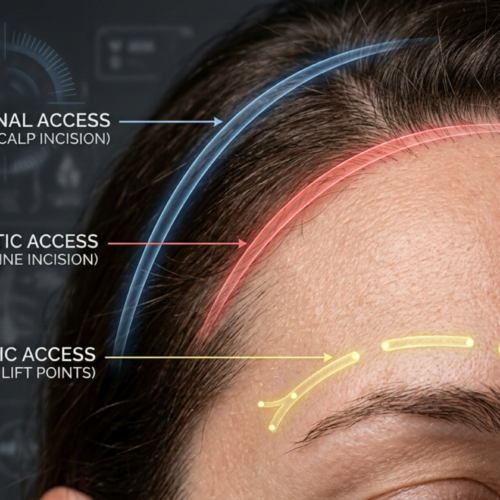
The surgeon will then make an incision on your scalp near your hairline or temple depending on where your defect is located. They will then access your frontal sinus using special instruments such as endoscopes (thin tubes with cameras) or microscopes (small devices with lenses). They will then remove any excess skin or bone from in front of your frontal sinus using scalpels (sharp knives), drills (power tools), lasers (light beams), or other methods.

They will then reshape or reposition your frontal sinus using bone grafts (pieces of bone taken from another part of your body) or bone cement (a sticky substance that hardens when mixed with water). They will then close any incisions with sutures (stitches) or staples (metal clips) depending on how much tissue they have removed.

The surgeon will then monitor your healing process closely for several weeks after surgery. They will check for any signs of infection, bleeding, swelling, bruising, numbness, tingling, pain, stiffness, scarring, asymmetry, recurrence (returning back to original condition), dissatisfaction (not meeting expectations), complications (unforeseen problems), etc.

They will also provide you with instructions on how to care for yourself at home such as taking medications (prescribed drugs), applying dressings (gauze pads), changing bandages (wrapping materials), elevating head (raising pillow), avoiding strenuous activities (lifting weights), etc.

A close-up portrait of a woman with smooth, radiant skin, looking upwards with long eyelashes and glossy lips, showcasing natural beauty.

What are some benefits and risks of forehead reconstruction surgery?

Forehead reconstruction surgery can offer many benefits for people who suffer from defects in their forehead due to various reasons such as trauma, disease, birth defect, or aging. Some benefits are:

  • Improved appearance: Forehead reconstruction surgery can enhance the beauty and harmony of your face by creating a more defined, balanced, or attractive forehead shape. It can also improve your self-esteem and confidence by making you feel more comfortable and satisfied with yourself.
  • Improved function: Forehead reconstruction surgery can improve the health and well-being of your face by correcting any problems that affect breathing, vision, hearing, smell, taste, or sensation. It can also prevent further damage or complications that may result from untreated defects.
  • Improved quality: Forehead reconstruction surgery can improve the quality and longevity of life by restoring normalcy, functionality, and happiness.
  • Infection: Forehead reconstruction surgery can cause infection in the wound site, the frontal sinus, or the brain. Infection can lead to fever, pain, swelling, redness, pus, or drainage. Infection can also spread to other parts of the body and cause serious complications such as meningitis (inflammation of the membranes around the brain) or abscess (collection of pus in the brain).
  • Bleeding: Forehead reconstruction surgery can cause bleeding in the scalp, the frontal sinus, or the brain. Bleeding can lead to hematoma (collection of blood under the skin), epistaxis (nosebleed), or intracranial hemorrhage (bleeding inside the skull). Bleeding can also cause anemia (low red blood cell count), hypotension (low blood pressure), or shock (life-threatening condition).
  • Swelling: Forehead reconstruction surgery can cause swelling in the forehead, the eyes, or the brain. Swelling can lead to edema (fluid accumulation under the skin), ecchymosis (bruising), or increased intracranial pressure (pressure inside the skull). Swelling can also cause headache, nausea, vomiting, dizziness, or vision problems.
  • Numbness: Forehead reconstruction surgery can cause numbness in the forehead, the scalp, or the face. Numbness can result from nerve damage, nerve compression, or nerve irritation. Numbness can also affect sensation, movement, or expression.
  • Scarring: Forehead reconstruction surgery can cause scarring in the scalp, the forehead, or the face. Scarring can result from wound healing, tissue removal, or tissue grafting. Scarring can also affect appearance, function, or comfort.
  • Asymmetry: Forehead reconstruction surgery can cause asymmetry in the forehead, the eyes, or the face. Asymmetry can result from uneven tissue removal, uneven tissue grafting, or uneven tissue healing. Asymmetry can also affect appearance, function, or satisfaction.
  • Recurrence: Forehead reconstruction surgery can cause recurrence of the defect in the forehead, the frontal sinus, or the brain. Recurrence can result from incomplete tissue removal, incomplete tissue grafting, or incomplete tissue healing. Recurrence can also affect appearance, function, or satisfaction.
  • Dissatisfaction: Forehead reconstruction surgery can cause dissatisfaction with the outcome of the surgery. Dissatisfaction can result from unrealistic expectations, poor communication, or poor results. Dissatisfaction can also affect self-esteem, confidence, or happiness.
Close-up photo of a person's face, focusing on the eyes and eyebrows. The person has dark hair, thick eyebrows, and is looking upward. The background is plain and light-colored.

Conclusion

Forehead reconstruction surgery is a type of plastic surgery that can restore the shape, size, or function of the forehead after it has been damaged by trauma, disease, birth defect, or aging. Forehead reconstruction surgery can offer many benefits such as improved appearance, improved function, and improved quality of life. However, forehead reconstruction surgery also has some risks such as infection, bleeding, swelling, numbness, scarring, asymmetry, recurrence, or dissatisfaction. Therefore, it is important to consult with a qualified and experienced plastic surgeon before deciding to undergo forehead reconstruction surgery. The surgeon will evaluate your condition, discuss your goals and expectations, and choose the best type of surgery for your case. The surgeon will also explain the procedure, the recovery, and the possible complications of forehead reconstruction surgery. Forehead reconstruction surgery is a complex and delicate procedure that requires careful planning and preparation, but it can also provide significant improvement and satisfaction for people who suffer from defects in their forehead.

Visit the Dr.MFO Instagram profile for examples of successful Surgeries. Contact for free consultation.

5 Facial Feminization Surgery Procedures That Can Enhance Your Beauty

A close-up portrait of a woman with smooth skin, looking off to the side with a neutral expression, against a plain background.

How About Learning 5 Facial Feminization Surgery Procedures That Will Improve Your Beauty? Facial Feminization Surgery (FFS) is a suite of procedures designed to bring balance and harmony to the face, aligning its features with feminine aesthetics. While individual goals vary, FFS can be transformative for transgender and non-binary individuals seeking to achieve a more authentic and comfortable presentation.

A woman with blonde hair tied back, featuring surgical markings on her eyelid, likely indicating preparation for a blepharoplasty procedure.

1. Forehead Reduction and Hairline Lowering

A prominent forehead is often associated with masculine features. FFS can address this by reducing the forehead’s height and lowering the hairline. This is achieved through scalp advancement, where a portion of the scalp is moved forward, resulting in a softer, more rounded forehead contour. This can be further enhanced with hair transplantation, creating a delicate and feminine hairline.

2. Brow Lift and Feminization

Brow bones and their position play a crucial role in facial expression. FFS addresses this through brow lift and feminization procedures. Through a combination of bone shaving and soft tissue manipulation, the brow bones can be softened and repositioned. This creates a more arched and lifted brow shape, enhancing femininity and expressiveness.

3. Rhinoplasty: Reshaping the Nose

The nose is a central facial feature and can significantly impact overall appearance. FFS rhinoplasty aims to achieve a feminine nose shape, typically characterized by a refined tip, narrower bridge, and delicate curves. The surgeon carefully sculpts the nasal bones and cartilage, ensuring a natural and harmonious result.

4. Cheek Augmentation and Jawline Contouring

Cheek fullness and a defined jawline are key characteristics of a feminine face. FFS addresses these aspects through cheek augmentation and jawline contouring. Implants or fat grafting can be used to add volume to the cheeks, creating a soft, youthful appearance. Jawline contouring techniques, like bone reduction and soft tissue manipulation, can then refine the jawline, enhancing its delicate and feminine shape.

5. Tracheal Shave and Adam’s Apple Reduction

The prominence of the Adam’s apple is a masculine feature that can be addressed through FFS. A tracheal shave involves removing excess cartilage from the Adam’s apple, creating a smoother and less pronounced neck contour. This procedure can significantly enhance the femininity of the neck and throat area.

A woman with her eyes closed is being examined by a medical professional wearing gloves, who is marking her face with a pen, likely preparing for a cosmetic procedure.

The Transformative Power of FFS: A Surgeon’s Perspective

As a facial feminization surgeon Dr. MFO, I have witnessed the profound impact these procedures can have on my patients’ lives. FFS is more than just cosmetic surgery; it’s about aligning physical appearance with internal identity. The transformation I see goes beyond the physical; it manifests in increased confidence, self-esteem, and a sense of belonging.

There are critics who argue against FFS, claiming it reinforces gender stereotypes. However, I believe this misses the point. FFS is a tool for self-expression and empowerment, allowing individuals to achieve a physical appearance that aligns with their authentic selves. It’s not about conforming to societal norms, but rather about reclaiming control and expressing one’s unique identity.

Ultimately, the decision to pursue FFS is a personal one. It’s important to carefully consider the physical and emotional implications, to seek qualified professionals, and to prioritize realistic expectations. For those who choose this path, FFS can be a transformative journey, opening doors to self-acceptance and a fuller expression of who they truly are.

Mehmet Fatih Okyay, MD, FEBOPRAS in Türkiye.

Choose Dr. MFO for Feminization Surgery Procedures: Embark on Your Journey to Self-Discovery

For transgender women seeking facial feminization surgery (FFS), the choice of surgeon is paramount. Dr. MFO, a renowned expert in this field, stands out as the ideal partner on this transformative journey. Here’s why:

Unmatched Expertise and Experience:

Dr. MFO boasts over 10 years of dedicated experience in FFS, honing his skills and techniques to achieve consistently exceptional results. His commitment to ongoing research and mastery of advanced surgical approaches ensures his patients benefit from the latest advancements in the field. This deep understanding of facial anatomy and the unique nuances of FFS surgery positions him as a leading authority whom you can trust with your journey.

A Collaborative Approach Tailored to Your Needs:

No two faces are identical, and neither are their FFS needs. Dr. MFO recognizes this and prioritizes a personalized, collaborative experience. During your consultation, he will listen attentively to your goals, assess your facial features, and recommend a treatment plan specifically tailored to your unique needs and desires. This collaborative approach ensures you receive the right combination of procedures to achieve your desired outcomes, while preserving your individual beauty.

Experience Exceptional Results with Natural Beauty:

Dr. MFO’s dedication to achieving natural-looking results is unwavering. His meticulous surgical technique prioritizes minimizing scarring and ensuring a smooth, seamless transition. This focus on preserving your natural beauty while enhancing your feminine features is evident in the numerous before-and-after photos on his website, dr-mfo.com. These photos showcase the transformative power of his work, allowing you to envision your own potential outcome.

State-of-the-Art Facilities and Advanced Technology:

Dr. MFO prioritizes your comfort and safety. His state-of-the-art clinic is equipped with the latest technology and resources, ensuring your procedures are performed with precision, accuracy, and minimal discomfort. This commitment to providing a positive and rewarding experience extends to every aspect of your journey.

Invest in Your Future Self:

Choosing Dr. MFO for FFS is not just about physical transformation; it’s an investment in your future happiness and well-being. By addressing your facial features in line with your gender identity, you can enhance your confidence, embrace your authentic self, and experience a renewed sense of joy and fulfillment. Dr. MFO is more than just a surgeon; he is a trusted partner who will guide and support you throughout your journey.

Ready to embark on your journey of self-discovery? Contact Dr. MFO today to schedule a consultation and take the first step towards achieving your FFS goals. Remember, choosing the right surgeon is crucial for success. With Dr. MFO’s expertise, experience, and unwavering commitment to your well-being, you can embrace your future with confidence and joy.

Visit the Dr.MFO Instagram profile for examples of successful Surgeries. Contact for free consultation.

FAQ

1. Is Dr. MFO a board-certified facial plastic surgeon?

Board certification is crucial when choosing a surgeon for any procedure, especially one as delicate and impactful as FFS. It ensures that the surgeon has undergone rigorous training and passed comprehensive exams demonstrating their expertise in the field.

2. Does Dr. MFO have specific experience with FFS for transgender patients?

While board certification is important, experience specifically with FFS is paramount. Look for a surgeon who has a proven track record of successful FFS procedures for transgender individuals. Their portfolio should showcase various cases and demonstrate their ability to achieve natural-looking and feminizing results.

3. What are Dr. MFO’s surgical techniques and philosophy?

Every surgeon has their preferred techniques and philosophies. Research Dr. MFO’s approach to FFS. Do their techniques align with your desired outcome and priorities? Are they known for achieving natural-looking results that avoid an “overdone” appearance?

4. What is Dr. MFO’s communication style and patient care philosophy?

Facial Feminization Surgery is a deeply personal experience. Look for a surgeon who prioritizes patient communication and understanding. Does Dr. MFO provide comprehensive consultations? Do they encourage open communication and address your questions and concerns thoroughly?

5. What are the costs associated with Dr. MFO’s FFS procedures?

The cost of FFS varies depending on the specific procedures performed and individual factors. Be transparent about your budget and inquire about Dr. MFO’s fees, financing options, and any additional expenses involved.

6. What are Dr. MFO’s patient reviews and testimonials like?

Reading patient reviews and testimonials can offer valuable insights into Dr. MFO’s skills, bedside manner, and overall patient experience. Look for positive feedback about their surgical results, communication, and care throughout the process.

7. Does Dr. MFO offer follow-up care and support after surgery?

Recovery from FFS is an important part of the journey. Ensure Dr. MFO provides comprehensive post-operative care, including regular follow-up appointments, wound management guidance, and emotional support.

8. Can you see Dr. MFO’s before-and-after photos of FFS patients?

Visual evidence is key when assessing a surgeon’s skill and ability to achieve desired results. Review Dr. MFO’s before-and-after photos of previous FFS patients. Do the results appear natural and feminine? Do they align with your aesthetic goals?

9. Is Dr. MFO’s clinic accredited and equipped with the latest technology?

A well-equipped and accredited clinic ensures a safe and comfortable surgical experience. Check if Dr. MFO’s clinic is accredited by relevant medical organizations and utilizes advanced technology and equipment for optimal surgical outcomes.

10. Does Dr. MFO offer virtual consultations or online support resources?

For geographically distant patients, access to virtual consultations and online support resources can be invaluable. Does Dr. MFO offer these options to facilitate communication and provide support throughout your FFS journey?

By carefully considering these questions and conducting thorough research, you can make an informed decision about choosing Dr. MFO for your Facial Feminization Surgery. Remember, the right surgeon should not only possess technical expertise but also prioritize your individual needs and well-being throughout the entire process.

Facial Rejuvenation: A Personalized Journey to Youthfulness

facelift, mini facelift

The desire to retain a youthful appearance is as old as time itself, and with advancements in aesthetic medicine, achieving this desire has never been more accessible. However, when it comes to facial rejuvenation procedures, a one-size-fits-all approach simply doesn’t work. Every individual possesses unique facial features, concerns, and goals, demanding a customized treatment plan for optimal results.

A smiling elderly woman with short gray hair, wearing a light-colored sweater and a diamond ring on her finger, posing with her hands clasped under her chin.

Understanding Your Individual Needs

Before embarking on any facial rejuvenation journey, it’s crucial to understand your individual needs and desires. What aspects of your appearance do you wish to address? Are there specific areas of concern, such as wrinkles, sagging skin, or volume loss? Discussing these concerns with a qualified and experienced plastic surgeon is the initial step towards personalized rejuvenation.

Facial Rejuvenation

A Tailored Approach to Rejuvenation

Gone are the days of generic facelift procedures. Today, advanced techniques and technologies allow for highly individualized treatment plans. Your surgeon will meticulously assess your facial anatomy, skin quality, and overall health to determine the most suitable procedures and combinations to achieve your desired outcome.

Here’s a glimpse into the diverse toolbox of facial rejuvenation techniques:

Injectables:

  • Botox: Relaxes overactive muscles, reducing the appearance of wrinkles and fine lines.
  • Dermal fillers: Restore volume loss, plump lips, and enhance facial contours.
  • Kybella: Dissolves submental fat, eliminating unwanted fullness under the chin.

Surgical Procedures:

  • Facelift: Tightens and lifts facial tissues, resulting in a more youthful appearance.
  • Brow lift: Elevates the brow line, reducing wrinkles and creating a more alert look.
  • Eyelid surgery: Addresses drooping eyelids and bags under the eyes, restoring a youthful and refreshed look.
  • Fat grafting: Transfers fat to specific areas of the face, enhancing volume and fullness.

Energy-Based Treatments:

  • Lasers: Resurface the skin, improve texture, and address concerns like acne scars and hyperpigmentation.
  • Microneedling: Stimulates collagen production and promotes skin rejuvenation.
  • Radiofrequency: Tightens skin and reduces the appearance of wrinkles.

Combination Therapy:

The true power of facial rejuvenation lies in the strategic combination of various techniques. By combining injectables, surgical procedures, and energy-based treatments, your surgeon can create a customized plan that addresses your specific concerns and delivers a natural-looking, rejuvenated appearance.

Beyond Aesthetics: The Importance of Facial Harmony

Facial rejuvenation isn’t simply about erasing wrinkles or chasing fleeting trends. It’s about achieving balance, harmony, and a natural-looking appearance. A skilled surgeon understands that facial aesthetics are deeply intertwined with individual features and expressions. Their goal is to enhance your natural beauty, not to create a cookie-cutter look.

A Collaborative Journey

The journey to facial rejuvenation is a collaboration between you and your surgeon. Open communication and realistic expectations are crucial for achieving your desired outcome. Be prepared to discuss your medical history, skincare routine, and lifestyle habits, as these factors can influence the choice of procedures and the overall success of your treatment.

Embracing Your Unique Beauty

Embrace your individuality and the unique characteristics that make you who you are. Facial rejuvenation should be a journey of self-discovery and self-love, not a pursuit of unrealistic beauty ideals. When approached mindfully and with a focus on personalized care, it can be a transformative experience that enhances your confidence and well-being.

Remember, every face tells a story, and your facial rejuvenation journey should be a beautiful continuation of that narrative.

Mehmet Fatih Okyay, MD, FEBOPRAS in Türkiye.

Choose Dr. MFO for Best Facial Rejuvenation: Unleash Your Inner Radiance

As we age, the natural beauty of our faces can gradually fade, leaving behind visible signs of aging like wrinkles, fine lines, and sagging skin. While this is a natural part of life, it doesn’t mean you have to accept it passively. Dr. MFO, a renowned expert in facial rejuvenation surgery, offers a comprehensive range of procedures to help you reclaim your youthful glow and achieve a more refreshed, revitalized appearance.

Unmatched Expertise and Experience

Dr. MFO boasts over 10 years of experience in facial plastic surgery, specializing in advanced techniques and innovative approaches to achieve natural-looking results. He continuously researches and incorporates the latest advancements in the field, ensuring his patients benefit from the most effective and cutting-edge methodologies. This exceptional expertise, combined with a deep understanding of facial anatomy and aesthetics, positions Dr. MFO as a leading authority in facial rejuvenation surgery.

A Tailored Approach for Individual Needs

No two faces are the same, and neither are their rejuvenation needs. Dr. MFO recognizes this and prioritizes a personalized approach for each patient. During your consultation, he will carefully assess your facial features, discuss your individual goals, and recommend a personalized treatment plan that addresses your specific concerns. This collaborative approach ensures you receive the perfect combination of procedures to achieve your desired results without compromising your unique individuality.

Surpassing Expectations with Natural Beauty

Dr. MFO’s dedication extends beyond surgical expertise. He believes in achieving natural-looking results that enhance your features without altering your unique essence. His meticulous surgical technique prioritizes minimizing scarring and ensuring a smooth, seamless transition, allowing your natural beauty to shine through. This commitment to preserving your individuality while achieving remarkable rejuvenation is evident in the numerous before-and-after photos on his website, dr-mfo.com, showcasing the transformative power of his work.

State-of-the-Art Facilities and Advanced Technology

Your comfort and safety are Dr. MFO’s top priorities. At his clinic, you will experience the highest quality care in a state-of-the-art facility equipped with the latest technology and resources. This ensures your treatment is performed with precision, accuracy, and minimal discomfort, contributing to a positive and rewarding experience.

Investing in Your Future Self

Choosing Dr. MFO for your facial rejuvenation is not just about turning back time, it’s about investing in your future self. By addressing signs of aging, you can boost your confidence, enhance your well-being, and radiate a renewed sense of vitality. Dr. MFO is more than just a surgeon; he is a trusted partner in your journey towards a more vibrant and youthful you.

Ready to unleash your inner radiance? Contact Dr. MFO today to schedule a consultation and embark on your personalized path to facial rejuvenation.

Visit the Dr.MFO Instagram profile for examples of successful Surgeries. Contact for free consultation.

FAQ

What are the most popular facial rejuvenation surgeries?

Facelifts, eyelid lifts, and brow lifts are some of the most popular choices for those seeking a more youthful appearance.

Which surgery is best for specific concerns?

Depending on your desired outcome, various procedures address specific concerns. Forehead wrinkles might benefit from a brow lift, while sagging skin around the eyes might respond better to eyelid surgery.

Is a facelift always necessary?

Not always! Less invasive options like laser treatments, fillers, and injectables might be sufficient for early signs of aging.

What are the benefits and risks?

Each surgery has its own set of advantages and potential drawbacks. Consulting a board-certified surgeon is crucial to understand the specific risks and benefits relevant to your situation.

What can I expect from the results?

Facial rejuvenation surgery aims to restore a more youthful appearance, with results lasting for several years, depending on individual factors and chosen procedures.

Who is a good candidate for surgery?

Generally, healthy individuals with realistic expectations and specific concerns can consider facial rejuvenation surgery. Consult a surgeon for a personalized assessment.

What’s the recovery process like?

Recovery time varies depending on the surgery’s complexity. Typically, it involves some swelling, bruising, and discomfort, but most patients return to their usual routines within weeks.

How much does it cost?

The cost varies based on the surgery type, surgeon’s expertise, and geographical location. Consult with potential surgeons for specific quotes.

Are there financing options available?

Some clinics or surgeons may offer financing options to help patients manage the cost of surgery.

Non-surgical alternatives?

Non-surgical options exist for those who prefer a less invasive approach. These include laser treatments, injectables, and topical creams, though their results might be subtler and require maintenance.

Unveiling the Feminine Essence: Facial Feminization for Cisgender Women

A portrait of a woman with long dark hair, looking over her shoulder with a gentle smile.

For many cisgender women, a mismatch between their internal sense of femininity and the way their face is perceived by the world can be a source of significant distress. This discrepancy can be due to several factors, including genetics, facial bone structure, and even hormonal influences. Fortunately, facial feminization surgery offers a safe and effective solution for women seeking to achieve a more feminine facial appearance.

A close-up portrait of a woman with smooth skin and subtle makeup, showcasing her facial features and hair.

Beyond Stereotypes: Redefining Femininity

While traditional beauty standards often associate femininity with specific features like delicate cheekbones, full lips, and a soft jawline, it’s crucial to remember that femininity is a beautiful spectrum. It encompasses a diverse range of facial features and expressions that are unique to each individual.

Instead of chasing fleeting trends or conforming to rigid societal expectations, facial feminization surgery empowers women to embrace their own unique femininity. It’s not about transforming into a stereotypical image of “feminine” beauty, but rather enhancing and refining features that already exist.

Tailoring the Approach: A Personalized Journey

The beauty of facial feminization surgery lies in its customizable nature. Each procedure is carefully tailored to the individual patient’s needs and desired outcome. During a thorough consultation with a qualified plastic surgeon, women have the opportunity to discuss their specific concerns and goals.

The surgeon then performs a comprehensive facial analysis to identify which features might benefit from enhancement. This collaborative approach ensures that the final result is a natural and harmonious improvement that reflects the patient’s true essence.

A woman with closed eyes and a slight smile, featuring highlighted facial zones with dashed lines and arrows, indicating areas for facial analysis or cosmetic treatment.

A Symphony of Procedures: Unveiling the Feminine Form

Facial feminization surgery encompasses a wide range of procedures, each targeting specific areas of the face. Some of the most common procedures include:

  • Forehead reduction: This procedure reduces the height of the forehead, creating a softer and more feminine hairline.
  • Brow bone shaving: By subtly reducing the prominence of the brow bone, this procedure creates a more delicate and youthful appearance.
  • Rhinoplasty: Reshaping the nose can improve facial balance and create a more feminine profile.
  • Chin augmentation: Enhancing the chin with an implant can add definition and balance to the lower face.
  • Cheek augmentation: Adding volume to the cheeks can create a more rounded and youthful appearance.
  • Lip augmentation: Plumping lips can add fullness and sensuality to the face.

These procedures can be performed individually or in combination, depending on the patient’s desired outcome. The surgeon will work collaboratively with the patient to develop a personalized treatment plan that achieves their unique goals.

Beyond Aesthetics: The Emotional Transformation

The impact of facial feminization surgery extends far beyond the physical realm. Studies have shown that women who undergo this procedure often experience significant improvements in their self-confidence, self-esteem, and overall quality of life.

Feeling more comfortable and confident in their own skin allows them to participate more fully in social and professional settings, leading to a more fulfilling and enriching life.

Embracing Your Authentic Self: A Journey of Empowerment

The decision to undergo facial feminization surgery should be a personal and well-considered one. It’s important to choose a board-certified plastic surgeon who specializes in this specific area and has a proven track record of successful outcomes.

By approaching the process with realistic expectations and a positive mindset, women can embark on a transformative journey that empowers them to Embrace their authentic selves and express their inner femininity with confidence and joy.

Mehmet Fatih Okyay, MD, FEBOPRAS in Türkiye.

Dr. MFO: Your Trusted Guide to Facial Feminization Surgery

For transgender women seeking to achieve a more feminine facial appearance, Facial Feminization Surgery (FFS) can be a life-changing experience. Choosing the right surgeon for this delicate and transformative procedure is critical. Dr. MFO, a renowned expert in FFS, stands out as the ideal choice for several compelling reasons.

Expertise and Experience:

Dr. MFO possesses a unique combination of expertise and experience in FFS. He has dedicated years to refining his skills and techniques, performing numerous successful surgeries and achieving consistently exceptional results. This dedication and experience translate into a deep understanding of facial anatomy and the nuances of FFS, allowing him to tailor each surgery to the individual needs and desires of the patient.

Superior Surgical Technique:

Dr. MFO is renowned for his meticulous surgical technique, which prioritizes both aesthetic beauty and natural results. He utilizes advanced surgical techniques that minimize scarring and ensure a smooth, natural-looking outcome. This commitment to excellence is evident in the countless testimonials and positive reviews from satisfied patients.

Patient-Centered Approach:

Dr. MFO believes in a patient-centered approach, prioritizing open communication and collaboration throughout the FFS journey. He takes the time to understand each patient’s unique goals and expectations, ensuring they feel comfortable and informed throughout the process. This collaborative approach fosters trust and confidence, leading to a more positive and successful outcome.

Exceptional Results:

Dr. MFO’s work speaks for itself. His patients consistently achieve stunning, natural-looking results that enhance their facial features and contribute to a more feminine appearance. This is evident in the numerous before-and-after photos on Dr. MFO’s website, dr-mfo.com, which showcase the transformative power of his FFS expertise.

State-of-the-Art Facilities:

Dr. MFO operates out of state-of-the-art facilities equipped with the latest technology and resources. This ensures that his patients receive the highest quality care in a comfortable and safe environment.

Choosing Dr. MFO for your FFS journey means entrusting your care to a highly skilled and experienced surgeon who prioritizes natural-looking results and patient satisfaction. With his expertise, dedication, and patient-centered approach, Dr. MFO can help you achieve your facial feminization goals and embark on the next chapter of your life with confidence and joy.

Ready to take the next step? Contact Dr. MFO today to schedule a consultation and discuss your FFS goals.

Visit the Dr.MFO Instagram profile for examples of successful Surgeries. Contact for free consultation.

FAQ
Can FFS benefit cisgender women seeking facial harmony?

Yes, Facial Feminization Surgery (FFS) can be beneficial for cisgender women seeking facial harmony and balance. While traditionally focused on transgender individuals, FFS can address specific features that may feel disproportionate or out of balance on a cisgender woman’s face. This can lead to a more harmonious and aesthetically pleasing overall appearance.

What features can be addressed?

FFS for cisgender women can address various features, including:

  • Brow shape and position: Raising the brows and softening the arches can create a more open and youthful appearance.
  • Nose size and shape: Rhinoplasty can address a large or prominent nose, leading to a more balanced facial profile.
  • Cheek fullness and definition: Implants or fillers can add volume to the cheeks, creating a rounder and more feminine contour.
  • Jawline shape and prominence: Contouring the jawline can soften its angles and create a more delicate appearance.
  • Lip size and definition: Lip augmentation can add fullness and definition, enhancing facial features and expression.

Non-surgical options for cisgender women?

Yes, several non-surgical options can offer similar benefits to FFS for cisgender women, although with varying degrees of effectiveness and permanency:

  • Makeup: Contouring and highlighting techniques can create a more sculpted and defined appearance.
  • Dermal fillers: These can be used to add volume to the cheeks, lips, and other areas for temporary enhancement.
  • Botox injections: These can relax facial muscles and soften wrinkles, creating a smoother and more youthful appearance.

Psychological and social impacts?

FFS can positively impact cisgender women’s lives, boosting confidence and self-perception. However, potential downsides exist, including:

  • Temporary side effects: Discomfort, swelling, and changes in sensation are common post-surgery experiences.
  • Unrealistic expectations: Setting overly specific or unattainable goals can lead to disappointment.
  • Financial burden: FFS is often expensive, and insurance coverage can be limited.

Differences for transgender and cisgender women?

The approach to FFS can differ between transgender and cisgender women:

  • Transgender: FFS focuses on aligning facial features with their gender identity, often requiring more extensive procedures.
  • Cisgender: FFS focuses on enhancing existing features for a more balanced and feminine appearance, often using less invasive techniques.

Risk of over-feminization?

Yes, there is a risk of over-feminization with FFS if desired outcomes are not clearly communicated or surgical skills are inadequate. Consulting an experienced and qualified surgeon is crucial to mitigate this risk.

Ethical considerations for cisgender women?

Ethical considerations include:

  • Body image and self-acceptance: FFS should be a choice made from self-love and a desire for personal enhancement, not societal pressure.
  • Informed consent: Potential risks and limitations should be thoroughly discussed with the surgeon.
  • Social and cultural norms: FFS can impact interactions and perceptions from others, and individuals should be prepared for potential reactions.

Mental health professional support?

Seeking professional support is advisable, especially if contemplating significant changes or experiencing body image concerns. A therapist can provide guidance and help manage expectations and potential emotional impacts.

Finding reliable information?

Researching reputable sources is crucial. Look for board-certified surgeons, patient testimonials, and unbiased information websites dedicated to FFS.

Long-term costs and considerations?

FFS involves long-term financial commitments, including surgery costs, potential follow-up procedures, and ongoing maintenance for non-surgical options. Consider the emotional impact and potential for evolving preferences over time.

How does FFS improve mental health and well-being for transgender women?

Facial Feminization Surgery (FFS) can significantly improve mental health and well-being for transgender women by alleviating gender dysphoria and creating a greater sense of alignment between their physical appearance and their gender identity. Studies have shown reductions in anxiety, depression, and social isolation after FFS, as well as increases in self-confidence and overall life satisfaction.

Can FFS alleviate gender dysphoria and feelings of incongruence?

Yes, FFS can be a powerful tool for alleviating gender dysphoria by addressing specific facial features that contribute to feelings of incongruence. By reshaping the brow, nose, jawline, and other features to appear more feminine, FFS can help transgender women feel more comfortable and authentic in their bodies.

What specific changes in facial features does FFS achieve?

FFS procedures can address a variety of facial features, including:

  • Forehead: Contouring the hairline and raising the brow line can create a more feminine appearance.
  • Nose: Rhinoplasty can reshape the nose to be smaller and more delicate, with a higher bridge and narrower tip.
  • Cheeks: Implants or soft tissue fillers can add fullness to the cheeks, creating a rounder, softer appearance.
  • Jawline: Contouring the jawline can reduce its prominence and create a more feminine shape.
  • Lips: Lip augmentation can add fullness and definition to the lips, creating a more feminine appearance.
  • Tracheal shave: This procedure reduces the prominence of the Adam’s apple.

How do individual FFS procedures contribute to the feminization effect?

Each FFS procedure contributes to the overall feminization effect by addressing specific facial features that are typically associated with a masculine appearance. By making subtle changes to these features, FFS can create a more balanced and harmonious facial appearance that aligns with a feminine gender identity.

Does FFS impact social interactions and gender expression?

Yes, FFS can positively impact social interactions and gender expression for transgender women. By feeling more confident and comfortable in their appearance, transgender women may feel more empowered to express their gender identity authentically in social settings. This can lead to improved social interactions, reduced discrimination, and increased feelings of belonging.

How do transgender women describe the impact of FFS on their confidence and self-perception?

Many transgender women report a significant boost in confidence and self-perception after FFS. Feeling more comfortable and authentic in their bodies can lead to increased self-esteem, improved social interactions, and a greater sense of well-being.

Does FFS contribute to improved social acceptance and reduced discrimination?

While FFS cannot eliminate discrimination against transgender people altogether, it can contribute to improved social acceptance by allowing transgender women to present themselves in a way that aligns with their gender identity. This can lead to increased understanding and acceptance from others, reducing the risk of discrimination and harassment.

Are there non-surgical options for achieving similar results to FFS?

Yes, there are some non-surgical options available for achieving some of the effects of FFS. These include:

  • Makeup: Contouring and highlighting techniques can be used to create a more feminine appearance.
  • Dermal fillers: These can be used to add volume to the cheeks, lips, and other areas.
  • Hair removal: This can be used to soften facial features and create a more feminine appearance.

It’s important to note that these non-surgical options are not always as effective as FFS and may require ongoing maintenance.

What are the long-term psychological and social effects of FFS on transgender women’s lives?

The long-term effects of FFS are generally positive, with most transgender women reporting sustained improvements in mental health, self-esteem, and social interactions. However, it’s important to note that individual experiences may vary, and some women may experience temporary challenges after surgery, such as depression or anxiety.

What are the ethical considerations surrounding FFS, and how do they relate to transgender rights and access to healthcare?

The ethical considerations surrounding FFS are complex and involve issues such as informed consent, access to affordable care, and the potential for discrimination. Transgender women should have the right to access medically necessary healthcare, including FFS, without discrimination or undue burden. It’s important to ensure that access to FFS is equitable and affordable for all transgender women who desire it.