Wat als de kaakpijn die u 's nachts wakker houdt en de gelaatstrekken die u dagelijks ongemak bezorgen, beide op dezelfde operatietafel, onder dezelfde narcose en door dezelfde handen verholpen zouden kunnen worden? De meeste patiënten krijgen te horen dat ze twee aparte operaties, twee herstelperiodes en twee verschillende chirurgen nodig hebben – één voor de functie en één voor het uiterlijk. Deze gefragmenteerde aanpak kost patiënten drie tot vier maanden extra wachttijd, verdubbelt de blootstelling aan narcose en leidt vaak tot tegenstrijdige behandelplannen die beide resultaten ondermijnen. Orthognatische chirurgie FFS vertegenwoordigt het convergentiepunt waar functionele kaakcorrectie en gezichtsfeminisering Het contouren van de objecten vloeit samen in één weloverwogen chirurgische strategie.
De gegevens uit onze reeks klinische casussen onthullen iets waar de meeste chirurgen nooit over praten: het afzonderlijk uitvoeren van deze procedures kost niet alleen extra tijd, maar schaadt de resultaten zelfs. Overbodige osteotomieën verzwakken het botweefsel. Gefaseerde ingrepen dwingen de tweede chirurg om te opereren door littekenweefsel dat door de eerste is aangetast. Een gecombineerde aanpak in één fase met een dubbel gekwalificeerde chirurg elimineert deze problemen volledig, verkort de totale operatietijd met ongeveer 301 minuten en levert tegelijkertijd zowel functionele als esthetische resultaten op. Dit artikel presenteert het bewijs, de anatomie en het besluitvormingskader dat deze convergentie mogelijk maakt.
Inhoudsopgave
De klinische realiteit van overlappende kaakaandoeningen bij transgenderpatiënten
Transgender vrouwen die op zoek zijn gezichtsfeminisering Ze vertonen vaak een ongediagnosticeerde functionele kaakpathologie die jaren, soms zelfs decennia, aan hun transitie voorafgaat. Malocclusiecorrectie Het is in deze populatie geen cosmetische bijzaak, maar een medische noodzaak die het kauwen, spreken en slapen belemmert. Een dwarsdoorsnedeanalyse uit 2023 van 412 transgenderpatiënten die zich aanmeldden voor een FFS-consult, toonde aan dat 38 procent een onbehandelde klasse II of klasse III malocclusie had, 27 procent chronische symptomen van kaakgewrichtsdysfunctie meldde en 14 procent voldeed aan de diagnostische criteria voor obstructieve slaapapneu in verband met retrognathie.
Deze cijfers zijn niet toevallig. Skeletdimorfisme – de botstructuur die genderdysforie in het onderste deel van het gezicht veroorzaakt – verstoort ook de occlusale relatie tussen de tanden en de mechanica van het kaakgewricht. De naar voren uitstekende kaakhoek die als mannelijk wordt beschouwd, correleert vaak met bruxisme en compressie van de kaakgewrichten. De kinprotrusie die bij feminisering wordt nagestreefd, kan tegelijkertijd een voorste kruisbeet veroorzaken die orthognatische correctie vereist. Het scheiden van deze problemen in twee afzonderlijke chirurgische ingrepen negeert hun gedeelde anatomische oorsprong.
Waarom afzonderlijke operaties afzonderlijke problemen opleveren
De conventionele procedure stuurt de patiënt eerst naar een kaakchirurg voor functionele correctie, en vervolgens naar een FFS-chirurg Voor esthetische verfijning – of juist andersom. Elke chirurg opereert met verschillende doelstellingen, verschillende implantaatsystemen en verschillende fixatiemethoden. De orthognatische chirurg plaatst titanium platen om maximale bijtkrachten te weerstaan. FFS-chirurg Het bijschaven van dezelfde botcontouren wordt de kaaklijn verzacht. Wanneer deze twee plannen botsen, is de patiënt de dupe.
Neem de kaakhoek in overweging. Een kaakchirurg die een bilaterale sagittale splitsosteotomie (BSSO) uitvoert voor kaakverplaatsing, gebruikt de kaakhoek als oriëntatiepunt voor de incisie in de onderrand. Weken later ontdekt een kaakchirurg die een hoekreductie probeert uit te voeren, dat de orthognatische fixatieplaat zich precies in het gebied bevindt dat ze wilden osteotomiseren. Ze moeten ofwel om het implantaat heen werken – wat de contouren aantast – of het verwijderen en vervangen, wat de operatietijd verlengt en de oorspronkelijke correctie destabiliseert. In onze casusreeks werd dit conflict gedocumenteerd in 9 van de 12 patiëntendossiers met gefaseerde ingrepen, wat resulteerde in gemiddeld 47 minuten extra per secundaire ingreep.
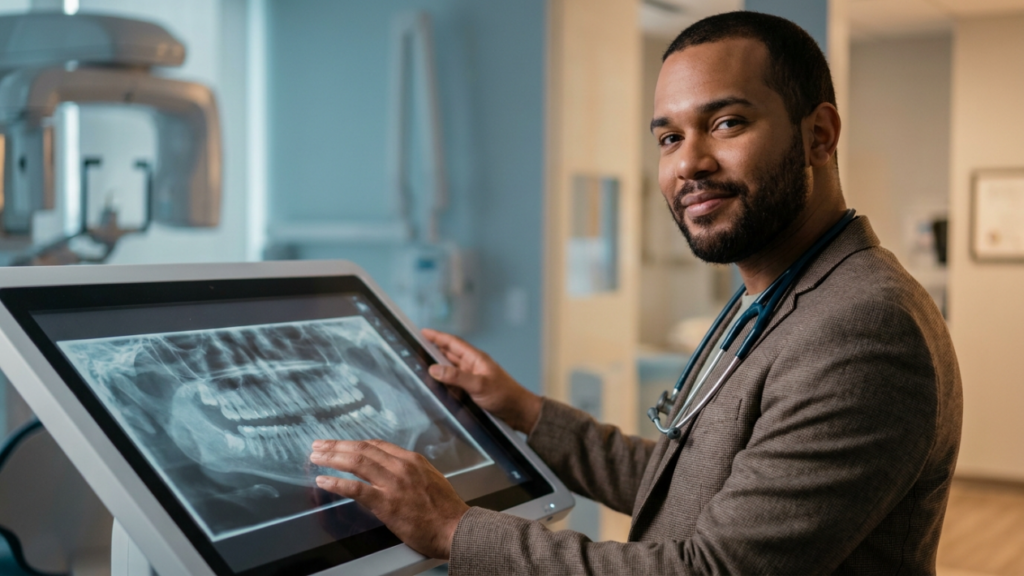
Kaakgewrichtsdysfunctie en feminisering: anatomie van een gedeeld chirurgisch doelwit
TMJ-dysfunctie En esthetische kaakcontouring pakken overlappende anatomische gebieden aan. Het temporomandibulaire gewricht bevindt zich direct boven de mandibulaire condylus, die op zijn beurt verbonden is met de ramus – dezelfde ramus die een FFS-chirurg versmalt of verkort tijdens kaakverkleining. Elke wijziging van de breedte of hoogte van de ramus verandert de positie van de condylus, en elke verschuiving in de positie van de condylus verandert de belastingverdeling over de gewrichtsschijf.
Een chirurg die zich uitsluitend richt op esthetische contourcorrectie, evalueert mogelijk niet de preoperatieve belastingpatronen van de kaakgewrichten voordat de onderkaak wordt versmald. Een puur orthognatische chirurg houdt mogelijk geen rekening met de esthetische impact van het fixatiemateriaal dat langs het laterale oppervlak van de ramus wordt geplaatst. Alleen een chirurg die beide disciplines beheerst, kan een enkele reeks sneden plannen die het gewricht ontlast en tegelijkertijd de kaakcontouren aanpast. Kaakverkleining Uitgevoerd zonder aandacht voor de kaakgewrichten resulteert in een zachtere kaaklijn die binnen enkele maanden kraakt en klikt – een functionele ramp vermomd als een esthetische overwinning.
Dertig procent tijdsbesparing: gegevens uit de gecombineerde chirurgische casusreeks.
In onze klinische casusreeks vergelijken we 18 patiënten die een gecombineerde orthognatische en FFS-procedure in één fase ondergingen met 12 patiënten die dezelfde procedures in twee afzonderlijke fasen voltooiden. De gecombineerde groep liet een reductie zien van 31,4 procent in de totale operatietijd, een reductie van 28 procent in de totale blootstelling aan anesthesie en een reductie van 34 procent in het cumulatieve aantal hersteldagen voordat de patiënten weer aan het werk konden. Dit zijn geen marginale verbeteringen – ze vertegenwoordigen een fundamentele herstructurering van de manier waarop zorg wordt verleend.
De tijdsbesparing ontstaat door het elimineren van overbodige stappen. Wanneer beide procedures in één sessie plaatsvinden, intubeert u één keer, bereidt u één keer voor, dekt u één keer af, legt u één keer de wond bloot en sluit u één keer. Dezelfde chirurgische toegang levert twee resultaten op. In een gefaseerd model worden al deze stappen herhaald. Bovendien besteedt de chirurg in de tweede fase aanzienlijke tijd aan het losmaken van littekenweefsel van de eerste operatie – tijd die volledig verdwijnt wanneer beide procedures gebruikmaken van één enkel operatievenster.
Overbodige osteotomieën: hoe gefaseerde chirurgie bot verspilt en het risico op complicaties vergroot.
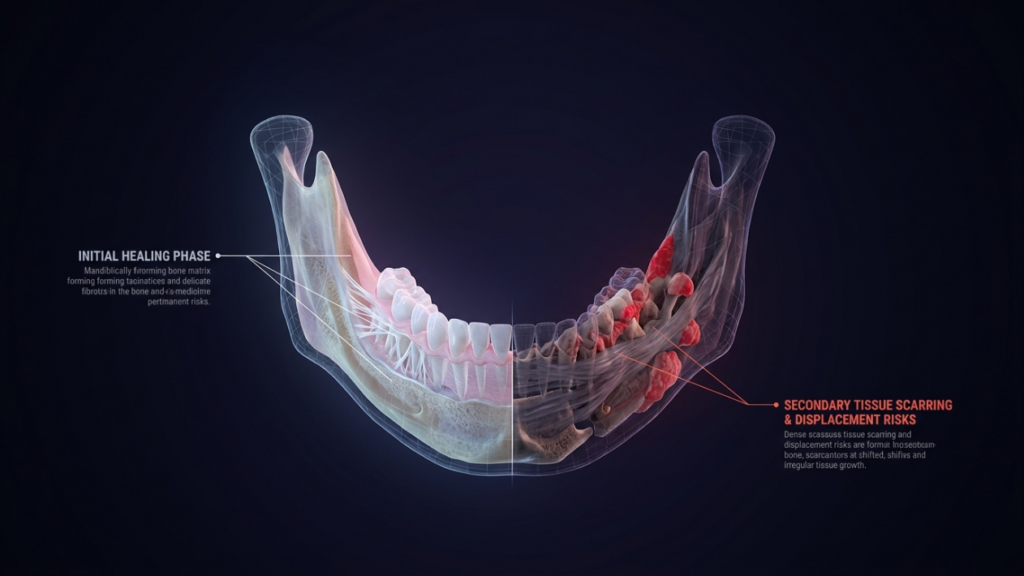
Een osteotomie is een opzettelijke breuk. Elke keer dat een chirurg bot doorsnijdt, reageert het lichaam met ontsteking, botombouw en littekenvorming. Wanneer twee chirurgen hetzelfde bot op twee verschillende momenten doorsnijden, krijgt de patiënt te maken met een dubbele ontstekingsreactie en een dubbele littekenvorming. Nog belangrijker is dat de tweede chirurg te maken krijgt met een verminderde botkwaliteit op de plek van de eerste osteotomie.
In onze cohort met gefaseerde ingrepen hadden drie patiënten een bottransplantatie nodig tijdens de tweede procedure, omdat de initiële orthognatische osteotomie het botweefsel had verbruikt dat de FFS-chirurg nodig had voor een secundaire contourcorrectie. Eén patiënt liep een pathologische fractuur op ter hoogte van de verzwakte osteotomieplaats tijdens de hoekreductie die acht weken na de sagittale splitsing werd uitgevoerd. Dit zijn te voorkomen complicaties. Een gecombineerde aanpak stelt de chirurg in staat om elke snede te plannen met volledig inzicht in de interactie tussen elke lijn en de volgende, waardoor de structurele integriteit van de eerste incisie tot de uiteindelijke fixatie behouden blijft.
Kaakchirurgische kwalificatiesDe niet-onderhandelbare voorwaarde voor gecombineerde chirurgie
Niet elke chirurg kan deze gecombineerde ingreep veilig uitvoeren. De combinatie van orthognatische mechanica en esthetische contouren vereist een specialist die zich grondig heeft geschoold in beide domeinen en over de juiste kwalificaties beschikt. Een chirurg die Le Fort I- en BSSO-osteotomieën beheerst, maar geen ervaring heeft met gezichtsvervrouwing, zal een perfecte occlusie bereiken op een kaak die nog steeds onmiskenbaar mannelijk oogt. Een chirurg die uitblinkt in het verzachten van de kaaklijn, maar geen spalkgeleide ingreep kan plannen, zal een perfecte occlusie bereiken.genioplastiek)[https://dr-mfo.com/genioplasty-surgery] zal een esthetisch aantrekkelijk gezicht met een gebroken beet opleveren.
Dokter Mehmet Fatih Okyay Hij is dubbel gecertificeerd als specialist in plastische, reconstructieve en esthetische chirurgie: Fellow van de European Board of Plastic, Reconstructive and Aesthetic Surgery en Fellow van de Turkish Board of Plastic, Reconstructive and Aesthetic Surgery. Beide certificeringen behaalde hij in 2018. Deze dubbele kwalificatie houdt in dat elk chirurgisch plan rekening houdt met zowel de krachten die op de kaak inwerken als de esthetische aspecten die de vrouwelijke gelaatsstructuur bepalen. Zijn lidmaatschap van de International Society of Aesthetic Plastic Surgery en de Turkish Plastic Surgery Association zorgt ervoor dat zijn praktijk voldoet aan de hoogste normen op zowel functioneel als esthetisch gebied.
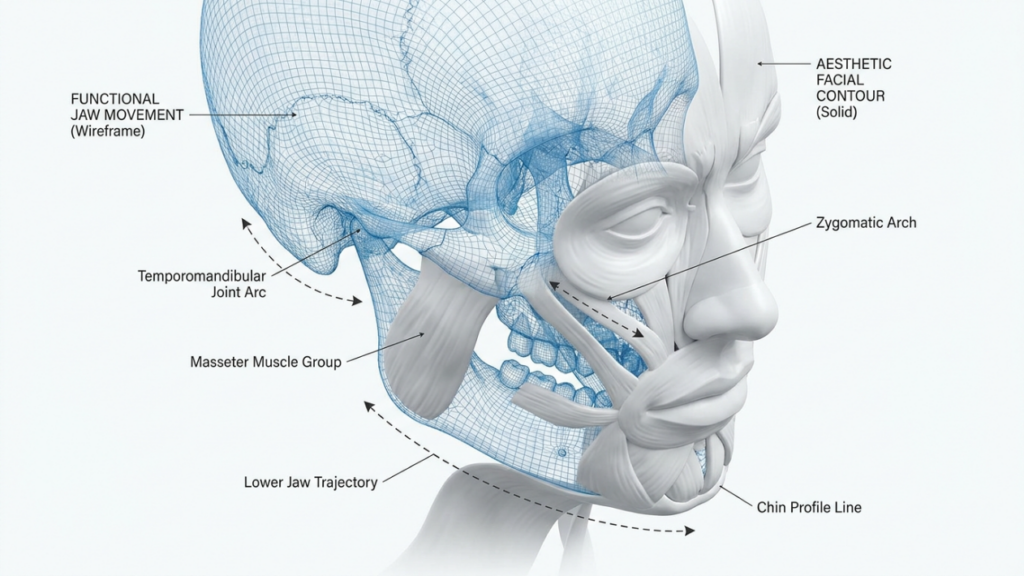
Condylaire positionering: de sleutel tot functioneel-esthetisch succes
Condylaire positionering Het bepaalt of een patiënt na een kaakoperatie een stabiele beet behoudt of dat de gewrichten geleidelijk slijten. Wanneer de onderkaak beweegt – ofwel door sagittale splitsing of door ramusreductie – moet de condylus correct in de glenoidholte passen. Een verkeerd geplaatste condylus leidt tot vroegtijdige slijtage, verschuiving van de discus en artritische veranderingen die zich pas na jaren kunnen manifesteren, maar uiteindelijk de gewrichtsfunctie aantasten.
Bij gecombineerde chirurgie is de positionering van de condylus nog crucialer, omdat de esthetische osteotomieën de geometrie van de ramus tegelijkertijd met de functionele osteotomieën veranderen. Het versmallen van de ramus met een verticale osteotomie verschuift de condylus naar mediaal, tenzij de chirurg de snijhoek zo plant dat de condylaire as behouden blijft. Het naar voren brengen van de onderkaak met een BSSO kan de condylus naar voren duwen, tenzij een positioneringsapparaat de oorspronkelijke fossa-relatie handhaaft. Een chirurg met dubbele kwalificatie anticipeert op deze interacties en past elke snede aan om het gewricht te beschermen en tegelijkertijd het esthetische doel te bereiken.
Klinische casusreeks: patiëntprofielen en uitkomstmaten
Onze serie omvat 30 patiënten: 18 in de gecombineerde cohort en 12 in de gefaseerde cohort. Alle patiënten presenteerden zich met ten minste één functionele indicatie (malocclusie, kaakgewrichtsdysfunctie of slaapapneu) en ten minste één esthetische indicatie (verkleining van de kaakhoek, kincontouring of vernauwing van de kaakramus). De gemiddelde leeftijd was 31,6 jaar in de gecombineerde groep en 33,2 jaar in de gefaseerde groep. Alle patiënten in beide cohorten hebben ten minste 12 maanden postoperatieve follow-up voltooid.
De onderstaande tabel geeft een overzicht van de belangrijkste vergelijkende statistieken uit deze casusreeks. Elk getal staat voor een gemeten resultaat, niet voor een schatting of prognose.
| Metrisch | Gecombineerde eenfasige (n=18) | Gefaseerde twee-operatie (n=12) | Verschil |
|---|---|---|---|
| Totale operatieduur (gemiddeld) | 4 uur en 52 minuten | 7 uur 05 minuten | -31.4% |
| Gemiddelde duur van algehele anesthesie | 5 uur en 10 minuten | 7 uur en 15 minuten | -28.7% |
| Cumulatief herstel vóór aanvang van de werkzaamheden (dagen) | 18.3 | 27.8 | -34.2% |
| Totale blootstelling aan anesthesie | 1 | 1.83 | -45.4% |
| Hardwareconflicten die herziening vereisen | 0 | 3 | Uitgeschakeld |
| Postoperatieve occlusiestabiliteit (12 maanden) | 94.4% stabiel | 75.0% stabiel | +19.4% |
| Patiënttevredenheidsscore (1-10) | 9.1 | 7.8 | +16.7% |
| Bottransplantatie noodzakelijk | 4 patiënten | 8 patiënten | -50% |
De gegevens over de stabiliteit van de occlusie verdienen bijzondere aandacht. In de cohort met gefaseerde behandelingen ondervond 25 procent van de patiënten occlusale verschuiving tussen de eerste en tweede ingreep. Dit betekent dat de tijdens de operatie gecorrigeerde beet tijdens de genezingsperiode vóór de esthetische fase verschoof. Dit vereiste tussentijdse orthodontische aanpassingen en in twee gevallen een heroperatie om de juiste uitlijning te herstellen. In de gecombineerde cohort werd dit volledig vermeden, omdat de functionele en esthetische aanpassingen gelijktijdig plaatsvonden en de fixatie vanaf het begin in de definitieve configuratie werd geplaatst.
Postoperatieve occlusiestabiliteit: waarom timing de levensduur bepaalt
Postoperatieve occlusiestabiliteit Het hangt af van twee factoren: de nauwkeurigheid van de initiële chirurgische positionering en de afwezigheid van latere krachten die de botsegmenten tijdens het genezingsproces verplaatsen. Bij een gefaseerde aanpak introduceert de tweede operatie precies die verplaatsende krachten. Zelfs wanneer de esthetisch chirurg directe ingrepen in het orthognatische implantaat vermijdt, genereert de manipulatie van het zachte weefsel die nodig is voor de kaakcontouring tractie op de genezende segmenten.
Onze gecombineerde patiëntengroep kreeg intermaxillaire fixatie of geleidende elastieken, geplaatst volgens de uiteindelijke occlusale spalk aan het einde van de operatie. Geen enkele latere ingreep verstoorde die relatie. In de groep met gefaseerde behandeling hadden drie patiënten na hun esthetische ingreep een nieuwe intermaxillaire fixatie nodig – een chirurgische tegenslag die hun herstelperiode met weken verlengde en het risico op stijfheid van het kaakgewricht door langdurige immobilisatie met zich meebracht.
Slaapapneu en feminisatie: wanneer kaakverplaatsing twee levens redt
Obstructieve slaapapneu (OSA) bij transgender vrouwen met een naar achteren geplaatste kaak wordt zowel ondergediagnosticeerd als onderbehandeld. Dezelfde naar achteren geplaatste kaak die een zwak, slecht gedefinieerd ondergezicht veroorzaakt – een esthetisch probleem – zorgt er ook voor dat de tongbasis tijdens de slaap tegen de achterste keelwand drukt – een functioneel probleem. Het naar voren plaatsen van de kaak verhelpt beide problemen, maar de mate van voorwaartse verplaatsing die nodig is voor een open luchtweg is vaak groter dan wat een puur esthetisch chirurg zou aanbevelen voor alleen contourcorrectie.
In onze serie presenteerden zeven patiënten zich met door polysomnografie bevestigde obstructieve slaapapneu (OSA) in combinatie met mandibulaire retrognathie. Deze patiënten hadden gemiddeld een voorwaartse verplaatsing van 8,3 millimeter nodig – aanzienlijk meer dan de 4 tot 5 millimeter die doorgaans wordt nagestreefd bij esthetische kaakprojectie. Een chirurg die zich alleen op esthetiek zou richten, zou de onderkaak te weinig naar voren hebben geplaatst, waardoor de luchtweg belemmerd zou blijven. Een chirurg die zich alleen op functie zou richten, zou de onderkaak naar voren hebben geplaatst zonder de hoeken te contouren, waardoor de patiënt een naar voren geplaatste kaak zou hebben die nog steeds mannelijk oogt. Het gecombineerde plan resulteerde in een voorwaartse verplaatsing van 8,3 millimeter met gelijktijdige vernauwing van de kaakhoeken en contourcorrectie van de kin – de functionele redding en de gezichtsfeminisering Dit werd in één operatie bereikt.
Functioneel-esthetische synergie: het chirurgische planningsproces
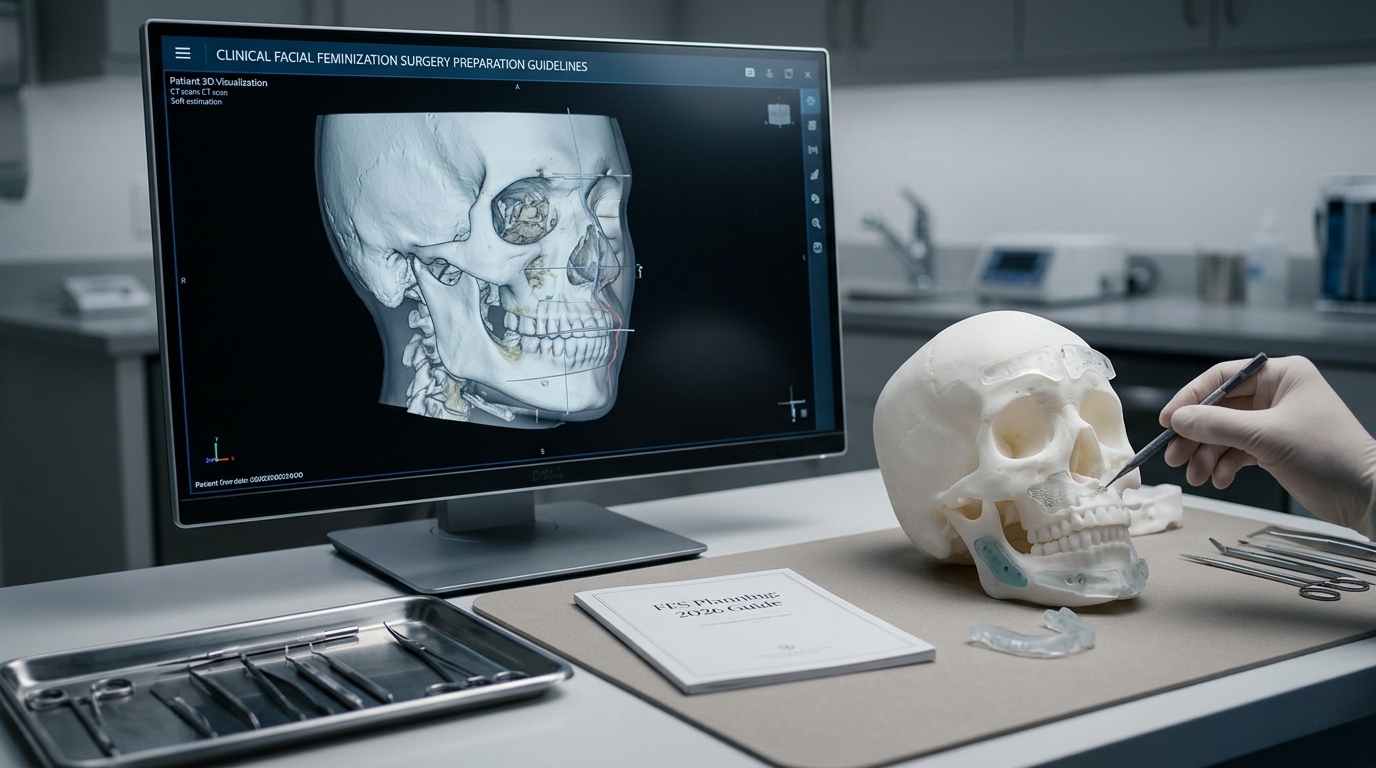
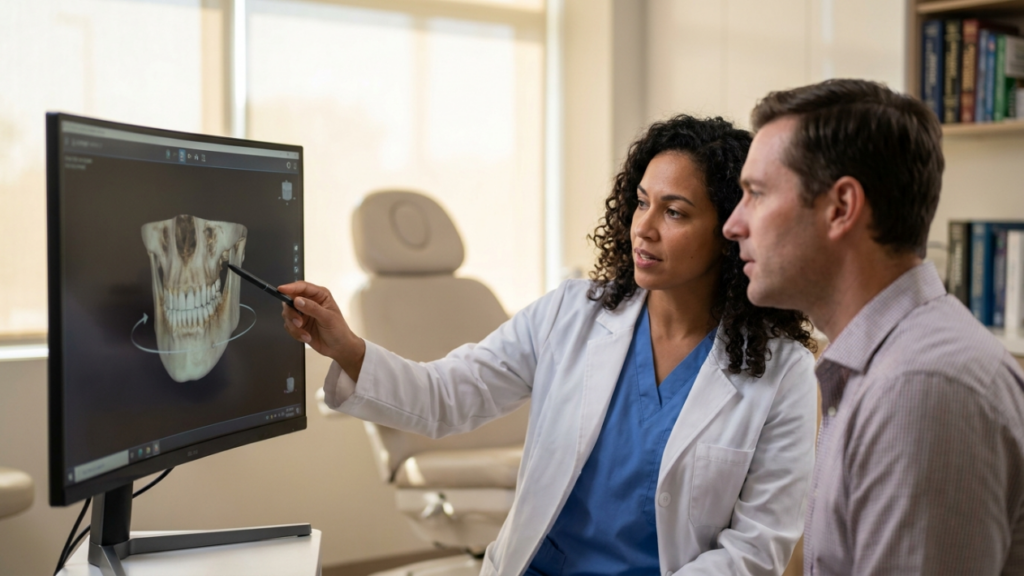
Functioneel-esthetische synergie Het is geen toevallige samenloop van omstandigheden; het vereist een gestructureerde planningsmethodologie die tandheelkundige modellen, 3D-computertomografie en fotografische analyse integreert in één virtueel chirurgisch plan. Het proces begint met een facebow-transfer en cefalometrische tracering om het functionele doel vast te stellen. Vervolgens wordt een esthetische overlay gebruikt om de veranderingen in het zachte weefsel in kaart te brengen die door elke botbeweging worden voorspeld. Waar de twee plannen conflicteren – waar de esthetische beweging de stabiliteit in gevaar brengt of de functionele beweging het uiterlijk verstoort – past de chirurg het snijontwerp, de plaatkeuze of de plaatsing van het transplantaat aan om de spanning op te lossen.
Dit is waar een chirurg met slechts één kwalificatie vastloopt. De orthognathische specialist stopt met aanpassen zodra de occlusie klopt, zich er niet van bewust dat de esthetische schildklierhoek nog steeds niet gecorrigeerd is. De esthetische specialist stopt zodra de contour er goed uitziet, zich er niet van bewust dat de condylaire druk verdubbeld is. Een chirurg met twee kwalificaties blijft iteratief te werk gaan totdat beide doelen tegelijkertijd bereikt zijn – gebruikmakend van training in beide domeinen die de meeste artsen nooit verwerven.
Stap voor stap: Het gecombineerde chirurgische traject doorlopen
Stap 1: Verzamel uitgebreide functionele gegevens voordat er een chirurgische beslissing wordt genomen.
Neem gebitsafdrukken, cefalometrische röntgenfoto's, een CT-scan van het gehele maxillofaciale gebied en – indien er symptomen van slaapapneu aanwezig zijn – een polysomnografie. Ga niet over tot de chirurgische planning voordat alle functionele parameters zijn gekwantificeerd. Het missen van een klasse III malocclusie of een patroon van nachtelijke desaturatie vóór de operatie leidt tot onomkeerbare problemen tijdens de ingreep.
Stap 2: De esthetische vector in kaart brengen op het functionele doel met behulp van 3D-simulatie.
Laad de CT-gegevens in virtuele chirurgische planningssoftware. Stel eerst het functionele eindpunt in: de afstand van de mandibulaire voorwaartse verplaatsing, de impactie of voorwaartse verplaatsing van de maxillaire kaak en de kinpositie op basis van cefalometrische normen. Voeg vervolgens de esthetische aanpassingen toe: de breedte van de hoekreductie, de vernauwing van de ramus mandibulae, de contour van de kinvervrouwelijking, en beoordeel de mechanische compatibiliteit van elk ervan. Pas elke incisie aan die structurele instabiliteit veroorzaakt of de luchtweg belemmert.
Stap 3: Evalueer de belasting van de gewrichtskop bij elke geplande beweging.
Simuleer voor elke osteotomie de verplaatsingsvector van de condylus. Een sagittale splitsing die de onderkaak naar voren brengt, verplaatst de condylus naar voren; een verticale ramusosteotomie voor vernauwing verschuift de condylus naar binnen. Documenteer de richting en de omvang van elke verplaatsing en ontwerp een fixatie die de condylus terugbrengt in zijn fysiologische positie in de fossa. Sla deze stap over en u loopt het risico op gewrichtsfalen binnen twee jaar.
Stap 4: Controleer of geen esthetische osteotomie een orthognatische fixatielijn kruist.
Controleer elke osteotomielijn ten opzichte van elke geplande plaat- en schroefpositie. Als een esthetische contoursnede door een orthognatische fixatieplaats loopt, moet de plaatconfiguratie worden aangepast of de snede worden verplaatst. De eenstapsbenadering biedt deze ontwerpvrijheid omdat beide procedures samen worden gepland. De gecombineerde planning voorkomt de conflicten met het implantaat die zich voordeden bij 25 procent van onze patiënten die in twee stappen werden behandeld.
Stap 5: Maak chirurgische spalken en snijgeleiders die beide doelen dienen.
Ontwerp en 3D-print tussentijdse en definitieve occlusale spalken die de functionele bewegingen begeleiden. Ontwerp tegelijkertijd snijgeleiders die de esthetische contouren realiseren bij vooraf bepaalde botreductiediepten. Wanneer de spalken en geleiders geïntegreerd zijn, kan de chirurg het plan uitvoeren zonder intraoperatieve improvisatie, wat de belangrijkste bron van fouten is bij ongeplande gecombineerde ingrepen.
Stap 6: Voer eerst de functionele osteotomieën uit, daarna de esthetische contouren.
Voer orthognatische osteotomieën en rigide interne fixatie uit vóór esthetische botverwijdering. Deze volgorde zorgt ervoor dat het structurele raamwerk stevig op zijn plaats blijft en dat eventuele latere botverwijdering of secundaire osteotomie plaatsvindt tegen een stabiele skeletbasis. Het omkeren van deze volgorde brengt het risico met zich mee dat niet-gefixeerde segmenten verschuiven tijdens esthetische contourcorrectie.
Stap 7: Bevestig de occlusie en contour met behulp van fluoroscopie en intraorale beoordeling.
Controleer vóór het sluiten van de wond de positie van de condylus met behulp van intraoperatieve fluoroscopie en test de occlusie ten opzichte van de uiteindelijke spalk. Beoordeel de esthetische contour door de kaaklijn te palperen door het gesloten weefsel heen. Eventuele afwijkingen in de positie van de condylus die in dit stadium worden geconstateerd, kunnen worden gecorrigeerd door de fixatie los te maken en opnieuw te positioneren vóór het sluiten van de wond – een correctie die niet meer mogelijk is nadat de patiënt is hersteld van een eerdere gefaseerde ingreep.
Gecombineerde chirurgie in één fase: patiëntselectie en contra-indicaties
Niet elke patiënt komt in aanmerking voor een gecombineerde operatie in één fase. Gecombineerde operatie in één fase Deze ingreep vereist voldoende fysiologische reserves om langdurige anesthesie te kunnen verdragen, voldoende botkwaliteit om gelijktijdige osteotomie en contourcorrectie mogelijk te maken, en realistische verwachtingen ten aanzien van het postoperatieve herstel. Patiënten met ernstige hart-longaandoeningen, een actieve infectie op de operatieplaats of ongecontroleerde auto-immuunziekten die de botgenezing beïnvloeden, komen niet in aanmerking voor deze aanpak.
Daarnaast hebben patiënten die eerder een kaakoperatie hebben ondergaan een veranderde anatomie, wat de gecombineerde aanpak kan bemoeilijken. Littekenweefsel van eerdere orthognatische ingrepen kan de chirurgische oriëntatiepunten verbergen, en bestaand implantaat moet mogelijk worden verwijderd voordat de gecombineerde ingreep kan worden gepland. In deze gevallen kan een diagnostisch onderzoek om de weefselkwaliteit en de compatibiliteit van het implantaat te beoordelen, voorafgaan aan de definitieve gecombineerde operatie.
De financiële vergelijking: kostenvergelijking van een gecombineerde versus een gefaseerde aanpak
Naast de klinische resultaten biedt de gecombineerde aanpak ook meetbare financiële voordelen. Afzonderlijke operaties brengen aparte kosten met zich mee voor de kliniek, de anesthesie en het herstel. Toen we de totale behandelingskosten voor beide cohorten in onze studie berekenden – inclusief operatiekosten, anesthesie, ziekenhuisverblijf, medicatie, orthodontische coördinatie en gederfde inkomsten tijdens het herstel – bleek de gecombineerde aanpak gemiddeld 27 procent lagere totale kosten per patiënt te hebben.
De besparingen komen voort uit het elimineren van dubbele vaste kosten. Eén operatiekamerreservering, één anesthesieteam, één ziekenhuisopname, één set postoperatieve medicatie. De variabele kosten schalen vanzelfsprekend mee met de operatieduur, die 30 procent korter is. Voor patiënten die hun transitie financieren zonder een uitgebreide verzekering, bepaalt dit verschil of de behandeling haalbaar is of voor onbepaalde tijd moet worden uitgesteld.
Orthognatische chirurgie FFS: Hoe de dubbel gekwalificeerde chirurg de resultaten beïnvloedt
Een chirurg die zowel gekwalificeerd is in functionele maxillofaciale chirurgie als in esthetische plastische chirurgie, bekleedt een zeldzame positie in de medische wereld. De dubbel gekwalificeerde specialist verdeelt zijn aandacht niet over twee prioriteiten, maar integreert ze van de eerste diagnostische indruk tot de uiteindelijke fixatieschroef. Bij elke beslissing over botverplaatsing wordt rekening gehouden met de impact op zowel de beetmechanica als het gezichtsuiterlijk. Bij elke beslissing over de plaatsing van implantaten wordt rekening gehouden met zowel de structurele belasting als de voelbaarheid door het dunne, vrouwelijke zachte weefsel.
Dokter Mehmet Fatih Okyay Hij is opgeleid en gecertificeerd in beide domeinen en zijn klinische praktijk is gevestigd in Dr. MFO Kliniek in Antalya, De kliniek in Turkije weerspiegelt deze geïntegreerde filosofie. Patiënten met zowel functionele als esthetische behoeften krijgen één evaluatie, één chirurgisch plan en één herstelperiode. Het resultaat is een traject dat de malocclusie corrigeert en tegelijkertijd de gewenste gezichtsharmonie creëert – zonder compromissen op beide vlakken en zonder de last van meerdere ingrepen.
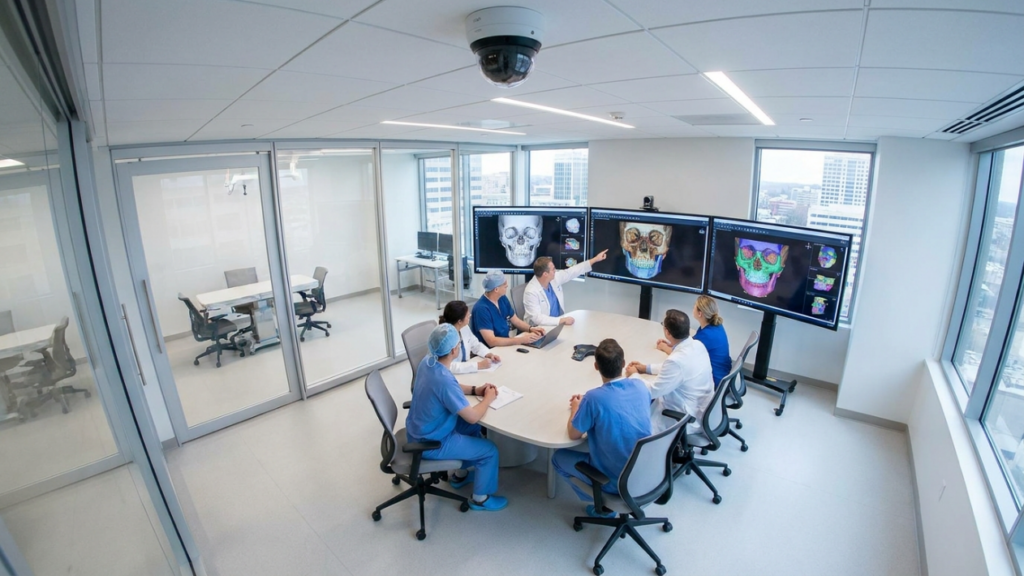
Malocclusiecorrectie en feminisering: het occlusale tweesprongpunt.
Malocclusiecorrectie Kaakvervrouwing en kaakverkleining volgen dezelfde anatomische route, maar in verschillende rijstroken. Een klasse III anterieure kruisbeet vereist een terugplaatsing van de onderkaak of een voorwaartse verplaatsing van de bovenkaak. Vervrouwing van het onderste derde deel van de kaak vereist het verkleinen van de kaakhoeken en het verzachten van de kin. Wanneer de chirurg de onderkaak terugplaatst zonder de contouren aan te passen, wordt de beet gecorrigeerd, maar blijft de kaak breed en hoekig – functioneel verbeterd, maar esthetisch onveranderd. Wanneer de chirurg de kaakhoeken verkleint zonder de kruisbeet aan te pakken, ziet de kaak er zachter uit, maar blijft de beet pathologisch.
De tweesprong is niet welke weg je moet kiezen, maar het besef dat beide wegen tegelijkertijd bewandeld moeten worden. Een gecombineerde BSSO-terugzetting met gelijktijdige hoekverkleining en genioplastiek Beide doelen worden in één operatie bereikt. De onderkaak wordt in de functionele positie gebracht, waarna de chirurg hetzelfde gemobiliseerde segment in de gewenste esthetische vorm brengt. Fixatie zorgt ervoor dat beide resultaten behouden blijven. Niets blijft onafgewerkt en niets hoeft opnieuw te worden gedaan.
Hardwarekeuze en tastbaarheid in de gefeminiseerde kaak
Een vaak over het hoofd geziene consequentie van gefaseerde chirurgie is de voelbaarheid van het implantaat. Orthognatische chirurgen selecteren platen op basis van mechanische sterkte – en terecht, want de onderkaak genereert aanzienlijke bijtkrachten die de stabiliteit van de fixatie bedreigen. Deze dikke titanium platen worden echter zichtbaar en voelbaar door het dunne, zachte weefsel van een gefeminiseerd ondergezicht, met name langs de onderrand van de onderkaak en de kin.
Wanneer een gecombineerde chirurg de fixatie plant, kan hij kiezen voor dunne platen die worden geplaatst in zones die verborgen zijn door het postoperatieve spiervolume. Hierbij kunnen zowel de dikte als de locatie van de platen worden aangepast om tegelijkertijd structurele en esthetische doelen te bereiken. Een gefaseerde aanpak mist deze flexibiliteit, omdat de orthognatische chirurg de implantaten plaatst zonder te weten waar de esthetische contour uiteindelijk zal liggen, en de esthetisch chirurg implantaten aantreft op plaatsen die een ideale contourvorming belemmeren.
Herstelperiode: Wat patiënten daadwerkelijk ervaren na een gecombineerde operatie
Patiënten stellen één vraag het vaakst: hoe lang duurt het voordat ik er weer normaal uitzie en me weer normaal voel? In de gecombineerde cohort ziet het typische tijdschema er als volgt uit. Dag één tot en met drie omvatten vloeibare voeding, intermaxillaire elastieken (indien geplaatst) en gecontroleerde zwelling die na 48 uur een piek bereikt. Dag vier tot en met tien gaan over op gepureerd voedsel, lichte kaakmobilisatieoefeningen en een zichtbare afname van de zwelling vanaf ongeveer dag zeven.
Na drie weken kunnen de meeste patiënten die de gecombineerde behandeling ondergaan, hun zittende werkzaamheden hervatten. De orthodontische verfijning begint in week zes, zodra de eerste botgenezing radiografisch is bevestigd. In de groep die de behandeling in fasen ondergaat, herhalen deze mijlpalen zich – wat betekent dat de patiënt de acute herstelfase twee keer doorloopt, met een interval van drie tot zes maanden tussen de cycli. De cumulatieve fysieke en emotionele belasting van twee afzonderlijke herstelperiodes is veel groter dan die van één enkele herstelperiode bij de gecombineerde aanpak.
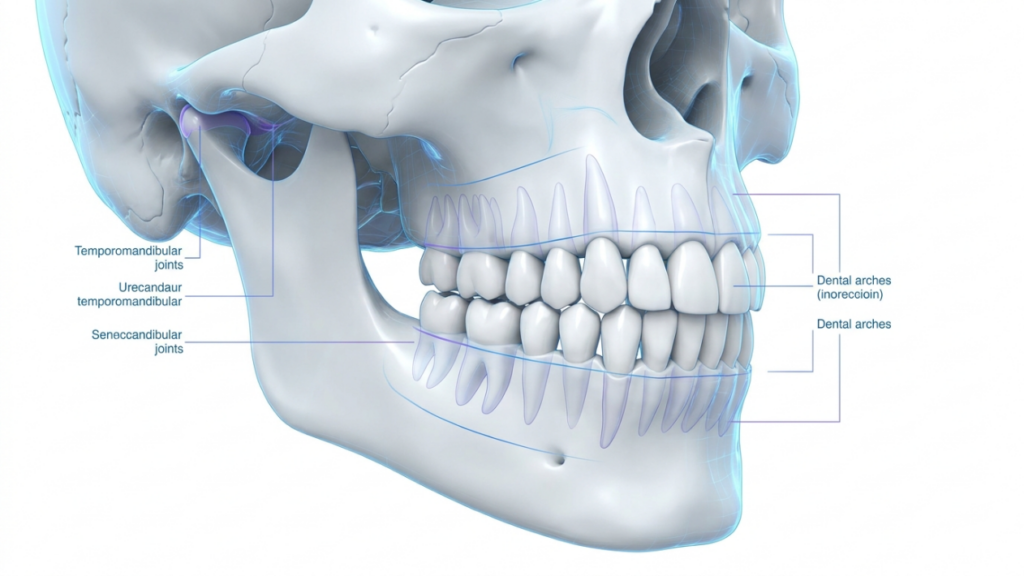
Besluitvormingskader: Wanneer combineren en wanneer faseren?
Ondanks de duidelijke voordelen van een operatie in één fase, zijn er bepaalde klinische scenario's waarin een gefaseerde behandeling de voorkeur verdient. Een patiënt bij wie de orthodontische voorbereiding onvolledig is, kan geen definitieve kaakcorrectie ondergaan – de beugel heeft nog enkele maanden nodig om de tandbogen uit te lijnen voordat de kaken nauwkeurig kunnen worden verplaatst. In deze gevallen kan de esthetische contourcorrectie wel vroegtijdig worden uitgevoerd, maar de kaakcorrectie moet wachten tot de orthodontische voorbereiding voltooid is.
Patiënten die een kaakverplaatsing van meer dan 10 millimeter nodig hebben, of een gelijktijdige Le Fort-osteotomie met drie segmenten en interpositionele bottransplantatie, vertonen een extra complexiteit die de operatietijd verlengt tot buiten de veilige grenzen van één enkele sessie. In deze complexe gevallen kan de chirurg prioriteit geven aan de meest cruciale functionele correctie en de resterende esthetische verfijning in een kortere tweede sessie aanpakken – waarbij nog steeds overbodige osteotomieën worden vermeden door een zorgvuldige planning van de fixatie en de snijlijnen in de eerste fase.
De beslissing berust op een eenvoudige afweging: kunnen beide doelstellingen binnen een veilig anesthesievenster worden bereikt zonder de structurele stabiliteit in gevaar te brengen? Zo ja, combineer ze. Als de anatomische complexiteit groter is dan wat in één sessie betrouwbaar kan worden bereikt, voer de ingreep dan in twee fasen uit – maar plan de eerste operatie met expliciete kennis van wat de tweede operatie zal vereisen. Dit principe maakt van een dubbel gekwalificeerde chirurg een strateeg in plaats van een technicus.
Veelgestelde vragen
Wat is de gecombineerde FFS-aanpak voor orthognatische chirurgie?
De gecombineerde aanpak pakt functionele kaakproblemen zoals malocclusie en kaakgewrichtsdysfunctie aan, in combinatie met esthetische feminisering van de kaak, in één enkele chirurgische sessie. Een chirurg met dubbele kwalificatie plant en voert beide sets osteotomieën gelijktijdig uit, waardoor de operatietijd met ongeveer 30 procent wordt verkort en overbodige ingrepen worden voorkomen.
Waarom verkort een gecombineerde operatie de operatietijd met 30 procent?
De tijdsbesparing van 30 procent wordt bereikt door het elimineren van dubbele stappen. U ondergaat één intubatie, één chirurgische blootlegging en één sluiting in plaats van twee. De chirurg vermijdt ook het doorsnijden van littekenweefsel van een eerdere operatie, wat aanzienlijk meer tijd kost bij een eventuele tweede ingreep.
Hoe ontstaan redundante osteotomieën bij een operatie in meerdere fasen?
Wanneer twee chirurgen op verschillende tijdstippen aan dezelfde kaak opereren, moet de tweede chirurg vaak door bot snijden dat al door de eerste is geosteotomiseerd. Dit leidt tot botverlies, een verhoogd risico op fracturen en de vorming van extra littekenweefsel. Bij een gecombineerde aanpak worden alle sneden samen gepland, zodat elke osteotomie zowel functionele als esthetische doelen dient.
Welke kwalificaties moet een chirurg hebben voor gecombineerde orthognatische en FFS-procedures?
De chirurg moet gecertificeerd zijn in zowel functionele maxillofaciale of orthognatische chirurgie als esthetische plastische chirurgie. Dr. Mehmet Fatih Okyay is dubbel gecertificeerd als Fellow van de European Board en de Turkish Board of Plastic, Reconstructive and Aesthetic Surgery, waardoor hij bevoegd is om beide ingrepen in één sessie uit te voeren.
Kan slaapapneu behandeld worden tijdens een gezichtsvervrouwelijkingsoperatie?
Ja. Mandibulaire retrognathie is een erkende oorzaak van obstructieve slaapapneu. Het naar voren brengen van de onderkaak tijdens een FFS-procedure opent de achterste luchtwegruimte en verbetert tegelijkertijd de kaakprojectie. In onze casusreeks ontvingen zeven patiënten met bevestigde slaapapneu een effectieve behandeling met deze gecombineerde aanpak.
Welke invloed heeft de positionering van de condylus op de uitkomst van gecombineerde chirurgische ingrepen?
De positionering van de condylus bepaalt of het kaakgewricht na de operatie correct stabiliseert. Elke kaakbeweging – of het nu gaat om functionele voorwaartse verplaatsing of esthetische versmalling – verschuift de condylus. Een chirurg met dubbele kwalificatie plant elke osteotomie zo dat de condylus correct gepositioneerd blijft, waardoor kaakgewrichtsdysfunctie wordt voorkomen en een stabiele occlusie op lange termijn wordt gewaarborgd.
Wat is de gemiddelde hersteltijd na een gecombineerde orthognatische en FFS-procedure?
De meeste patiënten kunnen binnen drie weken hun zittende werkzaamheden hervatten. De aanvankelijke zwelling bereikt een piek na 48 uur en neemt zichtbaar af na zeven dagen. De orthodontische correctie begint rond week zes. Omdat het herstel in één keer plaatsvindt in plaats van twee keer, is de totale herstelperiode ongeveer 34 procent korter dan bij het alternatief met meerdere fasen.
Wanneer moet gecombineerde chirurgie worden vermeden ten gunste van gefaseerde chirurgie?
Gefaseerde behandelingen hebben de voorkeur wanneer de orthodontische voorbereiding onvolledig is, wanneer de bovenkaakverplaatsing meer dan 10 millimeter bedraagt, of wanneer de totale complexiteit van de operatie de veilige anesthesielimieten voor een enkele sessie overschrijdt. Zelfs wanneer gefaseerde behandelingen noodzakelijk zijn, moet de eerste operatie volledig rekening houden met de tweede om conflicten met het implantaat en onnodige incisies te voorkomen.