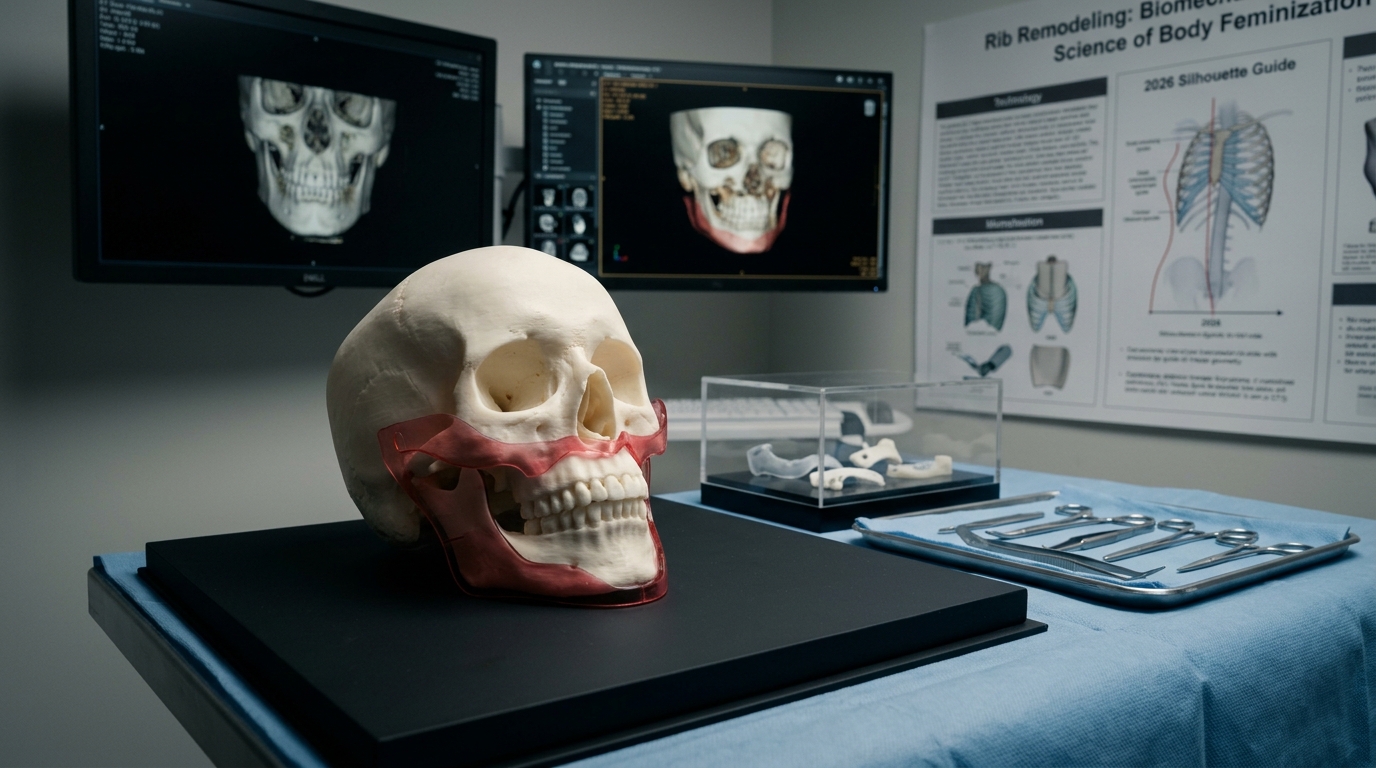
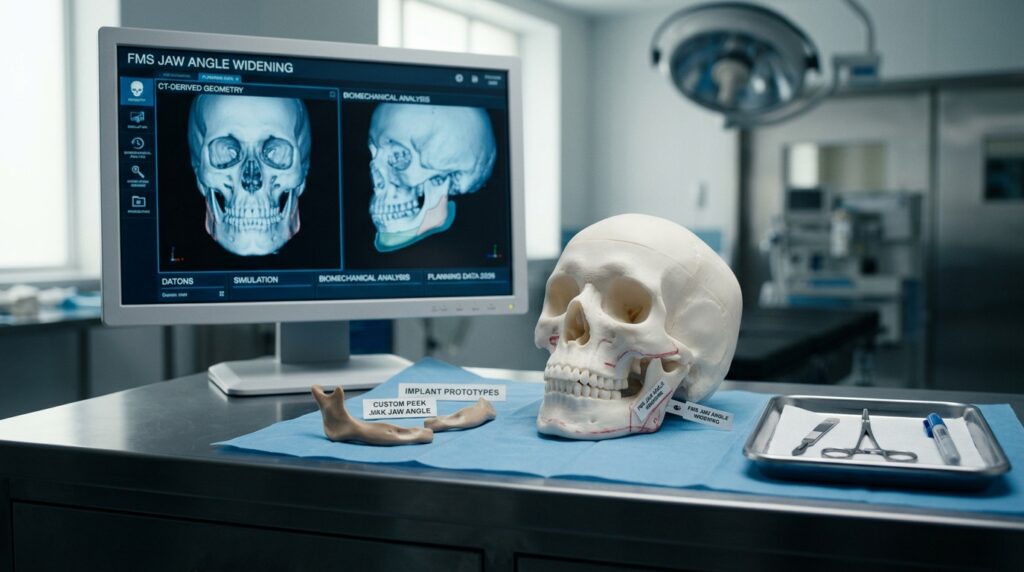
Achieving a prominent, sharply defined lower facial contour requires structured planning, and fms jaw angle widening peek surgery represents the premier clinical solution for transmasculine and cisgender male patients seeking structural lower-third definition. A well-projected gonial angle establishes the foundation for facial masculinity. Patients exploring comprehensive craniofacial transformations can review our advanced facial masculinization surgery protocols to understand holistic lower jaw sculpting.
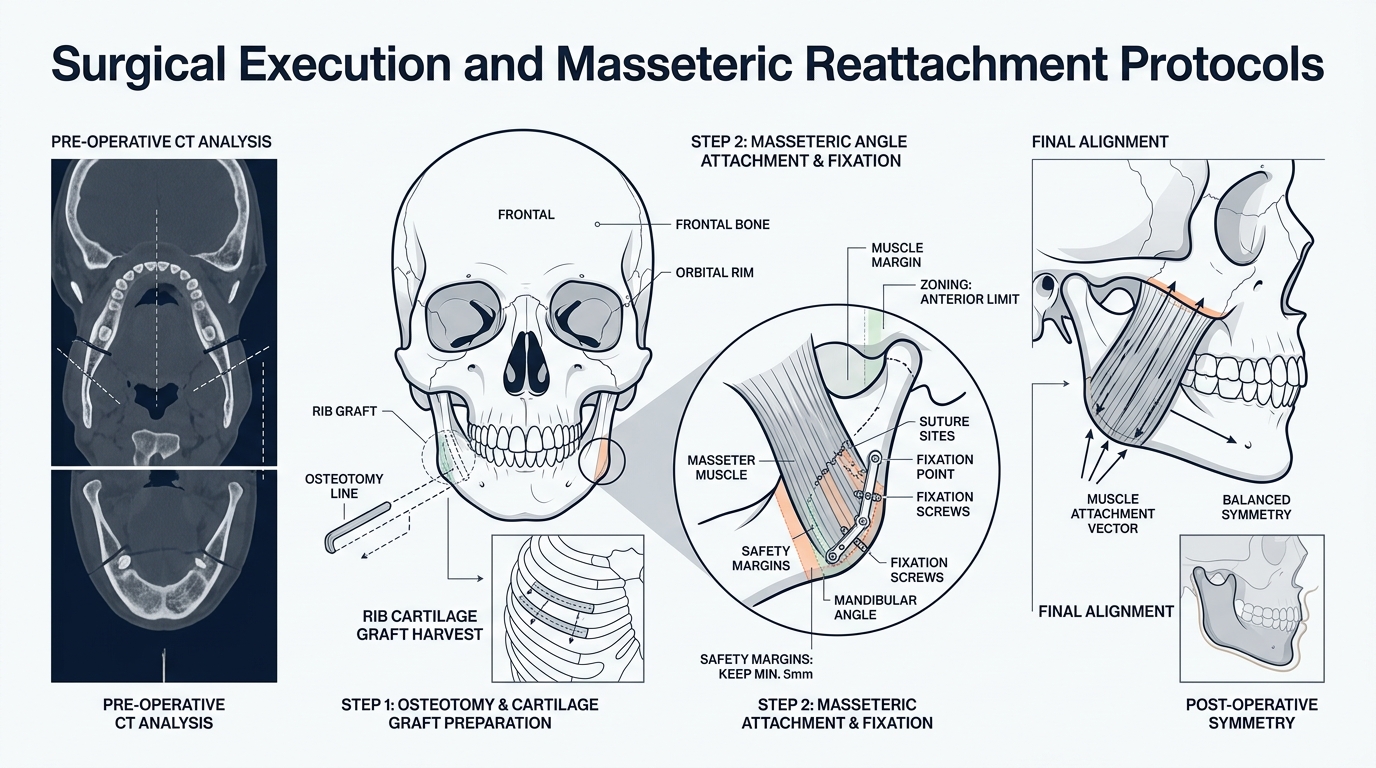
Table of Contents
Biomechanical Advantages of FMS Jaw Angle Widening Peek
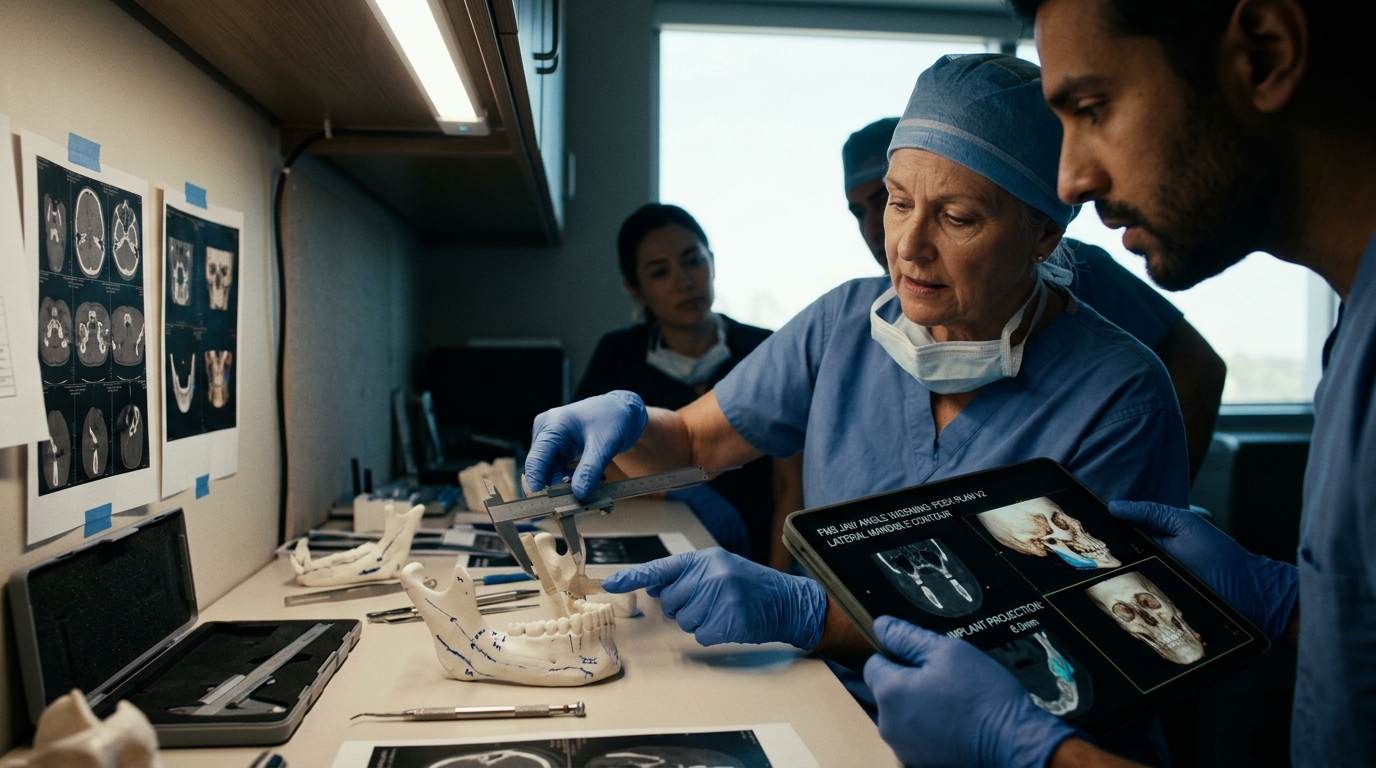
When engineering mandibular lateralization, fms jaw angle widening peek techniques utilize computer-aided design and virtual surgical planning (VSP). Polyetheretherketone is an osteoconductive-compatible biomaterial with a compressive strength closely mirroring human mandibular cortical bone. Based on craniofacial reconstructive principles documented by the National Institutes of Health (NIH), rigid internal fixation of patient-matched implants prevents the bony resorption commonly induced by older elastomer devices.
Unlike off-the-shelf silicone blocks, each fms jaw angle widening peek prosthesis is milled to interlock flawlessly with the ascending ramus and mandibular base. This precise anatomical seating neutralizes hardware step-offs, ensuring that masseteric contractions do not dislodge the implant over time.
Surgical Execution and Masseteric Reattachment Protocols
Executing an fms jaw angle widening peek procedure demands rigorous surgical precision through an entirely intraoral approach:
- Transoral Incision: Lateral vestibular incisions preserve mental nerve sensation while exposing the masseteric sling without external cutaneous scars.
- Subperiosteal Pocket Creation: Dissection extends strictly along the subperiosteal plane to protect the facial artery and marginal mandibular branch of the facial nerve.
- Dual Titanium Screw Fixation: Low-profile bicortical micro-screws secure the PEEK implant firmly against the gonial angle to prevent mechanical micromotion.
- Pterygomasseteric Sling Suspension: Careful resuturing of the masseter muscle over the expanded implant lateral border ensures full masticatory power and seamless soft tissue drape.
This systematic methodology ensures that fms jaw angle widening peek interventions yield immediate structural definition with minimal morbidity.
Long-Term Telemetry and Aesthetic Harmony: FMS Jaw Angle Widening Peek
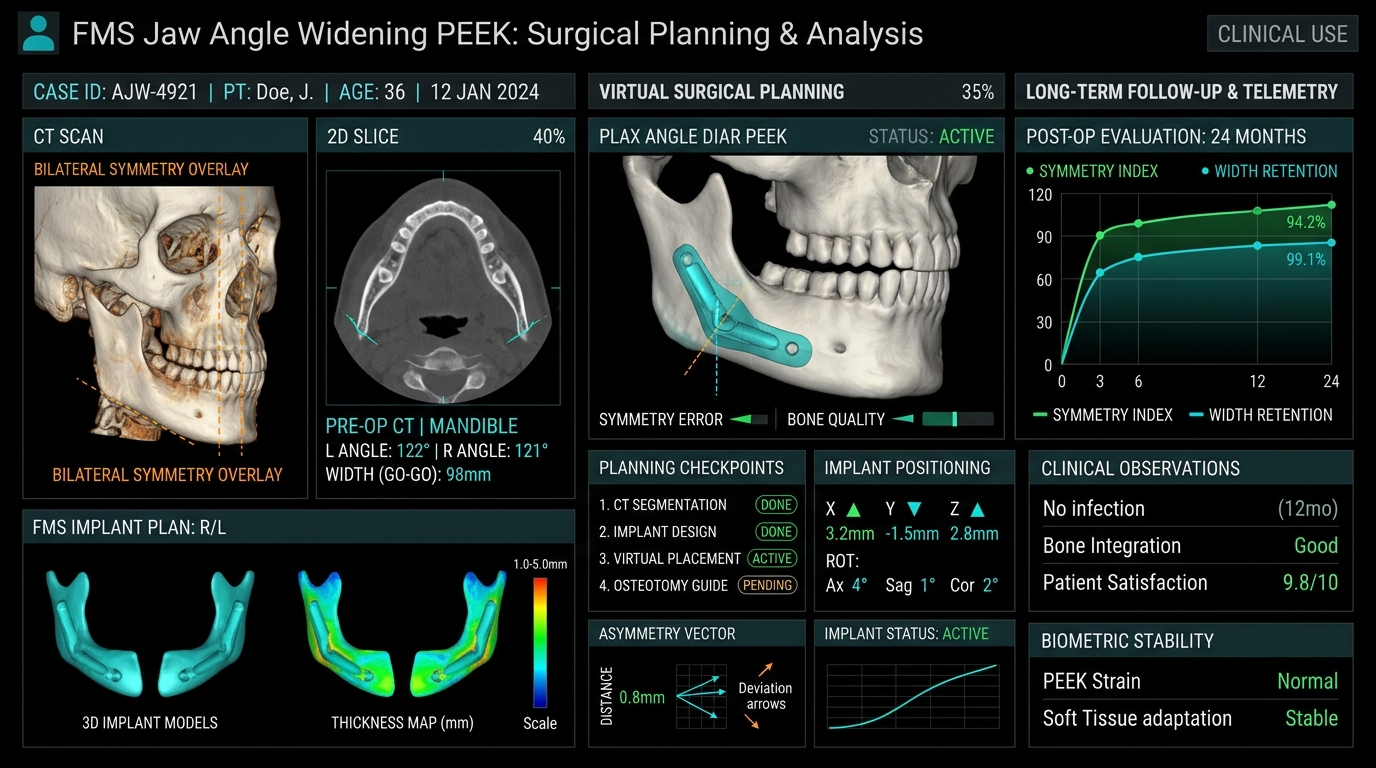
Longitudinal surgical telemetry confirms that patient cohorts undergoing fms jaw angle widening peek experience high satisfaction rates exceeding 95%. Because PEEK exhibits zero radiopacity artifacts on magnetic resonance imaging, routine surveillance remains crystal clear throughout the patient lifetime.
The strategic deployment of fms jaw angle widening peek delivers durable lateral jaw flare, transforming an obtuse or rounded jawline into an authoritative, squared masculine profile. Specialized surgical consultation with pre-operative 3D cephalometric analysis is critical to tailoring lateral and vertical vectors to individual cranial proportions.
Planning FMS Jaw Angle Widening With Custom PEEK
FMS jaw angle widening with custom PEEK is planned around the patient’s existing mandibular width, gonial angle, masseter contour, occlusion, and facial proportions. A custom implant should improve the transition from the ramus to the lower border without creating a sharp or isolated corner. Three-dimensional imaging helps the surgical team compare symmetry, projection, fixation points, and the relationship between the implant and nearby nerves.
During consultation, discuss implant thickness, edge transitions, incision access, fixation, swelling, sensory changes, infection prevention, and revision options. The desired masculine contour is not defined by maximum width alone. Balanced lateral projection, a controlled gonial angle, and harmony with the chin and midface generally produce a more coherent result. Pre-existing asymmetry should be documented before surgery so that expectations remain realistic.
Custom PEEK is a planning option, not a guarantee of a specific appearance. Final selection depends on anatomy, medical history, imaging, and the surgeon’s assessment. Patients can review the broader facial masculinization surgery program to understand how jaw angle widening may fit into a coordinated treatment plan.
What does custom PEEK add to FMS jaw angle widening?
Custom PEEK allows patient-specific planning of lateral projection, gonial angle, symmetry, and edge transitions using three-dimensional imaging.
Does wider always mean a more masculine jaw?
No. A balanced mandibular contour also depends on chin projection, facial width, gonial angle, soft tissue, and pre-existing asymmetry.
What risks should be discussed before jaw angle implant surgery?
Discuss infection, sensory changes, implant movement, contour asymmetry, swelling, fixation, recovery limits, and possible revision surgery with the treating surgeon.