

Facial Feminization Surgery (FFS) is widely recognized as a transformative set of procedures for transgender women seeking to align their facial features with their gender identity. However, its applications extend beyond gender affirmation: FFS for cis women is an increasingly sought-after solution for those born with genetically masculine facial traits—such as a prominent brow ridge, square jaw, or coarse facial contours—who wish to achieve a softer, more traditionally feminine appearance. Unlike cosmetic surgeries that address aging or asymmetry, facial softening surgery for cis women targets skeletal and soft tissue structures that society often associates with masculinity, offering a path to facial harmony and enhanced self-confidence.
This article explores the indications, techniques, and outcomes of FFS in cisgender women, focusing on how procedures like forehead contouring, jaw reduction, and chin reshaping can address genetic masculine features. We will also examine the psychological and social implications, surgical considerations, and the evolving standards of feminine facial aesthetics.
Understanding Masculine Facial Features in Cis Women
Genetic variation means that some cisgender women naturally develop facial structures that are typically associated with male anatomy. These may include:
- A prominent or bossed forehead with a pronounced brow ridge, often creating a heavier upper facial appearance.
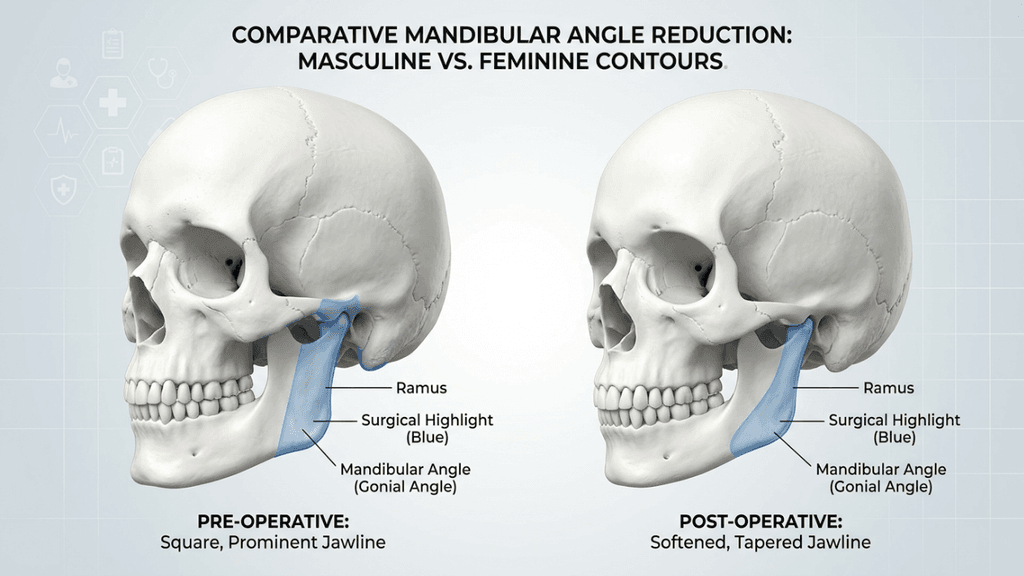
- A square or angular jawline, which can make the lower face appear broader and less delicate.
- A wide or projecting chin, contributing to a more masculine facial silhouette.
- A nose with a dorsal hump, wide bridge, or angular tip, which can disrupt the softness expected in feminine facial profiles.
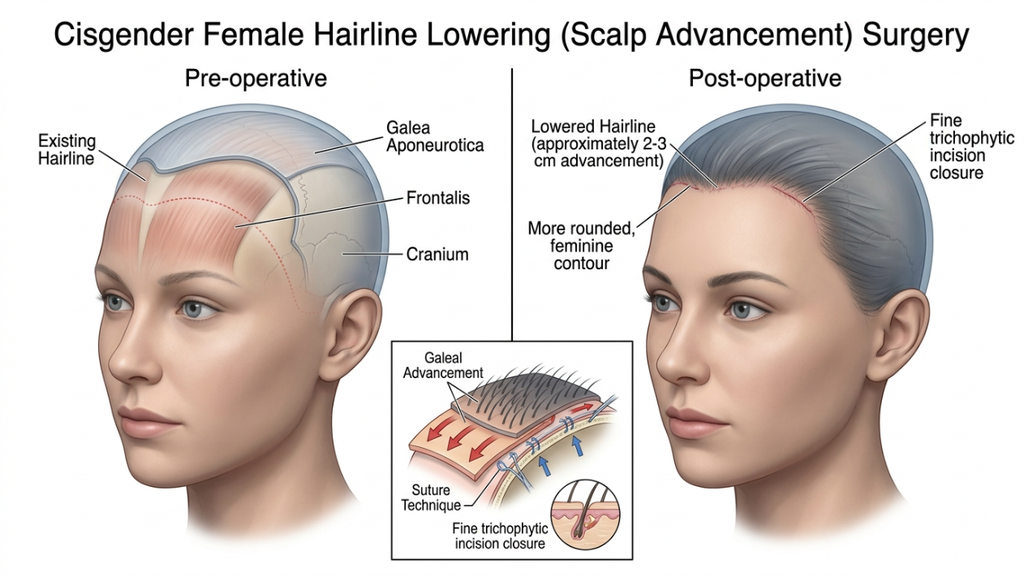
- A high or receding hairline, which may elongate the forehead and emphasize its prominence.
These features, while not indicative of gender identity, can lead to misperception, social discomfort, or personal dissatisfaction for cis women who feel their appearance does not reflect their internal sense of femininity. Research confirms that subtle facial traits—such as jaw angle, brow prominence, and nasal shape—significantly influence unconscious gender assumptions in social interactions.
The Science Behind Facial Feminization for Cis Women
Facial feminization surgery for cis women operates on the same anatomical and aesthetic principles as FFS for transgender patients, but with a focus on refinement rather than transformation. The goal is not to erase individuality but to soften and balance features that may be perceived as overly masculine, while preserving natural facial expressions and ethnic characteristics.
Key Anatomical Differences Between Male and Female Faces
Studies in craniofacial anatomy reveal that male faces tend to exhibit:
- Square or rectangular contours with sharper angles at the jaw and chin.
- More pronounced brow ridges and frontal bossing.
- Larger, more angular noses with a higher nasal bridge and broader tip.
- Thicker, more defined jawbones and masseter muscles.
In contrast, female faces are generally characterized by:
- Oval or heart-shaped contours with softer transitions between facial thirds.
- Smoother foreheads with less pronounced brow ridges.
- Narrower, more refined noses with a slight upward tip.
- Delicate jawlines and chins with subtle, rounded edges.
FFS for cis women leverages these distinctions to modify masculine-leaning features through targeted surgical and non-surgical interventions.
Key FFS Procedures for Cis Women
Facial feminization for cis women is highly individualized, with procedures selected based on the patient’s unique anatomy and aesthetic goals. Below are the most commonly performed techniques:
1. Forehead Contouring and Brow Bone Reduction
The forehead and brow complex is one of the most gender-distinctive areas of the face. In cis women with masculine features, the supraorbital ridge (brow bone) may protrude, creating a heavy or stern appearance.
Surgical Approaches:
- Type 1 Forehead Contouring: Involves burring (shaving) the brow ridge to reduce its prominence while maintaining structural integrity. This is ideal for patients with mild to moderate bossing.
- Type 3 Forehead Contouring: A more extensive procedure that includes frontal sinus setback, where the frontal bone is reshaped and repositioned to create a smoother, more feminine contour. This is often combined with hairline advancement to shorten the forehead and enhance facial balance.
- Hairline Lowering: For women with a high or receding hairline, this procedure advances the scalp forward, reducing forehead height and creating a more youthful, feminine frame.
Outcome: A softer, more sloped forehead with reduced brow prominence, contributing to a more delicate upper facial appearance.
2. Jaw and Chin Recontouring (Mandibular Feminization)
A square or angular jawline is a hallmark of masculine facial structure. For cis women, jaw contouring and chin reshaping are among the most impactful procedures for achieving a feminine profile.
Surgical Approaches:
- Mandibular Angle Reduction (Angleplasty): The lower jawbone is shaved or reshaped to reduce its width and angularity, creating a rounder, more tapered jawline.
- Genioplasty (Chin Reshaping): The chin can be reduced in width, shortened vertically, or reshaped to eliminate squareness. In some cases, sliding genioplasty is used to reposition the chin for better harmony with the jaw and lips.
- Masseter Muscle Reduction: For women with a wide lower face due to hypertrophic masseter muscles, this procedure reduces muscle bulk, further slimming the jawline.
Outcome: A softer, V-shaped or oval jawline that complements feminine facial proportions.
3. Rhinoplasty for Feminine Contours
The nose plays a central role in facial balance. A wide, projecting, or angular nose can dominate the face and contribute to a masculine perception.
Surgical Approaches:
- Nasal Bridge Narrowing: The dorsal hump is reduced, and the bridge is narrowed to create a smoother, more refined profile.
- Tip Refinement: The nasal tip is lifted, narrowed, or softened to eliminate bulkiness and achieve a delicate, slightly upturned appearance.
- Nostril Reduction: For noses with wide nostrils, alar base reduction can create a more proportionate nasal base.
Outcome: A narrower, more elegant nose that harmonizes with the softened forehead and jaw.
4. Hairline Adjustment
A high or receding hairline can elongate the forehead and emphasize its prominence. Hairline lowering surgery (or forehead reduction) involves:
- Surgically advancing the scalp to bring the hairline forward.
- Hair transplantation to fill in areas of thinning or recession.
Outcome: A shorter, more feminine forehead with a natural hairline frame.
5. Cheek Augmentation
Flat or underdeveloped cheeks can make the midface appear less feminine. Cheek augmentation enhances facial fullness and youthfulness through:
- Fat grafting (using the patient’s own fat) to add volume to the malar (cheekbone) area.
- Implants (silicone or porous polyethylene) for more permanent enhancement.
Outcome: Fuller, more defined cheeks that create a youthful, feminine contour.
6. Lip Enhancement
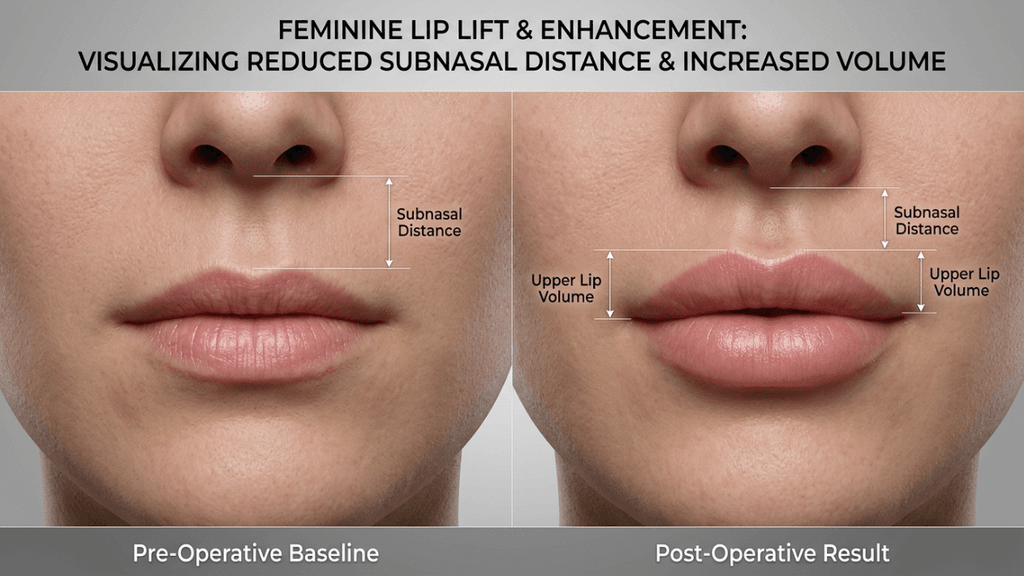
Thin or poorly defined lips can be augmented or lifted to achieve a more feminine appearance:
- Lip Lift: Shortens the distance between the upper lip and nose, creating a more visible, pouty lip.
- Fat Grafting or Fillers: Adds volume to the lips for a fuller, more youthful look.
Outcome: More prominent, expressive lips that enhance facial femininity.
7. Tracheal Shave (Adam’s Apple Reduction)
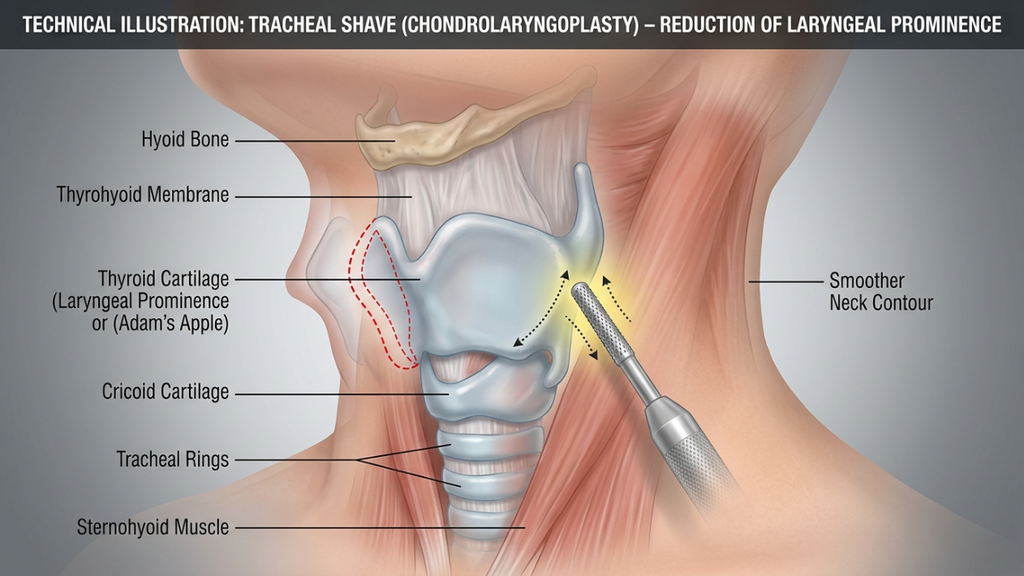
While rare in cis women, some may develop a prominent Adam’s apple due to genetic or hormonal factors. Tracheal shave (or laryngoplasty) reduces the thyroid cartilage’s prominence, creating a smoother neck contour.
Outcome: A more delicate, feminine neckline.
Who Is an Ideal Candidate for FFS as a Cis Woman?
Not all cis women are candidates for FFS. The ideal patient:
- Has genetically masculine facial features (e.g., prominent brow, square jaw, wide nose) that cause personal or social discomfort.
- Has realistic expectations about the outcomes and understands that FFS enhances, not erases, individuality.
- Is in good physical and mental health, with no contraindications for surgery.
- Has completed facial growth (typically after age 18–21).
A detailed consultation with a board-certified facial plastic surgeon or craniofacial specialist is essential to determine the most appropriate procedures. 3D imaging and CT scans are often used to plan surgical modifications with precision.
The Surgical Process: What to Expect
Preoperative Planning
- Consultation: The surgeon evaluates facial structure, discusses goals, and identifies which features contribute to a masculine appearance.
- Imaging: CT scans and 3D modeling help visualize potential outcomes and refine the surgical plan.
- Medical Evaluation: Blood tests, anesthesia clearance, and a review of medications (e.g., blood thinners) are conducted.
Surgical Execution
FFS for cis women is typically performed in one or two stages, depending on the complexity of the procedures:
- Upper Face Procedures: Forehead contouring, brow lift, hairline adjustment.
- Mid-Face Procedures: Rhinoplasty, cheek augmentation.
- Lower Face Procedures: Jaw contouring, chin reshaping, tracheal shave.
Anesthesia: Most FFS procedures are performed under general anesthesia to ensure patient comfort.
Recovery Timeline
| Phase | Duration | What to Expect |
|---|---|---|
| Immediate Post-Op | 1–3 days | Swelling, bruising, and discomfort. Pain medication and cold compresses are used. |
| Early Recovery | 1–2 weeks | Swelling begins to subside. Sutures are removed (if applicable). |
| Intermediate Recovery | 3–6 weeks | Most swelling resolves. Patients can return to light activities. |
| Long-Term Recovery | 3–6 months | Final results become visible as residual swelling subsides. |
| Full Healing | 12–18 months | Bone remodeling completes, and scars (if any) mature. |
Note: Recovery varies by procedure. Jaw and chin surgeries may require liquid diets for 1–2 weeks, while forehead contouring may involve temporary numbness.
Results and Longevity
The results of FFS for cis women are permanent, as the procedures involve bone and cartilage modification. However, soft tissue changes (e.g., fat grafting) may require touch-ups over time.
Expected Outcomes:
- Softer, more feminine facial contours with improved balance and harmony.
- Reduced misgendering or social discomfort due to a more traditionally feminine appearance.
- Enhanced self-esteem and confidence in personal and professional settings.
Before and After Considerations
- Subtlety is Key: The best FFS results for cis women are natural and undetectable, enhancing femininity without erasing individuality.
- Ethnic and Cultural Sensitivity: Surgeons must respect ethnic facial characteristics to avoid creating a “generic” look.
Psychological and Social Impact
For cis women with masculine facial features, the psychological benefits of FFS can be profound:
- Reduced Gender Dysphoria (Social): While not the same as gender identity dysphoria, some cis women experience distress from being misperceived as male or receiving comments about their “strong” features. FFS can alleviate this social discomfort.
- Improved Self-Image: Many patients report greater satisfaction with their appearance and a stronger sense of alignment between their inner and outer selves.
- Enhanced Social and Professional Interactions: A more feminine appearance can reduce misunderstandings in social settings and boost professional opportunities.
Ethical and Practical Considerations
Ethical Implications
- Informed Consent: Patients must fully understand the risks, benefits, and limitations of FFS.
- Avoiding Over-Feminization: Surgeons must preserve natural facial expressions and avoid creating an unnatural or “doll-like” appearance.
- Cultural Sensitivity: Facial beauty standards vary across cultures. Surgeons should respect ethnic features and avoid imposing Eurocentric ideals.
Cost and Insurance Coverage
- Cost: FFS for cis women is typically not covered by insurance, as it is considered elective cosmetic surgery. Costs vary widely but can range from $10,000 to $50,000+, depending on the procedures performed.
- Financing Options: Many clinics offer payment plans to make the surgery more accessible.
Risks and Complications
While FFS is generally safe, potential risks include:
- Swelling and Bruising (temporary).
- Infection or Poor Wound Healing (rare, but possible).
- Nerve Damage (e.g., temporary or permanent numbness in the forehead or chin).
- Asymmetry or Overcorrection (requires revision surgery in rare cases).
Non-Surgical Alternatives for Facial Softening
For cis women who are not ready for surgery or prefer minimally invasive options, several non-surgical treatments can soften masculine features:
| Procedure | Targeted Area | Effect | Longevity |
|---|---|---|---|
| Botox (Masseter Reduction) | Jawline | Slims the jaw by relaxing the masseter muscles. | 3–6 months |
| Dermal Fillers | Cheeks, Lips, Nasolabial Folds | Adds volume to create a softer, more feminine contour. | 6–18 months |
| Fat Grafting | Cheeks, Temples, Lips | Permanent volume enhancement for a more youthful appearance. | Long-lasting |
| Liquid Rhinoplasty | Nose | Temporarily smooths humps or refines the nasal bridge. | 6–12 months |
| Thread Lifts | Midface, Jawline | Lifts and tightens sagging skin for a more defined contour. | 1–2 years |
| Laser Resurfacing | Skin Texture | Improves skin tone and reduces coarse facial features. | Long-lasting |
Note: Non-surgical options provide temporary or partial results and may require ongoing maintenance.
Conclusion
Facial Feminization Surgery for cis women represents a powerful intersection of medicine, art, and personal empowerment. For those born with genetically masculine facial features, FFS offers a surgical path to soften, refine, and harmonize their appearance, aligning it more closely with their internal sense of femininity and societal expectations.
From forehead contouring to jaw reduction, each procedure is tailored to the individual, ensuring that the results are natural, balanced, and enhancing—not erasing. While the journey involves careful planning, skilled surgery, and a commitment to recovery, the psychological and social rewards can be life-changing.
As societal beauty standards evolve, so too does the acceptance and accessibility of FFS for cis women. Whether through surgical or non-surgical means, the ability to reshape one’s facial identity is a testament to the advancements in modern cosmetic and reconstructive surgery.
For cis women considering FFS, the first step is a consultation with a specialist who understands the unique nuances of feminine facial aesthetics and can guide them toward a personalized, transformative outcome.
Sources
- Facial Feminization Surgery On Female Faces – Saxon MD
- Facial Feminization Surgery: Anatomical Differences, Preoperative Planning, Techniques, and Ethical Considerations – PMC
- Facial Feminization for Cisgender Women with Masculine-Looking Faces – ASPS
- Can Cisgender Women Get FFS? – Dr. MFO
- Key Elements of Facial Feminization for Women with Masculine-Looking Faces – Deschamps-Braly Clinic
- Can Cis Women Get Facial Feminization Surgery? – Feminization Surgeries
- Facial Feminization Surgery – American Society of Plastic Surgeons
- Facial Feminization Surgery: A Review of 220 Consecutive Patients – PMC
- Facial Feminization Surgery | Johns Hopkins Medicine
- Is Facial Feminisation Surgery an Option for Cisgender Women? – Centre for Surgery