

Understanding type 3 forehead reduction ffs is essential for anyone seeking permanent facial feminization, as the upper third of the cranium accounts for nearly seventy percent of gender perception. In craniofacial anatomy, masculine foreheads display a prominent supraorbital ridge, heavy lateral bossing, and a flat anterior slope created by an aerated frontal sinus. Reshaping this prominent skeletal architecture demands a meticulous type 3 forehead reduction ffs rather than simple superficial burring.

Why Choose Type 3 Forehead Reduction FFS for Frontal Sinus Setback
In feminine craniofacial anatomy, type 3 forehead reduction ffs creates a gentle anterior contour. The type 3 forehead reduction ffs procedure addresses prominent supraorbital ridges, opening up the eye sockets and transforming a heavy brow into an open, youthful feminine arch. Attempting to shave bone over an expanded sinus cavity carries severe risks of bone collapse and chronic sinus infection, making type 3 forehead reduction ffs the definitive gold standard.
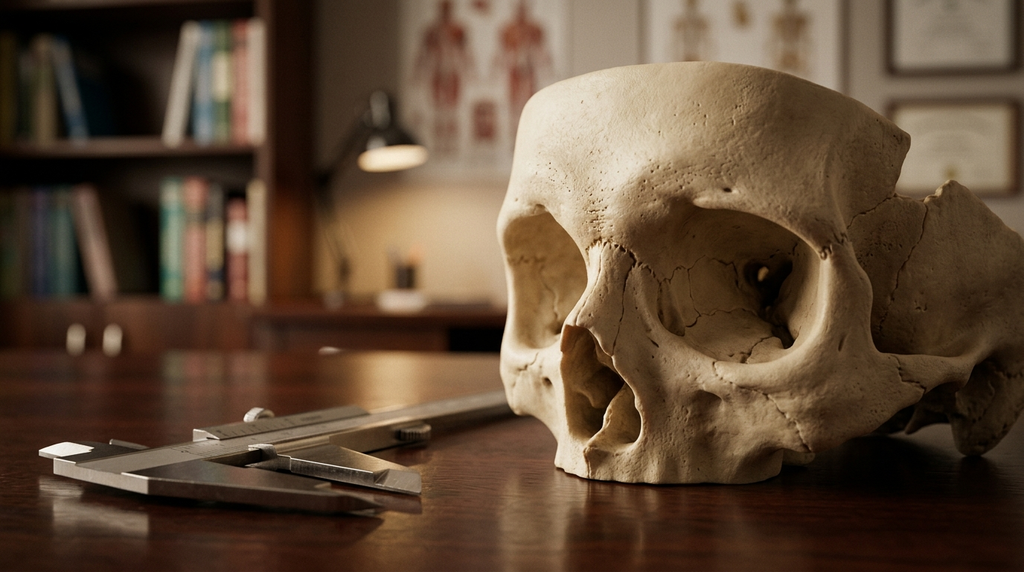
Anatomy of the Upper Craniofacial Third and Frontal Sinus
The frontal bone consists of two compact cortical plates sandwiching a cancellous diploic space. During pubertal testosterone exposure, the anterior wall of the frontal sinus expands anteriorly, creating an air-filled chamber directly behind the supraorbital bossing. Because the anterior bone plate measures merely one to three millimeters in thickness, aggressive grinding or shaving poses an unacceptable risk of sinus perforation.
Surgeons performing comprehensive facial feminization surgery rely on high-resolution multi-detector 3D computed tomography (CT) scans. Cross-sectional radiologic evaluation establishes the precise anteroposterior sinus depth, orbital rim thickness, and supraorbital nerve canal trajectories before any type 3 forehead reduction ffs intervention begins.
Type 1 Burring vs. Type 3 Forehead Reduction FFS Osteotomy
Craniofacial literature classifies frontal bone recontouring into distinct tiers depending on sinus morphology:
- Type 1 Forehead Contouring (Shaving): Applicable solely to patients with absent or hypoplastic frontal sinuses and thick cortical bone. The outer cortex is reshaped with diamond burrs. Attempting this on an aerated sinus causes bone collapse.
- Type 2 Forehead Contouring: An outdated approach involving shaving combined with acrylic or composite filling in adjacent depressions, often prone to long-term palpable step-offs.
- Type 3 Forehead Reduction FFS (Osteotomy & Setback): The clinical gold standard for true feminine transformation. The anterior sinus wall is completely osteotomized, removed, thinned, set back posterior-superiorly, and rigidly fixated with micro-plates.
Patients exploring advanced upper facial contouring can review our specialized surgical protocols for forehead contouring to understand how sinus osteotomies integrate with simultaneous hairline lowering. Furthermore, scientific literature published on PubMed National Center for Biotechnology Information confirms that type 3 forehead reduction ffs delivers predictable long-term osseous stability.
Surgical Technique: Step-by-Step Frontal Sinus Osteotomy
Execution of a type 3 forehead reduction ffs involves precise craniofacial stages executed under general anesthesia:
1. Incision Design and Flap Elevation
Depending on individual hairline height, surgeons utilize either a pretrichial (trichophytic) incision or a coronal incision placed four to five centimeters behind the hairline. A subperiosteal dissection planes downward, meticulously identifying and preserving the supraorbital and supratrochlear neurovascular bundles emerging from their respective notches.
2. Anterior Wall Osteotomy with Piezosurgery
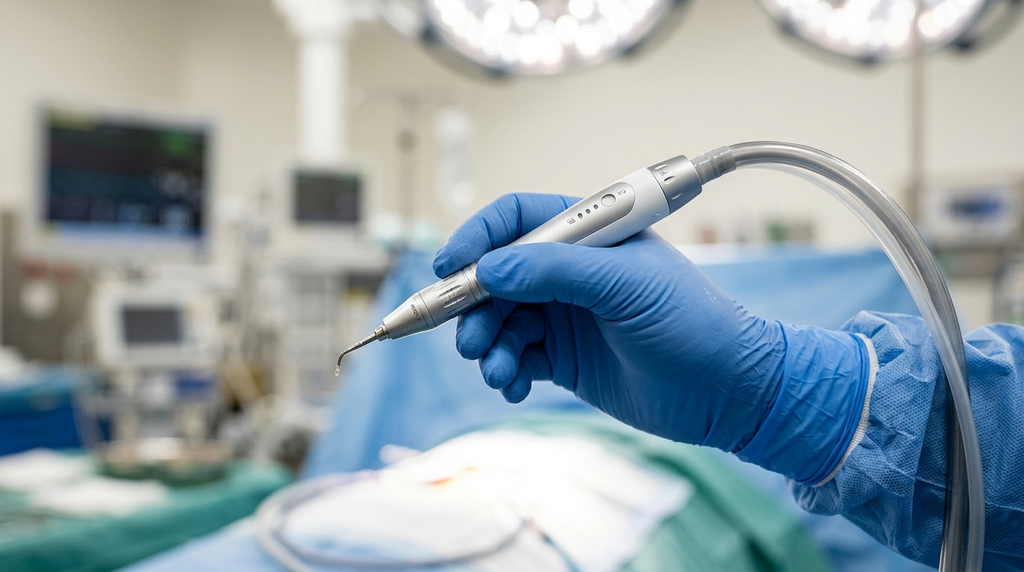
Using ultrasonic piezosurgery saws that cut bone while sparing underlying sinus mucosal membranes, the anterior table of the frontal sinus is outlined and carefully elevated during type 3 forehead reduction ffs. The nasofrontal duct and sinus ostia are inspected to ensure uninterrupted physiologic drainage.
3. Orbital Rim Shaving and Bone Reshaping
With the anterior plate temporarily removed, the superior and lateral orbital margins are contoured with precision burrs. This step opens up the eye socket, eliminating heavy brow shadows and softening masculine temporal hollows. Achieving this smooth feminine contour is a core objective of type 3 forehead reduction ffs.
4. Sinus Setback and Titanium Micro-Fixation
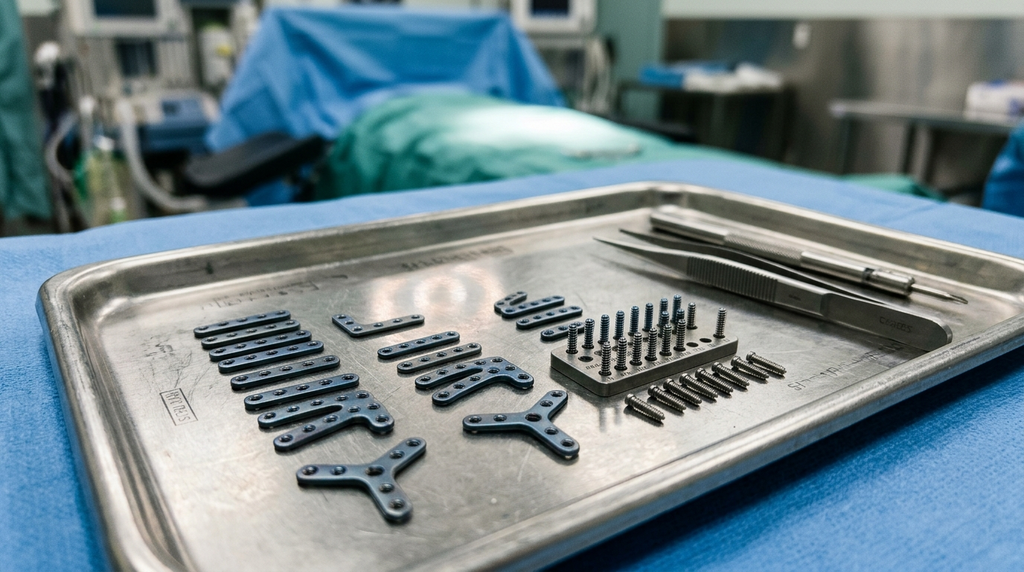
The bone segment is tailored extra-corporeally, thinned, and repositioned against the posterior sinus boundaries. Low-profile titanium micro-plates and 1.0mm to 1.5mm self-drilling screws secure the segment firmly in place during type 3 forehead reduction ffs, eliminating any risk of postoperative bone mobility.
Simultaneous Hairline Advancement and Brow Lifting
In feminine facial architecture, the hairline sits roughly five to six centimeters above the mid-pupillary line, forming a gentle rounded crescent without temporal recessions. During type 3 forehead reduction ffs, mobilizing the scalp flap forward achieves one to two centimeters of direct hairline advancement.
Concurrently, an endoscopic or open transpalpebral brow lift anchors the orbicularis oculi and frontalis muscles into a graceful feminine arch. Verified long-term outcomes and bone remodeling profiles can be viewed in our before after FFS gallery.
Biomechanics of Bone Healing and Long-Term Stability
Craniofacial bone healing follows systematic physiologic stages after osteotomy intervention. Osteoblasts deposit woven bone along micro-fixation plates, gradually transforming into mature lamellar architecture over six to twelve months following type 3 forehead reduction ffs. Rigorous surgical stabilization with low-profile titanium micro-screws guarantees complete immobility of the repositioned anterior table, eliminating palpability along the supraorbital margin and temporal contours.
Evaluating long-term outcomes of type 3 forehead reduction ffs confirms stable healing without secondary contour resorption. Dr. Mehmet Fatih Okyay recommends personalized virtual surgical planning for type 3 forehead reduction ffs to ensure millimetric bone cutting accuracy. Tracking post-operative recovery milestones ensures that type 3 forehead reduction ffs delivers authentic feminine facial balance. Every candidate for type 3 forehead reduction ffs undergoes thin-slice CT imaging to ensure safe type 3 forehead reduction ffs execution.
Postoperative Recovery Timeline and Clinical Care
Patients recovering from type 3 forehead reduction ffs experience a predictable physiological healing sequence:
- Days 1 to 3: Peak periorbital edema and mild brow tightness after type 3 forehead reduction ffs. Compressive dressings remain undisturbed; head elevation at 45 degrees minimizes swelling.
- Days 7 to 10: Suture removal along the trichophytic incision. Roughly sixty percent of acute bruising transitions to pale yellow tones.
- Weeks 3 to 6: Resumption of social engagements and desk employment. Sensation across the scalp gradually awakens with mild temporary paresthesia.
- Months 6 to 12: Complete osseous consolidation and scar maturation, revealing smooth, unblemished forehead curvature after type 3 forehead reduction ffs.
Prospective international patients ready to discuss customized 3D virtual surgical planning with Dr. Mehmet Fatih Okyay are encouraged to contact now for an in-depth clinical consultation.
Frequently Asked Questions
What is the difference between Type 1 and Type 3 forehead reduction?
Type 1 forehead reduction involves simple bone shaving with burrs and is only safe for small, thick-walled sinuses. Type 3 forehead reduction removes the anterior sinus bone plate, remodels it, and sets it back using titanium micro-fixation, providing dramatic feminine contouring without sinus damage.
Will I lose feeling in my forehead after Type 3 cranioplasty?
Temporary numbness is common due to surgical retraction of the supraorbital nerves. In the vast majority of cases, sensation regenerates steadily over three to nine months as peripheral nerve endings heal.
Are the titanium plates permanent or do they need removal?
The ultra-low-profile titanium micro-plates are fully biocompatible and designed to remain permanently integrated into the skull bone without triggering allergic reactions or airport metal detector alerts.