
Life on Pause? Understanding the Downtime for Facial Feminization Surgery (FFS)

Life on Pause? Understanding the Downtime for Facial Feminization Surgery (FFS)

You’re excited about the potential transformative results of Facial Feminization Surgery (FFS)! You’ve researched procedures, consulted with surgeons, and you’re getting closer to making a decision. But another very practical question looms large: “What is the downtime for FFS?” How long will you need to put your life “on hold” for recovery? When can you expect to get back to your normal routine, show your face in public confidently, and see the final results?

“Downtime” in the context of FFS refers to the period you need to dedicate to recovery. It encompasses the time needed for initial healing, managing swelling and bruising, dealing with discomfort, and allowing your body to recover before you can resume your usual activities, work, and social life.

Understanding the typical FFS downtime is crucial for realistic planning, managing expectations, and ensuring you allocate sufficient time for proper healing and recovery. Let’s break down the different phases of FFS downtime and what you can expect along the way.

A woman with dark hair pulled back into a bun, wearing diamond earrings, with a neutral facial expression and dramatic eye makeup.

Defining “Downtime” in FFS: More Than Just Bed Rest

It’s important to understand that “downtime” after FFS isn’t just about being confined to bed. It encompasses several aspects of recovery:

Initial Healing and Physical Recovery

The first phase of downtime focuses on physical healing from the surgical trauma. This involves:

  • Surgical Recovery from Anesthesia: Recovering from the effects of anesthesia, which can initially cause grogginess, nausea, or fatigue.
  • Wound Healing: Allowing incisions to heal properly, which involves meticulous wound care to prevent infection and promote optimal scar formation.
  • Pain and Discomfort Management: Managing post-operative pain and discomfort with prescribed medications and comfort measures.
  • Swelling and Bruising Reduction: Dealing with facial swelling and bruising, which are normal post-surgical occurrences and take time to subside.

Social Downtime and Public Appearance

Downtime also includes the period when you might feel less comfortable being seen in public due to visible signs of surgery.

  • Visible Swelling and Bruising: Significant facial swelling and bruising are typically present in the initial days and weeks after FFS. Many individuals prefer to remain private during this phase until the most noticeable swelling and bruising subsides.
  • Initial Appearance Changes: The immediate post-operative appearance may not yet reflect the final results of FFS. There might be temporary changes due to swelling, sutures, or dressings. Some individuals prefer “social downtime” until the initial appearance becomes more refined.

Functional Recovery and Resuming Activities

Downtime also involves the gradual return to your normal functional abilities and activities.

  • Physical Activity Restrictions: For a period after surgery, you will need to limit strenuous physical activity, heavy lifting, and activities that could strain your face or increase swelling.
  • Return to Work: The timeline for returning to work depends on the nature of your job (desk-based vs. physically demanding) and the extent of your FFS procedures.
  • Resuming Social Activities and Normal Routine: Gradually resuming social activities, exercise routines, and your overall pre-surgery lifestyle.

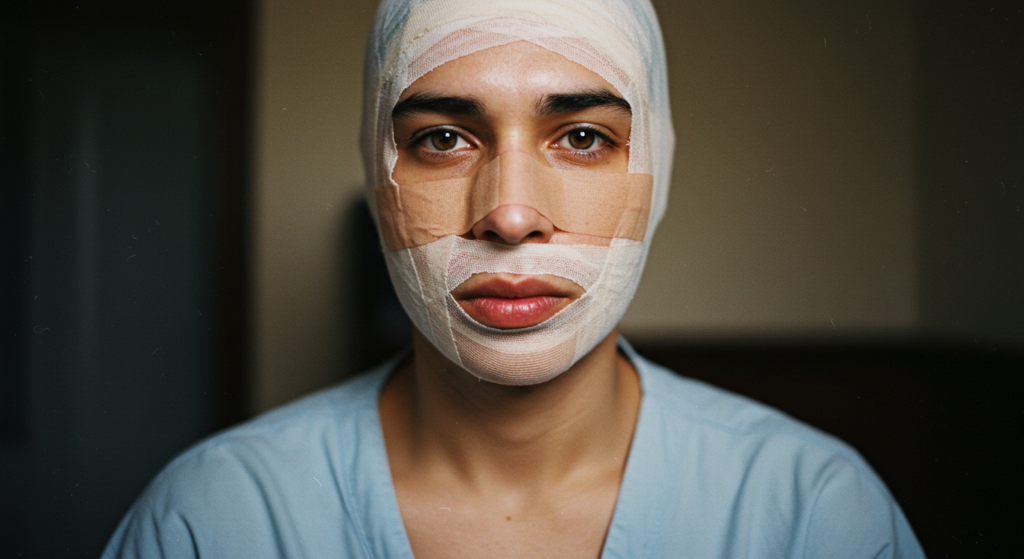
A person with their head and face wrapped in white bandages, leaving only their eyes, nose, and mouth exposed.

Typical FFS Downtime Timeline: Days, Weeks, and Months

FFS recovery is a process that unfolds over days, weeks, and months. It’s helpful to think of it in phases:

Phase 1: First Few Days (Days 1-5 Post-Op) – Most Intense Recovery

This is the most intensive phase of downtime, immediately after surgery.

  • Focus: Rest, pain management, initial swelling control, and basic self-care.
  • What to Expect:
    • Significant Swelling and Bruising: Swelling and bruising will be most pronounced during this phase.
    • Pain and Discomfort: Expect noticeable pain and discomfort, managed with prescribed pain medication.
    • Limited Mobility and Activity: You will primarily be resting, with limited mobility.
    • Caregiver Assistance Needed: You will likely need a caregiver to assist with medications, meals, and basic needs.
    • Limited Public Appearance: It is highly unlikely you will be comfortable appearing in public during this phase due to swelling, bruising, and potential dressings.
  • Typical Activities: Resting in bed or a recliner, applying cold compresses, taking medications, very light walking (as advised by your surgeon).

Phase 2: First Week to Two Weeks (Week 1-2 Post-Op) – Initial Swelling Subsides, Sutures Removed

This phase sees the beginning of significant improvement.

  • Focus: Continued swelling management, wound care, gradual increase in activity, first post-op check-up and suture removal (if non-dissolvable sutures were used).
  • What to Expect:
    • Swelling Starts to Subside: Noticeable reduction in swelling compared to the first few days, although swelling is still present.
    • Bruising Still Visible but Fading: Bruising will gradually fade in color.
    • Pain Decreases: Pain typically becomes more manageable, and you may reduce pain medication.
    • Increased Mobility and Independence: You can move around more easily and become more independent with self-care.
    • First Post-Op Appointment: You will likely have your first post-operative appointment, where your surgeon assesses your healing and removes sutures (if applicable).
    • Limited Public Appearance Still Likely: While improvement is noticeable, significant swelling and bruising may still make you prefer to avoid public appearances for most of this phase. Some might venture out with makeup and careful planning towards the end of week 2, but most still prefer to remain private.
  • Typical Activities: Continued rest, light walking, gentle activities around the house, wound care as instructed, attending post-op appointment.

A person with bandages wrapped around their head and neck, standing with arms crossed in a dark studio setting.

Phase 3: Weeks 3-4 Post-Op – Significant Swelling Reduction, Gradual Return to Routine

This phase marks a more substantial return to normal activities.

  • Focus: Ongoing swelling reduction, scar maturation, gradual return to light work for desk jobs (potentially), and social activities with careful planning.
  • What to Expect:
    • Swelling Significantly Reduced: Swelling will have decreased considerably, although some residual swelling will still be present, especially in the morning or after activity.
    • Bruising Mostly Resolved: Bruising is typically largely faded or gone by this point for most individuals.
    • Appearance More “Socially Acceptable”: Many individuals feel comfortable returning to light desk-based work and some carefully planned social outings by week 3-4, especially with makeup to further minimize the appearance of any residual bruising or swelling. However, individual comfort levels vary greatly – some may still prefer more privacy.
    • Return to Desk-Based Work (Potentially): If your job is desk-based and not physically demanding, you may be able to return to work around week 3-4. Physically demanding jobs will require longer time off.
    • Light Social Activities: Gradual return to low-key social activities may be possible, depending on your comfort level with residual swelling and any remaining minor bruising. Makeup can be used to enhance confidence.
  • Typical Activities: Return to desk-based work (if applicable), light social outings, gentle exercise (walking, light stretching, as cleared by your surgeon), continued wound care and scar management.

Phase 4: Months 1-3 Post-Op – Subtle Swelling Resolution, Scars Maturing, More Active Life

Recovery progresses to a more subtle phase.

  • Focus: Resolution of subtle residual swelling, scar maturation and fading, return to more strenuous activities (gradually), and enjoying the early results of FFS.
  • What to Expect:
    • Subtle Swelling Continues to Resolve: Fine, residual swelling can persist for several months, but it becomes increasingly subtle and less noticeable day-to-day. You may notice more subtle changes in facial contours over these months as the last traces of swelling resolve.
    • Scars Maturing and Fading: Scars will continue to mature and fade over time. Scar care becomes important to optimize healing aesthetic.
    • Return to Exercise and Strenuous Activities (Gradually): You can gradually increase your exercise intensity and return to more strenuous activities and routines, as cleared by your surgeon.
    • More Confidence in Public Appearance: Most individuals feel significantly more comfortable and confident in their public appearance during this phase, with swelling and bruising largely resolved.
  • Typical Activities: Full return to work (including physically demanding jobs for many), resuming regular exercise routines, enjoying social life without restrictions, focusing on long-term scar care and maintenance.

Phase 5: Beyond 3 Months Post-Op – Final Results Emerge, Long-Term Healing

This is the long-term refinement phase.

  • Focus: Ongoing scar maturation (scars can take 12-18 months or even longer to fully mature and fade), subtle refinements in facial contours as all swelling resolves completely, enjoying the final results and long-term benefits of FFS.
  • What to Expect:
    • “Final” Results Emerge Over Time: While significant feminization is apparent much earlier, the “final” results of FFS become more fully evident as all swelling resolves, typically over several months to a year or more.
    • Scars Continue to Fade: Scars will continue to fade and become less noticeable over 12-18 months and beyond.
    • Long-Term Enjoyment and Maintenance: Enjoying the long-term benefits of FFS and focusing on maintaining healthy skin and lifestyle for graceful aging with your feminized features.
  • Typical Activities: Fully enjoying life with your feminized facial appearance! Potentially considering non-surgical maintenance treatments in the future as you age naturally, as anyone might.

Factors Influencing Your Downtime: It’s Individual

It’s important to remember that the timeline above is a general guide. Downtime can vary based on several individual factors:

Extent of FFS Procedures Performed

The number and complexity of FFS procedures you undergo directly impact downtime.

  • More Procedures = Longer Downtime: Undergoing multiple FFS procedures in a single surgery session (e.g., brow bone reduction, rhinoplasty, jaw contouring combined) will generally result in a longer downtime than undergoing just one or two procedures. More extensive surgery means more tissue disruption, more swelling, and a longer overall recovery process.
  • Specific Procedure Recovery Times: Different FFS procedures have somewhat different recovery profiles. For example, rhinoplasty often has a slightly longer period of noticeable swelling compared to some other procedures.

Surgical Technique and Surgeon Experience

Surgical technique and surgeon experience play a role in recovery.

  • Minimally Invasive Techniques: Surgeons using minimally invasive techniques (when appropriate for the procedure) may sometimes lead to slightly less swelling and potentially a slightly faster recovery compared to more traditional open surgical techniques.
  • Experienced Surgeons = Efficient Surgery = Potentially Smoother Recovery: Highly experienced FFS surgeons are often able to perform procedures more efficiently and atraumatically, which can contribute to a smoother and potentially slightly faster recovery, although individual healing varies.

Individual Healing Capacity

Individual healing capacity is a significant factor that varies from person to person.

  • Genetics and Biology: Genetic factors and individual biological differences influence how quickly your body heals, how much swelling you develop, and how rapidly bruises resolve.
  • Overall Health and Lifestyle: Good overall health, a strong immune system, a healthy diet, staying hydrated, and avoiding smoking all contribute to optimal healing and can potentially shorten downtime. Pre-existing health conditions or unhealthy lifestyle habits can potentially prolong recovery.
  • Age (Minor Factor): While less of a dominant factor than overall health, younger individuals may sometimes have slightly faster healing processes and slightly more skin elasticity in some cases, although individual variation is much more significant than age alone.

Post-Operative Care and Compliance

Following post-operative instructions diligently significantly impacts recovery.

  • Strict Adherence to Surgeon’s Instructions: Meticulously following your surgeon’s post-operative care instructions regarding wound care, medications, activity restrictions, head elevation, and cold compresses is crucial for minimizing complications, managing swelling effectively, and optimizing healing.
  • Adequate Rest and Recovery Time: Allowing yourself sufficient rest and avoiding rushing back to strenuous activities or work before you are ready is essential for promoting healing and avoiding setbacks.
  • Proper Nutrition and Hydration: Maintaining good nutrition and hydration post-surgery supports your body’s healing processes.

Planning for Your Downtime Realistically

Realistic planning for FFS downtime is key to a smoother and less stressful experience.

Plan for at Least 2-4 Weeks Off Work or Social Commitments

As a general guideline, plan to take at least 2-4 weeks off work or significant social commitments. For more extensive FFS or physically demanding jobs, consider planning for even longer, potentially 4-6 weeks or more.

  • Err on the Side of More Time: It’s always better to plan for slightly more downtime than you think you might need. This gives you buffer room for any individual variations in healing and avoids pressure to rush your recovery.
  • Individualize Based on Your Procedures and Job: Adjust your planned downtime based on the specific FFS procedures you are undergoing and the demands of your job or daily routine.

Prepare Your Home Environment for Recovery

Setting up a comfortable and conducive recovery environment at home is essential.

  • Comfortable Rest Area: Prepare a comfortable and quiet space for resting, ideally with a recliner or bed with good head elevation using pillows.
  • Essential Supplies Ready: Stock up on post-operative medications, wound care supplies, soft foods, entertainment, and anything else you’ll need within easy reach.
  • Arrange for Caregiver Support: Confirm your caregiver arrangements and ensure they are available to support you as needed in the initial days.

Be Patient and Kind to Yourself During Recovery

FFS recovery is a process and it requires patience and self-compassion.

  • Healing Takes Time: Remind yourself that healing takes time, and progress is gradual, not always linear. There will be good days and perhaps days when swelling or discomfort seems more prominent. This is normal.
  • Focus on Progress, Not Perfection (Early On): In the initial weeks of recovery, focus on the positive progress you are making, even if it feels slow. Avoid fixating on any perceived imperfections or being overly critical of your appearance in the early stages when swelling is still significant and results are evolving.
  • Practice Self-Compassion: Be kind and gentle with yourself. Recovery is a physical and emotional journey. Allow yourself to rest, heal, and experience the range of emotions that may come up without self-judgment.
  • Long-Term Vision: Keep your long-term goals in mind. Remember why you chose FFS and the positive changes you are seeking in your life. Downtime is a temporary phase on the path to achieving those lasting goals.

Conclusion – Downtime is an Investment in Your Transformation

Downtime is an expected and necessary part of the Facial Feminization Surgery journey. Understanding the typical phases of recovery, planning realistically for 2-4 weeks (or more) of dedicated downtime, and being patient and kind to yourself are key to navigating the recovery process smoothly.

Think of downtime not as “life on pause,” but as an investment in your transformation. It’s dedicated time for your body to heal, for swelling to subside, and for the beautiful, feminized features to emerge that will enhance your life for years to come. By embracing the downtime period with realistic expectations and self-care, you set yourself up for a more comfortable and ultimately rewarding FFS experience.

Ready to take the next step in your FFS journey? Schedule consultations with specialist Facial Feminization Surgeons today to discuss your surgical plan, understand the expected downtime for your specific procedures, and get personalized guidance for a successful recovery.

Visit Dr.MFO Instagram profile to see real patient transformations! Get a glimpse of the incredible results achieved through facial feminization surgery and other procedures. The profile showcases before-and-after photos that highlight Dr. MFO’s expertise and artistic vision in creating natural-looking, beautiful outcomes.

Ready to take the next step in your journey? Schedule a free consultation with Dr. MFO ( Best Facial Feminization Surgeon for You) today. During the consultation, you can discuss your goals, ask any questions you may have, and learn more about how Dr. MFO can help you achieve your desired look. Don’t hesitate to take advantage of this free opportunity to explore your options and see if Dr. MFO is the right fit for you.

Timing is Personal: When is the Best Time to Get Facial Feminization Surgery (FFS)?

Timing is Personal: When is the Best Time to Get Facial Feminization Surgery (FFS)?

You’ve decided FFS is the right step for you on your gender affirmation journey – that’s fantastic! Now, another important question arises: “When is the best time to actually get Facial Feminization Surgery?” Is there a perfect age? A specific point in your transition? A particular season that’s ideal?

The truth is, unlike scheduling a routine appointment, there’s no single “best” time on the calendar that applies to everyone. The optimal timing for FFS is deeply personal and multifaceted, depending on a unique combination of factors related to your individual transition, your life circumstances, and your overall readiness – both physical and emotional.

Let’s explore the key considerations that will help you determine your best time to embark on your FFS journey.

A person with bandages covering the face, likely post-surgery or medical treatment, looking directly at the camera.

Age Considerations: Is There an Ideal Age Range for FFS?

While there’s no strict age limit, age can play a role in the FFS experience and recovery.

No Upper Age Limit: It’s Never “Too Late”

There is generally no upper age limit for FFS. Many individuals undergo FFS successfully in their 40s, 50s, 60s, and even later. As long as you are in good overall health and fit for surgery and anesthesia (as assessed by your surgeon and medical evaluations), age alone is rarely a barrier to FFS.

  • Focus on Health, Not Just Age: Surgical suitability depends more on your overall health status and the absence of significant medical contraindications than on your chronological age.
  • Benefits at Any Age: FFS can be transformative and beneficial at any age, improving self-confidence, alleviating dysphoria, and enhancing quality of life, regardless of when you choose to pursue it.
  • Aging Gracefully After FFS: As we discussed in a previous article, FFS is designed to age well. Having FFS later in life does not diminish its positive long-term impact on feminine appearance and aging gracefully.

Younger Patients (18-30s): Potential Advantages and Considerations

For younger transgender women in their late teens, 20s, and 30s, there can be certain advantages to pursuing FFS if it aligns with their transition goals and readiness.

  • Potential for Earlier Social Congruence: Undergoing FFS earlier in life can facilitate earlier social transition and living authentically in their affirmed gender, potentially reducing years of dysphoria and misgendering experiences.
  • Skin Elasticity and Healing Capacity (in some cases): Younger individuals may sometimes have better skin elasticity and potentially slightly more robust healing capabilities, although this varies greatly from person to person and is not a definitive rule.
  • Longer Time to Enjoy Results: Undertaking FFS at a younger age provides a longer period to live and enjoy the benefits of facial feminization and the enhanced sense of self-congruence it brings.
  • Considerations for Younger Patients:
    • Maturity and Stability of Gender Identity: For younger individuals, especially teenagers, ensuring a stable and well-established gender identity is crucial before considering irreversible surgical procedures.
    • Hormone Therapy Duration (Still Important): Even for younger patients, the recommendation for a period of Hormone Replacement Therapy (HRT) before FFS (typically 12-24 months) still applies to allow for hormonal feminization to take effect and refine surgical planning.
    • Financial and Support System Readiness: Younger individuals need to ensure they have adequate financial resources or support and a strong social support network in place to navigate FFS effectively.

Older Patients (40s and Beyond): Valid and Equally Meaningful

It’s a misconception that FFS is only for younger individuals. FFS is equally valid and meaningful for transgender women in their 40s, 50s, and beyond.

  • Addressing Years of Dysphoria: For many, pursuing FFS later in life is about finally addressing years or decades of facial dysphoria and achieving a sense of self-acceptance and congruence that may have been long-desired.
  • Personal Fulfillment and Authenticity: FFS at any age is about living more authentically and feeling more comfortable and confident in one’s own skin. This is a deeply personal goal valid at any life stage.
  • Excellent Results Still Achievable: Experienced FFS surgeons can achieve excellent feminizing results in older patients. While skin elasticity might be slightly reduced compared to younger individuals, skilled surgical techniques can address this effectively.
  • Mature Decision-Making: Older individuals often bring a level of life experience, emotional maturity, and financial stability to the FFS process, which can be advantageous.

Key takeaway on age: Focus on your individual readiness, overall health, and personal transition goals, not just on your age. FFS is beneficial and appropriate across a wide age spectrum.

Hormone Replacement Therapy (HRT) Timeline: When Hormonal Changes are Established

As we’ve discussed previously, the duration of Hormone Replacement Therapy (HRT) is a significant factor in FFS timing.

Minimum Recommended HRT Duration: 12-24 Months

A general consensus among surgeons and medical guidelines is to be on HRT for at least 12 to 24 months before seriously considering FFS.

  • Allowing for Hormonal Feminization: This timeframe allows sufficient time for HRT to induce its feminizing effects on facial soft tissues (fat redistribution, skin changes). Operating before HRT has had time to work fully might mean missing out on natural feminization and potentially undergoing unnecessary procedures.
  • Refining FFS Goals Based on HRT Changes: As your face feminizes with HRT, your perception of facial dysphoria might shift. Waiting allows you to refine your FFS goals, targeting surgery specifically to the features that remain a source of distress after HRT’s effects are established.
  • Surgeon Assessment and Planning Accuracy: Surgeons can assess your feminized baseline more accurately and plan surgery more effectively when your face has undergone a significant period of hormonal feminization.

Individual Variability in HRT Effects: Consult with Your Surgeon

While 12-24 months is a common guideline, individual responses to HRT vary.

  • Faster Feminization for Some: Some individuals experience rapid and noticeable facial feminization within the first year of HRT. They might be ready to consult with surgeons and consider FFS earlier, perhaps around the 12-18 month mark.
  • Slower or Less Pronounced Changes for Others: Others may experience slower or less dramatic facial changes from HRT. In these cases, waiting longer than 24 months might be beneficial to allow for maximum hormonal effects before FFS.
  • Surgeon’s Assessment and Personalized Advice: The best approach is to consult with FFS surgeons after you’ve been on HRT for at least a year (and ideally closer to two). Surgeons can assess your individual feminization progress and provide tailored advice on the optimal timing for surgery in your case.

Key takeaway on HRT timing: Allow sufficient time for HRT to work (at least 1-2 years) before seriously pursuing FFS. Consult with surgeons for personalized advice based on your individual feminization progress and goals

Emotional and Psychological Readiness: Is Your Mental State Ideal?

FFS is an emotionally significant undertaking. Your psychological readiness is as important as your physical health and HRT timeline.

Stable Mental Health and Support System

Ensure your mental health is stable and you have a strong support system in place before undergoing FFS.

  • Managing Pre-existing Conditions: If you have pre-existing mental health conditions like anxiety or depression, ensure these are well-managed with therapy and/or medication before surgery.
  • Coping Mechanisms and Resilience: FFS recovery can have its emotional ups and downs (swelling, initial appearance changes may take time to settle). Having healthy coping mechanisms and emotional resilience is important.
  • Strong Support Network: A supportive network of friends, family, or support groups is crucial for emotional encouragement and practical help during the FFS journey and recovery.

Realistic Expectations and Emotional Maturity

Having realistic expectations about FFS outcomes and emotional maturity in decision-making are essential.

  • Understanding Surgical Limitations: FFS enhances feminization but has limits. Perfect or idealized results are not guaranteed. Focus on realistic improvement, not an unattainable ideal.
  • Emotional Preparedness for Recovery: Be emotionally prepared for the recovery process, which involves swelling, bruising, potential discomfort, and a period where your initial post-operative appearance may not yet reflect the final result. Patience and emotional resilience are key.
  • Mature Decision, Not Impulsive: FFS should be a carefully considered, mature decision, not an impulsive reaction to dysphoria or external pressure.

Therapy and Counseling (Beneficial, Especially If Needed)

While not always mandatory, therapy or counseling can be incredibly beneficial, especially when preparing for such a significant surgery.

  • Processing Emotions and Expectations: Therapy can help you process emotions related to FFS, manage expectations realistically, and develop coping strategies for the emotional aspects of surgery and recovery.
  • Addressing Body Image and Dysphoria: Therapy can support you in navigating body image concerns and gender dysphoria related to facial features, both before and after FFS.
  • Overall Emotional Well-being: Prioritizing your mental and emotional well-being is paramount throughout your transition, and therapy can be a valuable resource.

Key takeaway on emotional readiness: Prioritize your mental health, ensure emotional stability, cultivate realistic expectations, and consider therapy for support throughout the FFS process.

Practical and Logistical Considerations: Life Circumstances Matter

Beyond medical and emotional factors, your practical life circumstances play a significant role in determining the best logistical time for FFS.

Work and Finances: Time Off and Affordability

FFS requires a significant investment of both time away from work for recovery and financial resources.

  • Adequate Time Off Work: FFS recovery requires a period of time off work, typically 2-6 weeks or more, depending on the procedures and your job demands. The “best time” logistically might be when you can realistically take this extended leave without jeopardizing your job or income.
  • Financial Stability and Savings: FFS is a significant financial investment. The “best time” financially might be when you have saved sufficient funds to cover the surgery costs, travel, accommodation (if needed), and time off work without undue financial strain.
  • Insurance Coverage (If Applicable, but Less Common for FFS): While less common for FFS, if you have any potential insurance coverage or access to funding, exploring and utilizing these options might influence the “best time” from a cost perspective. However, for most individuals, FFS is self-funded.

Social Support Availability: Caregiver and Network

Having social support readily available, particularly during the crucial recovery period, is a practical consideration.

  • Caregiver Availability: You will need a caregiver (friend, family member, or paid caregiver) to assist you, especially for the first few days post-surgery. The “best time” might be when you have a trusted and reliable caregiver who is available to support you for the initial recovery phase.
  • Social Network Support: Beyond a caregiver, having a broader social network of supportive friends, family, or community members can be invaluable for emotional encouragement and practical assistance throughout the entire FFS process. The “best time” might be when your support system is most readily available.

Life Events and Commitments: Minimizing Disruption

Consider your other life events and commitments when choosing your FFS timing to minimize disruption and stress.

  • Avoid Major Life Events Concurrently: Try to avoid scheduling FFS immediately before or during major life events like moving house, starting a new job, major family events, or significant work deadlines. Minimize overall stress by choosing a time when your life is relatively stable.
  • Seasonality (Minor Factor): Some individuals prefer to schedule surgery during cooler months to aid recovery comfort with swelling and compression garments. However, modern surgical facilities and post-operative care make seasonality a less critical factor than other considerations. Choose a time that suits you and your schedule primarily.
  • Personal Calendar and Preferences: Ultimately, the “best time” logistically needs to align with your personal calendar, preferences, and overall life flow. Choose a period that feels right for you and minimizes disruption to your personal and professional life as much as possible.

Key takeaway on practicalities: Consider your work situation, finances, caregiver availability, social support, and major life events when choosing a logistically suitable time for FFS to minimize stress and ensure a smoother experience.

Surgeon Availability and Consultation Scheduling

Practicalities also extend to surgeon availability and the consultation and scheduling process itself.

Consultation Wait Times and Surgeon Schedules

Reputable and highly sought-after FFS surgeons often have consultation wait times and booked surgical schedules.

  • Consultation Waitlists: Be prepared for potential wait times to secure initial consultations with your chosen surgeons, which could range from a few weeks to several months. Schedule consultations well in advance.
  • Surgical Scheduling Lead Time: Once you decide on a surgeon and book surgery, there is typically a lead time before your actual surgery date, which can also range from weeks to months, depending on the surgeon’s schedule and demand.
  • Flexibility in Timing (Sometimes Helpful): If your timing is flexible, being open to different consultation and surgery dates offered by the surgeon’s office might help you get in sooner rather than waiting for a very specific date.

Allow Time for Pre-operative Planning and Preparation

Factor in sufficient time for all the steps before surgery itself.

  • Consultation Process and Decision-Making: Allow adequate time to attend consultations with multiple surgeons, reflect on their recommendations, and make a well-informed decision about your surgical plan and chosen surgeon – don’t rush this critical step.
  • Pre-operative Tests and Medical Clearances: Factor in time for pre-operative medical tests, evaluations, and clearances required by your surgeon, which can take time to arrange and complete.
  • Lifestyle Adjustments (Smoking Cessation): If you need to make lifestyle changes like quitting smoking, allow sufficient time for these adjustments before surgery, as these can take weeks or months to achieve successfully.
  • Financial Arrangements and Logistics: Completing financial arrangements, travel plans (if applicable), and caregiver arrangements also takes time and planning – don’t leave these to the last minute.

Key takeaway on scheduling: Factor in potential wait times for consultations and surgery scheduling, and allow ample time for pre-operative planning, medical clearances, and logistical arrangements

Seasonality and Recovery Comfort (A Minor Consideration)

While less critical than other factors, some individuals consider seasonality when scheduling FFS.

Cooler Months (Autumn/Winter): Potential Minor Advantages

Some perceive cooler months (autumn/winter in many regions) as potentially slightly more comfortable for FFS recovery.

  • Swelling Management with Cold: Colder temperatures might feel slightly more comfortable for managing facial swelling with cold compresses and minimizing overheating.
  • Compression Garments Comfort: If compression garments are recommended post-surgery, cooler weather might make wearing them feel less warm and uncomfortable, although modern breathable garments mitigate this to some extent.
  • Indoor Recovery Focus: Recovery involves staying indoors and resting. Cooler, less active outdoor weather might naturally encourage this indoor focus.

Summer Months (No Major Drawbacks, Personal Preference)

There’s no major drawback to having FFS during summer months if that timing works best for your other considerations. Modern air conditioning and post-operative care make summer recovery perfectly manageable for most.

  • No Medical Contraindications for Summer Surgery: There are no medical reasons why FFS cannot be performed safely and successfully during warmer months.
  • Personal Preference and Schedule: Ultimately, seasonality should be a minor consideration compared to your personal schedule, work situation, surgeon availability, and other more critical factors. Choose a time that aligns with your overall life circumstances, regardless of the season.

Key takeaway on seasonality: Seasonality is a minor factor; prioritize other more significant considerations like personal schedule, HRT timeline, emotional readiness and surgeon availability. Choose a time that suits your life best, regardless of the season.

Conclusion – Your Personal “Best Time” is Multi-Factorial and Patient-Centered

There is no single “best time” for FFS that applies to everyone. The optimal timing is a deeply personal decision, a confluence of factors related to your unique journey: your age, your HRT timeline, your emotional readiness, your practical life circumstances, and surgeon availability.

The process of determining your best time involves:

  1. Listening to your inner self: Are you emotionally ready? Is your gender identity stable and facial dysphoria a significant concern?
  2. Consulting with experts: Discuss timing with experienced FFS surgeons, and consider seeking guidance from a therapist experienced in gender transition.
  3. Assessing practicalities realistically: Evaluate your work situation, finances, support system, and life commitments honestly.
  4. Prioritizing what matters most to you: Weigh the different factors and prioritize those most important for your personal well-being and transition goals.

The “best time” for you is when these various factors align, creating a period where you feel prepared, supported, and ready to embark on this transformative journey. It’s a patient-centered decision, and the right time is when it feels right for you.

Ready to explore your best timing for Facial Feminization Surgery? Schedule consultations with specialist FFS surgeons today to discuss your individual circumstances, ask questions, and begin planning your personalized FFS journey.

Visit Dr.MFO Instagram profile to see real patient transformations! Get a glimpse of the incredible results achieved through facial feminization surgery and other procedures. The profile showcases before-and-after photos that highlight Dr. MFO’s expertise and artistic vision in creating natural-looking, beautiful outcomes.

Ready to take the next step in your journey? Schedule a free consultation with Dr. MFO ( Best Facial Feminization Surgeon for You) today. During the consultation, you can discuss your goals, ask any questions you may have, and learn more about how Dr. MFO can help you achieve your desired look. Don’t hesitate to take advantage of this free opportunity to explore your options and see if Dr. MFO is the right fit for you.
Smooth Operator: Do You Need Electrolysis Before Facial Feminization Surgery (FFS)?

Smooth Operator: Do You Need Electrolysis Before Facial Feminization Surgery (FFS)?

When planning for Facial Feminization Surgery (FFS), you’re likely focused on the surgical procedures themselves – brow bone reduction, rhinoplasty, jaw contouring, and so on. But another aspect of facial feminization often comes into play: facial hair removal. You might be wondering: “Do I need to get electrolysis or laser hair removal before FFS?” Is it a prerequisite? Is it just a cosmetic preference?

The answer is nuanced. Electrolysis (or laser hair removal) is not typically a mandatory requirement to be approved for FFS. You can absolutely undergo FFS without having had prior facial hair removal. However, for a variety of practical and aesthetic reasons, facial hair removal, particularly electrolysis, is very strongly recommended, especially in certain circumstances, and often considered a vital component of comprehensive facial feminization.

Let’s break down the relationship between facial hair removal and FFS to understand why it’s highly advisable and when it becomes particularly important.

A smiling woman with long dark hair, wearing a white top, posing confidently against a neutral background.

Understanding the Different Goals: FFS vs. Hair Removal

It’s crucial to distinguish between what FFS achieves and what facial hair removal methods accomplish. They address different aspects of facial masculinization.

FFS: Reshaping Bone Structure for Feminization

Facial Feminization Surgery (FFS) primarily focuses on altering the underlying bone structure of the face to create more feminine contours. Procedures like:

  • Brow Bone Reduction: Addresses the prominent brow bone, a key masculine feature.
  • Rhinoplasty (Nose Feminization): Reshapes the nose to be more refined and feminine.
  • Jaw Contouring: Softens and narrows a typically wider, more angular masculine jawline.
  • Genioplasty (Chin Feminization): Reshapes the chin to be more delicate and feminine.
  • Tracheal Shave (Adam’s Apple Reduction): Reduces the visible Adam’s apple.

FFS directly addresses the skeletal framework of the face, creating lasting feminizing changes to bone structure.

Electrolysis and Laser Hair Removal: Targeting Hair Follicles

Electrolysis and laser hair removal are methods for reducing or eliminating facial hair by targeting hair follicles.

  • Electrolysis: Uses a fine probe to deliver an electrical current to each individual hair follicle, destroying it at the root and preventing regrowth. Electrolysis is effective for all hair colors and skin types.
  • Laser Hair Removal: Uses concentrated light beams to target the pigment in hair follicles, damaging them to inhibit future growth. Laser is most effective for dark hair and lighter skin and less effective on lighter hair colors (blonde, grey, red) and darker skin tones (risk of pigmentation changes).

Hair removal methods target the hair follicles themselves to reduce or eliminate hair growth. They do not alter the underlying skin or bone structure.

A professional headshot of a woman with short dark hair, wearing a black blazer and white shirt, smiling slightly at the camera against a neutral background.

Why Electrolysis (or Laser) is Highly Recommended Before or Concurrent with FFS

While not strictly mandatory for FFS approval, facial hair removal, especially electrolysis, is strongly encouraged and often considered an essential part of complete facial feminization for several compelling reasons.

1. Essential for Tracheal Shave (Adam’s Apple Reduction) Incision Area

If you are undergoing a tracheal shave to reduce your Adam’s apple, hair removal in the incision area is often considered essential pre-operatively.

  • Incision Placement: The incision for a tracheal shave is typically placed directly over or just above the Adam’s apple prominence, precisely where facial hair often grows.
  • Hygiene and Infection Risk: Hair follicles in the incision area increase the risk of infection and can hinder proper wound healing. Shaving is not sufficient as it can cause skin irritation and ingrown hairs, increasing infection risk.
  • Visibility of Scar and Hair Regrowth: Hair regrowth in the tracheal shave incision area can make the scar more noticeable and aesthetically detract from the feminizing result.
  • Surgeon Recommendation (Often a Prerequisite for Tracheal Shave): Many surgeons who perform tracheal shaves strongly recommend or even require patients to undergo electrolysis to clear hair from the incision site before surgery to optimize healing and aesthetic outcomes.

For tracheal shave, consider electrolysis in the incision area a practical necessity, not just a cosmetic preference.

2. Achieving a Consistently Feminine Facial Appearance

Even beyond the tracheal shave, facial hair removal contributes significantly to a consistently feminine facial appearance, complementing the structural feminization achieved by FFS.

  • Facial Hair is a Masculine Secondary Sex Characteristic: Facial hair, such as a beard or mustache, is a strong visual marker of masculinity. Even with FFS to feminize bone structure, visible facial hair can undermine the overall feminine effect.
  • “Beard Shadow” and Dysphoria: For many transgender women, even after makeup coverage, the persistent “beard shadow” (dark undertones from hair follicles beneath the skin) can be a major source of dysphoria. FFS addresses bone structure, but beard shadow requires hair removal.
  • Makeup Application and Smoothness: Facial hair, even when shaved very closely, creates texture and stubble that can make makeup application less smooth and flawless. Hair removal allows for a truly smooth canvas for makeup and a more feminine look, even without makeup.
  • Overall Feminine Presentation: Combining FFS with facial hair removal creates a synergistic effect, resulting in a more complete and consistently feminine facial presentation that aligns both skeletal structure and surface appearance with feminine norms.

3. Long-Term Solution vs. Daily Shaving/Concealing

Facial hair removal methods offer a long-term or permanent solution, eliminating the ongoing burden of daily shaving and concealing.

  • Time and Effort Savings: Daily shaving or meticulous makeup application to conceal beard shadow is time-consuming and a constant effort. Electrolysis (while also time-consuming initially) provides a long-term solution that frees you from this daily routine in the long run.
  • Skin Irritation and Ingrown Hairs from Shaving: Frequent shaving can lead to skin irritation, razor burn, and ingrown hairs, especially in the sensitive facial area. Electrolysis eliminates this issue over time.
  • Confidence and Freedom: Permanent facial hair reduction can significantly boost confidence and provide a sense of freedom from the constant worry about beard shadow and the need for daily concealment.

Timing Considerations: When to Start Hair Removal in Relation to FFS

Ideally, you should start facial hair removal well in advance of FFS, but concurrent treatment or even post-FFS treatment are also possible, depending on your specific needs and procedures.

Best Scenario: Start Electrolysis/Laser Before FFS Planning

The most advantageous approach is to begin electrolysis (or laser, depending on your hair/skin type) as early as possible, even before you finalize plans for FFS.

  • Electrolysis is a Process: Electrolysis requires multiple sessions over a period of time to clear an area effectively, as hair grows in cycles. Starting early gives you a head start on this process.
  • Time to See Results and Adjust Plan: Starting early allows you to see progress with hair removal, assess how many sessions you might need, and adjust your plan accordingly before your FFS timeline becomes imminent.
  • Tracheal Shave Preparation: If you know you want a tracheal shave, starting electrolysis in the Adam’s apple area early ensures it’s cleared in time for surgery, which is often surgeon-recommended or even required.

Concurrent Treatment: Electrolysis/Laser While Planning or Recovering from FFS

If you haven’t started hair removal well in advance, it’s still beneficial to begin concurrently with your FFS planning or even during your FFS recovery period (once cleared by your surgeon).

  • Address Remaining Areas During FFS Journey: You can begin electrolysis or laser on areas outside the immediate surgical zones while planning for FFS.
  • Post-FFS Start (Once Healed): Once incisions are fully healed (discuss timing with your surgeon), you can begin electrolysis or laser on areas around the FFS surgical sites. For the tracheal shave area, pre-operative clearance is highly preferred, but post-operative touch-ups might be needed as well.

Post-FFS Hair Removal (Least Ideal for Tracheal Shave Incision Area)

While possible, starting hair removal only after FFS is the least ideal approach, particularly for the tracheal shave incision area.

  • Tracheal Shave Incision Area Issues: Starting electrolysis after a tracheal shave on the incision area is less optimal due to potential sensitivity of the healed scar tissue and the preference for pre-operative clearance for best healing and aesthetic results.
  • Longer Overall Timeline: Delaying hair removal until after FFS extends the overall timeline to achieve complete facial feminization. Beginning hair removal earlier streamlines the process.

Laser vs. Electrolysis: Which Method to Choose?

The best hair removal method for you depends on your hair color, skin type, and personal preferences.

  • Electrolysis: The gold standard and often recommended for facial hair removal for transgender women. Effective on all hair colors (including blonde, grey, red) and skin types. Offers permanent hair removal. Can be more time-consuming and potentially more expensive per hair, as it treats individual follicles.
  • Laser Hair Removal: Most effective on dark hair and lighter skin. Less effective on blonde, red, grey hair and carries a higher risk of pigmentation changes on darker skin tones. Can be faster and less expensive per session than electrolysis for suitable candidates. Often provides significant hair reduction, but may not achieve complete permanent removal for everyone and may require maintenance treatments.

Often a Combination Approach is Best: Many individuals start with laser for initial bulk reduction (if suitable candidates) and then use electrolysis to target remaining lighter, finer, or stubborn hairs for complete and permanent clearance.

A person with facial bandages, likely recovering from surgery or an injury, with eyes closed and a neutral expression.

Surgeon Recommendations and Personal Choice

While facial hair removal, especially electrolysis, is strongly recommended in conjunction with FFS – and may be a practical necessity for tracheal shave incision areas – it is ultimately your personal choice.

  • Surgeon Consultation & Recommendations: Discuss facial hair removal with your FFS surgeon during consultations. They will likely recommend it, especially for the tracheal shave area and for overall facial feminization, and can offer advice on timing and methods.
  • Personal Goals and Dysphoria: Consider your own goals for facial feminization and the degree to which facial hair contributes to your dysphoria. If facial hair is a significant source of distress, prioritizing hair removal alongside FFS is likely to be very beneficial.
  • Budget and Time Commitment: Factor in the time and financial commitment of hair removal (especially electrolysis) when planning your FFS journey.

Conclusion – Highly Recommended, Not Strictly Required, but Essential for Comprehensive Feminization

Do you need electrolysis before FFS? No, not as a mandatory requirement in most cases, except potentially for tracheal shave incision areas depending on your surgeon’s protocol. However, is it highly recommended and often considered an essential component of achieving comprehensive and satisfying facial feminization? Absolutely, yes.

Facial hair removal, particularly electrolysis, significantly enhances the results of FFS, especially for tracheal shave, for creating a consistently feminine facial appearance, and for long-term freedom from beard shadow and shaving concerns. Start early, discuss with your surgeon, and consider facial hair removal as an integral part of your FFS journey for the most complete and fulfilling outcome.

Ready to explore all aspects of Facial Feminization Surgery, including complementary treatments like electrolysis? Schedule a consultation with a specialist FFS surgeon today to create a comprehensive plan tailored to your individual goals.

Mehmet Fatih Okyay, MD, FEBOPRAS in Türkiye. FFS Surgeon.

Visit Dr.MFO Instagram profile to see real patient transformations! Get a glimpse of the incredible results achieved through facial feminization surgery and other procedures. The profile showcases before-and-after photos that highlight Dr. MFO’s expertise and artistic vision in creating natural-looking, beautiful outcomes.

Ready to take the next step in your journey? Schedule a free consultation with Dr. MFO ( Best Facial Feminization Surgeon for You) today. During the consultation, you can discuss your goals, ask any questions you may have, and learn more about how Dr. MFO can help you achieve your desired look. Don’t hesitate to take advantage of this free opportunity to explore your options and see if Dr. MFO is the right fit for you.

Are You Ready? Understanding the Requirements for Facial Feminization Surgery (FFS)

A close-up portrait of a young woman with smooth skin, prominent cheekbones, and long eyelashes, looking slightly to the side against a dark background.

Facial Feminization Surgery (FFS) is a deeply personal and transformative process. If you’re considering FFS, you’re likely excited about the prospect of aligning your facial features with your gender identity. However, like any surgical procedure, FFS does have certain requirements to ensure your safety, maximize your chances of a successful outcome, and confirm that you’re truly ready for this significant step in your transition journey.

These requirements aren’t meant to be barriers, but rather guidelines to help you approach FFS in a well-prepared and informed way. They encompass medical, psychological, and practical considerations. Let’s break down the key requirements for FFS to help you understand what’s typically expected and how to assess your own readiness.

A close-up portrait of a woman's face with dramatic makeup and curly hair, focusing on her expressive eyes and contoured features.

Medical and Health Requirements: Prioritizing Your Safety

Your overall health and medical history are paramount when considering any surgery, and FFS is no exception. Surgeons prioritize your safety above all else.

Good General Physical Health

Being in good general health is a fundamental prerequisite for FFS. Surgery, even when elective, is a physical stress on the body. Good health allows you to:

  • Tolerate Anesthesia Safely: Anesthesia carries inherent risks, and pre-existing health conditions can increase these risks. Being in good health minimizes anesthetic complications.
  • Heal Optimally: Your body’s healing processes work best when you are healthy and have a strong immune system. Good health promotes faster and more effective recovery after surgery.
  • Minimize Complication Risks: Certain health conditions can increase the risk of surgical complications like infection, bleeding, or poor wound healing.

Surgeons will typically require a thorough medical history and may request pre-operative medical evaluations or clearances from your primary care physician to ensure you are fit for surgery.

A close-up portrait of a person with their face wrapped in white medical bandages, leaving only their eyes, nose, and mouth visible.

Absence of Contraindications (Certain Medical Conditions)

Certain medical conditions can be considered contraindications (reasons not to proceed with surgery) for FFS, or may require careful management and optimization before surgery can be considered safe. Common examples include:

  • Uncontrolled Diabetes: Poorly controlled diabetes can significantly impair wound healing and increase infection risk. Diabetes needs to be well-managed with stable blood sugar levels before FFS.
  • Severe Cardiovascular Disease: Serious heart conditions or uncontrolled hypertension can pose significant risks during surgery and anesthesia. Cardiac health needs to be assessed and optimized.
  • Bleeding Disorders: Conditions that affect blood clotting or medications that thin the blood (anticoagulants) increase the risk of excessive bleeding during and after surgery. These need to be carefully managed, and certain medications may need to be temporarily discontinued (under medical supervision).
  • Active Infections: Any active infection, whether localized or systemic, must be treated and resolved before elective surgery to prevent the spread of infection.
  • Severe Autoimmune Diseases (May be Relative Contraindication): Severe autoimmune conditions or those requiring immunosuppressant medications may increase infection risk and affect healing. These cases require careful evaluation and surgeon discretion.
  • Smoking: Smoking severely impairs wound healing, increases the risk of complications, and negatively affects anesthetic outcomes. Most surgeons require patients to stop smoking for a significant period before surgery (often several weeks, if not permanently).

This is not an exhaustive list, and every individual’s medical history is unique. Open and honest communication with your surgeon about your health history is crucial. They will assess your specific situation and determine if FFS is medically safe for you at this time, or what steps are needed to optimize your health before surgery.

Pre-Operative Health Optimization

Even if you don’t have major contraindications, surgeons may recommend steps to optimize your health before FFS to enhance your safety and recovery:

  • Smoking Cessation: As mentioned, quitting smoking well in advance of surgery is usually mandatory.
  • Weight Management: Being at a stable and healthy weight is generally recommended. Obesity or being significantly underweight can increase surgical risks in some cases.
  • Blood Sugar Control (if diabetic): Strict management of blood sugar levels is essential for diabetic patients before surgery.
  • Blood Pressure Management (if hypertensive): Well-controlled blood pressure is important for surgical safety.
  • Medication Review: Your surgeon will review all your medications and supplements. Certain medications (like blood thinners, some herbal supplements) may need to be temporarily stopped before surgery to minimize risks.
  • Pre-operative Tests: Expect to undergo pre-operative tests like bloodwork, an ECG (electrocardiogram), and potentially other tests as deemed necessary by your surgeon based on your medical history.

Psychological and Emotional Requirements: Ensuring Readiness and Well-being

FFS is not just a physical transformation; it is deeply intertwined with your emotional well-being and gender identity. Psychological readiness is as important as physical health.

Stable Gender Identity and Gender Dysphoria

FFS is a gender-affirming surgery, intended to alleviate gender dysphoria and enhance congruence between your appearance and your gender identity. A requirement is typically having a stable and well-established gender identity as transgender or non-binary, and experiencing gender dysphoria related to facial features.

  • Understanding Your Gender Identity: It’s important to have a clear and consistent understanding of your gender identity as transgender or non-binary before pursuing FFS. FFS is not about “finding” your gender identity, but rather about aligning your physical appearance with an identity you already know to be true.
  • Facial Dysphoria as Motivation: FFS is undertaken to address gender dysphoria specifically related to facial features perceived as incongruent with your gender identity. You should be able to articulate which facial features cause you dysphoria and how feminization surgery can help alleviate this distress.
  • Not a “Cure” for Underlying Issues: FFS is not a solution for unrelated mental health issues, relationship problems, or general unhappiness. It’s crucial to have realistic expectations and understand that FFS is designed to address facial dysphoria, not to solve other life challenges.

Realistic Expectations and Informed Consent

Having realistic expectations about FFS outcomes is crucial for satisfaction.

  • Understanding Surgical Limitations: FFS can achieve significant facial feminization, but it has limitations. Surgeons work within the bounds of your existing anatomy. Perfect or idealized results are not guaranteed, and striving for unrealistic expectations can lead to disappointment.
  • Focus on Feminization, Not Perfection: FFS aims for a more feminine appearance, not flawless beauty or complete erasure of all masculine traits. The goal is to create a harmonious and balanced feminine face that aligns with your gender identity.
  • Understanding Risks and Recovery: You need to be fully informed about the potential risks, complications, recovery process, and limitations of FFS procedures. Informed consent means understanding the potential downsides as well as the benefits.
  • Mature Decision-Making: FFS is a major, irreversible decision. Surgeons want to ensure you are making this decision with emotional maturity, a clear understanding of the implications, and not under duress or external pressure.

Mental Health Assessment (May be Recommended, Not Always Required)

While not always a strict requirement from every surgeon, a mental health evaluation by a therapist experienced in gender issues is often recommended or can be beneficial.

  • Assessing Psychological Readiness: A therapist can assess your overall psychological readiness for surgery, your coping mechanisms, and your support system.
  • Managing Expectations: Therapy can help you process emotions related to surgery, manage expectations realistically, and develop coping strategies for the recovery period and beyond.
  • Addressing Underlying Mental Health Concerns: If you have pre-existing mental health conditions like anxiety, depression, or body image issues, therapy can help ensure these are well-managed before surgery to optimize your emotional well-being throughout the FFS journey.
  • Support for Emotional Aspects of Transition: Therapy provides ongoing support for the broader emotional aspects of gender transition, of which FFS is a part.

While a formal mental health letter might not be universally mandated for FFS in all locations or by all surgeons (regulations vary), prioritizing your mental and emotional well-being and seeking support if needed is always a wise step when considering such a significant surgery.

Practical and Logistical Considerations: Being Prepared for the Process

Beyond medical and psychological factors, practical and logistical considerations are important for a smooth FFS journey.

Adequate Time on Hormone Replacement Therapy (HRT) (Typically Recommended)

While not a hard “requirement” in the strictest sense, most surgeons strongly recommend being on Hormone Replacement Therapy (HRT) for a certain period before FFS, typically 12-24 months.

  • Allowing HRT Effects to Manifest: HRT induces facial feminization through soft tissue changes (fat redistribution, skin softening). Waiting allows these hormonal effects to fully develop, so surgeons can assess your feminized baseline and plan surgery more effectively.
  • Refining FFS Goals: As HRT feminizes your face, your perception of your facial dysphoria might evolve. Waiting allows you to refine your FFS goals, focusing surgery on the features that remain a source of dysphoria after HRT has had its effect.
  • Surgeon Assessment Accuracy: Surgeons can more accurately assess your facial structure and plan surgical procedures once your face has undergone a period of hormonal feminization.

While some individuals may pursue FFS prior to or without HRT, discussing the potential benefits of HRT beforehand with your surgeon is crucial. They can advise on the best approach for your individual situation.

Age Considerations (No Upper Limit, Parental Consent for Minors)

  • No Upper Age Limit: There is generally no upper age limit for FFS as long as you are in good enough health to undergo surgery and anesthesia safely.
  • Minimum Age (Usually 18 or Older): FFS is typically performed on adults aged 18 and older.
  • Minors (Under 18): For individuals under 18, parental or guardian consent is legally required, and surgeons will carefully assess maturity, stability of gender identity, and parental support before considering FFS. FFS in minors is less common and requires careful ethical and medical considerations.

Financial Resources: FFS is a Significant Investment

FFS is a financially significant undertaking.

  • Cost of Surgery: FFS costs vary widely depending on the procedures involved, surgeon’s fees, hospital fees, anesthesia fees, and geographic location. Researching the costs of the procedures you are considering and understanding the surgeon’s pricing structure is essential.
  • Hidden Costs: Budget for potential hidden costs like consultation fees, pre-operative tests, post-operative medications, compression garments, travel expenses, accommodation, and time off work (lost income).
  • Financing Options: Explore financing options if needed, such as medical loans or payment plans offered by some clinics.

Financial readiness is a practical requirement that needs careful planning. Cost should not be the only factor in choosing a surgeon, but financial planning is a necessary part of preparing for FFS.

A woman with bandages on her face, likely after a medical procedure or injury.

Support System and Aftercare Plan

Having a solid support system and a well-thought-out aftercare plan is crucial for a successful FFS recovery.

  • Post-Operative Caregiver: Arrange for a responsible adult to stay with you, especially for the first few days after surgery. You will need help with medication, meals, mobility, and emotional support.
  • Emotional Support Network: Lean on your support network of friends, family, or support groups for emotional encouragement throughout the process, especially during the recovery period.
  • Realistic Recovery Plan: Understand the recovery timeline, plan for adequate time off work, and prepare your home environment for a comfortable and conducive recovery.
  • Access to Follow-Up Care: Ensure you understand the surgeon’s follow-up care plan and have logistical access to attend all scheduled post-operative appointments.

Realistic Lifestyle Adjustments Post-FFS

Be prepared for some lifestyle adjustments, both short-term and potentially long-term, after FFS.

  • Recovery Period Lifestyle Adjustments: Be prepared to follow post-operative instructions diligently, which may include activity restrictions, wound care routines, dietary adjustments, and medication schedules during the healing phase.
  • Long-Term Skincare and Sun Protection (Important): Protecting your facial skin from sun exposure becomes even more crucial after FFS, especially for incision sites. Incorporate daily sunscreen use into your routine long-term to minimize scarring and maintain skin health.
  • Potential Maintenance (Non-Surgical Treatments): As you age, you may choose to consider non-surgical treatments (Botox, fillers, etc.) to maintain a youthful appearance, just as anyone might as they age naturally.
A blurred image of a hospital corridor with a nurse at the reception desk and patients waiting on chairs.

Conclusion – Checking the Boxes, Empowering Your Journey:

The requirements for Facial Feminization Surgery are in place to protect your health, ensure your readiness, and maximize the likelihood of a positive and fulfilling experience. They are not insurmountable obstacles, but rather guideposts on your journey toward facial congruence. By addressing these medical, psychological, and practical considerations, you empower yourself to approach FFS from a position of strength, preparedness, and realistic expectations. The next crucial step is to schedule consultations with experienced FFS surgeons to discuss your individual circumstances and embark on this transformative path with confidence.

Ready to explore if FFS is right for you? Schedule consultations with specialist Facial Feminization Surgeons today to discuss your individual needs, assess your readiness, and take the next step in your journey.

Mehmet Fatih Okyay, MD, FEBOPRAS in Türkiye. FFS Surgeon.

Visit Dr.MFO Instagram profile to see real patient transformations! Get a glimpse of the incredible results achieved through facial feminization surgery and other procedures. The profile showcases before-and-after photos that highlight Dr. MFO’s expertise and artistic vision in creating natural-looking, beautiful outcomes.

Ready to take the next step in your journey? Schedule a free consultation with Dr. MFO ( Best Facial Feminization Surgeon for You) today. During the consultation, you can discuss your goals, ask any questions you may have, and learn more about how Dr. MFO can help you achieve your desired look. Don’t hesitate to take advantage of this free opportunity to explore your options and see if Dr. MFO is the right fit for you.

The Ageless Question: Does Facial Feminization Surgery (FFS) Age Well?

The Ageless Question: Does Facial Feminization Surgery (FFS) Age Well?

Facial Feminization Surgery (FFS) is a significant investment in yourself, your identity, and your long-term well-being. As you consider this transformative surgery, it’s natural to wonder not only about the immediate results but also about how those results will hold up over time. A key question on many minds is: “Does FFS age well?” Will the feminizing effects last? Will my face look natural as I get older?

The reassuring answer is generally yes, FFS does age well for the vast majority of individuals. In fact, in many ways, FFS can contribute to a more graceful and harmonious aging process, aligning your outward appearance with your authentic self for years to come. However, like any facial surgery and indeed, like any face, the aging process will continue. Understanding how FFS ages and what factors influence long-term results can help you make informed decisions and maintain your desired look over the years.

The Ageless Question: Does Facial Feminization Surgery (FFS) Age Well?

The Foundation: How FFS Creates Lasting Feminization

To understand how FFS ages, it’s crucial to grasp what the surgery fundamentally achieves and which aspects are inherently designed for long-term results.

Permanent Bone Reshaping: The Core of Long-Lasting Change

A significant portion of FFS involves reshaping the underlying bone structure of the face – brow bone reduction, rhinoplasty (nose feminization), jaw contouring, genioplasty (chin feminization). These bony alterations are designed to be permanent.

  • Brow Bone Reduction: Removing or reshaping the prominent brow bone is a foundational FFS procedure. Once bone is reduced, it does not regenerate. The feminized brow contour achieved through surgery is lasting.
  • Rhinoplasty (Nose Feminization): Reshaping the nasal bones and cartilage creates a permanently feminized nose shape. While subtle changes can occur over decades with natural cartilage remodeling (as with any nose, surgical or not), the fundamental feminized structure remains.
  • Jaw and Chin Contouring: Reshaping the jaw bone and chin projection creates a softer, more feminine jawline and chin. These bony contours are also permanent and provide a lasting feminized foundation to the lower face.

This permanence of bone work is a key reason why FFS provides enduring feminization. The surgery addresses core masculine skeletal features, creating a lasting feminine framework.

Addressing Soft Tissues: Long-Term Softening and Balance

While bone work is permanent, FFS also involves procedures on soft tissues – like lip lifts, hairline advancement, and sometimes cheek implants or fat grafting (less common in primary FFS but possible). The aging of soft tissues after FFS is more nuanced and follows general aging processes.

  • Lip Lift: A lip lift shortens the philtrum (the space between nose and upper lip) and increases upper lip show, creating a more youthful and feminine lip appearance. The effects of a lip lift are long-lasting, although natural lip volume can decrease somewhat with age, like any lip.
  • Hairline Advancement (Foreheadplasty): Bringing the hairline forward to create a more feminine forehead shape is also designed to be a long-lasting change. While hair density can naturally thin slightly with age for anyone, the advanced hairline position remains.
  • Cheek Implants/Fat Grafting (If Used): While less common in primary feminizing FFS focused on bone, if cheek implants or fat grafting are used to enhance cheek volume, implants are permanent. Fat grafting can have lasting volume enhancement, although a percentage of grafted fat can be reabsorbed initially, and remaining fat will age naturally.

For soft tissue procedures, the initial surgical results are long-lasting, but the soft tissues themselves will still be subject to the ongoing effects of aging, just like anyone’s face. The goal is to create a harmonious and balanced feminized foundation that will age gracefully.

The Natural Aging Process After FFS: What to Expect

It’s crucial to understand that while FFS creates lasting feminization, it does not stop the natural aging process. Just like anyone who hasn’t had surgery, your face will continue to change over time. However, aging after FFS is typically a continuation of a feminine aging pattern, rather than a return to masculine features.

Continued Soft Tissue Changes with Age

Regardless of FFS, everyone experiences soft tissue changes as they age:

  • Loss of Skin Elasticity: Skin naturally loses collagen and elastin over time, leading to decreased elasticity and some sagging. This is a universal aging process.
  • Volume Loss (Fat and Muscle Atrophy): Facial fat pads and underlying muscle volume can decrease with age, contributing to some hollowing and changes in facial contours. This is also a normal part of aging.
  • Wrinkle Formation: Wrinkles naturally develop over time due to skin aging and repetitive muscle movements.
  • Gravity’s Effects: Gravity continuously exerts its pull, contributing to some descent of facial tissues over decades.

These aging processes will occur in a face that has undergone FFS, just as they would in any face. However, because FFS has reshaped the underlying structure to be feminine, these aging changes typically occur within a feminine framework.

How FFS Bone Work Resists Masculinization with Age

The permanent bone work of FFS provides significant resistance against a return to masculine facial features as you age.

  • Brow Bone Masculinization is Addressed: Brow bone reduction eliminates the primary masculine trait of brow bossing. Aging will not cause the brow bone to re-protrude.
  • Nose Remains Feminine: A feminized nose created with rhinoplasty maintains its refined and feminine shape over time. Aging will not revert it to a masculine shape.
  • Jawline and Chin Stay Feminine: A surgically feminized jawline and chin projection provide a lasting feminine contour to the lower face that is maintained through the aging process.

In essence, FFS “rewinds the clock” on masculine skeletal features, setting your facial aging trajectory on a feminine path. While soft tissues will age naturally, the underlying feminine bone structure endures.

Factors that Contribute to “Aging Well” After FFS

While FFS sets a strong foundation, certain factors can further contribute to graceful aging and maintaining your desired appearance long-term.

Hormone Replacement Therapy (HRT) – Continued Feminine Influence

For transgender women who undergo HRT, maintaining HRT long-term is beneficial for overall feminine aging.

  • Skin Health and Elasticity: Estrogen contributes to skin hydration, collagen production, and elasticity. Continued HRT can help maintain skin quality as you age.
  • Fat Distribution Maintenance: Estrogen helps maintain a feminine fat distribution pattern in the face. While fat volume naturally decreases with aging for everyone, estrogen supports a feminine pattern of fat distribution over time.
  • Overall Feminine Appearance: HRT continues to exert its feminizing influence on soft tissues and overall appearance, complementing the permanent bone changes from FFS.

Lifestyle Factors: Skincare, Sun Protection, Healthy Habits

Healthy lifestyle choices significantly impact how your face ages, both with and without surgery.

  • Sun Protection: Consistent daily use of broad-spectrum sunscreen is paramount to prevent sun damage, wrinkles, and age spots. Sun protection is crucial for maintaining youthful-looking skin long-term.
  • Skincare Routine: A consistent skincare routine tailored to your skin type, including gentle cleansing, moisturizing, and potentially incorporating retinoids or other anti-aging ingredients (with dermatologist guidance), can help maintain skin health and appearance.
  • Hydration: Drinking adequate water keeps skin hydrated and healthy.
  • Healthy Diet: A balanced diet rich in antioxidants, vitamins, and minerals supports skin health from the inside out.
  • Avoid Smoking: Smoking significantly accelerates skin aging, wrinkles, and collagen breakdown. Avoiding smoking (or quitting) is crucial for maintaining youthful skin.
  • Manage Stress: Chronic stress can contribute to premature aging. Stress management techniques like exercise, mindfulness, or hobbies can be beneficial.

Scar Maturation and Management After FFS

FFS, like any surgery, involves incisions and some scarring. Proper scar care ensures scars heal optimally and become as inconspicuous as possible over time.

  • Following Post-Op Scar Care Instructions: Meticulously follow your surgeon’s post-operative scar care instructions, which may include silicone sheeting or gel, massage, and sun protection.
  • Time and Scar Maturation: Scars naturally mature and fade significantly over time, often becoming very faint. It can take 12-18 months or even longer for scars to fully mature and reach their final appearance.
  • Scar Revision (If Needed, but Rarely Necessary): In rare cases, if scars are raised or prominent, scar revision procedures (laser treatments, microneedling, or surgical revision) can be considered to further improve their appearance, but this is seldom needed with good surgical technique and post-operative care.

Non-Surgical Maintenance Treatments Over Time

Just as many people seek non-surgical treatments to maintain a youthful appearance as they age naturally, these options are also available after FFS.

  • Botulinum Toxin (Botox, Dysport): Botox can be used to relax muscles that cause wrinkles, such as frown lines, forehead lines, and crow’s feet. Botox is a temporary treatment and needs to be repeated every few months to maintain results.
  • Dermal Fillers: Fillers can be used to restore volume loss in areas like cheeks, temples, or under-eye hollows, and to soften wrinkles and folds. Fillers are also temporary, lasting months to over a year depending on the type and area of injection.
  • Skin Resurfacing Treatments (Lasers, Microneedling, Chemical Peels): These treatments can improve skin texture, tone, and reduce wrinkles and age spots. Lasers, microneedling, and chemical peels can be done periodically to maintain skin quality.
  • Thread Lifts (Limited and Consider Cautiously): Thread lifts are a minimally invasive procedure to lift sagging tissues. However, their longevity is limited, and their effectiveness for significant facial aging is debated. Discuss with a qualified practitioner if considering thread lifts.
  • Surgical Refreshment (Decades Later, If Desired): While FFS bone work is permanent, decades later, some individuals might consider minor surgical refinements or a facelift to address age-related soft tissue sagging, just as anyone might consider these options as they age. This is a very individual and long-term consideration, not a necessity for most.

Debunking Myths: What FFS Aging is Not

It’s important to dispel some misconceptions about how FFS might age.

  • FFS Does Not Look “Fake” or “Unnatural” with Age: Well-performed FFS, designed for harmonious feminization, typically ages very naturally. The goal is to create a facial structure consistent with feminine aging patterns. It does not create an artificial or “plastic” look that becomes more unnatural over time.
  • FFS Does Not “Collapse” or “Sag” Prematurely: The bone work provides a stable and supportive framework. While soft tissues will naturally sag to some degree with aging for everyone, FFS does not cause premature or accelerated sagging compared to natural aging.
  • FFS Results Do Not “Wear Off”: The core changes from FFS bone surgery are permanent. Feminization is not something that “wears off” over time. Aging is a natural process of change, but the fundamental feminized structure remains.

Conclusion – Graceful Aging, Enduring Feminization:

The truth is that Facial Feminization Surgery does indeed age well for the overwhelming majority of individuals who undergo it. The permanent bony changes create a lasting feminine foundation that resists a return to masculine features with aging. While soft tissues will naturally age, just as in any face, this aging occurs within a feminized framework. By maintaining a healthy lifestyle, practicing good skincare and sun protection, and potentially utilizing non-surgical maintenance treatments, you can ensure your FFS results continue to enhance your feminine appearance and sense of self for decades to come. FFS is an investment in your long-term congruence and well-being, designed to support a graceful and authentic aging journey.

Ready to learn more about how FFS can create lasting feminization? Schedule a consultation with a specialist Facial Feminization Surgeon to discuss your goals and understand the long-term benefits of FFS.

Mehmet Fatih Okyay, MD, FEBOPRAS in Türkiye. FFS Surgeon.

Visit Dr.MFO Instagram profile to see real patient transformations! Get a glimpse of the incredible results achieved through facial feminization surgery and other procedures. The profile showcases before-and-after photos that highlight Dr. MFO’s expertise and artistic vision in creating natural-looking, beautiful outcomes.

Ready to take the next step in your journey? Schedule a free consultation with Dr. MFO ( Best Facial Feminization Surgeon for You) today. During the consultation, you can discuss your goals, ask any questions you may have, and learn more about how Dr. MFO can help you achieve your desired look. Don’t hesitate to take advantage of this free opportunity to explore your options and see if Dr. MFO is the right fit for you.

Timing is Everything: How Long Should You Be on Hormones Before Facial Feminization Surgery (FFS)?

Timing is Everything: How Long Should You Be on Hormones Before Facial Feminization Surgery (FFS)?

Facial Feminization Surgery (FFS) is a significant step in aligning your appearance with your gender identity, and for many, it’s a deeply desired procedure. If you’re also undergoing Hormone Replacement Therapy (HRT), a common question emerges: When is the right time to consider FFS in relation to your hormone journey? Is there a magic number of months or years on hormones before you should start exploring surgical options?

The answer, like many aspects of gender transition, isn’t a strict one-size-fits-all timeframe. It’s a nuanced decision involving understanding how hormones feminize your face, allowing time for those changes to occur, and considering individual goals and surgeon recommendations. Let’s delve into the factors that will help you determine when you might be ready to think about FFS in relation to your HRT journey.

A woman with her face wrapped in medical bandages, with only her eyes, eyebrows, and lips visible.

Understanding the Facial Feminizing Effects of Hormone Therapy

Before diving into timelines, it’s essential to understand what facial changes you can expect from Hormone Replacement Therapy (HRT) with estrogen. HRT does bring about facial feminization, but it’s different from surgical FFS and has limitations.

Soft Tissue Changes vs. Bone Structure

HRT primarily affects the soft tissues of your face – fat, skin, and hair. It does not significantly alter the underlying bone structure, which is where FFS comes into play.

  • Fat Redistribution: Estrogen causes fat to redistribute in the face, leading to:
    • Fuller Cheeks: Fat migrates to the cheeks, creating a rounder, softer facial appearance.
    • Softer Jawline: Fat deposition can subtly soften the jawline angle, although it won’t significantly reduce bone projection.
    • Fuller Lips: Slightly increased fat in the lips can contribute to a more feminine pout.
  • Skin Changes: Estrogen leads to changes in skin texture and composition:
    • Softer Skin: Skin becomes softer, smoother, and often more elastic.
    • Reduced Pore Size: Pores may appear smaller.
    • Decreased Oiliness: Skin tends to become less oily.
  • Hair Changes (Limited Facial Hair Reduction): While hormones dramatically impact body hair and scalp hair, the effect on existing facial hair is limited.
    • Slower Growth: HRT can slow down facial hair growth and make it slightly finer, but it won’t eliminate existing terminal (dark, thick) facial hair. Electrolysis or laser hair removal are needed for significant facial hair reduction.

What HRT Cannot Achieve for Facial Feminization

It’s equally important to be realistic about the limitations of HRT regarding facial feminization. HRT cannot significantly change:

  • Brow Bone Prominence: The bony ridge above your eyes (brow bone) remains largely unaffected by hormones. Brow bone reduction surgery is often necessary for feminization.
  • Nose Shape and Size: HRT does not alter the shape or size of your nose. Rhinoplasty (nose surgery) is the surgical procedure for nasal feminization.
  • Jawline and Chin Bone Structure: While fat redistribution can slightly soften the jawline, the underlying bone structure of the jaw and chin remains unchanged. Jaw contouring and genioplasty (chin surgery) address these bony features.
  • Adam’s Apple (Laryngeal Prominence): HRT does not reduce the Adam’s apple. Tracheal shave surgery is required for its reduction.

Understanding these distinctions helps manage expectations about what HRT can achieve and where FFS becomes relevant. HRT sets a foundation, softening features, while FFS addresses the underlying bone structure for more profound feminization.

The Patience Factor: Why Time on Hormones Matters Before FFS

The most common recommendation from surgeons and medical professionals is to allow sufficient time on HRT before considering FFS. Why is patience so important?

Allowing HRT to Maximize Its Effects

Hormonal changes take time. Rushing into surgery before HRT has had sufficient time to work means you might not be seeing the full potential of feminization that hormones can provide.

  • Soft Tissue Changes Evolve Over Time: Fat redistribution, skin changes, and subtle shifts in facial softness are gradual processes. It can take years for these changes to fully manifest.
  • “Settling In” of Feminine Features: Facial features feminized by hormones continue to refine and “settle in” over an extended period. Operating too early might mean surgically altering features that would have feminized naturally with more time on HRT, potentially leading to less natural-looking results or unnecessary procedures.

Assessing Your Evolving Facial Dysphoria with Hormonal Changes

As hormones work their magic, your perception of your face and sources of dysphoria may shift.

  • Dysphoria Reduction from HRT: For many, HRT significantly reduces facial dysphoria simply through the soft tissue feminization it provides. You might find that features that once caused distress become less bothersome as your face softens and feminizes under hormonal influence.
  • Refining Your FFS Goals: As your face feminizes with HRT, you gain a clearer picture of what aspects still contribute to dysphoria. This allows you to refine your FFS goals, focusing surgical interventions on the remaining features that truly need addressing for your personal level of comfort and congruence. Operating prematurely might lead you to address features that would have become satisfactory with more time and hormonal changes, or you might miss focusing on features that become more prominent as others soften with HRT.

Surgeon Assessment and Planning Accuracy

Surgeons also prefer patients to be on hormones for a period of time before FFS consultations and surgery.

  • Stable Feminine Baseline: Surgeons can more accurately assess your feminized facial features and plan surgical interventions when your face has undergone a significant period of hormonal feminization and reached a more stable, feminine baseline. This allows for more precise and targeted surgical planning for optimal results.
  • Predicting Long-Term Outcomes: Operating after a period of hormonal feminization allows surgeons to better predict long-term surgical outcomes in conjunction with the ongoing effects of HRT, leading to more natural and harmonious final results.

General Timeline Recommendations: How Many Months or Years?

While there’s no magic number, general recommendations from surgeons and guidelines do exist.

Common Recommendation: 12-24 Months of HRT

A widely cited recommendation is to be on Hormone Replacement Therapy (HRT) for at least 12 to 24 months before seriously considering Facial Feminization Surgery (FFS). This timeframe provides a good balance between allowing significant hormonal changes to occur while still being within a reasonable timeframe for those eager to pursue surgery.

  • One Year (12 Months) as a Minimum: Many surgeons suggest at least one year on HRT as a minimum baseline before even scheduling a consultation. This allows for noticeable initial soft tissue feminization to occur, but it’s often considered a starting point.
  • Two Years (24 Months) for More Mature Feminization: Waiting closer to two years on HRT is often preferred by surgeons as it allows for more complete and mature soft tissue feminization and greater stability in facial features before surgical intervention. This longer timeframe can lead to more refined surgical planning and potentially better long-term outcomes.
  • Individual Variability: It’s important to remember these are general guidelines. Individual rates of feminization on HRT vary. Some individuals may experience significant facial changes within a year, while others may take longer. Genetics, hormone levels, and individual response to HRT all play a role.

Going Beyond 24 Months: Continued HRT Effects and Personal Choice

Even after two years, HRT continues to have subtle but ongoing effects.

  • Continued Soft Tissue Refinement: Feminization from HRT is not a static process. Soft tissue changes can continue to refine and mature for several years beyond the initial 1-2 year mark.
  • Personal Comfort and Goals: Ultimately, the decision of when to pursue FFS is a personal one. Even after 24 months on hormones, some individuals may feel ready for surgery, while others may choose to wait longer, either to allow for further hormonal changes or for personal or financial reasons.
  • Consultation and Surgeon’s Guidance: The best approach is to schedule FFS consultations with experienced surgeons after you’ve been on HRT for at least a year (and ideally closer to two). Surgeons can assess your individual facial feminization progress, discuss realistic expectations for both HRT and surgery, and provide tailored advice based on your specific needs and goals.
A modern medical clinic waiting area with blue chairs, a reception desk, and medical equipment in the background.

Factors Influencing Your Individual Timeline

Several factors influence when you might be ready to consider FFS and how long you should be on hormones beforehand.

Rate of Facial Feminization on HRT

As mentioned, individual responses to HRT vary vastly.

  • Significant Early Feminization: Some individuals experience rapid and noticeable facial feminization within the first year of HRT. They might feel comfortable exploring FFS earlier, perhaps around the 12-18 month mark, if specific bony features remain a source of dysphoria.
  • Slower or Less Pronounced Changes: Others may experience slower facial feminization or have less dramatic soft tissue changes from HRT. In these cases, waiting longer than 24 months might be beneficial to allow for maximum hormonal effects before considering surgery.
  • “Diminishing Returns” Point: You and your surgeon can assess when you’ve reached a point of “diminishing returns” from HRT – when facial changes have plateaued and further waiting is unlikely to yield significant additional feminization. This is often a good time to consider surgical interventions for features that HRT won’t address.

Specific Sources of Facial Dysphoria

The types of facial features causing you dysphoria also influence timing.

  • Bone Structure Dysphoria (Brow, Nose, Jaw): If your primary dysphoria stems from bony features that HRT won’t change (brow bone, nose, jawline), waiting longer on HRT might not significantly alter these specific sources of distress. Consulting with surgeons around the 12-18 month mark on HRT might be appropriate to discuss addressing these bony features surgically.
  • Soft Tissue Dysphoria (Subtle Feminization Needed): If your dysphoria is less pronounced, and you primarily seek subtle overall facial feminization to complement the changes from HRT, waiting longer – beyond 24 months, even – might be a reasonable approach. HRT alone might be sufficient for your goals, or surgery, if desired, can be considered later to fine-tune feminization in a more mature facial structure.

Personal and Psychological Readiness

Emotional and psychological factors are paramount.

  • Feeling “Stuck” or Impatient: For some, waiting excessively can lead to frustration or feelings of being “stuck” in their transition. If you’ve been on HRT for a year or more and feel emotionally ready and eager to move forward with FFS, consulting with surgeons to explore options is reasonable, even if it’s before the full 24-month mark.
  • Financial and Logistical Factors: Practical aspects like finances, time off work, and travel arrangements can also influence your timeline. Once you feel emotionally and financially prepared, and have allowed a reasonable period for HRT to work, proceeding with FFS planning becomes a logical next step.
  • Support System and Mental Health Stability: Ensure you have a solid support system in place and that your mental health is stable before undergoing FFS. Surgery is a significant undertaking, and emotional resilience is crucial for a positive experience.

The Consultation is Key: Talk to FFS Surgeons

Ultimately, the best way to determine your ideal timeline for FFS is to consult with experienced surgeons specializing in Facial Feminization Surgery.

Scheduling Consultations After at Least 12 Months of HRT

After being on HRT for at least a year, scheduling consultations with 2-3 reputable FFS surgeons is highly recommended.

  • Surgeon Assessment: Surgeons can assess your facial feminization progress on HRT, evaluate your specific facial features, and discuss realistic surgical goals and expected outcomes in your individual case.
  • Personalized Recommendations: Surgeons will provide personalized recommendations regarding the timing of FFS for you, based on their professional experience and your unique facial structure and desired level of feminization. They might suggest waiting longer on HRT or advise that you’re a good candidate for surgery now.
  • Surgical Planning and Procedure Options: Consultations are also crucial for discussing potential FFS procedures that would best address your specific areas of dysphoria. Surgeons will outline different surgical approaches, explain risks and benefits, and help you create a surgical plan tailored to your needs.

Open Communication and Realistic Expectations

During consultations, have open and honest conversations with surgeons.

  • Discuss Your HRT History: Provide a detailed history of your Hormone Replacement Therapy, including the type of hormones, dosage, and duration. Share any notable facial changes you’ve observed on HRT.
  • Express Your Goals and Concerns: Clearly articulate your FFS goals, the facial features that cause you dysphoria, and any concerns or anxieties you have about surgery.
  • Ask About Surgeon’s Philosophy on HRT Timing: Inquire about the surgeon’s general philosophy on the ideal timing of FFS in relation to HRT. Do they typically recommend waiting a specific duration? What factors do they consider when advising patients on timing?
  • Manage Expectations: Be open to hearing realistic expectations from surgeons. They can help you understand what is surgically achievable, both in conjunction with and separate from the feminization you’ve already experienced from hormones.

Conclusion – Personalized Timing & Informed Decisions:

There’s no universal “magic number” for how long you should be on hormones before FFS. While 12-24 months is a common guideline, individual factors like your rate of facial feminization on HRT, specific sources of dysphoria, and personal readiness all play crucial roles. Patience is generally beneficial to allow hormones to work their best. However, the most informed decision comes from scheduling consultations with experienced FFS surgeons after at least a year on HRT. Surgeon assessments, open communication, and realistic expectations will guide you to determine your optimal timeline for pursuing FFS and achieving your desired level of facial congruence. The journey is personal, and informed decisions lead to the most satisfying outcomes.

Ready to discuss your FFS timing with an expert? Schedule a consultation with a specialist Facial Feminization Surgeon today to get personalized advice tailored to your unique transition journey.

Mehmet Fatih Okyay, MD, FEBOPRAS in Türkiye. FFS Surgeon.

Visit Dr.MFO Instagram profile to see real patient transformations! Get a glimpse of the incredible results achieved through facial feminization surgery and other procedures. The profile showcases before-and-after photos that highlight Dr. MFO’s expertise and artistic vision in creating natural-looking, beautiful outcomes.

Ready to take the next step in your journey? Schedule a free consultation with Dr. MFO ( Best Facial Feminization Surgeon for You) today. During the consultation, you can discuss your goals, ask any questions you may have, and learn more about how Dr. MFO can help you achieve your desired look. Don’t hesitate to take advantage of this free opportunity to explore your options and see if Dr. MFO is the right fit for you.

What to do before FFS?

A close-up of a person with bandages wrapped around their head, covering most of their face, except for their eyes and eyebrows.

Beyond the Mirror: Essential Steps to Take Before Facial Feminization Surgery (FFS)

Thinking about Facial Feminization Surgery (FFS) is a huge step on your journey.  It’s exciting, maybe a little daunting, and definitely life-changing. But before you even schedule a consultation, there’s groundwork to lay to ensure you’re emotionally, financially, and practically ready for this incredibly important decision. This isn’t just about booking a surgery; it’s about preparing you for the best possible experience and outcome.  Let’s break down the essential steps you need to take before FFS – your roadmap to feeling confident and informed as you move forward.

What to do before FFS?

Deep Dive into Your “Why”: Emotional and Identity Preparation

Okay, this is step zero, even before step one.  FFS isn’t just a physical transformation; it’s deeply personal and tied to your identity.  Before you get caught up in surgeon profiles and procedure types, spend time reflecting on why you want FFS.

Identifying Specific Sources of Dysphoria

Pinpointing exactly what aspects of your face cause you dysphoria is crucial.  Vague feelings are harder to address.

  • Journaling: Keep a journal and specifically note the facial features that trigger dysphoria in different situations (looking in the mirror, photos, social interactions).
  • Photo Analysis: Look at photos of yourself and identify specific areas that feel misaligned with your gender identity. Is it the brow bone, jawline, nose shape, chin projection, or perhaps multiple features?
  • Emotional Triggers:  Reflect on when you feel most dysphoric about your face. Is it during certain social situations, when seeing certain images, or simply in daily life? Understanding these triggers helps clarify your surgical goals.

Aligning FFS with Your Gender Identity Journey

FFS should be a harmonious part of your broader gender affirmation journey.

  • Gender Identity Exploration:  Ensure you have a solid understanding of your gender identity. FFS is a significant step and should align with your deeply felt sense of self.
  • Transition Goals: How does FFS fit into your overall transition goals?  Is it a key step towards social affirmation, alleviating dysphoria, or enhancing your self-confidence in your gender presentation?
  • Long-Term Vision:  Think about how FFS will impact your life long-term. How will it affect your self-perception, social interactions, and overall well-being in the years to come?

The Role of Therapy and Support Groups Pre-FFS

Mental health support is invaluable, especially for a surgery with such emotional depth.

  • Therapy: Consider working with a therapist experienced in gender dysphoria. Therapy can help process emotions related to your face, body image, and the surgery itself. It can also equip you with coping mechanisms for the emotional journey.
  • Support Groups: Connect with transgender and non-binary support groups, both online and in the UK. Sharing experiences and hearing from others who have undergone FFS can be incredibly validating and informative.  Look for UK-specific groups for relevant resources.
  • Family and Friends:  Build a supportive network of family and friends. Open communication about your decision and feelings can ensure you have emotional backing throughout the process.

Managing Body Image and Self-Expectations

Realistic expectations are key to satisfaction with FFS.

  • Realistic Outcomes: Understand that FFS enhances feminization based on your existing bone structure.  Surgeons cannot completely reshape your face into something entirely different. View before-and-after photos to get a sense of typical results, but acknowledge individual outcomes vary.
  • Focus on Feminization, Not Perfection:  FFS aims for a more feminine appearance, not flawless beauty. Concentrate on softening features and achieving greater harmony in your face, rather than striving for an unattainable ideal.
  • Self-Compassion: Be kind to yourself during this process. Body image issues can be complex. Practice self-compassion and focus on self-acceptance throughout your journey, regardless of surgical outcomes.

Visualizing Your Feminine Self & FFS Goals (Mood Boards, Examples)

Visual aids can help you and your surgeon understand your aesthetic goals.

  • Mood Boards: Create a mood board with images of women or feminine features that you find aesthetically pleasing. This doesn’t mean you want to look exactly like someone else, but it helps communicate your general aesthetic preferences.
  • Example Photos: Collect photos of facial features you admire (e.g., brow shape, nose profile, jawline). These can serve as visual references during consultations to discuss your desired outcomes with your surgeon. Ensure the photos are ethically sourced and used for illustrative purposes only.
  • Digital Tools (with Caution): Some online tools offer facial feminization simulations. While these can be a starting point for visualization, remember they are not guarantees of surgical results and should be used cautiously to avoid unrealistic expectations.

The Financial Reality Check: Budgeting and Exploring Options (UK & Beyond)

Let’s be upfront: FFS in the UK, and globally, is a significant investment. Your ICP research highlights cost transparency as a major concern.  Let’s tackle that head-on:

Detailed Breakdown of FFS Costs in the UK (Procedure by Procedure)

Understanding the cost components helps in budgeting accurately.

  • Brow Bone Reduction (Forehead Reconstruction): Expect to pay £4,000 – £10,000+ in the UK, depending on complexity and surgeon.
  • Rhinoplasty (Nose Feminization):  Ranging from £6,000 – £12,000+ in the UK, again, varying by surgeon and intricacy.
  • Jaw Contouring (Jaw and Chin Reshaping):  £5,000 – £10,000+ in the UK, depending on whether it includes both jaw and chin work.
  • Trachea Shave (Adam’s Apple Reduction):  Typically less expensive, around £2,000 – £5,000+ in the UK.
  • Lip Lift & Augmentation:  Varies greatly, from £3,000 – £8,000+ depending on fillers, fat grafts, or surgical lip lift methods.

Note: These are estimated ranges for the UK in [Current Year]. Costs fluctuate based on surgeon experience, clinic location (London often pricier), and individual case complexity.  Always get personalized quotes from surgeons.

Understanding Consultation Fees, Hospital Fees, and Anesthesia Costs

The total cost isn’t just the surgeon’s fee.

  • Consultation Fees:  Initial and follow-up consultations often have fees (e.g., £100 – £300+ per consultation in the UK).  Clarify these upfront. Some virtual consultations may be cheaper or free initially.
  • Hospital/Facility Fees: Surgery facility costs include operating room use, nursing staff, and hospital stay (if overnight stay is required). These can be substantial and are separate from the surgeon’s fee.
  • Anesthesia Fees: Anesthesiologist fees are another separate charge, based on the type of anesthesia (general or local with sedation) and the surgery duration.
  • Hidden Costs:  Don’t forget pre-operative tests (bloodwork, ECG), post-operative medications, compression garments, and potential revision surgery costs (if needed, though rare with experienced surgeons).

Exploring UK Medical Loans and Financing Plans

FFS is a significant investment; financing options can make it more accessible.

  • Medical Finance Companies:  Several UK companies specialize in loans for cosmetic and medical procedures. Research reputable providers, compare interest rates, and understand repayment terms. Be cautious of high-interest loans.
  • Clinic Payment Plans:  Some UK clinics offer in-house payment plans. Inquire about these and understand the terms. These might be limited but worth exploring.
  • Personal Loans: Consider personal loans from banks or building societies, potentially offering lower interest rates than specialized medical loans.
  • Savings and Crowdfunding (Partial Funding):  Combine savings with potential crowdfunding efforts to partially offset costs if appropriate for your circumstances.

In-depth Look at Medical Tourism Destinations (Pros & Cons for UK Patients)

Medical tourism can be cheaper but has considerations for UK residents.

  • Popular Destinations: Thailand, Spain, Eastern Europe (e.g., Czech Republic) are often considered for lower FFS costs.
  • Cost Savings vs. Full Cost Analysis: While surgery costs might be lower, factor in:
    • Travel Costs: Flights, accommodation for yourself and potentially a companion.
    • Visa Requirements (if applicable): Check visa needs for your chosen destination from the UK.
    • Time Off Work: Potentially longer time off for travel and recovery abroad.
    • Follow-Up Care Logistics: How will post-operative care and any potential complications be handled when back in the UK?
  • Quality and Safety Concerns:  Thoroughly research surgeon qualifications, clinic accreditations, and standards of care in the destination country. Not all overseas clinics maintain the same standards as in the UK. Prioritize safety and surgeon expertise over cost alone.
  • Language Barriers:  Consider potential communication barriers with medical staff if going abroad.

Hidden Costs to Budget For (Pre & Post-Op Medications, Travel, Accommodation, Time Off Work)

Beyond the listed surgery costs, factor in these often-overlooked expenses:

  • Pre-Operative Tests: Blood tests, ECG, potentially imaging scans requested by the surgeon.
  • Post-Operative Medications: Pain relievers, antibiotics, anti-swelling medications.
  • Compression Garments:  May be required post-surgery, adding to the cost.
  • Travel to Consultations and Surgery:  Fuel, train tickets, or flights to get to consultation and surgery locations.
  • Accommodation during Recovery (if needed):  If staying near the clinic for initial post-op days.
  • Time Off Work (Lost Income):  Factor in lost wages during recovery time.
  • Special Foods/Supplies:  Easy-to-eat foods, soft foods, ice packs, specialized wound care supplies.

Tax Implications (if any) in the UK for Medical Procedures

Understand the tax implications relevant to medical procedures in the UK.

  • VAT on Cosmetic Surgery (often applicable to FFS):  Cosmetic surgery is often subject to VAT (Value Added Tax) in the UK.  Clarify with the clinic if VAT is included in quoted prices.
  • Tax Relief (Limited for elective cosmetic surgery):  Generally, tax relief for elective cosmetic surgery is very limited in the UK. Do not rely on significant tax deductions.
  • Seek Professional Advice:  Consult a UK tax advisor for specific guidance if you have complex financial situations and are unsure about tax implications related to FFS.

Surgeon Scouting: Finding Your Trusted Expert in the UK (and Globally)

Choosing your surgeon is arguably the most crucial decision. Your ICP prioritizes trust and proven expertise.

Key Qualifications and Certifications to Look for in an FFS Surgeon

Credentials demonstrate a surgeon’s training and expertise.

  • GMC Registration (UK): Ensure any surgeon practicing in the UK is registered with the General Medical Council (GMC) and has a valid license to practice. Check the GMC website for their registration status.
  • Specialist Registration (Plastic Surgery or ENT): Ideally, your FFS surgeon should be a specialist-registered plastic surgeon or ENT (Ear, Nose, and Throat) surgeon.  These specializations provide relevant surgical training for facial procedures.
  • Fellowship Training in Craniofacial Surgery or Facial Reconstructive Surgery:  Additional fellowship training in these sub-specialties indicates advanced expertise in complex facial procedures, highly beneficial for FFS.
  • Memberships in Professional Bodies: Look for memberships in reputable organizations like the British Association of Plastic, Reconstructive and Aesthetic Surgeons (BAPRAS) in the UK, or international equivalents (ISAPS, ASPS).
  • Board Certification (if applicable outside UK): For surgeons outside the UK, check for board certifications relevant to plastic surgery in their country (e.g., American Board of Plastic Surgery).

Importance of Specialization in FFS (Not Just General Cosmetic Surgery)

FFS requires specialized knowledge beyond general cosmetic surgery.

  • Understanding Transgender Facial Anatomy:  FFS surgeons with specific expertise understand the nuances of facial anatomy in transgender individuals and the specific feminization needs.
  • Experience with FFS Procedures: Prioritize surgeons who perform FFS procedures frequently. Experience translates to refined techniques and better outcomes.
  • Holistic Feminization Approach:  Expert FFS surgeons consider the face holistically, understanding how different procedures work together for balanced feminization, not just individual feature alterations.
  • Patient Testimonials and FFS-Specific Before & Afters:  Focus on patient testimonials specifically from transgender individuals who have undergone FFS with the surgeon, and review before-and-after photos specifically for FFS procedures.

Analyzing Surgeon Before & After Galleries (What to Look For)

Before & after photos are a crucial tool, but analyze them critically.

  • Focus on FFS Cases:  Primarily look for before-and-after photos specifically of FFS procedures performed by the surgeon, not just general cosmetic surgeries.
  • Consistency of Results:  Assess if the surgeon’s results are consistently good across multiple patients.
  • Variety of Cases:  Check if the gallery showcases diverse patient presentations – different ages, facial structures, and desired degrees of feminization.
  • Natural vs. Overdone Results:  Consider your aesthetic preference – do the surgeon’s results look natural and harmonious, or potentially overdone? Choose a surgeon whose aesthetic style aligns with your goals.
  • Be Wary of Heavily Edited Photos:  Look for natural lighting and consistent photo angles to get a genuine representation of results. If photos seem heavily edited, it can be a red flag.

Questions to Ask During Your Surgeon Consultations (Detailed List)

Prepare a comprehensive list of questions for your consultations.

  • Surgeon’s Experience & Qualifications:
    • “How many years have you been performing FFS?”
    • “What are your specific qualifications and certifications relevant to FFS?”
    • “Are you a specialist-registered plastic surgeon/ENT surgeon?”
    • “What percentage of your practice is dedicated to FFS?”
  • Procedure-Specific Questions:
    • “Based on my facial structure and goals, what procedures do you recommend?”
    • “Can you show me before-and-after photos of patients with similar facial features who have had these procedures?”
    • “What surgical techniques do you use for each recommended procedure?”
    • “What are the potential risks and complications associated with these procedures?”
    • “What is your revision surgery rate for FFS procedures?”
  • Logistics & Cost Questions:
    • “What is the total cost for the recommended procedures, including surgeon fee, hospital fees, anesthesia fees, etc.?”
    • “What payment options do you offer? Do you have financing plans?”
    • “What is included in the cost – pre-op appointments, post-op follow-ups, aftercare supplies?”
    • “Where will the surgery be performed (hospital or clinic setting)?”
    • “What is the typical hospital stay duration?”
  • Recovery & Aftercare Questions:
    • “What is the expected recovery timeline?”
    • “What kind of post-operative care is required (wound care, medications, follow-up appointments)?”
    • “Do you provide post-operative support and emergency contact information?”
    • “What are your protocols for managing complications, should they arise?”

Red Flags to Watch Out For When Choosing a Surgeon

Be aware of potential warning signs when evaluating surgeons.

  • Lack of FFS Specialization:  Surgeons who primarily perform general cosmetic surgery and only occasionally FFS may lack the specialized expertise needed.
  • Guaranteed Results or Unrealistic Promises:  No surgeon can guarantee specific outcomes. Promises of perfect results or comparisons to celebrity photos are red flags.
  • Pressure to Decide Quickly:  Reputable surgeons will give you time to consider your decision and won’t pressure you into booking surgery immediately.
  • Lack of Transparency about Costs:  Vague pricing or unwillingness to provide a detailed cost breakdown is concerning.
  • Poor Communication and Lack of Empathy: If the surgeon is dismissive of your goals, doesn’t listen to your concerns, or communicates poorly, consider it a warning sign.
  • Negative Patient Reviews or Lack Thereof:  While some negative reviews are normal, consistently negative feedback or a complete absence of online reviews (especially on independent platforms) can be concerning.

Second Opinions – Why They Are Valuable and How to Get Them

Seeking a second (or even third) opinion is a prudent step for such a significant surgery.

  • Confirmation and Different Perspectives:  Second opinions can confirm the initial surgeon’s recommendations or offer alternative approaches you may not have considered.
  • Increased Confidence:  Hearing consistent advice from multiple experts can boost your confidence in your chosen surgical plan.
  • Identifying Potential Issues:  A second surgeon might identify risks or considerations that the first surgeon didn’t highlight.
  • How to Get Second Opinions:
    • Consult Multiple Surgeons:  Schedule consultations with several surgeons to get various perspectives from the outset.
    • Online Consultations (initial):  Utilize virtual consultations for initial second opinions if in-person consultations are geographically challenging.
    • Ask for Referrals:  Ask your initial surgeon or transgender support groups for recommendations for other FFS specialists for second opinions.
    • Ethical Disclosure:  It’s ethical and acceptable to inform surgeons that you are seeking multiple opinions. Surgeons who are confident in their expertise will respect this.

Pre-Surgery Health and Lifestyle: Setting Yourself Up for Success

Your physical and mental wellbeing before surgery directly impacts your recovery and results.

Detailed Smoking Cessation Plan for FFS Patients

If you smoke, quitting is non-negotiable for optimal surgical outcomes and safety.

  • Start Quitting Well in Advance: Ideally, stop smoking at least 4-6 weeks before surgery, and preferably permanently.
  • Nicotine Replacement Therapy (NRT): Consider using NRT (patches, gum, lozenges) under medical guidance to manage nicotine withdrawal symptoms. Consult your GP or a smoking cessation service in the UK (NHS offers resources).
  • Medications: In some cases, medications like varenicline or bupropion may be prescribed to aid smoking cessation. Discuss with your GP if these are suitable options.
  • Support Programs: Utilize NHS stop smoking services or other support programs in the UK. These offer counseling, support groups, and resources to boost your success rate.
  • Avoid Secondhand Smoke:  Minimize exposure to secondhand smoke in the weeks leading up to surgery as it can also negatively impact healing.

Pre-Surgery Diet: Nutrients to Focus On and Foods to Avoid

Nutrition plays a crucial role in healing and recovery.

  • Focus on Protein:  Protein is essential for tissue repair. Increase your protein intake in the weeks before surgery with lean meats, fish, poultry, eggs, beans, lentils, tofu, and dairy (if tolerated).
  • Vitamins and Minerals:  Ensure you’re getting adequate vitamins and minerals through a balanced diet rich in fruits, vegetables, and whole grains. Vitamins C, A, and zinc are particularly important for wound healing.
  • Hydration: Drink plenty of water in the days leading up to surgery to optimize hydration and overall health.
  • Foods to Limit or Avoid:
    • Processed Foods: Limit processed foods, sugary drinks, and unhealthy fats, as they can hinder healing and weaken your immune system.
    • Alcohol:  Avoid alcohol for at least 1-2 weeks before surgery as it can thin blood and interfere with anesthesia.
    • Excessive Caffeine:  Reduce caffeine intake in the days before surgery as it can increase anxiety and potentially interact with anesthesia.
    • Certain Herbal Supplements (Consult Surgeon): Some herbal supplements can thin blood or interact with medications. Disclose all supplements to your surgeon for guidance.

Managing Medications and Supplements (Specific Examples)

Transparency with your surgeon about all medications and supplements is vital.

  • Blood Thinners:  Medications like aspirin, ibuprofen, warfarin, and heparin thin the blood and increase bleeding risk during and after surgery. Surgeons typically advise停止 these at least 1-2 weeks pre-operatively (under medical guidance). Never stop prescribed blood thinners without your doctor’s explicit instruction.
  • Herbal Supplements (Common Examples):
    • Ginkgo Biloba, Garlic, Ginger, Ginseng, Vitamin E (High Doses): These can have blood-thinning effects.
    • St. John’s Wort: Can interact with anesthesia and certain medications..
    • Kava: Can also interact with anesthesia.
  • Prescription Medications:  Disclose all prescription medications, even if they seem unrelated to surgery. Your surgeon will advise on which to continue, adjust, or temporarily stop.
  • Over-the-Counter Medications: Include even over-the-counter medications and pain relievers in your disclosure to your surgeon.

Pre-Operative Exercise Guidelines (What’s Safe and Beneficial)

Maintaining a healthy activity level is beneficial, but adjust your routine as surgery approaches.

  • Continue Regular Exercise (if you already exercise): If you already have a regular exercise routine, continue it in the weeks leading up to surgery, unless your surgeon advises otherwise. Moderate exercise can boost your overall health and mental wellbeing.
  • Focus on Gentle Exercise:  In the immediate days before surgery (e.g., 1-2 days prior), switch to gentler forms of exercise like walking, light stretching, or yoga. Avoid strenuous activities that could cause injury or fatigue.
  • Avoid New or Strenuous Exercise Right Before Surgery:  Don’t suddenly start a new intense workout routine right before surgery, as this could strain your body and increase risk of injury.
  • Listen to Your Body: Pay attention to your body and rest when needed. Avoid overexertion in the weeks leading up to surgery.

Mental Health Toolkit for Pre-Surgery Anxiety and Stress

Surgery can induce anxiety; proactive stress management is important.

  • Mindfulness and Meditation: Practice mindfulness techniques or meditation to calm your mind and reduce anxiety. Apps and online resources can guide you.
  • Deep Breathing Exercises: Learn and practice deep breathing exercises to manage moments of anxiety and promote relaxation.
  • Gentle Exercise (Yoga, Walking):  Light physical activity can release endorphins, reduce stress hormones, and improve mood.
  • Engage in Hobbies & Relaxing Activities:  Dedicate time to hobbies, reading, listening to music, spending time in nature, or other activities that you find relaxing and enjoyable.
  • Maintain Social Connections:  Connect with your support system – friends, family, support groups. Talking to others can alleviate anxiety and provide emotional support.
  • ** профессиональная помощь по психическому здоровью:**  If anxiety feels overwhelming, don’t hesitate to seek professional help from a therapist or counselor.

Building a Robust Post-Op Support System

Having support after surgery is crucial for recovery and emotional wellbeing.

  • Arrange for a Caregiver (Initial Days): Have a trusted friend, family member, or paid caregiver stay with you for at least the first few days post-surgery, especially if you live alone. They can assist with medication reminders, meals, mobility, and emotional support.
  • Inform Family and Friends: Let close family and friends know about your surgery and recovery needs. They can offer practical help, emotional support, and a listening ear.
  • Post-Op Support Groups (Online and In-Person):  Connect with FFS recovery support groups, online forums, or communities. Sharing experiences and advice with others who are also recovering can be incredibly helpful. Look for UK-based groups or resources.
  • Professional Support (Therapy, Counseling):  Consider continuing therapy or counseling post-surgery to process emotions, manage expectations regarding results, and cope with any potential body image adjustments.
A bright medical reception area with light blue and white walls, featuring a curved counter and a nurse working at a computer. The corridor extends into the distance with glass-paneled rooms visible on the sides.

Practical Prep: Logistics and Recovery Planning (UK Focus)

Let’s get into the nitty-gritty, especially from a UK resident’s perspective.

Estimating Realistic Time Off Work in the UK (By Procedure Type if possible)

Plan sufficient time off work for recovery; timelines vary.

  • Trachea Shave: Relatively shorter recovery, potentially 1-2 weeks off work for swelling and voice rest. Desk-based jobs might allow for earlier return.
  • Brow Bone Reduction, Rhinoplasty, Chin/Jaw Contouring (Individual Procedures):  Expect 2-4 weeks off work for swelling, bruising, and initial healing.  More physically demanding jobs may require longer.
  • Combined FFS Procedures (Multiple procedures at once): Plan for 4-6 weeks off work, or even longer, as recovery is more extensive.
  • Consult Your Surgeon for Personalized Timeline:  Your surgeon can provide a more personalized estimate based on your specific procedures and job demands.
  • UK Sick Leave and Employment Rights:  Understand your rights regarding sick leave in the UK. UK employment law protects employees regarding time off for medical procedures, but check your employment contract and company policy.

Creating a Post-Op Recovery Checklist (Essential Supplies)

Prepare essential supplies beforehand for a smoother recovery at home.

  • Medications: Pain relievers (prescribed and over-the-counter as advised), antibiotics, anti-nausea medication, any other prescribed medications.
  • Wound Care Supplies: Saline solution for cleaning incisions, gauze pads, surgical tape, antibiotic ointment (as instructed by surgeon).
  • Compression Garments: If required, have these ready (e.g., chin strap, facial compression mask).
  • Ice Packs & Cold Compresses:  For reducing swelling – reusable gel packs or simple ice wrapped in a cloth.
  • Comfortable Pillows:  Wedge pillows or extra pillows to elevate your head during sleep and rest, reducing swelling.
  • Soft Foods & Easy-to-Prepare Meals:  Stock up on soft foods that are easy to swallow in the initial days (soups, yogurt, mashed potatoes, smoothies, protein shakes).
  • Loose, Comfortable Clothing:  Button-down shirts or zip-up tops are easier to wear than pull-over clothing to avoid pressure on your face.
  • Entertainment: Books, magazines, streaming services, audiobooks – things to keep you entertained while resting and recovering at home.

Setting Up Your Home Recovery Environment for Comfort and Healing

Prepare a comfortable and conducive recovery space at home.

  • Clean and Quiet Space: Designate a clean, quiet, and comfortable space for recovery, ideally in your bedroom.
  • Easy Access to Essentials:  Keep medications, water, snacks, entertainment, and your phone/remote within easy reach from your bed or recovery chair.
  • Adjustable Bed or Recliner (Optional): An adjustable bed or recliner can make it easier to elevate your head while resting.
  • Good Lighting, but Dimable:  Adequate lighting for taking medications and navigating, but dimmable for comfort and rest.
  • Humidifier (Optional): A cool-mist humidifier can help with nasal congestion, especially after rhinoplasty.

Detailed Post-Operative Care Instructions (Expected Pain, Swelling, Wound Care, Medications)

Understand what to expect in recovery and follow instructions diligently.

  • Pain Management: Expect some pain and discomfort in the initial days. Take pain relievers as prescribed by your medications as prescribed by your surgeon. Don’t wait for pain to become severe before taking medication.
  • Swelling Management: Swelling is normal and will peak in the first few days.
    • Elevation: Keep your head elevated as much as possible, even while sleeping, to minimize swelling.
    • Cold Compresses: Apply cold compresses regularly (as directed by your surgeon) to reduce swelling and bruising.
    • Arnica (with Surgeon’s Approval): Some surgeons recommend arnica supplements or gels to help reduce bruising and swelling, but discuss this with your surgeon first to ensure it’s safe for you.
    • Limit Salt Intake:  A lower salt diet can help minimize fluid retention and swelling.
  • Wound Care: Follow your surgeon’s specific instructions meticulously for wound care.
    • Incision Cleaning: Gently clean incisions as instructed, typically with saline solution or a mild cleanser.
    • Antibiotic Ointment: Apply antibiotic ointment to incisions if directed by your surgeon.
    • Dressing Changes: Change dressings as instructed, keeping the incision areas clean and dry.
    • Avoid Touching Incisions: Keep your hands clean and avoid unnecessary touching or picking at incisions to prevent infection.
  • Medications: Take all prescribed medications (pain relievers, antibiotics, etc.) exactly as directed.
    • Antibiotics: Complete the full course of antibiotics, even if you feel better, to prevent infection.
    • Pain Relievers: Take pain medication as needed to manage discomfort, especially in the initial days.
    • Anti-Nausea Medication: If prescribed, take anti-nausea medication to manage any nausea, which can be a side effect of anesthesia or pain medication.
  • Follow-Up Appointments: Attend all scheduled follow-up appointments with your surgeon. These appointments are crucial for monitoring your healing progress, removing sutures (if non-dissolvable were used), and addressing any concerns.
  • Recognizing Complications and When to Seek Help: Be aware of potential complications and know when to contact your surgeon immediately.
    • Signs of Infection: Increased redness, warmth, swelling, pus or drainage from incisions, fever, chills, increasing pain.
    • Excessive Bleeding:  Heavy bleeding from incisions that won’t stop with gentle pressure.
    • Severe Pain Uncontrolled by Medication:  Pain that is not managed by prescribed pain relievers.
    • Breathing Difficulties or Chest Pain:  Seek immediate medical attention in case of these symptoms.
    • Numbness or Weakness:  New or worsening numbness or weakness in your face or limbs.
    • Allergic Reactions: Rash, itching, swelling, or difficulty breathing after taking medications.
    • Don’t Hesitate to Call:  If you are concerned about any symptom, contact your surgeon’s office. It’s always better to err on the side of caution.
  • Rest and Activity Restrictions: Rest is crucial for healing.
    • Adequate Rest: Get plenty of rest and sleep in the initial days of recovery.
    • Limit Physical Activity: Avoid strenuous activities, heavy lifting, and intense exercise for the period recommended by your surgeon (typically several weeks).
    • Avoid Bending Over:  Minimize bending over, especially in the first few days, as it can increase pressure and swelling in your face.
    • Sun Protection: Protect your incisions from direct sun exposure for several months to prevent hyperpigmentation. Use sunscreen and wear a hat when outdoors.
    • Driving Restrictions: Avoid driving immediately after surgery and while taking strong pain medication. Follow your surgeon’s guidance on when it is safe to drive again.

Logistics if Traveling Abroad for FFS (UK Residents)

If considering surgery outside the UK, meticulous planning is even more crucial.

  • Comprehensive Travel Insurance (Crucial): Ensure you have travel insurance that specifically covers medical procedures abroad, including potential complications, emergency medical evacuation back to the UK, and repatriation costs if needed.  Standard travel insurance may not cover elective cosmetic surgeries or complications arising from them.  Read the policy details carefully.
  • Accommodation and Caregiver Arrangements Abroad:
    • Recovery Accommodation: Book accommodation near the clinic for the initial recovery period, as advised by your surgeon. Consider hotels or recovery homes specifically catering to post-surgical patients.
    • Caregiver Travel and Accommodation:  If traveling with a caregiver, ensure their travel and accommodation are also arranged and budgeted for.
    • Length of Stay:  Plan for a sufficiently long stay abroad for the surgery and initial recovery period, as recommended by your surgeon (potentially 1-2 weeks or longer). Account for pre-operative appointments and post-operative check-ups before you are cleared to travel back to the UK.
  • Communication and Follow-Up Plan with Surgeon Post-Return to UK:
    • Emergency Contact: Ensure you have 24/7 emergency contact information for your surgeon and the clinic abroad. Understand the best way to reach them urgently from the UK if needed.
    • Telehealth Follow-Ups: Discuss the possibility of virtual follow-up appointments (telehealth) with your surgeon after you return to the UK.
    • Local UK Doctor for Immediate Concerns:  Identify a local GP or private doctor in the UK who is willing to assist with any immediate post-operative concerns upon your return.  Your UK doctor can communicate with your surgeon abroad if necessary, but they will not be responsible for the surgery itself.
    • Language Barrier Contingency:  If there’s a language barrier at the overseas clinic, have translation apps, services, or a translator if possible, readily available for clear communication post-surgery.

Conclusion – Empathetic and Action-Oriented:

Preparing for FFS is a journey in itself, almost as important as the surgery itself. By taking these pre-surgery steps – from deeply understanding your motivations and goals to meticulously planning finances, surgeon selection, health optimisation, and recovery logistics – you’re empowering yourself to make informed decisions, manage expectations realistically, and set yourself up for a smoother recovery and a more satisfying long-term outcome. Remember, you’re not alone in this transformative process. Reach out to supportive communities, connect with others who have been through FFS, prioritize your emotional and physical well-being, and most importantly, trust your inner voice as you navigate this significant step in your journey.

Ready to take the next step towards facial feminization? Schedule a consultation with a specialist FFS surgeon to discuss your individual needs, goals, and to create a personalized plan.

Visit Dr.MFO Instagram profile to see real patient transformations! Get a glimpse of the incredible results achieved through facial feminization surgery and other procedures. The profile showcases before-and-after photos that highlight Dr. MFO’s expertise and artistic vision in creating natural-looking, beautiful outcomes.

Ready to take the next step in your journey? Schedule a free consultation with Dr. MFO ( Best Facial Feminization Surgeon for You) today. During the consultation, you can discuss your goals, ask any questions you may have, and learn more about how Dr. MFO can help you achieve your desired look. Don’t hesitate to take advantage of this free opportunity to explore your options and see if Dr. MFO is the right fit for you.
Which country is best for FFS surgery?

Which country is best for FFS surgery?

Choosing the right country for Facial Feminization Surgery (FFS) is crucial. This article compares leading destinations, considering surgeon expertise, cost, legal frameworks, and patient experiences. Discover which country best balances quality and affordability for your FFS journey. {CONTENT}

Continue reading

How much is Adam’s apple surgery?

How much is Adam's apple surgery?

Considering Adam’s apple reduction surgery? Learn about the costs involved. Factors like surgeon fees, anesthesia, and location significantly impact the price. This article breaks down the expenses and helps you budget for this procedure. Get informed before you proceed! #Adam’sAppleSurgery #Cost #Surgery

Continue reading

How much does FFS cost in Thailand?

How much does FFS cost in Thailand?

Planning Facial Feminization Surgery (FFS) in Thailand? Discover the cost variations based on surgeon, procedure complexity, and hospital. This comprehensive guide explores FFS pricing in Thailand, helping you budget effectively for your transition. Learn more!

Continue reading