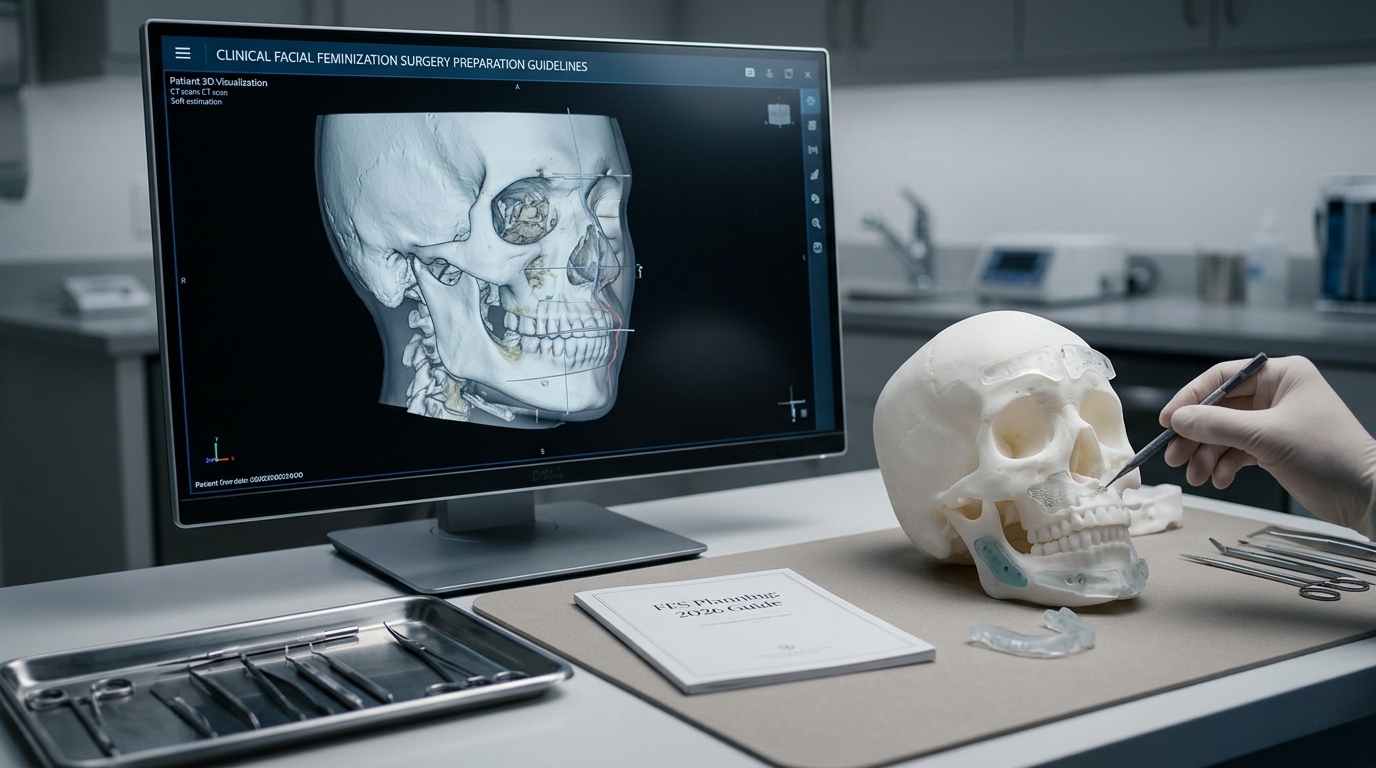

Stel je voor dat je duizenden dollars uitgeeft en maanden nodig hebt voor je herstel, om vervolgens in de spiegel te kijken en een haargrens te zien die er onnatuurlijk uitziet, of erger nog: kale plekken waar het haar nooit meer teruggroeit. Dit is geen zeldzame nachtmerrie; het is de realiteit voor veel mensen. 1 op de 5 haartransplantatie patiënten die te maken krijgen met complicaties variërend van een onnatuurlijke haarlijn tot volledig mislukte transplantaties (International Society of Hair Restoration Surgery, 2025). De schokkende waarheid? De meeste van deze mislukkingen zijn niet te wijten aan pech, maar aan vermijdbare technische fouten, gebrekkige chirurgische planning en een gebrek aan inzicht in wat een natuurlijke haarlijn kenmerkt.. Als u overweegt een haartransplantatie, Deze gids onthult de verborgen valkuilen waar klinieken u niets over zullen vertellen, en hoe u ervoor kunt zorgen dat uw behandeling slaagt waar anderen falen.
Inhoudsopgave
De belofte versus de realiteit: wat u niet wordt verteld over de slagingspercentages van haartransplantaties
Klinieken beweren succespercentages van 95% of hoger te hebben, maar deze cijfers zijn misleidend. De waarheid? Slechts 60%-patiënten bereiken de dichtheid en natuurlijkheid die hen was beloofd. (Journal of Cosmetic Dermatology, 2025). De rest krijgt te maken met complicaties zoals:
- Onnatuurlijke haarlijnenEen haarlijn die te recht, te laag is of de onregelmatigheden van een natuurlijke haargroei mist.
- Slechte hoekstand: Transplantaten worden onder de verkeerde hoek geplaatst, waardoor het haar onnatuurlijk uitsteekt of plat tegen de hoofdhuid ligt.
- Lage overlevingskansenTot wel 30%-transplantaten slagen er niet in om te gedijen als gevolg van onjuiste behandeling, uitdroging of trauma tijdens de implantatie.
- Necrose en littekenvormingOvermatige oogst of onjuiste incisietechnieken kunnen leiden tot blijvende schade aan het donorgebied.
- Schokverlies: Tijdelijk (of soms permanent) haarverlies als gevolg van trauma door de ingreep.
Waarom gebeurt dit? Het antwoord ligt in de drie cruciale fasen van een haartransplantatie— elk met zijn eigen risico's waar de meeste patiënten pas over horen als het te laat is.
Fase 1: De extractie – waarbij de meeste transplantaten afsterven voordat ze zelfs maar beginnen te groeien.
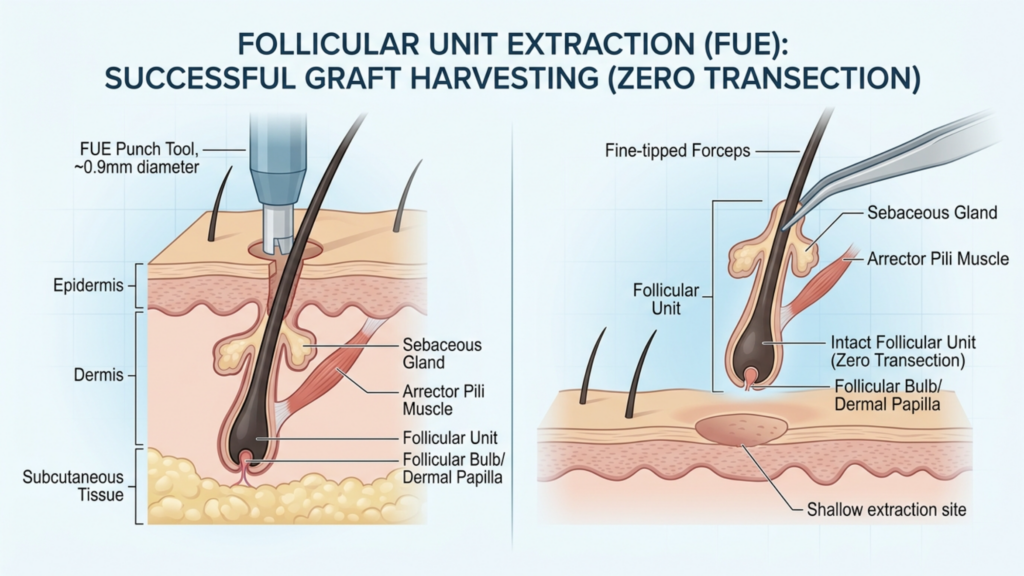
De eerste fase van een haartransplantatie – het extraheren van grafts uit het donorgebied – is waar tot 40% aan storingen ontstaan (Dermatologische chirurgie, 2025). Klinieken bezuinigen hier vaak, wat leidt tot onherstelbare schade.
Het FUE vs. FUT-debat: waarom techniek belangrijker is dan je denkt.
Folliculaire eenheidsextractie (FUE) is de gouden standaard vanwege de minimale littekenvorming, maar het is ook de plek waar doorsnijding van het transplantaat—het beschadigen van de haarzakjes tijdens het uittrekken—komt het meest waarschijnlijk voor. Studies tonen aan dat Onervaren technici snijden tot wel 15% aan enten door. Tijdens FUE worden ze onbruikbaar voordat ze zelfs maar geïmplanteerd worden (Plastic and Reconstructive Surgery, 2025). Folliculaire eenheidstransplantatie (FUT), hoewel invasiever, levert vaak hogere overlevingspercentages van de grafts op wanneer deze wordt uitgevoerd door een ervaren specialist. chirurg. Het addertje onder het gras? De meeste klinieken zetten technici in, geen chirurgen, voor extracties.—een kostenbesparende maatregel die de uitvalpercentages drastisch verhoogt.
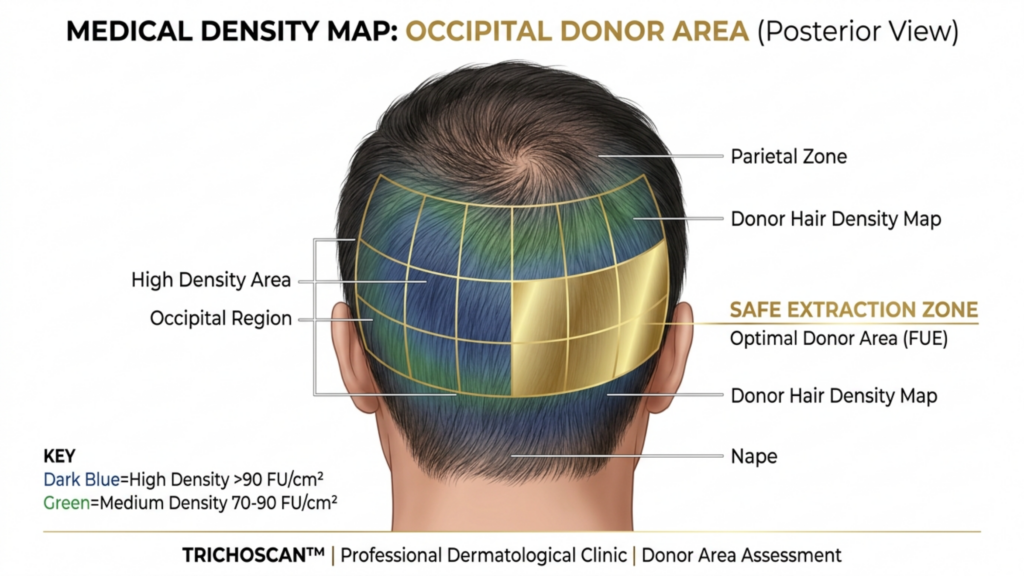
De valkuil van het donorgebied: overmatige oogst en blijvende littekens
Een andere cruciale fout is overbevissing—het wegnemen van te veel transplantaten uit het donorgebied, wat kan leiden tot:
- Uitdunnen van het donorgebied, waardoor het er vlekkerig of doorschijnend uitziet.
- Necrose (weefseldood) als de extractieplaatsen te dicht bij elkaar liggen, waardoor de bloedtoevoer wordt afgesneden.
- Permanente littekens Dat is zelfs bij korte kapsels zichtbaar.
Een studie uit 2025 in de Tijdschrift voor dermatologische wetenschap ontdekte dat 1 op de 10 patiënten Vrouwen die een FUE-haartransplantatie ondergingen, ondervonden blijvende schade aan het donorgebied als gevolg van overmatige haaroogst. De oplossing? Het aantal enten beperken tot 25-30 per cm². en ervoor zorgen dat de procedure wordt uitgevoerd door een chirurg, geen technicus.
De uitdrogingsramp: waarom transplantaten afsterven vóór de implantatie
Eenmaal verwijderd, zijn enten kwetsbaar. Elke minuut die ze buiten het lichaam doorbrengen, verlaagt hun overlevingskans met 1%. (Hair Transplant Forum International, 2025). Veel klinieken laten grafts blootgesteld aan de lucht of bewaren ze in suboptimale oplossingen, wat leidt tot uitdroging en celdood. Wat is het ideale protocol?
- Transplantaten moeten worden bewaard in hypothermische (4°C) zoutoplossing om de stofwisseling te vertragen en de levensvatbaarheid te behouden.
- De implantatie moet beginnen. binnen 1-2 uur extractie om de overlevingskansen te maximaliseren.
- Transplantaten mogen nooit met een pincet worden aangeraakt – alleen zachte, niet-traumatische hulpmiddelen om te voorkomen dat het geplet wordt.
Fase 2: De implantatie – waar onnatuurlijke haarlijnen ontstaan
Zelfs als de enten de extractie overleven, Slechte implantatietechnieken kunnen de hele procedure verpesten.. De twee grootste boosdoeners? Hoekfouten En onnatuurlijk haarlijnontwerp.
De hoekcrisis: waarom je haar uitsteekt als een tandenborstel
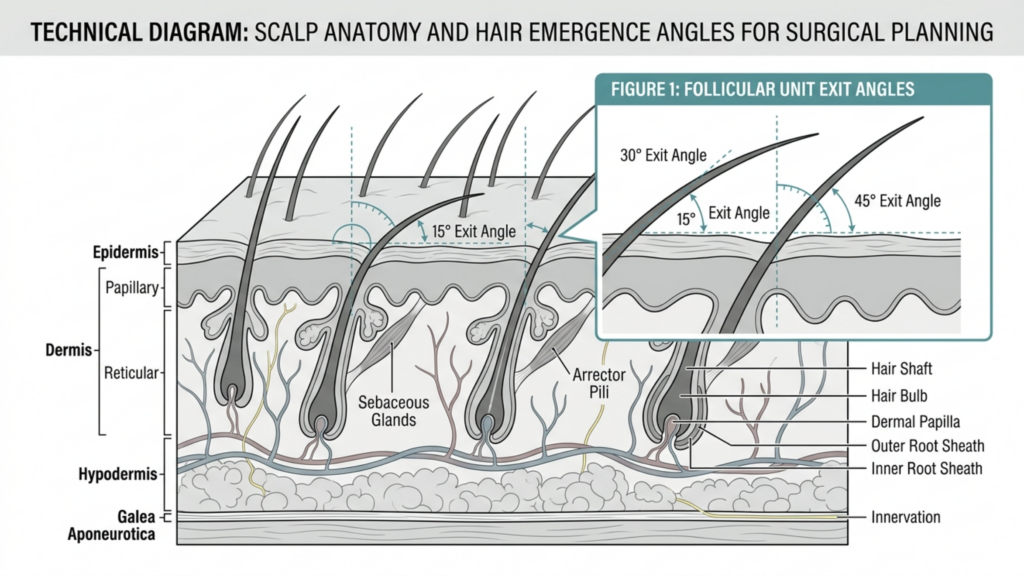
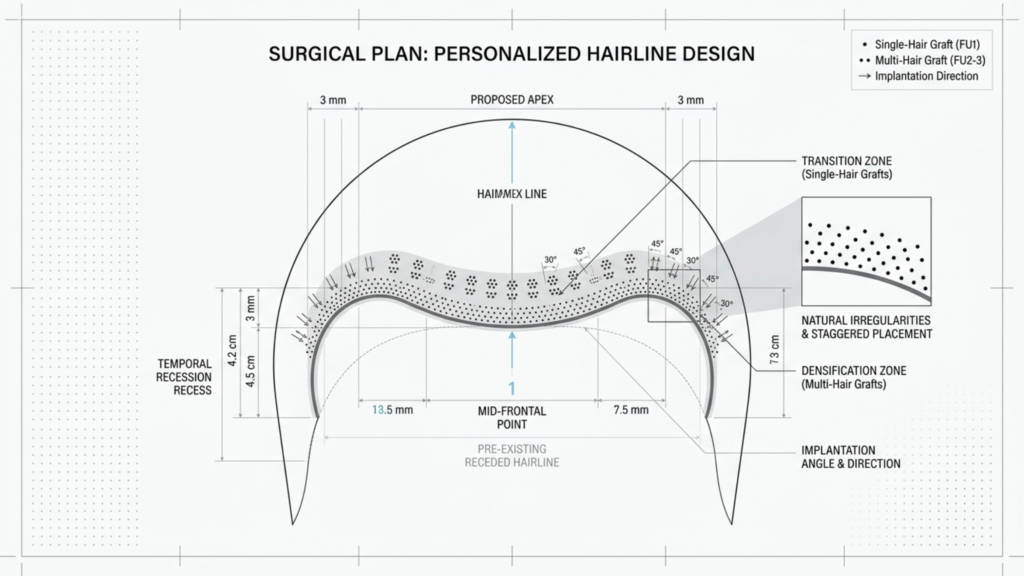
Haar groeit niet rechtstreeks uit de hoofdhuid; het komt aan de andere kant naar buiten. 10–45° hoek, afhankelijk van de regio. Wanneer grafts onder de verkeerde hoek worden geïmplanteerd, ontstaat een "poppenhaar"-effect, waarbij het haar onnatuurlijk uitsteekt. Een studie uit 2025 in Esthetische Chirurgie Tijdschrift ontdekte dat 40% van slechte resultaten bij haartransplantatie Dit kwam door een onjuiste hoekinstelling. De oplossing?
- Voorste haarlijnEen hoek van 10-20°, met een lichte vooroverhelling.
- Midden op de hoofdhuidEen hoek van 20-30°, die overgaat in een meer verticale richting.
- KroonEen hoek van 30-45°, met een spiraalvormig patroon voor een natuurlijke doorstroming.
De rampzalige haartransplantatie: waarom de meeste transplantaties er nep uitzien.
Een natuurlijke haarlijn is geen rechte lijn, maar onregelmatig. micro-onregelmatigheden, individuele haartransplantaties aan de voorkant en geleidelijke toename van de haardichtheid. Toch creëren veel klinieken het volgende:
- Rechte, "barbie-achtige" haarlijnen die schreeuwen om een transplantatie.“
- Te lage haarlijnen die er onnatuurlijk uitzien naarmate de patiënt ouder wordt.
- Oververdichting in de frontale zone, wat leidt tot een "plugachtig" uiterlijk.
De oplossing? Ontwerp op maat voor de haarlijn gebaseerd op:
- Gezichtssymmetrie en -proporties.
- Leeftijdsgebonden hoogte van de haargrens (hoger voor oudere patiënten om rekening te houden met toekomstige haaruitval).
- Geleidelijke overgangen in dichtheid, met grafts met één haar aan de voorkant en grafts met meerdere haren aan de achterkant.
Het diepteprobleem: waarom sommige enten nooit groeien
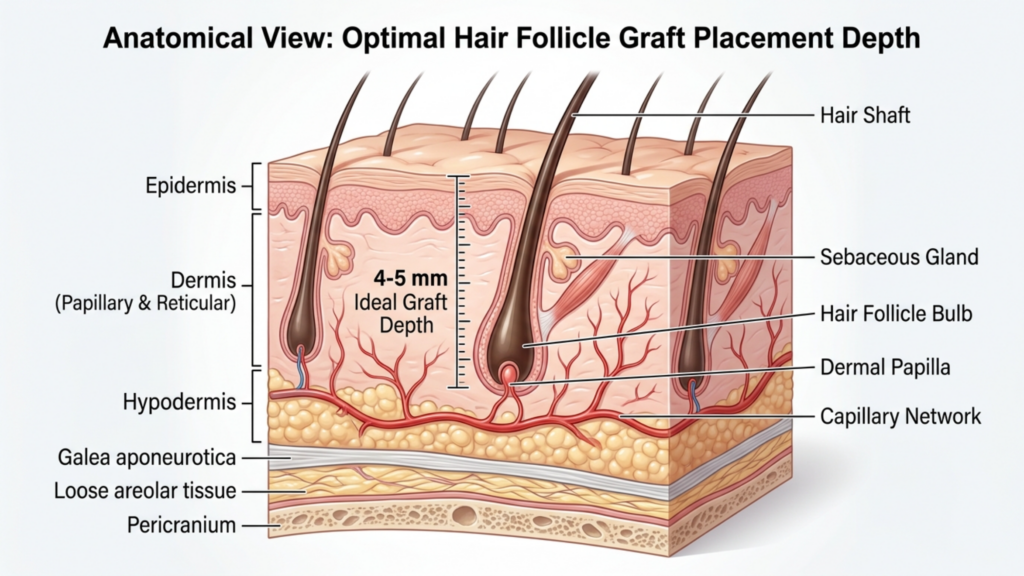
Transplantaten te oppervlakkig of te diep geplaatst zal geen goede doorbloeding krijgen, wat leidt tot een slechte overlevingskans. De ideale diepte?
- 4–5 mm onder het huidoppervlak, zodat de bulbus zich in de dermislaag bevindt waar de bloedtoevoer het rijkst is.
- Voorkomen subcutane plaatsing (te diep), waardoor de transplantaten geen zuurstof meer krijgen.
Fase 3: Het herstel – Waar schokverlies en infectie toeslaan
Zelfs een perfect uitgevoerde transplantatie kan tijdens het herstel mislukken. De twee grootste bedreigingen? Schokverlies En infectie.
Shockverlies: de stille moordenaar van bestaand haar.
Schokverlies—tijdelijk (of soms permanent) haarverlies— heeft gevolgen voor 30% van patiënten (International Journal of Trichology, 2025). Het wordt veroorzaakt door trauma aan de hoofdhuid tijdens de implantatie en komt vaker voor bij:
- Patiënten met dun of geminimaliseerd haar.
- Degenen die een behandeling ondergaan dichte pakking (te veel transplantaten op één plek).
- Patiënten die roken of een slechte bloedsomloop hebben..
Preventiestrategieën omvatten:
- Preoperatieve minoxidil Om bestaand haar te versterken.
- Vermijd dichte pakking in gebieden met dun haar.
- Postoperatieve PRP (plaatjesrijk plasma) om de genezing te versnellen.
Infectie en necrose: wanneer een transplantatie gevaarlijk wordt
Infecties komen voor in 5–10% haartransplantaties (Dermatologische Chirurgie, 2025), vaak als gevolg van slechte hygiëne of onjuiste postoperatieve zorg. Indien onbehandeld, kunnen infecties leiden tot:
- Folliculitis (ontstoken haarzakjes).
- Abcessen (met pus gevulde holtes).
- Necrose (weefselsterfte) in ernstige gevallen.
Preventie vereist:
- Antibiotische profylaxe (antibiotica vóór en na de operatie).
- Steriele postoperatieve zorg, waaronder voorzichtig wassen en het vermijden van aanraking van de hoofdhuid.
- Regelmatige vervolgcontroles om te controleren op tekenen van infectie.
Het dilemma tussen chirurg en technicus: waarom uw keuze bepalend kan zijn voor het resultaat.
Dit is de harde waarheid: De meeste haartransplantatieklinieken gebruiken technici – en geen chirurgen – voor cruciale stappen zoals het verwijderen en implanteren van haartjes.. Hoewel dit de kosten verlaagt, verhoogt het de kans op:
- Transplantaatdoorsnijding (het doorsnijden van haarzakjes tijdens de extractie).
- Slechte hoekinstelling en dieptecontrole tijdens de implantatie.
- Overbevissing van het donorgebied.
- Onnatuurlijk ontwerp van de haarlijn vanwege een gebrek aan artistieke training.
Een onderzoek uit 2025 in Plastische en reconstructieve chirurgie ontdekte dat Patiënten die door chirurgen werden behandeld, hadden een 25% hogere overlevingskans van het transplantaat. vergeleken met degenen die door technici werden behandeld. De conclusie? Sta erop dat een gecertificeerde chirurg elke stap van uw ingreep uitvoert.—niet alleen toezicht houden.

Hoe herken je een mislukte haartransplantatie voordat het te laat is?
Als je een haartransplantatie overweegt, lees dan hier hoe je dat moet aanpakken. voorkom dat je een van de vele statistieken wordt.:
Waarschuwingssignalen tijdens de consultatie
- Geen discussie over risico'sEen gerenommeerde chirurg zal complicaties zoals shockverlies, infecties en een onnatuurlijke haargrens uitleggen.
- Gegarandeerde dichtheidGeen enkele chirurg kan de overleving van een 100%-transplantaat garanderen; pas op voor valse beloftes.
- Technici die een operatie uitvoerenSta erop dat de extractie en implantatie door een chirurg worden uitgevoerd.
- Geen voor- en nafoto's van echte patiënten (of alleen zwaar bewerkte afbeeldingen).
Waarschuwingssignalen in de procedure
- Haastig geëvacueerdAls het team te snel transplantaten verwijdert, zal het aantal doorsnijdingen enorm toenemen.
- Geen protocol voor het bewaren van transplantatenEnten die aan de lucht worden blootgesteld of onjuist worden bewaard, zullen afsterven.
- Onjuiste hoekAls het team geen gespecialiseerde hulpmiddelen gebruikt om de hoek van de grafts te controleren, zal uw haarlijn er onnatuurlijk uitzien.
Waarschuwingssignalen tijdens herstel
- Geen postoperatief zorgplanU ontvangt gedetailleerde instructies over wassen, medicatie en vervolgafspraken.
- Tekenen van infectie (roodheid, zwelling, pus) werd door de kliniek genegeerd.
- Vroege afstoting van enten zonder uitleg (een zekere mate van haaruitval is normaal, maar overmatig haarverlies kan wijzen op een slechte innesteling).
Het 7-stappenplan voor een succesvolle haartransplantatie
Volg deze checklist om Vergroot uw kansen op een natuurlijk, dicht en permanent resultaat.:
- Kies een chirurg, niet een kliniek.Controleer hun referenties, ervaring en voor- en na-resultaten.
- Vraag om een gepersonaliseerd haarlijnontwerp.Vermijd standaardmodellen. Je haarlijn moet passen bij de symmetrie van je gezicht en je leeftijd.
- Sta erop dat de extractie en implantatie door een chirurg worden uitgevoerd.Technici dienen alleen te assisteren, niet de cruciale stappen uit te voeren.
- Bevestig de protocollen voor het bewaren van transplantaten.De transplantaten moeten in een hypotherme zoutoplossing worden bewaard en binnen 2 uur worden geïmplanteerd.
- Bereid je hoofdhuid voor.Gebruik minoxidil of PRP vóór de operatie om het bestaande haar te versterken en haaruitval door shock te verminderen.
- Volg de postoperatieve instructies nauwgezet op.Vermijd roken, alcohol en zware lichamelijke inspanning gedurende minimaal 2 weken. Slaap rechtop om zwelling te verminderen.
- Neem deel aan alle vervolgafspraken.: Monitor op infectie, shockverlies en overleving van het transplantaat. Pak problemen vroegtijdig aan om blijvende schade te voorkomen.
Conclusie: Het succes van uw haartransplantatie begint met kennis.
Een haartransplantatie is een levensveranderende ingreep, maar alleen als deze goed wordt uitgevoerd. Het verschil tussen een natuurlijk, onzichtbaar resultaat en een ramp hangt vaak af van de kwaliteit van de transplantatie. De juiste chirurg kiezen, de risico's begrijpen en een nauwgezet plan volgen.. Laat kosten of gemak uw beslissing niet bepalen. Uw haar is een investering in uw zelfvertrouwen en identiteit, en het verdient niets minder dan het beste.
Als je klaar bent om de volgende stap te zetten, Raadpleeg een gecertificeerde chirurg. die prioriteit geeft aan vakmanschap, precisie en jouw tevredenheid op de lange termijn. Je toekomstige zelf zal je dankbaar zijn.

Veelgestelde vragen
Waarom zien sommige haartransplantaties er onnatuurlijk uit?
Onnatuurlijke haartransplantaties zijn meestal het gevolg van een slechte hoek, een onjuist ontwerp van de haarlijn of een te dichte plaatsing van de grafts. Een ervaren chirurg creëert een haarlijn met subtiele onregelmatigheden en implanteert de grafts onder de juiste hoek (10-45°) om natuurlijke groeipatronen na te bootsen.
Hoe kan ik shockhaaruitval na een haartransplantatie voorkomen?
Om haaruitval door shock te minimaliseren, kunt u vóór de operatie minoxidil gebruiken om het bestaande haar te versterken, dichte beharing in gebieden met dun haar vermijden en na de operatie PRP-behandelingen (plaatjesrijk plasma) overwegen om de genezing te versnellen en haaruitval te verminderen.
Wat is het verschil tussen FUE en FUT, en welke is beter?
FUE (Follicular Unit Extraction) is minder invasief en laat minimale littekens achter, maar er is een hoger risico op het afscheuren van de grafts als de ingreep niet door een ervaren chirurg wordt uitgevoerd. FUT (Follicular Unit Transplantation) levert een hogere overlevingskans van de grafts op, maar laat een lineair litteken achter. De beste keuze hangt af van uw specifieke haaruitvalpatroon en de expertise van de chirurg.
Hoe weet ik of mijn haartransplantatiechirurg gekwalificeerd is?
Een gekwalificeerde chirurg moet gecertificeerd zijn, ruime ervaring hebben met haartransplantatie en transparante voor- en nafoto's van echte patiënten kunnen laten zien. Vermijd klinieken waar technici cruciale stappen zoals extractie en implantatie uitvoeren.
Kan een mislukte haartransplantatie worden hersteld?
Ja, maar het is complex. Bij herstelprocedures moeten vaak verkeerd geplaatste grafts worden verwijderd, littekenweefsel worden gecorrigeerd en grafts met de juiste hoek en dichtheid opnieuw worden geïmplanteerd. Kies voor het beste resultaat een chirurg met ervaring in hersteloperaties.
Hoe lang duurt het voordat het uiteindelijke resultaat van een haartransplantatie zichtbaar is?
De eerste groei begint na 3-4 maanden, maar het duurt 12-18 maanden voordat het volledige resultaat zichtbaar is. Geduld is essentieel: het proces overhaasten of direct een dichtere haargroei verwachten kan tot teleurstelling leiden.
Wat zijn de tekenen van een mislukte haartransplantatie?
Tekenen hiervan zijn onder andere een rechte of te lage haarlijn, haren die in onnatuurlijke hoeken uitsteken, zichtbare littekens, ongelijkmatige haardichtheid en aanhoudende roodheid of zwelling. Raadpleeg direct een specialist als u deze symptomen opmerkt.