

The human face is a complex anatomical structure where skeletal and soft tissue elements interact to create the unique appearance of each individual. Among the most significant and clinically relevant aspects of facial anatomy is facial sexual dimorphism—the systematic differences in facial structure between males and females. These differences are not merely superficial; they are deeply rooted in evolutionary, functional, and aesthetic factors that influence both perception and medical practice.
Facial sexual dimorphism manifests in the upper, middle, and lower thirds of the face, each exhibiting distinct anatomical traits that contribute to the overall masculine or feminine appearance. Understanding these differences is critical for clinicians, surgeons, and researchers, particularly in fields such as facial feminization surgery (FFS), forensic anthropology, and aesthetic medicine. This article explores the anatomical nuances of the male and female facial skeleton and soft tissue, with a focus on the forehead slope (frontal bossing), supraorbital ridge, nasofrontal angle, cheekbone projection, mandible width, and chin morphology, all of which are frequently illustrated in anatomical drawings and surgical planning.
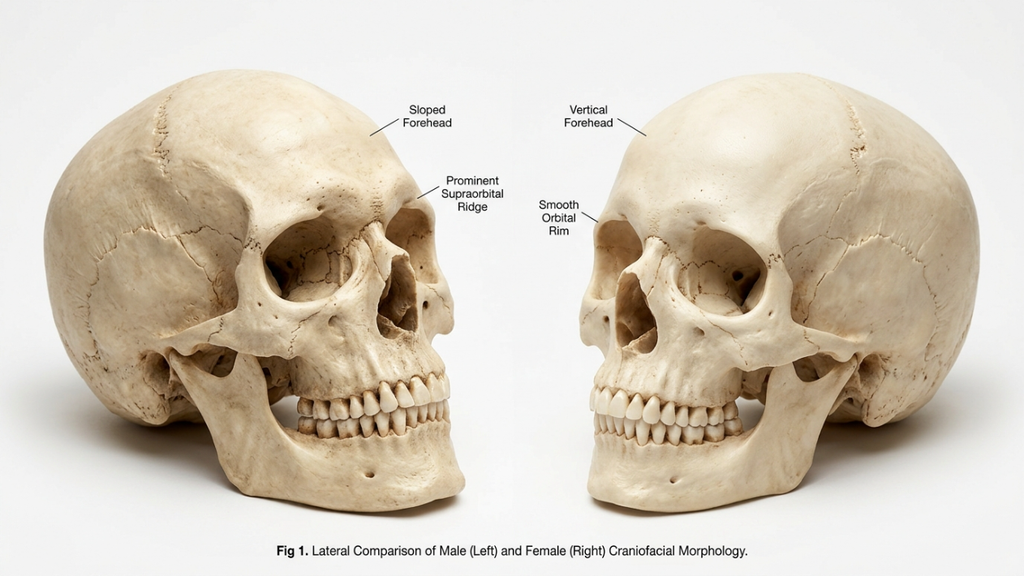
The Upper Facial Third: Forehead, Brow, and Nasofrontal Angle
Forehead Shape and Frontal Bossing
The forehead is one of the most sexually dimorphic regions of the face. In males, the forehead tends to be longer, broader, and more sloped, with a pronounced frontal bossing—a forward projection of the frontal bone that extends from the nasion (the root of the nose) to the supraorbital region. This bossing is often associated with a thicker anterior table of the frontal sinus, which contributes to the characteristic masculine appearance of a more acute nasofrontal angle (the angle between the forehead and the nose).
In contrast, the female forehead is typically shorter, more convex, and smoother, lacking the prominent frontal bossing seen in males. The nasofrontal angle in females is more obtuse (wider), which contributes to a softer, more vertical forehead profile. This difference is further accentuated by the hairline shape: males often have an M-shaped hairline with temporal recession, while females tend to have a more rounded or “upside-down U” shaped hairline.
Anatomical Drawing Insight: In anatomical illustrations, the male forehead is often depicted with a flat or slightly concave area just above the supraorbital ridge, followed by a forward projection (bossing). The female forehead, by comparison, is drawn as a smooth, continuous curve without the flat recess, emphasizing its convexity and lack of bossing.
Supraorbital Ridge and Glabella
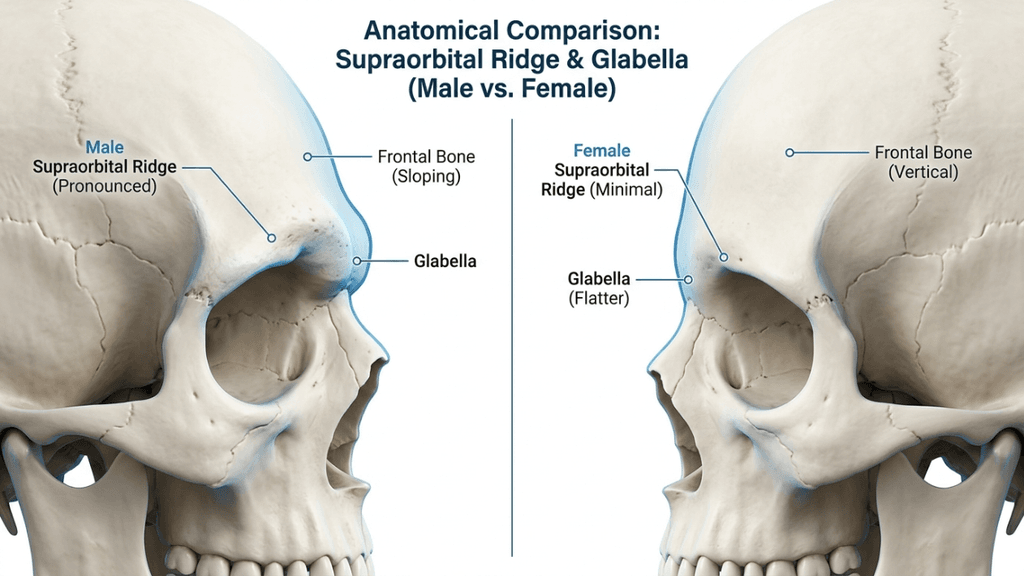
The supraorbital ridge (or brow ridge) is a defining feature of masculine facial anatomy. In males, this ridge is thicker, more pronounced, and extends laterally to the zygomaticofrontal suture. The glabella (the area between the eyebrows) is also more prominent in males, contributing to a heavier, more robust brow that sits directly above the superior orbital rim.
Females, on the other hand, exhibit a minimal or absent supraorbital ridge, with a smoother, less pronounced glabella. This results in a softer transition between the forehead and the orbital rims, which is a hallmark of feminine facial anatomy. The medial supraorbital ridge in males blends into the glabella, creating a more angular and masculine appearance, while in females, the absence of this ridge allows for a rounder, more delicate forehead contour.
Clinical Implication: The supraorbital ridge and glabella are primary targets in facial feminization surgery (FFS). Procedures such as burring (smoothing the bone), frontal sinus setback, and supraorbital contouring are commonly employed to reduce the prominence of these masculine features and achieve a more feminine forehead profile.
The Middle Facial Third: Cheekbone Projection and Malar Region
Zygomatic Bones and Cheekbone Prominence
The zygomatic bones (cheekbones) play a pivotal role in defining the middle third of the face. In males, the zygomatic arches are wider and more robust, contributing to a squarer, more angular midface. The cheekbone projection in males is often more lateral, creating a flatter midface appearance.
In females, the zygomatic bones are more pronounced and positioned more anteriorly, resulting in fuller, rounder cheeks that contribute to a heart-shaped or oval facial contour. The malar (cheek) region in females is often more prominent in the infraorbital area, extending toward the zygomatic and mandibular regions, which enhances the perception of youthfulness and femininity.
Anatomical Drawing Insight: Anatomical drawings typically highlight the wider, more angular zygomatic arches in males, while female illustrations emphasize the fuller, more anteriorly projected cheekbones, which create a softer, more rounded midface.
Nasal Structure and Orbital Morphology
The nose also exhibits significant sexual dimorphism. Males tend to have a wider, straighter nose with a more acute nasofrontal angle, while females often have a narrower, more concave nasal profile with a more obtuse nasofrontal angle. Additionally, the orbital rims (eye sockets) in males are generally more robust and posteriorly sloped, whereas in females, the orbits are rounder and more vertically oriented.

The Lower Facial Third: Mandible Width, Chin Morphology, and Jawline
Mandible and Jawline
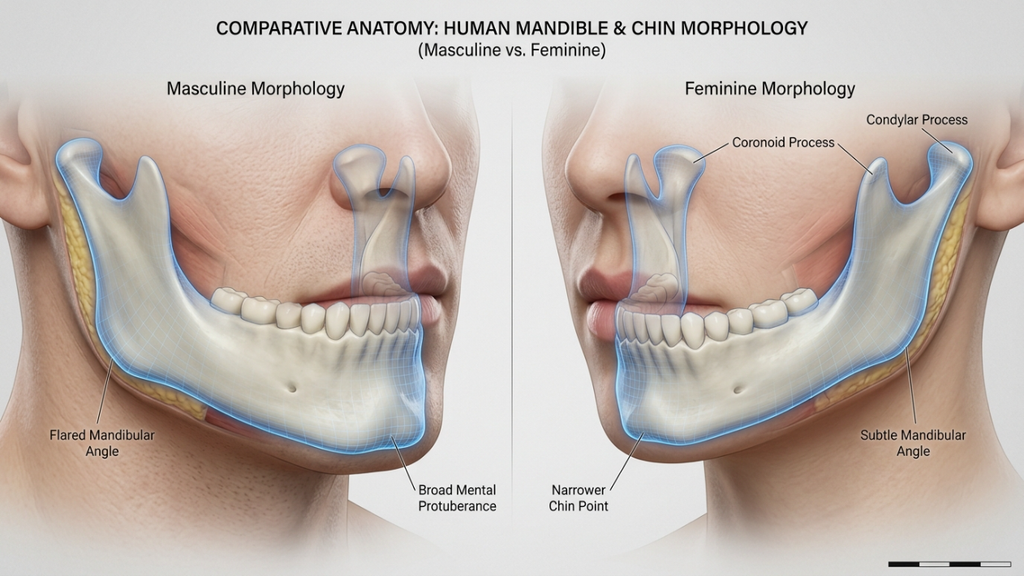
The mandible (jawbone) is a key differentiator between male and female facial structures. In males, the mandible is longer, wider, and more angular, with a prominent gonial angle (jaw angle) that contributes to a squarer, more robust jawline. The bigonial width (distance between the jaw angles) in males is often equal to or greater than the bizygomatic width (distance between the cheekbones), creating a strong, masculine jawline.
In females, the mandible is shorter, narrower, and more tapered, with a less prominent gonial angle. The chin in females is smaller, more pointed, and often positioned slightly posterior to the lower lip, contributing to a softer, more delicate jawline.
Anatomical Drawing Insight: Anatomical illustrations of the mandible typically show the male jaw as broader and more U-shaped, while the female jaw is depicted as narrower and V-shaped, with a tapered, less prominent chin.
Chin Morphology
The chin is another highly dimorphic feature. In males, the chin is broader, more robust, and often squared or flattened, with a greater degree of projection. Females, in contrast, have a narrower, more pointed chin that is less prominent and often slightly posterior to the lower lip.
Clinical Implication: In facial feminization surgery, the mandible and chin are often contoured and reduced in width to achieve a more feminine appearance. Procedures such as mandibular angle reduction, chin reshaping, and genioplasty are commonly performed to soften the jawline and chin.
Soft Tissue Considerations
While the skeletal framework provides the structural foundation for facial dimorphism, soft tissue elements—including facial muscles, subcutaneous fat, and skin quality—play a crucial role in defining gender-specific facial features.
- Subcutaneous Fat Distribution: Females generally have more subcutaneous fat in the cheeks, lips, and temporal regions, contributing to a softer, rounder facial appearance. Males, on the other hand, have less subcutaneous fat in these areas, resulting in a more angular, chiseled look.
- Skin Thickness and Texture: Male skin is typically thicker and more textured, with larger pores and greater sebum production. Female skin is thinner, smoother, and more elastic, which enhances the perception of softness and femininity.
- Facial Musculature: The masseter muscles (jaw muscles) are more developed in males, contributing to a wider, more defined jawline. In females, these muscles are less prominent, resulting in a softer jawline contour.
Clinical and Aesthetic Implications
Understanding the anatomical differences between male and female facial structures is essential for surgical planning, aesthetic treatments, and forensic analysis. Here’s how these differences are applied in practice:
Facial Feminization Surgery (FFS)
FFS is a transformative surgical approach designed to align the facial features of transgender women with their gender identity. Key procedures include:
- Forehead Contouring: Reducing frontal bossing and supraorbital ridge prominence to create a smoother, more convex forehead.
- Rhinoplasty: Refining the nasal structure to achieve a more feminine, concave profile with a wider nasofrontal angle.
- Mandibular and Chin Contouring: Narrowing the jawline and reshaping the chin to create a softer, more tapered lower face.
- Cheek Augmentation: Enhancing cheekbone projection to achieve fuller, more feminine cheeks.
Facial Masculinization Surgery
For transgender men or individuals seeking a more masculine appearance, procedures may include:
- Forehead Augmentation: Increasing frontal bossing and supraorbital ridge prominence to create a more robust, angular forehead.
- Mandibular Angle Enhancement: Widening the jawline and increasing gonial angle prominence to achieve a squarer, more masculine jaw.
- Chin Augmentation: Enhancing chin projection and width to create a broader, more robust chin.
Forensic and Anthropological Applications
In forensic anthropology, the analysis of cranial and facial dimorphism is used to determine sex from skeletal remains. Key indicators include:
- Supraorbital Ridge Prominence: More pronounced in males.
- Mandibular Width and Gonial Angle: Wider and more angular in males.
- Frontal Bone Morphology: More robust and sloped in males, with a smaller nasofrontal angle.
Evolutionary and Functional Perspectives
The anatomical differences between male and female facial structures are not arbitrary; they are shaped by evolutionary pressures, functional demands, and sexual selection.
- Evolutionary Adaptations: Males have historically been associated with physical strength and aggression, traits that may have favored the development of robust, angular facial features as a signal of dominance. Females, on the other hand, have been associated with nurturing and youthfulness, traits that may have favored the evolution of softer, rounder facial features as a signal of fertility and approachability.
- Functional Considerations: The larger nasal cavities and more prominent brow ridges in males may have evolved to support greater respiratory capacity and physical exertion, while the softer, more delicate features in females may have been selected for their association with youthfulness and health.
Anatomical Drawings and Visual Representations
Anatomical drawings are an invaluable tool for visualizing and understanding the differences between male and female facial structures. These illustrations typically highlight the following key features:
| Feature | Male Anatomy | Female Anatomy |
|---|---|---|
| Forehead | Longer, sloped, frontal bossing | Shorter, convex, smooth |
| Supraorbital Ridge | Prominent, thick, angular | Minimal, smooth, rounded |
| Nasofrontal Angle | Acute (narrower) | Obtuse (wider) |
| Cheekbones | Wider, more lateral projection | Full, round, anterior projection |
| Mandible | Broad, angular, robust | Narrow, tapered, delicate |
| Chin | Broad, squared, prominent | Narrow, pointed, less prominent |
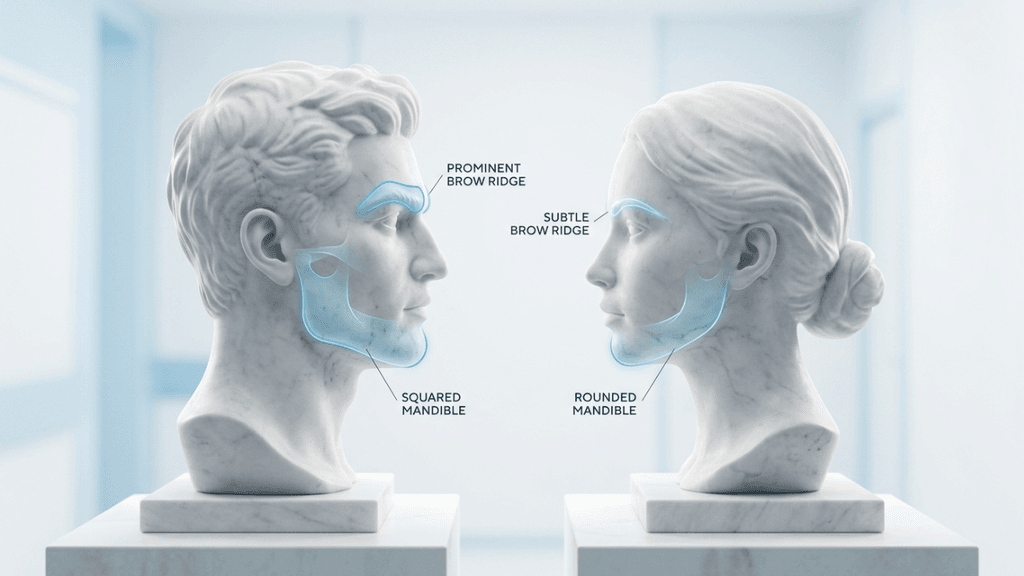
These drawings are often used in surgical planning, educational materials, and forensic analysis to illustrate the subtle yet significant differences that define facial gender dimorphism.
Conclusion
The anatomical differences between male and female facial structures are a testament to the complex interplay of biology, evolution, and aesthetics. From the frontal bossing and supraorbital ridge in the upper face to the mandibular width and chin morphology in the lower face, each feature contributes to the unique sexual dimorphism that defines human facial anatomy.
Understanding these differences is not only academically fascinating but also clinically essential. Whether for facial feminization surgery, aesthetic treatments, or forensic analysis, a deep knowledge of facial sexual dimorphism allows professionals to create natural, harmonious results that align with an individual’s gender identity and aesthetic goals.
As research continues to advance, our understanding of these anatomical nuances will only deepen, paving the way for more precise, personalized, and effective interventions in the fields of medicine, surgery, and anthropology.
Sources
- Differences in male and female soft-tissue and skeletal aspects of the chin, mandible, and cheeks | ResearchGate
- Anatomical bone differences between the male and female faces: A narrative literature review | Research, Society and Development
- Frontal Bossing – an overview | ScienceDirect Topics
- Facial Feminization Surgery: Anatomical Differences, Preoperative Planning, Techniques, and Ethical Considerations – PMC
- Lower Third Facial Contouring: Male vs Female – Understanding the Differences | IFAAS
- Gender-related Facial Analysis – ScienceDirect
- Quantitative Analysis of Male Versus Female Frontal Bone and Orbital Skeletal Morphology – PMC
- Masculine vs. Feminine Facial Features: A Surgeon’s Perspective | Dr. Kriya Gishen
- Sex-Specific Facial-Soft-Tissue Morphology in Mandibular Prognathism: A Homologous-Model Analysis – PMC
- How and why patterns of sexual dimorphism in human faces vary across the world | Scientific Reports
- How Sex Shapes Facial Morphology in Adults: A 3D Geometric Morphometric Study
- Male vs Female Face: 7 Key Differences (And Why They Matter?) | Encyclopaediia
- 8 Key Differences Between Male and Female Facial Features | Ariamedtour
- Differences Between Male and Female Skulls – StatPearls – NCBI Bookshelf
- Facial Anthropometric Analysis of Gender-Related Characteristics in Computed Tomography – PubMed