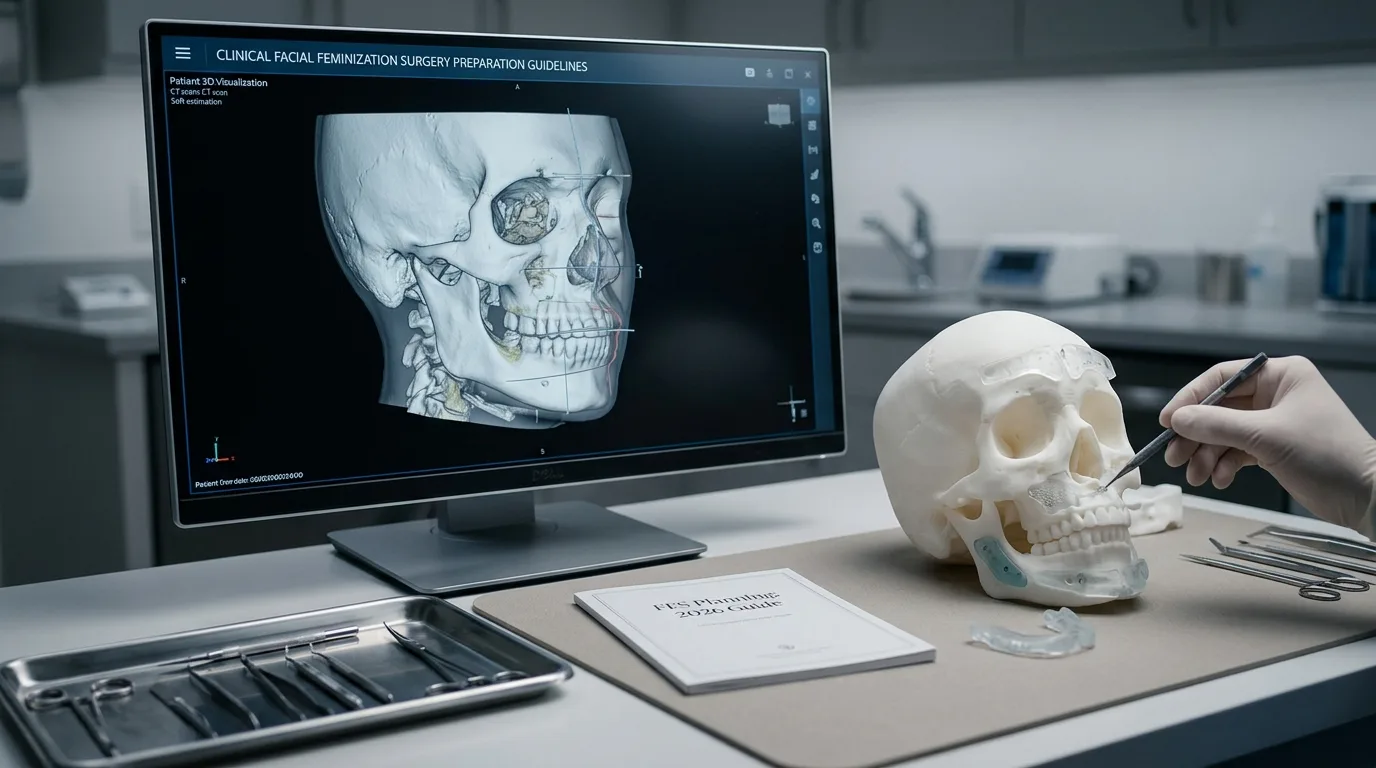

The human face is a canvas of identity, and among its many features, the forehead stands as a profound determinant of perceived gender. For many, the journey toward aligning their outer appearance with their inner self involves meticulous attention to these subtle yet powerful markers. A prominent brow ridge, often referred to as brow bossing, and a flatter, more sloped forehead are typically associated with masculine features. In stark contrast, a smoother, gently rounded, and more vertically oriented forehead is a hallmark of femininity. This fundamental difference in cranial architecture is not merely aesthetic; it deeply influences how an individual is perceived and, crucially, how they perceive themselves.
Facial Feminization Surgery (FFS) encompasses a suite of procedures designed to soften and balance facial contours, with forehead feminization being a cornerstone of this transformative process. Within the realm of forehead contouring, various techniques exist, each suited to different anatomical presentations. However, for individuals seeking the most comprehensive and impactful change, Type 3 Forehead Cranioplasty emerges as the definitive solution. This advanced surgical approach goes beyond superficial modifications, delving into the underlying bone structure to achieve a profound and harmonious feminization of the upper face.
The significance of the forehead in gender perception cannot be overstated. It is often the first feature noticed, subtly communicating gender cues before a single word is spoken. For transgender women, addressing a prominent brow bone can be a pivotal step in alleviating gender dysphoria, fostering a sense of congruence and confidence. The goal is not to erase individuality but to sculpt a forehead that naturally integrates with other feminine facial features, creating an overall softer and more harmonious appearance. This procedure is not exclusive to transgender individuals; cisgender men and women dissatisfied with their forehead’s appearance also seek these transformative techniques.
The classification of forehead types, particularly Type 1, Type 2, and Type 3, provides a critical framework for surgeons to determine the most appropriate and effective surgical strategy. This classification, largely attributed to the pioneering work of Dr. Douglas Ousterhout, is based on the intricate relationship between the brow ridge projection and the underlying frontal sinus. Understanding these distinctions is paramount, as an incorrect approach can lead to suboptimal results or even complications. While Type 1 involves simple shaving and Type 2 focuses on augmentation, Type 3 is a reconstructive procedure that directly addresses significant bony projections by repositioning the frontal bone itself.
This article will delve into the intricacies of Type 3 Forehead Cranioplasty, exploring why it is widely considered the gold standard for achieving optimal forehead feminization. We will dissect the anatomical considerations that necessitate this advanced technique, detail the precise surgical steps involved, and compare it rigorously with its Type 1 and Type 2 counterparts. Furthermore, we will examine the crucial role of advanced pre-operative planning, the integration of Type 3 with other feminizing procedures like brow lifts and hairline lowering, and what patients can expect regarding recovery and long-term outcomes. Our aim is to provide a deep, actionable analysis, offering foresight into the transformative potential of this procedure and solidifying its position as the preferred choice for comprehensive forehead contouring in FFS.

The Anatomical Blueprint: Understanding the Forehead’s Gender Markers
To truly appreciate the nuances of forehead feminization, one must first understand the underlying anatomy that dictates its shape and gendered perception. The frontal bone, which forms the forehead, is not a uniform, solid structure. A key feature within this bone, located just above the eyebrows and behind the lower part of the forehead, is the frontal sinus. This air-filled cavity plays a pivotal role in determining the prominence of the brow ridge and, consequently, the perceived masculinity or femininity of the upper face (Dr. MFO, 2025).
The Frontal Sinus: A Critical Determinant
The anterior wall of the frontal sinus—the front plate of bone palpable beneath the skin of the brow—significantly contributes to the projection of the brow ridge. The thickness of this wall and the depth of the sinus cavity behind it vary considerably among individuals. In masculine foreheads, this anterior wall is often thicker and projects further forward, creating a more pronounced brow bossing. Conversely, feminine foreheads typically exhibit a smoother, less prominent brow ridge due to a different configuration of the frontal sinus and surrounding bone (Dr. MFO, 2025).
The degree of brow bossing is influenced by several factors:
- The thickness and projection of the frontal bone located above the frontal sinus.
- The thickness and forward projection of the anterior wall of the frontal sinus itself.
- The thickness and projection of the bone directly below the frontal sinus, known as the supraorbital rims, which are the bony structures immediately above the eyes (Dr. MFO, 2025).
These anatomical variations are precisely why a standardized classification system is essential. Dr. Douglas Ousterhout’s original research identified three primary types of foreheads based on the frontal bossing and sinus configuration, guiding surgeons in selecting the most effective modification technique (Mittermiller, n.d.).
The Spectrum of Forehead Feminization Techniques: Type 1, 2, and 3
Forehead feminization is not a one-size-fits-all procedure. Surgeons employ different techniques tailored to the individual’s unique facial structure and the degree of change required. These techniques are categorized into Type 1, Type 2, and Type 3, each with distinct mechanisms, indications, and outcomes (Facialteam, 2025; Dr. MFO, 2025).
Type 1 Forehead Contouring: The Simple Shave
Type 1 forehead contouring, also known as brow bone shaving or burring, is the least invasive of the bone reduction techniques. It is suitable for individuals with minimal brow bossing where the underlying bone is relatively solid. This means the frontal sinus is either absent or very small and positioned well behind the area requiring reduction (Dr. MFO, 2025).
Indications and Technique
This technique is indicated for minimal brow bossing where the frontal bone anterior to a small or absent frontal sinus is thick. The desired reduction can be achieved by simply shaving down the outer layer of bone without exposing the frontal sinus cavity (Dr. MFO, 2025). The procedure typically involves an incision, often placed along the hairline (pretrichial incision) or within the hair (coronal incision), to access the frontal bone. Specialized surgical burrs are used to carefully shave down the prominent areas, creating a smoother, more rounded contour. The reduction is limited by the bone’s thickness and the need to avoid entering the frontal sinus (Mittermiller, n.d.; Dr. MFO, 2025).
Pros and Cons of Type 1
- **Pros:** Less invasive, shorter surgical time, generally faster recovery with less swelling and bruising compared to Type 3. It avoids entering or manipulating the frontal sinus, potentially reducing certain risks (Dr. MFO, 2025).
- **Cons:** Limited degree of reduction. If brow bossing is significant or the frontal sinus is large and close to the surface, sufficient reduction cannot be achieved without risking a hole in the sinus. It cannot significantly change the overall projection or slope of the forehead (Dr. MFO, 2025).
Type 2 Forehead Contouring: The Augmentation Approach
Type 2 forehead contouring is less common. It is considered for individuals with minimal brow bossing but a relative recession of the forehead bone above the brow ridge, creating a concave or flattened appearance. This technique focuses on augmenting the recessed area to create a smoother, more convex contour (Facialteam, 2025; Dr. MFO, 2025).
Indications and Technique
This method is ideal for patients whose primary concern is a depression in the forehead rather than a protruding brow ridge. Access is gained through a scalp incision. Biocompatible materials, such as polymethyl methacrylate (PMMA) or hydroxyapatite cement, are meticulously sculpted and applied to the bone in the recessed area. This builds up the forehead and creates a smooth, convex contour that blends harmoniously with the brow ridge (Facialteam, 2025; Dr. MFO, 2025).
Pros and Cons of Type 2
- **Pros:** Avoids entering or significantly manipulating the frontal sinus. It can effectively address forehead recession and create a smoother contour without extensive bone reduction. It is relatively less invasive than Type 3 (Dr. MFO, 2025).
- **Cons:** Does not reduce prominent brow bossing; it only camouflages it by building up the surrounding area. The use of artificial material introduces a low risk of infection or extrusion. It may not be suitable for significant brow bossing, as augmentation alone could create an unnatural or overly prominent forehead (Facialteam, 2025; Dr. MFO, 2025).
Type 3 Forehead Contouring: The Gold Standard Osteotomy and Setback
Type 3 forehead contouring, also known as frontal bone setback or forehead reconstruction, is the most complex and frequently performed technique in FFS for individuals with significant brow bossing. This technique involves surgically removing the anterior wall of the frontal sinus, reshaping it, and setting it back to a more feminine position (Mittermiller, n.d.; Dr. MFO, 2025; Costa, n.d.). It is considered the gold standard because it directly addresses the bony projection that most significantly contributes to a masculine forehead shape, allowing for the most dramatic and natural-looking feminization.
Indications for Type 3 Cranioplasty
Type 3 cranioplasty is indicated for patients with significant brow bossing where shaving alone would be insufficient or would risk exposing the frontal sinus. It is necessary when there is a large or prominently projected frontal sinus and a need for substantial reduction in the brow ridge’s projection, along with a change in the overall slope and contour of the forehead. This is often required when the globe position (how far forward the eyeball sits) is significantly posterior to the brow ridge, as identified on pre-operative imaging (Dr. MFO, 2025; Keojampa, 2017).
The Mechanistic Details: Surgical Technique of Type 3
The Type 3 procedure is a meticulous and highly skilled operation. Access is gained through a coronal or pretrichial incision, providing wide exposure of the frontal bone. The soft tissues are elevated, typically in a subperiosteal plane, down to the orbital rims. Precise osteotomies (bone cuts) are carefully made around the anterior wall of the frontal sinus, allowing this piece of bone, often referred to as a bone flap, to be surgically removed (Mittermiller, n.d.; Keojampa, 2017; Dr. MFO, 2025).
Once removed, this bone flap is meticulously reshaped on a sterile tray using specialized burrs to reduce its convexity and thickness. Simultaneously, the supraorbital rims (the bone directly above the eyes) are carefully burred down to a more feminine contour. The sinus cavity behind where the bone flap was removed is often treated, for example, by removing internal mucosa, to reduce the risk of complications (Dr. MFO, 2025).
The reshaped anterior bone wall is then set back to the desired, more feminine position and secured in place using small, often resorbable, plates and screws. These plates and screws hold the bone segment securely and have the benefit of dissolving over time, typically after about 12 to 18 months, leaving no permanent hardware (Keojampa, 2017; Mittermiller, n.d.; Costa, n.d.). The periosteum is then meticulously closed over the reconstructed area, soft tissues are repositioned, and the incision is closed. A brow lift is almost always performed concurrently (Dr. MFO, 2025; Costa, n.d.).
Pre-operative Planning: Precision Through Technology
The success of a Type 3 cranioplasty relies heavily on advanced pre-operative planning. Surgeons utilize three-dimensional imaging, such as CT scans, to virtually plan the reconstruction. These scans provide detailed cross-sectional images of the frontal bone and sinus, allowing the surgeon to precisely measure the thickness of the anterior sinus wall, the depth of the sinus cavity, and the degree of brow ridge projection. This data is crucial for determining the exact amount of setback possible and for planning the precise bone cuts (Keojampa, 2017; Costa, n.d.; Dr. MFO, 2025).
Some surgeons even use real-time stereotactic imaging navigation during surgery. This technology, similar to what neurosurgeons use, helps pinpoint the exact location of critical areas of the brain and skull base, ensuring pinpoint accuracy during bone cuts and placement of the reshaped bone flap (Keojampa, 2017; Costa, n.d.). This individualized and customized approach ensures remarkable and predictable results.
Integration with Other Procedures: A Holistic Approach
Forehead contouring is almost always performed in conjunction with a brow lift in FFS. The same incision used for forehead contouring (coronal or pretrichial) provides access for the brow lift, allowing the surgeon to elevate and reshape the eyebrows for a more feminine appearance. This simultaneous approach ensures a harmonious transition between the newly contoured forehead and the eyebrows (Dr. MFO, 2025; Costa, n.d.).
Furthermore, if a patient has a high hairline that contributes to a larger-appearing forehead, hairline lowering (scalp advancement) can be performed simultaneously with forehead contouring and brow lift, particularly when a pretrichial incision is used. This allows for a comprehensive reshaping of the upper face through a single incision, optimizing both the bony contour and the hairline position for a more feminine aesthetic (Keojampa, 2017; Dr. MFO, 2025; Costa, n.d.).
Recovery Expectations and Potential Complications of Type 3
As the most invasive of the forehead contouring techniques, Type 3 cranioplasty generally involves a more involved recovery period compared to Type 1 or 2. Patients can expect more significant swelling and bruising of the forehead and eyelids, which may take longer to fully resolve. Discomfort is typically managed with stronger pain relief initially. Numbness of the forehead and scalp is common due to nerve manipulation during flap elevation and can take many months to resolve (Dr. MFO, 2025).
While all surgeries carry inherent risks, Type 3 cranioplasty has specific potential complications due to the manipulation of the frontal sinus and bone. These include sinus infection, mucocele formation (a rare accumulation of mucus within the sinus), or, exceptionally rarely, a cerebrospinal fluid leak. Issues with the plates and screws used for fixation, such as infection or palpability, are also possible, though uncommon. Non-union of the bone flap is very rare. Contour irregularities or asymmetries can occur if the procedure is not performed meticulously (Mittermiller, n.d.; Dr. MFO, 2025).
Long-Term Outcomes and Stability
The long-term outcome of Type 3 forehead contouring is typically permanent, as it involves reshaping the underlying bone structure. Once the bone has healed in its new contour, the changes are structurally stable. While the face will continue to age, and changes in soft tissues like skin elasticity will occur over time, the surgically altered bony framework remains stable. Scarring along the incision line will mature and fade over many months, eventually becoming less noticeable. Sensation may gradually return over a year or more, though some areas of altered sensation may persist (Dr. MFO, 2025).

Direct Comparison: Why Type 3 Stands Apart
Understanding the fundamental differences between Type 1, Type 2, and Type 3 forehead contouring techniques is crucial for appreciating why a particular method is chosen for a patient’s forehead. The key distinctions lie in the underlying anatomy, the invasiveness of the procedure, the surgical steps, the degree of reduction possible, and the associated risks and recovery (Dr. MFO, 2025).
| Feature | Type 1 Forehead Contouring (Shaving) | Type 2 Forehead Contouring (Augmentation) | Type 3 Forehead Contouring (Osteotomy & Setback) |
| Underlying Anatomy | Minimal bossing, thick bone anterior to sinus | Minimal bossing, forehead recession superior to brow | Significant bossing, often large/projecting frontal sinus |
| Surgical Approach | Burring (shaving) of bone only | Augmentation of recession area with material | Osteotomy (cutting bone), reshaping, setback, fixation |
| Invasiveness | Least invasive | Moderately invasive | Most invasive (bone cutting/reconstruction) |
| Degree of Reduction | Limited | Does not reduce bossing; camouflages recession | Allows for significant reduction of bossing |
| Frontal Sinus Involvement | Avoided | Avoided | Anterior wall is removed and replaced; sinus cavity manipulated |
| Recovery (Initial) | Generally faster | Generally faster | Generally slower and more involved |
It is critical to understand that the forehead type is determined by the underlying anatomy, not by patient preference. A surgeon’s assessment, often utilizing CT scans to visualize the frontal sinus and bone thickness, is essential to determine the appropriate technique. Attempting a Type 1 procedure on a forehead that requires a Type 3 would result in an inadequate reduction or a complication, such as entering the sinus. Similarly, performing a Type 3 when a Type 1 would suffice is unnecessarily invasive (Dr. MFO, 2025).

Conclusion: Embracing the Transformative Power of Type 3 Cranioplasty
The journey of facial feminization is deeply personal and profoundly impactful, with the forehead playing an undeniable role in shaping perceived gender identity. For those seeking to harmonize their outer appearance with their inner self, the choice of forehead contouring technique is paramount. As we have explored, Type 3 Forehead Cranioplasty stands as the gold standard, offering an unparalleled level of precision and transformative potential for individuals with significant brow bossing and prominent frontal sinuses.
Unlike the more conservative Type 1 shaving or the augmentation-focused Type 2, Type 3 directly addresses the core anatomical structures that define masculine forehead features. By meticulously removing, reshaping, and setting back the anterior wall of the frontal sinus, surgeons can achieve a dramatic yet natural-looking reduction in brow bossing, creating a smooth, convex, and appropriately sloped feminine forehead contour. This comprehensive approach is not merely about reducing a bump; it’s about sculpting a new foundation for the upper face, allowing for a more authentic and congruent self-expression.
The advanced nature of Type 3 cranioplasty, supported by cutting-edge pre-operative planning with CT scans and 3D imaging, ensures a highly individualized and predictable outcome. The ability to integrate this procedure with a brow lift and hairline lowering further enhances its efficacy, allowing for a holistic feminization of the entire upper face through a single surgical access point. This integrated approach minimizes surgical burden while maximizing aesthetic harmony, a testament to the evolving sophistication of FFS.
While the recovery from Type 3 cranioplasty is more involved than less invasive techniques, the long-term stability and high patient satisfaction rates underscore its value. The changes to the underlying bone structure are permanent, providing a lasting foundation for a feminized appearance. The potential risks, though present as with any surgery, are meticulously managed by experienced craniofacial surgeons specializing in FFS, who prioritize patient safety and optimal aesthetic results.
Ultimately, the decision to undergo Type 3 Forehead Cranioplasty is a profound step towards self-actualization. It is a testament to the power of modern surgical artistry to facilitate a deeper connection between one’s internal identity and external presentation. For those who have long felt a disconnect, this procedure offers not just a physical transformation but a profound sense of relief, confidence, and congruence. It is an investment in authenticity, a commitment to living fully and openly as one’s true self. Consult with a highly specialized FFS surgeon to determine if Type 3 Forehead Cranioplasty is the right path for your unique journey, and embrace the future with a forehead that truly reflects who you are.
Frequently Asked Questions
What is Type 3 Forehead Cranioplasty?
Type 3 Forehead Cranioplasty is the most comprehensive forehead feminization technique. It involves surgically removing the anterior wall of the frontal sinus, reshaping it, and setting it back to a more feminine position to reduce a prominent brow ridge and create a smoother, more rounded forehead contour.
How does Type 3 differ from Type 1 and Type 2 forehead contouring?
Type 3 involves bone cutting and setback for significant brow bossing. Type 1 uses simple shaving for minimal bossing, and Type 2 uses augmentation to fill in recession above the brow. Type 3 offers the most significant reduction and reshaping.
Is Type 3 Forehead Cranioplasty a permanent procedure?
Yes, the results of Type 3 Forehead Cranioplasty are generally considered permanent. The procedure reshapes the underlying frontal bone structure, and these changes are long-lasting. While soft tissues will age, the bony contour remains stable.
What are the main benefits of choosing Type 3 Forehead Cranioplasty?
The main benefits include the most significant reduction of brow bossing, the ability to create a smooth and appropriately sloped feminine forehead contour, high patient satisfaction, and long-term stability of results. It directly addresses the primary masculine feature of the forehead.
What are the typical recovery expectations for Type 3 Forehead Cranioplasty?
Recovery from Type 3 cranioplasty is more involved than other types, with significant swelling and bruising of the forehead and eyelids. Discomfort is managed with pain relief, and numbness of the forehead and scalp is common, gradually resolving over several months.
Can other procedures like a brow lift or hairline lowering be done with Type 3 Cranioplasty?
Yes, Type 3 Forehead Cranioplasty is almost always performed concurrently with a brow lift. Hairline lowering (scalp advancement) can also be done simultaneously, especially with a pretrichial incision, allowing for comprehensive upper face feminization through a single surgical access point.
Bibliography
- Costa, M. A. (n.d.). Forehead Feminization. Melinda A. Costa, M.D. Retrieved from https://costamd.com/forehead-reduction-cranioplasty/
- Dr. MFO. (2025, May 10). FFS Forehead Contouring: Type 1, 2 & 3 Compared. Dr. MFO – FFS Surgeon in Turkey. Retrieved from https://www.dr-mfo.com/ffs-forehead-contouring-type-1-2-3-difference/
- Facialteam. (2025, February 6). Type 3 Forehead Feminization Surgery: FOREContour® by Facialteam. Facialteam. Retrieved from https://facialteam.eu/blog/type-3-forehead-feminization-surgery-forecontour-by-facialteam/
- Keojampa, M. D. (2017, June 9). Facial Feminization Surgery | Forehead Reduction Cranioplasty Type 3 | Los Angeles | California | Dr Keojampa. Keojampa MD Facial Plastic Surgery. Retrieved from https://www.drkeojampa.com/facial-feminization-forehead-reduction-cranioplasty-type-3-los-angeles-california-dr-keojampa/
- Mittermiller, P. (n.d.). Type 3 Forehead Reduction for Forehead Feminization. Paul Mittermiller, MD. Retrieved from https://paulmittermillermd.com/blog/how-is-a-type-3-cranioplasty-performed