The obsession with the “cat eye” aesthetic has blinded the medical community to a stark anatomical reality: the downward slope of the outer eye corner, known as negative canthal tilt, is not a defect to be eradicated but a defining feature of structural beauty in many faces. While the westernized beauty standard dictates that the outer corner must sit higher than the inner, forcing a lift can strip a face of its character, making it look perpetually surprised or artificially altered.
This guide dissects the geometry of the eye, revealing why a negative tilt is often a sign of skeletal strength rather than aging, and how precise surgical intervention requires a nuanced understanding of vectors rather than a simple pull-up approach.
By the end of this analysis, you will possess the clinical framework to distinguish between a pathologic descent caused by aging and a natural, structurally sound negative tilt. You will learn the specific surgical vectors used by Dr. Mehmet Fatih Okyay, a European & Turkish Board Certified Plastic Surgery Specialist based in Antalya, Turkey, to correct true functional or aesthetic issues without erasing ethnic identity or natural expression. This is not a generic overview; it is a deep dive into the architectural nuances of the periorbita that you simply cannot find elsewhere.
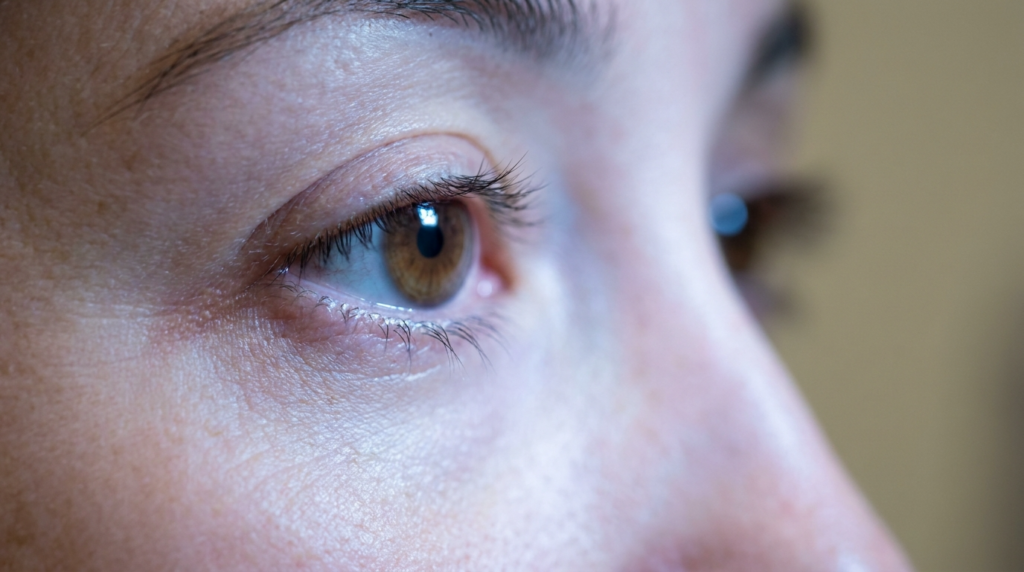
Table of Contents
What is Negative Canthal Tilt?
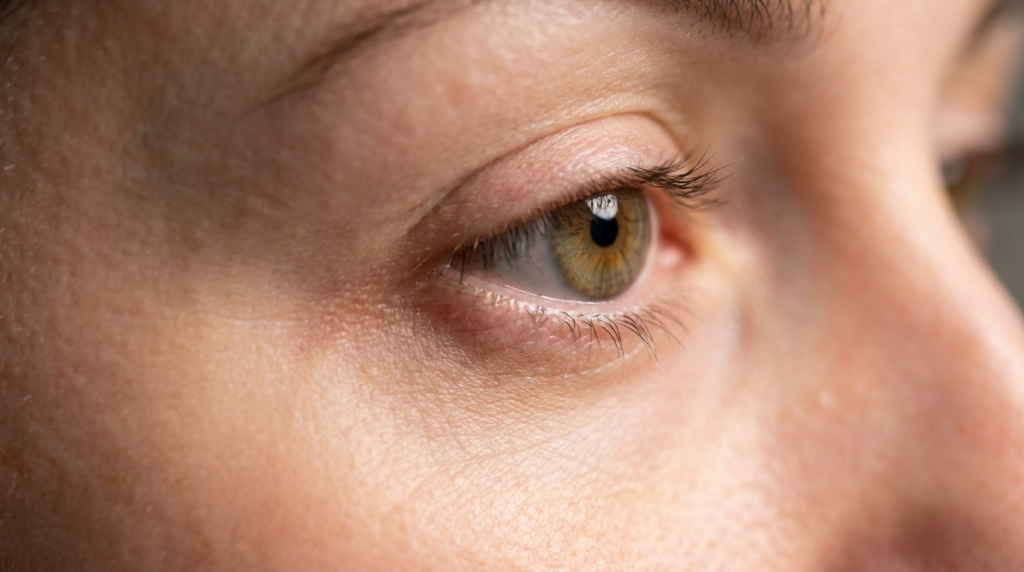
Negative canthal tilt refers to the angle formed by a line drawn between the inner corner (medial canthus) and the outer corner (lateral canthus) of the eye, where the lateral corner sits lower than the medial corner. In a neutral or positive tilt, the outer corner is level with or higher than the inner. While a positive tilt is often associated with youth and alertness in western aesthetics, a negative tilt is a common and beautiful feature in many ethnic groups, particularly those with stronger cranial-facial structures.
The misconception that negative canthal tilt requires correction stems from a failure to appreciate facial harmony. When the jaw is broad and the midface is strong, a slight downward slope of the eye complements the structure. Conversely, in faces with softer features, a negative tilt might accentuate a sense of sadness or fatigue. The key lies in the relationship between the bony orbit and the soft tissue envelope, not just the angle of the eye itself. Understanding this relationship is the first step in avoiding the “operated look” that plagues standard surgical approaches.
The Skeletal Connection
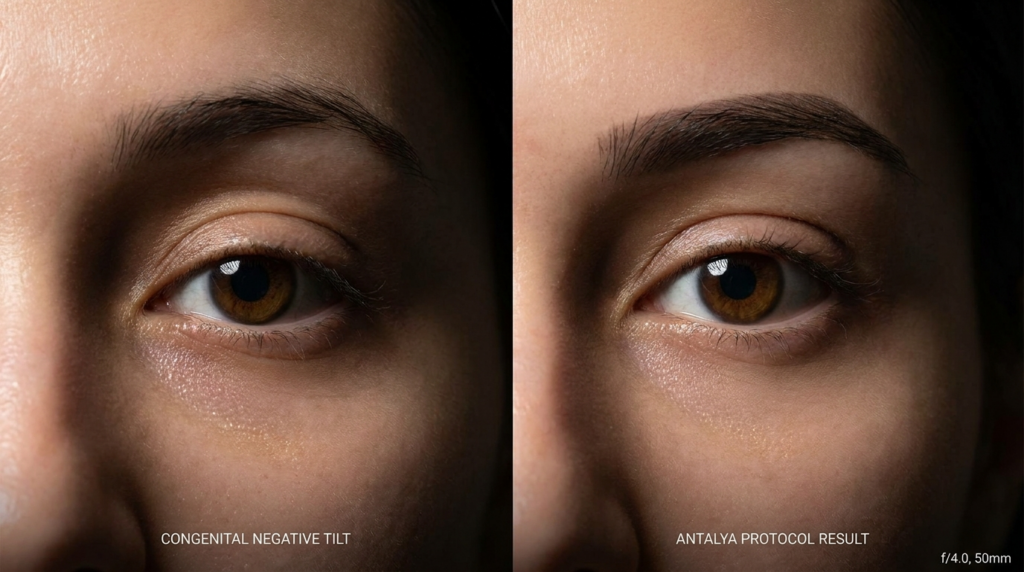
Most discussions about eye shape ignore the foundation: the zygomatic arch and the lateral orbital rim. A negative canthal tilt often coincides with a robust malar complex. When surgeons attempt to lift the lateral canthus without respecting this underlying architecture, they create a disharmony that looks disjointed. Dr. MFO’s approach at his clinic in Antalya focuses on the “Antalya Protocol,” which evaluates the tilt in relation to the entire facial skeleton, ensuring that any adjustment feels like a natural evolution of the patient’s features rather than a foreign addition.
Research indicates that as we age, the descent of the soft tissue over the bone creates a pseudo-negative tilt. This is different from a congenital negative tilt. Treating a structural feature as if it were an age-related descent leads to over-correction. The goal of modern Facial Feminization Surgery or rejuvenation is to restore the lid-cheek junction’s integrity, not merely to hoist the corner of the eye upward.

Techniques and Approaches for Correction
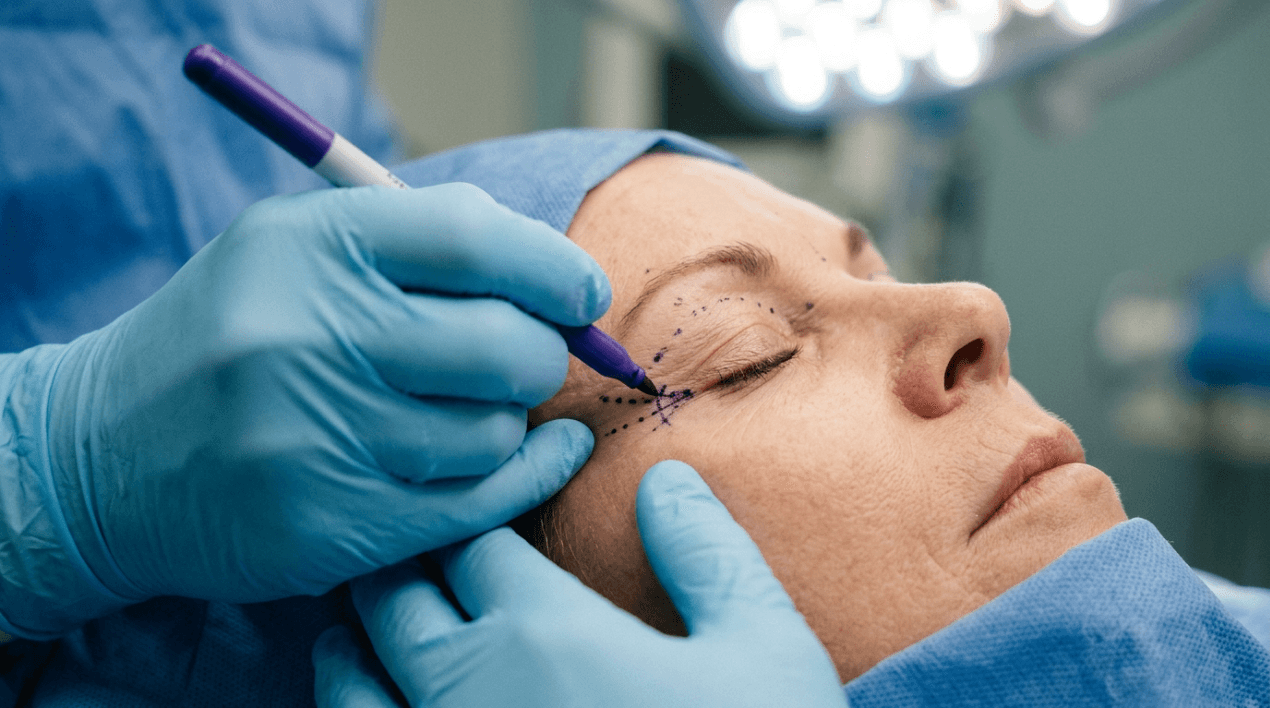
Correcting a negative canthal tilt that is deemed problematic—either due to aging or patient preference—requires a mastery of canthoplasty and canthopexy. These are not mere lifts; they are reconstructive procedures that alter the tension of the lateral canthal tendon. The approach must be tailored: a patient with lax skin requires a different vector than a patient with a deficient orbital rim.
The traditional “cat eye” surgery, or Cat Eyes surgery, often involves simply cutting and resuspending the tissue. However, Dr. Mehmet Fatih Okyay utilizes a method that reinforces the canthal tendon using the patient’s own tissue or biocompatible materials. This ensures the result is not only aesthetically pleasing but also maintains the functional integrity of the eyelid, preventing ectropion (outward turning of the lid) which is a common complication of aggressive tilting.
Surgical vs. Non-Surgical Modalities
While surgery remains the gold standard for permanent change, non-surgical options like hyaluronic acid fillers are often used to camouflage a negative tilt. Fillers placed strategically along the orbital rim can create an illusion of lift. However, this is a temporary fix that carries risks of swelling and migration. For those seeking definitive change, surgical canthoplasty offers a controlled environment to reset the eye’s geometry.
| Feature | Surgical Canthoplasty | Filler Camouflage | Lateral Tarsal Strip |
| Longevity | Permanent | 6-12 months | Permanent |
| Invasiveness | High (incisional) | Low (injection) | Moderate |
| Risk of Asymmetry | Low (with expert surgeon) | Moderate (swelling dependent) | Low |
| Best For | Structural negative canthal tilt | Mild aesthetic preference | Functional lid laxity |
The choice of technique depends heavily on the patient’s anatomy. A thin-skinned patient with a negative tilt requires a delicate touch to avoid visible scarring, whereas a patient with thicker skin and a strong brow may require a more robust elevation. Dr. MFO’s expertise lies in mapping these individual variables to predict the healing trajectory accurately.
The Psychology of the Tilt: Breaking the Westernized Standard
The drive to correct negative canthal tilt often stems from a subconscious bias toward western beauty ideals. In many non-western cultures, a downward slant is associated with wisdom, strength, and maturity. Erasing this feature can lead to a loss of identity—a phenomenon known as “facial homogenization.” Dr. Okyay, during his consultations at the Dr. MFO Clinic, emphasizes the preservation of ethnic identity while achieving the patient’s aesthetic goals.
This perspective challenges the industry norm of “one size fits all.” By analyzing the negative canthal tilt through the lens of cultural anthropology rather than just plastic surgery, we uncover a truth rarely discussed: the most successful surgeries are those that respect the patient’s heritage. The goal is refinement, not erasure. This approach reduces the psychological burden of feeling “changed” and increases long-term satisfaction.
Recovery and Long-Term Outcomes
Recovery from canthal tilt correction involves a specific timeline that differs from standard blepharoplasty. Because the lateral canthal tendon is being manipulated, the initial swelling can obscure the final result for several months. Patients often experience a period where the eye looks too high or too round—a phase known as the “surprise look.” Understanding this timeline is crucial for mental preparation.
Long-term studies on negative canthal tilt surgery show that the most stable results come from techniques that do not rely solely on skin tension. When the deep tissues are anchored to the periosteum of the lateral orbital rim, the risk of recurrence or drop-off is minimized. Dr. Okyay’s technique prioritizes deep structural anchoring, ensuring that the negative canthal tilt correction remains stable even as the face continues to age naturally.
Your Roadmap to Addressing Negative Canthal Tilt
If you are considering addressing your negative canthal tilt, follow this specific action plan to ensure safety and satisfaction. These steps move you from contemplation to a successful outcome.
- Assess Your Structure: Determine if your tilt is structural (bony) or age-related (soft tissue). Look at old photos to see if the tilt has always been present.
- Select a Specialist: Choose a surgeon who understands facial diversity. Verify their board certifications and review before-and-after galleries specifically for canthal work.
- Map the Vectors: During consultation, discuss the exact degree of change. Use digital imaging to simulate the result, ensuring it aligns with your other facial features.
- Prepare for Swelling: Arrange your schedule to allow for at least two weeks of social downtime. The eyes are sensitive, and rushing back to public life can increase anxiety.
- Commit to Follow-up: Attend all post-operative checks. The first three months are critical for guiding the healing tissue into the correct position.
Addressing negative canthal tilt is a decision that reshapes how the world perceives your expressions. By choosing a path that values structural integrity over trendy shortcuts, you ensure a result that looks like you—only refreshed. Contact Dr. Mehmet Fatih Okyay’s team in Antalya today to begin your personalized assessment.
Frequently Asked Questions
Is negative canthal tilt a sign of aging?
Not necessarily. While aging can cause the soft tissues to descend and create a negative tilt, many individuals have a natural, congenital negative canthal tilt that is part of their skeletal structure. Distinguishing between a structural feature and age-related ptosis is the first step in determining if surgery is appropriate for your specific anatomy.
What is the cost of negative canthal tilt correction?
The investment for correcting a negative canthal tilt varies based on the complexity of the procedure and the geographic location of the clinic. In Antalya, Turkey, patients benefit from world-class expertise at a more accessible price point compared to Western Europe or the United States, without compromising on the quality of care or surgical precision.
Can fillers effectively fix a negative canthal tilt?
Dermal fillers can provide a temporary camouflage for a negative canthal tilt by adding volume to the lateral orbital rim. However, this does not change the actual tendon position. For a permanent solution that addresses the root cause of the tilt, surgical canthoplasty remains the only definitive treatment option available.
How does negative canthal tilt affect facial expression?
A negative canthal tilt is often perceived as conveying seriousness, maturity, or sadness. In contrast, a positive tilt is associated with alertness and youth. The impact on expression depends heavily on the surrounding facial features, such as the position of the eyebrows and the fullness of the cheeks, which must be balanced during any corrective procedure.
What are the risks of over-correcting the lateral canthus?
Over-correction can lead to a condition called round eye deformity or ectropion, where the eyelid pulls away from the eye. This not only looks unnatural but can also cause dry eye issues. An expert surgeon like Dr. Mehmet Fatih Okyay uses precise vector planning to avoid these complications and preserve the natural shape of the eye.